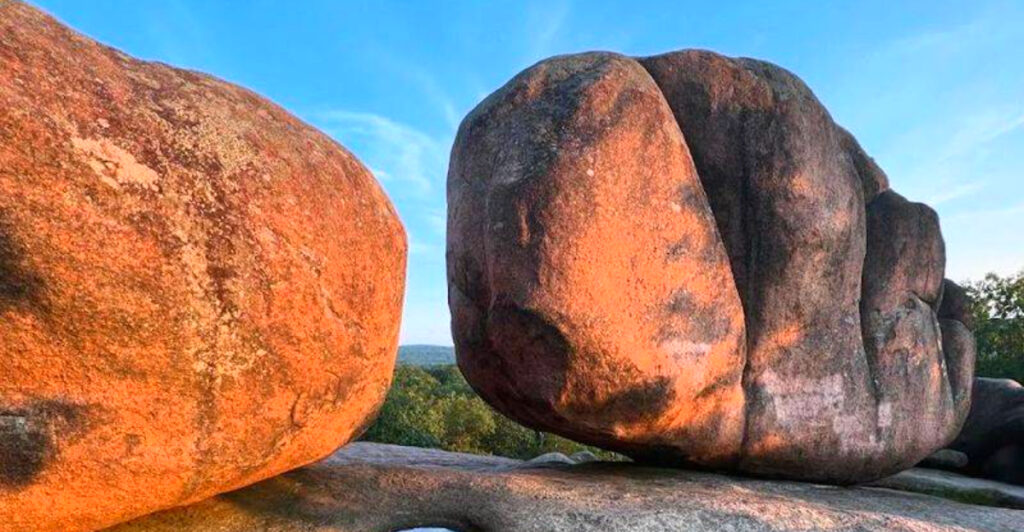
Massive pink granite boulders weighing hundreds of tons make Elephant Rocks State Park one of the most unusual natural attractions in Missouri. Formed 1.5 billion years ago, these towering rocks line up so much like a train of circus elephants that the park’s name hardly needs an explanation.
The geology is only part of the story. Visitors can walk a one-of-a-kind Braille Trail, explore the remains of a historic granite quarry, and scramble through narrow passages between enormous boulders. It is the kind of place that looks remarkable in photos but becomes even more impressive once you are standing beside rocks that have been here for more than a billion years.
Where the Boulders Begin: Address, Location, and Getting There
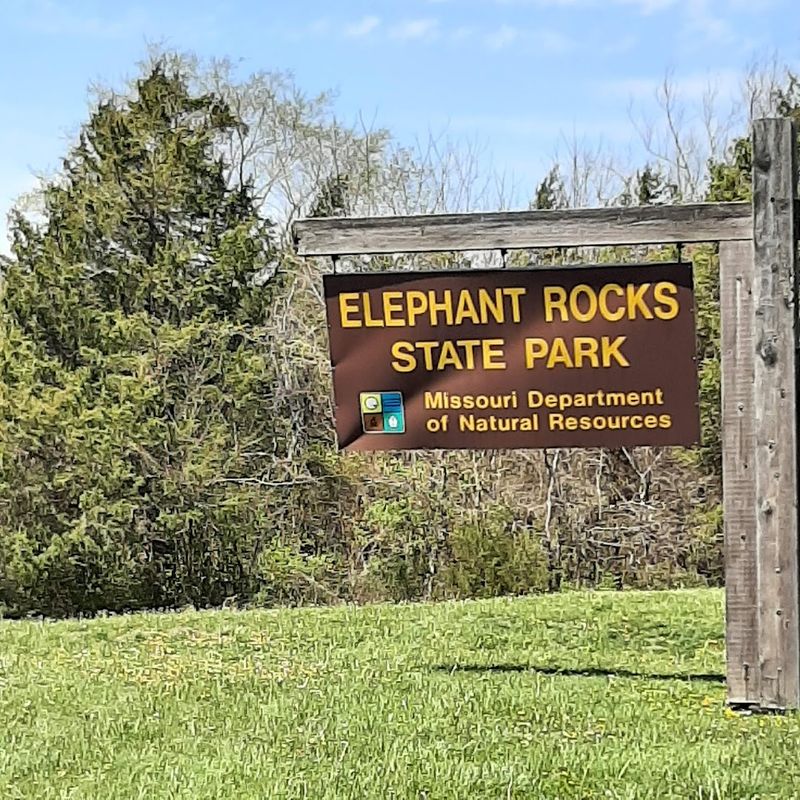
The first thing that hits you when you turn off Missouri Route 21 is how quickly the landscape changes. Elephant Rocks State Park sits at 7406 MO-21, Belleview, MO 63623, in Iron County in the heart of southeast Missouri.
The park is roughly 90 minutes south of St. Louis, making it a very doable day trip for city residents craving something different. The drive itself winds through the rolling Ozark hills, and by the time you reach the parking lot, the anticipation has already built nicely.
Parking is free and fairly spacious, though it fills up fast on weekends and sunny days. Arriving before 10 AM is a smart move if you want breathing room. The park is open daily from 8 AM to 8 PM, and you can reach the park office at 573-546-3454 for current conditions before heading out.
5 Billion Years in the Making: The Geological Story Behind the Rocks
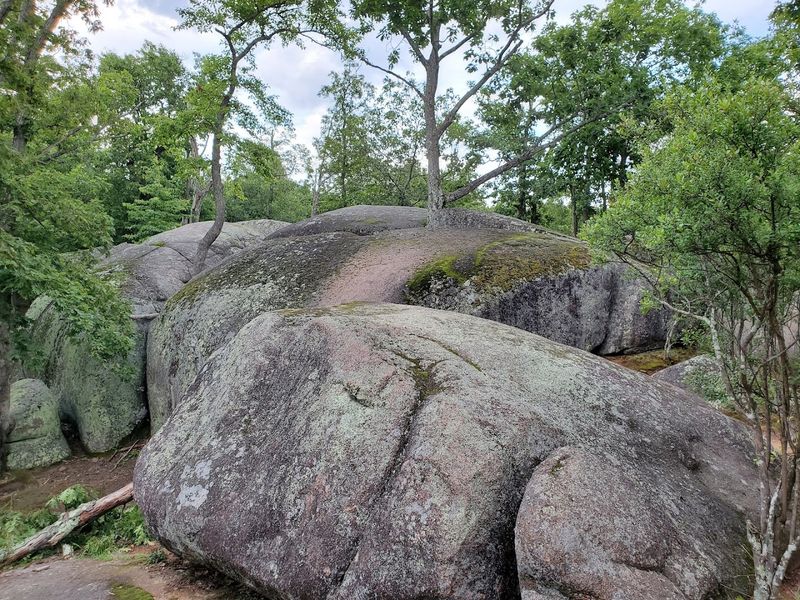
There is something quietly mind-bending about touching a rock that formed 1.5 billion years ago, long before dinosaurs, long before fish, long before almost anything we recognize as life. The granite here originated as magma that cooled slowly deep beneath the Earth’s surface during the Precambrian era.
Over hundreds of millions of years, erosion peeled away the layers of rock on top, and the granite gradually rose to the surface. Then water, freezing temperatures, and repeated thawing went to work on the angular blocks, rounding their sharp corners into the smooth, bulging shapes you see today.
Geologists classify this type of formation as a “tor,” which is a stack of spheroidal weathered residual granite boulders. Elephant Rocks is considered Missouri’s finest example of this geological feature. The rounding process is still happening right now, which means the park is essentially a slow-motion sculpture show that has been running for longer than the human mind can truly process.
Meet Dumbo: The Undisputed Star of the Boulder Field
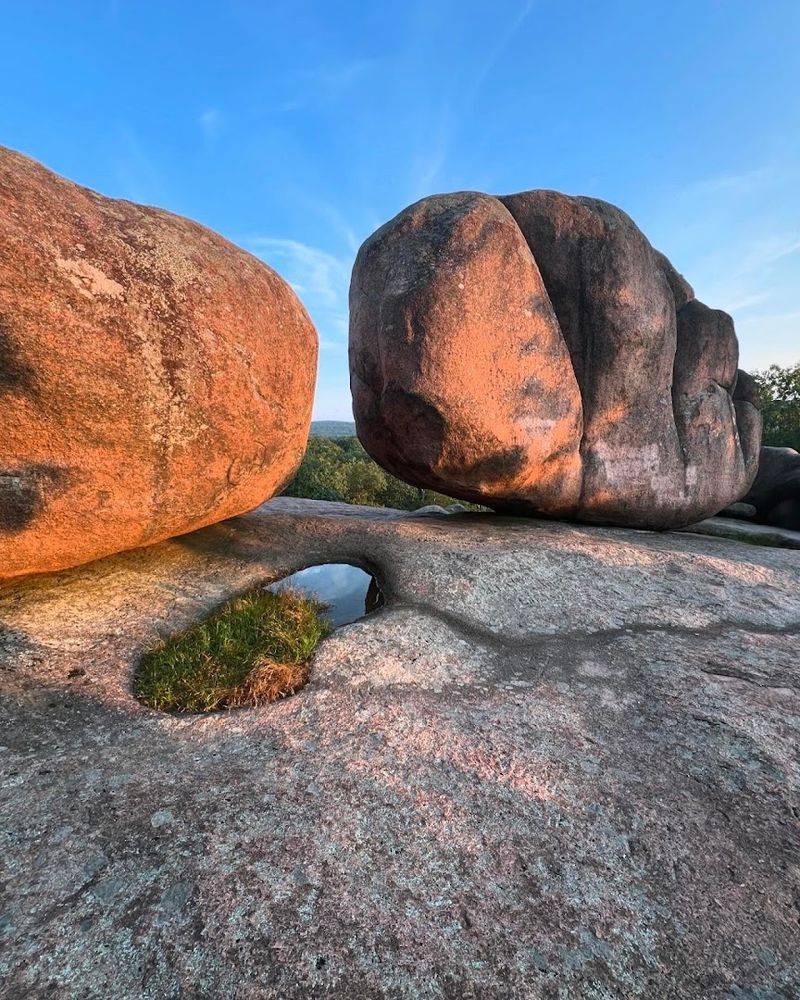
Every park has a centerpiece, and at Elephant Rocks, that title belongs to a boulder called Dumbo. This single rock stands 27 feet tall, stretches 34 to 35 feet long, measures 17 feet wide, and weighs approximately 680 tons.
Reading those numbers on paper is one thing. Standing next to Dumbo is something else entirely. The rock dwarfs everything around it, and you find yourself tilting your head back just to see the top. Kids go absolutely wide-eyed, and adults are not far behind.
The pink and reddish coloring of the granite gives Dumbo a warm, almost glowing appearance on sunny afternoons. The surface is textured and rough in some spots, smooth and rounded in others, showing off millions of years of natural sculpting. Dumbo is usually easy to find on the main trail loop, and honestly, you will hear other visitors talking about it before you even see it rounding the bend ahead of you.
The Braille Trail: A Trail Built for Everyone
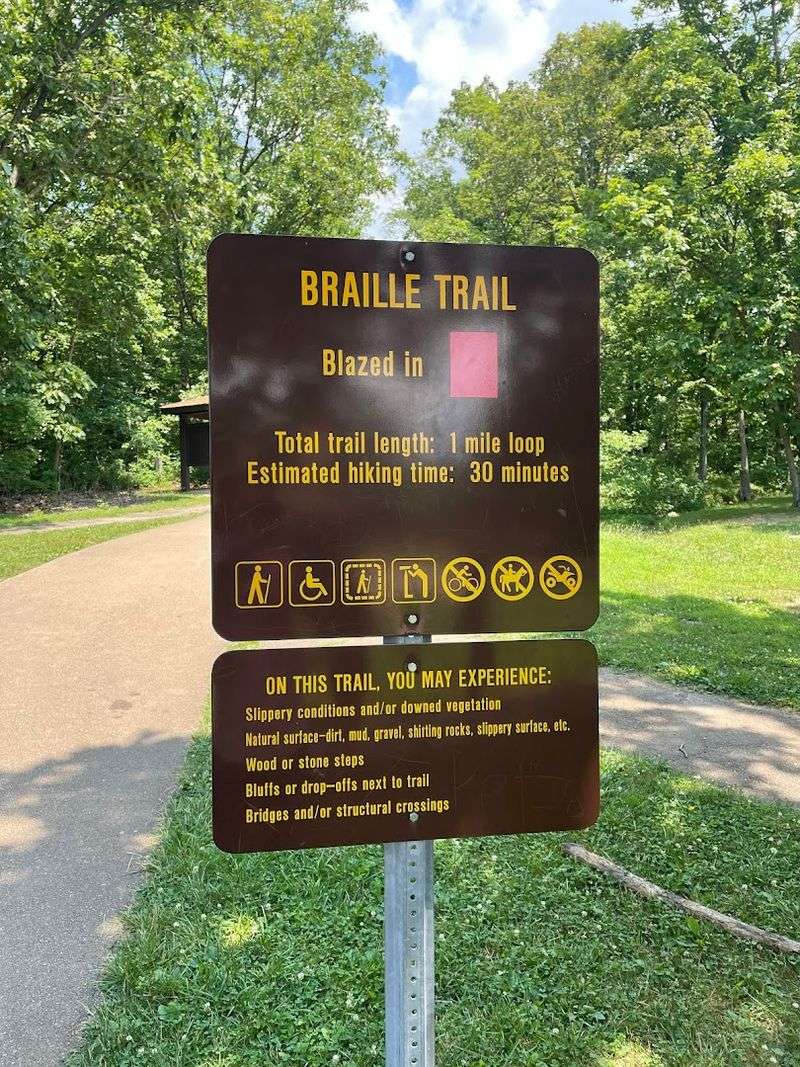
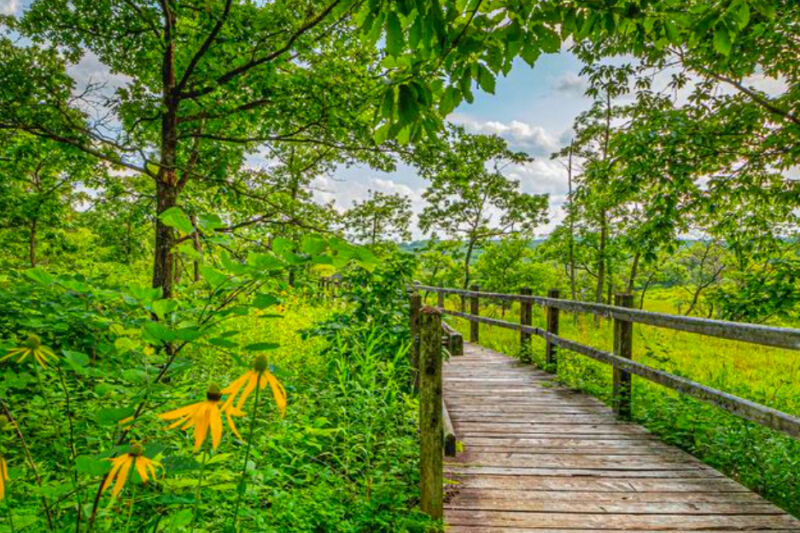
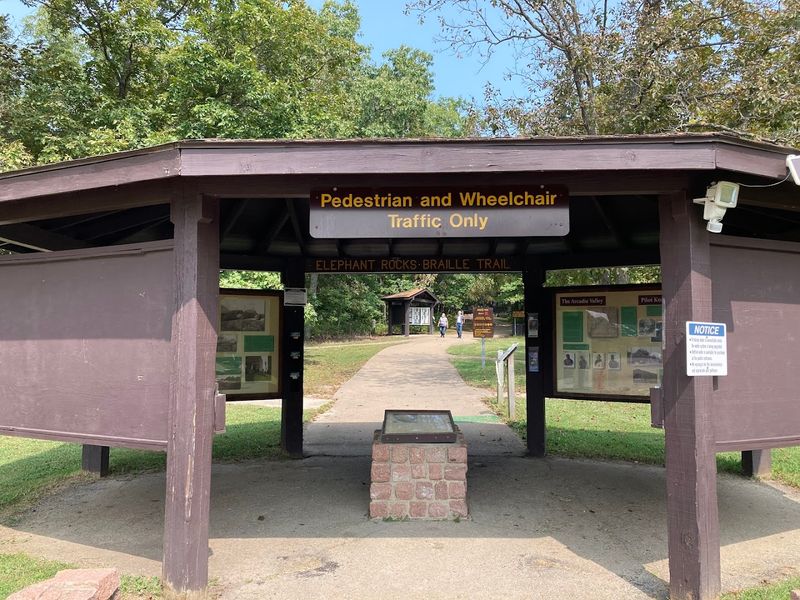
One of the most thoughtful features of this park is a trail that most state parks simply do not have. The Braille Trail is a paved, self-guided interpretive loop roughly one mile long, designed specifically to be accessible for visitors with visual and physical disabilities.
Rope guides, tactile signs written in both standard text and Braille, and a smooth paved surface make it possible for a much wider range of visitors to experience the boulder field up close. Benches are placed at regular intervals along the route, giving everyone a chance to rest and take in the surroundings.
That said, the trail does have some hilly sections, so visitors using wheelchairs or mobility devices should be prepared for a few moderate inclines. The accessibility here is genuinely impressive for a natural park of this type, and it reflects a real commitment to making the experience available to as many people as possible. The views along the way are worth every step.
Fat Man’s Squeeze and The Maze: The Spur Trails That Steal the Show
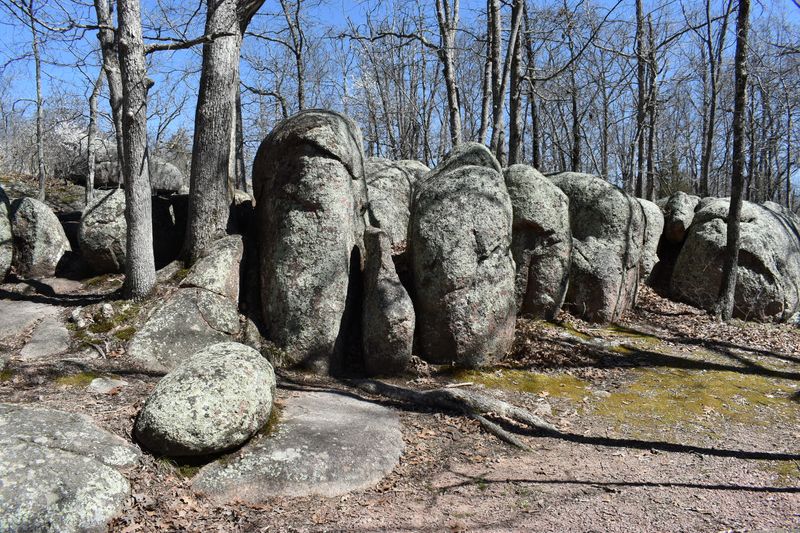
Beyond the main Braille Trail loop, a series of spur trails branch off into the boulder field, and these are where the real adventure happens. Two of the most popular detours are Fat Man’s Squeeze and The Maze.
Fat Man’s Squeeze is exactly what it sounds like: a narrow gap between two enormous boulders that requires visitors to turn sideways and shuffle through carefully. It is the kind of moment that produces genuine laughter and a little bit of healthy nervousness. The Maze is a 100-foot section of scattered boulders where the path is less obvious and the exploration feels genuinely open-ended.
Both areas reward curiosity and a willingness to slow down and look around. Wearing shoes with solid grip is strongly recommended here, because some rock surfaces get slippery, especially after rain. Knee pads are not a bad idea if you plan to squeeze into tighter crevices. These spur trails turn a pleasant walk into something far more memorable.
Carved in Stone: The Quarrying History Hidden in Plain Sight
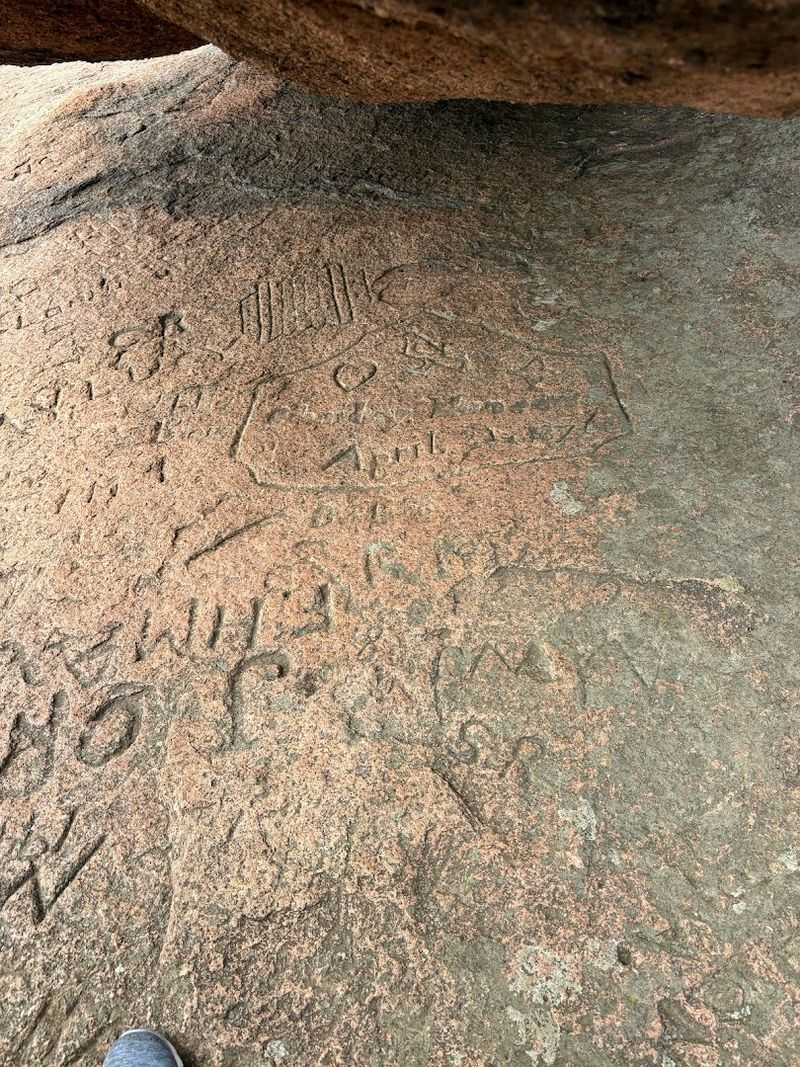
Long before this place was a state park, it was a working quarry. Granite extraction here dates back to at least 1869, and the red granite pulled from this region ended up in some surprisingly prominent places. The piers of the Eads Bridge in St. Louis, columns on the Missouri Governor’s Mansion, and the floors of St. Louis City Hall all carry stone that came from this very ground.
One of the quietly fascinating details you notice on the trail is the names and dates carved into the boulders by 19th-century quarry workers. These carvings have survived more than 150 years of Missouri weather and still read clearly today. They give the park an unexpected layer of human history sitting right alongside the geological story.
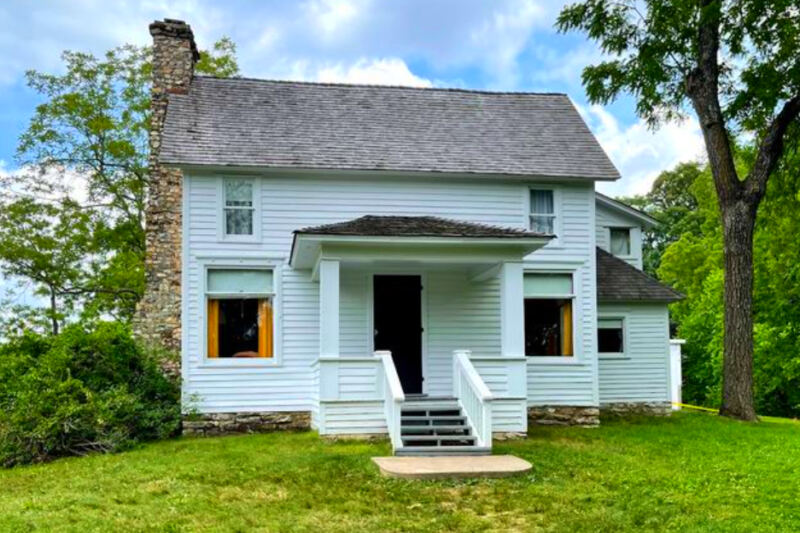
The ruins of an old railroad engine house are also accessible via a spur trail, offering a tangible connection to the era when granite was loaded onto trains and shipped across the state. History and nature rarely overlap this neatly.
How the Park Came to Be: The Donation That Changed Everything
The land that became Elephant Rocks State Park was not purchased by the government. It was given away by a geologist who understood exactly what he had. Dr. John Stafford Brown donated the property to the state of Missouri in 1967, and his gift came with a very specific condition attached.
The deed included a clause prohibiting any commercial use of the granite for 99 years. That single requirement has kept the boulders intact and protected from quarrying for generations of visitors. Without that clause, it is entirely possible that Dumbo and the rest of the boulder field could have ended up as building material rather than a beloved landmark.
The park today covers approximately 133 to 140 acres in total, with the Elephant Rocks Natural Area, the core geological zone, covering about 7 to 7.5 acres within the larger park boundary. That relatively small natural area manages to pack in more visual drama per square foot than almost anywhere else in the state.
Rock Climbing, Scrambling, and Bouldering: The Athletic Side of the Park
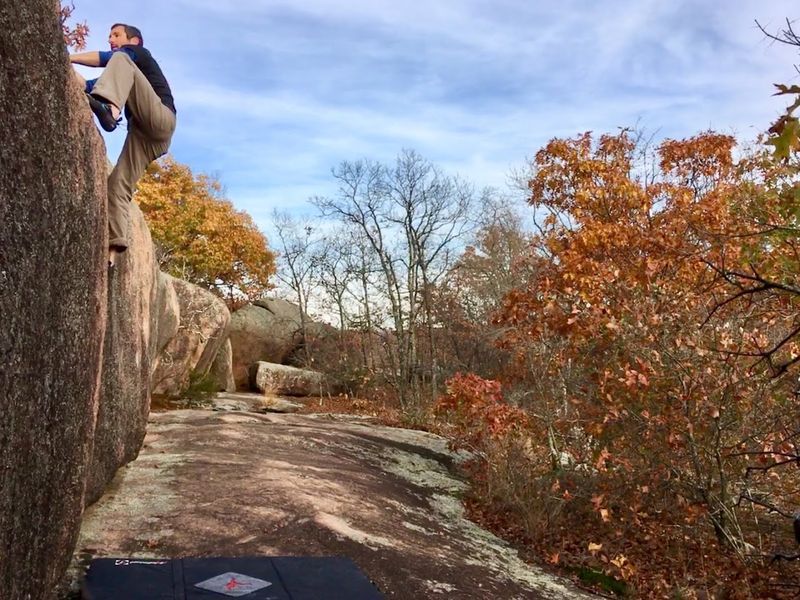
The boulder field at this park is a natural playground for anyone who enjoys using their hands and feet together. Bouldering and scrambling opportunities are everywhere along the trail, with rocks of varying height and difficulty scattered throughout the formation.
Traditional rock climbing with ropes and gear is generally not permitted within the park, but the free-form scrambling and bouldering that happens naturally on the lower sections of the boulders is very much part of the experience. You will see kids clambering up broad sloping faces while adults find their own lines on the trickier sections nearby.
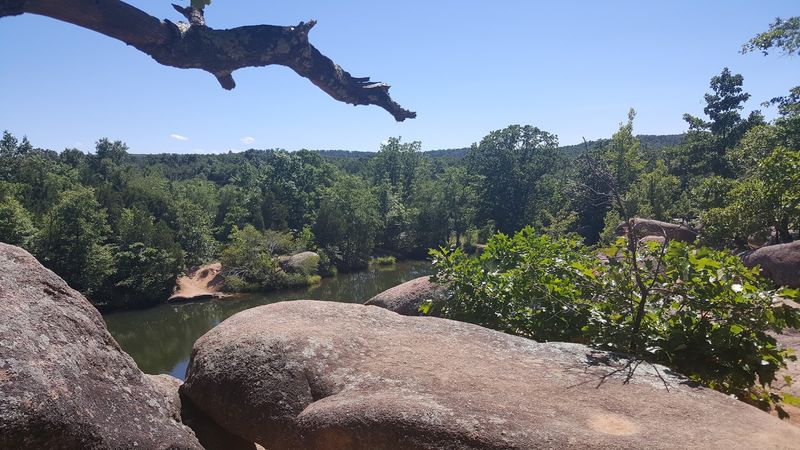
The views from the top of the taller boulders are genuinely rewarding, offering wide sightlines across the surrounding Ozark landscape. Solid, closed-toe shoes with good tread are essential, because the granite surface can be deceptively smooth in places. Trail runners work well, and a pair of gloves can help on rougher sections. The physical challenge here scales naturally with your own comfort level.
Family-Friendly Features That Make the Visit Easy
Not every spectacular natural site is easy to visit with young children, but this park has done a thoughtful job of accommodating families. A playground sits near the parking lot, giving younger kids a structured space to burn energy before or after the trail.
Picnic tables and grills are spread across a well-maintained picnic area, making it easy to pack a lunch and turn the outing into a full day rather than a quick stop. The paved Braille Trail means that strollers and smaller children can navigate the main loop without too much difficulty, though the hilly sections require some effort.
A vending machine on site provides snacks and drinks, which is useful since the water fountains have been out of service recently. Bringing your own water is the smarter call. Restrooms are available near the parking lot, which is always a relief with kids in tow. The overall setup makes it easy to arrive with the whole family and leave with everyone happy.
Pets, Wildlife, and the Natural Atmosphere of the Park
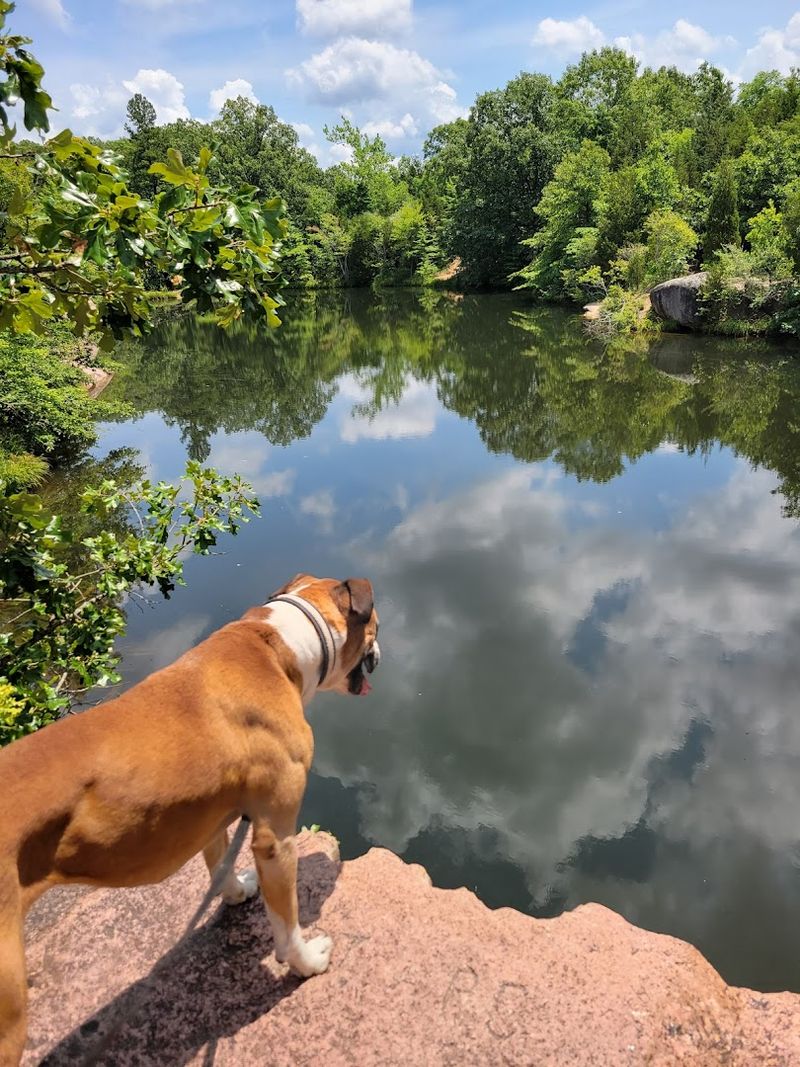
Pets are welcome at Elephant Rocks State Park, provided they stay on a leash at all times. The park is genuinely dog-friendly in practice, and the trail surfaces are manageable for most dogs with decent paw traction on the granite.
Wildlife is present throughout the park, and the natural setting feels genuinely wild despite the paved trail. Birds, lizards, and various insects make their home among the boulders, and the surrounding Ozark forest adds a layer of biodiversity that rewards slow and attentive walking. Tick awareness is important, especially during warmer months, so checking yourself and your pets thoroughly after the visit is a smart habit.
Cell service is very limited or nonexistent in the park, which means downloading offline maps before you arrive is a practical step. That same lack of signal also contributes to the peaceful, disconnected feeling that many visitors find to be one of the park’s best unofficial features. Nature has a way of filling the silence that screens leave behind.
Best Times to Visit and Practical Tips for a Great Trip
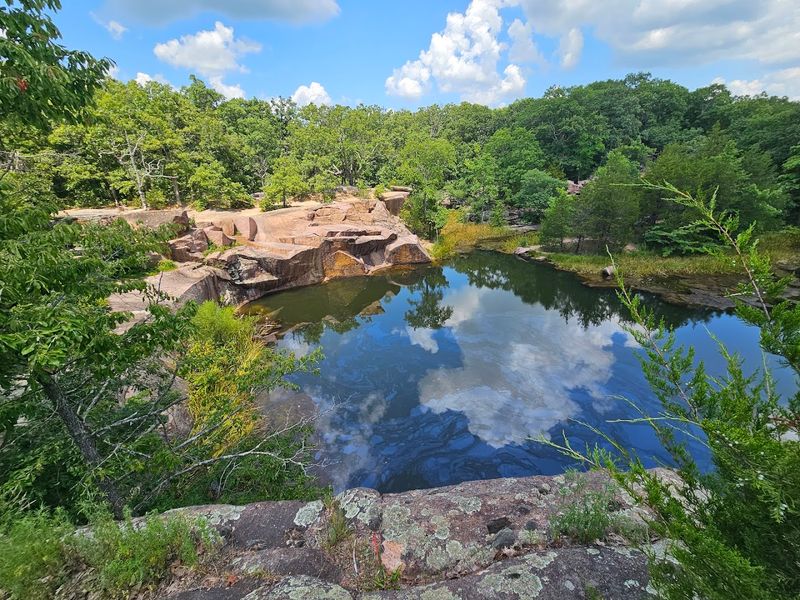
Timing your visit makes a real difference at this park. Weekday mornings are the quietest option, and arriving before 10 AM on weekends gives you the best chance of finding parking and enjoying the boulders without too much company.
The park opens at 8 AM and closes at 8 PM every day of the week. Spring and fall offer the most comfortable temperatures for hiking and scrambling, while summer visits work best with an early start before the midday heat settles in. A Monday evening visit close to closing time can be surprisingly peaceful, with only a handful of other visitors around.
Packing water is non-negotiable since the fountains are currently not operational. Sturdy shoes, sunscreen, and a small backpack with snacks will cover most of your needs. No food is allowed beyond the picnic table area, which helps keep the boulder field clean and litter-free. Food trucks and ice cream vendors sometimes appear on busier days near the parking lot, which is a welcome bonus.
Why This Small Park Leaves a Lasting Impression
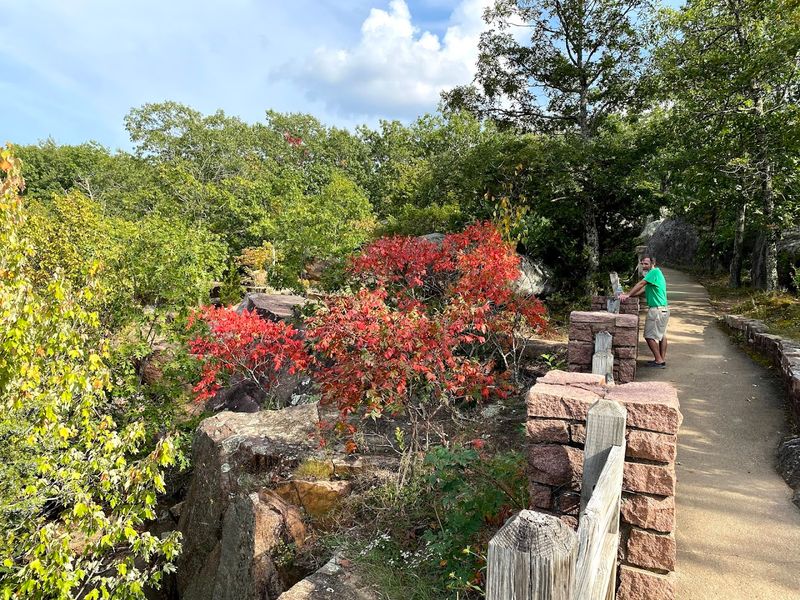
At roughly 133 to 140 acres, Elephant Rocks State Park is not a sprawling wilderness destination. You can complete the main loop in under an hour if you keep moving. But very few people actually keep moving, because the boulders have a way of stopping you in your tracks every few steps.
The combination of geological wonder, human history, accessible trail design, and genuine scrambling fun creates an experience that is harder to replicate than it looks on paper. The park holds a 4.9-star rating across more than 4,300 reviews, which tells you that the reaction is consistent across a very wide range of visitors.
What lingers after the visit is not just the memory of the boulders themselves but the specific feeling of standing inside a landscape that has been slowly shaping itself for 1.5 billion years, completely indifferent to human schedules and entirely worth rearranging yours for. Some places earn their reputation one visitor at a time, and this is one of them.
Share this story