Throughout history, certain individuals made the remarkable choice to leave behind the noise, comfort, and company of everyday life to seek something deeper in solitude. These hermits came from all walks of life, from farmers and monks to explorers and mystics, yet each one shared a powerful desire to disconnect from the world around them.
Their stories stretch across centuries and continents, offering a fascinating glimpse into what drives a person to choose silence over society. Whether motivated by faith, personal transformation, or a longing for inner peace, their lives continue to inspire people today.
1. Paul of Thebes (c. 227-341)
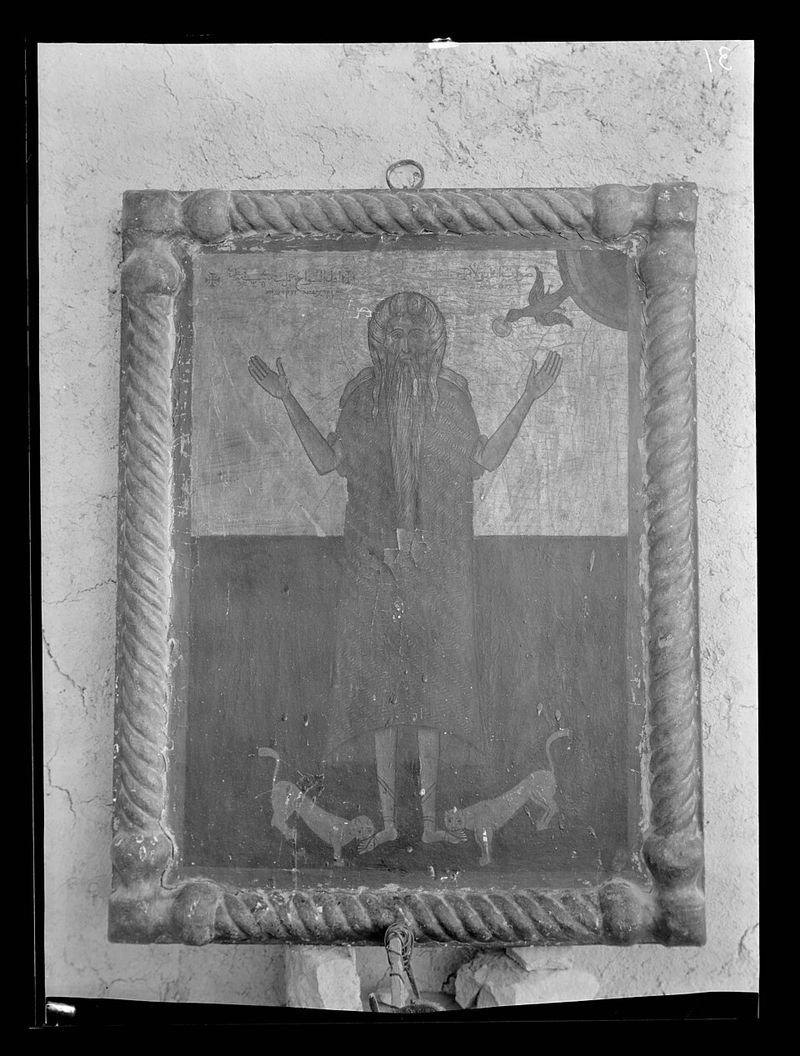
Paul of Thebes is widely considered the very first Christian hermit, and his story begins with a dramatic escape. Fleeing Roman persecution during the reign of Emperor Decius, Paul retreated into the Egyptian desert as a young man and simply never came back.
He found shelter in a cave near a palm tree and a spring of water, which sustained him for the rest of his life.
For nearly a century, Paul lived completely alone, praying and fasting in the scorching desert heat. According to tradition, a raven brought him half a loaf of bread each day.
When Anthony the Great visited him near the end of his life, Paul was said to be around 113 years old.
His example set a powerful standard for later Christian monks and hermits. Paul showed that radical solitude was not only possible but could become a deeply spiritual way of living.
2. Anthony the Great (c. 251-356)
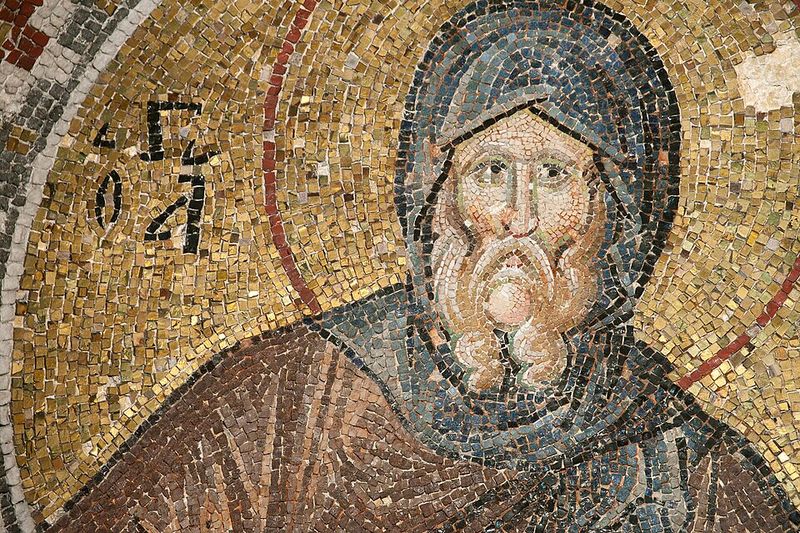
Anthony the Great did not ease his way into solitude. At around 20 years old, he heard a Gospel passage about selling all possessions and following God, walked out of his comfortable home, and never looked back.
He gave away his inheritance, placed his younger sister in the care of trusted women, and headed into the Egyptian wilderness.
For years, Anthony lived in an abandoned fort, battling what he described as intense spiritual temptations and visions. His story, written by Athanasius of Alexandria, became one of the most widely read religious texts of the ancient world and directly inspired thousands of people to pursue monastic life.
Anthony is often called the Father of Christian Monasticism. His influence stretched far beyond Egypt, shaping religious communities across Europe and the Middle East for centuries.
He reportedly lived to the remarkable age of 105.
3. Mary of Egypt (c. 344-421)
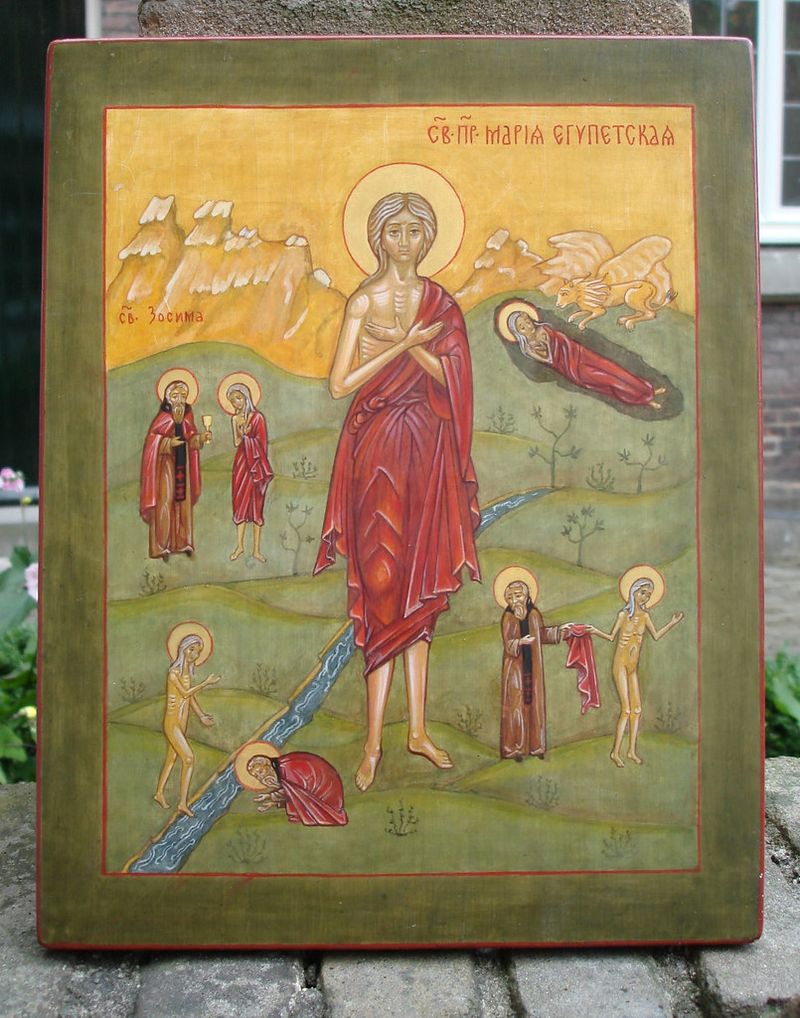
Mary of Egypt carries one of the most dramatic transformation stories in Christian tradition. According to hagiographic accounts, she spent the first part of her life in Alexandria as a woman known for reckless behavior, before a sudden spiritual experience at the Church of the Holy Sepulchre in Jerusalem changed everything.
Blocked from entering the church by what she described as an invisible force, Mary took it as a divine sign and immediately turned her life around. She crossed the Jordan River and spent the next 47 years living alone in the harsh Judean Desert, eating only roots and wild plants.
Her story was recorded by a monk named Zosimas, who encountered her near the end of her life. She could barely be recognized as human, her skin darkened and hair turned white from decades of desert exposure.
Mary became a beloved symbol of repentance and spiritual renewal.
4. Simeon Stylites (c. 390-459)
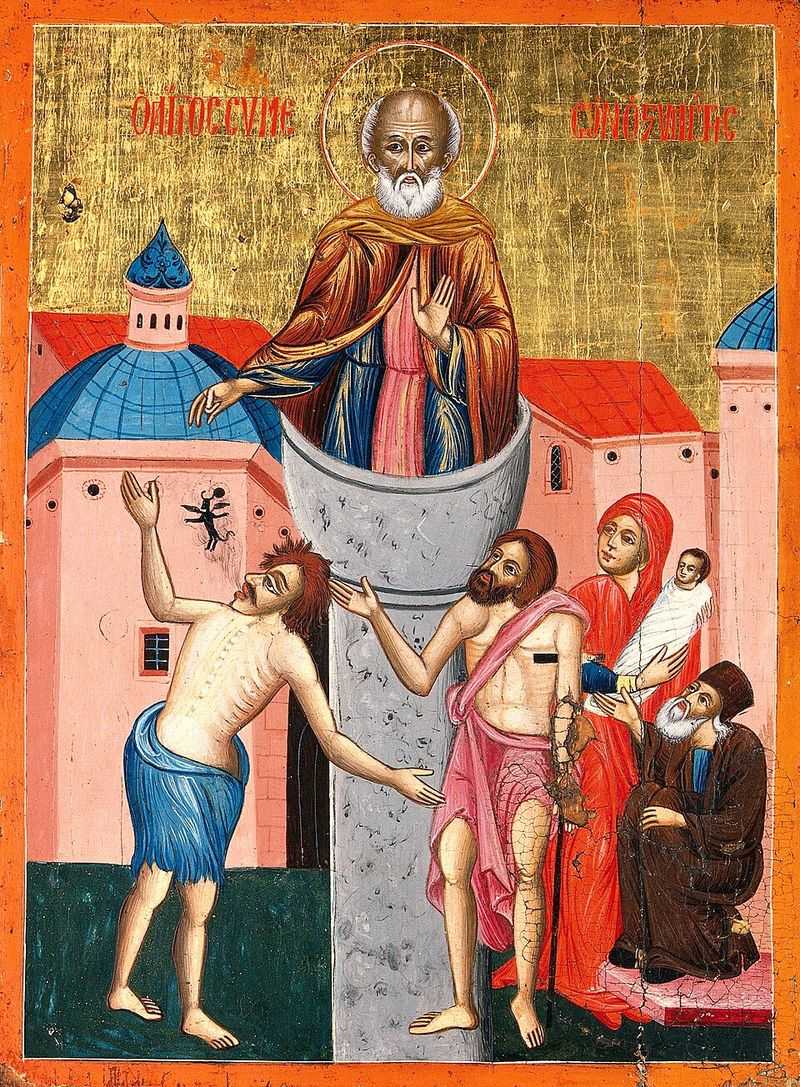
Few hermits in history have chosen a more unusual home than Simeon Stylites. Frustrated by the constant stream of visitors interrupting his prayers at a Syrian monastery, he came up with an extraordinary solution: he climbed a pillar and stayed there.
His first pillar was about 9 feet tall, but over the years he had it raised to nearly 50 feet.
Simeon lived on that platform for approximately 37 years, exposed to burning sun, freezing nights, and howling winds. He slept upright, ate tiny amounts of food lifted to him by disciples, and spent most of his waking hours in deep prayer, sometimes bowing in prostration hundreds of times a day.
Far from being forgotten, Simeon became one of the most famous figures in the ancient world. Pilgrims traveled from across the Roman Empire and beyond just to see him.
His unusual devotion inspired a whole tradition of pillar-dwelling monks called Stylites.
5. Nilus of Sinai (c. 390-430)
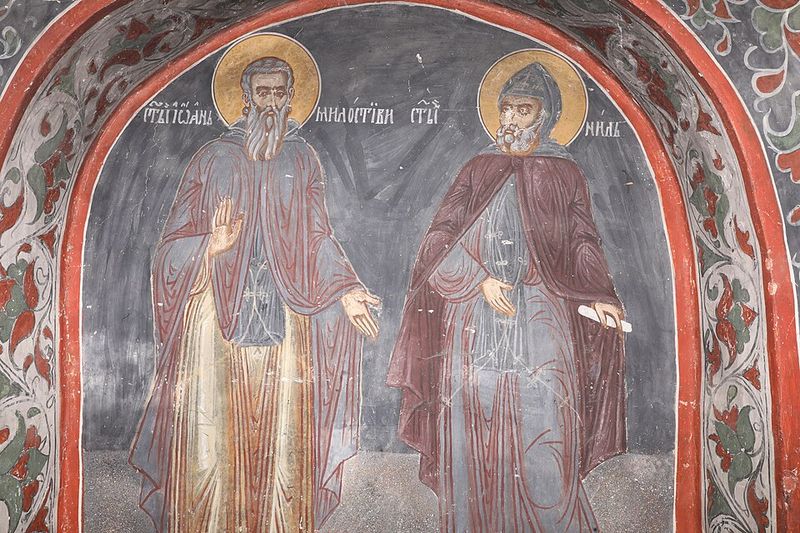
Nilus of Sinai had a life that most people would have envied before he walked away from it. He served as a high-ranking official in Constantinople, possibly under Emperor Arcadius, and had a family and considerable social standing.
Yet something in him longed for a quieter, more spiritually focused existence.
Around the turn of the fifth century, Nilus left his prestigious position and traveled with his son Theodulus to Mount Sinai, where they both embraced the life of hermits. The journey was not without hardship.
During a Bedouin raid, Theodulus was captured and sold into slavery before eventually being freed through the intervention of a local bishop.
Despite this trauma, Nilus remained committed to his solitary life and became a respected writer and spiritual guide. His letters and treatises on prayer and ascetic life were widely circulated and influenced later monastic thought throughout the Christian East.
6. St. Cuthbert (c. 634-687)
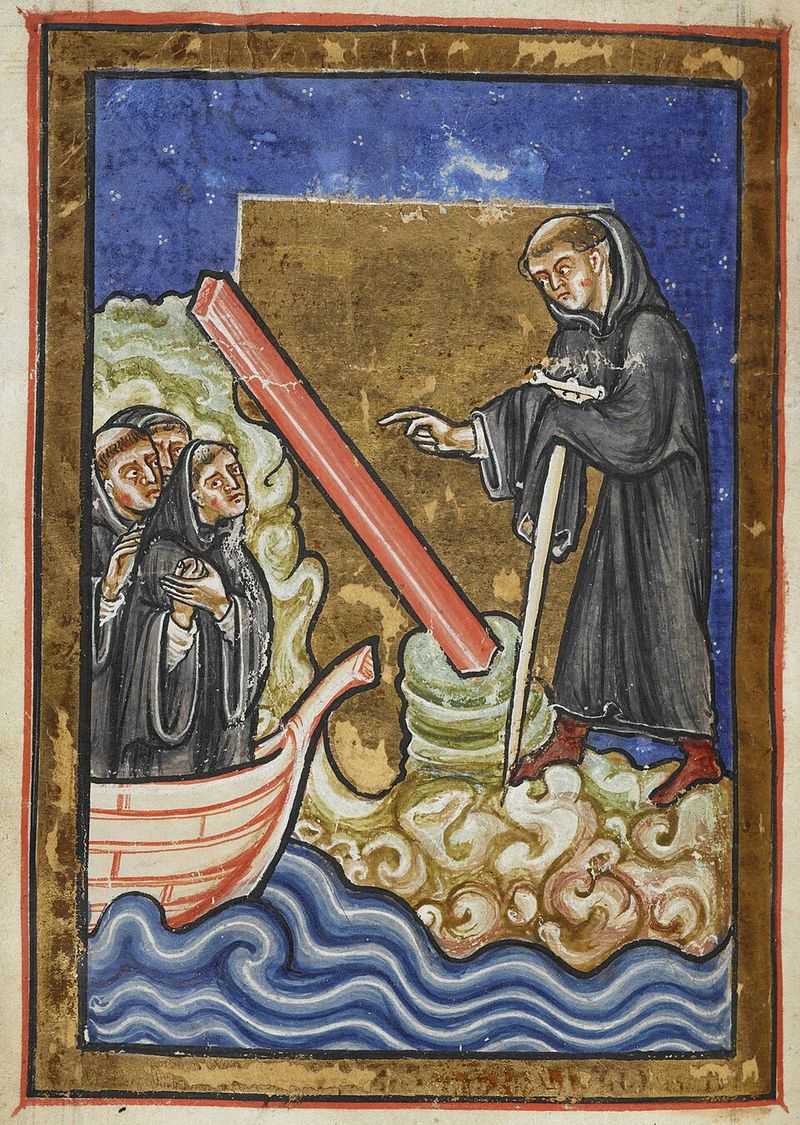
Cuthbert of Lindisfarne was already a respected monk and bishop when he made the decision that would define his legacy: he retreated to the tiny, storm-battered island of Inner Farne, just off the coast of Northumberland in northeastern England, to live as a hermit.
Life on Inner Farne was anything but comfortable. Cuthbert built a small stone hut and dug the floor lower than ground level so he could see only the sky, cutting off any earthly distractions.
He grew barley to survive and reportedly had a warm relationship with the island’s wildlife, particularly the eider ducks that nested nearby.
Even from his remote island, Cuthbert could not entirely escape the world. He was eventually called back to serve as Bishop of Lindisfarne, though he returned to Inner Farne to die in 687.
His tomb at Durham Cathedral became one of the most important pilgrimage sites in medieval England.
7. St. Guthlac (c. 674-714)
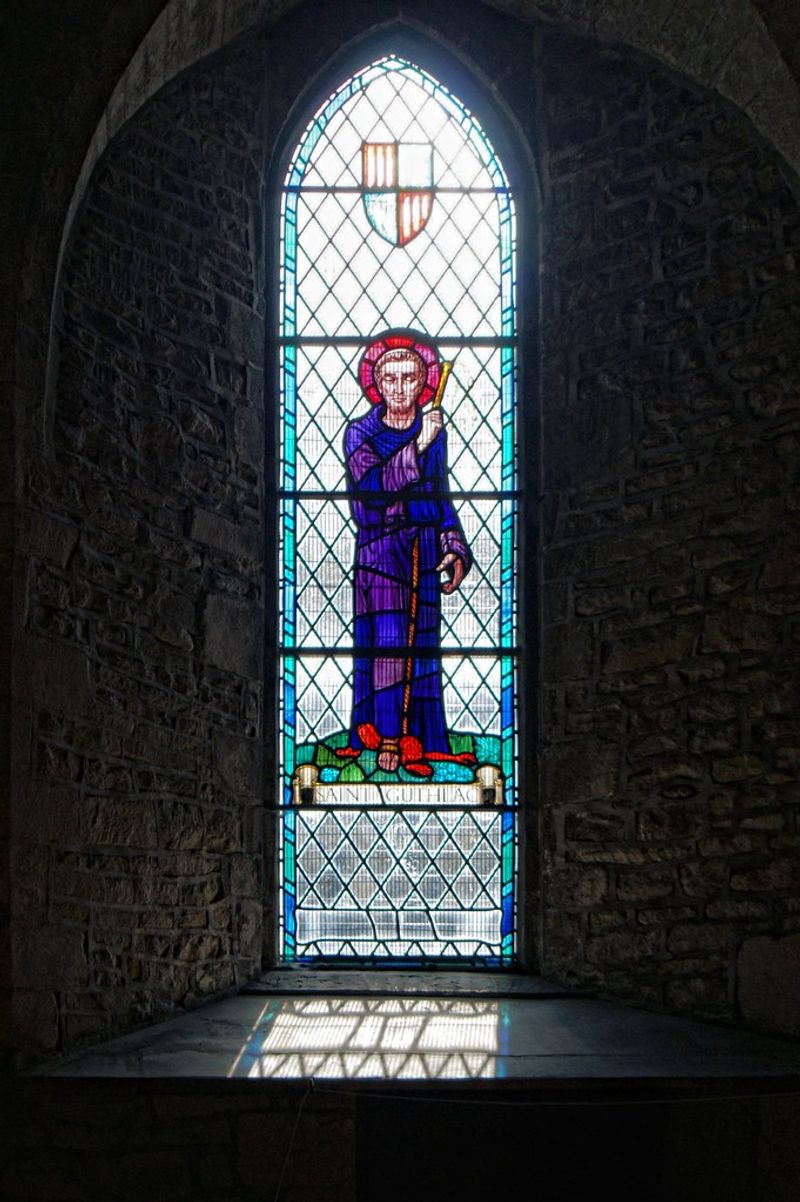
Before becoming a hermit, Guthlac lived a completely different kind of life. He was a young Anglo-Saxon warrior who fought for several years in the Mercian army, raiding and battling across England.
Then, at around 24 years old, he had a change of heart so complete that he entered a monastery and eventually sought even greater solitude.
Guthlac chose one of the most forbidding places imaginable: the remote, boggy marshes of Crowland in Lincolnshire, England. Local people believed the area was haunted by demons, which apparently made it more appealing to him rather than less.
He settled on a small island mound and built a simple shelter, living there for about 15 years until his death.
Guthlac reportedly experienced vivid spiritual visions and was visited by St. Bartholomew, who gave him a golden scourge to drive away evil. His life inspired the founding of Crowland Abbey on the very spot where he lived.
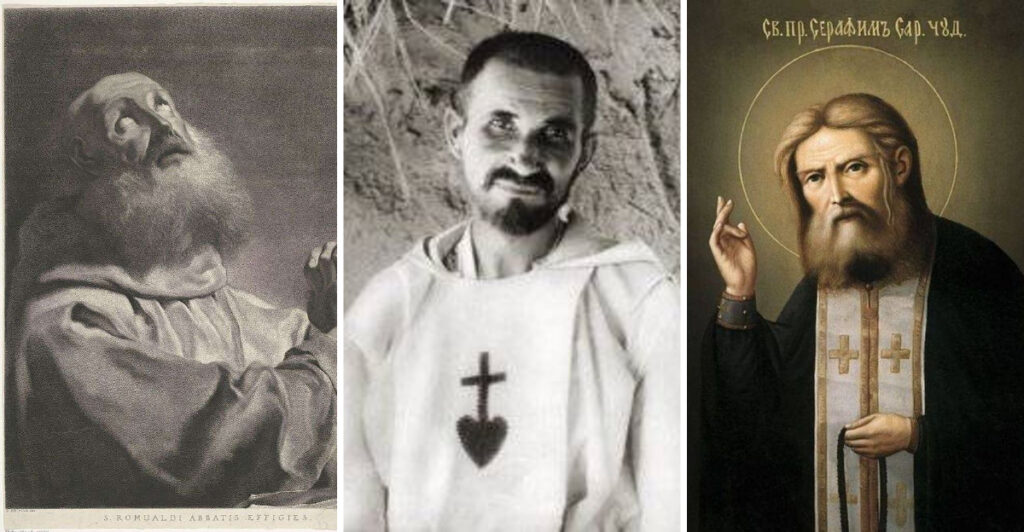
8. Romuald of Ravenna (c. 951-1027)
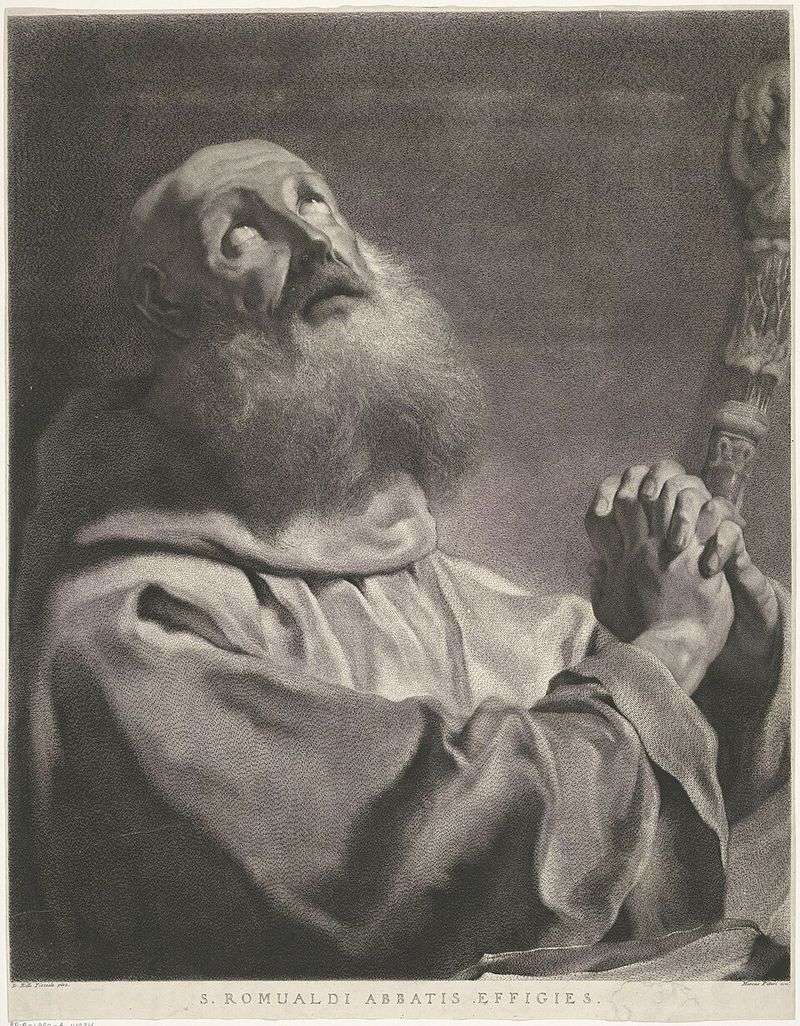
Romuald came from a noble family in Ravenna, Italy, and his path toward hermit life began with a shocking event. As a young man, he witnessed his father kill a relative in a duel over a land dispute.
Horrified and guilt-ridden on his father’s behalf, Romuald entered a monastery to do penance, but soon found communal monastic life too noisy and social for his taste.
He spent decades wandering across Italy, founding small hermit communities and reforming monasteries that had grown lax. His goal was always to push toward deeper silence and solitude.
Around 1012, he founded the Camaldolese Order near Arezzo, which combined elements of communal monastic life with strict individual hermit cells.
Romuald reportedly lived to around 75 years old, spending his final days alone in a simple cell. He died exactly as he had wished: in complete solitude.
His model of blending community and isolation remains influential in Catholic monastic life today.
9. Godric of Finchale (c. 1065-1170)
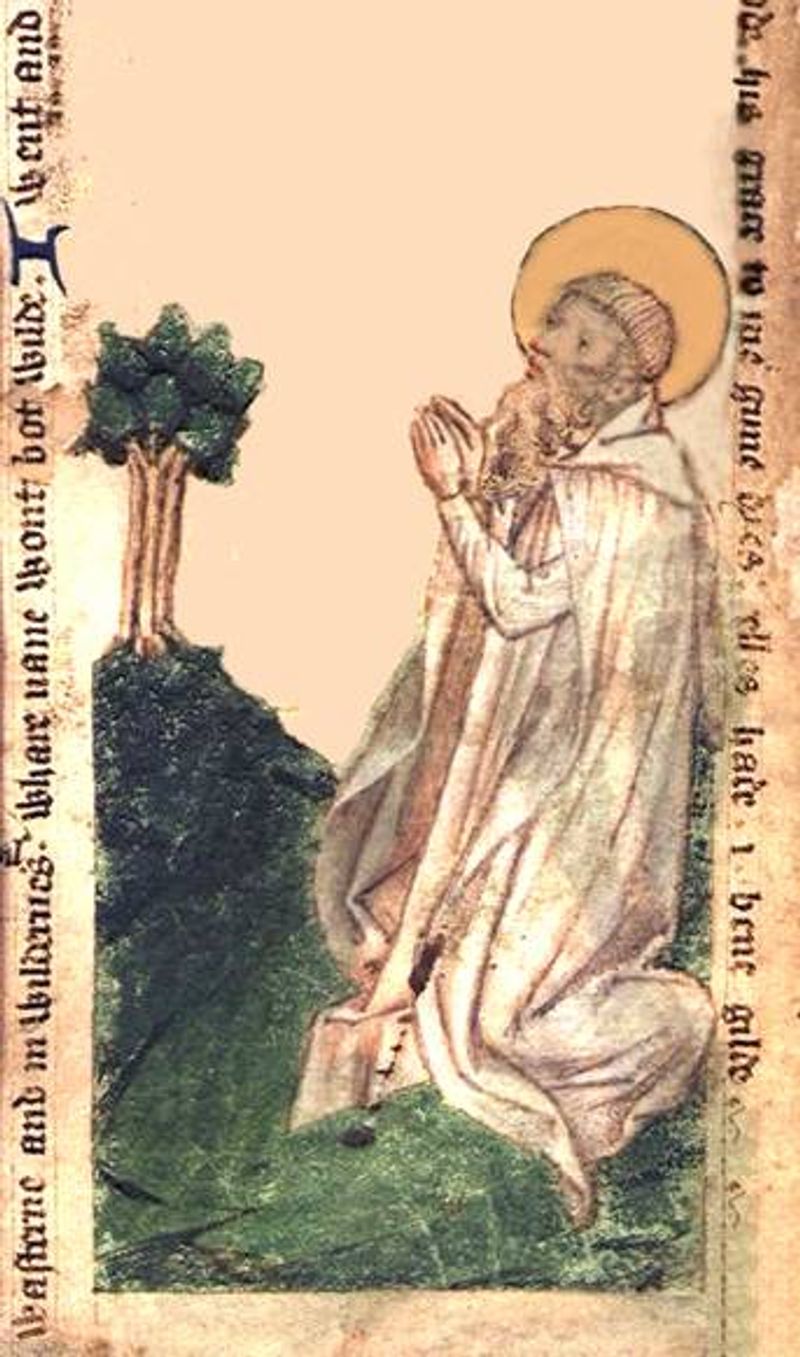
Godric of Finchale had one of the most colorful backstories of any medieval hermit. He spent his early adult years as a sailor, traveling to ports across northern Europe, and later worked as a merchant and even a pirate of sorts before a series of pilgrimages to holy sites transformed him completely.
After visiting Rome, Jerusalem, and the shrine of St. Cuthbert at Durham, Godric settled permanently at Finchale, a wooded bend of the River Wear in County Durham, England, around 1110. There he spent the remaining 60 years of his life in prayer, fasting, and penance, building a simple chapel and garden.
Godric is also remembered as one of the earliest known composers of English-language songs. Three of his hymns survive today, making him a unique figure in both religious and musical history.
He reportedly lived to over 100 years old, outlasting nearly everyone who had known him in his adventurous youth.
10. Richard Rolle (c. 1300-1349)
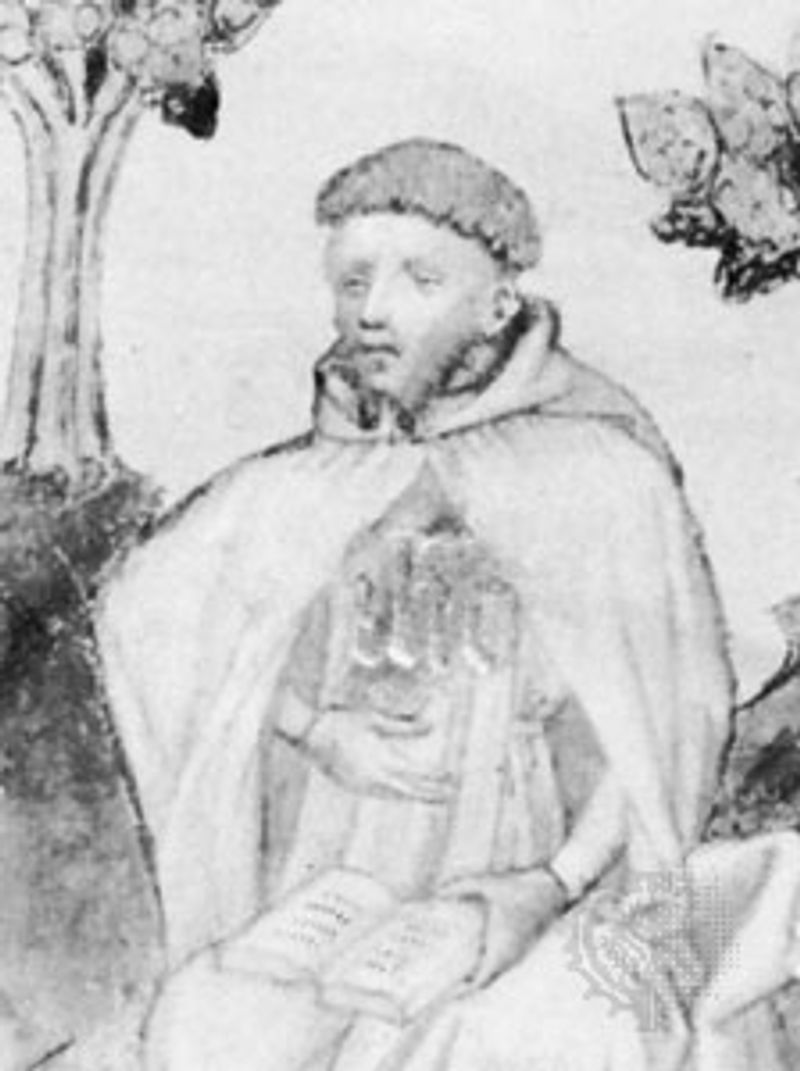
Richard Rolle made his dramatic exit from ordinary life at around 18 years old. He returned home from his studies at Oxford, borrowed his sister’s tunic and his father’s rain hood to fashion a makeshift hermit’s robe, and walked into the woods to begin his solitary life.
His sister reportedly thought he had lost his mind.
Rolle settled in Yorkshire, England, moving between the homes of sympathetic nobles who gave him shelter while he prayed, wrote, and experienced what he described as intense mystical sensations of heat, sweetness, and music coming from within his soul. He called these experiences calor, dulcor, and canor, Latin for warmth, sweetness, and song.
He became one of the most widely read English spiritual writers of the 14th century. His works were copied and distributed across England and Europe.
Rolle died during the Black Death in 1349, likely at Hampole Priory in Yorkshire, where he had lived near a community of nuns.
11. Julian of Norwich (c. 1343-after 1416)
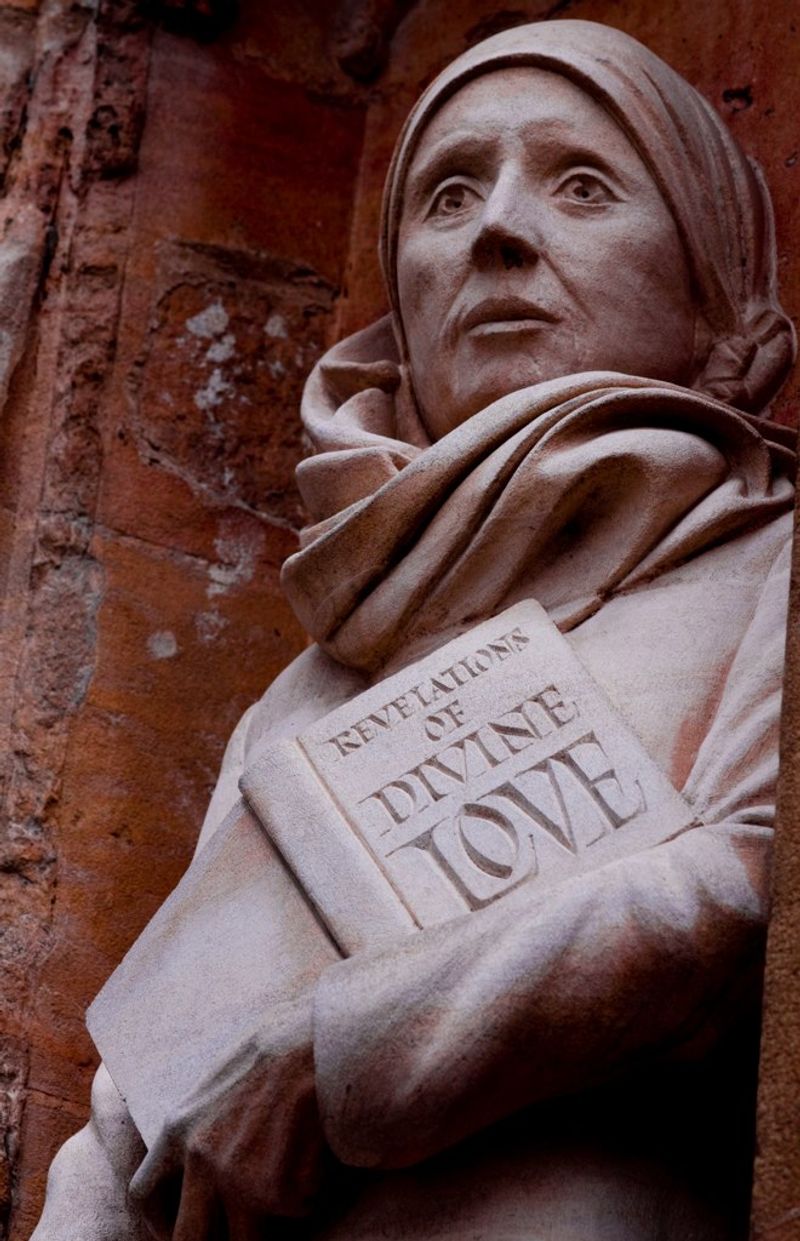
Julian of Norwich did not flee to a desert or a remote island. Her chosen form of solitude was perhaps even more deliberate: she was walled into a small room attached to the Church of St. Julian in Norwich, England, with no way out.
This practice was called being an anchoress, and it was taken extremely seriously in medieval times.
Her cell had three windows: one into the church so she could attend services, one for a servant to pass food, and one for visitors seeking spiritual counsel. Julian willingly accepted this permanent enclosure after experiencing a series of intense visions, which she called Revelations of Divine Love, during a near-fatal illness in 1373.
Her written reflections on those visions became the first known book written in English by a woman. Julian’s famous line, that all shall be well and all manner of thing shall be well, continues to comfort readers around the world more than 600 years later.
12. Niklaus von Flue (Brother Klaus) (1417-1487)
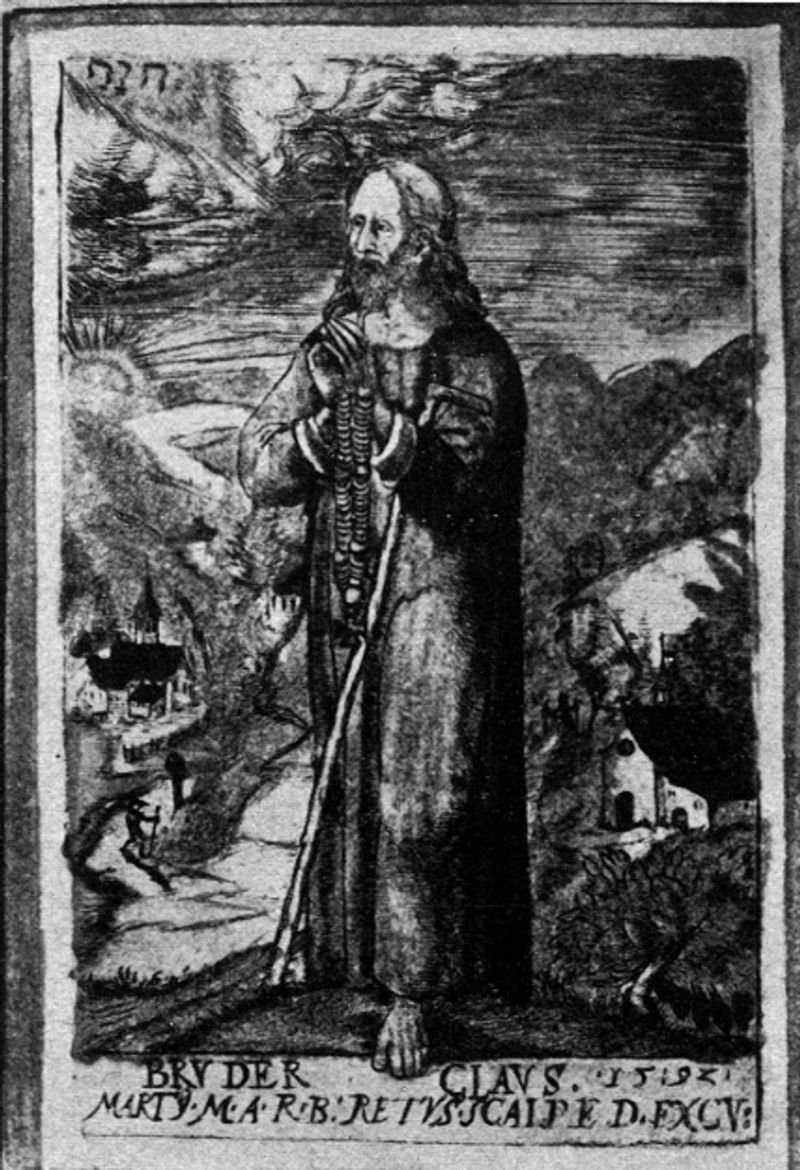
Most people who walk away from society do so before building a full life. Niklaus von Flue was different.
He was 50 years old when he left, and he was leaving behind a remarkable amount: a large farm, a respected position as a local magistrate and military commander, and ten children with his devoted wife Dorothea.
With his wife’s consent, Niklaus retreated to a narrow gorge called Ranft, just a short distance from his family home in Obwalden, Switzerland. There he lived in a tiny hermitage for the final 19 years of his life, reportedly surviving on nothing but the Eucharist.
Pilgrims came from across Europe to seek his counsel.
His most celebrated achievement came in 1481, when Swiss cantons were on the brink of civil war. Niklaus sent a brief message of advice that reportedly helped broker a peace agreement, earning him the title Patron Saint of Switzerland.
He was canonized in 1947.
13. Francis of Paola (1416-1507)
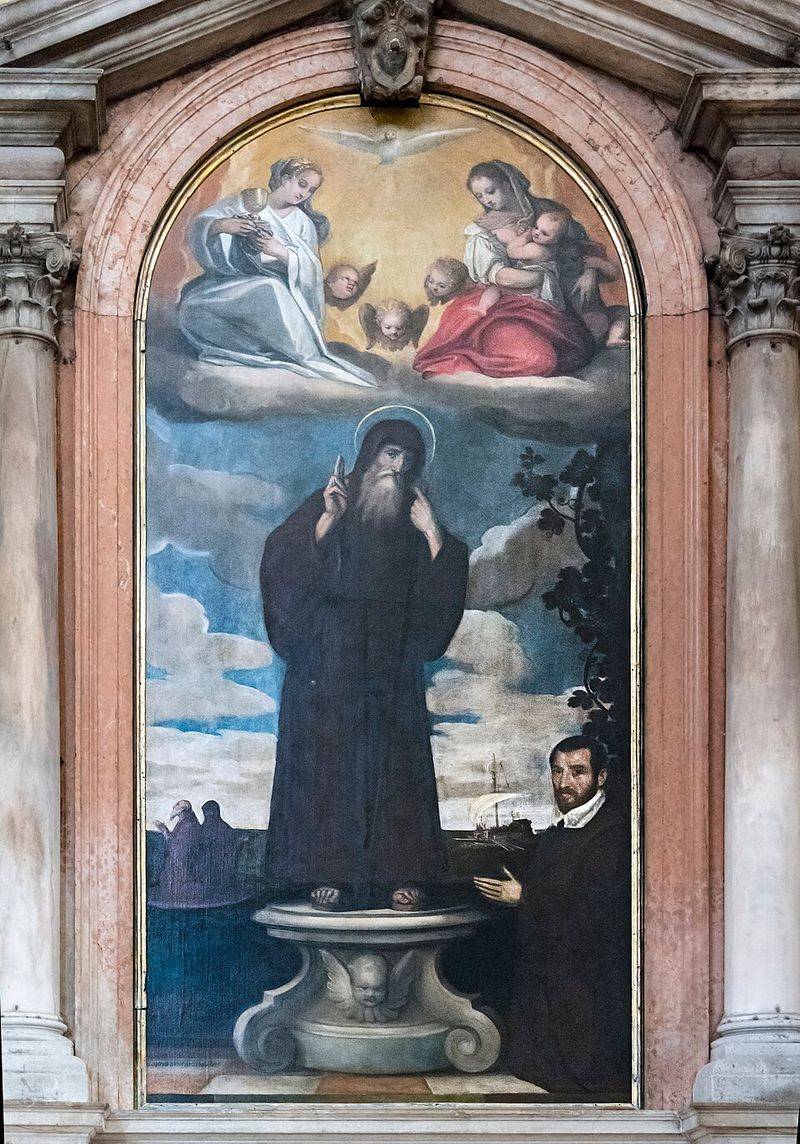
Francis of Paola grew up near the sea in Calabria, the rugged toe of Italy’s boot, and from a very young age he felt drawn to extreme solitude. After spending time with the Franciscans as a teenager, he decided even monastic community life was too crowded for his spiritual ambitions.
At around 14 or 15 years old, he retreated to a cave near the sea cliffs of Paola and began living entirely alone.
Word of his holiness spread quickly despite his efforts at isolation. Followers gathered, and Francis eventually organized them into a new religious order, the Order of Minims, which he named to reflect their commitment to being the least of all.
The order emphasized extreme fasting and humility above all other virtues.
Francis lived to 91 years old and was summoned to the court of King Louis XI of France near the end of his life. Even there, surrounded by royalty, he maintained his simple, ascetic ways.
He was canonized just 12 years after his death.
14. Seraphim of Sarov (1754-1833)
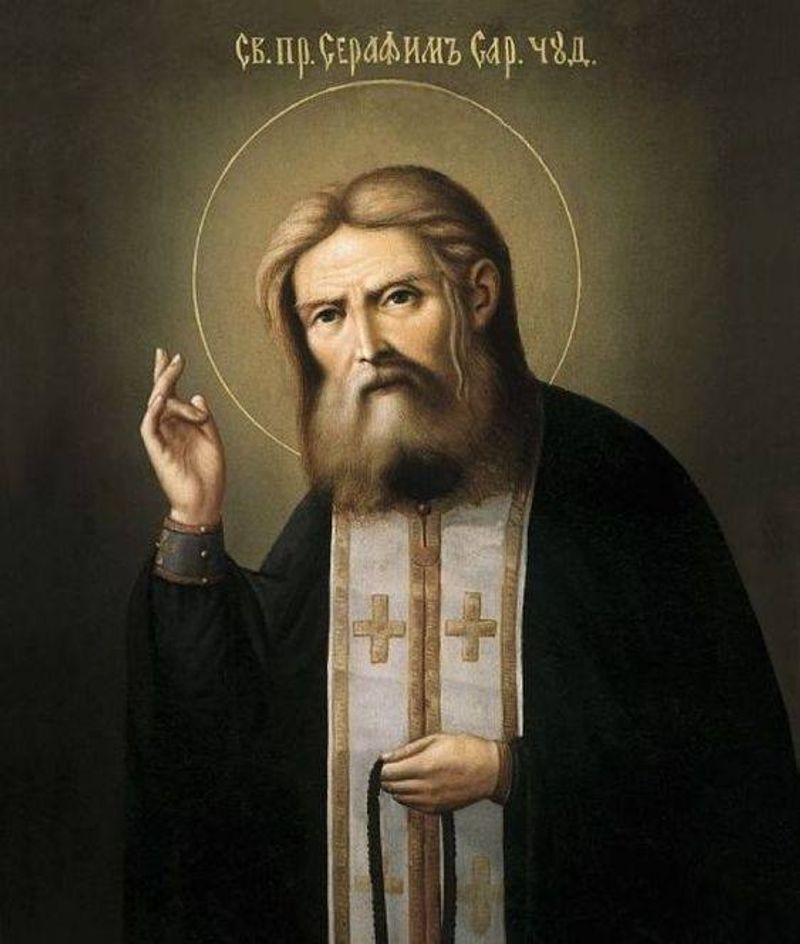
Seraphim of Sarov is one of the most beloved figures in Russian Orthodox Christianity, and his story is filled with remarkable details. Born Prokhor Moshnin in the city of Kursk, he entered the Sarov monastery in his early twenties and eventually sought permission to live alone in the surrounding forest, a practice called being a pustynnik or desert-dweller.
For about 25 years, Seraphim lived in a small log hut deep in the woods, growing vegetables, praying for hours each day, and keeping long periods of strict silence. One of the most famous stories about him describes spending 1,000 consecutive nights in prayer while kneeling on a large rock.
He also reportedly tamed a wild bear, which he fed from his hand.
After years of deep solitude, Seraphim opened himself to visitors, welcoming hundreds of pilgrims with warmth and wisdom. He greeted everyone with the phrase, My joy, Christ is risen.
He was canonized by the Russian Orthodox Church in 1903.
15. Charles de Foucauld (1858-1916)
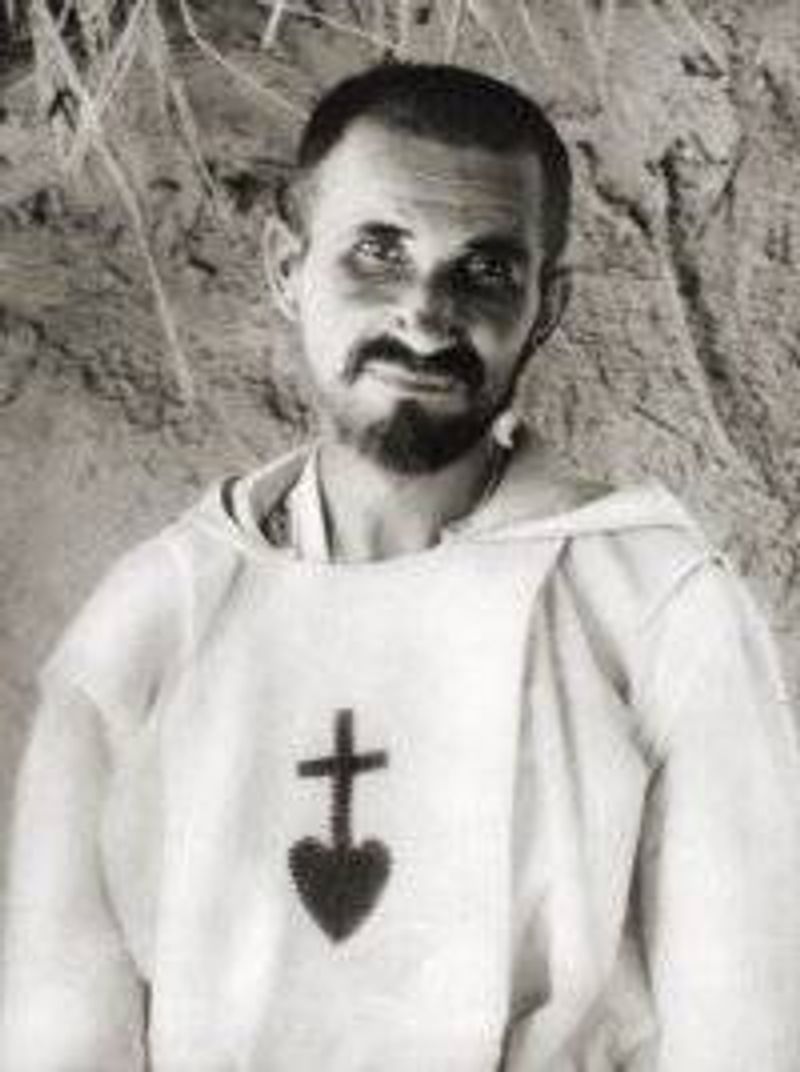
Charles de Foucauld started life about as far from hermit territory as possible. He was a French army officer and adventurous explorer who led a famously indulgent lifestyle before a sudden religious conversion in his late twenties turned everything upside down.
He spent time with Trappist monks in France and Syria before realizing he wanted something even more stripped down.
In 1905, Foucauld settled in Tamanrasset, a remote village in the Algerian Sahara among the Tuareg people. He learned their language, translated their poetry, and lived in a tiny mud hermitage, hoping to show friendship and respect rather than seeking to convert anyone by force.
He called his approach a silent witness of the Gospel.
Foucauld was killed during a tribal raid in 1916, dying alone in the desert he had chosen. His writings and example inspired the founding of several religious communities after his death.
Pope Francis beatified him in 2020, recognizing him as a model of humble, cross-cultural spiritual presence.
Share this story