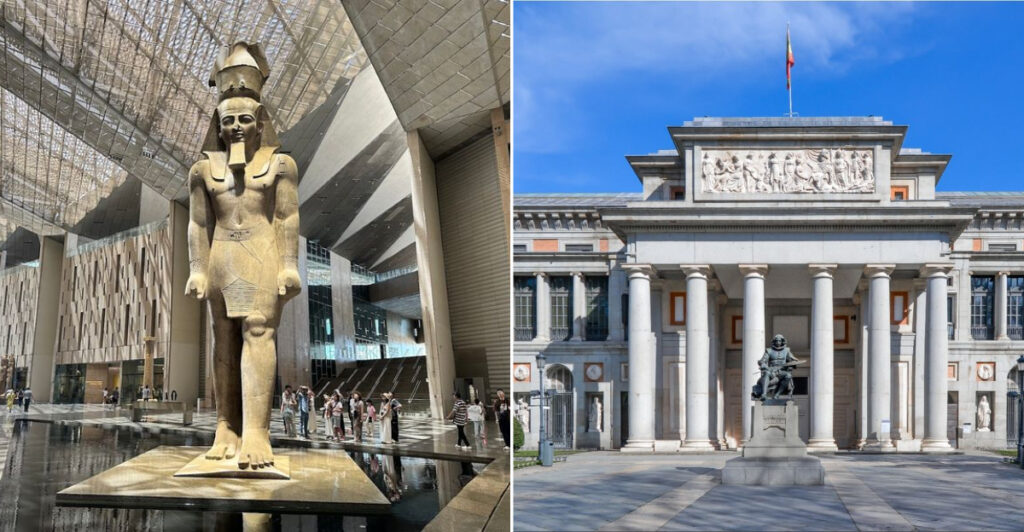
Some buildings hold the entire story of human civilization within their walls. Museums give us a chance to stand face to face with ancient history, breathtaking art, and discoveries that changed the world.
Whether you are a lifelong culture lover or someone who has never set foot in a gallery before, the right museum can completely shift how you see the world around you. This list covers 15 of the most remarkable museums on the planet, spread across continents and cultures, each one offering something genuinely unforgettable.
From a glass pyramid in Paris to a hilltop view in Athens, these are the places worth building a trip around.
Louvre Museum – Paris, France
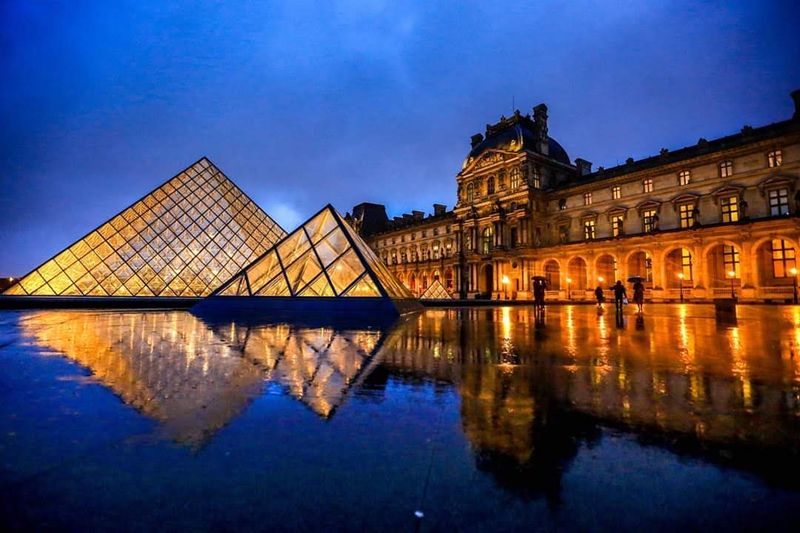
Housed inside a former royal palace, the Louvre is one of those rare places where the building itself competes with what is inside it. The glass pyramid entrance has become one of the most photographed structures in the world, but it is only the beginning of what awaits.
Inside, the collection spans ancient Egypt, Greek and Roman antiquities, European paintings, decorative arts, and grand royal apartments. The Mona Lisa draws the biggest crowds, but works like the Venus de Milo and the Winged Victory of Samothrace stop visitors just as completely.
One smart tip: arrive early or book a timed entry ticket online to avoid the longest lines at the pyramid entrance. The museum is so large that most visitors only cover a fraction of it in one day.
Pick two or three wings to focus on rather than trying to see everything at once.
Vatican Museums – Vatican City
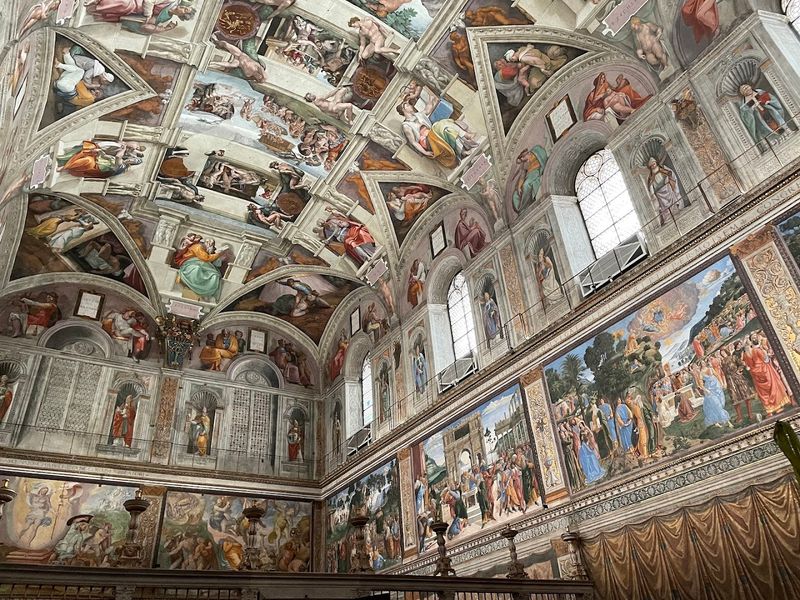
The walk through the Vatican Museums is less like a single museum visit and more like a journey through centuries of art, power, and faith packed into one extraordinary building. Visitors pass through gallery after gallery before reaching the Sistine Chapel, and the route itself is packed with unforgettable moments.
The Gallery of Maps stretches nearly 400 feet and is covered in detailed topographical paintings of Italy from the 16th century. The Raphael Rooms showcase four chambers painted entirely by Raphael and his workshop, each one telling a different story through color and composition.
Michelangelo’s ceiling in the Sistine Chapel is the reason most people come, and it genuinely lives up to its reputation. Booking tickets in advance is strongly recommended, especially during peak travel seasons.
Early morning entry slots tend to offer a calmer experience before tour groups arrive in full force.
British Museum – London, England
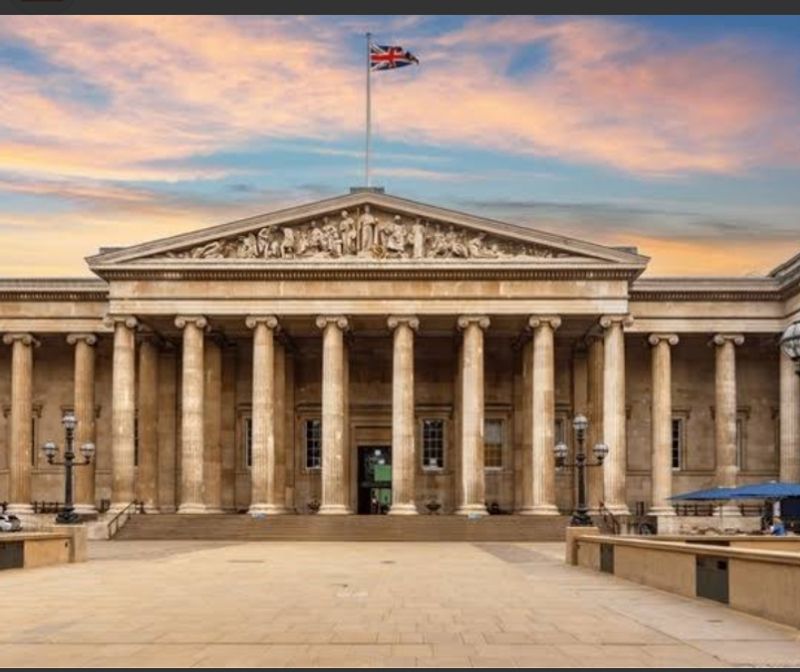
One of the oldest public museums in the world, the British Museum opened its doors in 1759 and has been drawing curious visitors ever since. Its collection spans roughly two million years of human history, which makes it genuinely difficult to know where to start.
The Rosetta Stone is perhaps the most famous object in the building, and it sits in the Egyptian galleries surrounded by mummies, carved reliefs, and ancient artifacts that have survived thousands of years. The Assyrian lion hunt reliefs and the Lewis Chessmen are equally worth seeking out.
General admission is free, which makes this one of London’s most accessible major attractions for travelers on any budget. The Great Court, with its dramatic glass-and-steel roof designed by Norman Foster, is worth pausing in before heading into the galleries.
Plan at least half a day to cover the highlights without rushing through.
The Metropolitan Museum of Art – New York City, New York
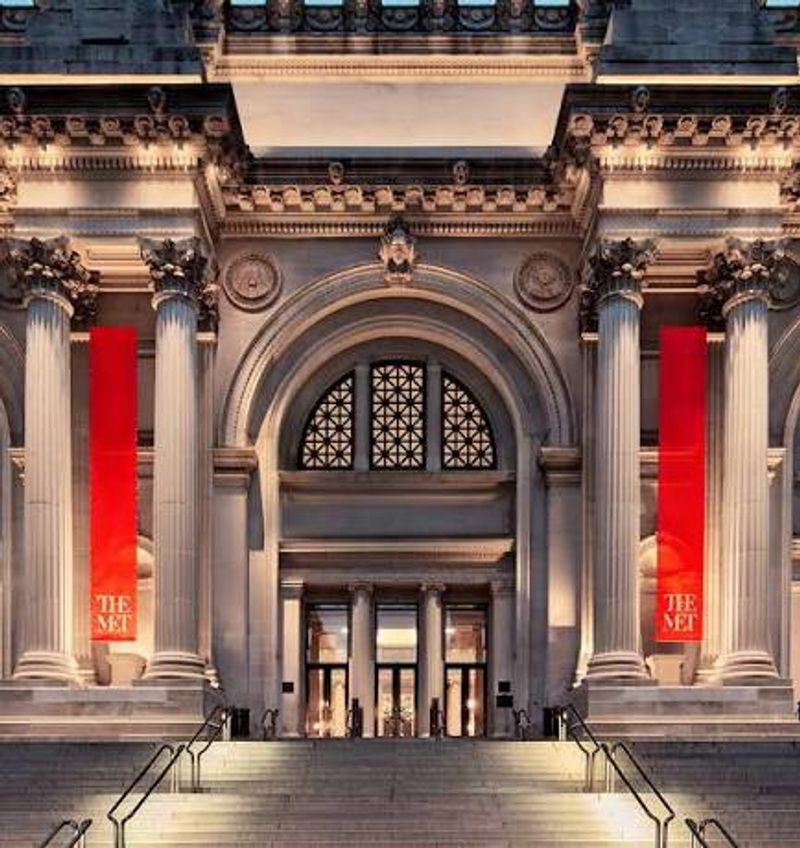
The Met stretches across more than two million square feet of floor space on Fifth Avenue, which makes it one of the largest art museums in the world by any measure. Its collection covers more than 5,000 years of human creativity, from ancient Egyptian temples to contemporary design.
The Temple of Dendur is one of the most memorable spaces in the building. It is an actual ancient Egyptian temple, relocated and reassembled inside a dramatic glass-walled gallery that overlooks Central Park.
Few museum moments anywhere in the world match the strangeness and grandeur of standing next to a 2,000-year-old stone structure inside a Manhattan building.
European paintings, American decorative arts, arms and armor, Islamic art, and a rooftop sculpture garden round out a collection that could take multiple visits to properly explore. Suggested admission pricing gives visitors flexibility, especially families traveling with children.
Smithsonian National Museum of Natural History – Washington, D.C.
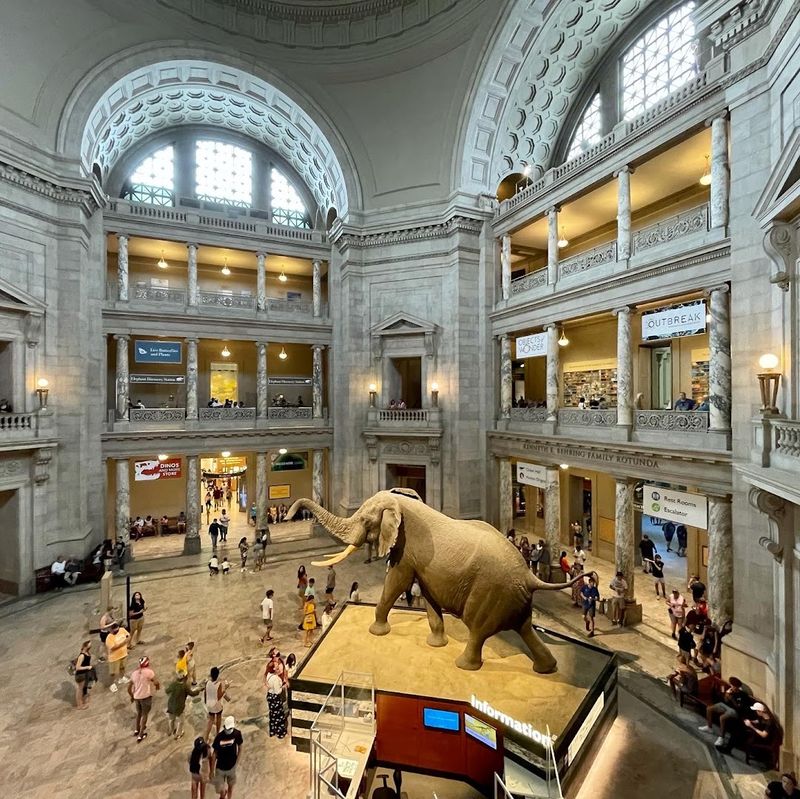
Right in the middle of the National Mall, this museum greets visitors with an African elephant in the main rotunda, which sets the tone for everything that follows. The collection is massive and covers geology, biology, anthropology, ocean science, and human evolution all under one roof.
The Hope Diamond is the most famous single object in the building. At 45.52 carats and a deep blue color, it draws a steady crowd in the geology gallery.
The Hall of Human Origins is another standout, walking visitors through millions of years of human development with fossils, models, and interactive displays.
Dinosaur fossils, insect collections, live butterfly pavilions, and ocean hall exhibits give the museum enough variety to keep visitors of any age genuinely interested. Admission is free, which is part of what makes this one of the most visited museums in the entire world year after year.
National Air and Space Museum – Washington, D.C.
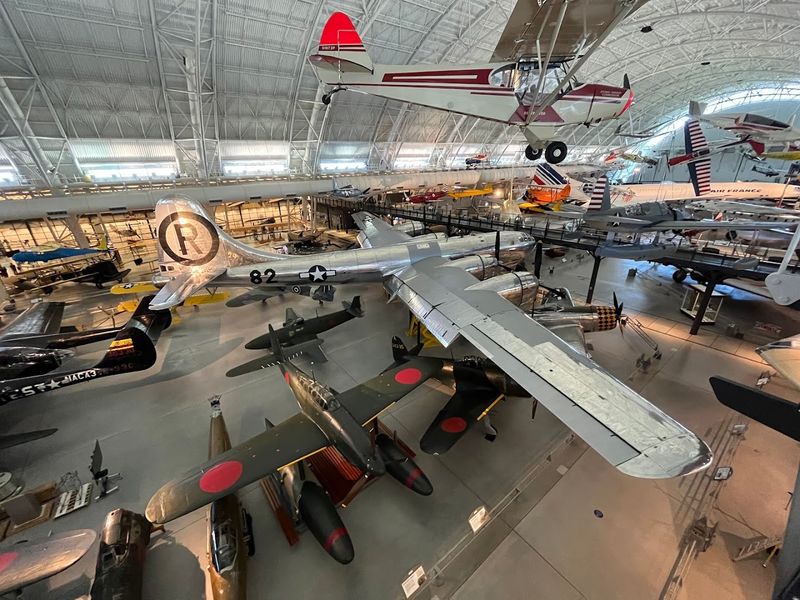
Few museums capture human ambition quite like this one. The Smithsonian National Air and Space Museum holds one of the most significant collections of aviation and space history anywhere on earth, including the Wright Brothers’ Flyer, the Apollo 11 command module, and a moon rock visitors can actually touch.
The museum has been undergoing a major phased renovation in recent years, with galleries reopening gradually as the project progresses. Even during the renovation period, the experience remains remarkable, with enough historic aircraft and spacecraft on display to impress anyone who has ever looked up at the sky and wondered what was possible.
For families, it is one of the most naturally engaging stops in Washington, D.C., because the subject matter does a lot of the work on its own. A second campus in Chantilly, Virginia, called the Steven F.
Udvar-Hazy Center, holds additional large aircraft including the Space Shuttle Discovery.
Museo Nacional del Prado – Madrid, Spain

The Prado is not the kind of museum that tries to impress visitors with flashy architecture or interactive technology. Its power comes entirely from the depth and quality of what hangs on its walls, and that is more than enough.
Velázquez’s Las Meninas is considered one of the greatest paintings ever created, and seeing it in person at the Prado is a genuinely different experience from viewing a reproduction. Goya’s dark paintings, including Saturn Devouring His Son, carry a weight that photographs simply cannot replicate.
Hieronymus Bosch’s The Garden of Earthly Delights is another work that stops visitors mid-step.
The museum also holds major works by Titian, Rubens, and El Greco, making it essential for anyone serious about European classical painting. The Prado sits in the Paseo del Arte museum district, where the Reina Sofia and Thyssen-Bornemisza museums are also located, making it easy to plan a full day of art across multiple institutions.
Rijksmuseum – Amsterdam, Netherlands
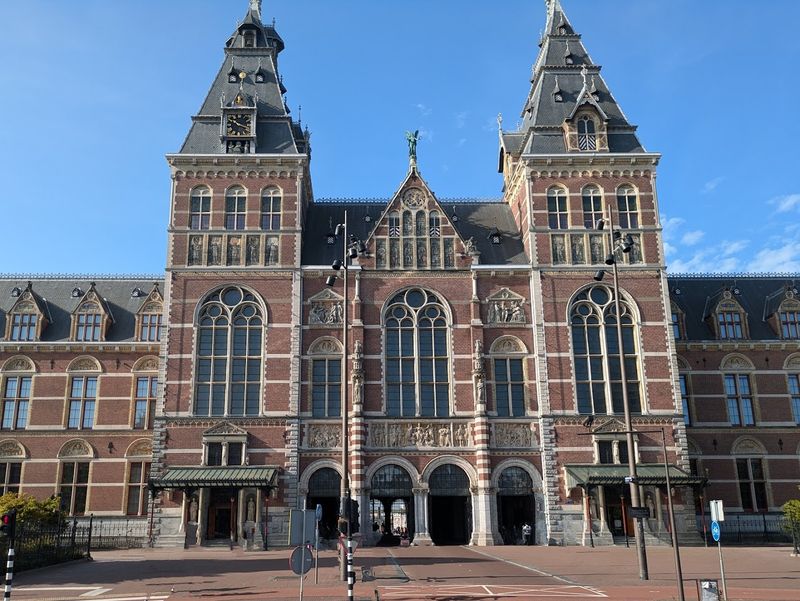
The Rijksmuseum building is worth admiring before you even step inside. The 19th-century structure features ornate brickwork, towers, and a central passageway that cyclists actually ride through, which feels distinctly Amsterdam in the best possible way.
Inside, the collection focuses on Dutch and Flemish art and history, with the Dutch Golden Age galleries as the clear centerpiece. Rembrandt’s The Night Watch dominates its own dedicated room and measures roughly 12 by 14 feet, making it far larger than most people expect.
Vermeer’s The Milkmaid and The Love Letter are also here, quiet and intimate in contrast to Rembrandt’s theatrical scale.
Beyond painting, the museum holds ship models, Delftware ceramics, silver, furniture, and historical objects that trace Dutch culture across centuries. The garden outside features sculptures and a pleasant space to rest between galleries.
Booking tickets online in advance is recommended, especially during summer months when lines grow long.
Uffizi Galleries – Florence, Italy
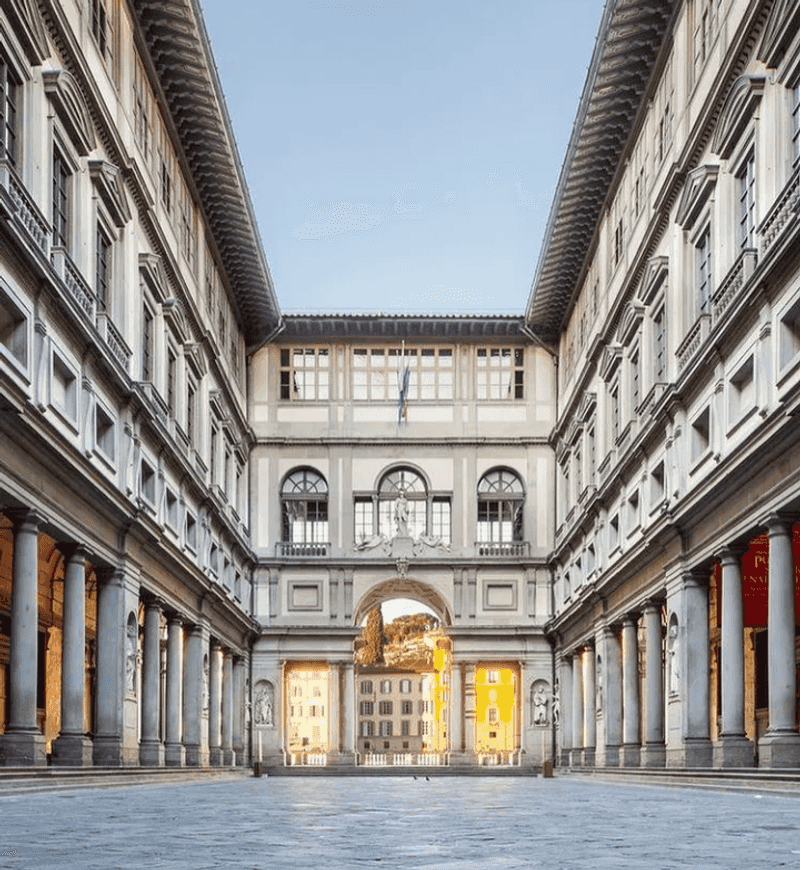
Standing in front of Botticelli’s The Birth of Venus at the Uffizi is one of those art experiences that people describe for years afterward. The painting is large, luminous, and far more commanding in person than any textbook image suggests.
It shares a room with Primavera, another Botticelli masterpiece, which makes that single gallery one of the most remarkable spaces in European art.
The Uffizi traces the development of Italian painting from the medieval period through the Renaissance and beyond, with works by Leonardo da Vinci, Michelangelo, Raphael, Caravaggio, and Titian spread across its long U-shaped corridors. The building itself, designed by Giorgio Vasari in the 16th century, adds historical weight to every step.
Florence’s historic center surrounds the museum, so a visit pairs naturally with a walk across the Ponte Vecchio or a stop at the nearby Piazza della Signoria. Timed entry tickets are essential during busy seasons to avoid very long waits.
Acropolis Museum – Athens, Greece

Built directly above an archaeological site, the Acropolis Museum in Athens was designed with transparency in mind, literally. Glass floors on the ground level reveal ancient ruins below the building, and the upper gallery is oriented to face the Parthenon itself, visible through floor-to-ceiling windows just a short distance away.
The museum opened in 2009 and was purpose-built to house artifacts from the Acropolis and its surrounding slopes. The collection includes original sculptures from the Parthenon frieze, caryatid figures from the Erechtheion, and thousands of objects recovered from the sacred hill over centuries of excavation.
Unlike general history museums, this one stays tightly focused on a single extraordinary site, which gives every exhibit a clear sense of context and place. Combining a morning visit to the Acropolis itself with an afternoon at the museum below creates one of the most complete ancient history experiences available anywhere in the world.
Museo Nacional de Antropología – Mexico City, Mexico
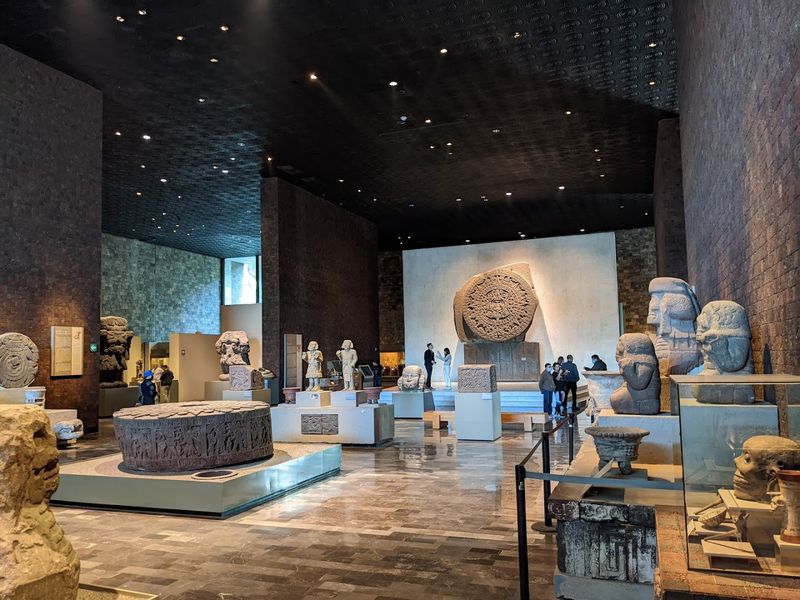
Mexico City’s National Museum of Anthropology is widely considered one of the greatest museums in the Americas, and its collection makes a strong case for that reputation. The building, designed by Pedro Ramirez Vazquez and opened in 1964, wraps around a central courtyard shaded by a massive concrete umbrella-shaped structure that channels rainwater down a central column.
The galleries explore Mexico’s Indigenous civilizations in remarkable depth, covering the Mexica, Maya, Olmec, Zapotec, Toltec, and many other cultures through artifacts, models, and reconstructed environments. The Aztec Sun Stone, often called the Aztec Calendar, is the most recognized object in the collection, but it represents just one piece of an enormous cultural story.
The museum is located in Chapultepec Park, one of the largest urban parks in Latin America, which makes it easy to combine with a broader exploration of that part of the city. Admission is very affordable, and the museum is open most days of the week.
National Museum of Korea – Seoul, South Korea

Korea’s national museum does not announce itself with flashy spectacle. Instead, it offers something rarer: a thoughtfully arranged, generously spaced collection that makes it genuinely easy to absorb thousands of years of Korean history and culture without feeling rushed or overwhelmed.
The permanent collection includes prehistoric artifacts, Buddhist sculpture, Goryeo celadon ceramics, Joseon-era paintings and calligraphy, and royal court objects that trace Korean identity across multiple dynasties. The Gyeongcheonsa Pagoda, a 14th-century stone pagoda displayed inside the museum, is one of the most striking individual objects in the building.
General admission to the permanent collection is free, which makes this one of the best cultural experiences in Seoul for travelers watching their budget. The museum sits in Yongsan-gu, easily accessible by subway.
An outdoor garden and additional exhibition spaces round out what is already a full and rewarding visit for anyone curious about Korean history.
Grand Egyptian Museum – Giza, Egypt
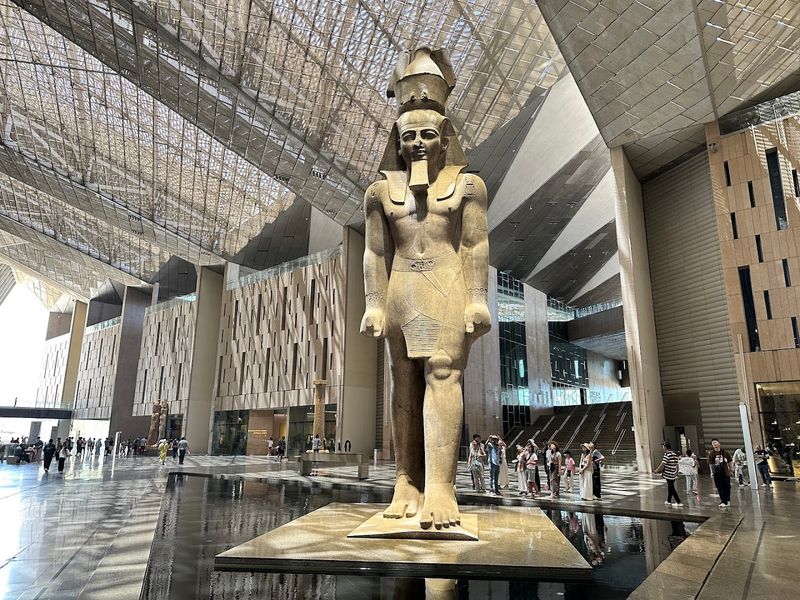
Located just a short distance from the Giza pyramids, the Grand Egyptian Museum is one of the most ambitious cultural projects completed in the modern era. The building spans roughly 500,000 square meters, making it one of the largest archaeological museums in the world by physical footprint alone.
The museum was designed to house the complete collection of artifacts from Tutankhamun’s tomb, more than 5,000 objects that have never before been displayed together in a single location. Monumental statues, including a massive seated figure of Ramesses II near the main entrance, set the scale for everything that follows inside.
Its proximity to the Giza plateau is part of what makes a visit here feel unlike any other museum experience. Seeing ancient objects in a modern building while the actual pyramids are visible in the distance creates a connection between past and present that is difficult to replicate anywhere else on earth.
Tokyo National Museum – Tokyo, Japan
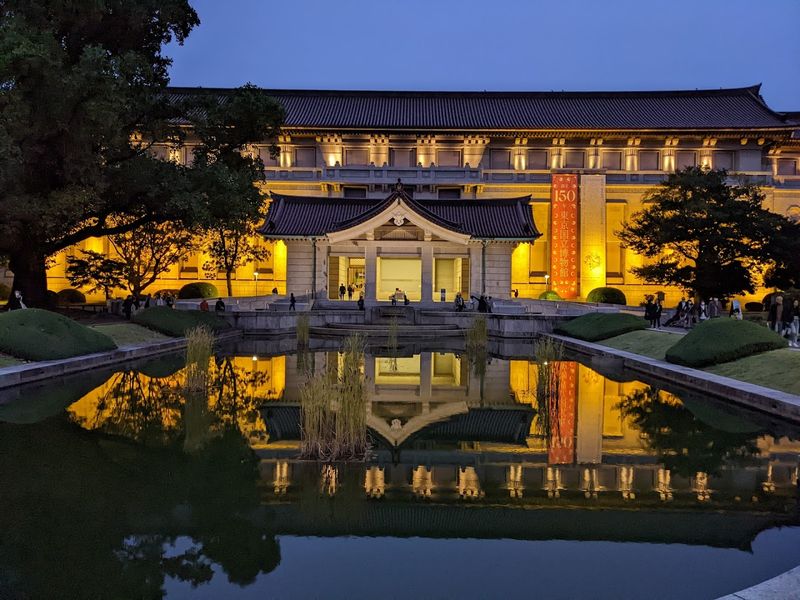
Japan’s oldest national museum sits in Ueno Park, a green and cultural stretch of Tokyo that also holds several other museums, a zoo, and temple grounds. The Tokyo National Museum was founded in 1872, and its main building, completed in 1938, blends Western structure with Japanese architectural details in a way that feels distinctly of its era.
The collection is extensive, covering Japanese art and history from prehistoric Jomon ceramics through samurai-era armor, Buddhist sculpture, lacquerware, ink paintings, textiles, and calligraphy. National Treasure-designated objects rotate through the galleries on a regular basis, meaning repeat visitors often encounter something new.
For first-time visitors to Japan, the museum offers one of the most organized and accessible introductions to the country’s artistic and cultural history. The garden on the grounds, open seasonally, adds a quiet counterpoint to the richness inside.
A separate gallery is dedicated to Asian art from neighboring countries, broadening the museum’s regional scope considerably.
Art Institute of Chicago – Chicago, Illinois
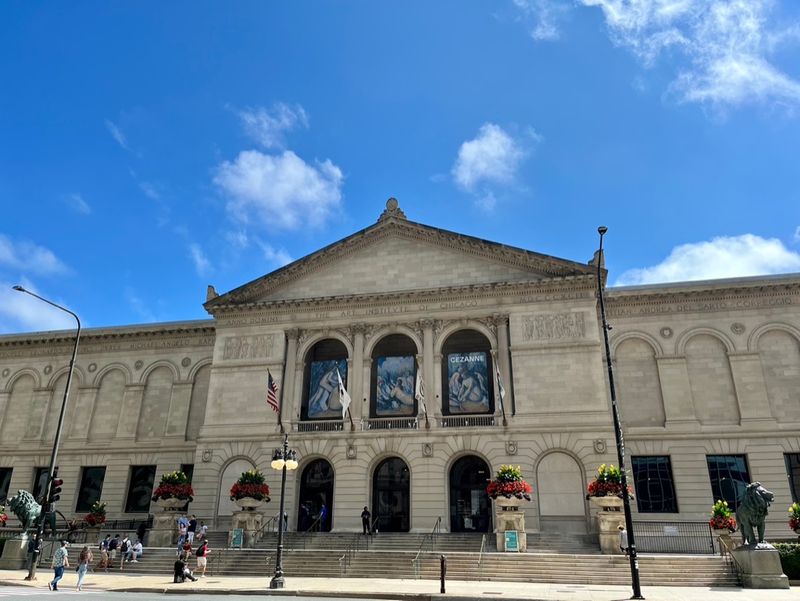
Two bronze lions have guarded the entrance to the Art Institute of Chicago since 1894, and they have become as much a symbol of the city as the skyline behind them. The museum itself is one of the oldest and largest art institutions in the United States, with a collection that covers nearly every period and culture in art history.
Georges Seurat’s A Sunday on La Grande Jatte is one of the most recognized paintings in American museum history, and it holds an entire wall in the Impressionism gallery. Edward Hopper’s Nighthawks, Grant Wood’s American Gothic, and a deep collection of Monet’s paintings round out a lineup that draws serious art enthusiasts from around the world.
The museum connects directly to Millennium Park, which means a visit can naturally extend into an afternoon outdoors near Cloud Gate and the Pritzker Pavilion. The Griffin Court and Modern Wing, designed by Renzo Piano, add contemporary architecture to a building already full of visual interest.
Share this story