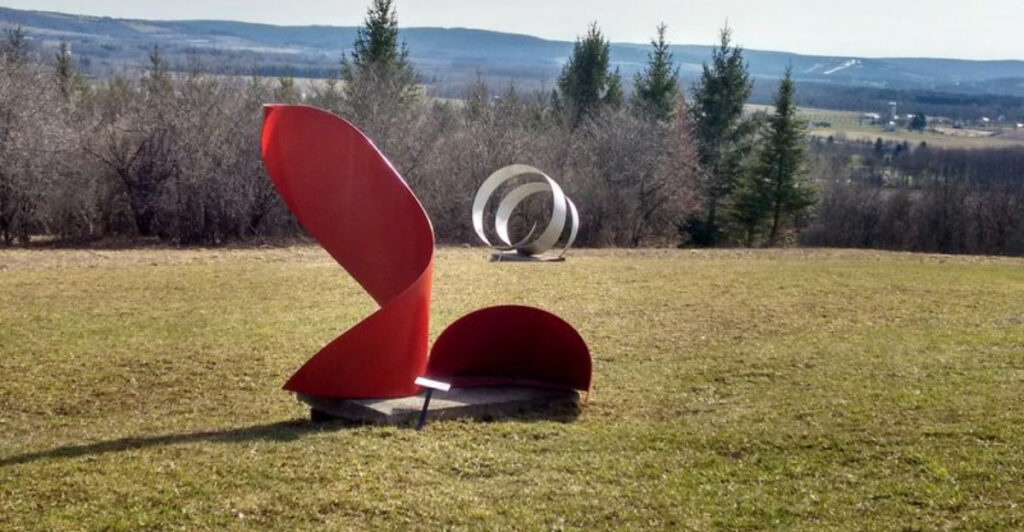
Somewhere in central New York, tucked into rolling hills above a quiet village, there is a place where art grows out of the ground like something the landscape invented itself. Sculptures appear between trees, rise from meadows, and sit at the edges of wooded paths in ways that feel genuinely surprising rather than arranged.
National Geographic once recognized the trails here among the best in the country, which tells you something about how this spot earns its reputation without trying too hard. Whether you visit on a foggy morning, a crisp winter afternoon, or a golden autumn day, this park rewards the kind of visitor who slows down long enough to actually look around.
The Founder Who Planted Seeds That Grew Into Something Lasting
Dorothy Riester is the artist and founder behind Stone Quarry Hill Art Park, and her name comes up quickly when you start talking to anyone familiar with the place. She was a sculptor herself, and her decision to open her land to other artists and the public turned a private creative space into something far larger than one person’s vision.
Riester’s influence shows in the way the park operates. Art is not simply displayed here the way it might be in a gallery.
It is placed thoughtfully within the landscape, often responding to the specific terrain, light, or natural surroundings of each spot. That philosophy came from her and it stuck.
Artists who have shown work here often describe the experience as collaborative with the land itself. That is a direct reflection of how Riester approached her own practice, and why the park continues to carry her spirit through every trail and field.
National Geographic Noticed Something Most People Drive Past
Getting recognized by National Geographic for trail quality is not something that happens by accident. The organization included Stone Quarry Hill Art Park among its top trail recommendations, which put this central New York property on a much larger map than local word of mouth could manage alone.
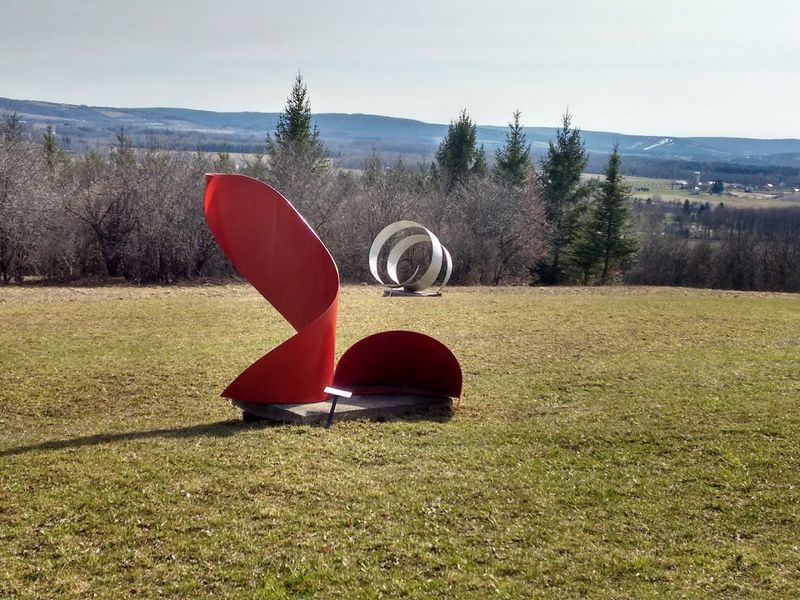
What likely caught that attention is the combination of trail variety and sculptural experience. You can walk through open meadows, duck into shaded forest sections, and find yourself standing in front of a large-scale sculpture with a view of distant hills behind it.
That layered experience is genuinely rare.
The park offers up to four miles of trails depending on the route you choose, and each path has its own character. Some are easy enough for families with young kids, while others take you deeper into wooded sections that feel genuinely removed from the surrounding area.
The National Geographic nod made sense to anyone who had already been here.
Four Miles of Trails That Each Feel Like a Different Place
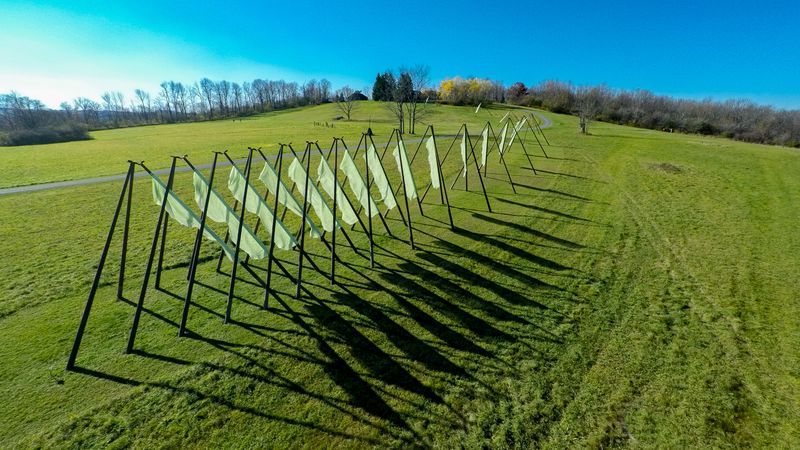
Four miles of trails sounds manageable, and it is, but what surprises most visitors is how different each section feels from the others. One stretch takes you through an open field where sculptures catch the light from every angle.
Another drops you into a tree-lined path where the canopy closes overhead and the air changes noticeably.
There is a wheelchair-accessible loop around the top of the hill, which makes a meaningful portion of the park reachable for visitors with mobility limitations. That kind of thoughtful design is easy to overlook until you actually need it or visit with someone who does.
Trail markings have been noted as an area where improvement would help first-time visitors, and that is worth knowing before you go. Bringing a sense of adventure and a willingness to wander a little helps.
Most people find that getting slightly turned around on the trails leads to discovering something they would have otherwise missed entirely.
The Sculptures Do Not Ask Permission From the Landscape
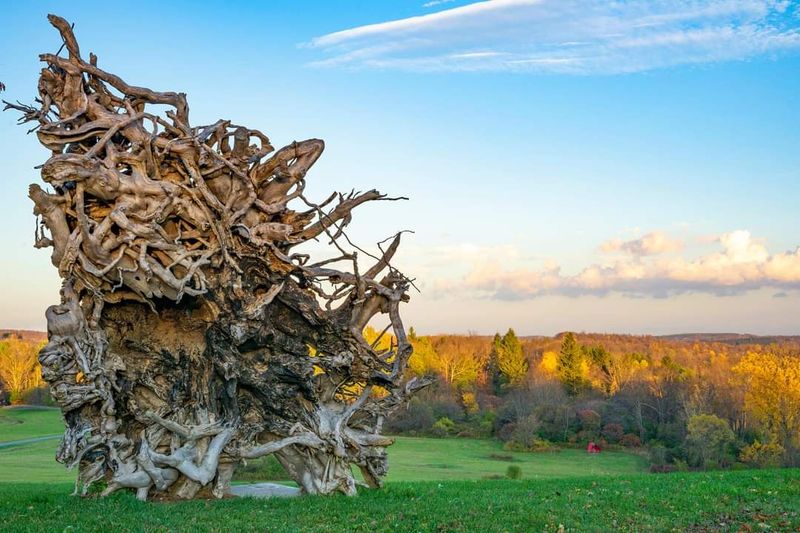
What separates this park from a typical outdoor gallery is the way the sculptures relate to where they are placed. A piece positioned at the edge of a field draws your eye toward the horizon.
Something tucked into the trees asks you to look more carefully at what is around it. The art and the land are in conversation rather than competition.
The collection includes a wide range of styles and materials. Some works are large-scale metal pieces that hold their own against the open sky.
Others are quieter and more intimate, designed to be discovered rather than announced. The variety keeps the walk genuinely engaging from start to finish.
The collection changes over time as new artists are invited to install work and older pieces rotate out or evolve. That means returning visitors often find something different from their last trip, which is part of why people come back year after year rather than treating it as a one-time stop.
Every Season Rewrites the Experience Entirely
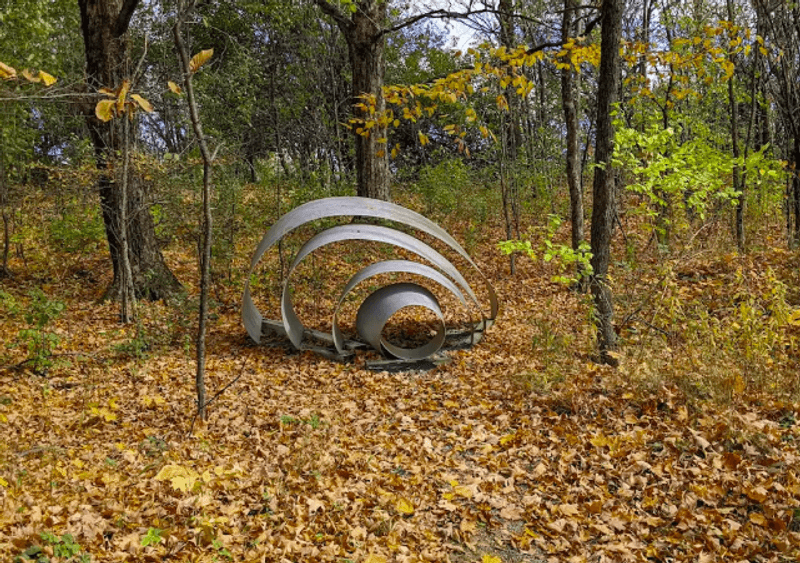
Summer visits are popular, but people who have come in other seasons often say those trips turned out to be their favorites. Winter brings a completely different atmosphere.
Snow covers the trails, sculptures take on new shapes under ice and frost, and the hilltop sledding draws a crowd that has nothing to do with art appreciation.
One visitor described knee-deep snow on the trails in winter and noted that snowshoes or skis are genuinely necessary rather than optional. The gravel access road can also be tricky in icy conditions, so checking the weather before a cold-weather visit is practical advice worth taking seriously.
Spring and fall each bring their own rewards. Autumn color wraps the forested trail sections in something that pairs well with almost any sculpture.
Spring reveals how the landscape shifts after winter, and new growth around the installations makes familiar pieces look freshly placed. The park earns its reputation across all four seasons rather than coasting on one.
The View From the Top Earns Its Own Mention
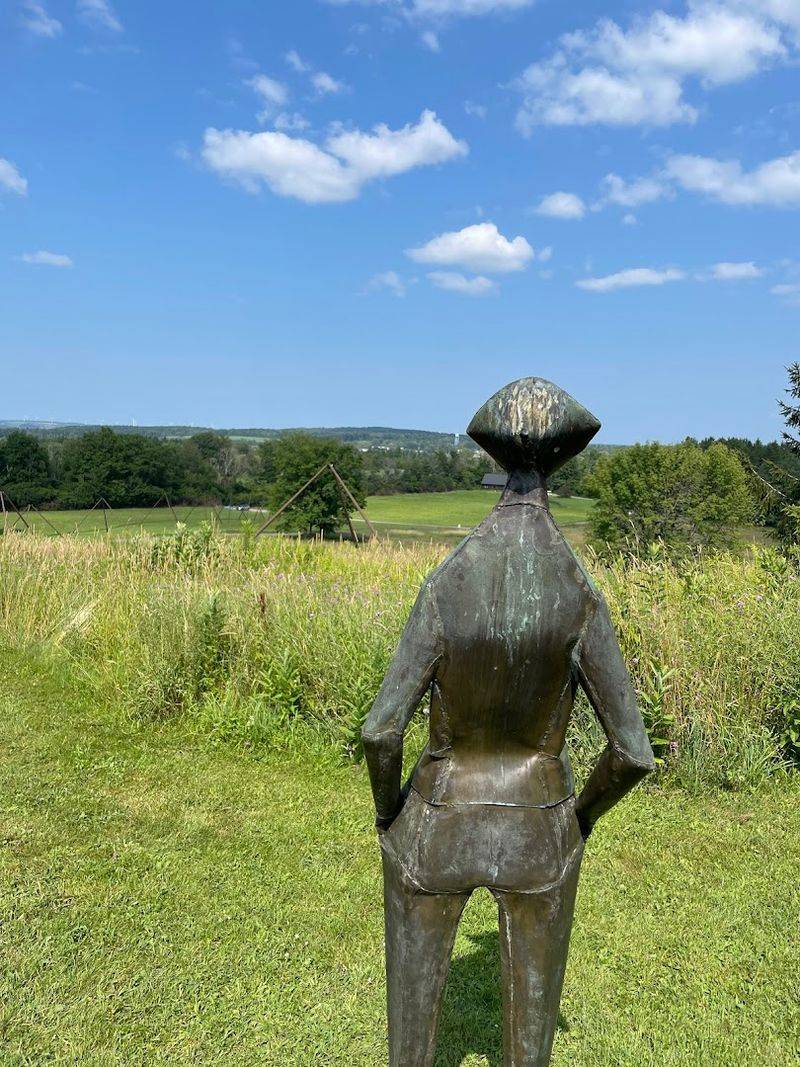
The hilltop at Stone Quarry Hill Art Park delivers a view that covers a wide sweep of central New York countryside. On a clear day you can see across multiple ridgelines, and the sense of elevation feels more significant than the actual climb would suggest.
It is the kind of view that makes you stop mid-sentence if you are talking with someone.
Sunrise and sunset from the hilltop are mentioned repeatedly by visitors who have timed their arrival to catch the light. The park opens at 6 AM daily, which makes early morning visits entirely possible and genuinely worth the effort for the right kind of visitor.
The hilltop is also where much of the sculpture concentration is highest, which means visitors who have limited mobility or energy can focus their time there and still see a significant portion of what the park has to offer. The accessible loop around the summit makes that possible without requiring any difficult terrain navigation.
Dogs, Kids, and People Who Just Want a Good Walk
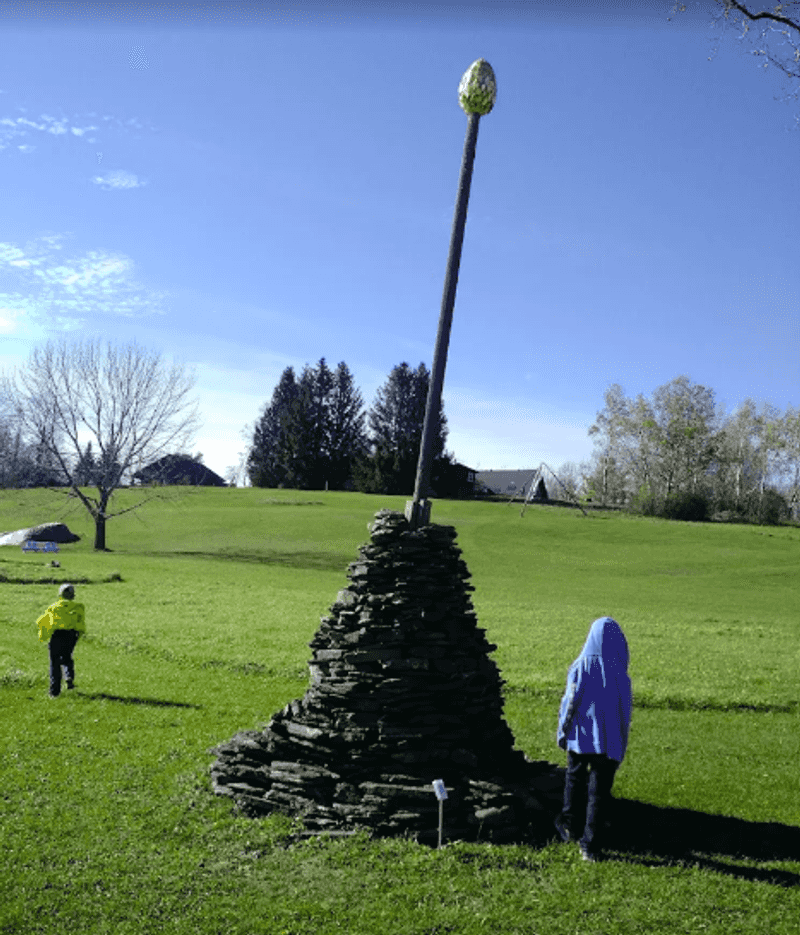
Stone Quarry Hill is one of those rare places that genuinely works for different kinds of visitors without feeling like it is trying to be everything at once. Dogs are welcome on the trails, and the open meadow sections give them plenty of room to move.
Families with kids find the easier trail sections manageable without being boring.
Children tend to respond to the sculptures in ways that are different from adults. Some pieces are large enough to feel adventurous rather than just artistic, and kids often interact with them physically in ways that seem entirely natural given the setting.
The park does not discourage that kind of engagement.
For visitors who simply want a quiet walk without any particular agenda, the trails deliver that too. You do not need to know anything about art to enjoy the experience here.
The combination of fresh air, open views, and occasional surprising discoveries along the path is enough to make the trip feel worthwhile on its own terms.
Free to Enter With a Donation That Actually Makes Sense
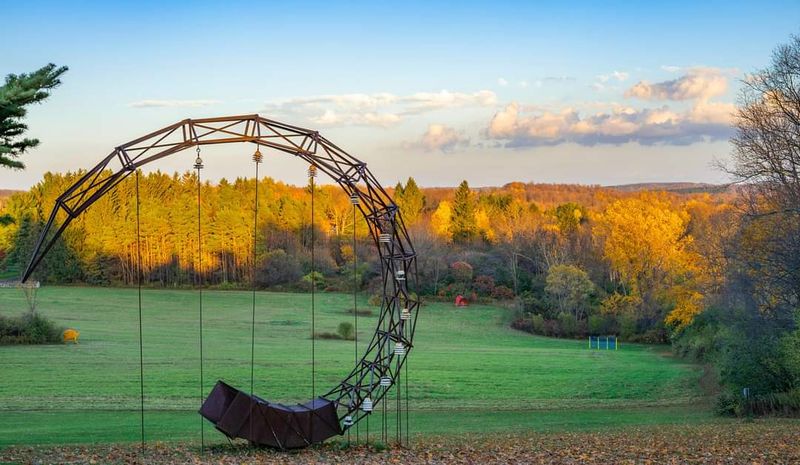
The park is technically free to enter, but a suggested donation of five dollars per person is posted at the entrance. For what you get in return, that amount is genuinely easy to justify.
The trails, the sculptures, the views, and the overall experience add up to something that costs far more to maintain than five dollars per visitor would cover.
As a non-profit organization, Stone Quarry Hill Art Park depends on that kind of community support to keep the grounds maintained and to continue inviting artists to install new work. The donation model keeps the park accessible to people who might not visit if there were a fixed admission fee.
Drive-through visits during rainy days are also allowed without charge, which is a generous policy that speaks to the park’s overall approach. Several visitors have noted appreciating that option on days when walking the full trails was not practical.
The park seems genuinely interested in being accessible rather than exclusive, and the pricing reflects that clearly.
Planning Your Visit Without Any Unpleasant Surprises
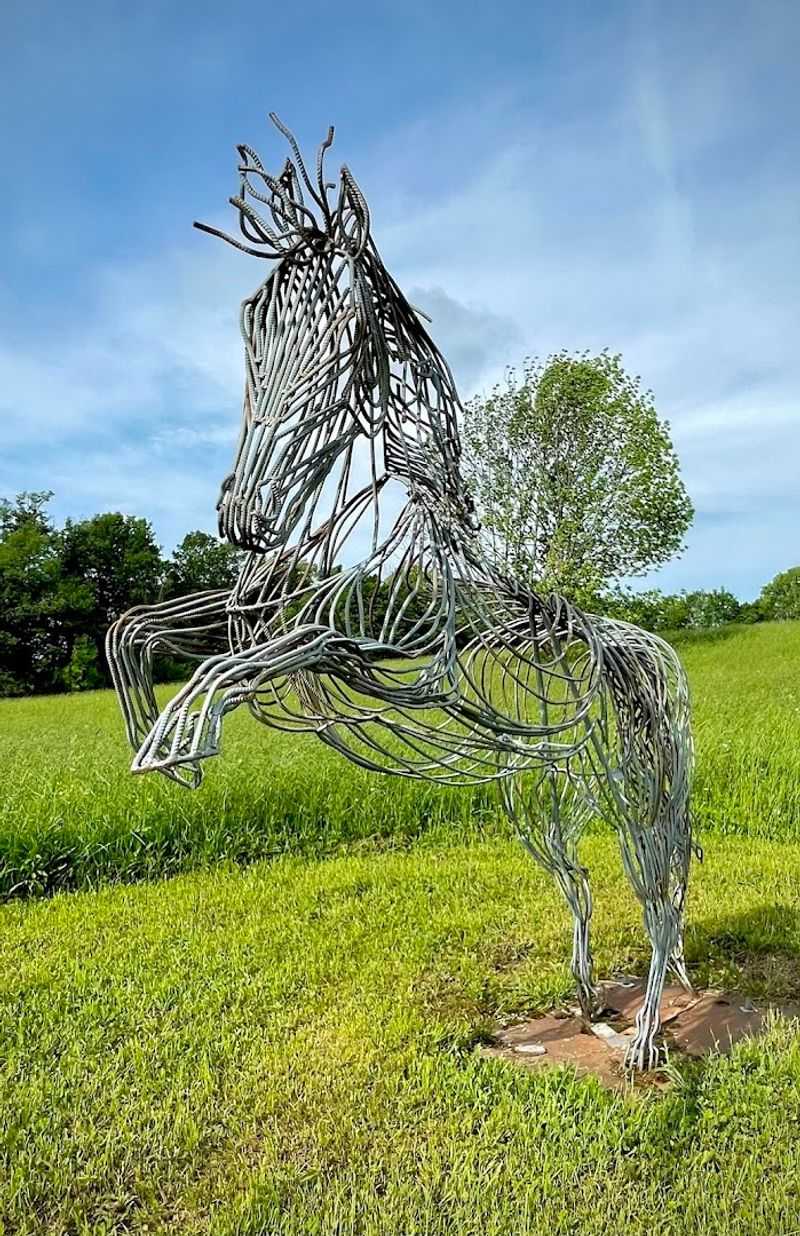
The park is open every day of the week from 6 AM to 7:15 PM, which gives you a solid window to visit without rushing. Arriving earlier in the day tends to mean fewer other visitors, and the morning light on the hilltop sculptures is worth the earlier alarm if you are willing to set one.
Parking is available just below the hill, and the road up to the hilltop area is driveable for most vehicles in fair weather. Winter and wet conditions are a different story, and the access road has caught a few visitors off guard when conditions turned icy.
Checking ahead before a cold or rainy day visit is a reasonable precaution.
Comfortable walking shoes make a real difference on the gravel and grass surfaces. There are restrooms on site, which visitors have described as clean and well-maintained.
The phone number for the park is 315-655-3196, and the website at sqhap.org has current information about events, artist residencies, and seasonal conditions worth reviewing before you go.
Where the Park Actually Sits and Why That Matters
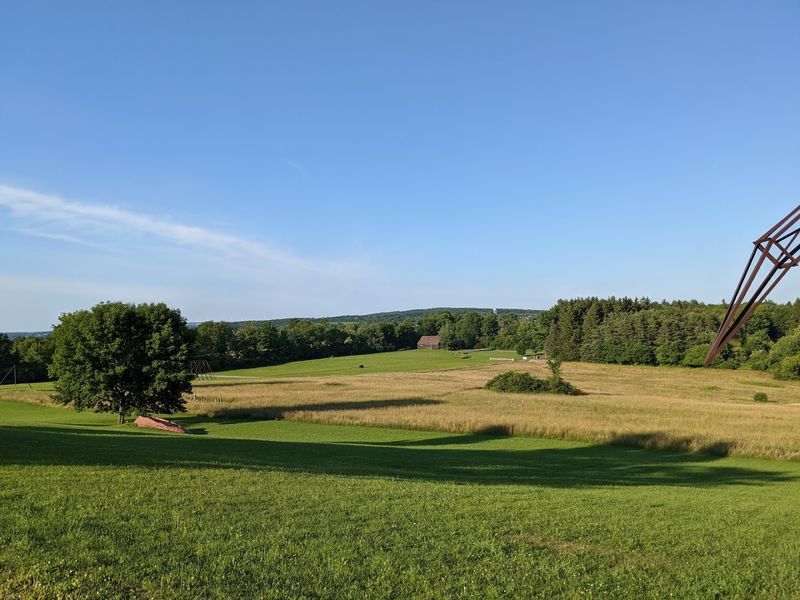
Stone Quarry Hill Art Park is located at 3883 Stone Quarry Road in Cazenovia, New York 13035, in the heart of central New York’s Madison County. The drive up to the property gives you an immediate sense of what you are getting into.
A gravel road climbs a modest hill, and the landscape opens up as you gain elevation.
Cazenovia itself is a small village known for its historic downtown and Cazenovia Lake, making it an already appealing destination before you even reach the park. The art park sits just outside the village center, which means you can combine a visit with a stop in town without much extra effort.
The park is a registered non-profit organization, which shapes everything from how it is funded to how it feels when you walk through it. There is no corporate polish here.
The place has a handmade, community-rooted quality that you notice from the moment you arrive.
Share this story