Europe is full of places where the past refuses to stay quiet, and nowhere is that more true than in its medieval towns. From walled citadels perched on hilltops to canal-threaded market towns still buzzing with life, these places carry centuries of stories in their stones.
Whether you are a history fan, a curious traveler, or someone who just loves a good cobblestone street, these towns deliver something unforgettable. Pack your walking shoes and prepare to be seriously impressed.
Rothenburg ob der Tauber, Germany
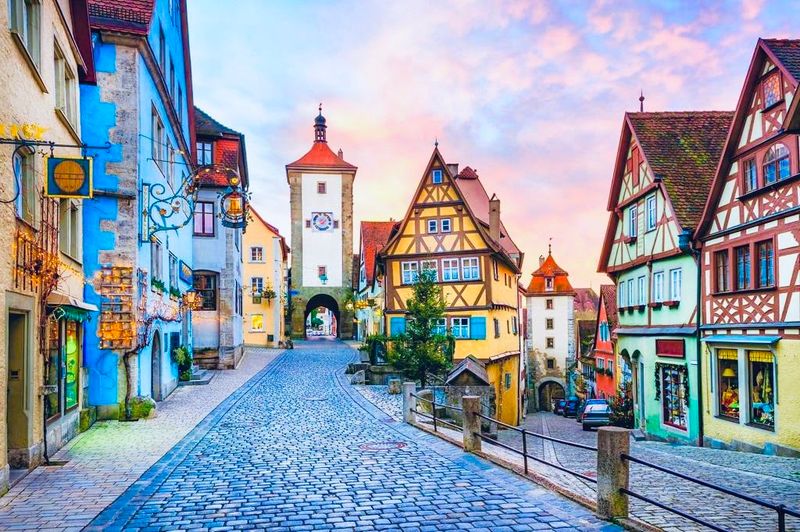
Step inside Rothenburg ob der Tauber and you might genuinely wonder if someone forgot to tell the town that several centuries have passed. Perched in Bavaria, this jaw-dropping walled city has survived wars, plagues, and the relentless march of modern architecture without losing a single cobblestone of its character.
The half-timbered houses lean at friendly angles, the flower boxes overflow with color, and the whole place glows like a fairy tale at dusk.
Walking the full circuit of the medieval town walls is an absolute must. The views down into the old streets and out over the rolling Tauber Valley are worth every step.
The Plonlein, a small square where two lanes fork at a crooked tower, is arguably Germany’s most photographed corner.
Rothenburg also takes Christmas seriously, running one of Germany’s most beloved Christmas markets from late November. The town hosts the German Christmas Museum year-round, so festive fans never go home empty-handed.
Crowds do arrive in summer, so visiting early morning or in the shoulder seasons gives you quieter streets and better photos. Rothenburg rewards slow travelers most generously.
Český Krumlov, Czechia
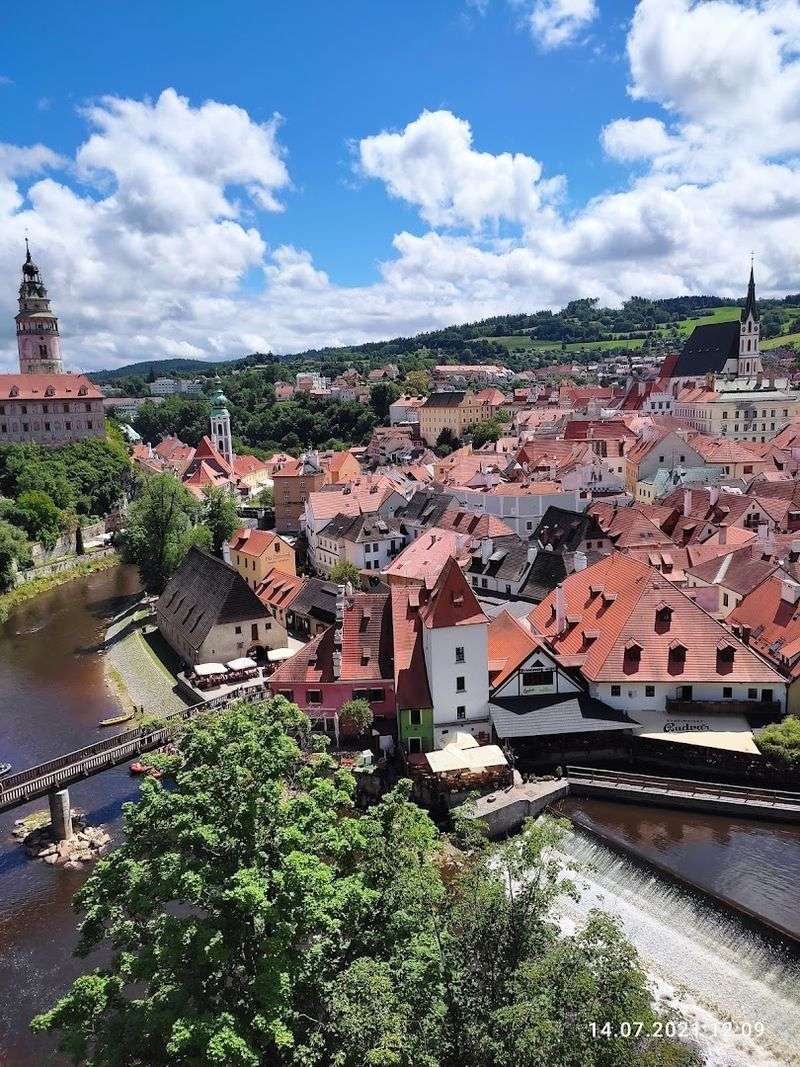
Wrapped inside a dramatic horseshoe bend of the Vltava River, Český Krumlov looks like it was designed by someone who had read too many adventure novels and decided to build one. The town’s castle complex towers above terracotta rooftops, connected to the old town below by stone bridges and steep garden terraces.
UNESCO gave it World Heritage status, and honestly, it earned every syllable.
The castle itself is the second largest in the Czech Republic after Prague, and its baroque theater is one of the best preserved in all of Europe. Guided tours take you through rooms filled with original furniture, costumes, and stage machinery that still actually works.
Outside, the castle gardens offer sweeping views over the town’s red rooftops and the river curving below.
The old town streets are narrow, atmospheric, and lined with artisan shops, wine bars, and small restaurants serving traditional Czech food. Kayaking on the Vltava through town is a popular warm-weather activity that gives you a completely different perspective on the medieval skyline.
Winter strips the crowds away and reveals a quieter, more intimate Český Krumlov that locals love best.
Bruges, Belgium
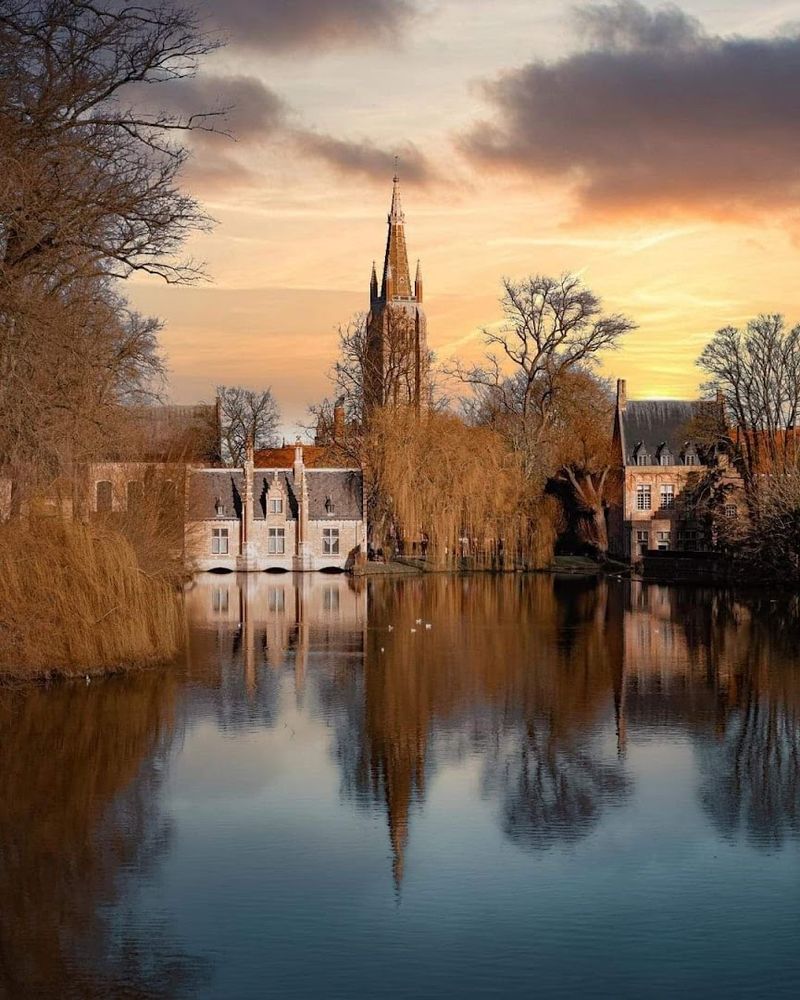
Bruges is the kind of city that makes you feel slightly guilty for living anywhere else. Its web of mirror-still canals, soaring Gothic towers, and perfectly preserved merchant houses creates a medieval atmosphere so complete that it almost feels theatrical.
Yet this is a real, living city, full of chocolate shops, craft beer bars, and residents going about their very normal modern lives inside their very ancient buildings.
The Markt, the central market square, is dominated by the iconic Belfry, a medieval bell tower with 366 steps and panoramic views from the top. Climbing it is breathless in both senses of the word.
The Burg square nearby holds the stunning Basilica of the Holy Blood, which is said to contain a relic of Christ’s blood brought back from the Crusades.
Bruges reached its peak as a trading powerhouse in the 14th and 15th centuries, and the wealth of that era is still visible in its architecture. The Groeningemuseum holds an exceptional collection of Flemish Primitive paintings.
Taking a canal boat tour is the classic visitor move, and it remains classic for good reason. The city looks even better from the water.
Carcassonne, France
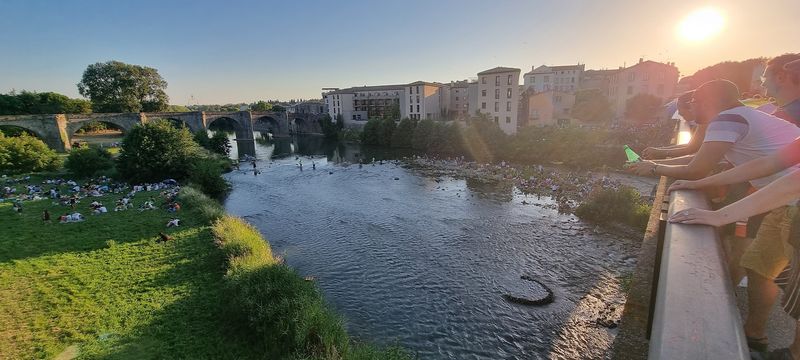
Seen from a distance at dusk, Carcassonne looks like it was conjured straight out of a legend. The double ring of walls, the 52 towers, the pointed turrets catching the last light of day, the whole hilltop citadel floats above the surrounding landscape like something your imagination dreamed up.
It is one of the most complete examples of medieval military architecture anywhere in the world, and walking through its gates feels genuinely cinematic.
The cite, or fortified upper town, contains a Romanesque and Gothic basilica, a castle within the castle, narrow cobbled streets, and a lively mix of restaurants and artisan shops. The outer walls can be walked freely, giving visitors a soldier’s-eye view of the surrounding countryside and the lower town below.
It is easy to spend a full day here without running out of things to explore.
Carcassonne was heavily restored in the 19th century by architect Eugene Viollet-le-Duc, which gives it an almost theatrical completeness. Some historians debate his methods, but visitors are usually too busy being stunned to argue.
The summer festival brings outdoor concerts and theatrical performances to the citadel. Staying overnight, after the day crowds leave, transforms the experience entirely.
San Gimignano, Italy
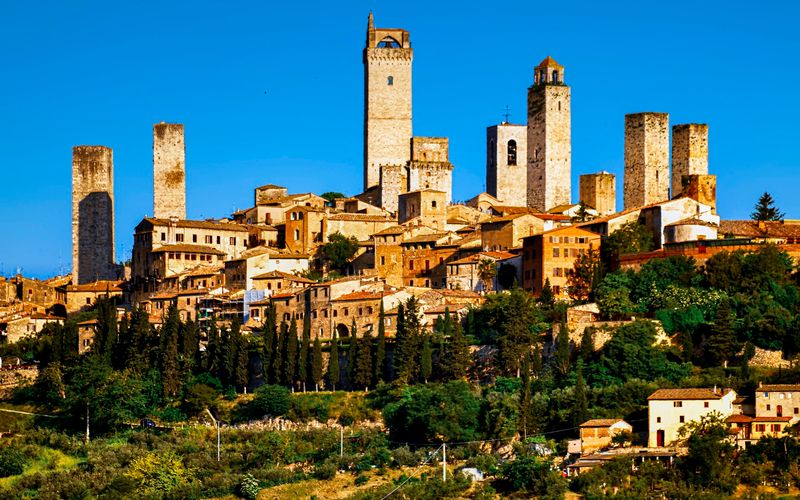
Fourteen towers still puncture the Tuscan skyline above San Gimignano, the stubborn survivors of what was once a forest of 72 rival family towers built by wealthy clans trying to outdo each other in height and ambition. Medieval Instagram flexing, essentially.
The result is one of the most distinctive silhouettes in all of Italy, visible from miles away across the rolling green hills of the Val d’Elsa.
Inside the walls, the town is compact and walkable, organized around two connected piazzas, the Piazza della Cisterna and the Piazza del Duomo. The well in the center of the Cisterna has been there since 1237.
The Collegiata church is covered in extraordinary 14th-century frescoes that deserve far more attention than they typically receive from visitors rushing between gelato stops.
Speaking of gelato, San Gimignano’s Gelateria Dondoli has won the World Gelato Championship multiple times, so any visit without a cone is a minor personal tragedy. The town is genuinely busy in summer, but the surrounding countryside offers excellent hiking and wine tasting at nearby Vernaccia vineyards.
Vernaccia di San Gimignano is Tuscany’s oldest documented white wine, and it pairs beautifully with a view of those towers.
Óbidos, Portugal
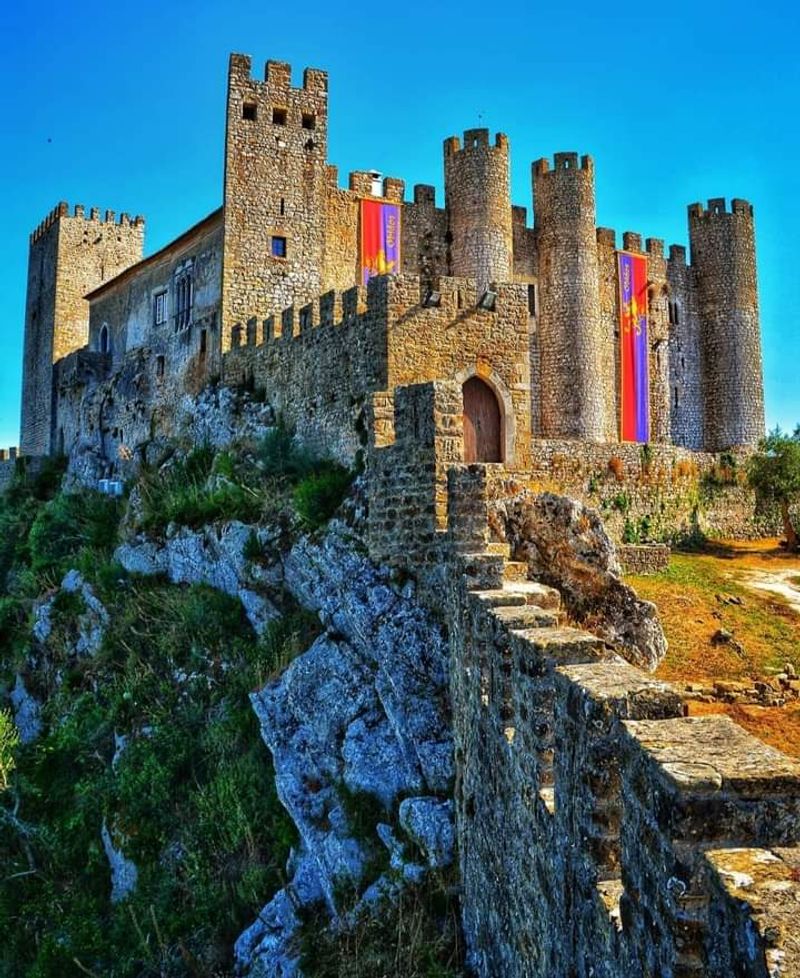
Óbidos is so charming it was once given as a wedding gift. In 1282, King Dinis of Portugal presented the entire walled town to his new queen, Dona Isabel, who fell in love with it on sight.
The tradition of gifting the town to Portuguese queens continued for centuries, which explains why it was so lovingly maintained. Today it is still one of the most romantic small towns in all of Europe.
The town walls are fully intact and walkable, offering a narrow but thrilling path around the entire perimeter with views over whitewashed rooftops, church towers, and the surrounding countryside. The main street, Rua Direita, is lined with shops selling local crafts, cherry liqueur in chocolate cups, and handmade ceramics.
The castle at the top of town has been converted into a pousada, a luxury inn, so you can actually sleep inside a medieval fortress.
Óbidos hosts a famous Medieval Market each summer, filling the streets with jousting, feasts, jesters, and costumed performers. The Literary Festival and the Chocolate Festival draw visitors throughout the year.
Despite its popularity, the town remains small and manageable, and quiet mornings before the tour buses arrive reveal a genuinely peaceful, flower-scented corner of Portugal.
Tallinn Old Town, Estonia
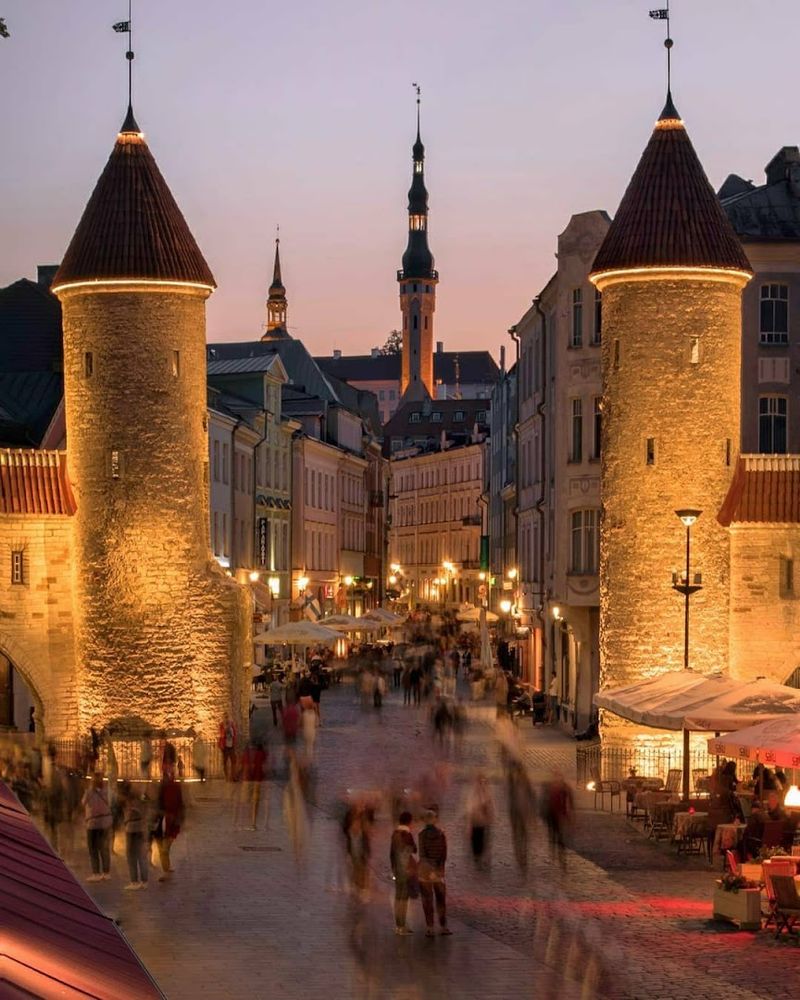
Tallinn’s old town is so well preserved that walking its medieval lanes feels less like sightseeing and more like time travel with better coffee shops. The city walls, watchtowers, and merchant houses of the lower town date back to the 13th and 14th centuries, and the upper town, or Toompea Hill, has been a seat of power since the medieval period.
The whole ensemble is a UNESCO World Heritage Site, and it earns that status every single day.
Town Hall Square is the beating heart of old Tallinn, ringed by Gothic and Renaissance buildings and hosting markets throughout the year. The Christmas Market here is considered one of the best in Europe, a genuinely magical experience of mulled wine, handmade crafts, and twinkling lights under medieval towers.
The square also contains one of Europe’s oldest pharmacies, still operating since at least 1422.
The Estonian capital punches well above its size in terms of medieval atmosphere. Viru Gate, the two surviving towers of the old eastern entrance, frames a perfect view into the old town.
The nearby Katariina Passage is a quiet medieval alley lined with artisan workshops. Tallinn in summer offers long Nordic evenings where daylight lingers past 10pm, making rooftop bars above the old town a very popular choice.
Sighișoara, Romania
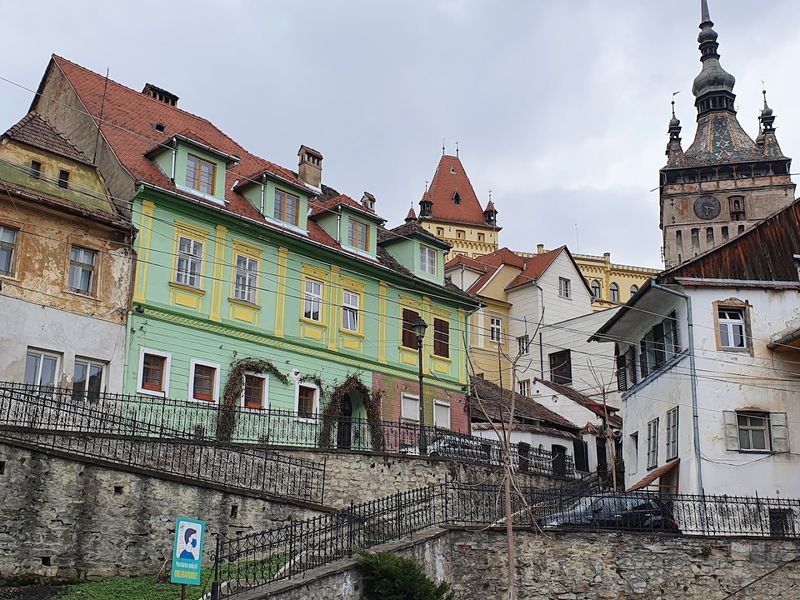
Sighișoara is the only continuously inhabited medieval citadel in Europe, which means real people live, work, and raise families inside these ancient fortified walls. That fact alone makes it stand apart from every open-air museum on this list.
The Transylvanian town sits on a hill above the Tarnava Mare River, its pastel-colored houses and nine surviving towers creating one of Romania’s most photogenic skylines.
The Clock Tower, built in the 14th century, is the town’s unmistakable centerpiece and now houses a history museum with a mechanical clock that still puts on a show at the top of the hour. Climbing the covered wooden staircase, known as the Scholars’ Stairs, leads to the hilltop church and cemetery, which offer sweeping views over the citadel rooftops and surrounding hills.
The staircase has 175 steps and was built in 1642 to protect schoolchildren from the weather during their steep daily climb.
Sighișoara is also famously the birthplace of Vlad the Impaler, the historical figure who inspired Bram Stoker’s Dracula. His supposed birth house is now a restaurant, because Romania has a very practical sense of humor about its most notorious export.
The annual Medieval Festival in July fills the citadel with jousting, music, and costumed revelry that feels entirely appropriate.
Dinan, France
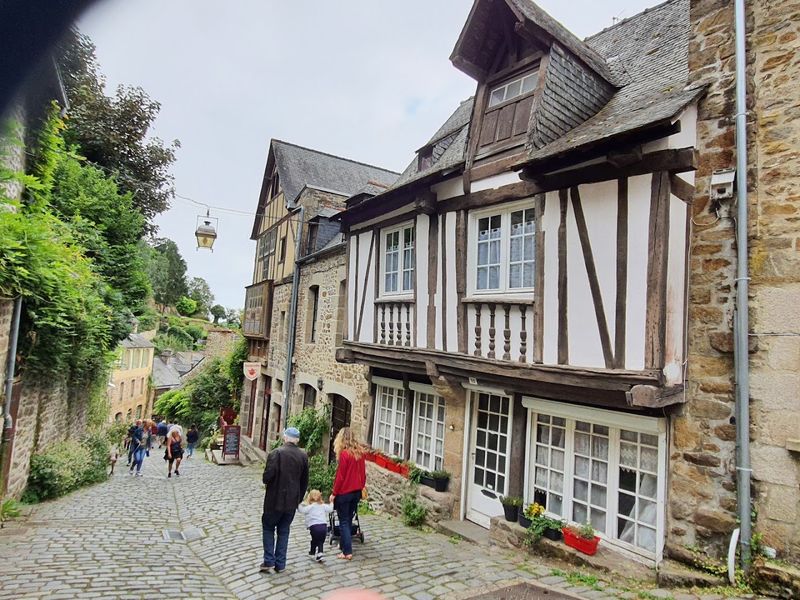
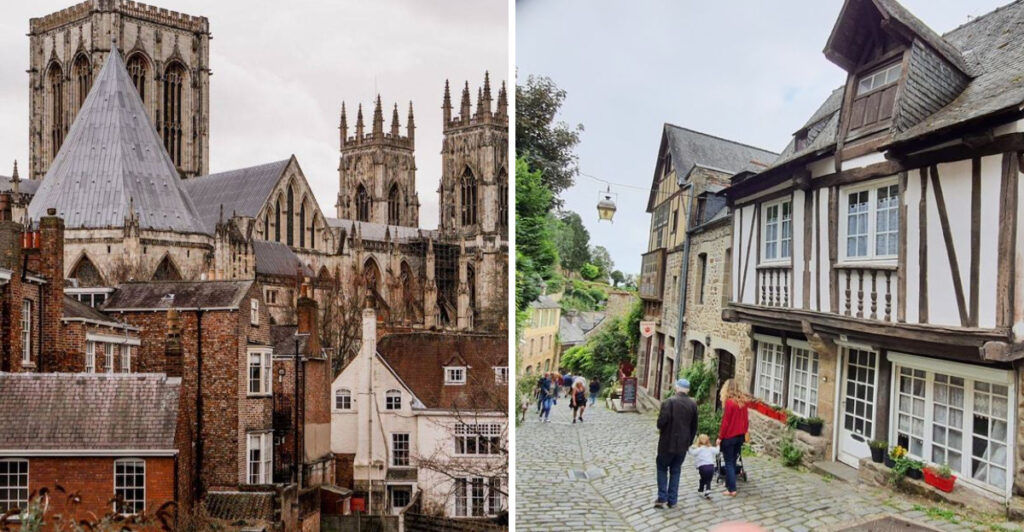
Brittany’s best-kept medieval secret sits at the top of a dramatic hill above the Rance River, and Dinan repays every step of the climb with interest. The old town’s ramparts stretch for nearly three kilometers, enclosing a web of cobbled streets lined with the kind of crooked, leaning, timber-framed houses that look structurally impossible but have been standing since the 15th century.
It is the sort of place that makes you want to cancel your return ticket.
The Rue du Jerzual is the town’s most celebrated street, a steep medieval lane that tumbles down toward the river port, lined with artisan studios, potters, weavers, and painters who have clearly made the same decision to stay. At the bottom, the Vieux Port area is a cluster of riverside restaurants and old stone buildings where boats once unloaded goods from across Brittany and beyond.
Dinan’s castle, the Chateau de Dinan, houses a local history museum and offers excellent views from its tower. The town also has a strong connection to Bertrand du Guesclin, the famous Breton knight who defeated the English in a famous single combat duel right in the market square in 1359.
His equestrian statue still stands there, looking thoroughly pleased with himself.
York, England
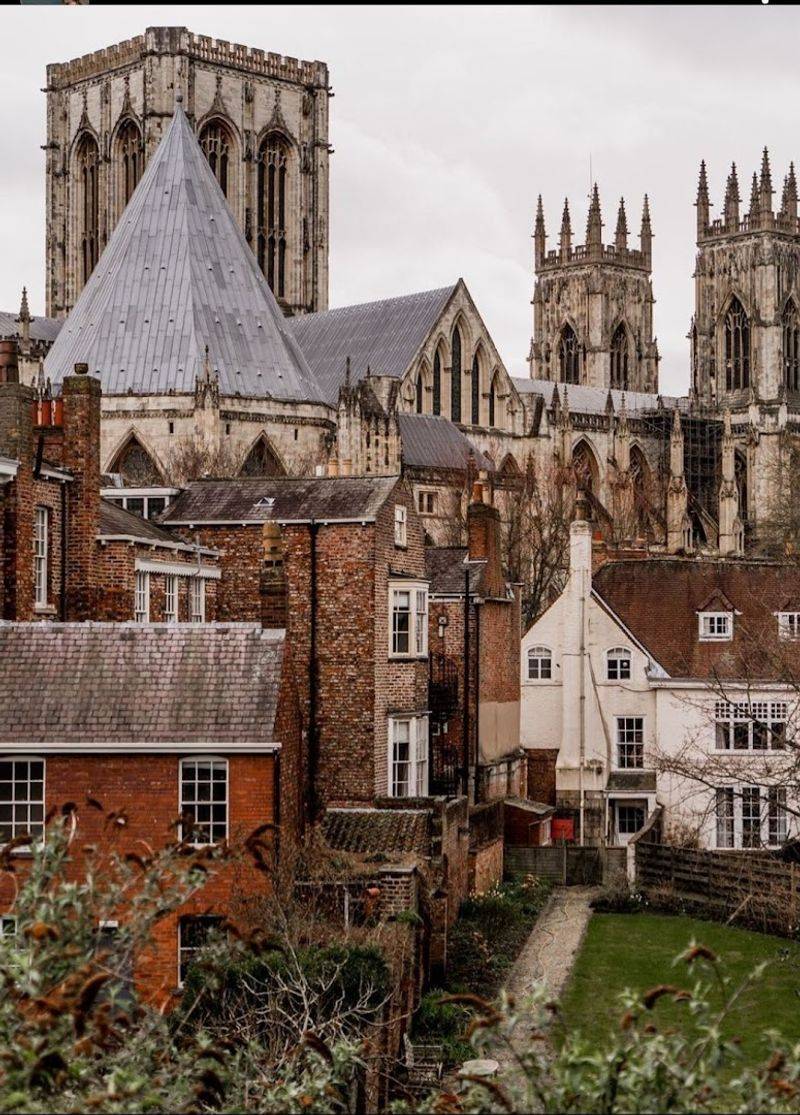
York has been continuously occupied for over 2,000 years, which means its medieval layer is just one of several fascinating historical strata stacked on top of each other. Romans built a fortress here, Vikings turned it into a trading hub called Jorvik, and then the Normans arrived and built a castle.
The result is a city where history genuinely comes at you from every direction, and the medieval period left some of its most spectacular marks.
York Minster is one of the finest Gothic cathedrals in Northern Europe, and its Great East Window contains the largest expanse of medieval stained glass in the world. The window alone justifies the entrance fee.
The city walls, which encircle the old town for nearly three miles, are largely intact and freely walkable, offering elevated views over rooftops and gardens throughout the circuit.
The Shambles is York’s most famous medieval street, a narrow lane of overhanging timber buildings that once housed butchers and now houses gift shops and cafes. It inspired J.K.
Rowling’s Diagon Alley, according to popular legend, though she has never officially confirmed it. York also has a remarkable Viking museum, the Jorvik Viking Centre, built on the actual site of excavated Viking-age streets.
History here has layers, and every one of them is worth exploring.
Toledo, Spain
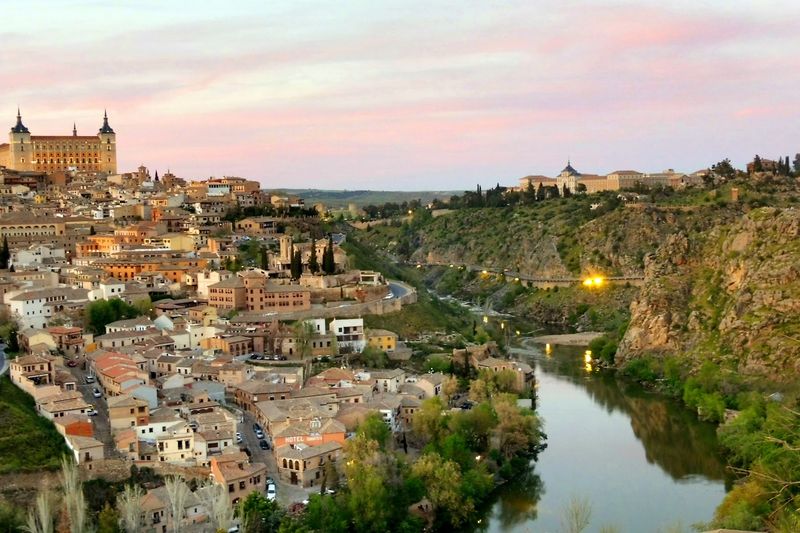
Toledo earned the nickname “City of Three Cultures” because for centuries, Christians, Jews, and Muslims lived and worked side by side here, each leaving extraordinary architectural fingerprints on the city. The result is a medieval maze where a Gothic cathedral stands minutes from a Moorish mosque and ancient synagogues, all packed together on a dramatic hilltop ringed by the Tagus River.
No other Spanish city tells such a layered story in such a compact space.
The Cathedral of Toledo is one of Spain’s greatest Gothic buildings, its interior stuffed with El Greco paintings, a jaw-dropping altarpiece, and the famous Transparente, a baroque altarpiece lit by a sculpted opening in the ceiling that floods the space with theatrical light. The nearby Alcazar fortress, rebuilt after the Spanish Civil War, now houses a military museum with exhibits covering the siege of 1936.
Toledo’s old Jewish quarter, the Juderia, contains two surviving medieval synagogues, Santa Maria la Blanca and El Transito, both now museums that preserve remarkable Mudejar architecture. The city is also famous for its swords and blades, a craft tradition dating back to Roman times.
Buying a Toledo steel letter opener is optional but feels entirely appropriate. The hilltop views at sunset are simply stunning.
Colmar, France
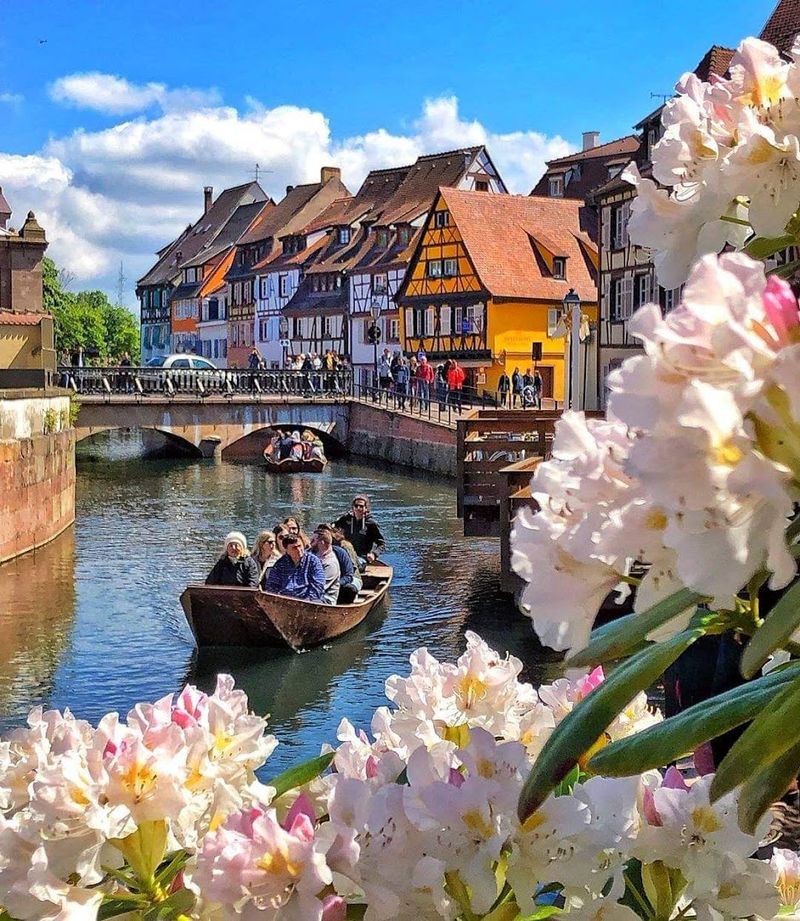
Colmar looks so impossibly pretty that first-time visitors often stop in the middle of the street and just stare, unsure whether they have wandered into a town or a very elaborate stage set. The Alsatian capital of wine is packed with half-timbered houses painted in shades of coral, mustard, sage, and terracotta, their facades reflected in the canals of the Little Venice quarter.
It is one of the most photogenic towns in France, and it knows it.
The Quartier des Tanneurs, or Tanners’ Quarter, is a particularly atmospheric corner of the old town, with tall narrow houses that were once used to dry hides on their upper floors. The open-air upper stories gave the buildings their distinctive look and now give photographers their favorite shots.
The nearby Rue des Marchands is lined with medieval merchants’ houses, including the Maison Pfister, one of the finest Renaissance buildings in Alsace.
Colmar also holds a world-class art treasure: the Isenheim Altarpiece, housed in the Unterlinden Museum. Painted around 1515 by Matthias Grunewald, it is considered one of the greatest works of German Renaissance art and is genuinely moving to stand in front of.
The town’s Christmas markets, spread across several themed squares, are among the most beautiful in France. Alsatian wine flows freely throughout.
Kotor, Montenegro
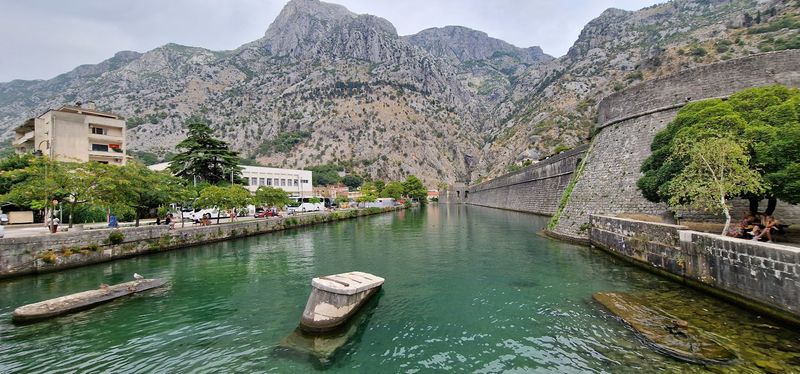
Geography gave Kotor an unfair advantage in the dramatic settings competition. The walled old town is squeezed between the glittering Bay of Kotor and near-vertical mountain walls that rise so steeply behind the city that they almost seem to lean over it.
The result is one of the most spectacular natural and architectural combinations anywhere on the Adriatic coast, and the view from the water as you approach by boat is genuinely breathtaking.
The old town itself is a beautifully preserved Venetian-era medieval settlement, full of Romanesque churches, marble piazzas, and carved stone doorways. The Cathedral of Saint Tryphon, built in 1166, is the city’s oldest and most important building, and its interior treasury holds centuries of gold and silver religious artifacts.
The winding lanes inside the walls are narrow enough that two people can barely pass in places, which makes exploration feel like a genuine adventure.
The fortress of San Giovanni climbs 1,350 steps up the mountain behind the town, and the view from the top rewards every burning calf muscle with a panorama over the entire bay. Cats are famously beloved in Kotor, with their own museum and countless feline residents lounging on sun-warmed stone steps throughout the old town.
Kotor takes its cats as seriously as its history, and both are excellent.
Mdina, Malta
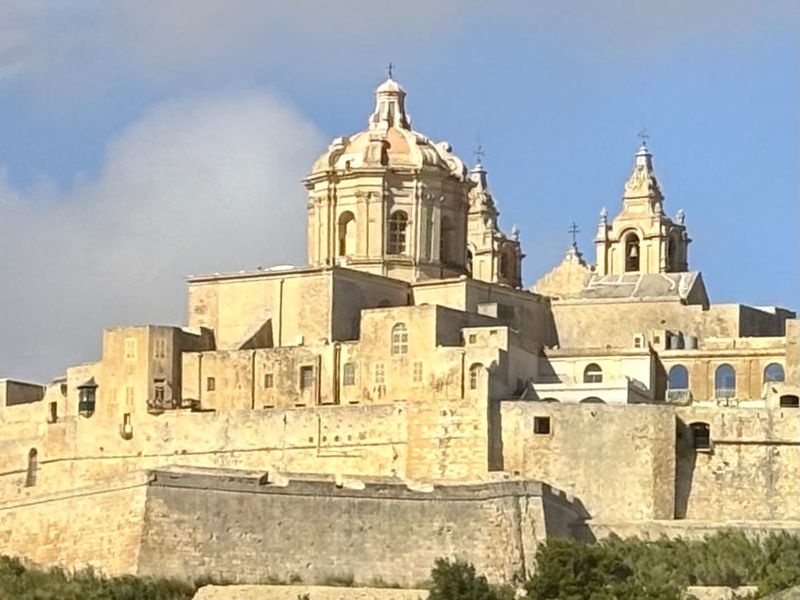
Locals call it the Silent City, and Mdina earns that name every single day. Only about 300 people live within its ancient fortified walls, making it one of the most sparsely populated city centers in the world.
The result is an atmosphere unlike any other medieval town in Europe: golden stone palaces, baroque cathedrals, and noble houses lining streets so quiet you can hear your own footsteps echoing off walls that have stood for over a thousand years.
Mdina served as Malta’s capital for centuries before the Knights of St. John moved the seat of power to Valletta in the 16th century. The switch left the old city essentially frozen in time, its aristocratic families still occupying the same palaces their ancestors built.
The Cathedral of Saint Paul, built on the site where Saint Paul is said to have met the Roman governor of Malta, dominates the skyline and contains an extraordinary collection of Flemish paintings and Maltese silverwork.
The bastions surrounding Mdina offer sweeping views across the entire island, from the glittering harbor of Valletta to the rural countryside rolling toward the sea. Visiting at dusk, when the golden limestone walls glow amber in the fading light, is a genuinely magical experience.
The nearby suburb of Rabat adds Roman catacombs and ancient ruins to round out an already remarkable visit.
Lavenham, England
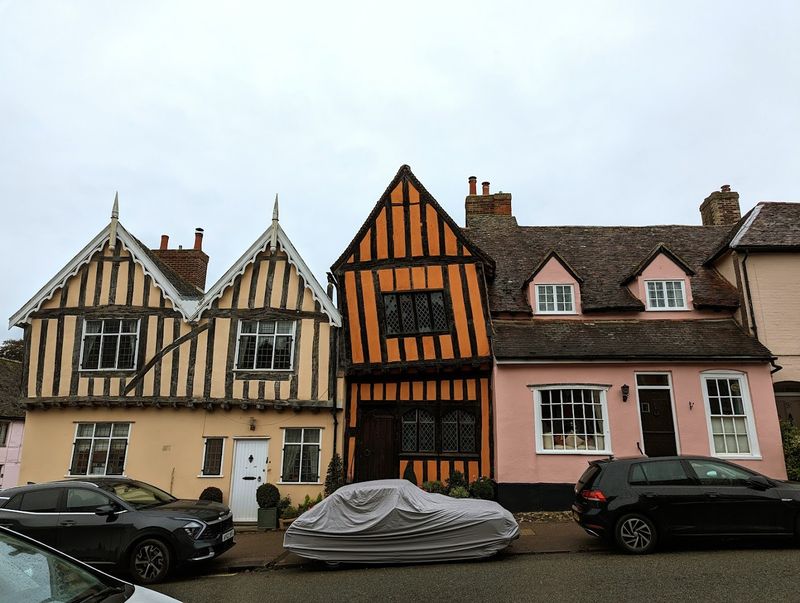
Lavenham is crooked in the most wonderful way possible. Its medieval half-timbered houses lean, tilt, and sag at angles that should be alarming but are instead completely charming, the result of centuries of gentle settlement into the Suffolk clay beneath them.
The town was one of the wealthiest in England during the 15th century, built on the profits of the wool trade, and that prosperity left behind a collection of timber-framed buildings that is still considered one of the finest in the country.
The Guildhall of Corpus Christi, a striking timber-framed building on the market square, was built around 1529 and now operates as a museum telling the story of the local cloth industry and village life through the centuries. The parish church of St. Peter and St. Paul is enormous for such a small town, another testament to the medieval wealth that once flowed through Lavenham’s wool merchants.
Its tower is one of the tallest in Suffolk.
The town has only around 1,700 residents today, which gives it a genuinely lived-in, unhurried quality that larger heritage destinations often lose. Lavenham has appeared in several film and television productions, most notably as a filming location for Harry Potter and the Deathly Hallows.
Wandering its lanes on a quiet weekday morning, with no crowds and no agenda, is one of England’s most underrated pleasures.
Share this story