More than 150 concrete sculptures, a limestone house built to look like a log cabin, and a glass-lidded mausoleum make the Garden of Eden in Lucas one of the most unusual attractions in Kansas. Created over two decades by retired schoolteacher S. P. Dinsmoor, the site combines biblical scenes, political commentary, and folk art on a scale that is difficult to believe until you see it in person.
The surprises keep coming as you explore the property. Built with 113 tons of cement, the sculptures reflect one man’s deeply held beliefs, while the house and mausoleum offer an equally fascinating look at the life behind the artwork. It is a place unlike any other in the Midwest, and every section reveals another unexpected piece of its story.
The Man Behind the Concrete: Who Was S. P. Dinsmoor
Samuel Perry Dinsmoor was not your average retiree. Born in 1843, he served in the Civil War, worked as a schoolteacher, farmed the land, and threw himself into Populist politics before most people his age were thinking about slowing down.
At 64, he moved to Lucas, Kansas, and began constructing what would become one of the most eccentric personal art projects in American history. He was driven by deeply held beliefs about fairness, religion, and the exploitation of ordinary workers by powerful institutions.
His sculptures were not random. Every figure he created carried a message, whether biblical or political, and he wanted visitors to understand exactly what he was saying. He charged admission from early on, knowing that the site needed financial support to survive beyond his own lifetime.
Dinsmoor was fiercely independent, deeply opinionated, and wildly creative, a combination that turned a modest Kansas lot into something the world still talks about today.
Finding the Place: Lucas, Kansas and What Surrounds It
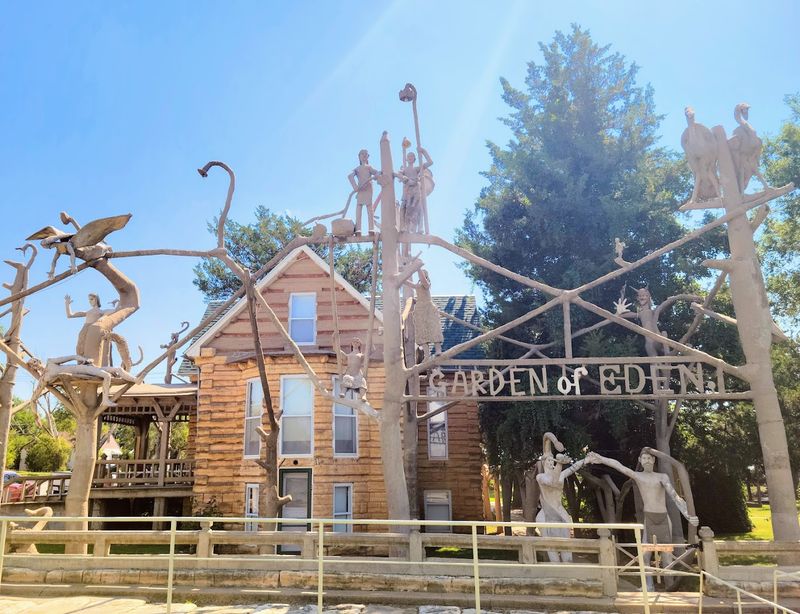
The town of Lucas sits in Russell County in north-central Kansas, a quiet community of just a few hundred people surrounded by wide open plains and the kind of sky that seems to go on forever.
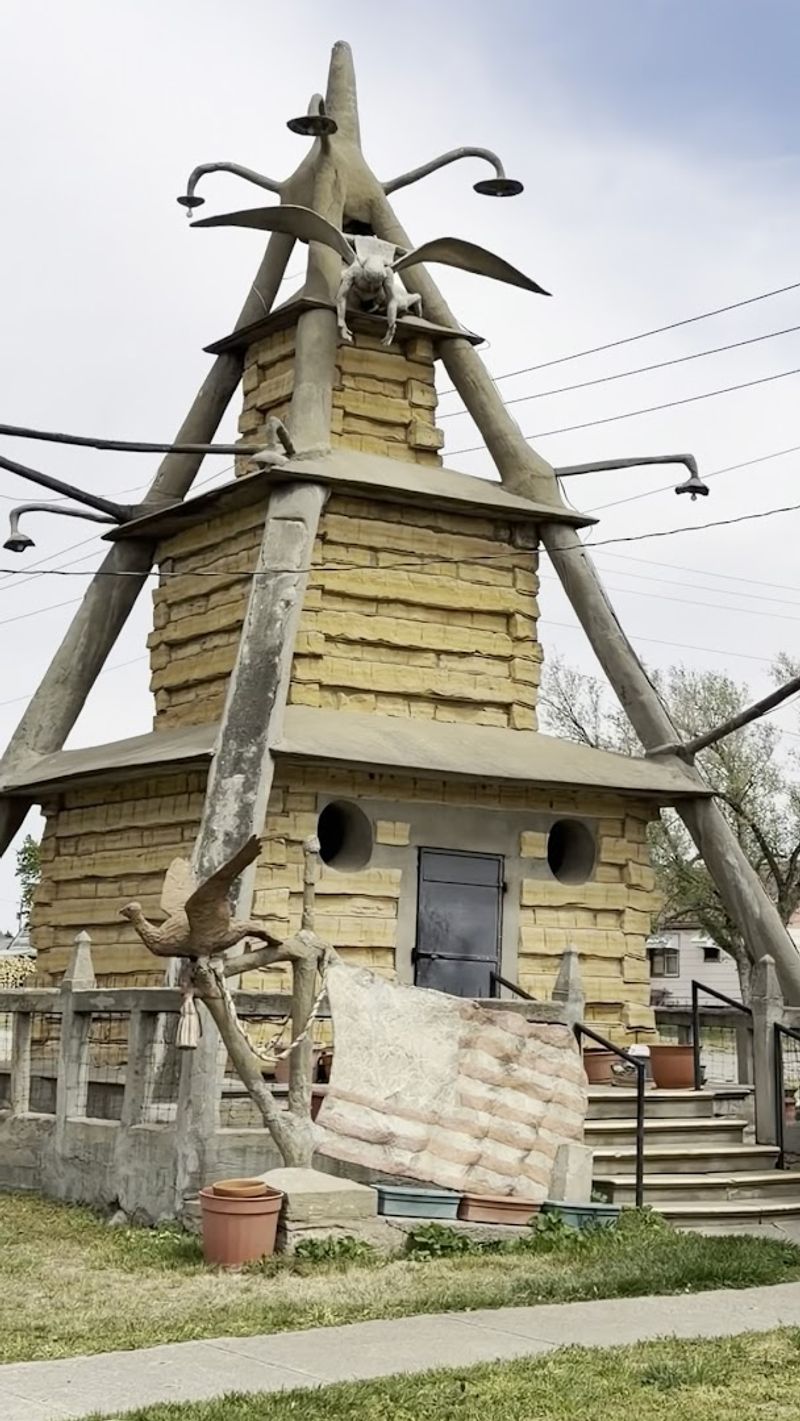
The Garden of Eden is at 305 E 2nd St, Lucas, KS 67648, and it is hard to miss once you turn onto that block. The limestone cabin rises above the surrounding neighborhood, and the concrete figures peer out from every angle of the property like they are watching you arrive.
Lucas itself has developed a reputation as an arts community, partly because of the Garden of Eden and partly because other folk artists have been drawn to the town over the years. The nearby Grassroots Art Center and the remarkable outdoor sculpture called the World’s Largest Collection of the World’s Smallest Versions of the World’s Largest Things are both worth a stop.
The whole area rewards slow, curious travelers who enjoy unexpected discoveries tucked into ordinary-looking places.
The Cabin That Is Not Really a Cabin
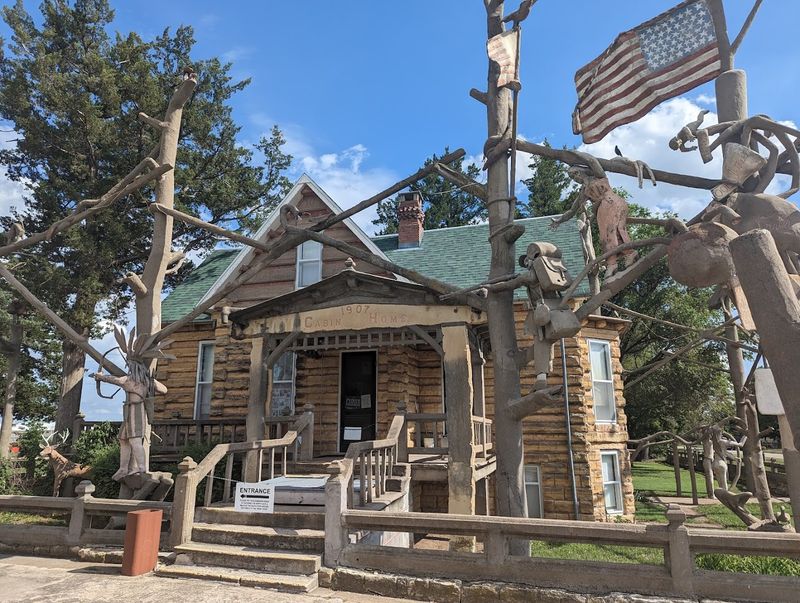
At first glance, the house looks like a log cabin, which is exactly what Dinsmoor intended. But look closer, and you will realize that every single log is actually native Post Rock limestone, quarried from the Kansas landscape and carefully shaped to mimic the rounded texture of timber.
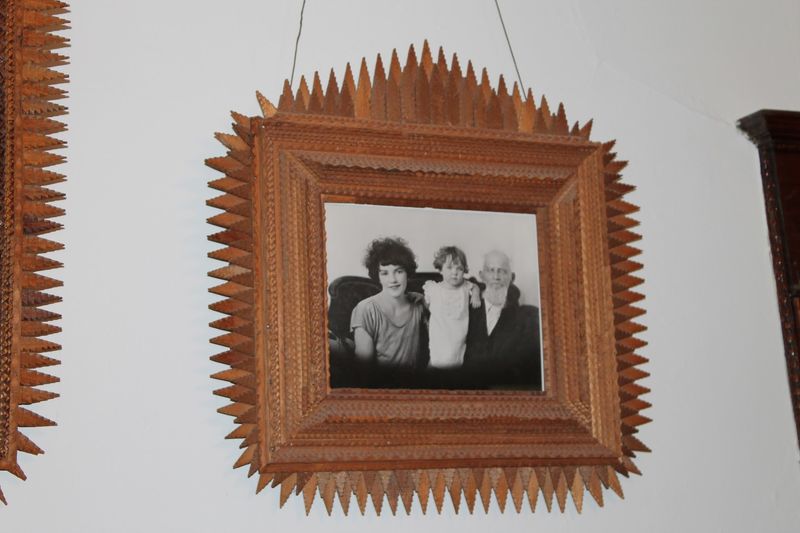
The structure has eleven rooms spread across multiple floors, and the interior holds detailed woodwork that Dinsmoor carved himself, including doorframes, banisters, tables, and a wardrobe that show a level of craftsmanship most people never expect to find here.
The main floor is where visitors pay admission and watch a short orientation film before beginning the tour. Upper and lower floors can sometimes be explored more independently, giving you a chance to absorb the atmosphere of a home that has been frozen in time since the early twentieth century.
The house feels less like a museum and more like a time capsule, one where the original resident had very strong opinions about almost everything.
Over 150 Concrete Sculptures and the Stories They Tell

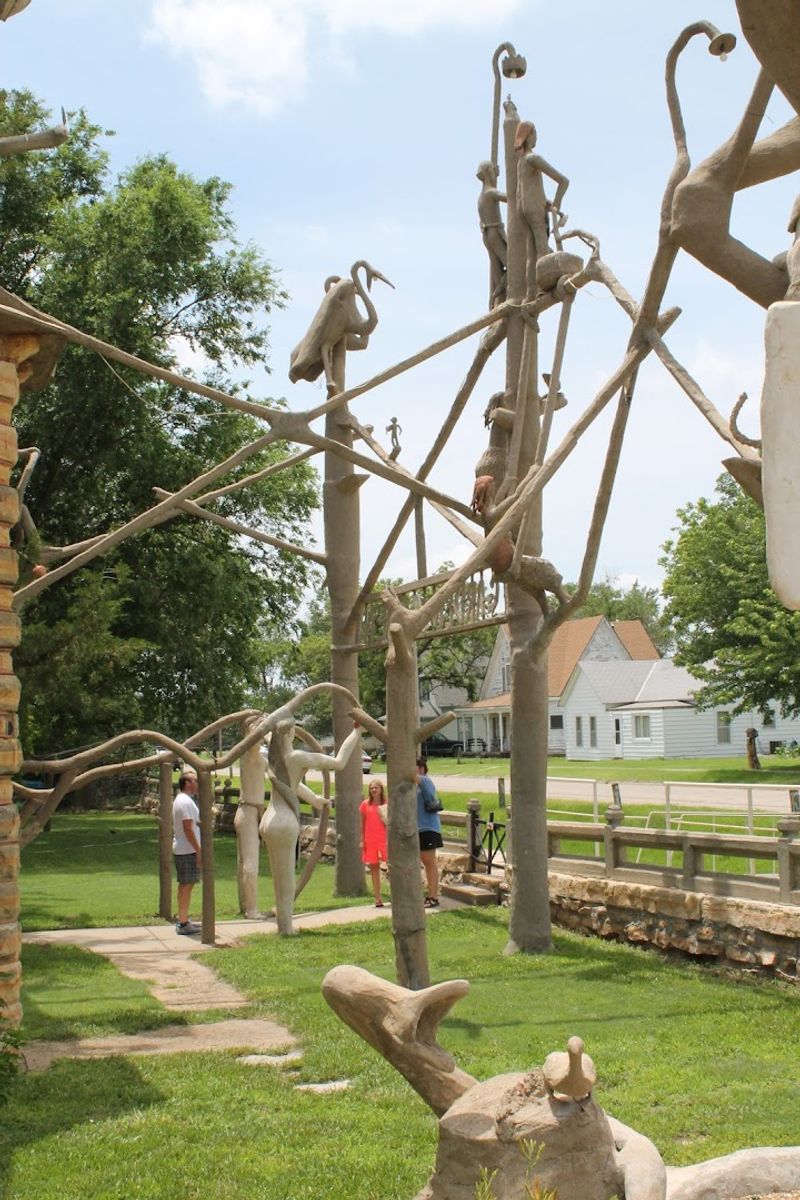
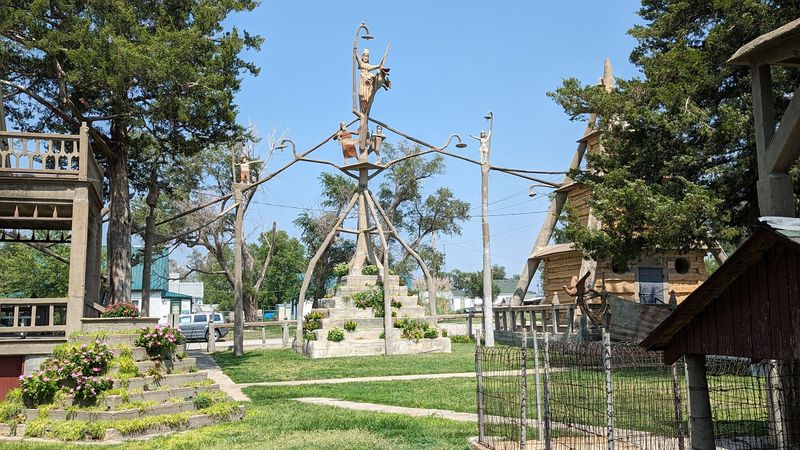
The sculptures are the heart of the experience, and there are more than 150 of them covering nearly every inch of the property. Dinsmoor used 113 tons of cement to create figures that range from biblical characters to sharp political commentary.
Adam and Eve appear in the garden, as do Cain and Abel, angels, and a serpent winding through the trees. These religious scenes mix freely with figures representing bankers, lawyers, and monopolists shown in unflattering poses that leave no room for misinterpretation about what Dinsmoor thought of them.
Many of the sculptures are three stories tall, rising above the roofline of the cabin and visible from the street before you even set foot on the property. The scale of the work is genuinely surprising, especially when you remind yourself that one man built all of this by hand over roughly two decades.
Each figure rewards a second and third look, because the details embedded in the concrete tell stories that a quick glance simply cannot capture.
The Crucifixion of Labor: Dinsmoor’s Most Powerful Statement
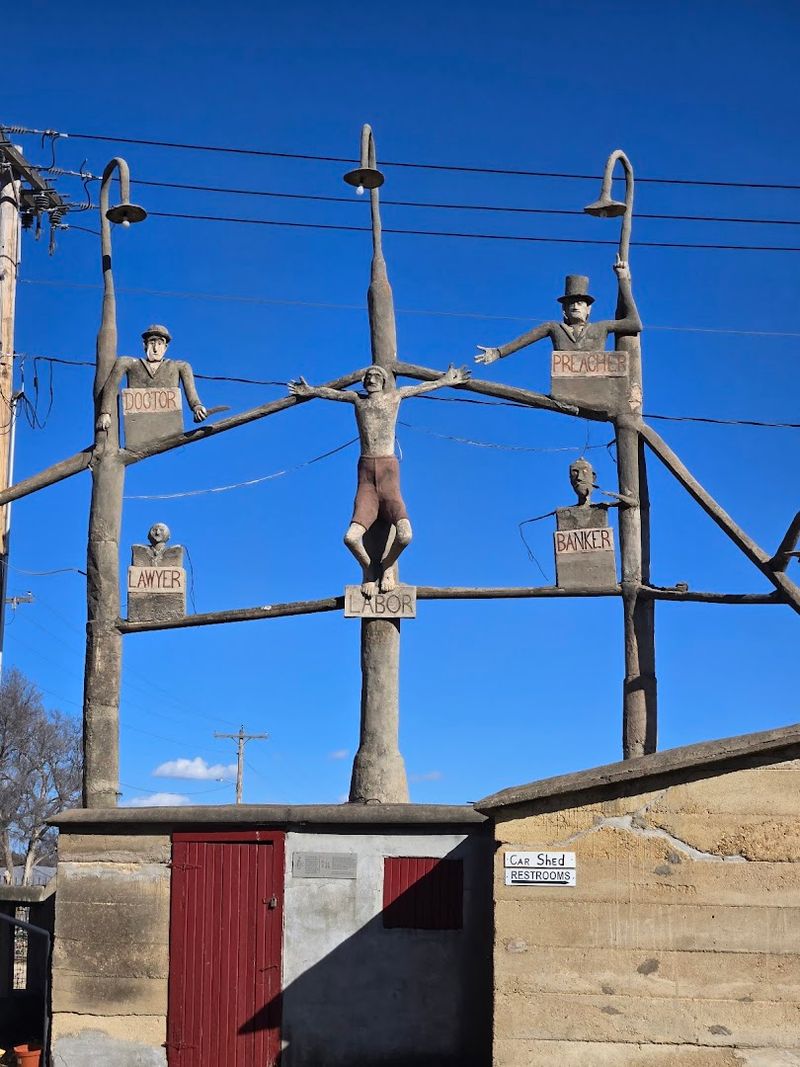
Of all the sculptures on the property, the one titled “Crucifixion of Labor” is arguably the most striking and the most direct. It shows a working man being crucified, with figures representing banks, trusts, and monopolies positioned as the perpetrators of the act.
Dinsmoor was a committed Populist, and this piece distills his entire political worldview into a single concrete image. He believed that ordinary farmers and workers were being systematically crushed by powerful financial institutions, and he was not subtle about saying so.
The sculpture is large enough to be seen clearly from the sidewalk, and it has a theatrical quality that makes it feel more like a stage set than a yard decoration. The figures are expressive, the composition is deliberate, and the message is unmistakable even to someone who knows nothing about the Populist movement of the late 1800s.
Standing in front of it, you feel the weight of genuine conviction, the kind that makes a 64-year-old man pick up a trowel and not put it down for twenty years.
The All-Seeing Eye and Dinsmoor’s Clever Use of Electric Light
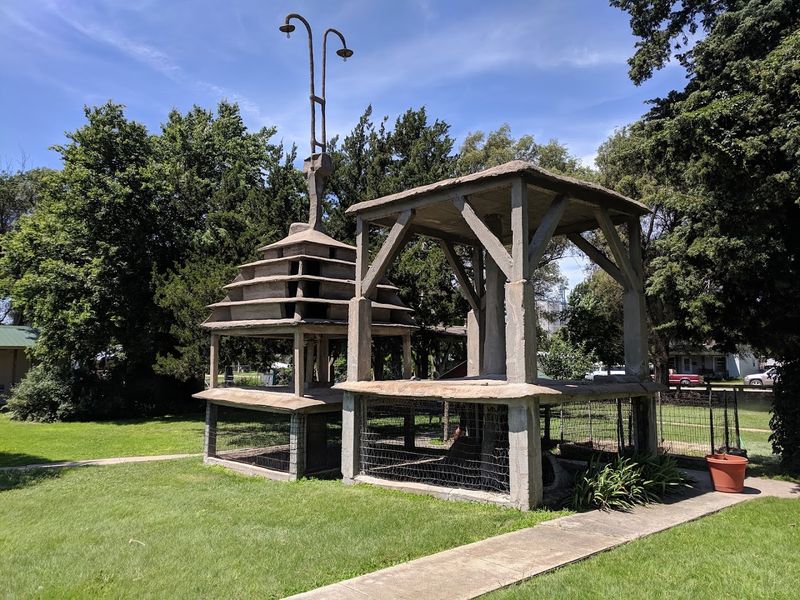
One of the most inventive details at the Garden of Eden is something that many visitors almost walk right past. Dinsmoor wired electric lighting into several of his sculptures, a remarkable feat for a self-taught concrete artist working in the early twentieth century.
The most famous of these is the “All-Seeing Eye,” a sculpture designed specifically to wink at passing trains. The idea that this man was thinking about theatrical effects, audience engagement, and interactive art long before those terms became fashionable says a great deal about how ahead of his time he was.
The lighting details are subtle during the day, but the guides do a wonderful job of explaining how they work and what Dinsmoor intended by including them. It is one of those moments in the tour where you realize the creator was not just passionate but also genuinely clever.
That combination of raw conviction and practical ingenuity is what keeps the Garden of Eden from feeling like a simple curiosity and elevates it into something worth studying.
The Mausoleum: Dinsmoor’s Final and Most Unforgettable Exhibit
Nothing on the tour quite prepares you for the mausoleum. Dinsmoor designed and built it himself, and he arranged to be interred there in a glass-lidded concrete coffin so that visitors could see him long after he was gone.
He passed away in 1932 at the age of 89, and true to his plan, he remains on site to this day. His first wife is also interred in the mausoleum. The guides give a brief heads-up before entering, which is a thoughtful touch, because the experience is genuinely unlike anything most people have encountered at a tourist attraction.
Photography is not allowed inside the mausoleum, a rule that actually makes the experience feel more respectful and more personal. You stand there, face to face with the remains of the man who built everything you just walked through, and it lands with a quiet weight that no photograph could really capture anyway.
It is the moment the entire visit snaps into focus, and it is something you will not forget quickly.
Taking the Guided Tour: What to Expect From Start to Finish
The guided tour at the Garden of Eden runs about 45 minutes, though spending closer to an hour gives you more time to absorb everything without feeling rushed. Tours are available every day from 10 AM to 5 PM, and the last admission is timed accordingly.
The experience begins inside the cabin, where you pay admission, browse a small gift shop stocked with postcards, lapel pins, and a guidebook, and watch a short film that provides helpful context before you head outside. The guides are knowledgeable, enthusiastic, and clearly love what they do, weaving together art history, local lore, and personal details about Dinsmoor that bring the whole property to life.
Outside, the tour moves through the sculpture garden at a comfortable pace, with the guide stopping to explain the meaning behind specific figures and groupings. The mausoleum visit comes near the end and is handled with appropriate care.
Bathrooms are available behind the house, and the gift shop is worth a browse before you leave.
Biblical Narratives Carved in Concrete: Adam, Eve, and Beyond

The biblical section of the garden is where Dinsmoor’s storytelling instincts are most obvious. The creation narrative unfolds across the property in concrete, with Adam and Eve rendered in figures that are expressive and surprisingly detailed given the medium.
The serpent winds through a concrete tree in a way that feels theatrical rather than menacing, and the surrounding figures create a scene that reads almost like a comic strip frozen in three dimensions. Cain and Abel appear nearby, and the sequence of events moves through the garden in a way that rewards visitors who take time to follow the narrative rather than just admiring individual pieces.
Dinsmoor was not trying to create fine art in the traditional sense. He was telling stories, making arguments, and inviting people into a world shaped entirely by his own convictions about faith and justice.
The biblical and political sections of the garden sit side by side, which is itself a statement about how Dinsmoor saw the relationship between scripture and social responsibility.
A National Historic Place With a Very Unconventional Resume
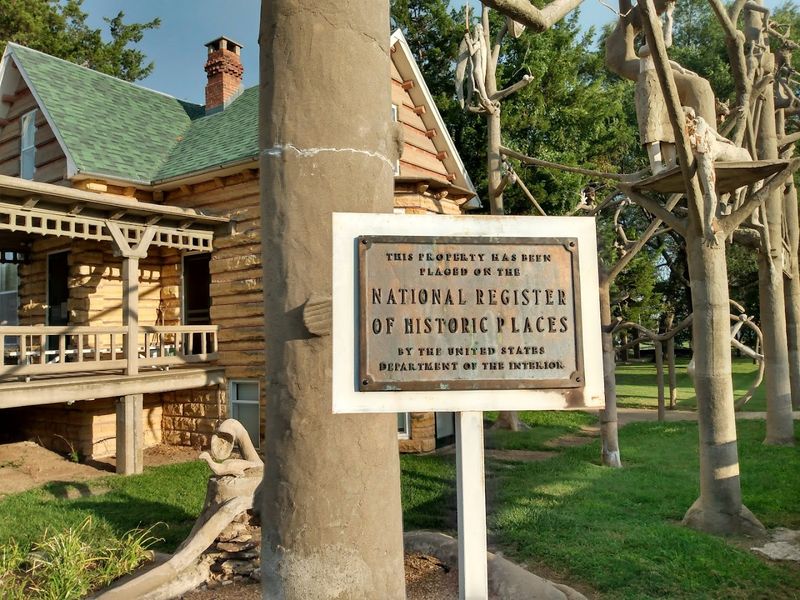
The Garden of Eden holds a spot on the National Register of Historic Places, which puts it in the company of courthouses, battlefields, and presidential homes. That distinction matters, but it also feels slightly funny given how deliberately strange this place is.
The listing has helped support conservation efforts that keep the concrete sculptures from deteriorating. Cement is not indestructible, and maintaining more than 150 outdoor figures that have been exposed to Kansas weather for over a century requires real expertise and ongoing investment.
The site draws more than 10,000 visitors a year to a town of just a few hundred people, which makes it one of the most impactful tourist attractions per capita in the entire state. Researchers, artists, and folk art enthusiasts come from around the world to study what Dinsmoor built.
Being recognized by the National Register has also helped the Garden of Eden gain international attention as one of the top art environments on the planet, a label that would have pleased its creator enormously.
Planning Your Visit: Practical Tips for Getting the Most Out of the Garden
The Garden of Eden is open seven days a week from 10 AM to 5 PM, which makes planning a visit relatively simple no matter what day you are passing through. The phone number is 785-525-6395, and the official website at gardenofedenlucas.org has current admission prices and any seasonal updates.
Plan for at least 45 minutes if you want the full tour, and closer to 90 minutes if you want to explore Lucas’s other attractions before or after. The sculptures are visible from the sidewalk even when the site is closed, so a drive-by is always possible, but the interior tour and the mausoleum visit are what make the experience complete.
The property is not fully wheelchair accessible due to uneven walkways, but the outdoor sculptures along the sidewalk perimeter are viewable without going onto the grounds. There is street parking on E 2nd St, and the neighborhood is easy to navigate.
The site’s rating of 4.6 stars across hundreds of reviews reflects how consistently it delivers on its unusual promise.
Share this story