Europe is home to some of the most breathtaking gardens on the planet, and a few of them look so stunning that photos barely do them justice. From tulip fields that stretch as far as the eye can see to ancient terraces built for kings and sultans, these outdoor spaces tell stories of art, power, science, and beauty all at once.
Some are open just a few weeks a year, while others welcome visitors every single day. Whether you are planning a trip or just looking for inspiration, this list covers 15 European gardens that genuinely deserve a spot on your travel radar.
Keukenhof – Lisse, Netherlands
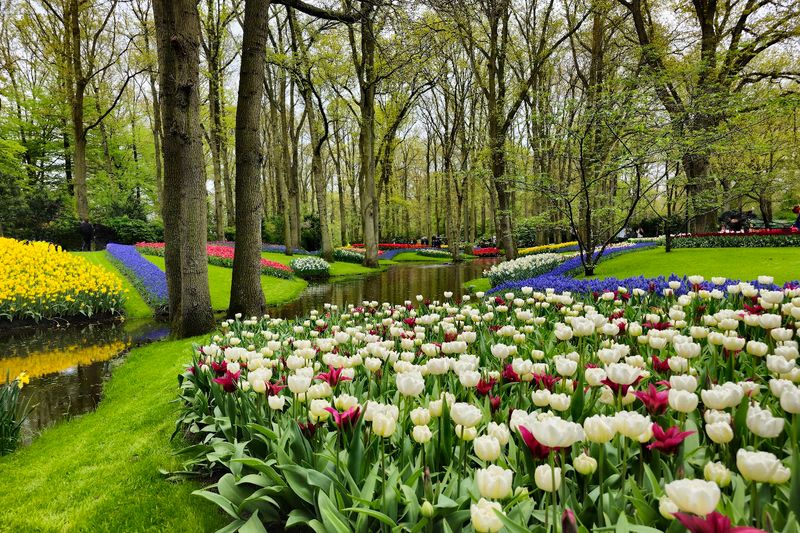
Every spring, a small Dutch town near Amsterdam transforms into one of the most color-saturated landscapes you will ever see in real life. Keukenhof opens for a limited window each year, with the 2026 season running from March 19 to May 10, and those seven or eight weeks are packed with millions of tulips, hyacinths, daffodils, and other bulbs arranged in sweeping seasonal displays.
Because the garden only opens once a year, visiting feels more like catching a rare event than simply walking through a park. The layouts change from season to season, which means repeat visitors often discover something new each time.
Planning ahead is important here. Tickets sell out quickly, especially on weekends and around Dutch holidays.
Arriving early in the morning gives you the best light and fewer crowds. For pure flower spectacle on a grand scale, Keukenhof remains one of Europe’s most iconic spring destinations.
Claude Monet’s House and Gardens – Giverny, France
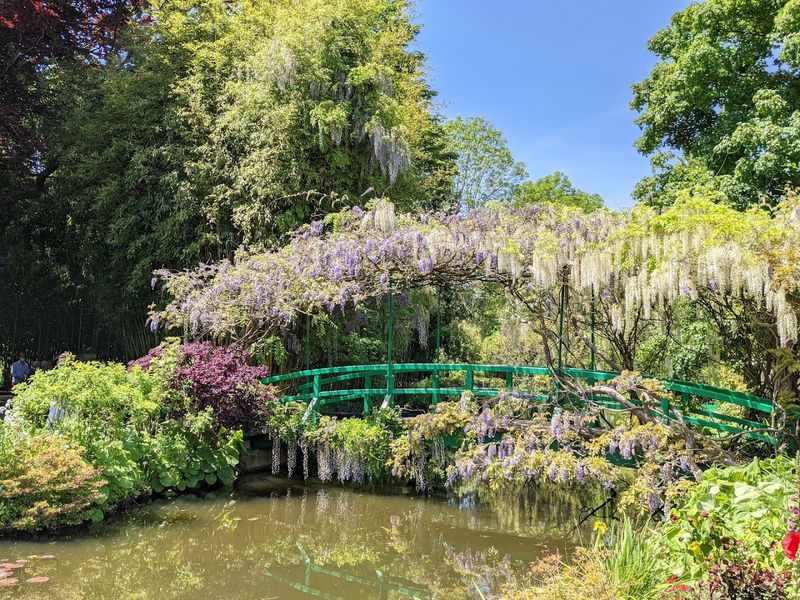
There are not many gardens in the world where the plants themselves inspired some of the most famous paintings in art history, but Giverny is exactly that place. Claude Monet designed and tended his garden here for decades, and the water lily pond with its arched Japanese bridge became the subject of his legendary series of large-scale paintings.
The site includes two distinct areas: the Clos Normand, a structured flower garden in front of the house, and the water garden across the road. Both are open to visitors from April 1 to November 1 each year.
The house itself, painted in cheerful pink and green, is also part of the tour.
Peak season brings large crowds, especially on weekends in May and June. Going on a weekday or arriving right at opening time makes a real difference.
Even with the crowds, walking through Giverny feels genuinely different from any other garden visit in France.
Gardens of Versailles – Versailles, France
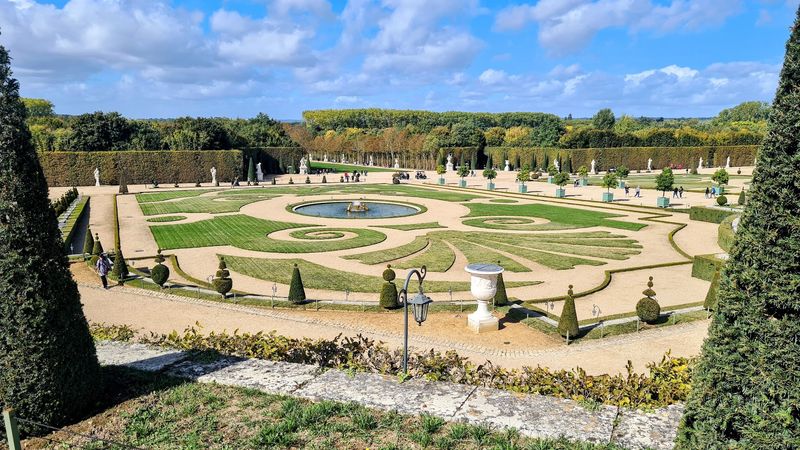
Few gardens anywhere in the world match the sheer scale and ambition of Versailles. Louis XIV commissioned landscape designer Andre Le Notre to create these grounds beginning in 1661, and the work continued for roughly four decades.
The result is a masterpiece of formal French garden design, built to project royal power through geometry, water, and stone.
Long sight lines, elaborate fountains, marble statues, clipped hedges, and the Grand Canal stretching into the distance all contribute to a landscape that still feels theatrical centuries later. The Park and Gardens are open every day, with special Musical Fountain Shows and Musical Garden days running on select dates during the warmer months.
The outer park is free to enter, while some areas and events require tickets. Comfortable shoes are essential because the grounds cover a vast area.
Even a few hours here barely scratches the surface of what Louis XIV’s gardeners built across this extraordinary estate.
Chateau de Villandry Gardens – Loire Valley, France
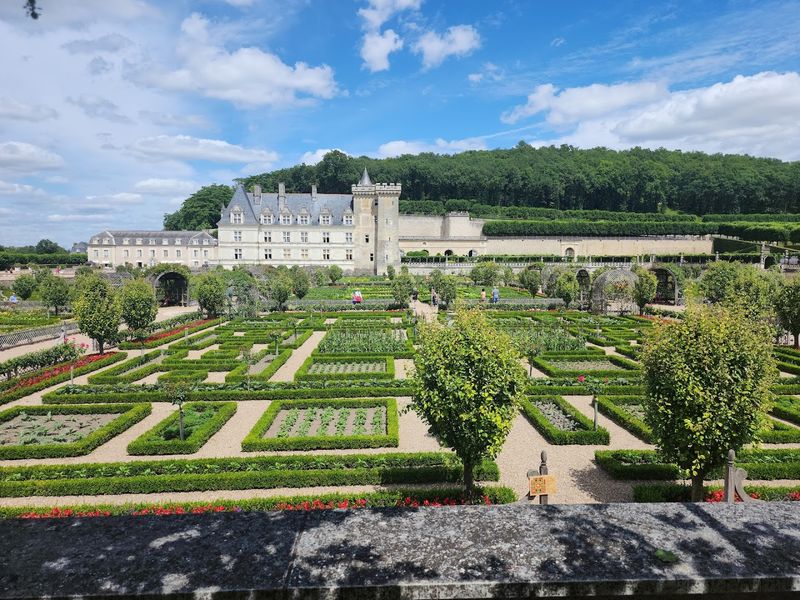
What makes Villandry stand out from every other chateau garden in the Loire Valley is its decorative vegetable garden, a Renaissance-inspired arrangement of cabbages, leeks, peppers, and other vegetables planted in precise geometric color blocks that look more like artwork than agriculture. The precision is genuinely striking, especially in late summer when the planting reaches full height.
The estate includes several distinct garden areas beyond the vegetables: an ornamental garden, a water garden, a medicinal plant garden, a sun garden, and a labyrinth. Each section has its own character, which means there is always something different to explore as you move through the grounds.
One practical advantage Villandry has over many European gardens is its schedule. The gardens are open every day of the year except December 25, making it one of the most flexible major garden destinations in France.
It rewards slow visits, so giving yourself at least two hours is a smart approach.
Villa d’Este Gardens – Tivoli, Italy
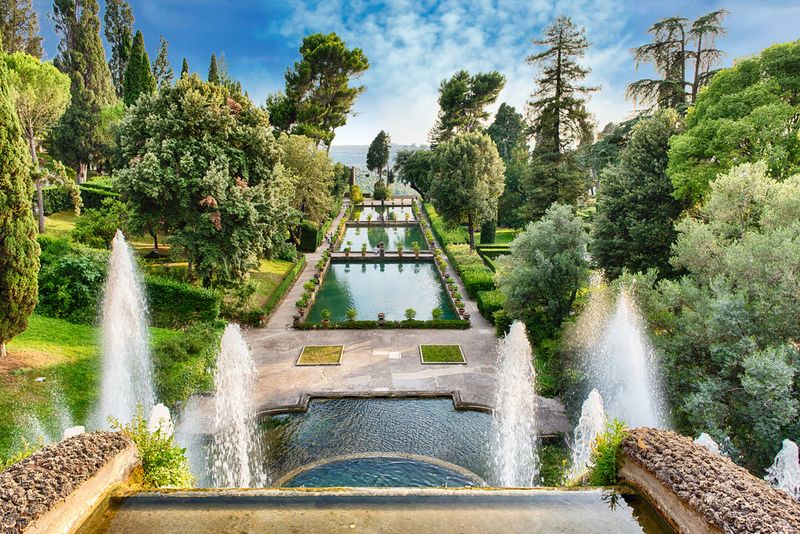
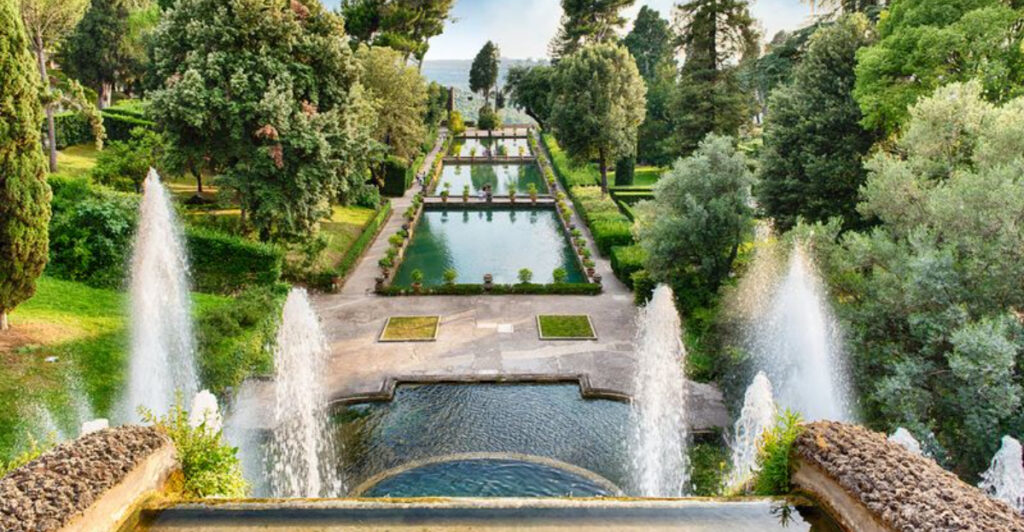
Built in the sixteenth century for Cardinal Ippolito II d’Este, this terraced garden on a steep hillside outside Rome is essentially a showcase for what water can do when engineers and artists work together. Hundreds of fountains, water jets, cascades, and channels are fed entirely by gravity from a diverted river, and the engineering behind it is as impressive as the visual result.
The layout drops steeply across multiple levels, with long horizontal walkways connecting different fountain areas. The Organ Fountain, the Oval Fountain, and the Avenue of a Hundred Fountains are among the most photographed features.
Views over the town of Tivoli and the surrounding countryside add another layer to the experience.
Villa d’Este is listed as a UNESCO World Heritage Site and is open daily, with Monday afternoon access and seasonal closing times. It pairs well with a visit to the nearby ruins of Hadrian’s Villa, which is just a short drive away.
Boboli Gardens – Florence, Italy
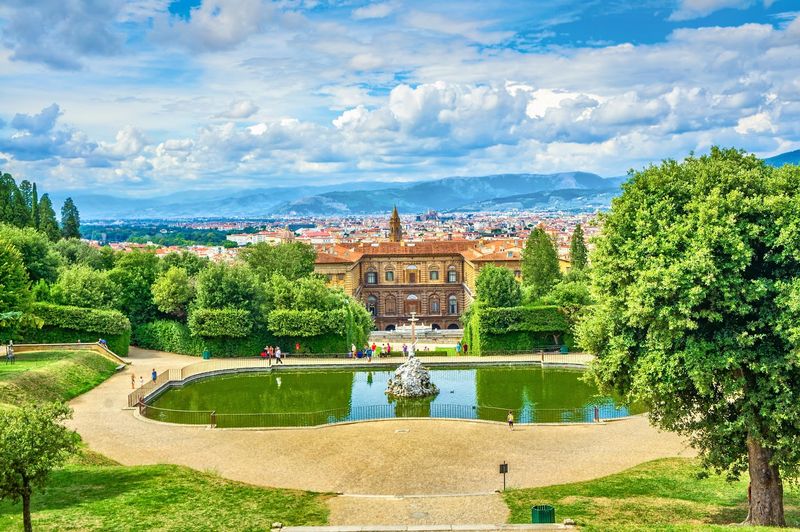
Behind the massive Pitti Palace in Florence lies a garden that was never really meant to be peaceful. The Boboli Gardens were designed to impress, to demonstrate Medici wealth and taste, and that ambition still comes through clearly in the layout today.
Long avenues, amphitheaters, grottos, and classical sculpture create a space that feels more like an outdoor museum than a casual park.
The Medici family established the original garden layout, and it was later expanded by the Habsburg-Lorraine and Savoy dynasties, each adding their own layers to the design. The result is a layered landscape where centuries of European power are literally built into the hillside.
Managed by the Uffizi Galleries, the gardens require a ticket that can be combined with other Uffizi-connected sites. The elevated terraces offer some of the best views over Florence’s rooftops, and the Kaffeehaus pavilion near the top of the garden is one of the more unusual features on the estate.
Garden of Ninfa – Cisterna di Latina, Italy
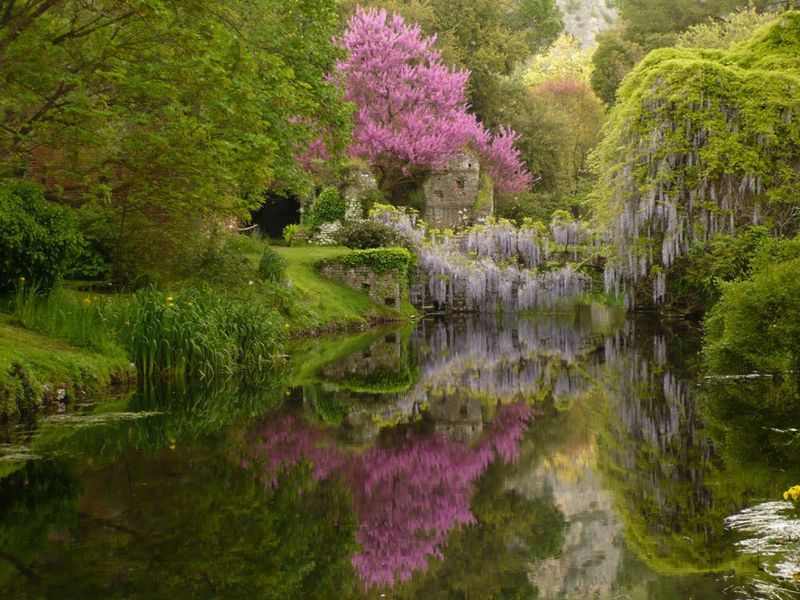
Ninfa is not a typical garden visit. It is built across the ruins of a medieval town that was abandoned in the fourteenth century, and the combination of crumbling stone towers, clear streams, arched bridges, and exuberant planting creates something that genuinely feels like a place from a fairy tale.
Roses climb over old walls, wisteria drapes across broken archways, and the water runs clear and fast through the middle of it all.
Unlike most public gardens, Ninfa operates on a limited calendar of selected opening dates managed by the Caetani Nature Foundation. The 2026 season has bookable visits available, and reservations are essential because access is carefully controlled to protect the site.
That limited access is part of what makes Ninfa feel special. It has never been developed for mass tourism, and the atmosphere reflects that.
For travelers who appreciate gardens that feel poetic and slightly wild rather than overly manicured, this is one of Italy’s most memorable stops.
Generalife Gardens – Granada, Spain
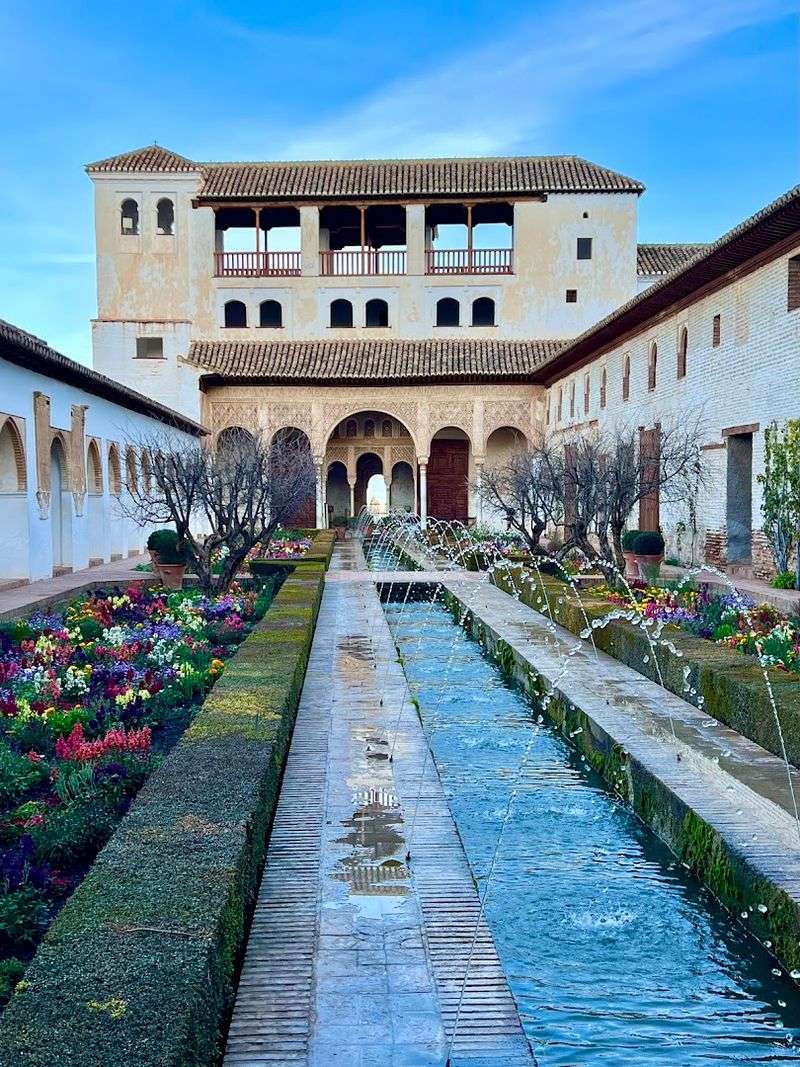
The Generalife was the summer retreat of the Nasrid rulers who governed Granada from the Alhambra, and the garden they built here reflects a very specific philosophy: that a garden should provide shade, the sound of water, and a sense of calm above all else. That approach feels remarkably modern, even though the design dates back to the thirteenth and fourteenth centuries.
Long water channels run through the central courtyard, flanked by hedges and flower beds, while cypress trees and orange trees provide structure and shade. The garden is built into the hillside above the Alhambra, which means the views are part of the experience too.
Visitors access the Generalife as part of the Alhambra monument complex, and tickets should be booked well in advance, especially during peak season. The combination of Islamic garden design, water features, historic architecture, and mountain setting makes this one of Spain’s most atmospheric and rewarding outdoor experiences.
Park and Palace of Monserrate – Sintra, Portugal
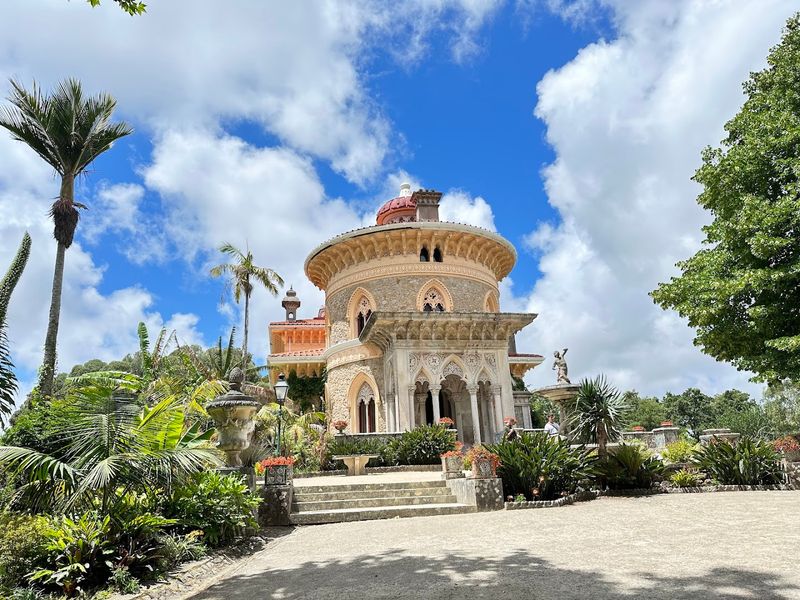
Sintra is already one of Portugal’s most visited destinations, but Monserrate tends to draw a different kind of traveler than the crowded hilltop castles. The park here was developed in the nineteenth century as a romantic landscape garden, planted with species from around the world by wealthy English and Portuguese collectors who wanted something exotic and slightly theatrical.
The palace at the center of the park is a visual mix of Gothic, Islamic, and Romantic architectural styles, and it sits so naturally within the surrounding trees and garden paths that the whole estate feels like it was designed as a single composition. Parques de Sintra describes it as a masterpiece of romanticism, and that framing is accurate.
The park is open daily, with current ticket prices and opening hours listed through Parques de Sintra’s official visitor pages. It is less crowded than Pena Palace and rewards visitors who take time to explore the less-traveled paths deeper into the garden.
Jardins do Palacio de Cristal – Porto, Portugal
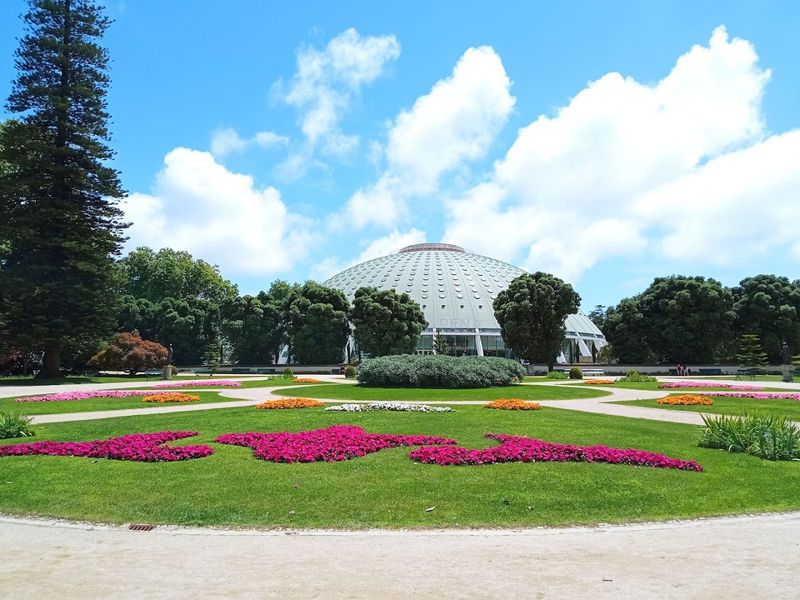
Porto is a city of steep hills and river views, and the Crystal Palace Gardens sit right at the intersection of both. The gardens occupy a prominent hilltop above the Douro River, and from the terraced overlooks you can see the river, the bridges, and the city spreading out across the opposite bank.
It is one of the best free viewpoints in Porto.
The gardens themselves are well-maintained and pleasant to walk through, with fountains, tree-lined paths, and open lawns. Peacocks roam freely through the grounds, which adds a slightly unexpected element to the experience.
The area also includes a sports pavilion and hosts outdoor events throughout the year.
One of the strongest practical points here is that the gardens are open daily and free to enter, making them an easy addition to any Porto itinerary without extra planning or cost. For travelers who want a scenic and relaxed break from the city’s busier streets, this is a reliable and genuinely rewarding stop.
Schonbrunn Palace Gardens – Vienna, Austria
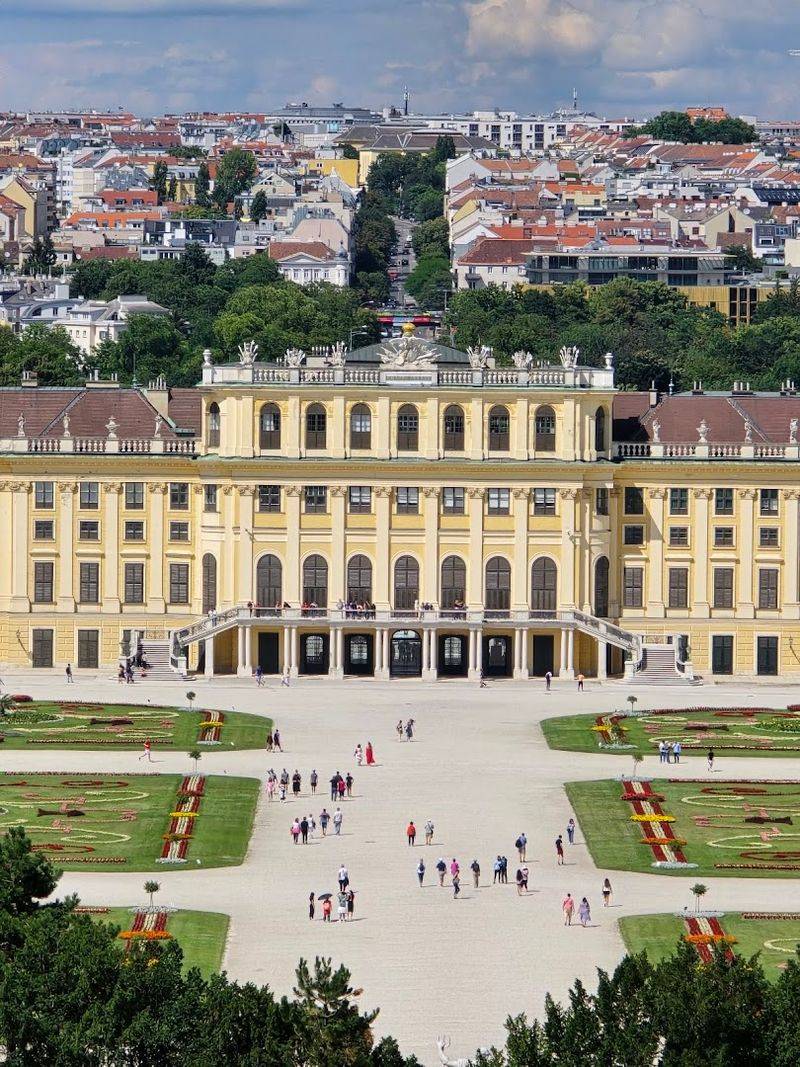
Vienna has no shortage of grand public spaces, but Schonbrunn’s palace park operates on a scale that still manages to feel surprising. The formal gardens stretch out from the yellow Baroque palace in a long symmetrical axis that leads uphill to the Gloriette, a colonnaded monument at the top of the grounds that offers sweeping views back over the palace and the city beyond.
The garden layout reflects the imperial ambitions of the Habsburg dynasty, with clipped hedgerows, classical sculptures, a Neptune fountain, and carefully managed planting beds all contributing to a landscape that feels both ordered and expansive. The gardens are open to the public every day of the year without a ticket, while the palace interior and some attractions require admission.
Schonbrunn is also home to one of the world’s oldest zoos, which sits within the palace grounds. The combination of formal garden, imperial architecture, and open green space makes this one of the most complete estate visits in Central Europe.
Kew Gardens – London, England
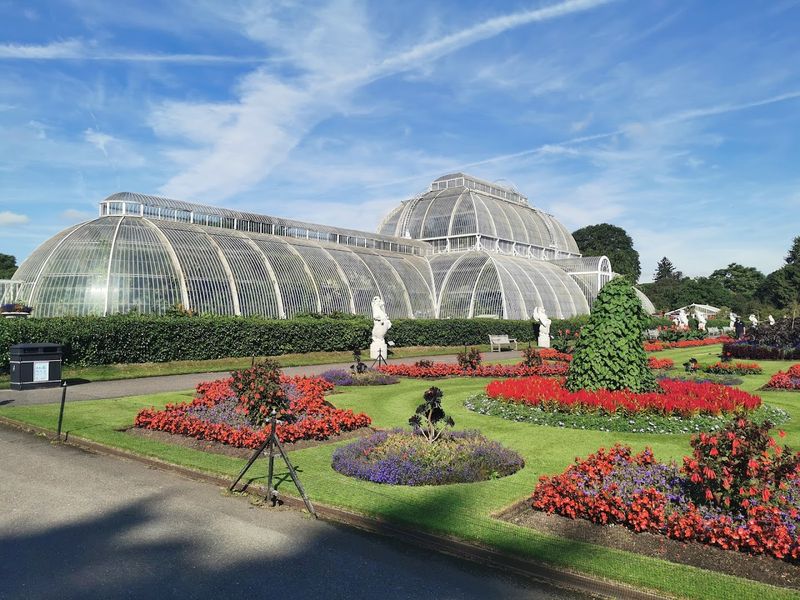
Kew Gardens carries a double identity that most botanical gardens do not manage to balance as well. On one hand, it is a working scientific institution with one of the most important plant collections in the world.
On the other hand, it is a genuinely beautiful 320-acre landscape that most visitors enjoy simply as a place to spend a full day outdoors in London.
The Victorian glasshouses are among the most recognizable features, with the Palm House and Temperate House standing as architectural landmarks in their own right. Beyond the glasshouses, the grounds include formal gardens, a treetop walkway, a Japanese pagoda, a grass garden, and wide open spaces that feel surprisingly rural given the London setting.
Kew is open daily, with seasonal hours and specific access times published on the official site. Tickets are required and can be booked online.
It is one of those places that works equally well for a focused botanical visit or a relaxed walk with no particular agenda.
RHS Garden Wisley – Surrey, England
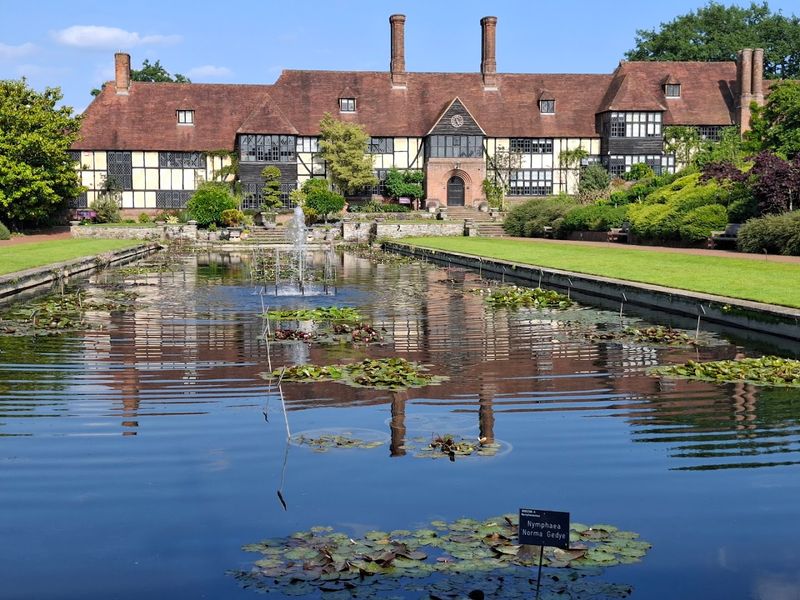
Just outside London in the Surrey countryside, Wisley is the Royal Horticultural Society’s largest and most visited garden, and it attracts a mix of serious gardeners and casual visitors who simply enjoy well-designed outdoor spaces. The RHS has developed the site over more than a century, and the result is a garden that feels both polished and constantly evolving.
Different areas of Wisley shine at different times of year. The mixed borders are at their best in summer, the glasshouse displays change with the seasons, and the kitchen garden and fruit collection offer something more practical and educational.
The broad range of planting styles means there is always a section that rewards attention no matter when you visit.
Current visitor information, tickets, opening times, and access details are available through the RHS website. The garden is open daily, and a well-stocked plant centre and cafe are part of the visit.
For gardeners looking for planting inspiration, Wisley is one of the most genuinely useful garden visits in the country.
Powerscourt Gardens – County Wicklow, Ireland
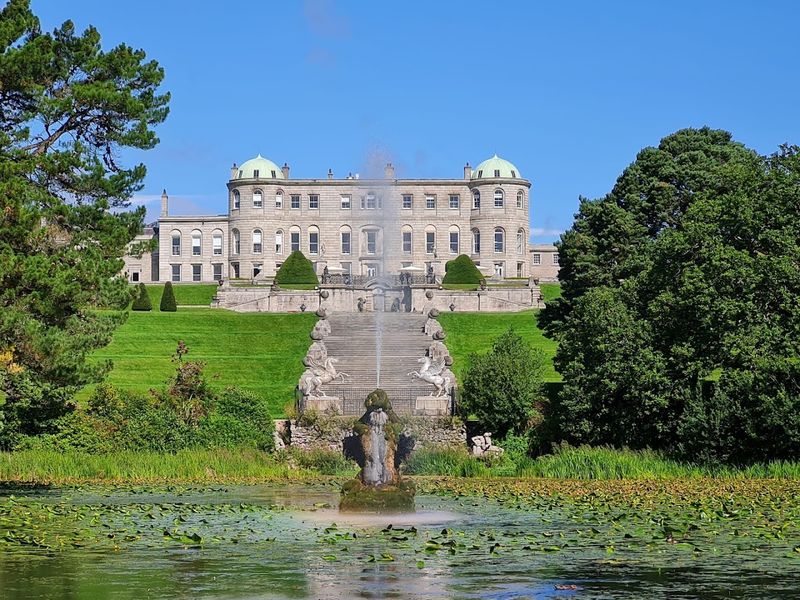
Set against the rolling backdrop of the Wicklow Mountains, Powerscourt is one of those Irish estates where the natural landscape and the designed garden feel like they were always meant to work together. The formal terraces drop down from the house in sweeping stone-edged levels, with statues, urns, and a circular pond creating a structure that looks almost Italian against the wild Irish hills behind it.
Beyond the main terraces, the estate includes a walled garden, a Japanese garden, a pet cemetery, a tower, and access to nearby Powerscourt Waterfall, which is one of Ireland’s tallest. The combination of formal design and natural scenery in one visit is genuinely hard to find elsewhere in the country.
Powerscourt House and Gardens is a ticketed attraction with a cafe, garden centre, and shops on site. It is located near the town of Enniskerry in County Wicklow, about 25 kilometers south of Dublin, making it a manageable day trip from the city.
Mainau Island – Lake Constance, Germany
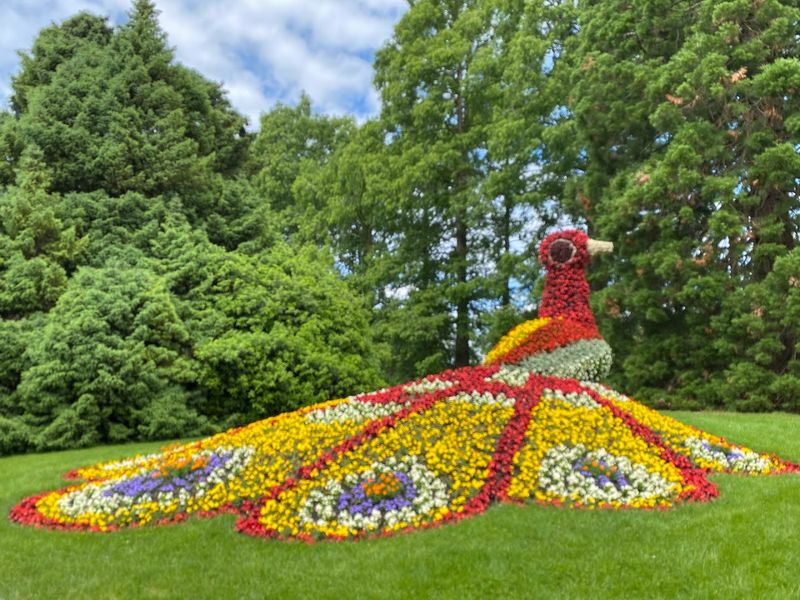
Germany is not the first country most people picture when they think of a lush flower island, but Mainau on Lake Constance makes a strong case for itself. The island sits in the southwestern corner of Germany where the borders of Germany, Austria, and Switzerland meet, and its mild microclimate allows palm trees, dahlias, rhododendrons, and other plants to thrive in ways that feel unusual for Central Europe.
The Bernadotte family, relatives of the Swedish royal family, have managed the island for generations and developed it into a year-round garden destination. The official Mainau site confirms the island is open every day of the year, with current ticket prices and event schedules posted for each season.
A Baroque church and castle add architectural interest beyond the planting, and family-friendly features including a butterfly house and children’s areas make it a practical stop for travelers with kids. The lake setting gives the whole visit a scenic quality that a mainland garden simply cannot replicate.
Share this story