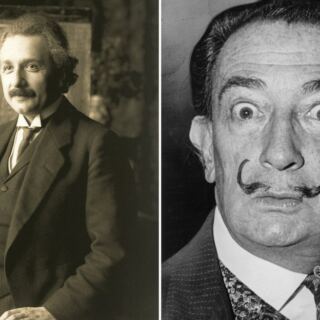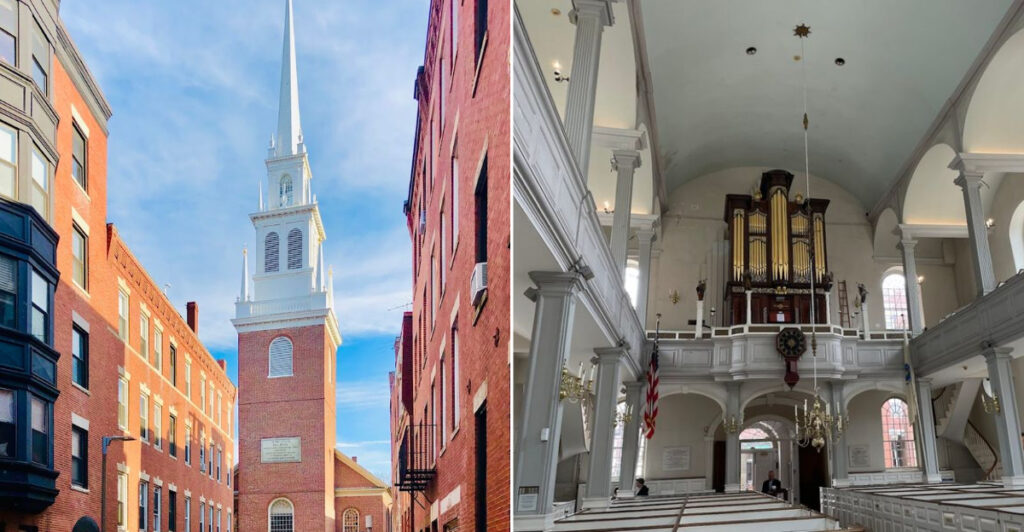
There is a building in Boston where two lanterns once flickered for less than a minute, and that brief flash of light set an entire revolution in motion. Most people walk past old churches without a second thought, but this one holds a story that runs deeper than any textbook chapter you have ever read.
The signal sent from its steeple on a spring night in 1775 warned colonial riders that British troops were moving by sea, triggering a chain of events that shaped the United States as we know it today. If you have ever wondered what it feels like to stand inside a place where history literally happened around you, this church delivers that feeling in a way that is hard to forget.
The Night Two Lanterns Changed Everything
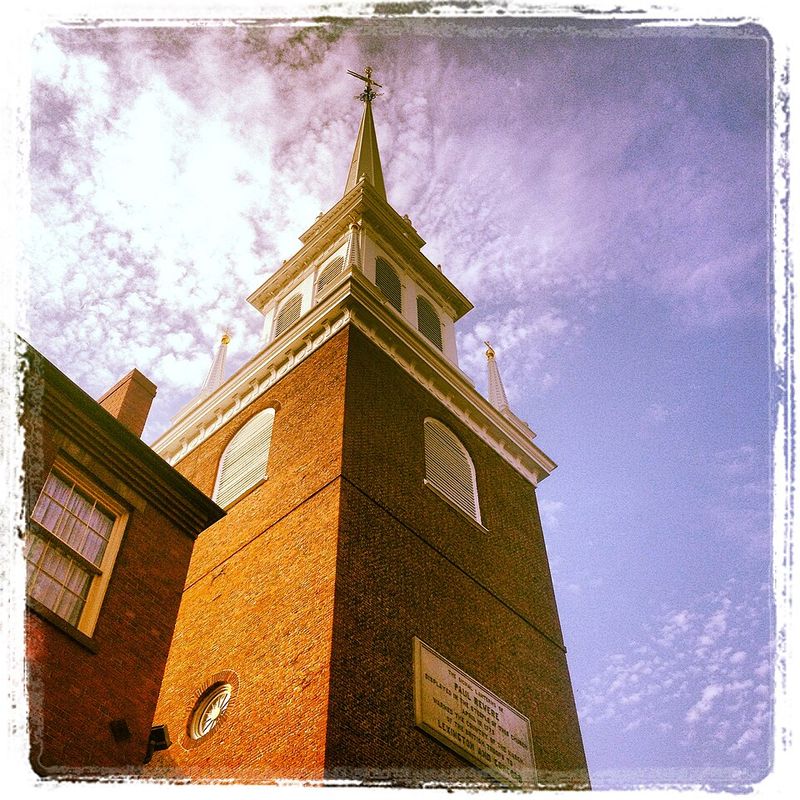
On the night of April 18, 1775, a church sexton named Robert Newman and a local patriot named Captain John Pulling Jr. climbed into the steeple of Old North Church and hung two lanterns. Those lanterns burned for just one minute before the men extinguished them to avoid detection by British soldiers patrolling the streets below.
That single minute was enough. The signal meant the British troops were crossing the Charles River by boat rather than marching overland, and it alerted riders in Charlestown to spread the warning across the countryside.
Paul Revere’s famous midnight ride followed directly from that signal.
One lantern would have meant the British were coming by land. Two lanterns confirmed the sea route.
The simplicity of the code is almost surprising when you consider how much depended on it. Standing in the steeple where Newman stood makes the weight of that moment feel very real.
Paul Revere’s Ride And The Poem That Shaped The Legend
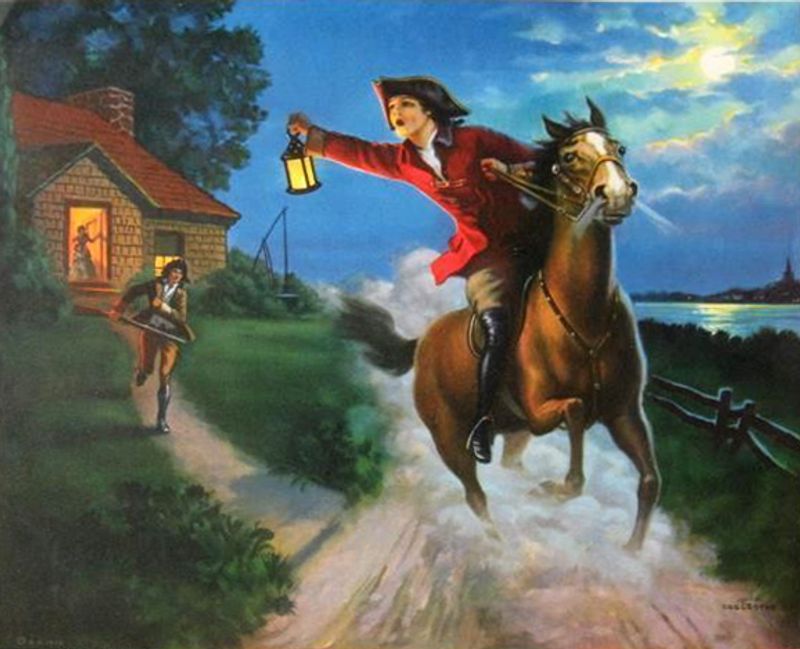
Most people first hear about Old North Church through Henry Wadsworth Longfellow’s 1860 poem titled Paul Revere’s Ride. The famous line, one if by land and two if by sea, comes directly from that poem, which was written nearly a century after the actual events of 1775.
Longfellow’s poem took creative liberties with history, but it burned the image of Revere and the lanterns into the American imagination so thoroughly that the two became permanently linked. The real story involved multiple riders, including William Dawes and Samuel Prescott, but Revere’s name became the one that history remembered most vividly.
What matters at the church is that the poem, however simplified, pointed people back to a real building where a real signal actually happened. The lanterns were genuine.
The steeple was real. The urgency of that night was absolutely not a literary invention.
The poem gave the church its fame, but the church gave the poem its foundation.
Robert Newman: The Quiet Hero Most People Forget
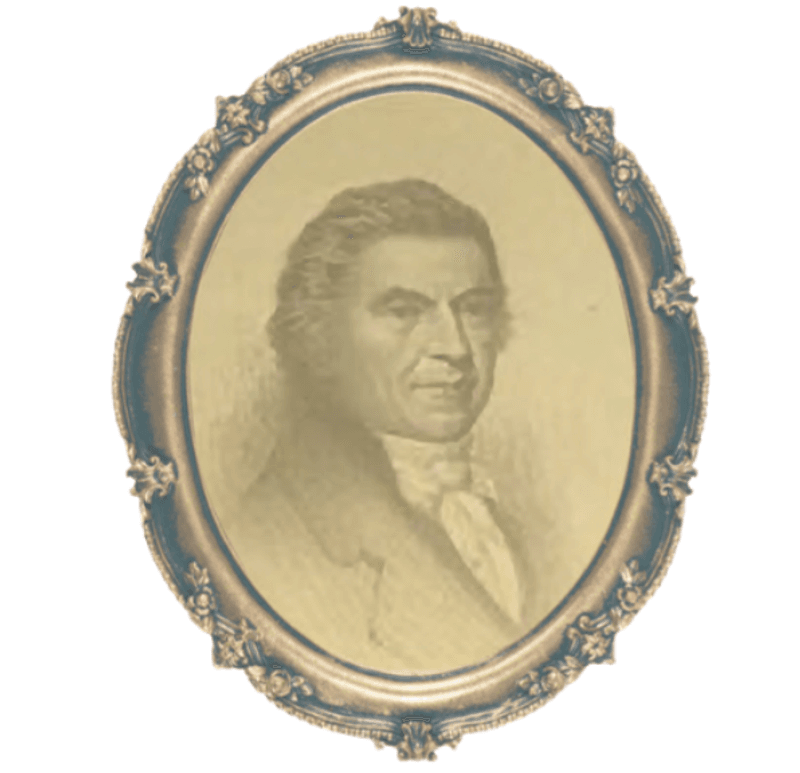
Robert Newman was the sexton of Old North Church in 1775, which meant he was responsible for maintaining the building, ringing the bells, and keeping things in order. He was in his mid-twenties on the night he carried those lanterns up the steeple, and his role in the story is often overshadowed by the more famous names connected to that evening.
Newman reportedly climbed out of a window to reach the steeple after British soldiers had already gathered near the church. The risk he took was significant.
If caught, the consequences would have been severe. He was briefly arrested afterward but managed to avoid serious punishment.
His name appears on a plaque inside the church, and the guides there make a point of giving him the recognition he deserves. Visiting Old North Church and learning about Newman’s contribution adds a layer to the story that most casual history readers have never encountered.
He was not a general or a politician. He was just a young man who did something that mattered.
The Architecture That Has Outlasted Three Centuries
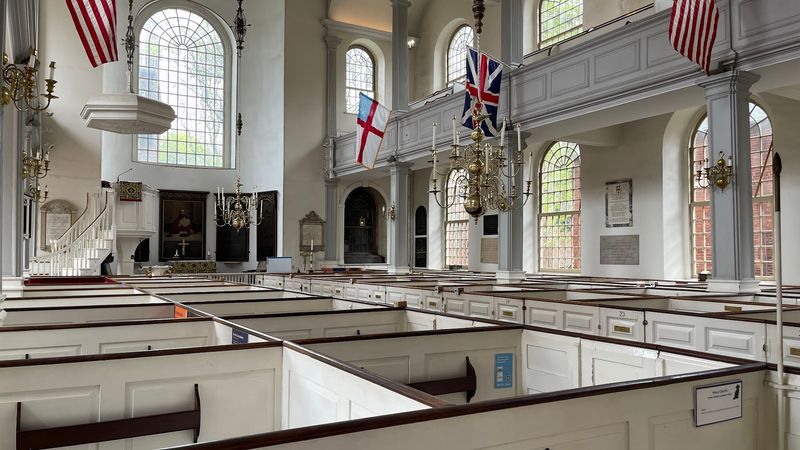
Old North Church was modeled after the work of Sir Christopher Wren, the English architect responsible for many of London’s most recognizable churches. The design favors clean lines, tall clear windows, and a symmetrical interior that feels both formal and surprisingly open for a building of its age.
The white box pews are one of the most distinctive features inside the church. Families in colonial Boston purchased or rented these enclosed wooden stalls, and ownership of a pew was considered a sign of social standing in the community.
Sitting inside one today gives you a very specific sense of what Sunday mornings felt like in the 1700s.
The steeple has actually been rebuilt twice after being brought down by hurricanes, most recently in 1954. The current steeple is a faithful reconstruction of the original design.
Despite those repairs, the main structure of the church has remained largely intact since 1723, which makes it genuinely one of the oldest standing buildings in Boston.
The Crypt Beneath The Floor And The 1,100 Buried There
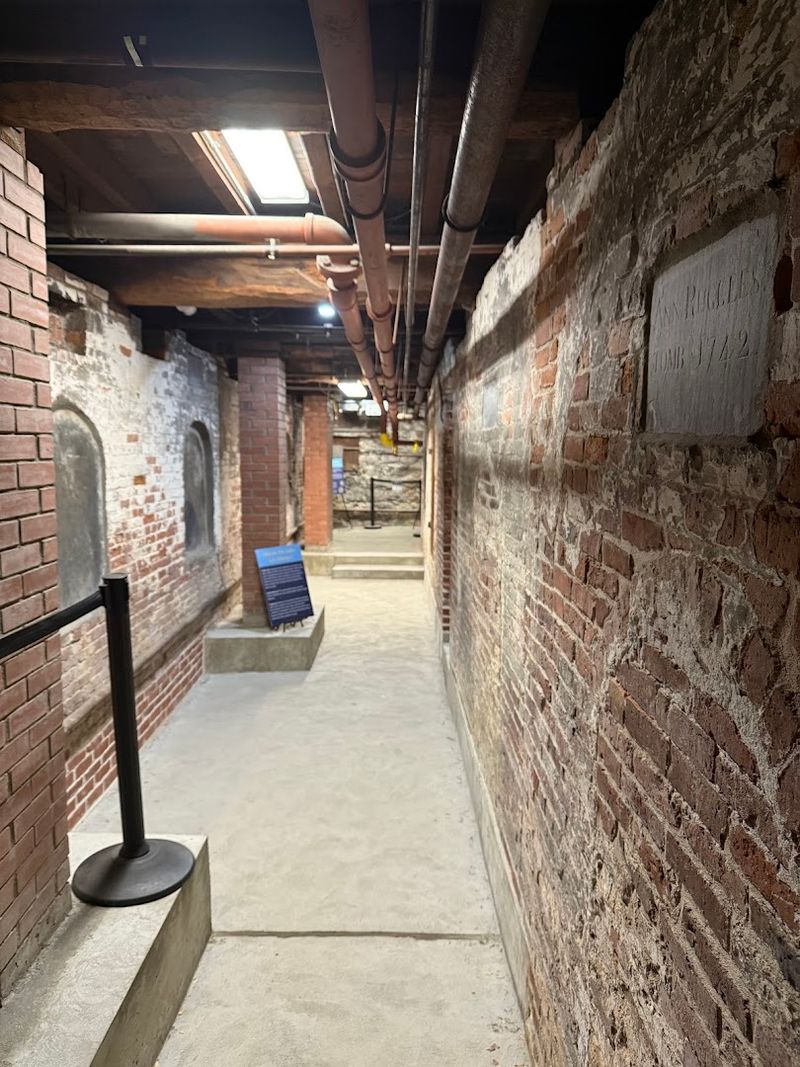
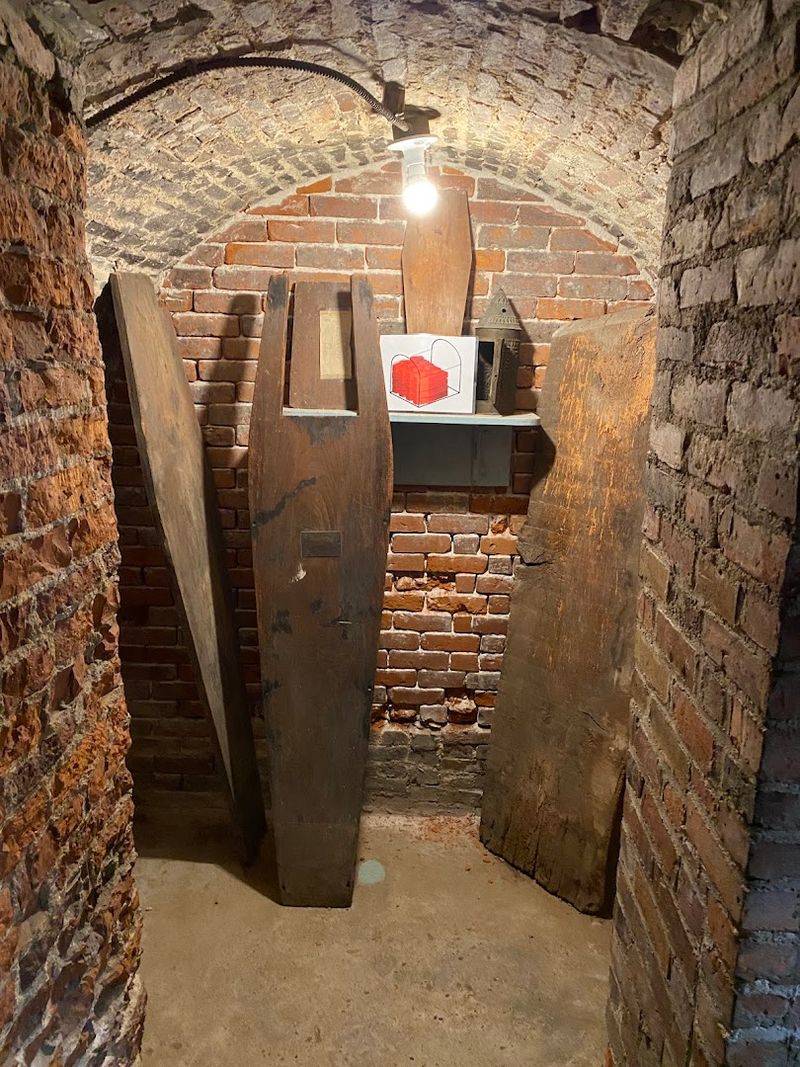
Beneath the main floor of Old North Church lies a crypt that holds the remains of approximately 1,100 people, making it one of the more sobering and fascinating parts of the entire visit. The crypt is accessible as an add-on to the standard tour for nine dollars per person.
The space itself is a U-shaped hallway lined with brick burial vaults. It is not large, and the ceilings are low, but the atmosphere is unlike anything else on the Freedom Trail.
Many of those buried there were prominent figures in colonial Boston, and the church staff can point out specific vaults with notable histories attached to them.
Some visitors find the crypt unexpectedly compelling, especially those who came mainly for the Revolutionary War history upstairs. There is also a so-called cursed brick somewhere in the crypt that guides mention with a certain quiet enthusiasm.
Whether you believe in that sort of thing or not, it adds an unexpected and memorable note to an already unusual underground experience.
The Box Pews And What They Say About Colonial Social Life
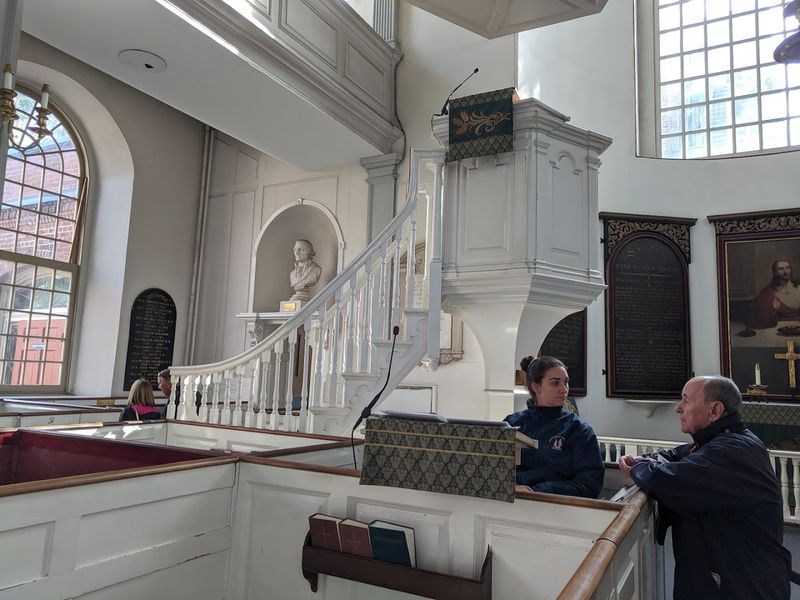
The box pews inside Old North Church are not just an architectural detail. They are a window into how colonial Bostonians organized their social world.
Families paid for the right to use a specific pew, and the location of that pew within the church reflected their position in the community. The closer to the front, the higher the status.
Each pew is essentially a small wooden room with a swinging door. The walls of the enclosure were originally designed to keep out drafts in the days before central heating, but they also created a sense of private space within a shared public building.
Some pews still bear the names of the families who once sat in them.
Visitors are encouraged to sit inside the pews during the self-guided tour, and that invitation is worth taking seriously. There is something grounding about settling into one of those wooden stalls and looking up at the same arched windows and balconies that colonial Bostonians looked at three hundred years ago.
The Self-Guided Audio Tour That Lets You Set The Pace
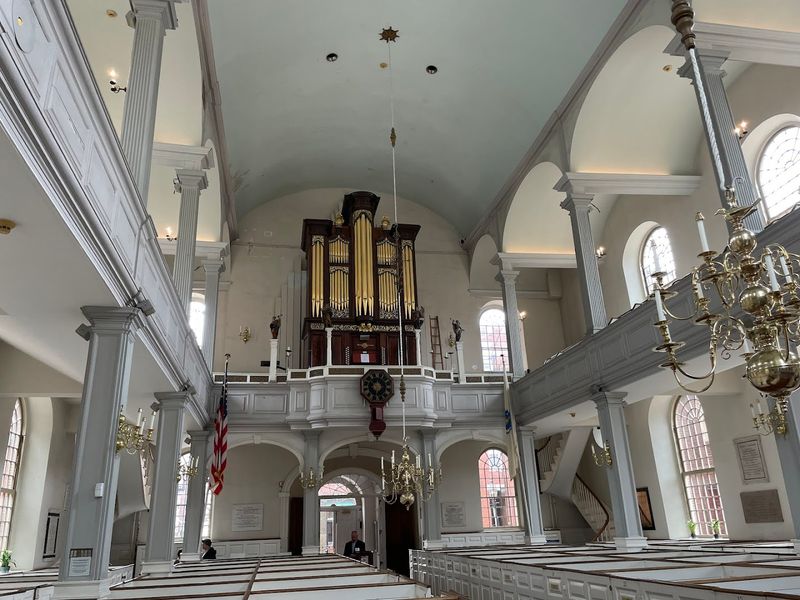
Old North Church offers a self-guided audio tour using a handheld device that plays narrated clips at numbered stops throughout the building. The format works well for visitors who prefer to linger at certain spots without feeling rushed by a group schedule.
The narration covers the church’s founding, the events of April 1775, the architectural details, and some of the lesser-known stories connected to the building and its congregation. There is genuinely more content available than most people have time to absorb in a single visit, so the ability to skip ahead or slow down is a practical advantage.
The guides and staff stationed throughout the church are also worth engaging. They tend to be knowledgeable and enthusiastic, and several visitors have noted that the staff members answer detailed questions with a depth that goes well beyond the standard tour script.
The combination of audio narration and live staff creates a visit that rewards curiosity at every turn.
The Bell Tower And The Bells That Rang Before The Revolution
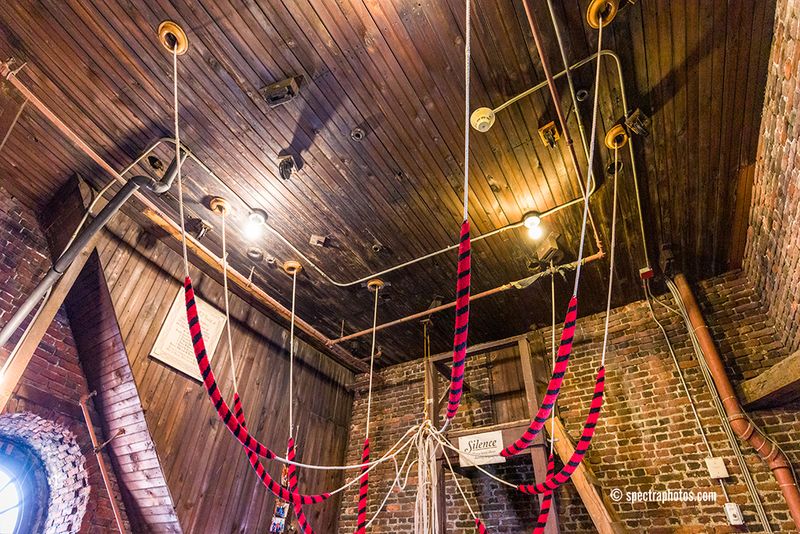
Old North Church is home to a set of eight bells that were cast in Gloucester, England in 1744 and shipped to Boston. They are the oldest change-ringing bells in North America that are still in use, which is a distinction the church holds with considerable pride.
Paul Revere himself was one of the young men who rang those bells as a teenager, years before his famous midnight ride. The bell-ringing guild at the church has maintained the tradition of change ringing continuously, and visitors with an interest in that specific aspect of the building can book a bell tower tour as an additional option.
Change ringing is a specific English tradition that involves ringing a set of bells in mathematically calculated sequences rather than playing a melody. It requires coordination and practice, and hearing it done properly from the ground below the steeple is a surprisingly moving experience.
The bells connect the church to a living tradition that predates the American Revolution by centuries.
An Active Episcopal Congregation In A Historic Monument
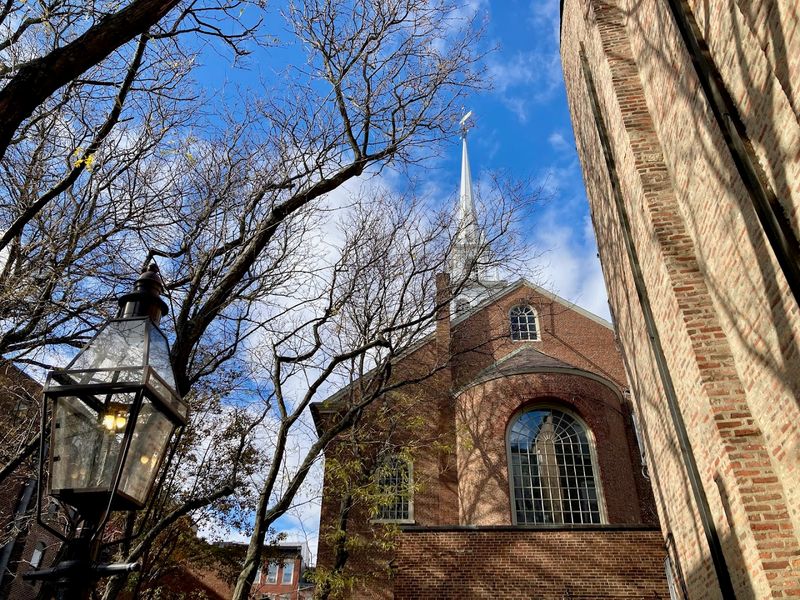
Old North Church is not a museum that happens to look like a church. It is an active Episcopal congregation that holds regular worship services, which means the building serves two very different but complementary purposes at the same time.
Sunday services are open to the public and free to attend. The church staff welcomes visitors at the door and ushers seat them in the historic pews.
Attending a service here is a genuinely different experience from taking the standard tour, because the setting transforms from a historical exhibit back into a functioning place of worship.
The church was officially placed on the National Historic Landmark Registry in 1961, and balancing the responsibilities of landmark preservation with the needs of an active religious community is something the congregation takes seriously. Couples have held weddings here, and the staff approach those occasions with the same care they bring to their historical programming.
The building is both a living church and a national treasure, and somehow it manages to be both without feeling contradictory.
The North End Neighborhood That Surrounds The Church
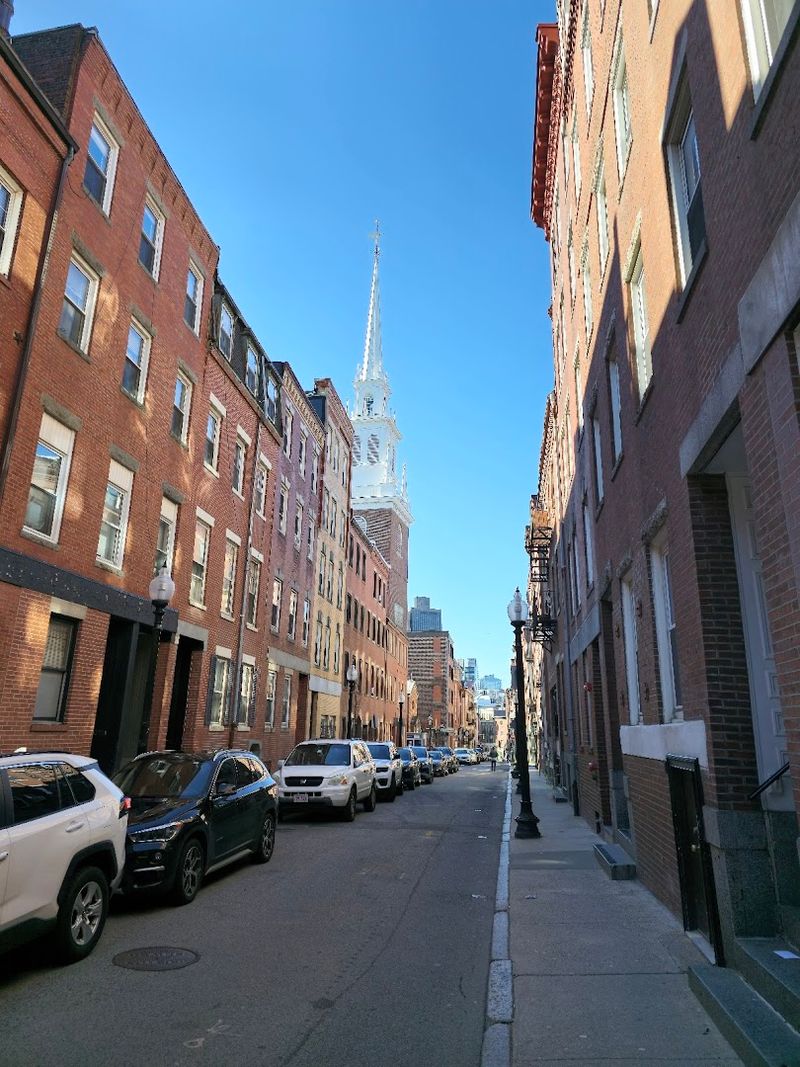
The North End is one of Boston’s oldest and most densely layered neighborhoods, and Old North Church sits right at the center of its historical geography. The streets around the church are narrow, uneven, and lined with buildings that lean toward each other in the way that old city blocks tend to do when they have been standing for a very long time.
The neighborhood also happens to be Boston’s Little Italy, which means the blocks surrounding the church are full of Italian bakeries, coffee shops, and restaurants. Visitors who arrive early or stay after the tour have easy access to some of the city’s most celebrated cannoli, pastries, and espresso within a short walk of the church entrance.
The contrast between the colonial history inside the church and the lively Italian American street culture just outside its doors is one of those things that makes Boston feel genuinely layered. The neighborhood rewards slow walking and unplanned stops in a way that very few urban areas still manage to deliver.
The Garden, The Courtyard, And The Quiet Space Out Back
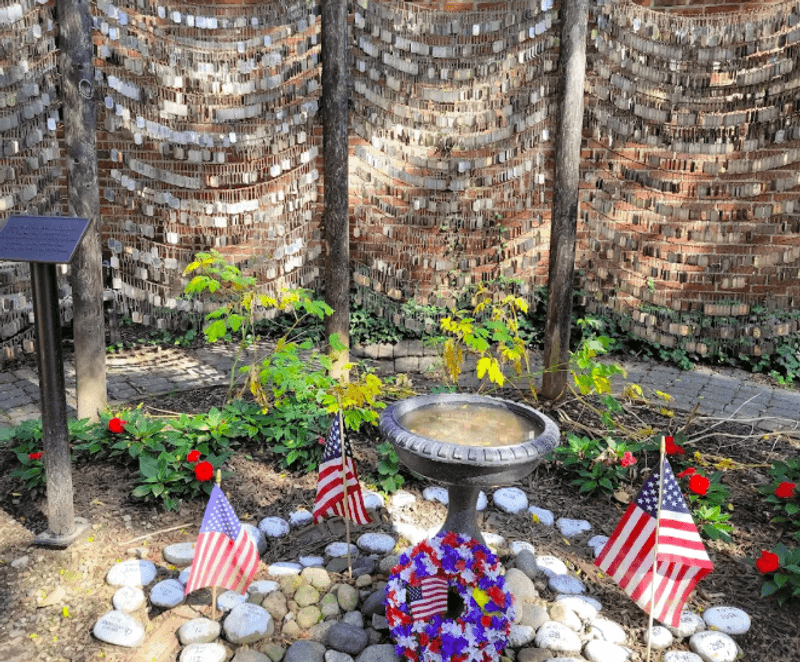
Behind Old North Church there is a small garden and courtyard that most visitors discover only after exiting through the back of the building. The space is quieter than the busy Salem Street entrance, and it provides a moment to decompress after the concentrated history of the interior tour.
The garden contains a replica of the statue of George Washington that stands in the Public Garden across the city, along with some plantings and seating that make it a pleasant place to pause. The brick pathway and surrounding walls feel consistent with the age and character of the church itself.
There is also a bricked-up window visible from the exterior of the church that some guides point out as a detail connected to the events of 1775. The story behind it involves an escape route used during the tense days following the lantern signal.
It is the kind of small architectural detail that rewards visitors who pay attention and ask questions rather than moving quickly from stop to stop.
Practical Things To Know Before You Visit
General admission to Old North Church is five dollars per person, with crypt access available for nine dollars. An all-access ticket at ten dollars covers multiple areas of the church and is worth considering if you plan to spend more than a quick hour at the site.
The church is open Tuesday through Saturday from ten in the morning to five in the afternoon, Monday from ten to five, and Sunday from eleven to noon.
Parking in the North End is genuinely limited. Most street parking requires a resident permit, and public lots are typically several blocks away.
Taking the MBTA Green or Orange Line and walking is a practical option that also gives you more time to explore the neighborhood itself.
The church website at oldnorth.com allows visitors to book tours in advance, which is recommended during peak summer months when lines can form at the entrance. The phone number for the church is 617-523-6676 if you need to confirm hours or ask about specific tour availability before making the trip.
Where History Planted Its Flag: The Church On Salem Street
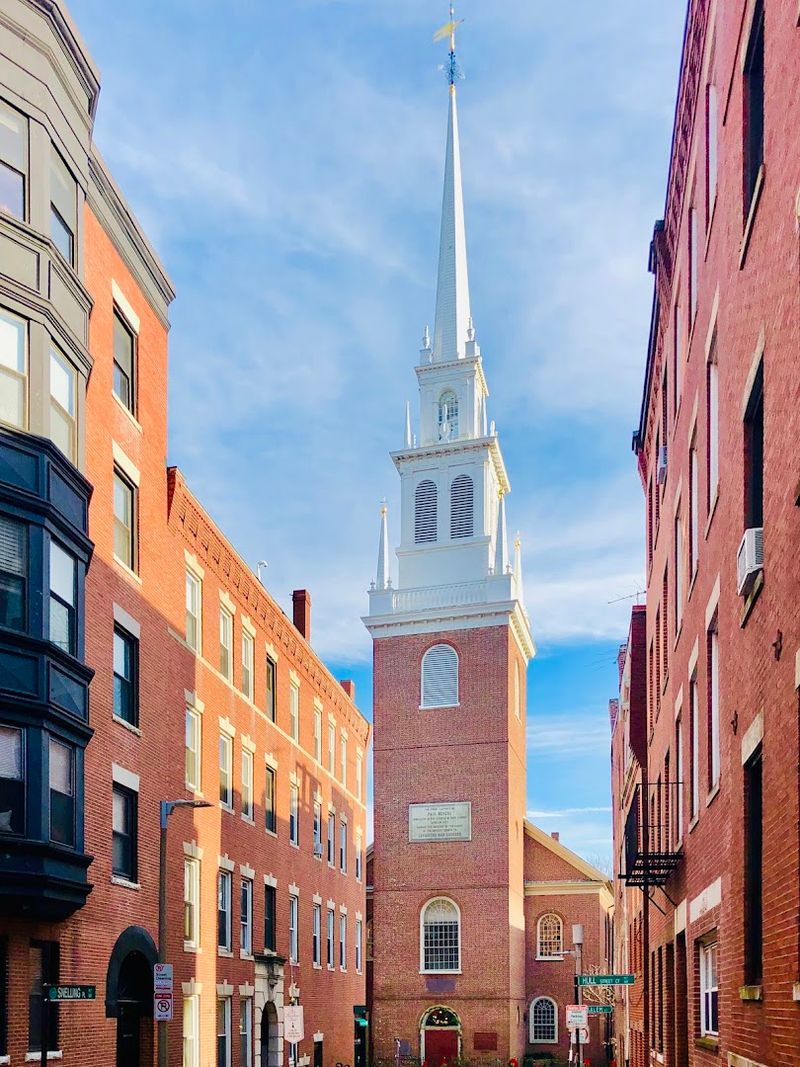
Old North Church, officially known as Christ Church in the City of Boston, sits at 193 Salem St, Boston, Massachusetts 02113, right in the heart of the North End neighborhood. Built in 1723, it holds the title of Boston’s oldest surviving church building, which is already a remarkable distinction on its own.
The church is a stop on the Freedom Trail, that famous red-line walking route that connects sixteen of the city’s most significant historic sites. Getting there on foot from downtown Boston takes roughly fifteen to twenty minutes, and the walk through the narrow, cobblestoned streets of the North End is worth the trip by itself.
Admission starts at five dollars for general entry, with optional add-ons for the crypt and bell tower tours. The church is open most days from ten in the morning to five in the afternoon, with Sunday hours running from eleven to noon.
Share this story