Some places on Earth get so hot that stepping outside feels like opening an oven door. From vast deserts and salt flats to low-lying valleys and coastal cities, these locations regularly shatter temperature records that most of us can barely imagine.
Whether caused by low elevation, dry air, or relentless sunshine, these spots push the limits of what our planet can produce. Get ready to sweat just reading about them.
Dasht-e Lut (Lut Desert) — Iran
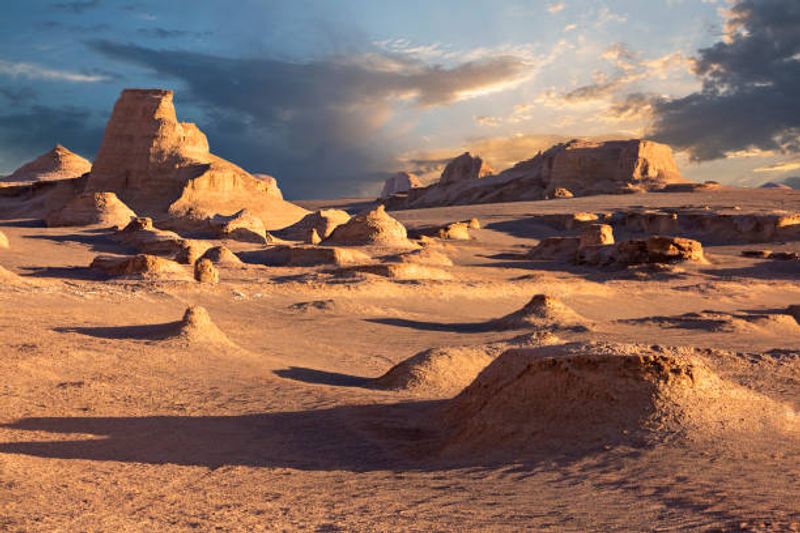
Satellite sensors have recorded land surface temperatures in Iran’s Lut Desert exceeding 176°F (80°C), making it arguably the hottest ground surface ever measured anywhere on our planet. NASA’s Terra satellite confirmed these staggering readings multiple times between 2003 and 2009.
Nothing lives in the hottest parts of this desert — not even bacteria.
The Lut Desert covers roughly 20,000 square miles of southeastern Iran. Much of its extreme heat comes from its dark volcanic rock formations called yardangs, which absorb solar radiation intensely and hold onto that heat for hours.
The surrounding terrain is almost completely flat, offering no shade or wind protection.
Remarkably, this desert became a UNESCO World Heritage Site in 2016, recognized for its stunning geological features. Kaluts, which are towering mud castle formations sculpted by wind, rise dramatically from the landscape.
Adventurous travelers visit during cooler months, but summer exploration is considered genuinely life-threatening. The Lut Desert reminds us that Earth has places where the environment is essentially as hostile as another planet.
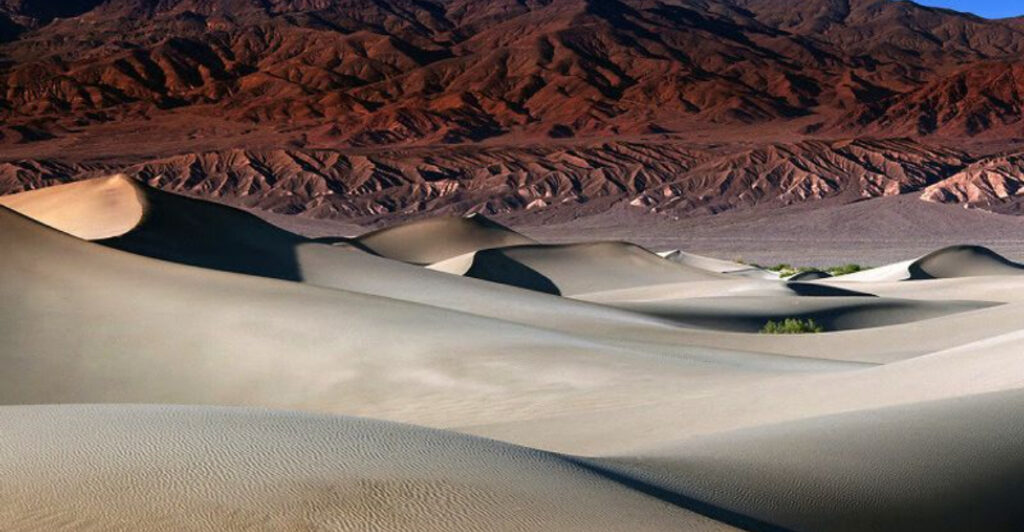
Death Valley National Park — California, United States
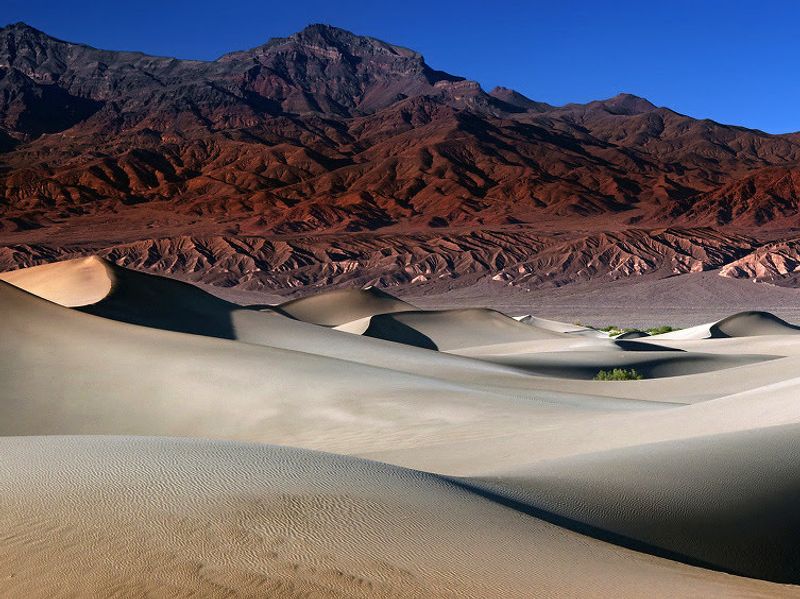
On July 10, 1913, a thermometer at Furnace Creek hit 134°F (56.7°C), officially making Death Valley the hottest place ever recorded on Earth. That record still stands today, more than a century later.
The valley sits about 282 feet below sea level, trapping heat like a giant bowl.
Summer days above 120°F (49°C) are completely normal here. The surrounding mountains block cooling winds, and the dark desert floor absorbs solar energy and radiates it back with full force.
Nights offer little relief, sometimes staying above 100°F even after midnight.
Despite these brutal conditions, Death Valley is a popular national park. Visitors come from around the world to see its colorful badlands, salt flats, and sand dunes.
Rangers strongly advise hiking only before 10 a.m. during summer. Carrying large amounts of water is not optional — it is survival.
The park receives about one million visitors each year, proving that extreme heat is oddly fascinating to people everywhere.
Kebili — Tunisia
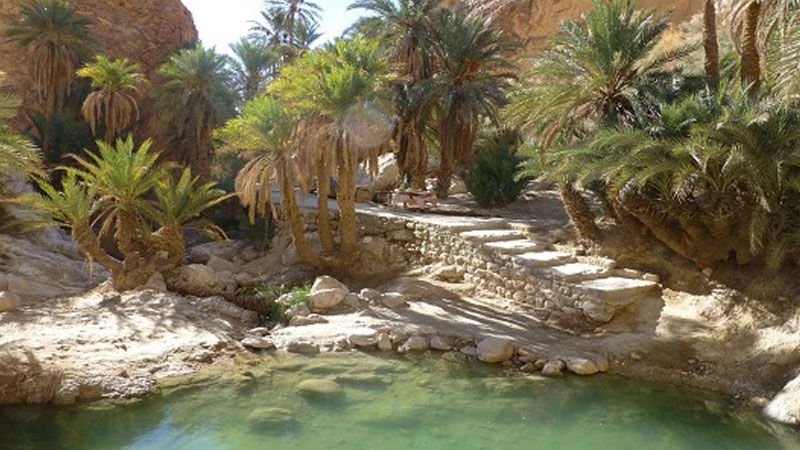
Kebili has been inhabited for over 200,000 years, making it one of the oldest known human settlements in Africa. People figured out long ago how to survive here — and surviving is genuinely the right word.
Summer temperatures in this Tunisian oasis town regularly exceed 115°F (46°C), and the Sahara Desert surrounds it on nearly every side.
The town sits in a natural depression that collects heat efficiently. Hot, dry Saharan winds called the sirocco sweep through regularly, pushing temperatures even higher and reducing humidity to almost zero.
Locals have traditionally built thick-walled homes to keep interiors cooler during the worst afternoon heat.
Date palms are everywhere in Kebili, and date farming has been the backbone of the local economy for thousands of years. The palms actually thrive in extreme heat as long as their roots reach water.
Tourists visit the surrounding desert for camel treks and sand dune experiences, typically in spring or autumn when conditions are more bearable. Kebili proves that human ingenuity and adaptation can make even the most punishing environments feel like home over generations.
Dallol — Ethiopia
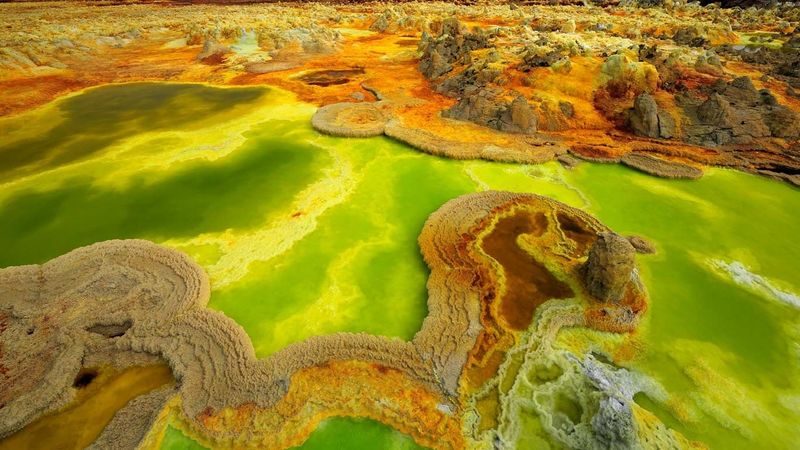
Dallol might be the most alien-looking place on Earth. Neon-yellow sulfur pools, bright green acid lakes, and orange salt formations bubble and hiss across the landscape of Ethiopia’s Danakil Depression.
This surreal scenery comes with a matching temperature tag — Dallol holds the record for the highest average annual temperature of any permanently inhabited location on Earth, around 94°F (34°C) year-round.
Daytime highs regularly exceed 110°F (43°C), and the area sits about 410 feet below sea level. Volcanic activity underneath the surface constantly pumps heat upward, turning the ground into something resembling a slow-motion lava lamp.
The region also has active volcanoes, geysers, and one of the world’s few lava lakes nearby at Erta Ale volcano.
The Afar people have lived in this region for centuries, mining salt from the vast crystalline flats. Camel caravans still carry salt blocks across the desert today, just as they have for generations.
Scientists visit Dallol to study extremophile organisms that somehow survive in the acidic, scalding pools. If life can thrive here, researchers believe it might also exist in harsh environments beyond Earth.
Wadi Halfa — Sudan
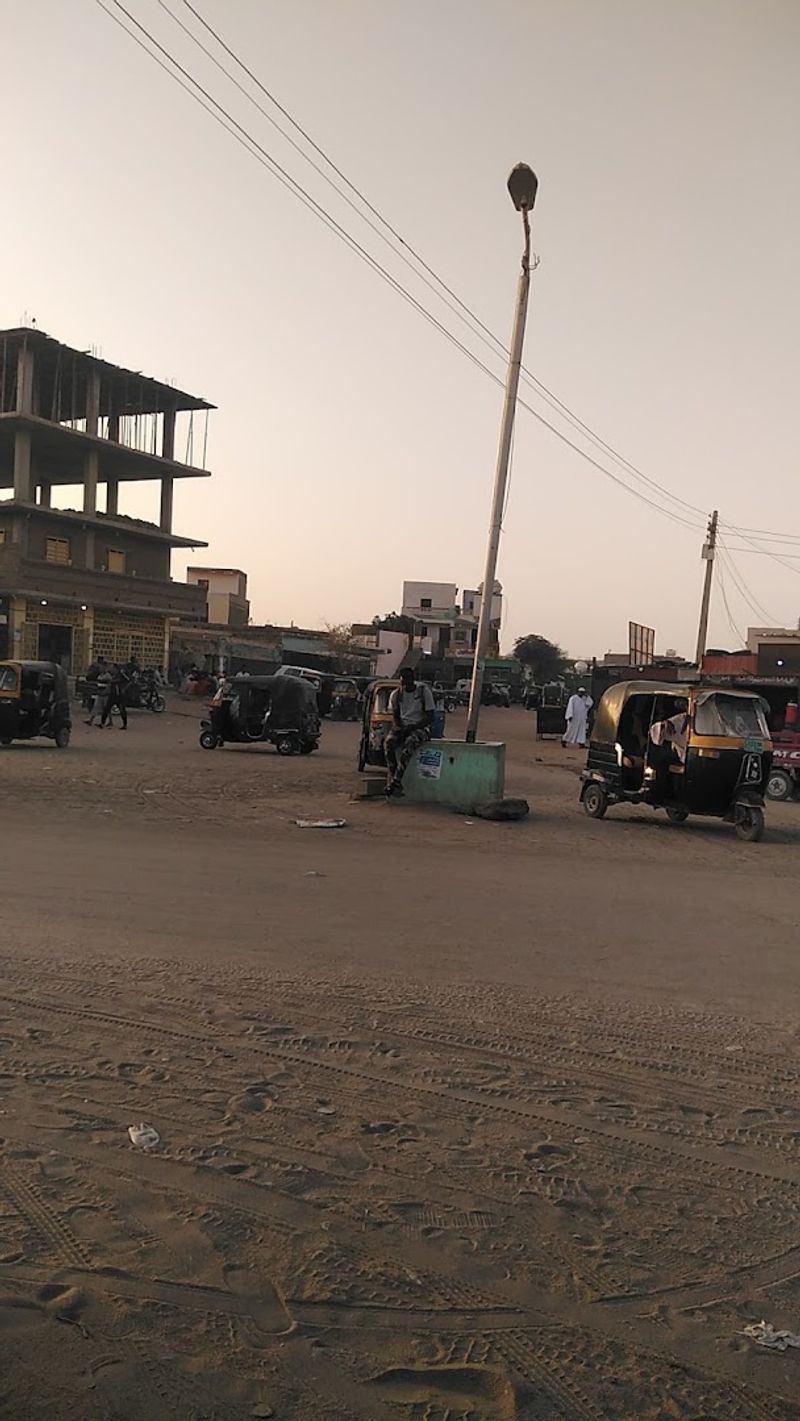
Rain is so rare in Wadi Halfa that the town sometimes goes entire years without a single drop. Located in the northern corner of Sudan near the Egyptian border, this remote town sits on the edge of the Sahara where the desert is at its most unforgiving.
Daytime temperatures during summer regularly climb above 118°F (48°C).
Wadi Halfa borders Lake Nubia, the Sudanese portion of Lake Nasser, which was created when the Aswan High Dam was built. Ironically, the presence of water nearby does almost nothing to cool the surrounding air.
The low humidity actually makes the heat feel slightly more tolerable than coastal heat, but the sheer temperature still makes outdoor activity extremely dangerous during peak hours.
The town serves as a crossing point between Sudan and Egypt, with a ferry route crossing the lake. Travelers passing through often describe the experience as stepping into a furnace.
Despite the brutal conditions, a small community persists here, sustained by trade and fishing. Wadi Halfa is a powerful example of how humans adapt to environments that seem completely incompatible with comfortable daily life.
Shade and timing become the most important survival tools available.
Ahvaz — Iran
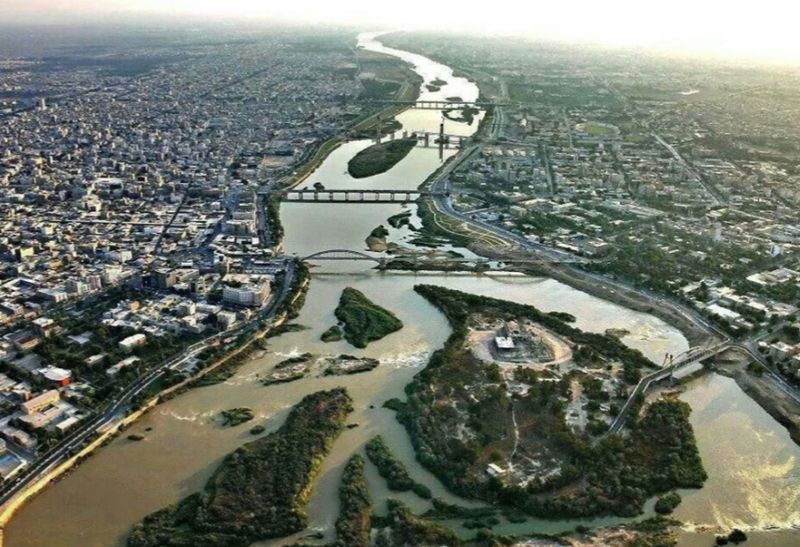
Ahvaz earned a grim distinction in 2017 when the United Nations ranked it among the most polluted cities on Earth — and that was before accounting for the heat. Summer temperatures here regularly surpass 122°F (50°C), turning the streets of this southwestern Iranian city into something resembling a pressure cooker.
Dust storms roll in frequently, blending scorching air with choking clouds of fine sand.
The city sits in the Khuzestan province, a flat, low-lying region with almost no natural shade or elevation to break the sun’s intensity. The Karun River runs through Ahvaz, but the water does little to moderate the surrounding temperature.
Humidity from the river actually combines with the heat to make conditions feel even more oppressive during certain seasons.
Oil production is the economic backbone of the region, meaning workers often have no choice but to operate in these extreme conditions. The Iranian government has occasionally declared public holidays during the worst heat waves to protect residents.
Despite everything, Ahvaz has a population of over one million people. Local architecture traditionally includes windcatchers, tower-like structures designed to funnel cooler air into buildings — an ancient solution to a problem that has never gone away.
Kuwait City — Kuwait
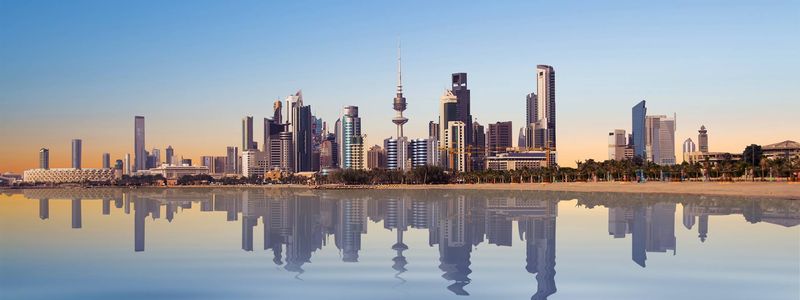
Kuwait City holds the title of one of the hottest capital cities on the planet, and it earns that label every single summer. In July 2016, a weather station in nearby Mitribah recorded 129.2°F (54°C), one of the highest reliably measured air temperatures ever documented anywhere outside of Death Valley.
The World Meteorological Organization confirmed this reading as a record for Asia.
The city itself regularly sees summer highs above 120°F (49°C), and the combination of heat and humidity near the Persian Gulf can push the heat index even higher. Outdoor construction and labor work is legally restricted during the hottest midday hours in summer to protect workers.
Air conditioning is not a luxury here — it is a basic necessity for survival.
Kuwait City is a surprisingly modern, wealthy metropolis shaped almost entirely around the reality of extreme heat. Malls are massive and heavily air-conditioned, serving as community gathering spaces during summer months when outdoor activity is nearly impossible.
Most daily life shifts to early morning or evening hours. Residents joke that summer is when Kuwait goes indoors.
The city’s infrastructure reflects centuries of human creativity in adapting to one of the world’s most demanding climates.
Basra — Iraq
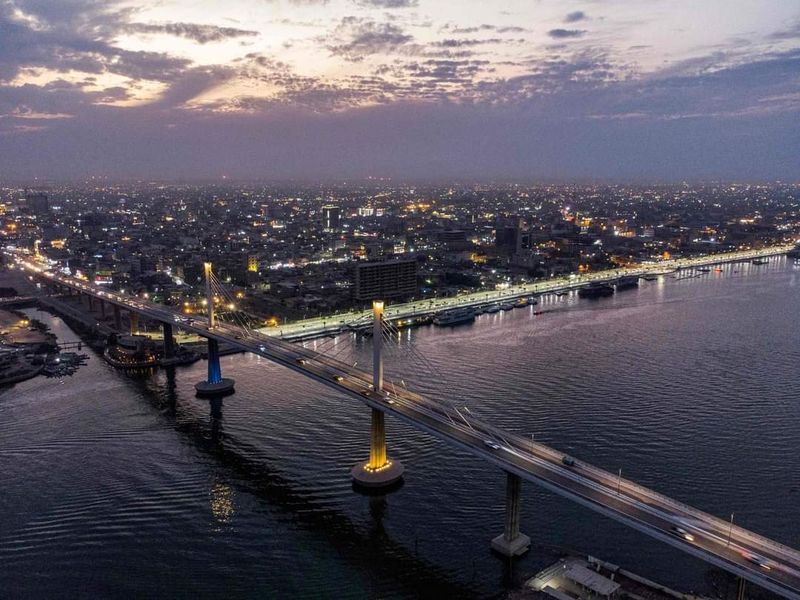
Basra sits at the northern tip of the Persian Gulf, where summer heat has a personality of its own. The city regularly records temperatures above 122°F (50°C) from June through August, making it one of the consistently hottest urban areas anywhere in the Middle East.
In 2016, Basra hit 129°F (53.9°C), a temperature so extreme it triggered widespread protests over failing power infrastructure.
When the power grid collapses during peak summer, air conditioning stops working — and in Basra, that is a genuine emergency. The city has struggled with electricity shortages for years, and heat-related deaths have been documented during major outages.
The Shatt al-Arab waterway, formed by the meeting of the Tigris and Euphrates rivers, runs through the city but adds humidity rather than relief.
Despite everything, Basra has a rich history as one of the ancient world’s most important port cities. It was a major hub of trade and learning during the Islamic Golden Age.
Today, Iraq’s oil wealth flows largely through this region. Locals have developed deep cultural rhythms around the heat — afternoon rest periods, evening outdoor gatherings, and a remarkable collective resilience that outsiders often find genuinely inspiring.
Jacobabad — Pakistan
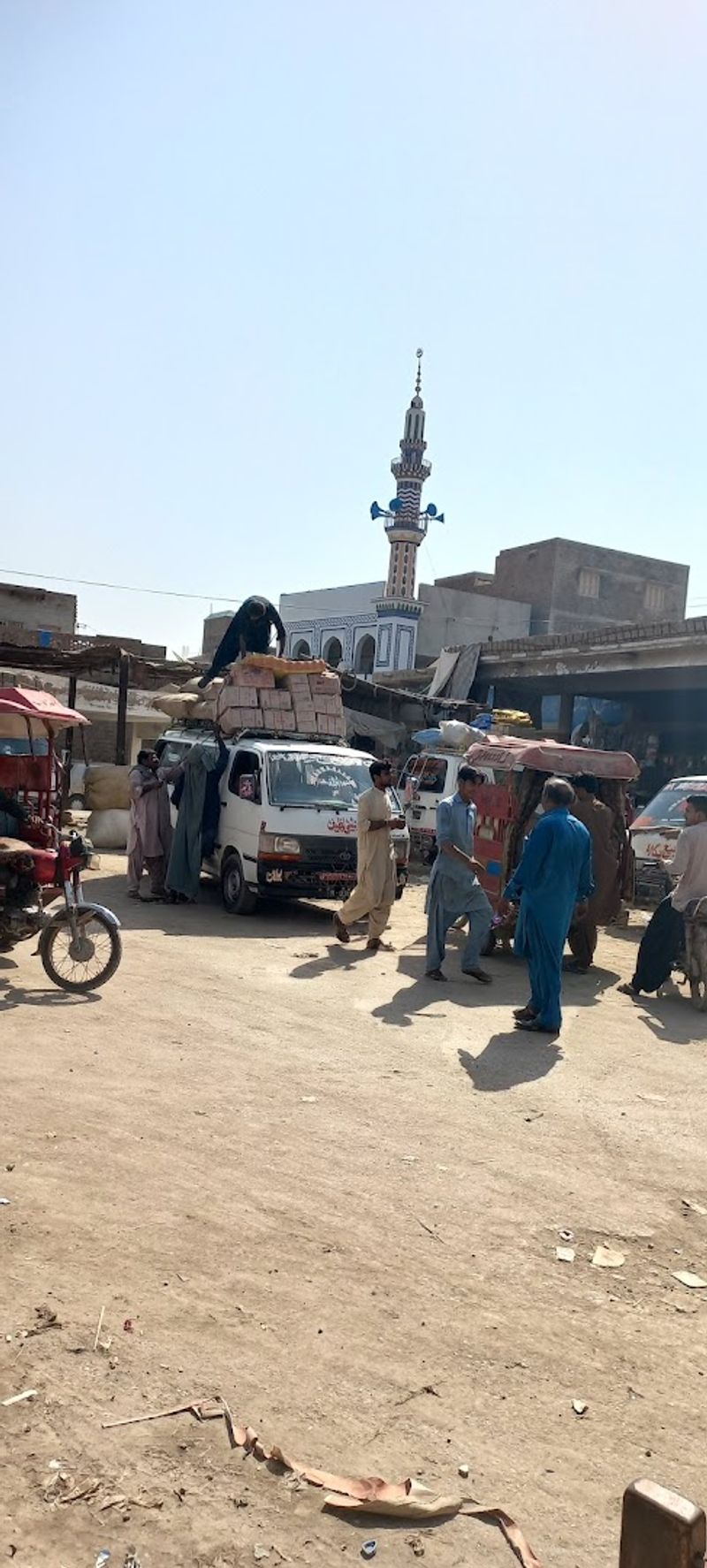
Scientists have identified Jacobabad as one of only two places on Earth that have already crossed the theoretical survivability threshold for human heat stress — a wet-bulb temperature of 35°C (95°F). That number might sound technical, but what it means is chilling: at that level, the human body physically cannot cool itself through sweating, even in the shade.
This has happened in Jacobabad multiple times in recent years.
Located in Pakistan’s Sindh province, the city sits in a flat, landlocked basin with almost no wind movement. Summer temperatures regularly exceed 125°F (52°C), and the combination of heat and humidity creates conditions that are medically dangerous within minutes of outdoor exposure.
Climate scientists frequently cite Jacobabad as a preview of what many more cities could face in the coming decades.
The local population is largely agricultural, meaning many residents work outdoors despite the extreme risks. Women and children are especially vulnerable during heat waves.
Community water points and shade structures have become critical infrastructure. International researchers visit regularly to study how the human body responds to these conditions.
Jacobabad is not just a hot city — it is a front-line location in the global conversation about climate change and human survival.
Timbuktu — Mali
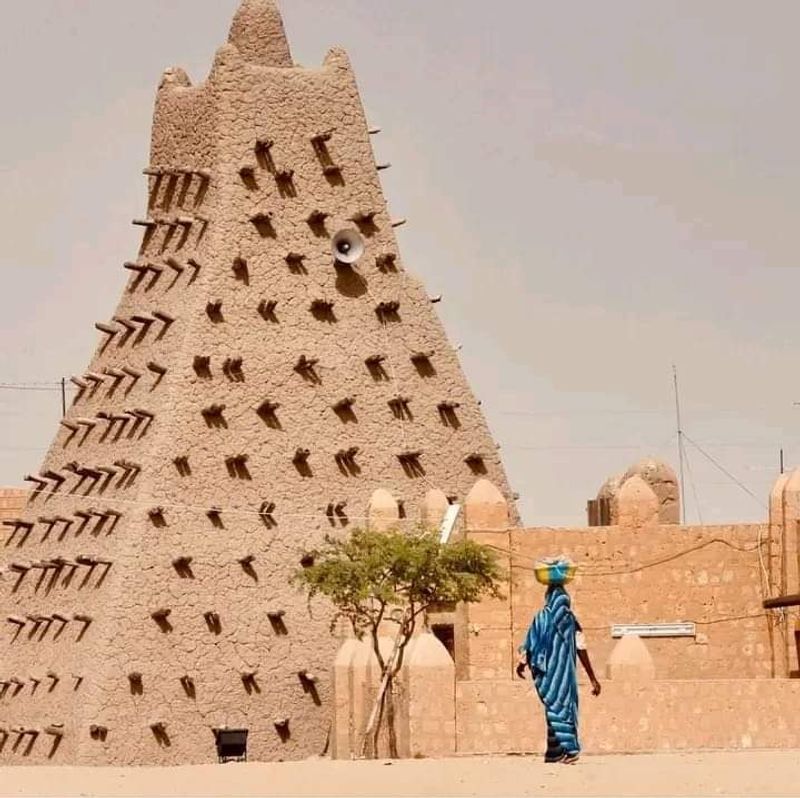
Timbuktu carries a legendary reputation as one of history’s most remote and mysterious cities, and its climate matches that mystique perfectly. Perched on the southern edge of the Sahara Desert in Mali, the city regularly experiences temperatures above 110°F (43°C) during the hottest months of April, May, and June.
Dry season conditions strip every last drop of moisture from the air.
The harmattan wind blows in from the Sahara, carrying fine sand that coats everything and reduces visibility to near zero during the worst storms. Buildings, streets, and even people turn a uniform shade of pale brown during these events.
Despite the harsh conditions, Timbuktu was once one of the most important centers of Islamic scholarship and trans-Saharan trade in the world.
Its ancient manuscripts and mud-brick mosques are UNESCO World Heritage Sites, though climate change and desertification now threaten the city’s very existence. Sand dunes are slowly encroaching on the outskirts.
Local residents and international organizations work together to push the dunes back and protect the city’s heritage. Timbuktu teaches us that even the most extreme environments can produce extraordinary human culture and civilization when people find ways to adapt creatively.
Phoenix — Arizona, United States

Phoenix holds a record that is equal parts impressive and alarming: it averages more than 110 days per year above 100°F (38°C), making it the hottest major city in the United States by a significant margin. Summer highs routinely surpass 115°F (46°C), and the city’s massive urban footprint creates an intense heat island effect that keeps temperatures elevated even after sunset.
The urban heat island happens because concrete, asphalt, and buildings absorb heat during the day and release it slowly at night. Phoenix nights in summer rarely cool below 90°F (32°C), giving the human body almost no recovery time.
Heat is the leading weather-related killer in Arizona, claiming more lives annually than floods, tornadoes, and lightning combined.
Despite all this, Phoenix is one of the fastest-growing cities in America. People move here for jobs, lower housing costs, and the sun-soaked lifestyle.
The city has invested heavily in cooling centers, shade structures, and heat emergency programs to protect its most vulnerable residents. Misting systems, reflective pavements, and tree-planting initiatives are all part of a long-term strategy to make urban life survivable as temperatures continue rising.
Phoenix is essentially a real-time experiment in how cities adapt to extreme heat.
Mecca — Saudi Arabia
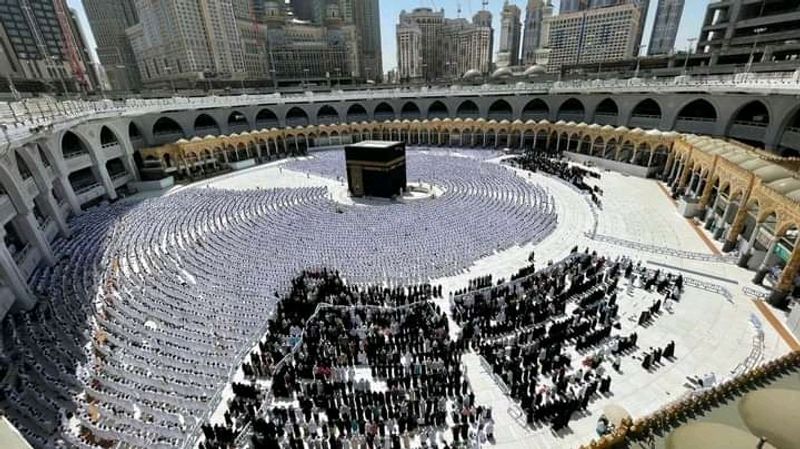
Every year, millions of Muslim pilgrims travel to Mecca for Hajj, one of the world’s largest religious gatherings — and they do it knowing full well that summer temperatures here regularly exceed 113°F (45°C). July and August are the most brutal months, with heat radiating off marble plazas and the surrounding rocky hills offering no shade.
Managing heat safety for millions of people simultaneously is one of the most complex logistical challenges in the world.
Saudi authorities have invested billions of dollars in cooling systems, misting fans, air-conditioned walkways, and medical stations specifically designed to handle heat emergencies during Hajj. Despite these precautions, heat-related illness and death remain serious risks, particularly for elderly pilgrims and those traveling from cooler climates who are not acclimatized to the conditions.
Mecca’s geography amplifies the heat — the city sits in a narrow valley surrounded by rocky mountains that trap hot air and block wind. The surrounding desert adds dry, scorching air to the mix.
Year-round residents have adapted through architecture, scheduling, and cultural habits built around avoiding peak heat hours. Mecca stands as a remarkable intersection of deep spiritual devotion and the physical extremes of one of Earth’s most unforgiving climates.
Turpan — China
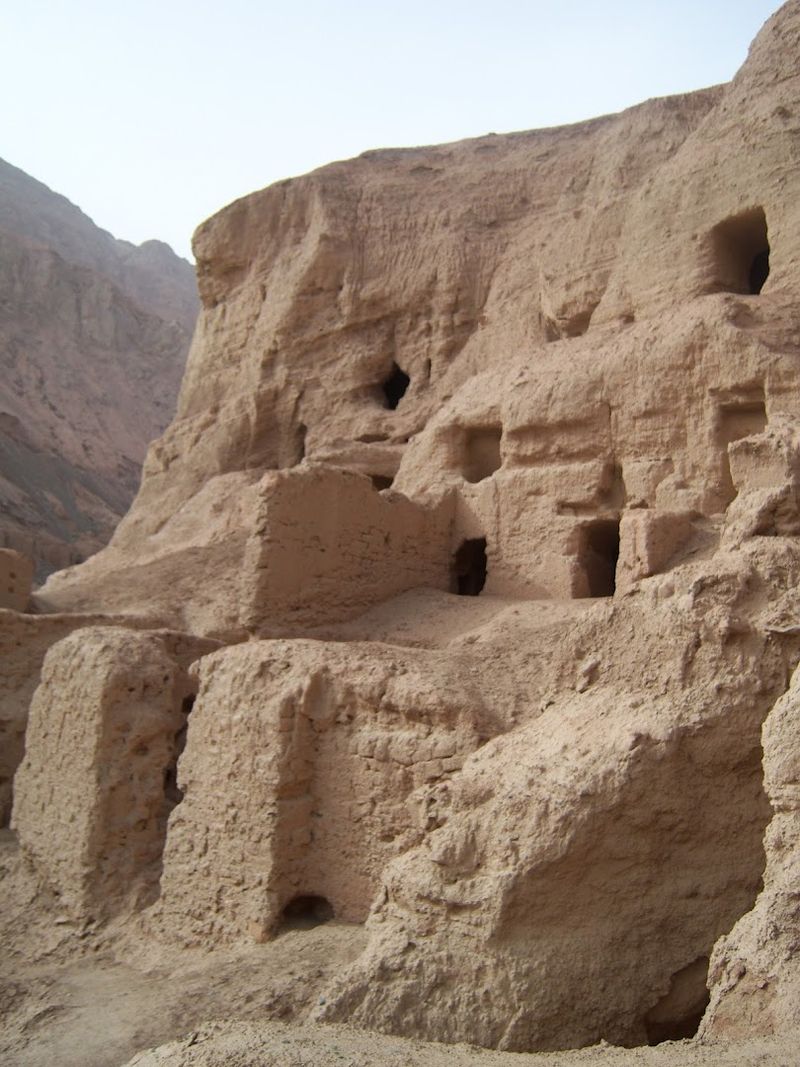
Turpan sits roughly 505 feet below sea level in China’s Xinjiang region, making it the lowest and hottest place in the country. The locals have a nickname for it: the Land of Fire.
Summer temperatures regularly reach between 104°F and 113°F (40°C to 45°C), and the ground surface can hit a scorching 180°F (82°C) — hot enough to fry an egg directly on the sand.
The famous Flaming Mountains nearby glow brilliant red and orange in the summer sun, and the heat radiating from them creates visible shimmering waves of hot air. The mountains are not actually on fire, but the optical effect is convincing enough to understand where the name came from.
Ancient residents solved the heat and water problem simultaneously by engineering an underground irrigation system called karez.
The karez system consists of thousands of underground channels that carry snowmelt from distant mountains directly to Turpan’s farms and homes, bypassing evaporation entirely. This ancient engineering marvel, built over 2,000 years ago, still functions today.
Turpan is also famous for its grapes and melons, which thrive in the extreme heat and dry air. The combination of scorching summers and this ingenious water system makes Turpan one of the most fascinating hot places on Earth.
Oodnadatta — South Australia
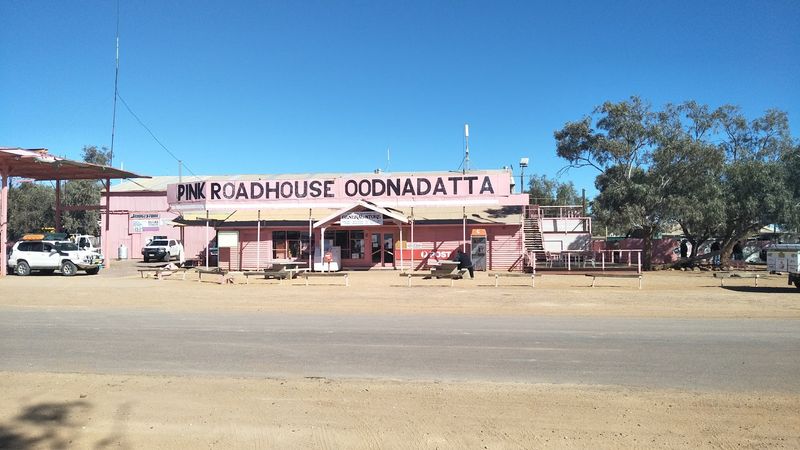
Oodnadatta is the kind of place where the pub doubles as a weather station, a tourist information center, and essentially the social heart of the entire community. This tiny outback town in South Australia holds the country’s highest reliably recorded temperature: 123°F (50.7°C), set in January 1960.
Summer heat here is not a surprise — it is a way of life.
The town sits in one of Australia’s driest regions, where red dust covers everything and the nearest large city is hundreds of miles away. The surrounding landscape is a flat, treeless expanse of gibber plains, where heat bounces off rock and bare earth with nowhere to go.
Flies are a constant companion, and the silence is broken mainly by the wind and the occasional road train rumbling through.
Oodnadatta sits on the historic Oodnadatta Track, a legendary outback road that connects remote communities across South Australia. Travelers on the track are strongly advised to carry extra water, fuel, and emergency supplies because breakdowns in this heat can become life-threatening quickly.
Despite its tiny population of only around 200 people, Oodnadatta has a proud identity. Residents embrace the extremes as part of what makes their corner of Australia genuinely unique and unforgettable.
Bandar-e Mahshahr — Iran
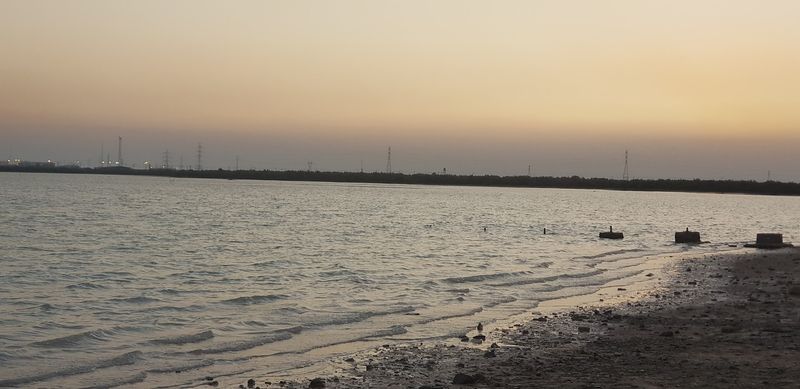
In July 2015, a weather observation in Bandar-e Mahshahr recorded a heat index of approximately 165°F (74°C), one of the most extreme human-perceived temperatures ever documented. The actual air temperature was around 115°F (46°C), but suffocating humidity from the Persian Gulf pushed the apparent temperature into territory that meteorologists described as almost unsurvivable.
Standing outside was compared to being inside a steam room set to maximum heat.
Bandar-e Mahshahr is a major petrochemical hub, which means thousands of workers operate industrial facilities in this environment every single day. The combination of coastal humidity and desert heat creates a particularly vicious form of heat stress that hits the body from multiple directions at once.
Standard heat warnings become almost meaningless here because conditions regularly exceed their upper thresholds.
The city has a population of around 100,000 people, many of whom work in the oil and gas industry. Employers have implemented strict heat safety protocols, including mandatory rest periods and hydration schedules.
Traditional Persian architecture in older parts of the city features thick walls and central courtyards designed to maximize shade and airflow. Bandar-e Mahshahr is a striking reminder that the hottest places on Earth are not empty deserts — they are living, working communities where people show up every day regardless of the temperature outside.
Share this story