One of Delaware’s most overlooked attractions is an outdoor sculpture garden where more than 20 large-scale works are displayed across the grounds of a historic estate. Located beside the Delaware Art Museum in Wilmington, it combines public art, walking paths, and landscaped gardens into an experience that is free to explore.
Visitors can discover a towering 13-foot bronze sculpture, kinetic artworks that move with the wind, a sculpture created from recycled tires, and a stone labyrinth that invites exploration. Keep reading to see why this hidden corner of Wilmington offers one of the state’s most rewarding outdoor art experiences.
A Garden With Deep Roots: The History Behind the Grounds
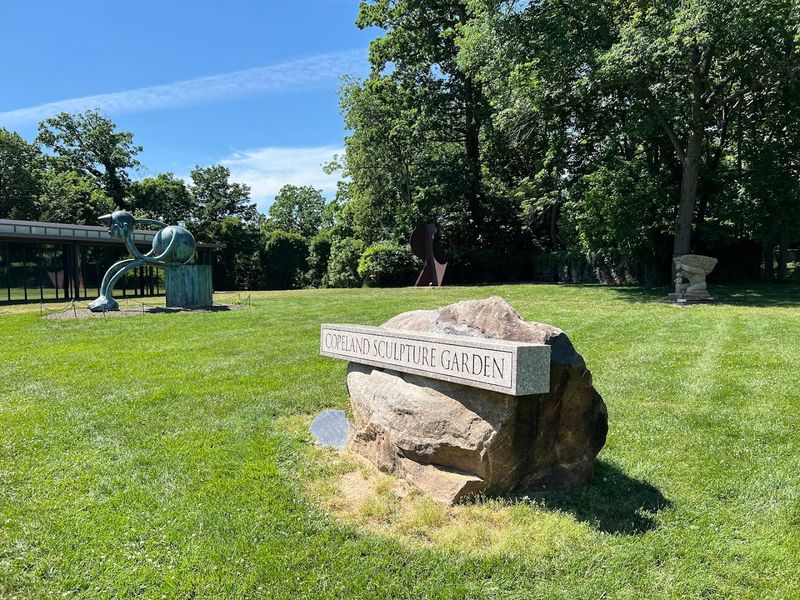
Not every art destination comes with a backstory this layered. The Copeland Sculpture Garden sits on land that was originally part of the Samuel and Mary R. Bancroft estate, a historic property in Wilmington, Delaware, that carries the kind of quiet prestige you can almost feel underfoot.
The garden itself was dedicated in 2006 by Tatiana Copeland, honoring her husband Gerret Copeland and his parents, Pamela and Lammot duPont Copeland. That family connection to Delaware history adds real meaning to every path and planted border on the property.
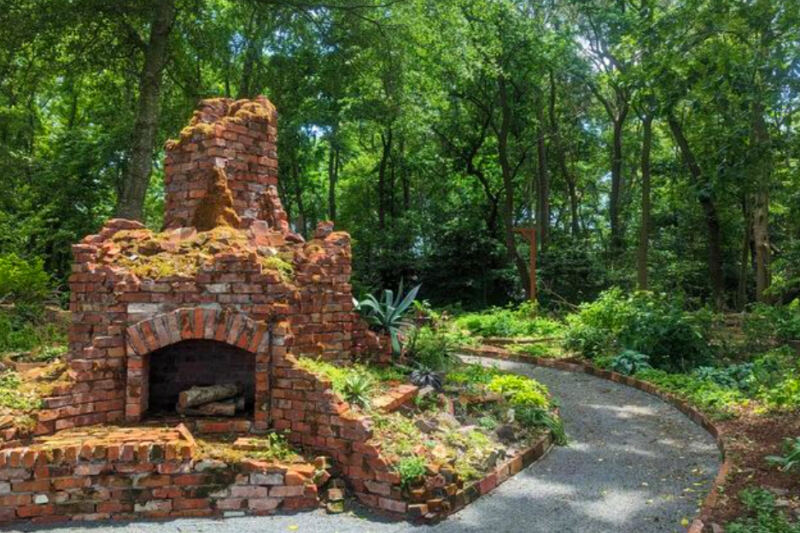
The address is 2301 Kentmere Parkway, Wilmington, DE 19806, nestled within the grounds of the Delaware Art Museum. What strikes you first is how naturally the old estate landscape blends with the curated art collection. Mature trees frame open lawns, and the whole space feels more like a personal retreat than a public attraction. History here is not just a plaque on a wall; it is woven into the landscape itself.
Twenty Sculptures, Zero Crowds: What the Garden Actually Looks Like
Most people picture a sculpture garden as a few stone figures on pedestals surrounded by gravel. The Copeland Sculpture Garden is nothing like that. Twenty works by nationally recognized artists are spread across wooded areas and open lawns in a way that feels organic rather than arranged.
Indigenous plants grow alongside each piece, so the art and the landscape genuinely support each other. You might round a bend and find a towering abstract metal form rising above a bed of native ferns, or spot a bright red sculptural disk peeking through the branches.
The garden connects the parking area to the Delaware Art Museum’s main entrance, which means even visitors who came just for the paintings inside get a full outdoor art experience on the way in. That built-in flow makes the whole visit feel curated from the moment you arrive. Every turn reveals something worth pausing over, and that sense of discovery keeps the walk interesting from start to finish.
The Giant That Steals Every Visitor’s Attention
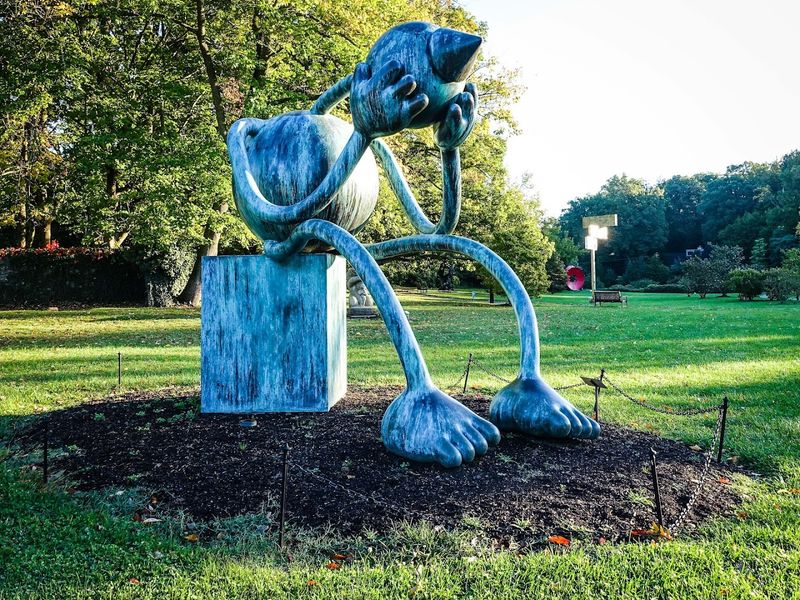
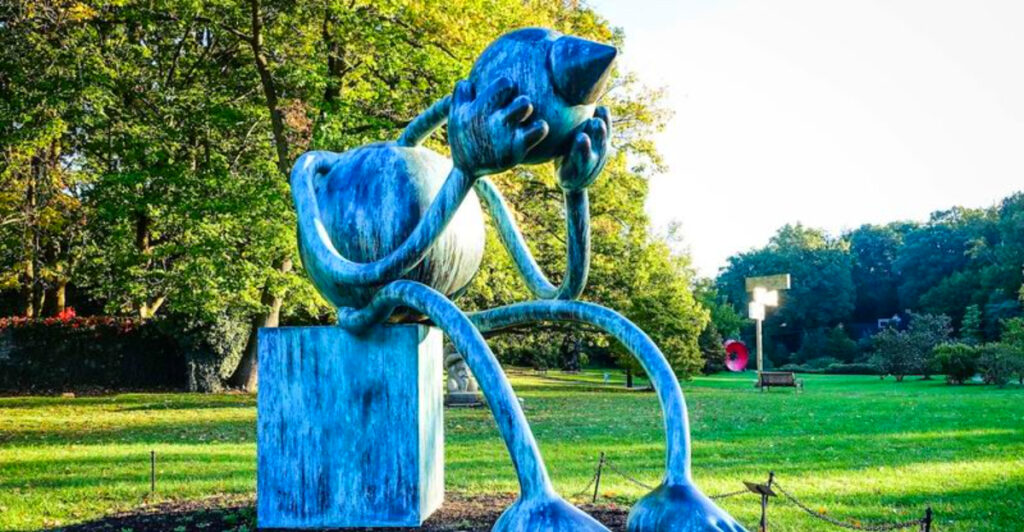
Tom Otterness created “Crying Giant” in 2002, and the 13-foot-tall bronze figure has been the garden’s unofficial mascot ever since. There is something both humorous and oddly moving about a massive figure with an exaggerated, cartoonish face sitting in the middle of a peaceful Delaware garden.
Children absolutely gravitate toward it. On the day I visited, two kids were already climbing around the base before their parents even noticed. The sculpture has that rare quality of being immediately approachable, which is not something you can say about most large-scale public art.
Adults tend to circle it slowly, taking in the proportions and the surprisingly detailed surface work. Otterness is known for creating figures that blur the line between playful and profound, and this piece captures that balance perfectly. It photographs beautifully from almost every angle, and it has a way of anchoring the entire garden space around it. Honestly, plan to spend more time here than you think you will.
Art That Actually Moves: The Kinetic Sculpture You Have to See in Person
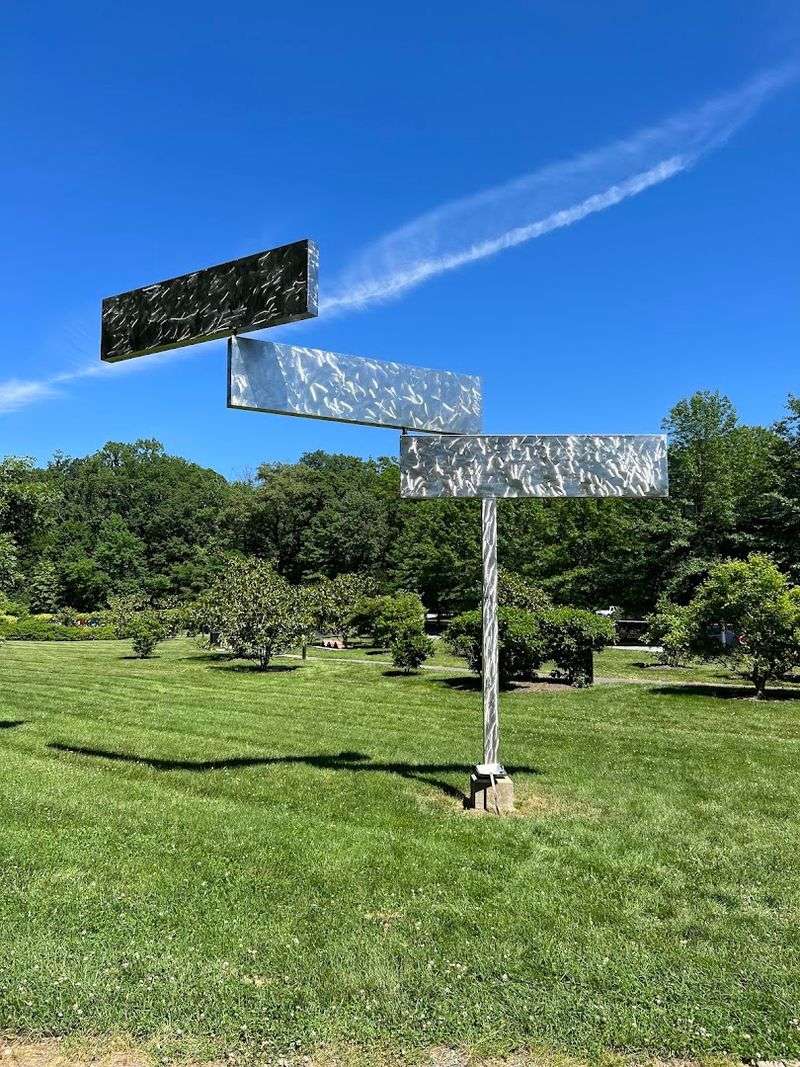
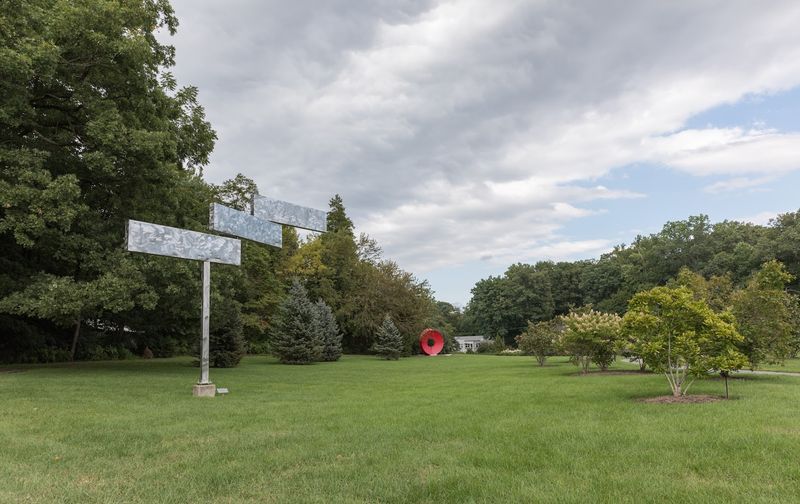
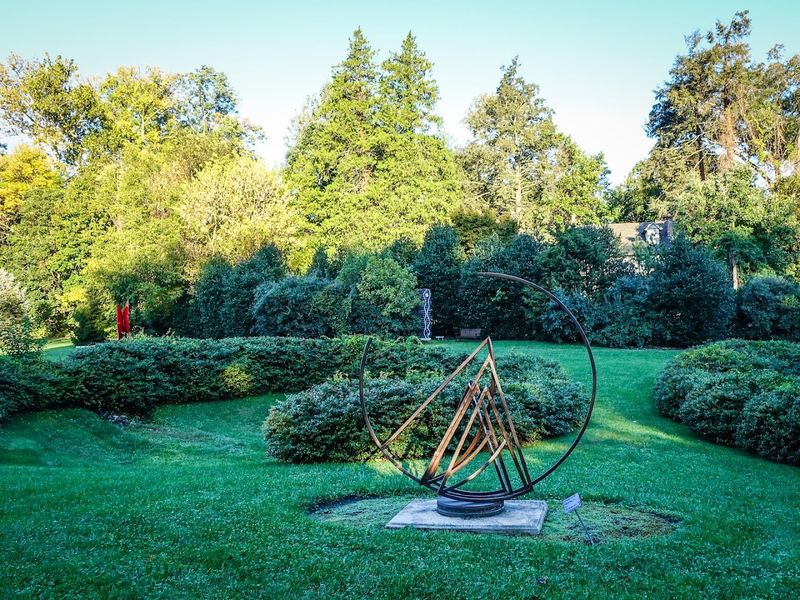
George Rickey’s “Three Rectangles Horizontal Jointed Gyratory III” from 1990 is the kind of sculpture that makes you stop mid-step and just watch. Three large rectangular blades are balanced and jointed so precisely that the lightest breeze sends them rotating in slow, hypnotic patterns.
No motor. No mechanism. Pure engineering and patience. Rickey spent decades perfecting this kind of kinetic work, and seeing it move in a real outdoor setting is completely different from reading about it in an art book.
What makes it especially interesting in this garden is the contrast. Most of the other pieces here are static, grounded, heavy. Then you turn a corner and find something floating and spinning on its own, responding to weather you cannot even feel on your skin. It changes the mood of the surrounding area instantly.
If you visit on a calm day, wait a few minutes; even the faintest air movement is enough to set the whole thing gliding. The patience required to watch it is its own quiet reward.
Rubber Tires Reimagined: The Sculpture That Challenges What Art Can Be Made From
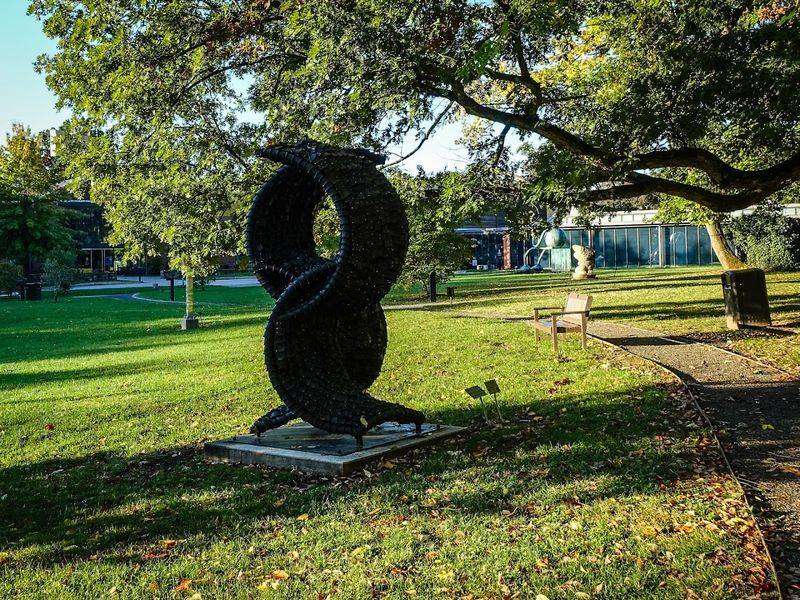
Chakaia Booker’s “One Way,” installed in 2008, is one of those works that makes you reconsider the word “material.” The piece is constructed from recycled rubber tires and stainless steel, and the result is something that looks almost organic, like a creature that grew rather than was built.
Booker uses tire rubber to explore themes of diversity, mobility, and hope, and those ideas come through clearly once you start looking closely at how the tread patterns interact and layer. The texture is surprisingly rich for something sourced from a junkyard.
It is also one of the most visually bold pieces in the collection. The dark rubber creates strong shadows, and the stainless steel elements catch light in a way that shifts depending on where you stand. Standing next to it, the scale becomes clear, and the craftsmanship even more impressive. This piece alone is worth the trip for anyone curious about contemporary sculpture that pushes past conventional boundaries in both material and message.
Red Disks and Sound Waves: The Sculpture That Plays With Your Senses
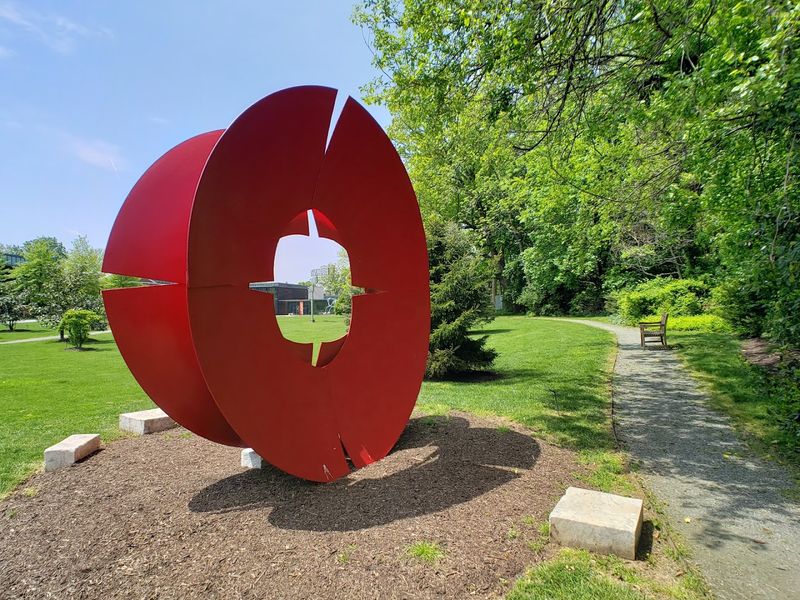
Joe Moss created “Orifice II,” and it is one of those pieces that catches your eye from across the garden before you even know what you are looking at. Bright red disks arranged in an abstract configuration, they create a strong visual punch against the green landscape surrounding them.
What most visitors do not realize until they get close is that the sculpture incorporates auditory elements as well. The design channels and amplifies ambient sound in ways that shift depending on how near you stand and where you position yourself. It is a subtle effect, but once you notice it, the piece becomes a completely different experience.
Moss was interested in how sculpture could engage multiple senses at once, and “Orifice II” delivers on that idea without being gimmicky about it. The color choice alone makes it one of the most photographed works in the garden. But the real payoff comes from slowing down and actually listening while you look, which is not something most outdoor art invites you to do.
The Labyrinth That Turns a Walk Into Something Meditative
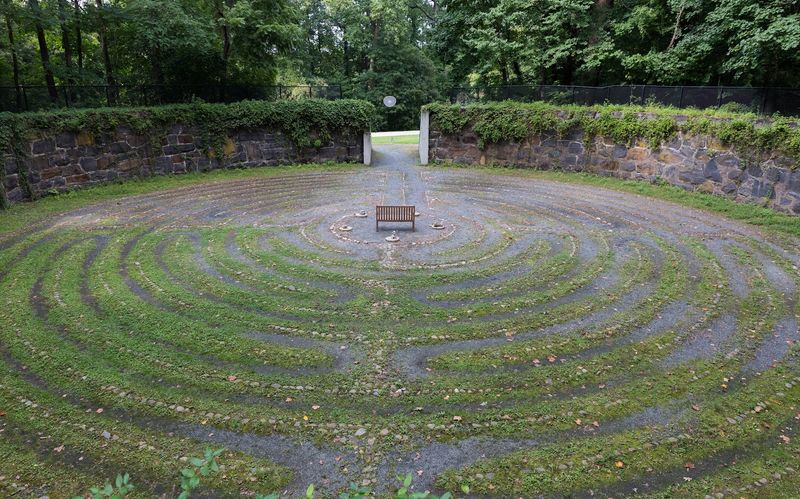
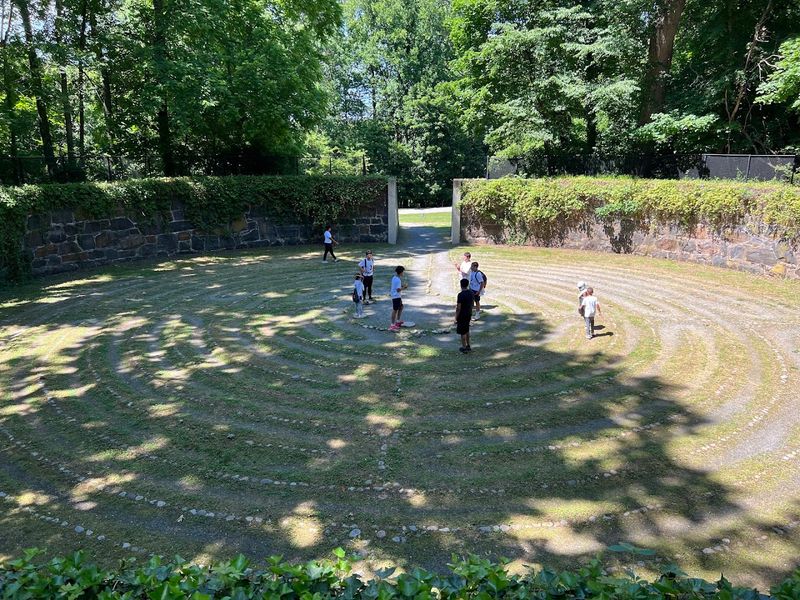
The Anthony N. Fusco Reservoir area holds one of the most unexpected features in the entire garden: an 80-foot diameter labyrinth built using seven tons of Delaware River rock. That is not a small undertaking, and the finished result has a weight and permanence that suits the meditative purpose behind it.
Walking the labyrinth is a practice rooted in mindfulness. The single winding path leads you inward and then back out again, and the rhythm of following it quietly tends to calm a busy mind in a way that is hard to explain until you try it yourself.
The center of the labyrinth has an added bonus that feels almost accidental but clearly was not: the acoustics there are remarkable. Stand in the middle, speak or hum at a normal volume, and the sound returns to you in a way that feels enclosed and amplified despite being completely outdoors. One early morning visit in light rain, following that path in near silence, turned out to be one of the more genuinely peaceful experiences I have had at any public attraction anywhere.
Early Voices in the Collection: When the Garden First Started Speaking

Not all the art here is recent. “Protecting the Future,” created between 1966 and 1967 by Domenico Mortellito, is one of the earliest pieces in the collection and one of the most thought-provoking once you know its context. The work comments on pollution at a time when the environmental movement was just beginning to gain public attention in the United States.
That historical placement matters. Standing in front of a sculpture that was made over 50 years ago to warn about environmental damage, surrounded by indigenous plants and carefully preserved green space, creates a quiet conversation between past and present that no interpretive sign could fully capture.
The garden also holds abstract metal sculptures from the 1970s and 1980s by artists including Betty Gold, Joe Moss, David Stromeyer, and Isaac Witkin. These works reflect the aesthetic language of their era, bold forms, industrial materials, geometric abstraction, and seeing them alongside newer commissions like Booker’s tire piece shows how much the collection has grown in both scope and ambition over the decades.
When to Visit and What to Know Before You Go
The garden is open Wednesday through Saturday from 10 AM to 4 PM and Sunday from 10 AM to 4 PM as well, with Monday and Tuesday being closed days. Those hours are worth checking before you plan your trip, especially if you are combining the outdoor garden with a visit to the museum inside.
General admission to the Copeland Sculpture Garden is free on Thursdays between 4 PM and 8 PM, from April through December. That Thursday evening window is a genuinely good deal, and the light at that hour is also flattering for photographs of the sculptures.
The garden is best enjoyed in warm, dry weather, though a light rain visit has its own quiet appeal, particularly at the labyrinth. Wear comfortable walking shoes since the paths move across both paved and natural surfaces. The phone number for the Delaware Art Museum is 1-866-232-3714, and more information about the garden is available at delart.org. Parking is available on site, which makes the whole visit straightforward from arrival onward.
More Than Just a Walk Outside: Why This Place Leaves a Lasting Impression
A lot of outdoor art spaces feel like afterthoughts, places where a museum puts sculptures it cannot fit inside. The Copeland Sculpture Garden does not feel that way at all. The integration of art, native plants, historic landscape, and community programming gives the space a sense of genuine purpose.
During warmer months, the garden hosts community events and music performances, which transforms the already pleasant grounds into something livelier and more social. Birthday parties have been held here. Geocachers have wandered through. Families come for the giant; art lovers come for the Rickey; contemplative types come for the labyrinth.
The garden seems to accommodate all of them without feeling crowded or pulled in too many directions.
What stays with me most is how the place manages to be both stimulating and calming at the same time. The art gives you things to think about, and the greenery gives you space to do the thinking. That combination is rarer than it sounds, and it is exactly why a single visit to this tucked-away corner of Wilmington has a way of turning into a personal tradition.
Share this story