This small Montana museum gives visitors the rare chance to do more than admire dinosaur fossils. Located along U.S. Highway 89, it offers hands-on fossil digs with paleontologists, remarkable dinosaur discoveries, and exhibits that showcase one of North America’s richest fossil regions.
From groundbreaking finds of baby dinosaur remains to an enormous mounted skeleton that wraps around the outside of the building, the museum delivers an experience that goes well beyond traditional exhibits. Keep reading to discover why this stop has become a favorite for families, road trippers, and anyone fascinated by prehistoric life.
A Small Town Address With a Massive Prehistoric Story
The Montana Dinosaur Center sits at 120 2nd Ave S, Bynum, MT 59419, a town so small you might blink and miss it while driving north on Highway 89. But missing it would be a genuine mistake. This non-profit research and educational institution opened its doors in 1995 with a clear mission: bring serious paleontology to the public in a hands-on, meaningful way.
Bynum is surrounded by the Two Medicine Formation, a geological treasure chest deposited between roughly 82 and 74 million years ago during the Late Cretaceous period. The landscape is open and rugged, with the Rocky Mountains rising in the distance and fossil-bearing rock layers exposed right at the surface.
The center holds a 4.7-star rating from hundreds of visitors, a number that reflects just how much heart goes into every exhibit and every conversation with staff. You can reach them at 406-469-2211 or visit tmdinosaurcenter.org to plan your trip before the summer season fills up.
Why Montana’s Ground Is Basically a Dinosaur Treasure Chest
Montana did not become one of the world’s top dinosaur fossil regions by accident. The state’s geology tells a story of ancient seas, river systems, and subtropical forests that made it a perfect habitat for enormous creatures during the Late Cretaceous period. When those animals passed on, the conditions were just right for their remains to be preserved in rock.
The Two Medicine Formation, which underlies the land around Bynum, is particularly remarkable. Its soil chemistry is neutral enough to protect small bones and even dinosaur eggs, which are notoriously fragile and rare. That is why this region has produced not just adult skeletons but also nests, juvenile specimens, and eggshell fragments that scientists rarely find elsewhere.
Over millions of years, gradual erosion has slowly uncovered these fossils, essentially delivering them to the surface without human effort. Montana’s exposed, accessible rock layers mean new discoveries keep emerging every field season, making this one of the most reliably productive fossil regions anywhere on the planet.
The Baby Dinosaur Discovery That Changed Science Forever
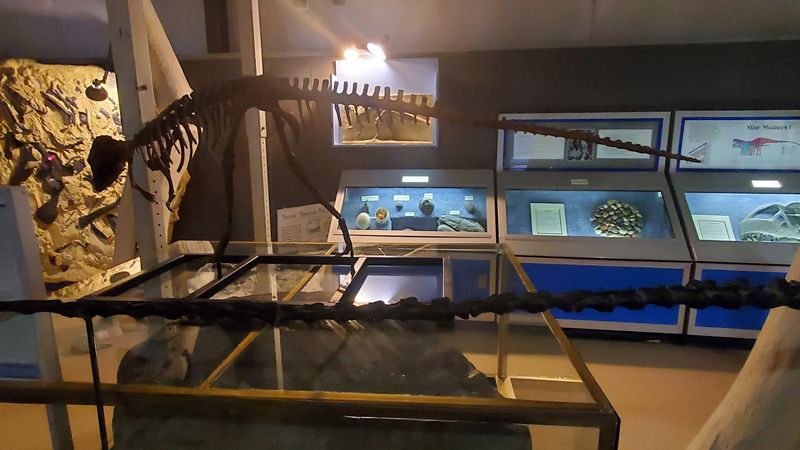
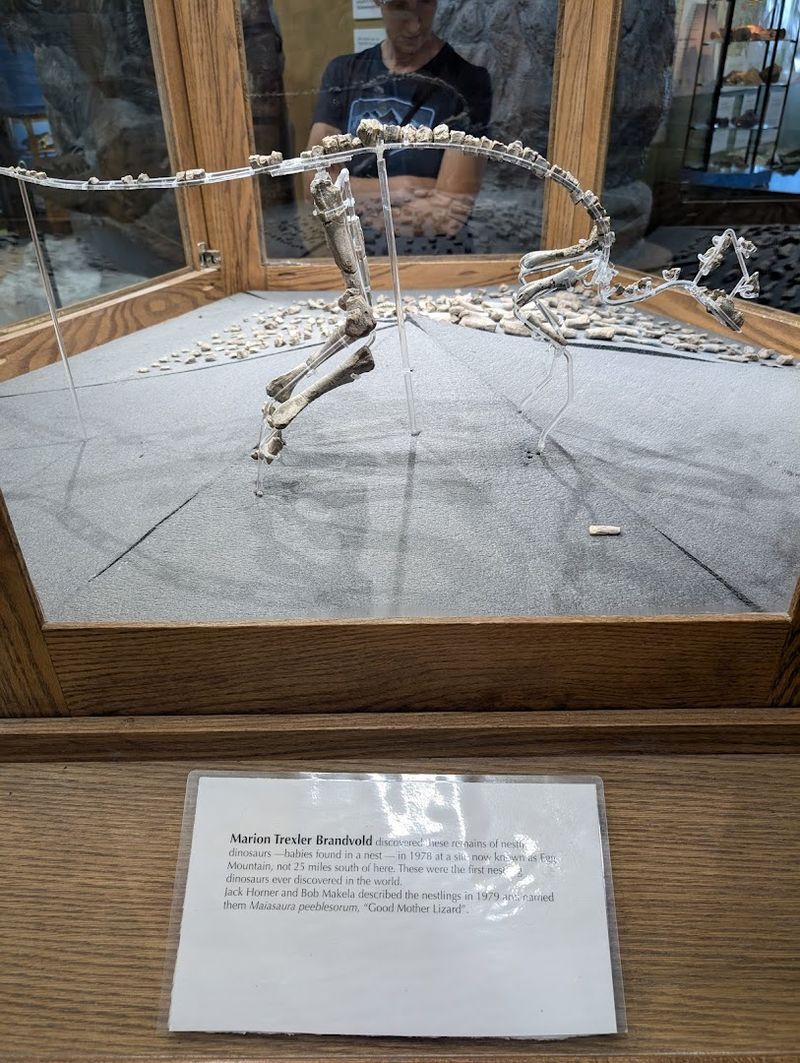
Few scientific discoveries have shifted our understanding of dinosaurs as dramatically as the one made near Bynum in 1978. Marion Brandvold, a local fossil enthusiast, collected the first baby dinosaur bones ever found. Paleontologists Bob Makela and Jack Horner identified them as belonging to a previously unknown species they named Maiasaura, meaning “good mother lizard.”
The name came from the evidence surrounding those tiny bones. Nearby was a nesting site, now known as Egg Mountain, where multiple nests contained eggs, hatchlings, and juveniles at various growth stages. That pattern suggested the adults were actively caring for their young, feeding them and protecting the nest, which was a revolutionary idea at the time.
Before this discovery, most scientists assumed dinosaurs laid their eggs and walked away, much like modern reptiles often do. The Maiasaura evidence flipped that assumption entirely. The Montana Dinosaur Center proudly houses juvenile Maiasaura fossils, and the story behind them is one of the most compelling things you will hear on any museum visit.
The World-Record Dinosaur That Barely Fits Inside
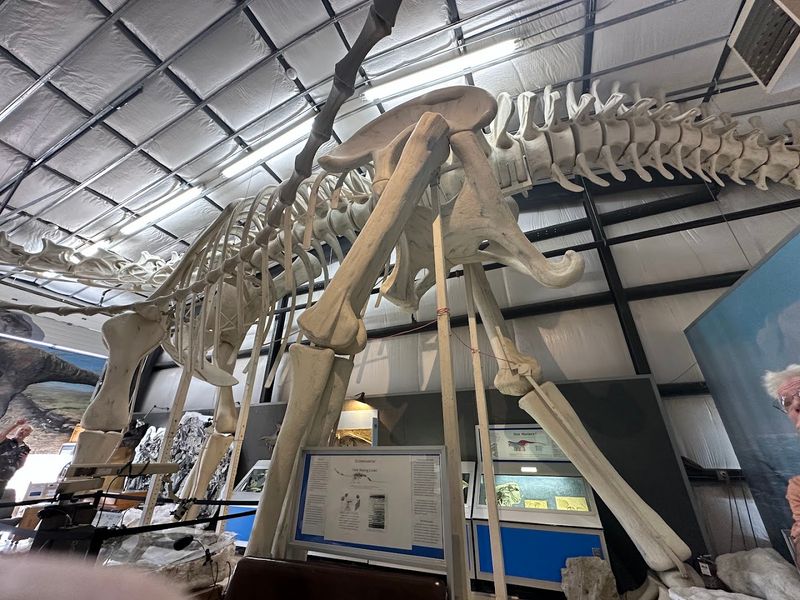
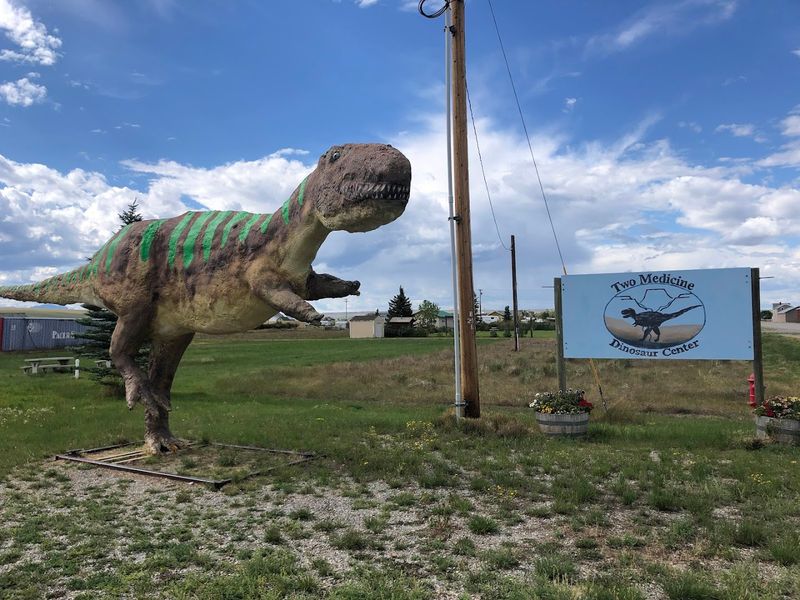
Imagine standing next to something 137 feet long and nearly 23 feet tall at the hips. That is the scale of the Diplodocus skeletal model on display at the Montana Dinosaur Center, a specimen once listed in the Guinness Book of World Records as the longest dinosaur ever measured. The museum refers to this creature affectionately as “Seismosaurus,” a name used when it was first described.
The sheer size of this mounted replica is hard to process until you are actually standing next to it. The skeleton extends so far that it wraps around the outside of the building, giving visitors a dramatic preview of what waits inside before they even pay admission. It is the kind of sight that makes adults go quiet for a second before reaching for their cameras.
What makes this display even more meaningful is that it sits in a small-town museum rather than a massive metropolitan institution. The contrast between the modest setting and the record-breaking exhibit creates an experience that feels personal and surprisingly powerful, and that feeling carries through the entire visit.
Getting Your Hands Dirty at a Real Fossil Dig
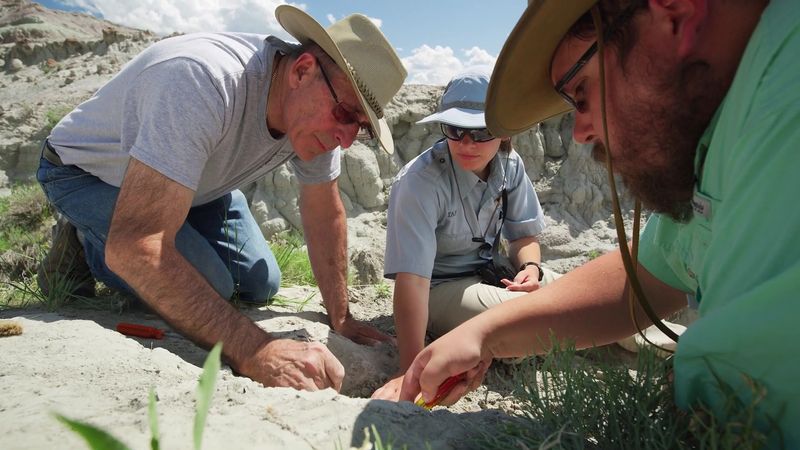
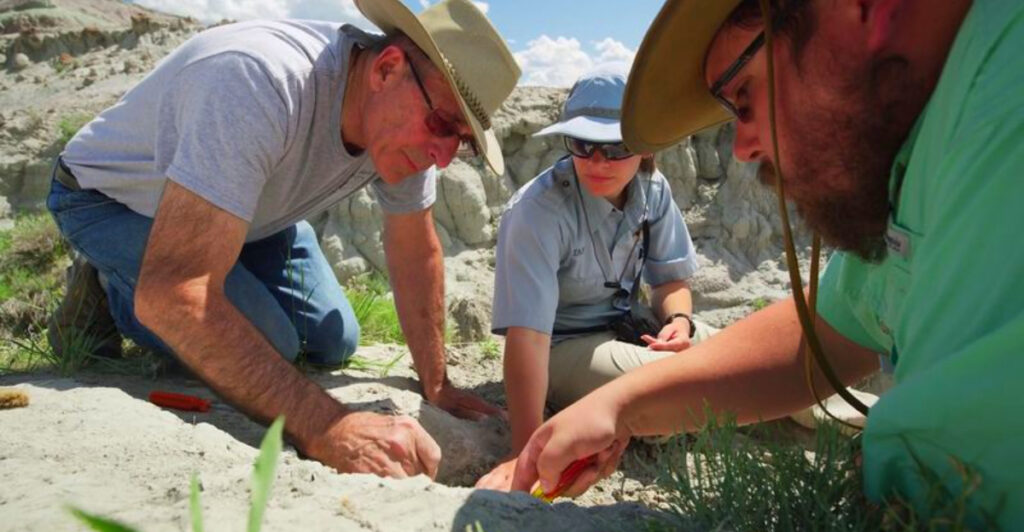
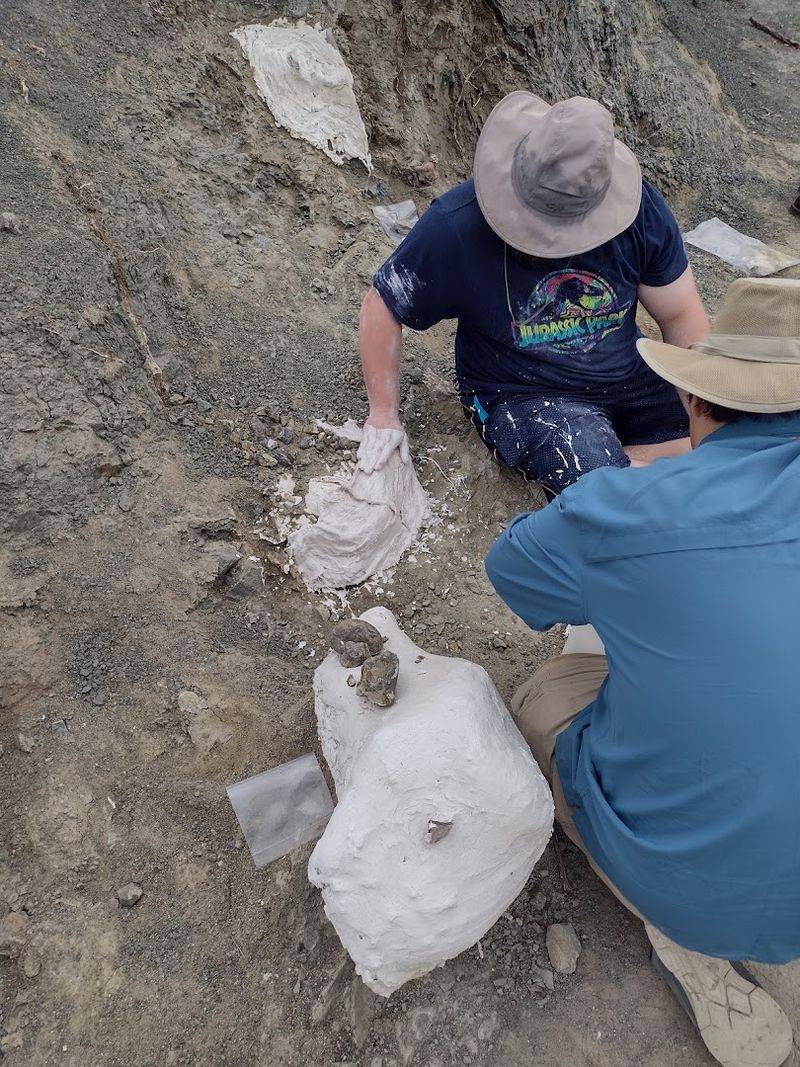
Most museums ask you to look but not touch. The Montana Dinosaur Center operates on a completely different philosophy. Throughout the summer field season, from June 1 through Labor Day, the center offers public hands-on fossil dig programs that let ordinary people work at real excavation sites alongside professional paleontologists and trained research staff.
Options range from half-day site tours to multi-day expeditions, so you can choose the level of commitment that fits your schedule and energy. Participants learn excavation principles, fossil stabilization techniques, data collection methods, and proper site documentation, the same skills working scientists use every day in the field.
In 2020, the team discovered a new bonebed containing fossils of tyrannosaurs, duckbilled dinosaurs, and armored dinosaurs. That site is now an active dig where program participants can contribute to real scientific research, not just a simulated experience. If you plan to join a dig, book well in advance online because spots fill up quickly, especially during peak summer weeks.
What Happens Inside the Fossil Preparation Lab
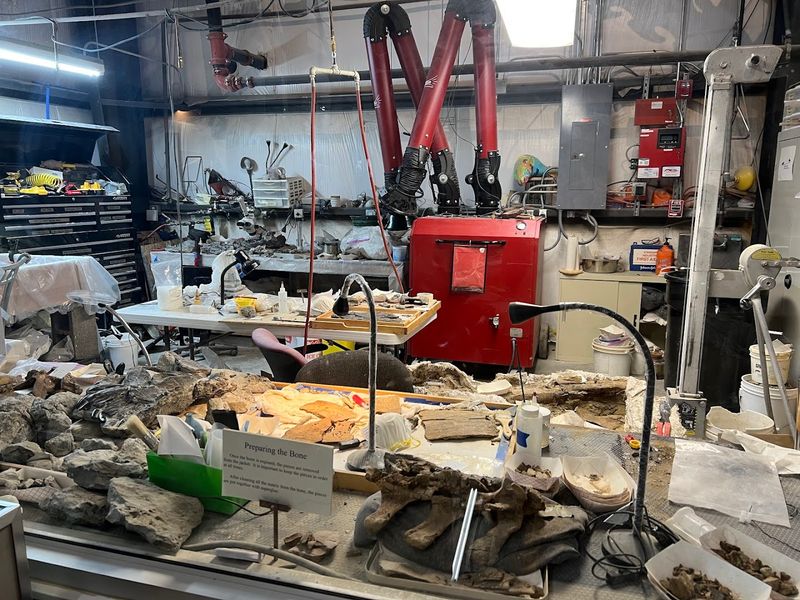
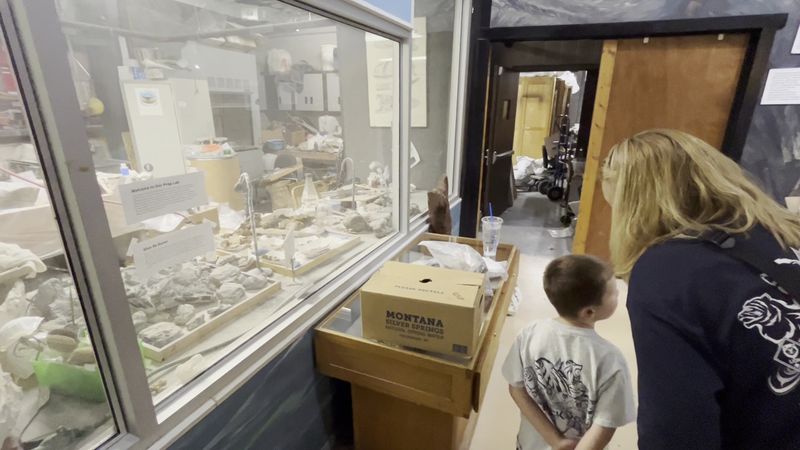
One of the quieter thrills of visiting the Montana Dinosaur Center is the preparation lab, visible through a window from inside the museum. Watching a technician carefully remove rock from an ancient bone with tiny tools is oddly hypnotic, and it puts the entire science of paleontology into a completely different perspective.
The lab is where raw field discoveries are transformed into study-ready specimens. Technicians use air scribes, dental picks, and microscopes to expose fossils without damaging them, a process that can take months or even years for a single specimen. The work is painstaking, methodical, and genuinely fascinating to observe even for a few minutes.
The center’s philosophy is that fossils found in the Two Medicine Formation should stay in Montana, which means what you see in that lab window may one day become part of the museum’s permanent collection.
The Remarkable Diversity of Species Found Nearby
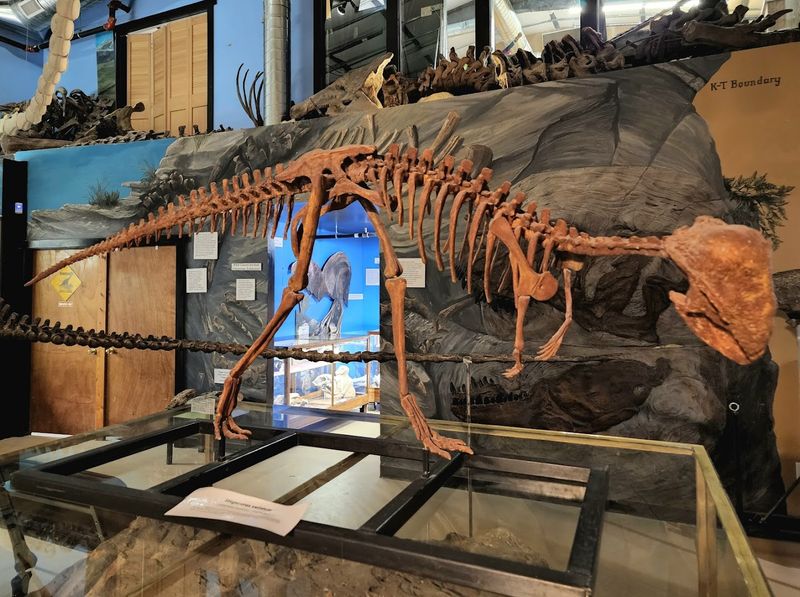
The land around Bynum has produced an impressive roster of dinosaur species over the decades. The Two Medicine Formation is home to fossils of Maiasaura, Daspletosaurus, Gorgosaurus, Troodon, Einiosaurus, Edmontonia, and Scolosaurus, among others. That variety reflects just how rich and diverse the Late Cretaceous ecosystem of Montana actually was.
The Montana Dinosaur Center’s collections include specimens of hadrosaurs, ceratopsians, and tyrannosaurs, representing a broad cross-section of the animals that once roamed this region. Some of these specimens belong to species that were newly identified from fossils collected in and around the Two Medicine Formation, meaning this museum holds genuine contributions to the scientific record.
For visitors who love dinosaurs beyond the usual T. rex and Triceratops headliners, this collection offers a refreshing look at the full supporting cast of the Cretaceous world. The staff are happy to explain what makes each species distinct, and those conversations tend to be the highlight of many people’s visits, especially for curious kids and adults who ask good questions.
Talking Face-to-Face With Real Paleontologists
One of the most unexpectedly wonderful things about the Montana Dinosaur Center is that the people behind the counter are not just museum guides. Many of them are working paleontologists who have spent time in the field, brushing rock off bones and making real discoveries. That kind of direct access to actual scientists is rare and genuinely valuable.
Conversations here tend to go deep fast. Ask a question about Maiasaura parenting behavior or the geology of the Two Medicine Formation and you will likely get a ten-minute answer full of details that no exhibit placard could ever capture. The staff approach these exchanges with patience and enthusiasm, clearly energized by the chance to share what they know.
For families traveling with children who are passionate about science or natural history, this kind of interaction can be genuinely formative. There is something powerful about a child asking a scientist a question and getting a real, substantive answer in return, the kind of moment that can quietly shape a future career path.
What the Landscape Around Bynum Looks Like Up Close
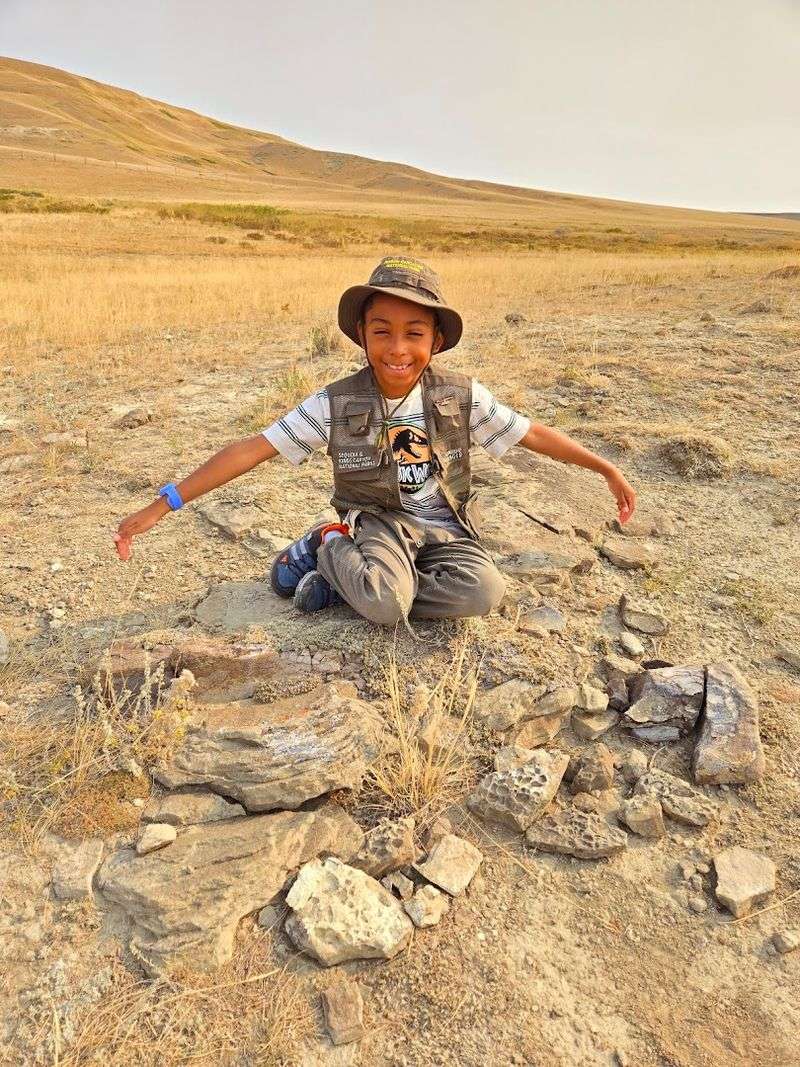
The setting around Bynum is part of what makes a visit here feel so different from a typical museum trip. The town sits in an open, windswept stretch of north-central Montana where the prairie rolls out in every direction and the Rocky Mountains form a dramatic backdrop to the west. The sky here feels enormous, the kind of wide-open view that makes you instinctively slow down.
The surrounding terrain is the same landscape that has been slowly giving up dinosaur fossils for decades. Badlands-style outcroppings of exposed sedimentary rock dot the hillsides, and it is not hard to imagine how a trained eye could spot a bone fragment eroding out of a cliff face on a routine drive through the area.
The beauty of this region is something visitors consistently mention alongside the museum itself. Combining the natural scenery with the paleontological history creates a layered experience that goes beyond just looking at old bones. The whole area feels alive with geological time in a way that is hard to put into words but easy to feel.
The Montana Dinosaur Trail Connection
The Montana Dinosaur Center is one of the official stops on the Montana Dinosaur Trail, a network of museums and research institutions spread across the state that together tell the full story of Montana’s extraordinary fossil heritage. The trail was designed to encourage travelers to explore multiple sites rather than treating any single museum as a standalone destination.
Each stop on the trail offers something a little different, from massive university collections to smaller community museums like the one in Bynum. What the Montana Dinosaur Center brings to the trail that few others can match is the combination of real scientific research, hands-on dig programs, and direct access to working paleontologists all in one compact location.
For road trippers who want to turn a Montana vacation into a proper prehistoric adventure, the Dinosaur Trail is a brilliant framework for planning the route. The center in Bynum makes a natural anchor point given its location on Highway 89, and the staff can often point you toward other worthwhile stops based on your specific interests.
Planning Your Visit Around the Museum’s Seasonal Hours
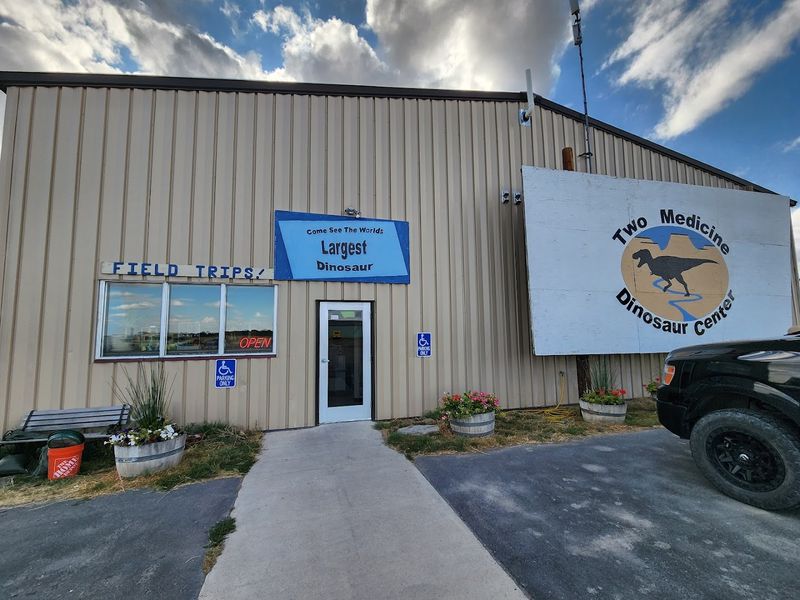
Timing your visit to the Montana Dinosaur Center matters more than you might expect. During the peak summer season, from Memorial Day weekend through Labor Day, the gallery is open daily from 9 AM to 6 PM. That window gives most travelers plenty of flexibility, especially those passing through on a road trip between Great Falls and Glacier National Park.
Spring and fall hours are more limited. From May 1 through Memorial Day weekend, and again from the day after Labor Day through September 30, the museum operates Wednesday through Sunday from 10 AM to 5 PM. Between October 1 and April 30, tours are available by appointment only, so calling ahead at 406-469-2211 is essential during those months.
Admission is very affordable, making this an easy addition to any itinerary without stressing the travel budget. The museum also has a gift shop stocked with books, science kits, jewelry, and stuffed animals, so you will likely leave with something tucked under your arm alongside all the new knowledge.
Why This Place Stays With You Long After You Leave
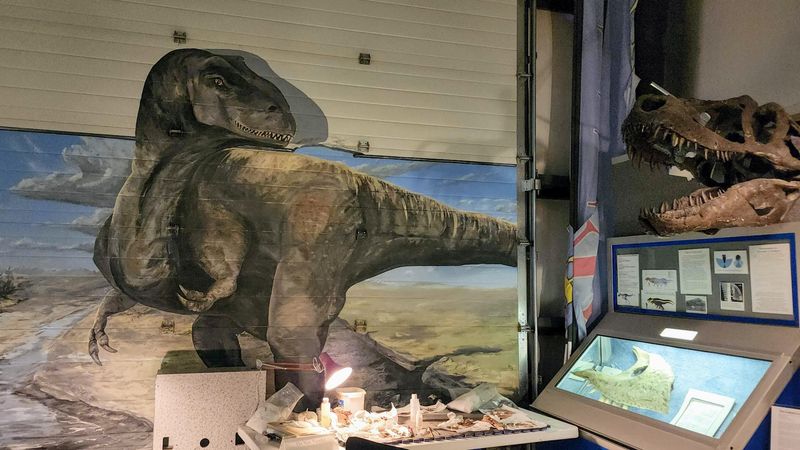
There is a specific kind of museum experience that does not fade the moment you walk back out into the parking lot. The Montana Dinosaur Center tends to produce that experience, and the reason is not just the fossils or the record-breaking skeleton. It is the combination of genuine scientific purpose, accessible programming, and staff who clearly love what they do.
Families who bring kids to the fossil dig programs consistently describe it as one of the most memorable things they did on their entire Montana trip. The chance to contribute to real research, even in a small way, creates a sense of participation that no exhibit can replicate. Grandparents, parents, and children all walk away with the same story to tell.
The museum is small enough to feel personal but substantial enough to leave you with real knowledge and a new appreciation for the ancient world beneath Montana’s soil. That combination is rarer than it sounds, and it is exactly what makes this little museum on a quiet stretch of Highway 89 worth seeking out.
Share this story