Some beaches are so stunning that photos barely do them justice. From the powdery white sands of the South Pacific to dramatic black volcanic shores in Iceland, the world is packed with coastal wonders that seem almost too beautiful to be real.
Whether you’re a seasoned traveler or just starting to dream big, these legendary beaches deserve a permanent spot on your travel bucket list. Pack your sunscreen and get ready to be seriously inspired.
Whitehaven Beach, Queensland, Australia
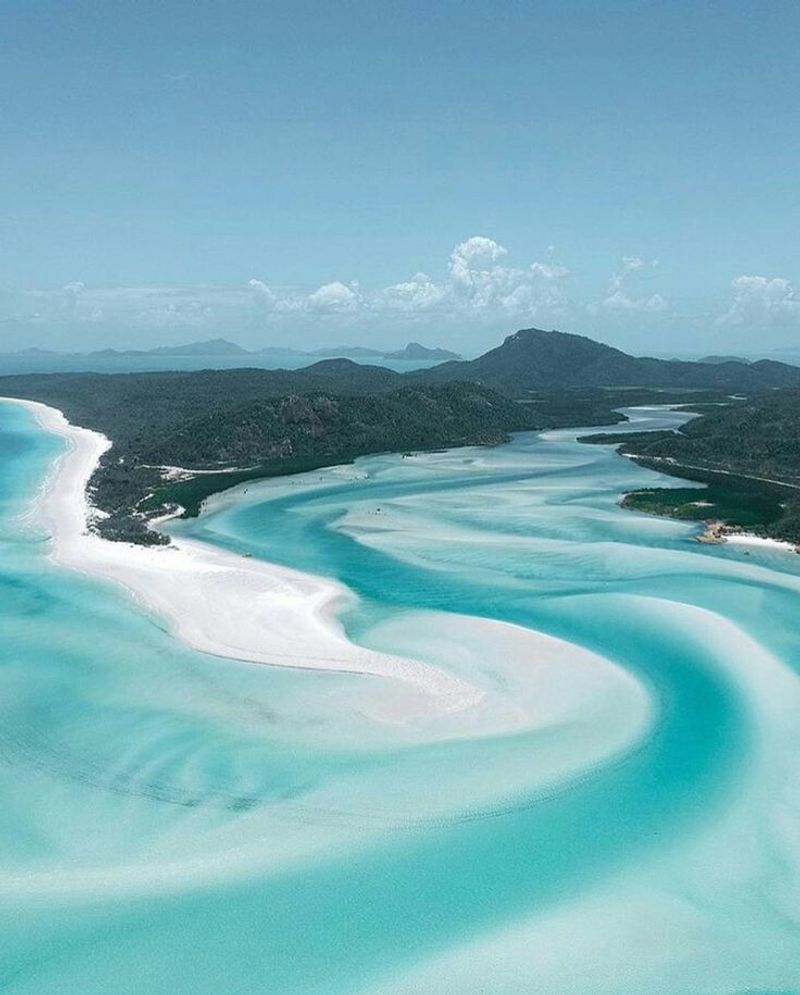
Silica sand so pure it squeaks under your feet, that is the first thing visitors notice when they step onto Whitehaven Beach. Tucked inside the Whitsunday Islands National Park, this seven-kilometer stretch of coastline is regularly voted one of the world’s finest beaches, and it is not hard to see why.
The real showstopper is Hill Inlet, a tidal inlet at the northern end of the beach where swirling patterns of white sand and turquoise water create a natural artwork that changes with every tide. Photographers and drone operators travel from all over the globe just to capture this view.
No two photos ever look quite the same.
Because the sand is 98 percent pure silica, it stays cool even on hot days, which makes walking barefoot a genuine pleasure. There are no permanent shops or facilities on the beach, keeping the atmosphere wonderfully wild and unspoiled.
Most visitors arrive by boat or seaplane from Airlie Beach. Plan to spend a full day here because an hour simply will not feel like enough time to soak it all in properly.
Grace Bay Beach, Providenciales, Turks and Caicos
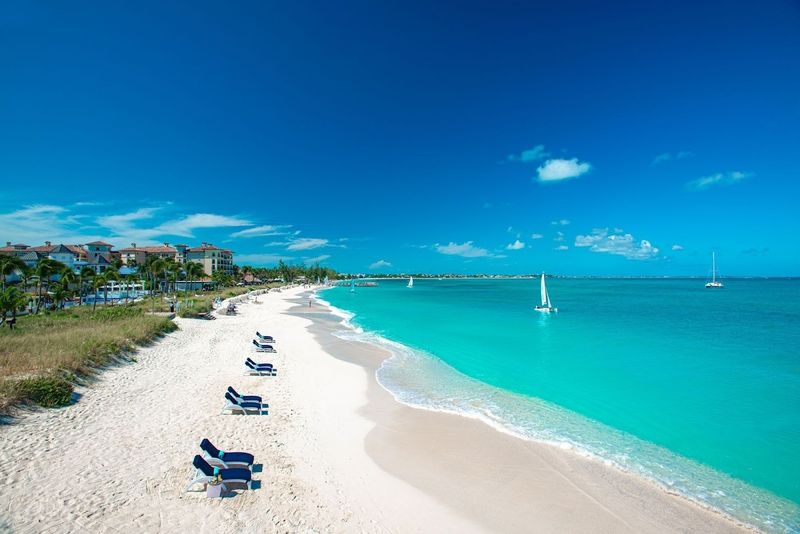
Consistently ranked among the top beaches on Earth, Grace Bay has a reputation that is almost unfair to every other beach on the planet. The water here is the kind of turquoise that makes you question whether someone added food coloring.
Spoiler: they did not.
Stretching about 12 miles along the northern coast of Providenciales, Grace Bay sits beside one of the Caribbean’s healthiest barrier reef systems. Snorkelers and scuba divers can spot sea turtles, eagle rays, and colorful reef fish just a short swim from shore.
The calm, shallow water also makes it ideal for families with young children who want a safe place to splash around.
The beach is lined with upscale resorts, but public access is always available, and the soft sand never feels overcrowded compared to more tourist-heavy Caribbean destinations. Sunrise here is genuinely magical, with pastel pinks and oranges reflecting off the glassy water before the crowds arrive.
If you only visit one Caribbean beach in your lifetime, Grace Bay makes an incredibly strong case for being that beach. Book accommodations early because this island fills up fast during peak season.
Anse Source d’Argent, La Digue, Seychelles
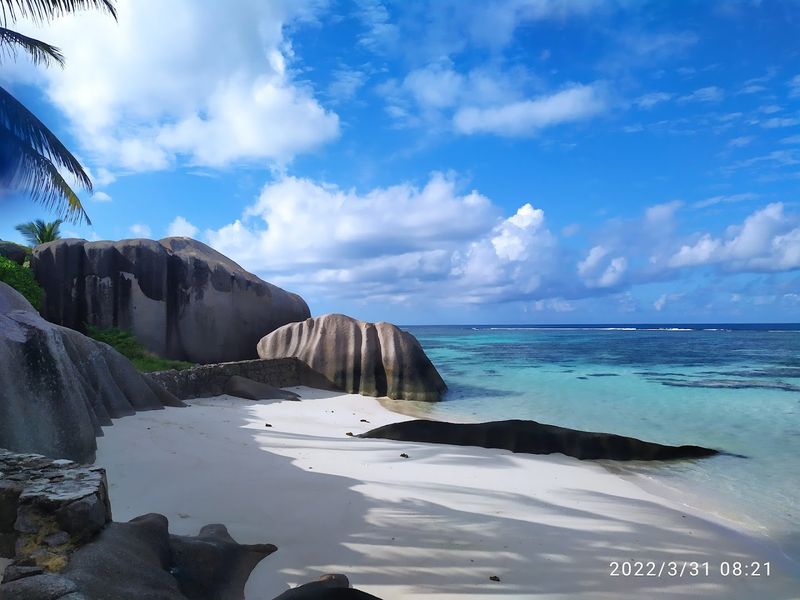
Nowhere else on Earth will you find a beach quite like Anse Source d’Argent, where enormous smooth granite boulders rise dramatically from the sand like ancient sculptures left behind by giants. This is one of the most photographed beaches in the world, and standing here in person confirms every single photo was worth taking.
Located on La Digue Island, getting here is part of the adventure. Most visitors rent a bicycle to cross the island, weaving through vanilla plantations and small villages before arriving at the beach through a former coconut plantation called L’Union Estate.
The shallow lagoon is protected by a coral reef, keeping the water calm and perfect for swimming even for nervous swimmers.
The light here at golden hour is extraordinary. The pink-tinted granite boulders glow warm orange as the sun sets, creating a scene that feels almost unreal.
Anse Source d’Argent stretches across several small coves separated by the boulders, meaning you can find a relatively private spot even during busy periods. Bring water and snacks because facilities are limited.
Visiting early in the morning gives you the best chance of experiencing this remarkable place in near-perfect solitude.
Navagio Beach (Shipwreck Beach), Zakynthos, Greece
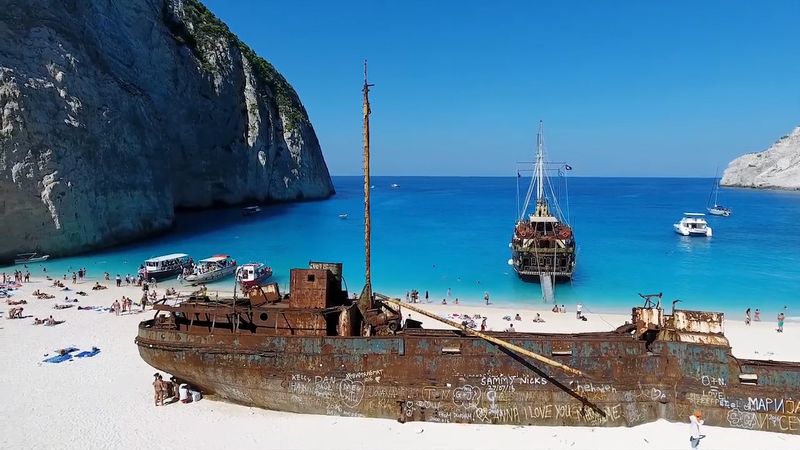
There is a shipwreck on this beach, and somehow that makes it even more beautiful. Navagio Beach, also called Shipwreck Beach, sits inside a dramatic cove on Zakynthos Island, completely enclosed by towering white limestone cliffs that plunge straight into the Ionian Sea.
The rusting hull of the MV Panagiotis has rested on the sand since 1983, when the freighter allegedly ran aground during a smuggling operation. Whether that story is entirely accurate remains debated, but the wreck has since become one of Greece’s most iconic landmarks.
The contrast of orange rust against white sand and electric-blue water is genuinely jaw-dropping.
Getting here is exclusively by boat, which actually works in the beach’s favor by limiting crowds compared to more accessible destinations. Day trips depart regularly from Zakynthos Town and Porto Vromi Harbor.
The cliffs surrounding the cove are also popular with thrill-seekers who hike to the cliff-top viewpoint for a bird’s-eye perspective. Swimmers should be aware that currents can be strong near the cliffs.
Visit during late May or September to avoid the peak summer rush while still enjoying warm, sunny weather and calmer seas.
Baía do Sancho, Fernando de Noronha, Brazil
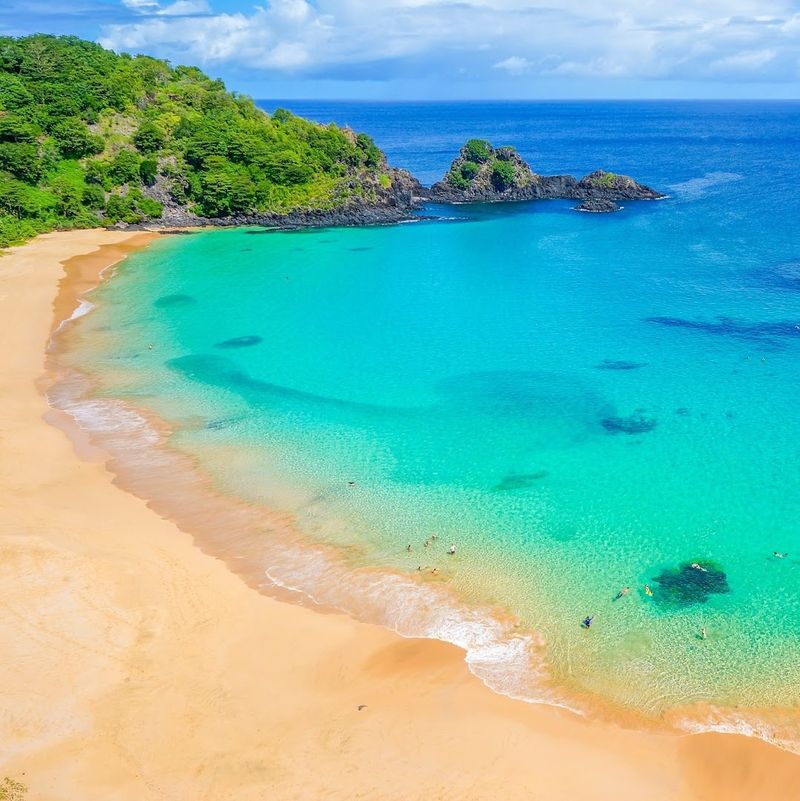
Winning the title of world’s best beach is no small achievement, but Baía do Sancho has claimed that honor multiple times on TripAdvisor’s Travelers’ Choice rankings. Tucked beneath towering volcanic cliffs on the remote archipelago of Fernando de Noronha, reaching this beach requires either descending a narrow ladder bolted into the cliff face or arriving by boat.
Either way, the effort is absolutely worth it.
The water at Baía do Sancho is a stunning mix of deep emerald and vivid blue, fed by Atlantic currents that keep it remarkably clear. Spinner dolphins frequently surf the waves just offshore, and the snorkeling is considered among the best in South America.
Hawksbill sea turtles, reef sharks, and tropical fish are regular visitors beneath the surface.
Fernando de Noronha itself is a protected UNESCO World Heritage Site, which means visitor numbers are strictly controlled through a daily environmental tax. This keeps the island and its beaches in extraordinary condition compared to more heavily visited destinations.
Book your trip well in advance, especially for the Brazilian summer months. Staying overnight on the archipelago lets you experience the beach at dawn, when the light is golden and the crowds have not yet arrived by boat.
Pink Sands Beach, Harbour Island, Bahamas
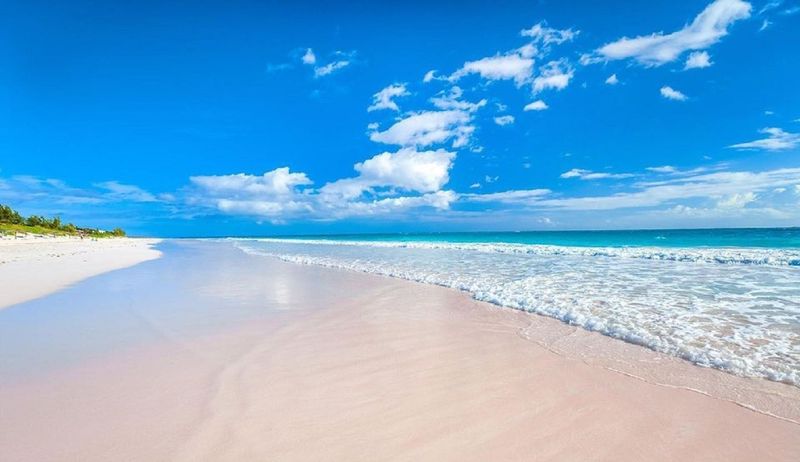
Pink sand sounds like something invented for a fairy tale, but Harbour Island’s famous beach is entirely, spectacularly real. Stretching nearly three miles along the Atlantic side of the island, the rosy hue comes from tiny fragments of a red-shelled organism called Foraminifera, which mix with white sand and crushed coral to create that distinctive blush color.
The shade of pink actually shifts depending on the time of day and weather. Early morning light gives the sand a deeper rose tone, while midday sun makes it appear more pale and delicate.
Photographers obsess over this beach for exactly that reason. The water alongside the pink sand is a brilliant clear turquoise, creating a color combination that looks almost too pretty to be natural.
Harbour Island itself is a charming small community known for its pastel-colored cottages, golf carts instead of cars, and a relaxed, unhurried pace that feels refreshingly old-fashioned. The beach faces east, making it ideal for morning swims before the afternoon Atlantic breeze picks up.
Several boutique hotels sit right on the shoreline. Getting here requires a short ferry from North Eleuthera, followed by a water taxi, but the journey adds to the feeling that you have discovered somewhere genuinely special.
Maya Bay, Ko Phi Phi Leh, Thailand
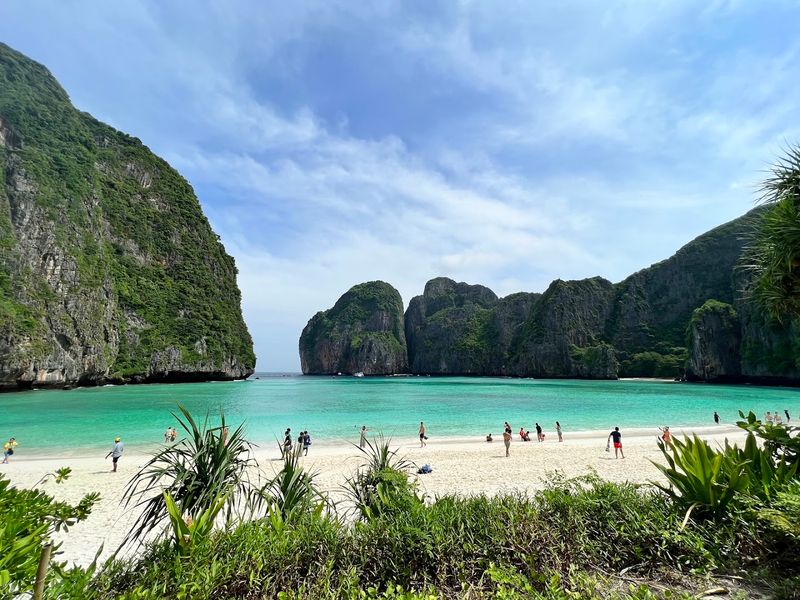
Before the tourists arrived in overwhelming numbers, Maya Bay was a secret known only to local fishermen. Then a certain Leonardo DiCaprio film called The Beach came out in 2000, and the cove on Ko Phi Phi Leh became one of Thailand’s most visited spots almost overnight.
The good news is that Thai authorities took action before the damage became permanent.
Maya Bay was closed entirely to visitors between 2018 and 2022 to allow the coral reefs and marine ecosystem to recover. The recovery exceeded expectations, with blacktip reef sharks returning in numbers that surprised even marine biologists.
The beach now operates under strict visitor limits, with no overnight stays permitted and boats restricted to designated anchor zones.
The setting itself is undeniably spectacular. Three-sided limestone cliffs rise sharply from the water, sheltering a small bay of brilliant turquoise water and white sand.
Access is by longtail boat from Ko Phi Phi Don or speedboat tours from Krabi and Phuket. Early morning visits before the tour boats arrive offer the most peaceful experience.
Snorkeling here is rewarding now that the reef has bounced back. Respect the rules, stay on marked paths, and you will leave feeling like you witnessed something genuinely precious being protected.
Seven Mile Beach, Grand Cayman, Cayman Islands
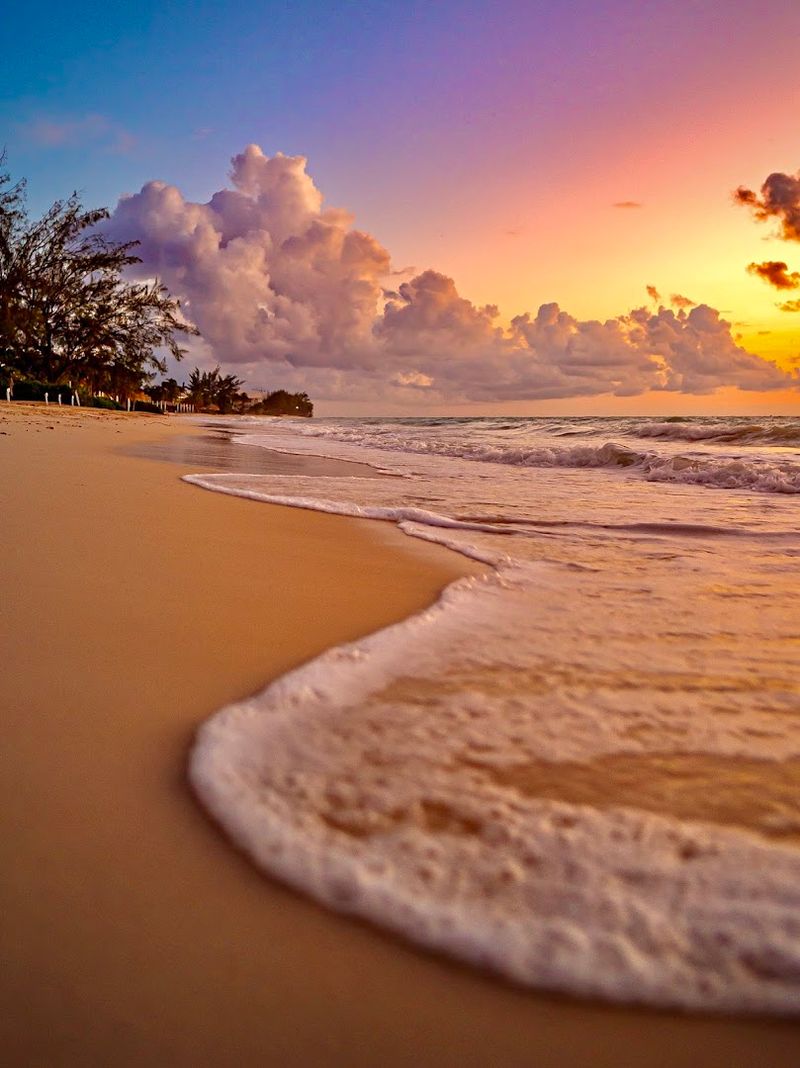
Fun fact for geography enthusiasts: Seven Mile Beach is actually about 6.3 miles long. The slight exaggeration in the name does absolutely nothing to diminish how gorgeous this beach is.
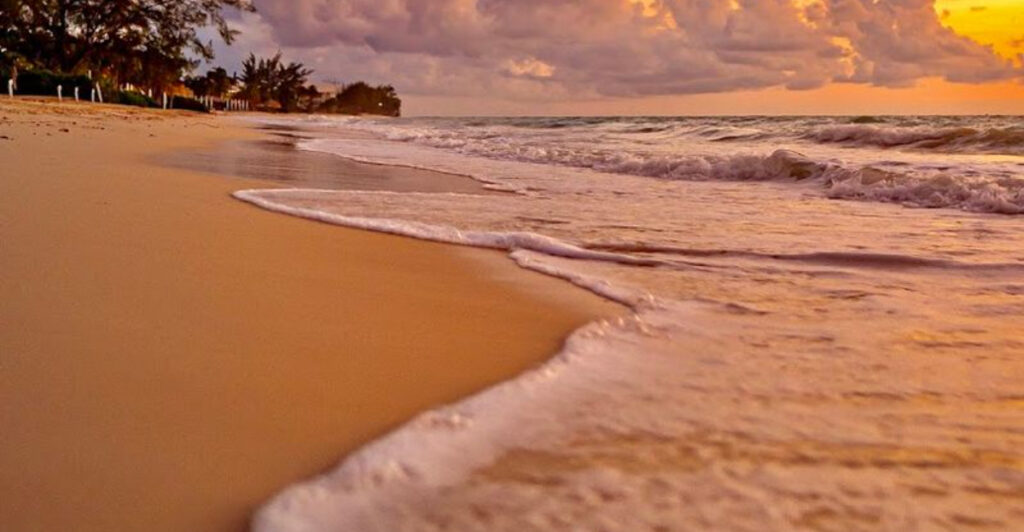
Located on the western coast of Grand Cayman, it consistently ranks as one of the Caribbean’s finest stretches of sand, and the sunsets here are the stuff of postcards.
The water is calm, warm, and beautifully clear year-round thanks to the natural protection provided by a barrier reef offshore. Jet skiing, parasailing, paddleboarding, and glass-bottom boat tours are all popular activities along the beach.
Stingray City, one of the world’s most famous shallow-water snorkeling spots, is just a short boat trip away and involves swimming alongside friendly southern stingrays in chest-deep water.
The beach is lined with hotels, restaurants, and beach bars, giving it a lively atmosphere without ever feeling chaotic. Runners and cyclists use the wide sandy stretch for early morning exercise, while families stake out spots under palm trees for leisurely days.
Grand Cayman is one of the wealthiest islands in the Caribbean, which means facilities are excellent and the overall visitor experience is polished. Hurricane season runs June through November, so visiting between December and April guarantees the best weather and calmest seas.
Reynisfjara, Iceland
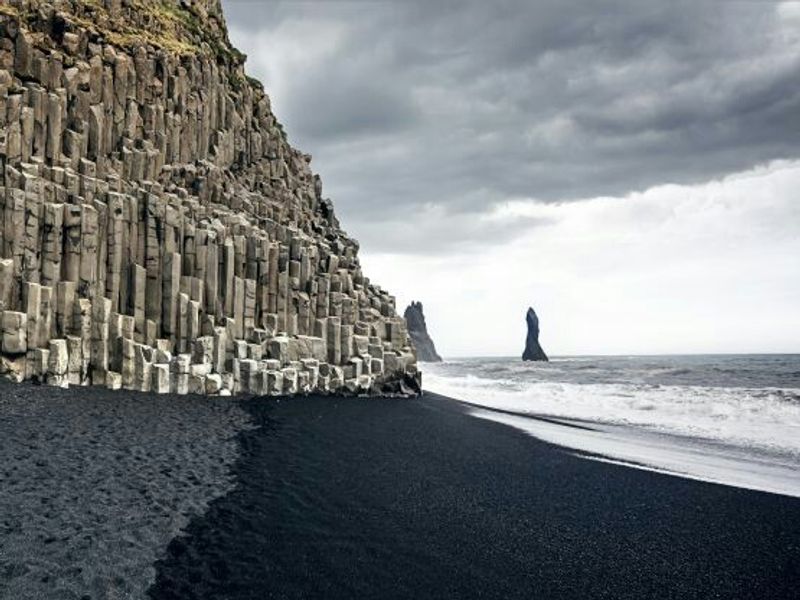
Every other beach on this list wants to be warm and inviting. Reynisfjara went in a completely different direction and became one of the most dramatic, awe-inspiring coastal landscapes on the planet.
Located near the small fishing village of Vík in southern Iceland, this black-sand beach is formed entirely from volcanic basalt, giving it an otherworldly, almost cinematic atmosphere.
The hexagonal basalt columns stacked along the cliff face look like they were designed by a very precise architect. They formed naturally through the slow cooling of lava thousands of years ago.
Puffins nest in the cliffs during summer months, adding a surprisingly adorable touch to an otherwise intense landscape. The roaring Atlantic waves, known as sneaker waves, can surge far up the beach without warning, so visitors must stay alert and never turn their backs on the ocean.
Despite being chilly and windswept for most of the year, Reynisfjara draws enormous crowds of visitors who come to experience something completely unlike a conventional beach. Photographers are particularly devoted to this location, arriving before sunrise to capture the basalt columns and sea stacks in moody, dramatic light.
The nearby village of Vík has cafes and guesthouses for overnight stays. Visiting in winter offers the added bonus of possible Northern Lights sightings overhead.
Eagle Beach, Aruba
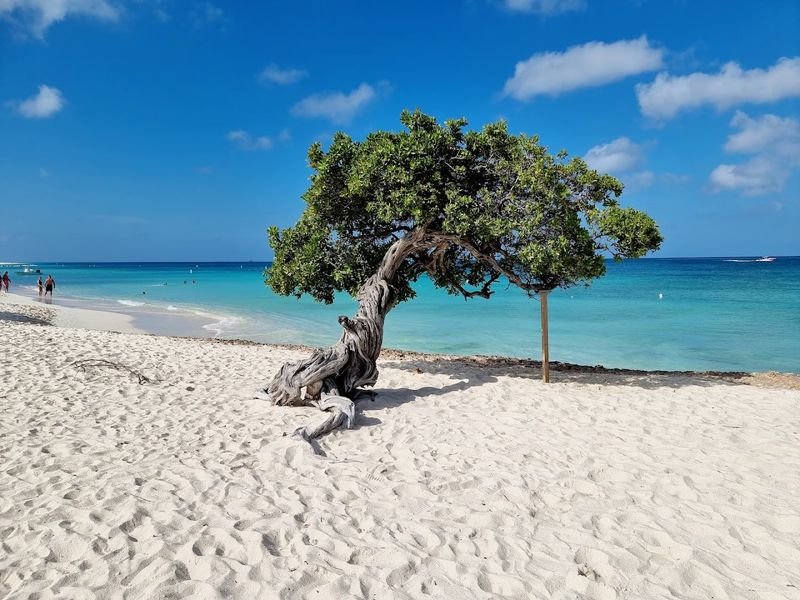
Aruba is famous for its near-perfect weather, with sunshine almost every single day of the year and very little rainfall. Eagle Beach takes full advantage of that meteorological gift by offering a wide, uncrowded stretch of powdery white sand that rarely feels overwhelmed with visitors despite the island’s popularity.
The beach’s most recognizable feature is the divi-divi tree, a low-growing, wind-sculpted tree that leans permanently toward the southwest due to the island’s constant trade winds. These trees have become symbols of Aruba and look particularly striking against the backdrop of turquoise Caribbean water.
The calm, shallow water makes Eagle Beach one of the safest swimming spots on the island, suitable for all ages and confidence levels.
Unlike the nearby hotel strip of Palm Beach, Eagle Beach has a quieter, more relaxed atmosphere with fewer large resort developments directly on the sand. Sea turtles nest on this beach between April and August, and conservation volunteers monitor the nests overnight to protect them from disturbance.
Watching a turtle nest or witnessing hatchlings heading toward the water is an experience that visitors describe as genuinely life-changing. Several excellent restaurants and smaller boutique hotels are within walking distance, making Eagle Beach a wonderful base for exploring everything Aruba has to offer.
El Nido Beaches, Palawan, Philippines
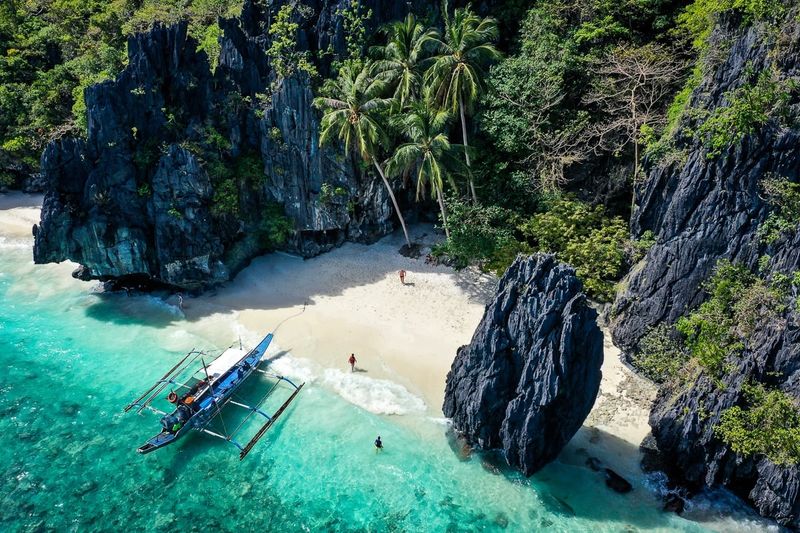
Palawan has been called the most beautiful island in the world so many times that the label almost feels inadequate. El Nido, located at the northern tip of the island, is the crown jewel of a destination already overflowing with natural wonders.
Jagged limestone karst cliffs rise from the water like giant teeth, sheltering hidden lagoons, secret beaches, and coves that feel genuinely undiscovered even when other tourists are nearby.
The most popular way to explore El Nido is by island-hopping tour aboard a traditional wooden bangka boat. Tour A is the classic route, covering the Big Lagoon, Small Lagoon, Secret Lagoon, and Shimizu Island.
Each stop offers snorkeling, swimming, or kayaking through narrow rock passages into enclosed lagoons where the water glows an impossible shade of turquoise. The marine biodiversity here is extraordinary, with coral gardens hosting sea turtles, clownfish, and giant clams.
El Nido town itself has grown significantly in recent years, with more accommodation options ranging from budget guesthouses to luxury eco-resorts. The best beaches outside the town area require boat access, which adds a sense of adventure to every excursion.
Visit between November and May for dry season conditions. Bring reef-safe sunscreen to protect the coral ecosystems that make this destination so remarkable in the first place.
Lanikai Beach, Oahu, Hawaii, USA
Locals in Oahu have a complicated relationship with Lanikai Beach. They love it deeply and would prefer the rest of the world did not know it existed.
Unfortunately for them, word got out long ago, and Lanikai now regularly appears on lists of America’s most beautiful beaches, drawing visitors from every corner of the globe to this quiet residential neighborhood on the Windward Coast.
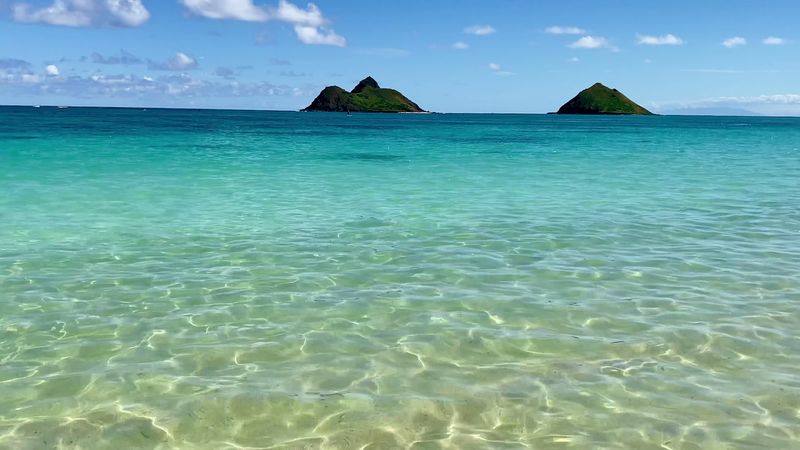
The name Lanikai translates roughly to heavenly sea in Hawaiian, and the water here genuinely earns that description. It is calm, shallow, and a brilliant shade of turquoise that shifts toward deeper blue as you wade further out.
The two small Mokulua Islands sitting just offshore create a postcard-perfect backdrop that is visible from the entire beach. Kayaking out to the Mokes, as locals call them, is a popular morning activity.
Parking is limited and access runs through narrow public beach access paths between private homes. Arrive early, ideally before 8am, to find parking and claim a spot on the sand before the crowds build.
There are no commercial facilities directly on the beach, so bring everything you need including water, snacks, and shade. The Kailua Beach Park nearby offers restrooms and parking as an alternative starting point for those planning a longer coastal walk toward Lanikai.
Railay Beach, Krabi, Thailand
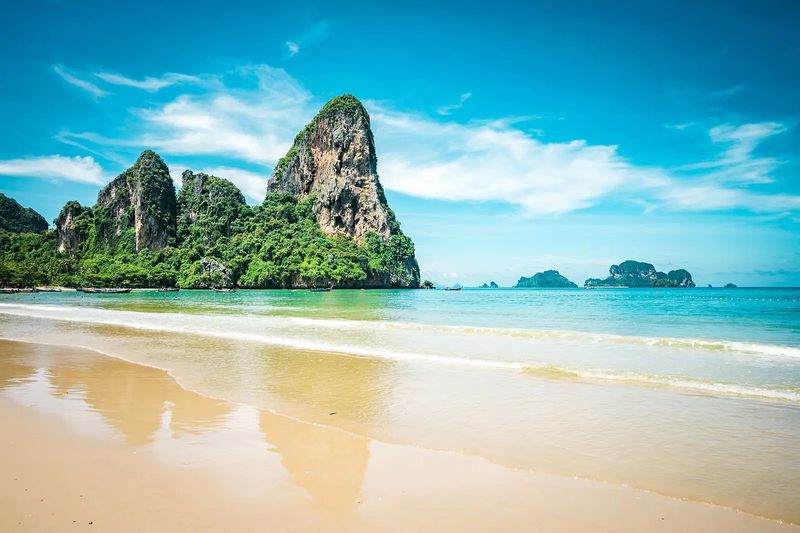
Cut off from the mainland by towering limestone cliffs that make road access completely impossible, Railay Beach is only reachable by longtail boat. That geographical quirk has preserved a laid-back, island-like atmosphere that most mainland beaches lost decades ago.
The 15-minute boat ride from Ao Nang feels like crossing into a different world entirely.
Railay is actually made up of several beaches. Railay West is the prettiest for swimming, with calm clear water and a long sandy shoreline backed by jungle-covered cliffs.
Railay East is a mangrove-lined tidal beach better suited for watching boats than swimming. Phra Nang Cave Beach, a short walk south, is arguably the most dramatic of them all, with a sea cave shrine, emerald water, and towering karst formations rising directly from the sand.
Rock climbing has become a major draw here, with hundreds of established routes on the limestone cliffs ranging from beginner-friendly to seriously challenging. Several climbing schools operate on the beach and cater to all experience levels.
Kayaking and snorkeling are popular ways to explore the surrounding sea caves and hidden coves. Accommodation options range from budget bungalows to comfortable mid-range resorts.
Avoid peak holiday season in December and January if you prefer a quieter experience, as the beach can become noticeably busy during those months.
Zlatni Rat, Brač, Croatia
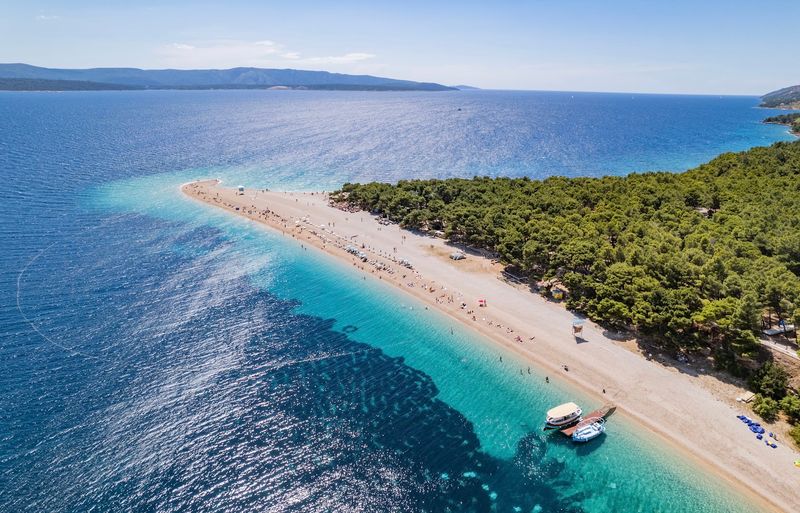
Croatia’s most famous beach is not made of sand at all. Zlatni Rat, which translates to Golden Horn or Golden Cape, is a striking white pebble spit that extends about 500 meters into the Adriatic Sea from the coast of Brač Island.
What makes it truly unique is that the tip of the spit actually shifts direction depending on wind and current, giving the beach a slightly different shape every time you visit.
The water surrounding Zlatni Rat is exceptionally clear and shallow, shading from pale turquoise near the shore to deep sapphire further out. Pine trees provide welcome shade along the base of the beach, which is rare for Croatian coastal spots.
Windsurfers and kitesurfers are a constant presence here because the reliable afternoon winds that reshape the beach are perfect for water sports.
The beach sits just below the charming town of Bol, which has excellent restaurants, ice cream shops, and accommodation options to suit most budgets. Ferries connect Brač to Split on the mainland, making it an easy day trip or overnight destination.
The walk along the coastal path from Bol to Zlatni Rat takes about 20 minutes and offers beautiful views of the Adriatic along the way. Visiting in June or September avoids the intense July and August crowds while still guaranteeing warm, sunny weather.
Matira Beach, Bora Bora, French Polynesia
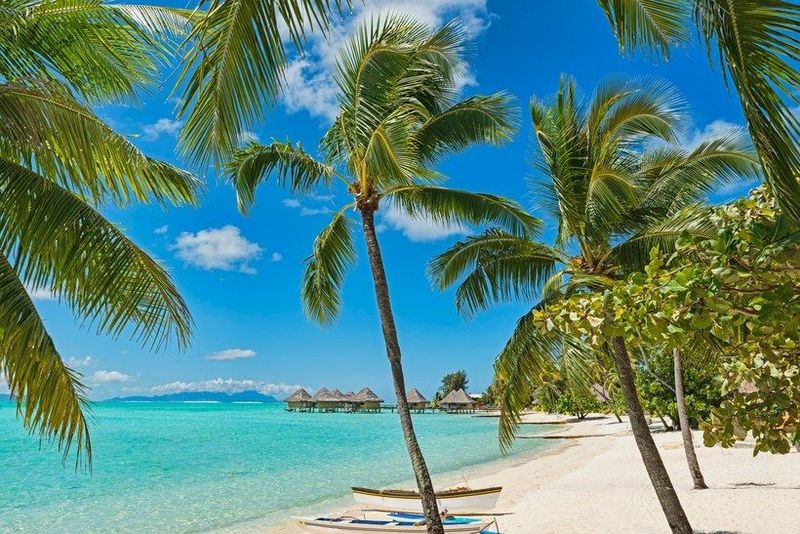
Bora Bora is arguably the most romanticized island destination on Earth, and Matira Beach is the one stretch of public sand that lives up to every dreamy expectation. The iconic overwater bungalows of the island’s luxury resorts are mostly off-limits to non-guests, but Matira belongs to everyone, and it is spectacular.
The lagoon at Matira is extraordinarily shallow and calm, with water so clear you can see the sandy bottom from 20 feet away. The sand itself is fine and brilliantly white, sloping gently into the water without any sudden drop-offs, making it ideal for wading and swimming at a relaxed pace.
Mount Otemanu, an extinct volcanic peak, rises dramatically behind the island and provides a breathtaking backdrop for photos at any time of day.
Sunset at Matira Beach is one of those experiences that travel writers run out of words trying to describe. The sky turns deep orange and pink while the lagoon mirrors the colors below, and the silhouettes of palm trees frame the whole scene perfectly.
Several small guesthouses and family-run restaurants near the beach offer authentic Polynesian food at prices far more reasonable than the big resort hotels. Renting a bicycle and cycling around the island to reach Matira from Vaitape town takes about 30 minutes and passes through beautiful coastal scenery the whole way.
Tulum Beach, Quintana Roo, Mexico
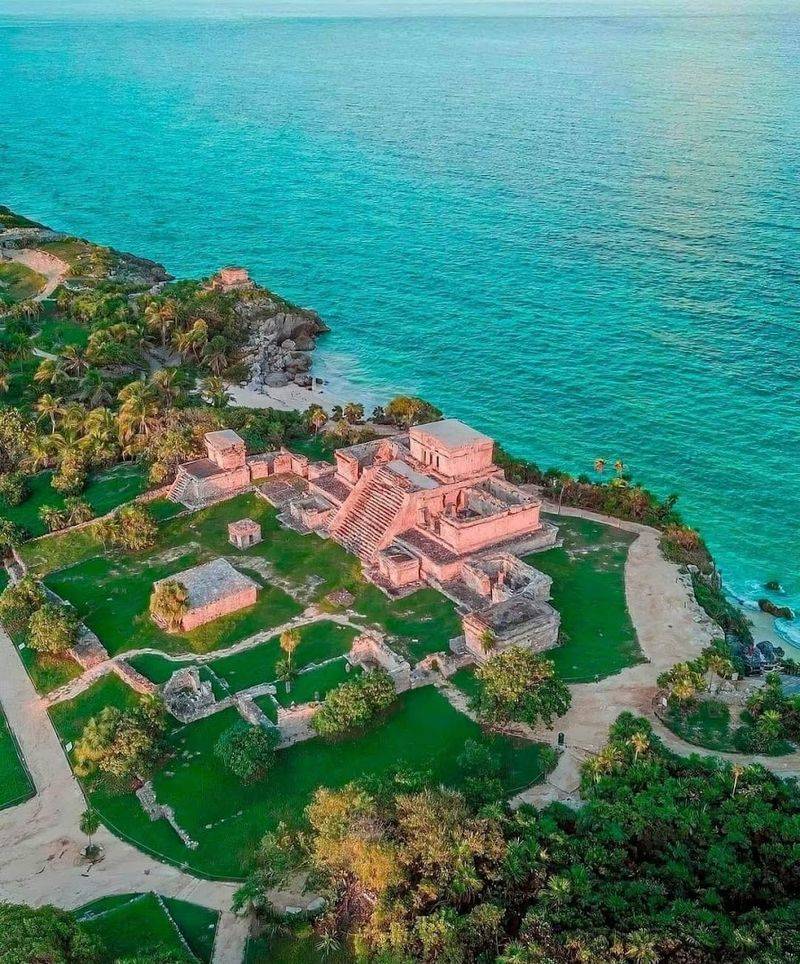
Only one beach in the world has a set of ancient Mayan ruins sitting on a cliff directly above it, and that beach is Tulum. The sight of El Castillo temple overlooking turquoise Caribbean water has become one of Mexico’s most iconic images, and experiencing it in person rather than through a screen is something else entirely.
The ruins date back to the 13th century and were one of the last great Mayan cities, continuing to be occupied well into the 16th century after Spanish contact. Visiting the archaeological site gives context to the beach below, which the Mayans used as a trading port.
The combination of ancient history and natural beauty in one location is genuinely unmatched anywhere in the Americas.
Tulum town has transformed dramatically over the past decade from a quiet backpacker destination into a trendy hotspot filled with boutique hotels, yoga retreats, and upscale restaurants. The beach itself stretches for miles, with the northern end near the ruins being the most photographed and the southern stretches offering more seclusion.
The current along parts of the coast can be strong, so check conditions before swimming. Visiting the ruins early in the morning before tour groups arrive makes the experience significantly more peaceful and allows for better photography without crowds in every frame.
Playa Norte, Isla Mujeres, Mexico
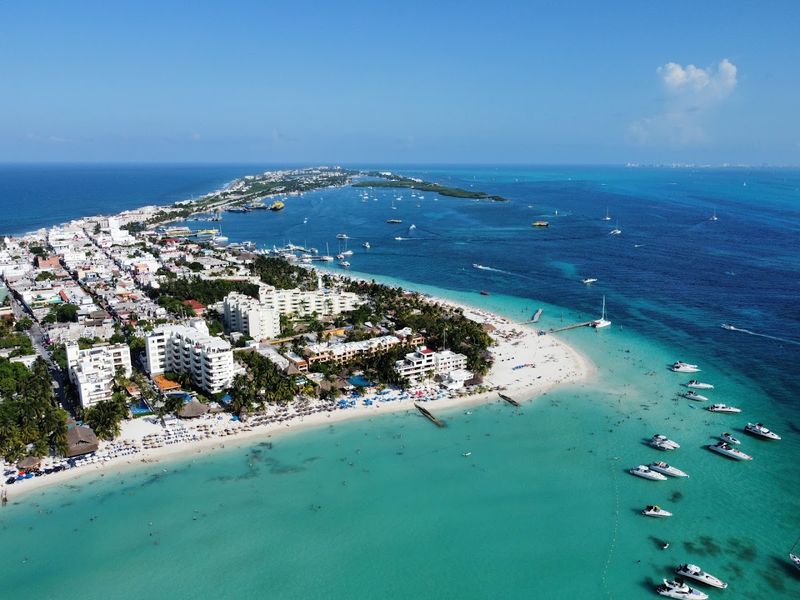
Isla Mujeres sits just 8 miles off the coast of Cancun, but arriving here feels like stepping into a completely different world. The frenetic energy of Cancun’s hotel zone evaporates the moment the ferry docks.
Playa Norte, the beach at the island’s northern tip, is calm, shallow, and so clear you can see your feet even when the water reaches your waist.
The name means North Beach, which is a refreshingly understated name for a place this beautiful. The bay is naturally protected from waves, making the water almost pool-like in its stillness.
Families with young children love it for exactly that reason. Hammocks are strung between poles in the shallow water at several beach bars, making it one of the most relaxing spots in all of Mexico for simply doing absolutely nothing.
Isla Mujeres is small enough to explore by golf cart, which is the preferred mode of transport for most visitors. The island has a laid-back fishing village character that larger resort destinations have long since lost.
Fresh seafood restaurants along the waterfront serve ceviche and grilled fish that tastes remarkably better when eaten 10 meters from the ocean. Take the last ferry back to Cancun in the evening or, better yet, stay overnight and watch the stars appear over the Caribbean from a rooftop bar.
The island rewards those who linger.
Nungwi Beach, Zanzibar, Tanzania
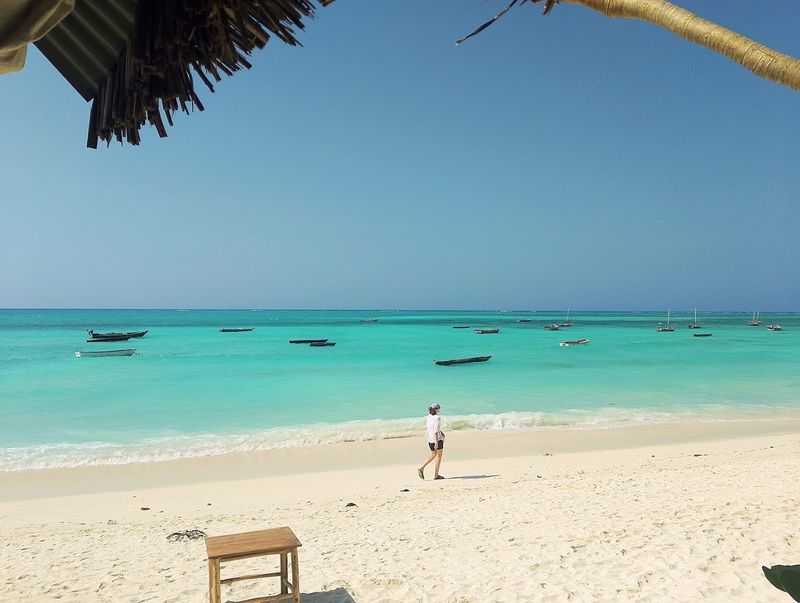
At the northern tip of Zanzibar, Nungwi Beach sits far enough from the island’s main tourist hub of Stone Town to feel genuinely removed from the ordinary world. Traditional wooden dhow boats rest on the sand between fishing trips while their builders work nearby, a scene that has played out on this coastline for centuries.
Watching a dhow sail across a blazing orange sunset is the kind of moment that turns first-time visitors into lifelong Zanzibar devotees.
Unlike beaches on Zanzibar’s east coast, which suffer significant tidal variations that can leave the shore muddy and shallow at low tide, Nungwi benefits from a naturally deeper bay. Swimming is possible at most tidal states, which makes it far more practical for beach holidays.
The water is warm year-round, hovering around 27 degrees Celsius, and visibility for snorkeling is excellent around the nearby reef.
The village of Nungwi has grown considerably with tourism but retains a genuine local character. Fresh seafood is grilled every evening along the beach, with vendors setting up outdoor kitchens that fill the air with irresistible aromas.
Spice tours, dolphin-watching excursions, and trips to Prison Island are popular day activities. The best time to visit is during the dry seasons of June through October and December through February, when the weather is reliably sunny and the ocean is calm.
Elafonissi Beach, Crete, Greece
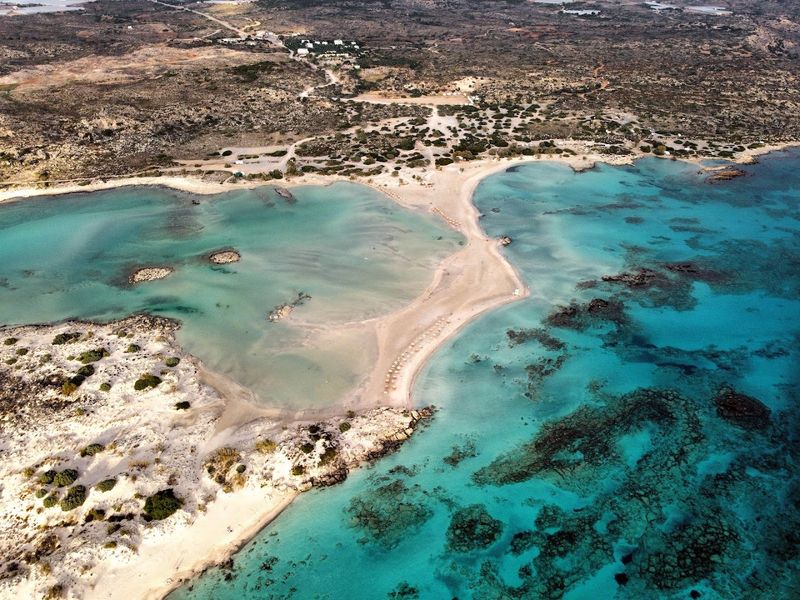
Greece is full of extraordinary beaches, but Elafonissi manages to stand apart from all of them by doing something genuinely unusual: it turns pink. The sand at this protected nature reserve on the southwestern tip of Crete gets its rosy tint from crushed shells and coral fragments containing a red pigment, and the effect becomes most vivid after rain or when the sand is wet near the waterline.
The beach is actually a semi-island connected to the Cretan mainland by a shallow sandbar that you can wade across in knee-deep water. The lagoon formed between the beach and the islet is extraordinarily shallow and warm, making it a favorite with families who enjoy letting young children play in completely safe, gentle conditions.
The color of the water shifts between turquoise, aquamarine, and pale green depending on depth and angle of light.
Elafonissi is a protected Natura 2000 site, meaning development is strictly limited and the natural environment is carefully preserved. Rare sea lilies and protected plant species grow along the dunes, so staying on marked paths is important.
The beach is located about 75 kilometers from Chania town, and the winding mountain road to get here is an experience in itself. Arrive before 10am in summer to beat the tour buses and claim a good spot before the beach fills with admirers from around the world.
Praia da Marinha, Algarve, Portugal
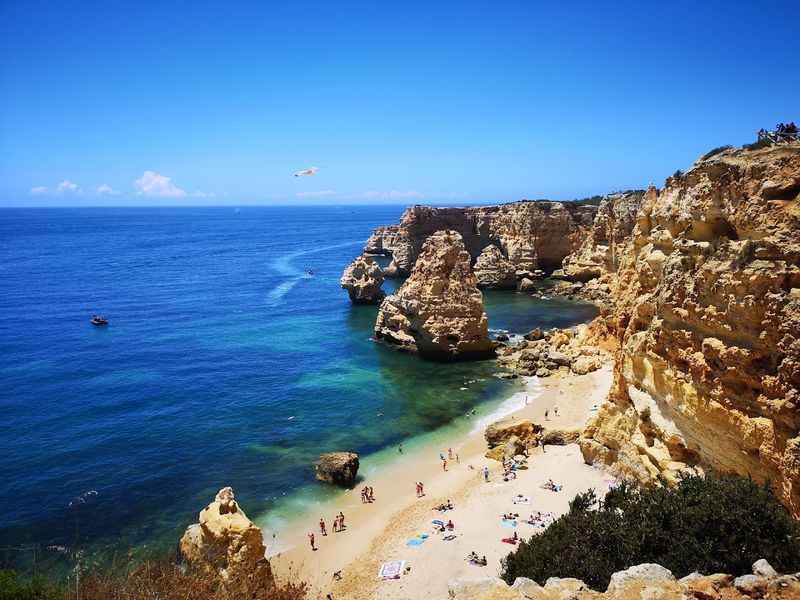
Portugal’s Algarve coast is packed with beautiful beaches, but Praia da Marinha has a reputation that rises above all its neighbors. National Geographic once listed it among the top ten beaches in the world, and the European Blue Flag program has recognized it for exceptional water quality.
Standing at the cliff edge looking down at the golden rock formations and jewel-colored water, it is easy to understand exactly why.
The beach sits at the base of dramatic golden limestone cliffs sculpted by centuries of Atlantic erosion into arches, tunnels, and sea caves that beg to be explored. Kayaking through the sea caves at water level is one of the most popular activities along this stretch of coast.
The water clarity is remarkable, with visibility reaching several meters below the surface, making it a favorite spot for snorkelers who come to explore the rocky underwater landscape.
Access requires descending a steep staircase cut into the cliff face, which takes about five minutes and keeps the beach naturally less crowded than more accessible Algarve spots. The beach is relatively small and fills up quickly during July and August, so arriving before 10am is strongly recommended.
Nearby Benagil Cave, reachable by kayak or small boat tour, is another extraordinary sea cave worth adding to the itinerary. The Algarve enjoys over 300 days of sunshine per year, making almost any time a good time to visit.
Share this story