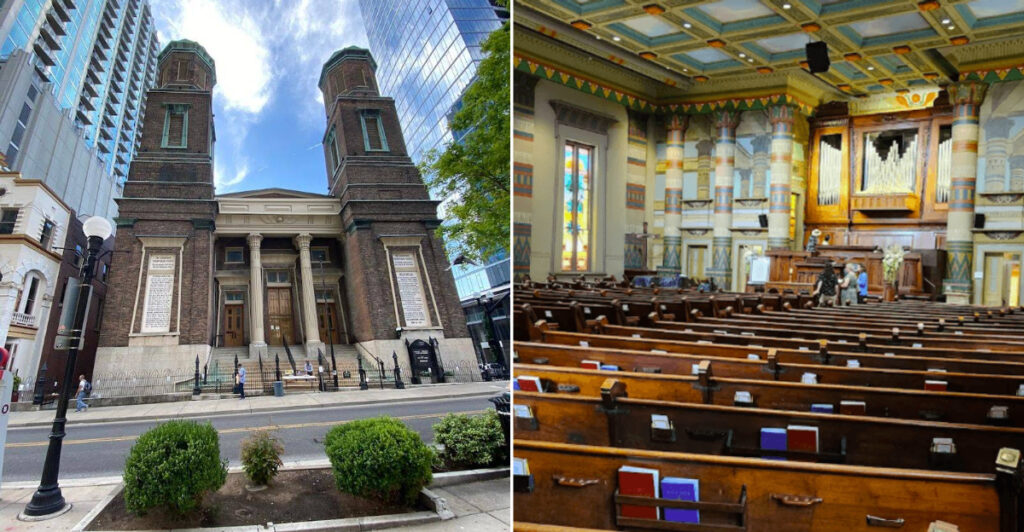
Most people walking through downtown Nashville are focused on honky-tonks and hot chicken. But tucked right in the middle of it all stands a building that stops people cold the moment they look up.
It does not look like any church most Americans have ever seen, and that is exactly the point. From its bold exterior to an interior that feels more like ancient Egypt than middle Tennessee, this place has been quietly surprising visitors for nearly 180 years, and it has the history to back up every bit of that surprise.
William Strickland And The Bold Architectural Choice That Defined A City Block
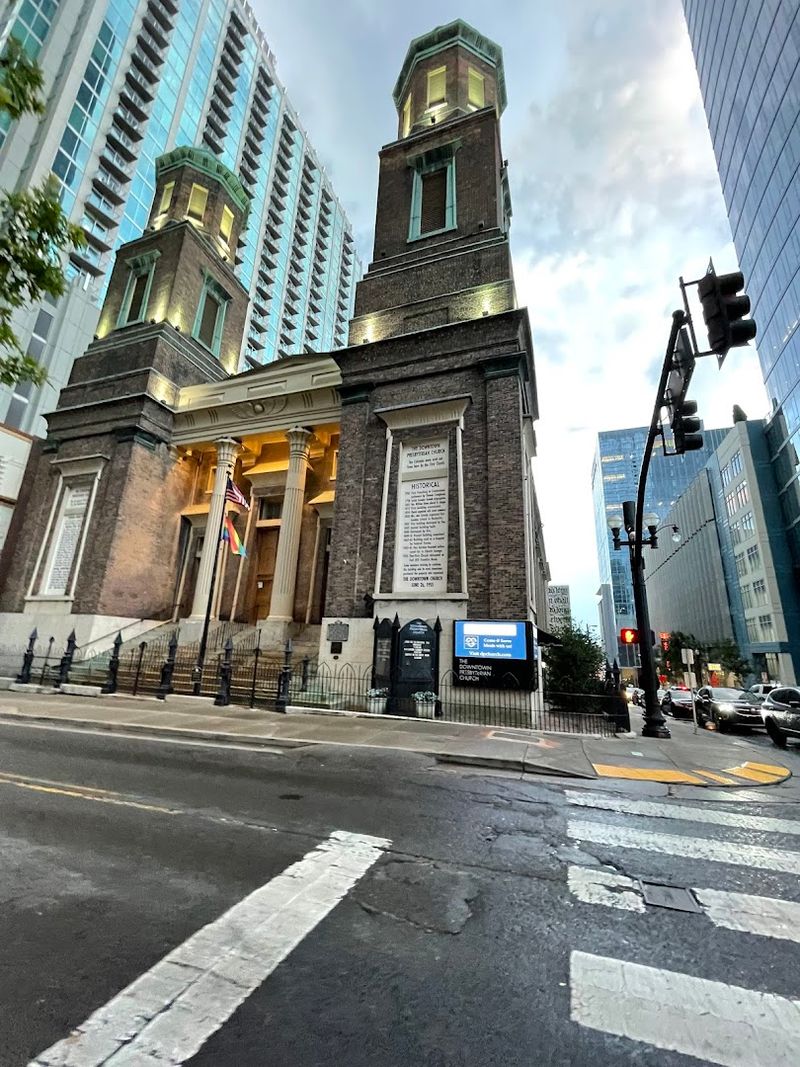
William Strickland was already one of the most respected architects in America when he took on this project. He had trained under Benjamin Henry Latrobe and gone on to design some of the most recognized federal and civic buildings of the early 19th century.
When Nashville called, he came, and he stayed for the rest of his life.
Choosing Egyptian Revival for a Presbyterian church was not an obvious move. The style was associated more with libraries, cemeteries, and government buildings at the time.
But Strickland saw something in it, a sense of permanence and authority that suited a congregation serious about its place in the community.
The result was a building that broke from the standard Greek Revival forms dominating American architecture at the time. Strickland completed the church in 1851, and it has stood largely intact ever since.
His fingerprints, quite literally in design, are still all over this block of downtown Nashville.
What Egyptian Revival Actually Looks Like When You Walk Through The Door
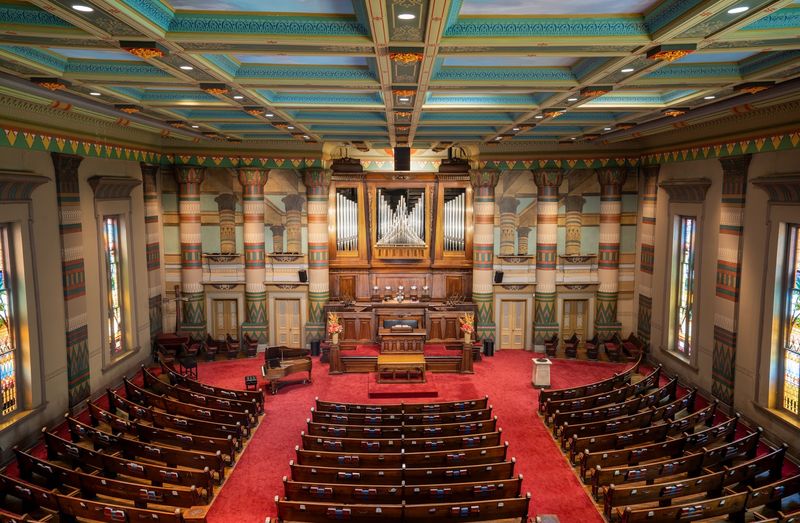
The outside hints at something different. The inside delivers it fully.
Once you cross the threshold of the sanctuary, the Egyptian Revival style unfolds in a way that genuinely catches most visitors off guard. The columns are modeled after ancient Egyptian forms, featuring lotus and papyrus capitals rather than the Greek Ionic or Corinthian styles found in most 19th-century American churches.
The ceiling is painted in rich colors, and decorative motifs run throughout the space in patterns that feel both ancient and deliberate. The effect is immersive without being theatrical.
This is not a theme park version of Egypt. It is a serious architectural interpretation carried out with real craft and care.
Natural light filters through the windows in a way that shifts the mood of the room depending on the time of day. Morning services feel different from afternoon visits, and that quality of changing light is part of what makes the interior feel alive rather than museum-like.
The Civil War Left Marks Here That History Books Rarely Mention
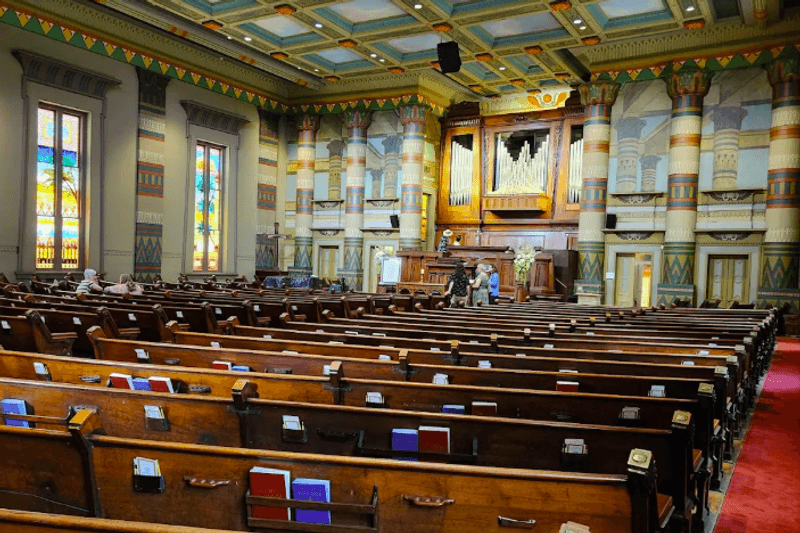
When the Civil War reached Nashville in 1862, the city fell to Union forces relatively quickly. Federal troops needed hospitals, and they needed them fast.
The Downtown Presbyterian Church, with its large sanctuary and solid construction, was converted into a military hospital for Union soldiers.
That is a detail that tends to land differently once you are standing inside the sanctuary. The same space where the congregation gathered for worship became a place where wounded soldiers were treated during one of the most turbulent periods in American history.
The building absorbed all of it.
After the war ended, the congregation reclaimed the space and worked to restore it to its original purpose. The fact that the building survived the war intact, and that the Egyptian Revival interior was preserved rather than stripped or altered, is something of a small miracle given the scale of destruction that swept through parts of Tennessee during those years.
The walls here have held a lot.
The Organ Is The Kind You Feel Before You Hear It
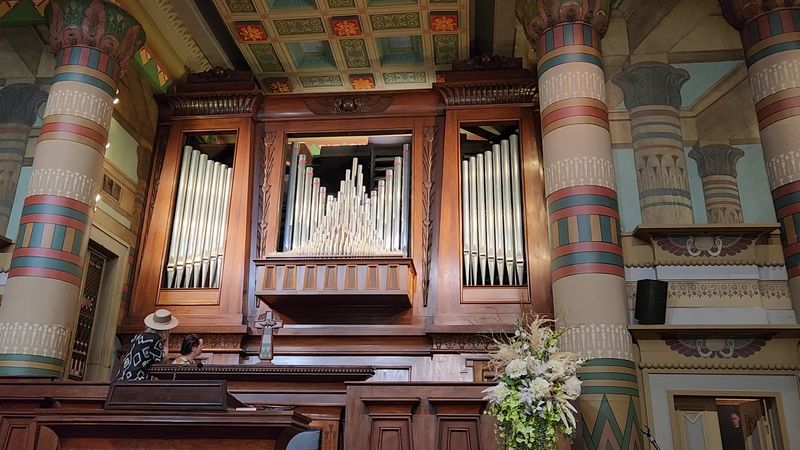
Pipe organs have a way of commanding a room before a single note is played. The organ at the Downtown Presbyterian Church carries that quality in full.
Its presence in the sanctuary is both visual and physical, the kind of instrument that you sense in your chest when it opens up during a service.
Sunday services at 11:00 AM have long featured the pipe organ alongside a choir, and the combination of the instrument and the acoustics of the Egyptian Revival sanctuary creates a sound experience that is genuinely hard to describe without hearing it yourself. The room was not designed with modern acoustic panels or technical adjustments.
The sound simply works because of the shape and materials of the space.
Grammy-winning artist Patty Griffin recorded her album Downtown Church in this sanctuary, partly because the acoustics were so well-suited to the project. Other musicians have recorded here as well, drawn by the same natural quality that makes Sunday morning services feel like something more than ordinary.
Patty Griffin Recorded An Album Here And The Sanctuary Earned Its Credit
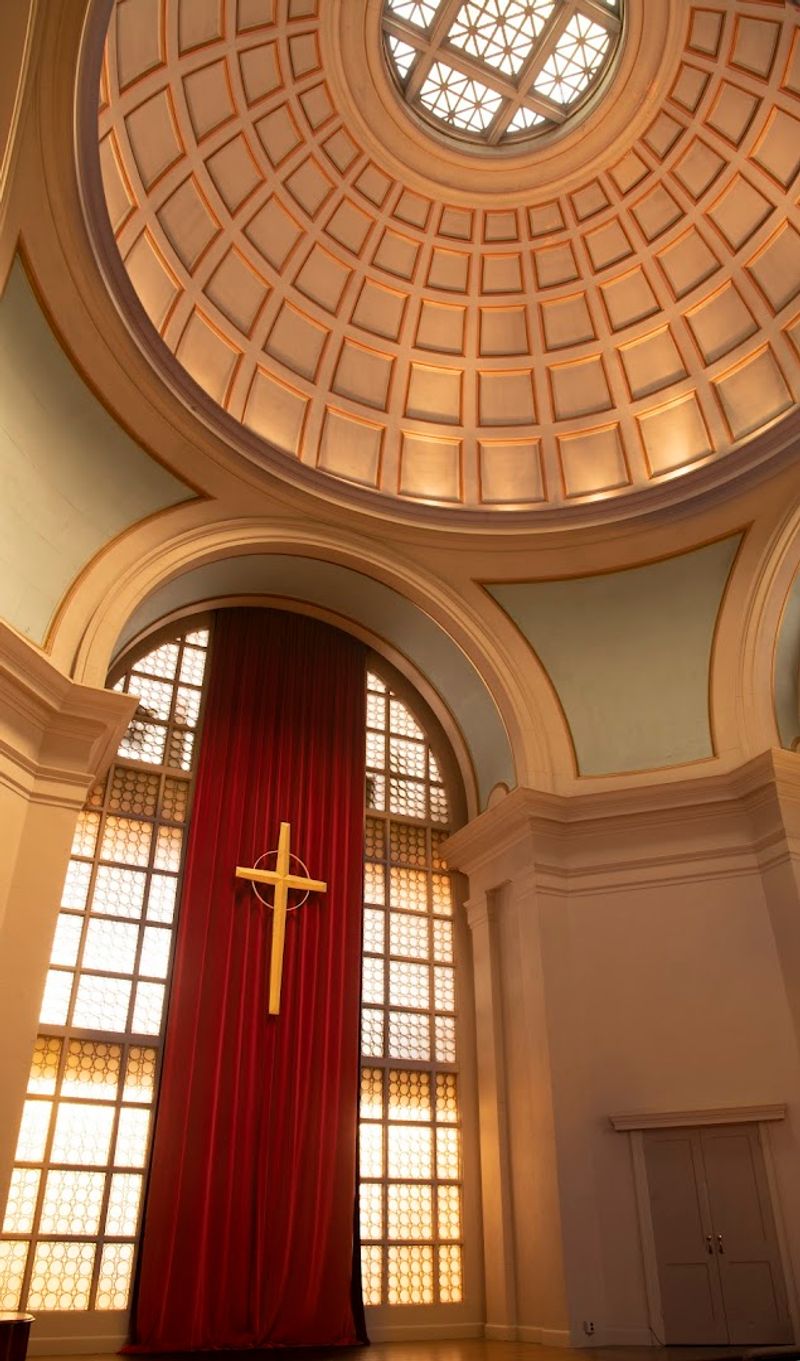
When Patty Griffin was looking for the right space to record her gospel-influenced album, she landed on the sanctuary at the Downtown Presbyterian Church. The album, released in 2010 and titled Downtown Church, went on to win the Grammy Award for Best Traditional Gospel Album.
The recording captured not just Griffin’s voice but the room itself.
The sanctuary’s natural reverb and warm acoustics gave the album a texture that studio environments rarely produce. Griffin and her collaborators recorded in the same space where the congregation gathers each Sunday, and that sense of place comes through in the final product.
For anyone who has heard that album, visiting the church takes on an added layer. You can stand in the exact spot where those recordings were made.
The building is still very much a working church, not a museum or a tourist attraction, which makes the connection between the music and the place feel genuinely rooted rather than performed.
The Saturday Morning Outreach Program Feeds More Than Just Breakfast
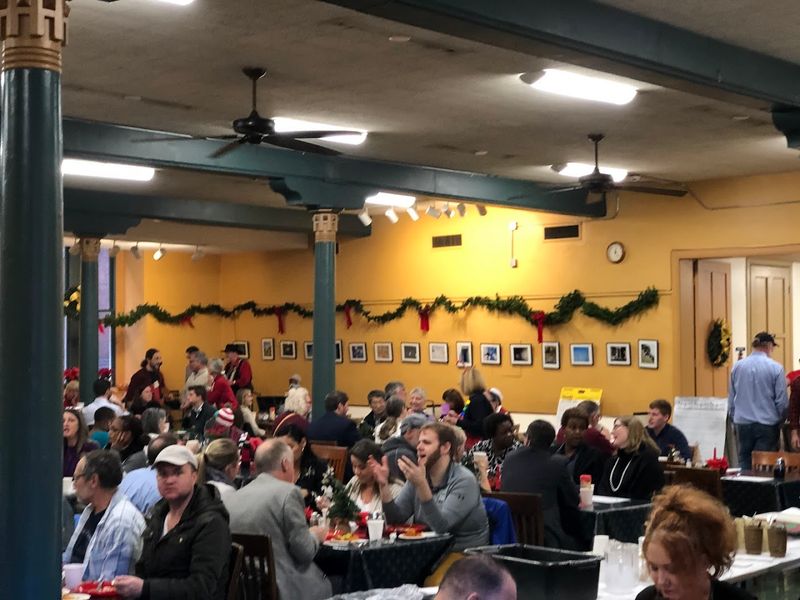
Every Saturday morning, a line forms outside the Downtown Presbyterian Church well before 9:00 AM. The congregation runs a breakfast outreach program that serves hot meals to Nashville’s unhoused and food-insecure residents, and the turnout reflects both the need in the city and the consistency of the program over time.
People arrive early and sometimes wait around the corner. The church makes room for everyone.
Volunteers from the congregation and the broader community show up regularly to help serve, and the atmosphere is less transactional than genuinely communal. Families, individuals, regulars, and first-timers all find a place at the table.
The Fishes and Loaves outreach program, as it is known, is one of the ways the church maintains a direct and practical connection to the neighborhood around it. In a part of downtown Nashville that has seen rapid gentrification and rising costs, that kind of consistent, no-barrier service carries real weight.
The doors open, and people come.
Art Lives Inside These Walls In A Way Most Churches Never Attempt
The Downtown Presbyterian Church operates an art gallery space within the building, which sets it apart from most houses of worship in Tennessee and beyond. The gallery hosts rotating exhibits and has become part of the Nashville Arts Crawl circuit, drawing visitors who might not otherwise step inside a church on a weekday afternoon.
The pairing of contemporary art with Egyptian Revival architecture creates a visual tension that actually works in the space’s favor. The old and the new do not fight each other here.
The gallery has a room called the Brew Room, which serves as an exhibit space and a place for community gatherings, adding a casual layer to the building’s otherwise formal interior.
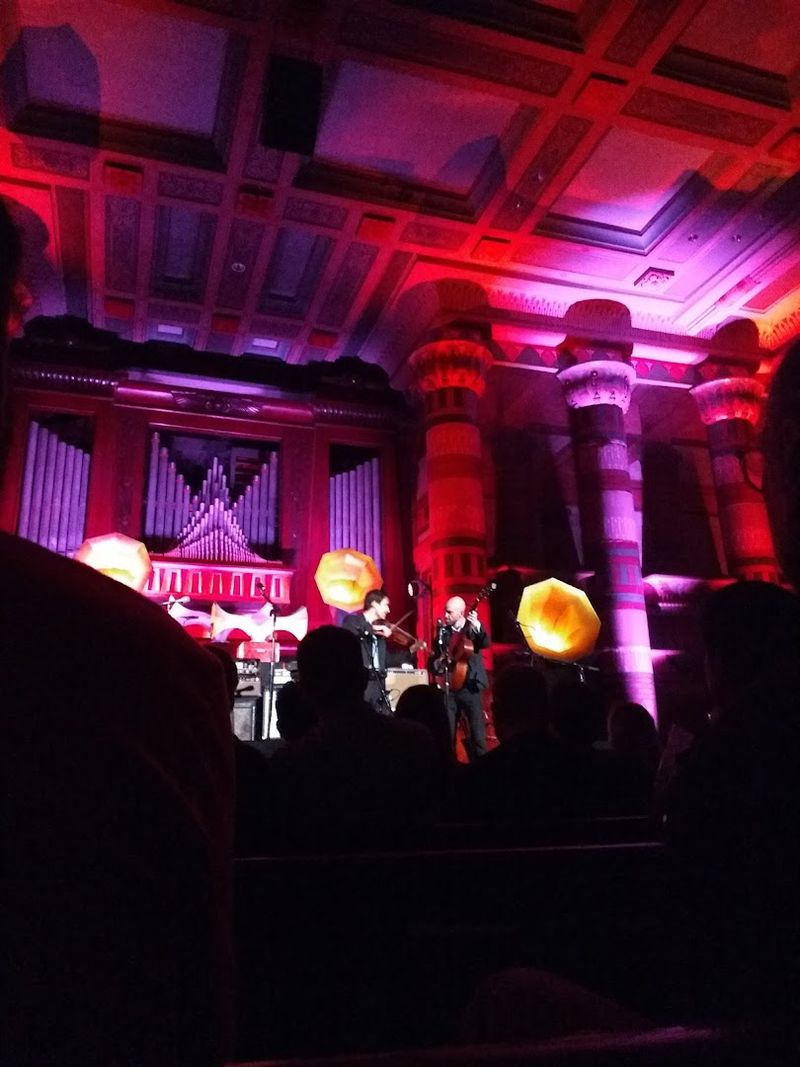
Live music events, speaker series, and jazz performances have all taken place within the church’s walls, building a reputation as a cultural venue that operates alongside its identity as an active congregation. That combination of sacred and creative space is genuinely unusual and makes the church worth visiting even outside of Sunday services.
Getting Married Here Means Saying Your Vows Inside American Architectural History
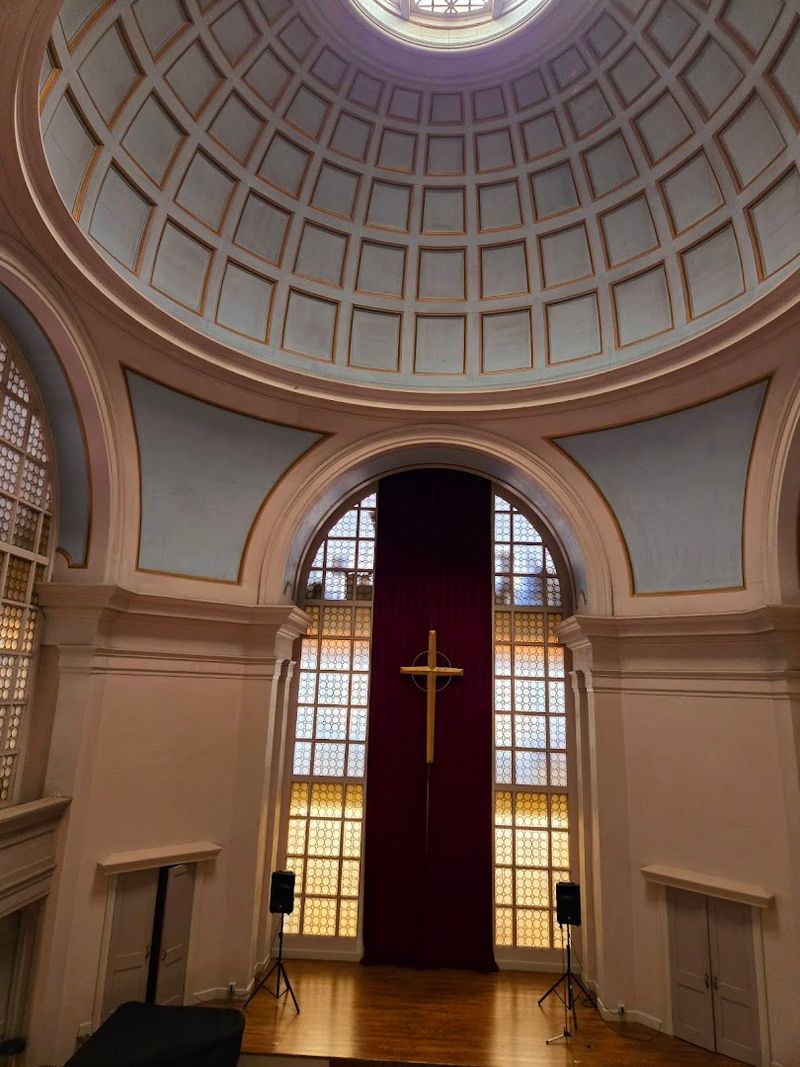
Couples who choose the Downtown Presbyterian Church for their wedding are not just selecting a venue. They are stepping into a space that has witnessed nearly two centuries of Nashville life.
The sanctuary’s scale, its painted ceiling, and its Egyptian Revival columns create a setting that photographs in a way few other venues in the city can match.
The church has a dedicated wedding coordinator and staff who work with couples on scheduling and logistics. The building’s multiple spaces, including the sanctuary and the chapel, offer different options depending on the size and style of the event.
Both rooms are known for their acoustics, which means live music during ceremonies sounds particularly full and resonant.
The chapel, like the sanctuary, carries the Egyptian Revival aesthetic throughout. For couples who want something genuinely different from a standard ballroom or garden wedding, the church offers an environment that feels historic without being stuffy, and formal without being cold.
The building itself becomes part of the ceremony.
Sunday Services Here Have Been Welcoming Strangers For Generations
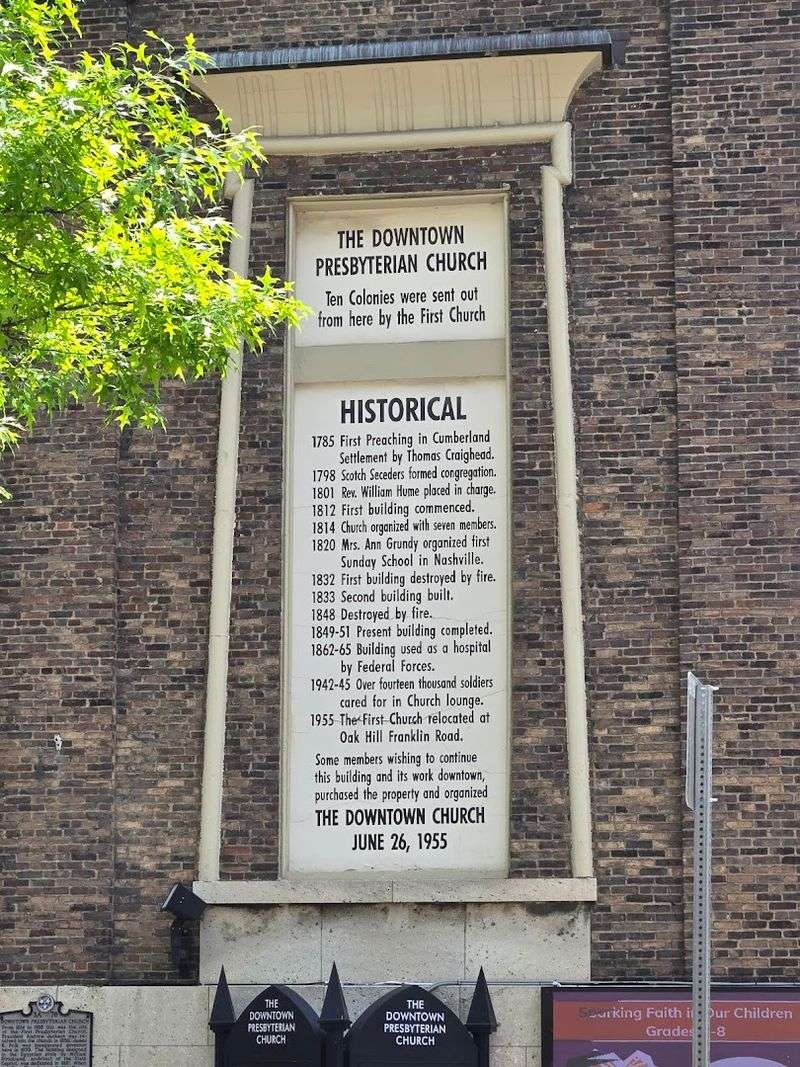
Sunday services at the Downtown Presbyterian Church begin at 11:00 AM and have a reputation for being genuinely welcoming to visitors. There is no dress code, and no prior connection to the congregation is required to show up and participate.
People passing through Nashville on weekends have found themselves welcomed without fanfare or pressure.
The service includes pipe organ music and choral singing, which the acoustic qualities of the Egyptian Revival sanctuary amplify in a way that feels different from most modern church settings. Before the service, coffee is available, giving early arrivals a chance to settle in and get a feel for the space before things begin.
The congregation itself has a reputation for being engaged in social justice work, arts programming, and community outreach simultaneously. That combination gives Sunday mornings a texture that goes beyond a single hour of worship.
Visitors often leave with a sense that the church is genuinely trying to be something useful in the city, not just something old.
Practical Details Worth Knowing Before You Make The Trip
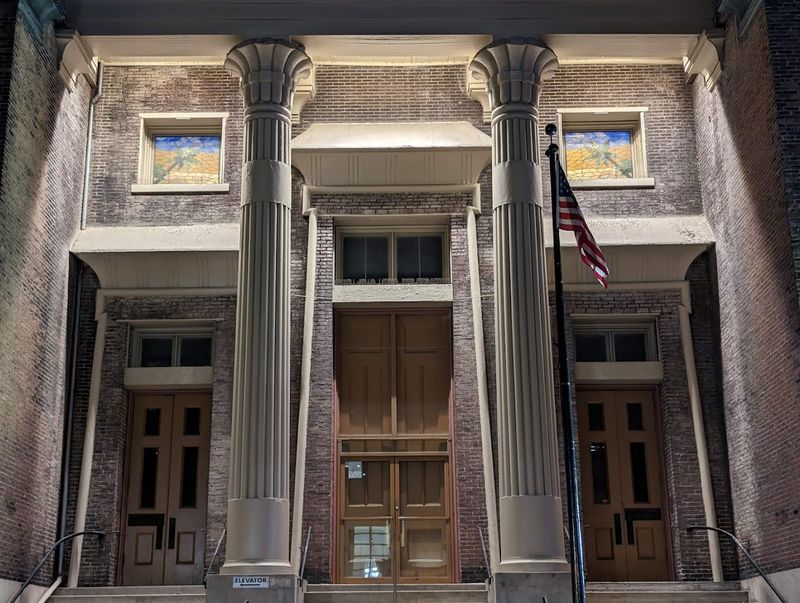
The Downtown Presbyterian Church is located at 154 Rep. John Lewis Way N in Nashville, Tennessee, right in the heart of the city’s downtown district.
The church office is open Tuesday through Friday and on Sunday from 9:00 AM to 12:30 PM. The phone number is (615) 254-7584, and the website at dpchurch.com has current information on services, events, and gallery exhibits.
Parking in the immediate area is limited, and the surrounding streets are managed by parking enforcement. If you plan to stop briefly to look at the exterior, be mindful of loading zones and posted signs.
Street parking and nearby garages are the most reliable options for longer visits.
The church is not a ticketed tourist attraction. It is a working congregation that welcomes visitors during open hours and at services.
Treating it with the same respect you would give any active house of worship goes a long way. The building rewards slow, attentive visits far more than quick walk-throughs.
A Church That Rewrites Your Expectations From The Outside In
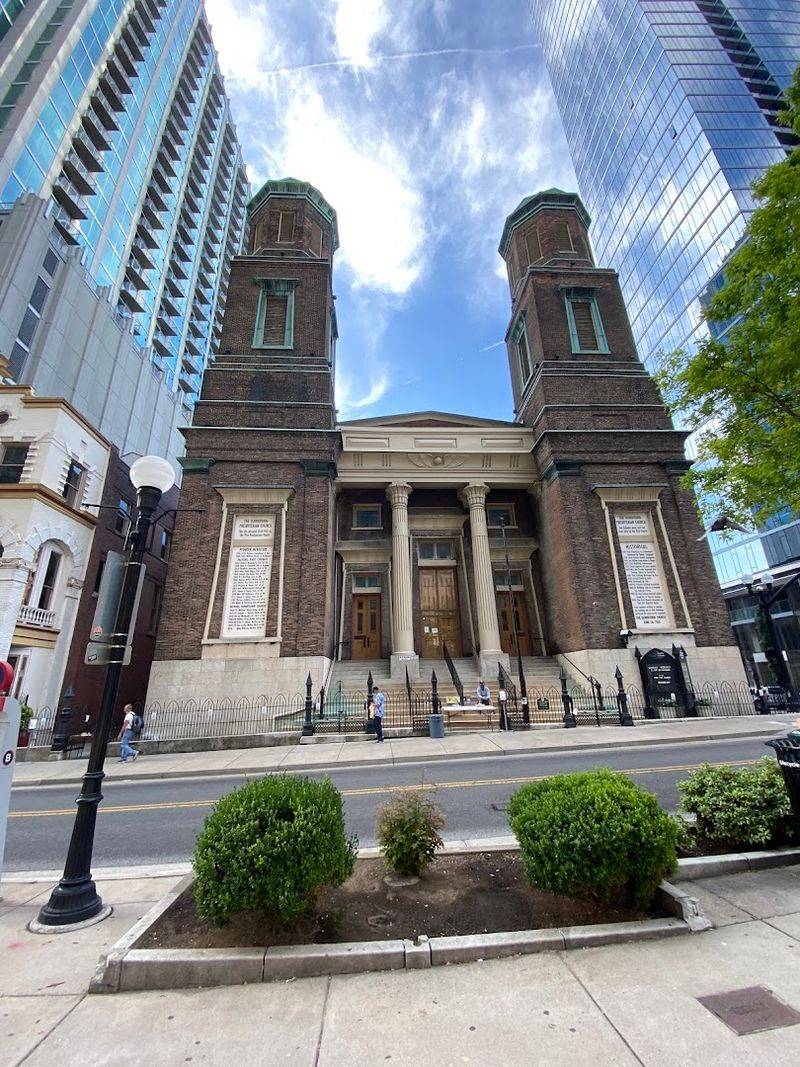
Most churches in America announce themselves with steeples, crosses, or stained-glass windows in familiar patterns. The Downtown Presbyterian Church at 154 Rep.
John Lewis Way N, Nashville, Tennessee 37219, does none of that in the usual way. From the street, the building presents a bold, flat-topped facade with columns and decorative details that feel more ancient than Southern.
The Egyptian Revival style was chosen deliberately in the 1840s, making this one of only a handful of surviving examples of that architectural movement in the entire country. Architect William Strickland, who also designed the Tennessee State Capitol, completed the current structure in 1851.
The church actually predates that building, with its congregation founded even earlier.
Standing outside on Rep. John Lewis Way, you can feel the weight of the history before you ever walk through the door.
The building does not whisper its age. It states it plainly in stone and column.
Share this story