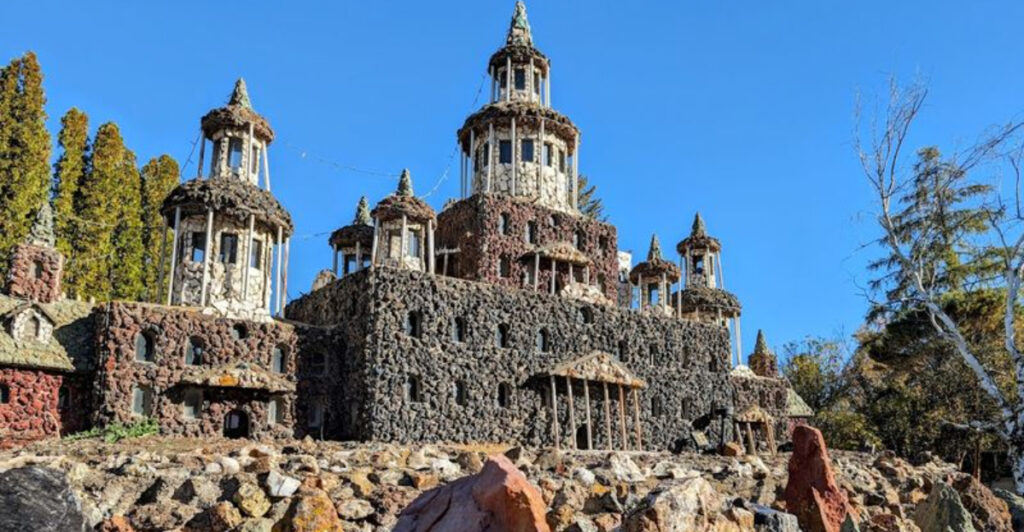
Somewhere between Redmond and Bend, Oregon, there is a property that looks a little rough around the edges from the road but transforms into something genuinely jaw-dropping the moment you step onto the grounds. One man spent roughly 17 years building miniature castles, bridges, and monuments entirely by hand, using lava rock, petrified wood, agate, and obsidian collected mostly within 80 miles of the site.
Peacocks strut freely across the paths, the museum holds rocks that glow under black light, and a small shed invites you to write down a wish and hang it with hundreds of others. This place earns every bit of its reputation as one of Oregon’s most wonderfully strange roadside stops.
Where It All Begins: Address and First Impressions
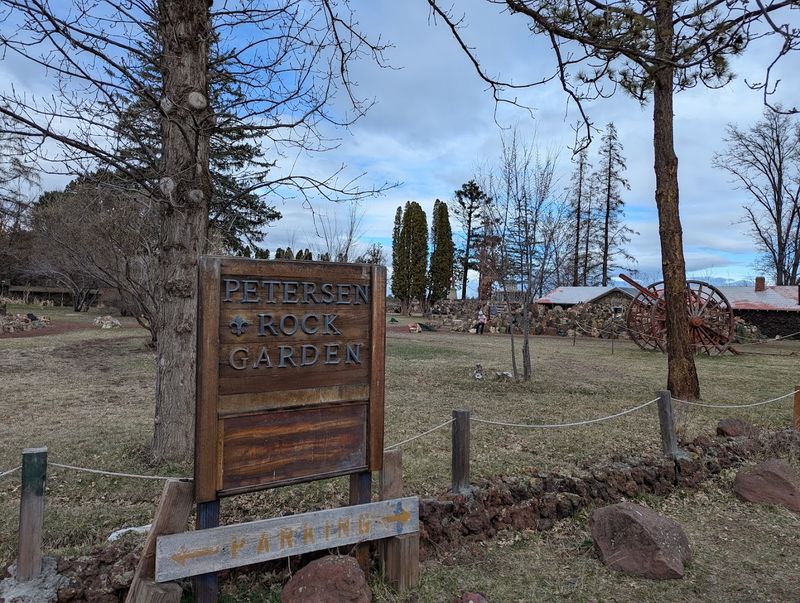
The address is 7930 SW 77th St, Redmond, OR 97756, and the drive there already hints at something special. Central Oregon’s high desert stretches out around you, sagebrush and juniper framing the road as you turn off the main highway onto a quieter lane.
From the outside, the property could easily be mistaken for an old farmstead that has seen better days. The fencing is weathered, and the signage is modest at best.
First impressions here are famously misleading.
Once you pass through the entrance, the entire atmosphere shifts. Stone structures rise from carefully tended garden beds, ponds reflect the Oregon sky, and the sound of peacocks echoes from somewhere nearby.
The scale of what one person built here between 1935 and 1952 is hard to process all at once. Your eyes keep finding new details in every direction, and the urge to slow down and actually look at everything becomes impossible to resist.
The Man Behind the Rocks: Rasmus Petersen’s Vision
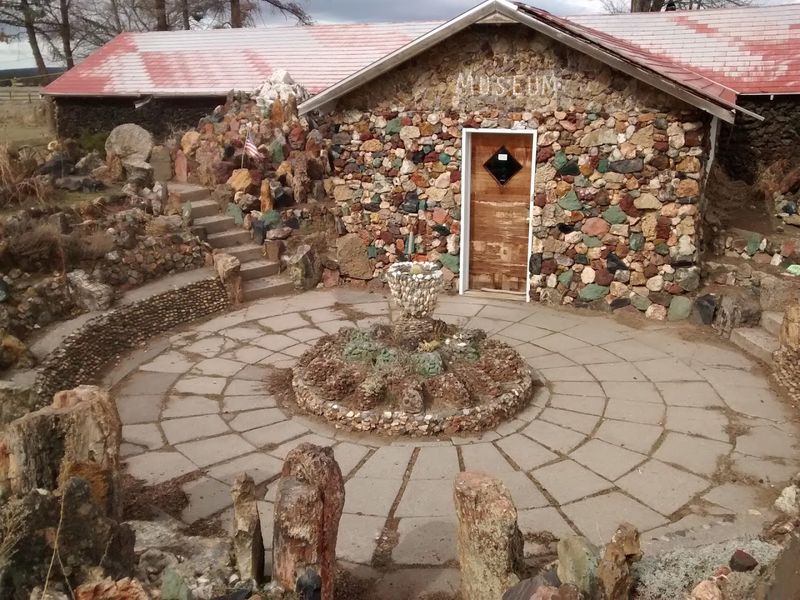
Rasmus Petersen was a Danish immigrant and farmer who started building his rock garden in 1935 and did not stop until 1952. He had no formal training in architecture, sculpture, or landscape design.
What he had instead was an extraordinary patience and a deep fascination with the rocks and minerals of the Pacific Northwest.
Working mostly alone, he hauled, sorted, and carefully placed thousands of stones to create an entire miniature world on his Central Oregon property. He built replicas of famous American landmarks, decorative bridges, fountains, and towers, all from materials he gathered himself from the surrounding region.
The knowledgeable volunteers who now staff the garden love to share stories about Petersen, and talking with them adds a whole new layer to the visit. Learning that one person built all of this with his own hands, over roughly 17 years, reframes everything you see on the grounds.
It stops being just a quirky attraction and starts feeling like a genuine act of devotion to craft and place.
The Rock Structures: Miniature Worlds Built from Oregon Stone
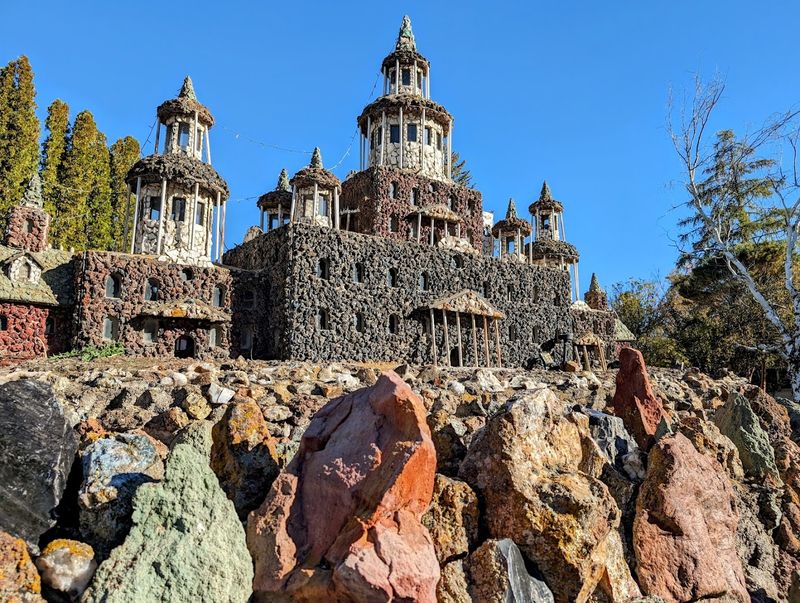
The structures themselves are the centerpiece of the entire property, and they genuinely earn that title. Rasmus Petersen built miniature castles, patriotic monuments, replicas of landmarks, arched bridges, and decorative towers using lava rock, obsidian, agate, petrified wood, and glass.
Each one is densely detailed, with individual stones placed to create textures and patterns that hold up even under close inspection.
What makes them so compelling is the combination of ambition and intimacy. These are not massive sculptures that overwhelm you with size.
They are human-scaled creations that reward slow, careful looking. The longer you spend with each one, the more you notice.
Some structures show their age, with weathering and minor damage that restoration volunteers are actively working to address. That ongoing work actually adds something to the experience rather than detracting from it.
Seeing people care enough to preserve these creations makes the whole place feel alive rather than frozen in time. The complexity and beauty of the stonework still comes through clearly, and several structures feature stunning samples of Oregon minerals that catch the light in unexpected ways.
The Museum and Its Glowing Rocks
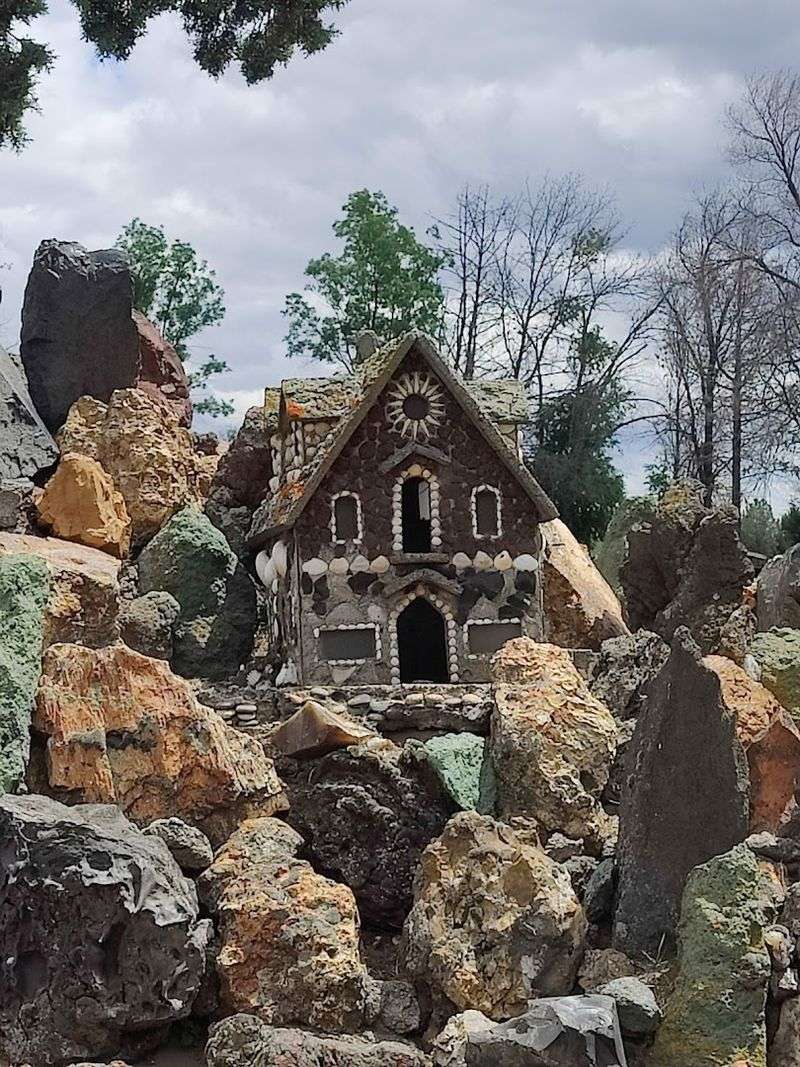
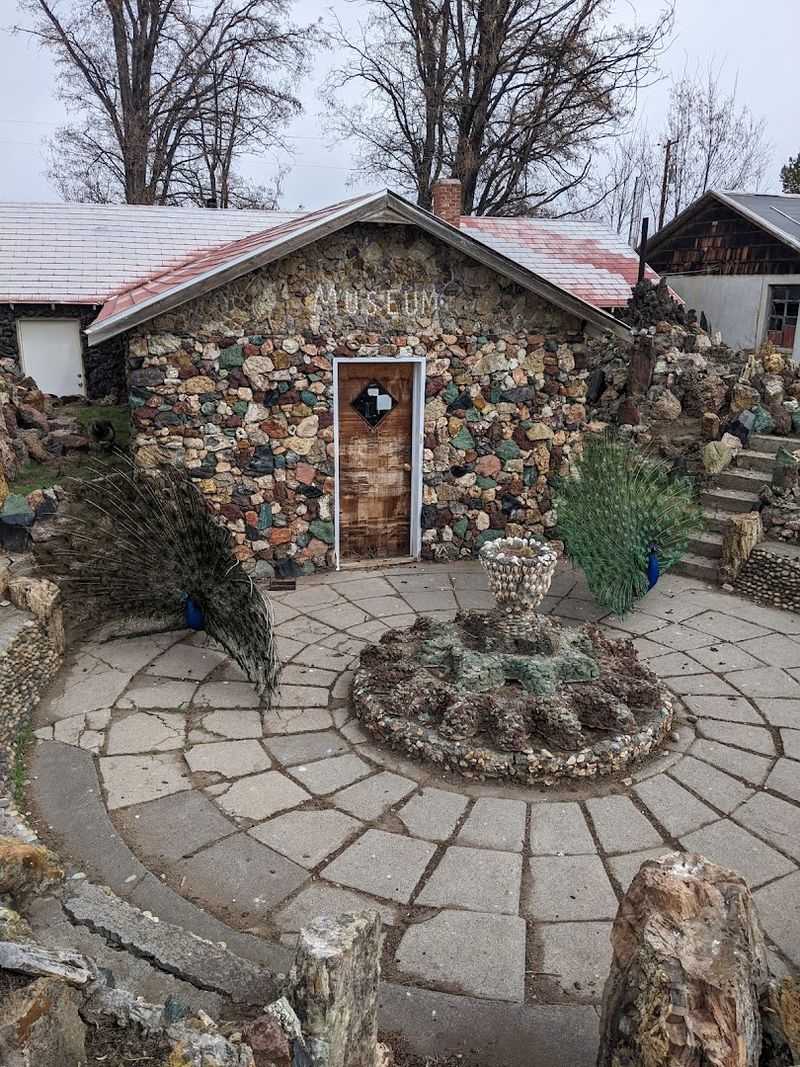
The museum building on the property holds a collection that could easily surprise even people who think they are not particularly interested in rocks. Specimens from all over the world sit alongside minerals sourced from within about 80 miles of the garden, and the range of colors, textures, and formations is genuinely impressive.
The black light display is a standout feature that tends to stop visitors in their tracks. Certain minerals and gemstones that look fairly ordinary under regular lighting suddenly burst into vivid neon colors under ultraviolet light.
Thundereggs, which are a particularly Oregon rock, are among the specimens that put on a striking show in this display.
Volunteers who staff the museum are knowledgeable about both the geology and the local history, and they are happy to explain what you are looking at. The gift shop attached to the museum carries an impressive selection of specimens, polished stones, and unique decorative pieces at prices that feel genuinely fair.
Several visitors have walked out with showpiece items they expected to pay far more for elsewhere.
The Peacocks: Oregon’s Most Dramatic Garden Residents
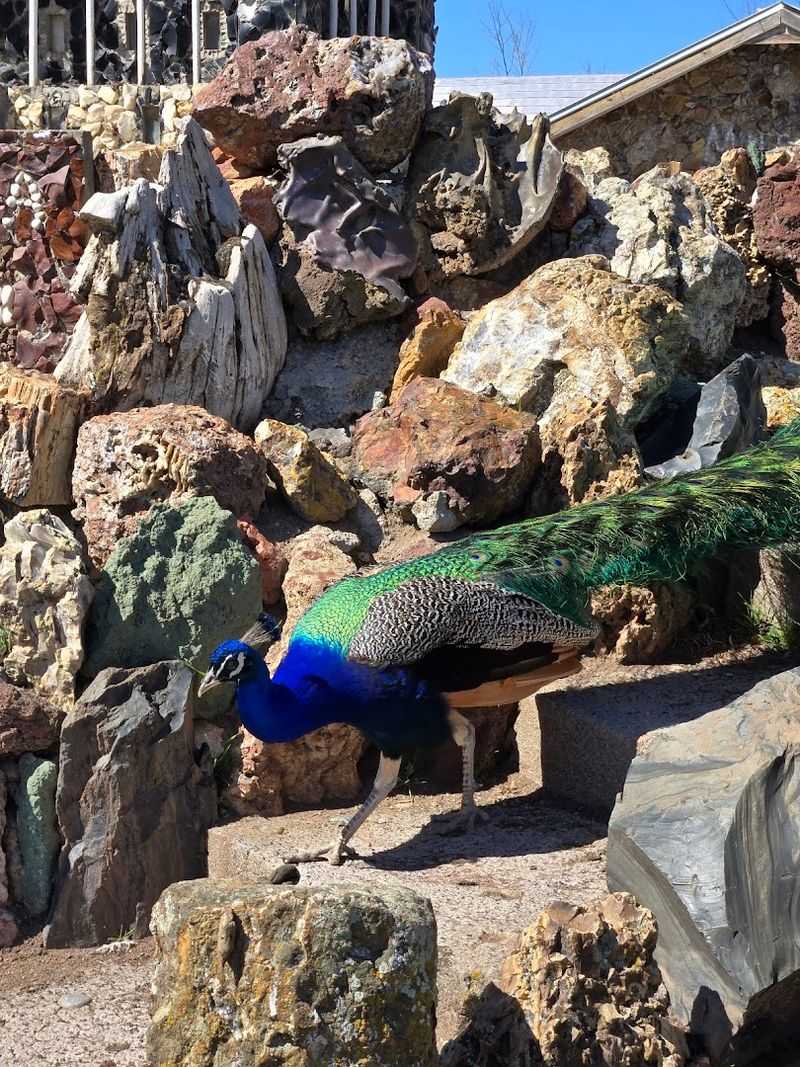
Nobody warns you quite adequately about the peacocks. There are a dozen or more of them roaming freely across the grounds, and they treat the entire property as their personal domain.
They perch on stonework, wander across garden paths, and occasionally fan out their tail feathers with the casual confidence of animals that know exactly how good they look.
The sounds they make are another matter entirely. A peacock call is loud, sharp, and oddly prehistoric, and hearing one unexpectedly from somewhere behind the shrubbery is an experience that tends to produce a strong reaction.
Once you know what it is, it becomes part of the charm of the place.
For one dollar, you can buy a small cup of peacock food and hand-feed them directly. The birds are calm enough to approach closely, which makes for remarkable photos and a surprisingly personal interaction.
Children absolutely love this part of the visit, and honestly, so do most adults. The peacocks add a layer of surreal, living color to the already unusual landscape that no amount of planning could have deliberately designed.
The Ponds and Water Features
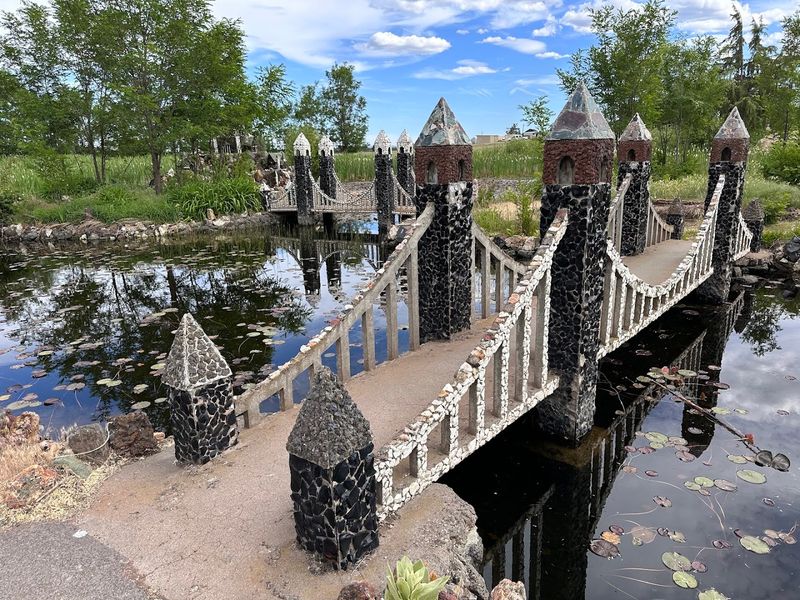
Scattered across the property are several ponds and water features that Rasmus Petersen incorporated into his original design. At their best, these ponds are genuinely beautiful, with lily pads floating on the surface, small stone islands rising from the water, and fountains adding movement and sound to the garden’s atmosphere.
The water features work best during the warmer months when they are fully operational. Visiting in summer gives you the complete version of the garden that Petersen originally envisioned, with reflections of the rock structures shimmering in the ponds and the whole landscape feeling lush and alive.
During drier periods or off-season visits, some of the ponds may have lower water levels or inactive fountains, which is worth knowing before you plan your trip. The garden is still absolutely worth visiting regardless, but the water features add a dimension that elevates the experience considerably.
One section near the front of the property features a particularly striking arrangement of stone islands and water that is easy to miss if you do not make a point of exploring that side of the grounds carefully.
The Wish Shed: A Small Detail Worth Finding
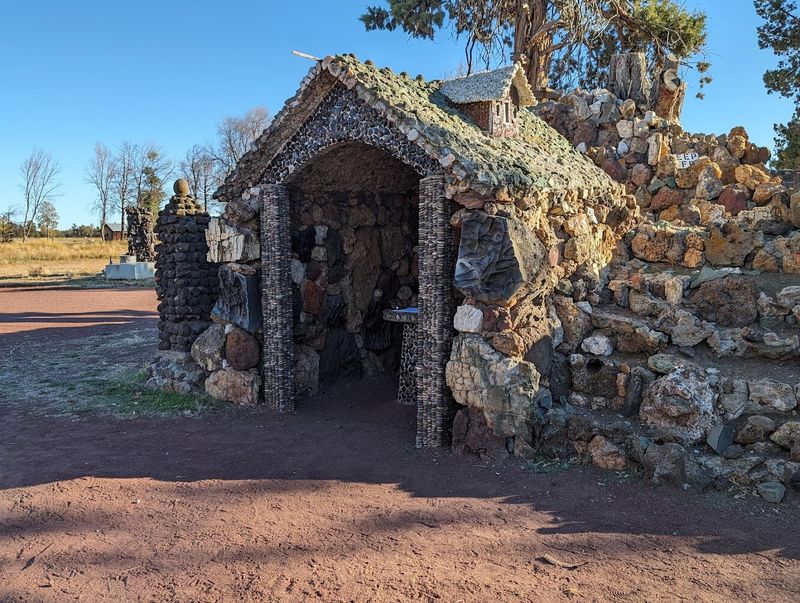
Tucked to one side of the main garden path is a small wooden shed that most visitors nearly walk past without noticing. The front door poses a question that immediately pulls you in: ‘What do you want to rock?’ Inside, hundreds of small wooden boards hang from every available surface, each one carrying a wish written by a previous visitor.
The whole installation has a warmth and intimacy that feels completely different from the geological grandeur of the rest of the property. Reading through a few of the wishes left by strangers becomes unexpectedly moving, and adding your own takes only a minute but tends to stick with you long after you leave.
It is a small touch in the context of everything else the garden offers, but it is the kind of detail that makes a place memorable in a personal way rather than just a visual one. The shed sits as a reminder that the garden has always been about more than rocks.
It has been a place where people pause, reflect, and connect with something they find genuinely meaningful, which is a rare quality in any roadside attraction.
A Family-Friendly Stop That Works for All Ages
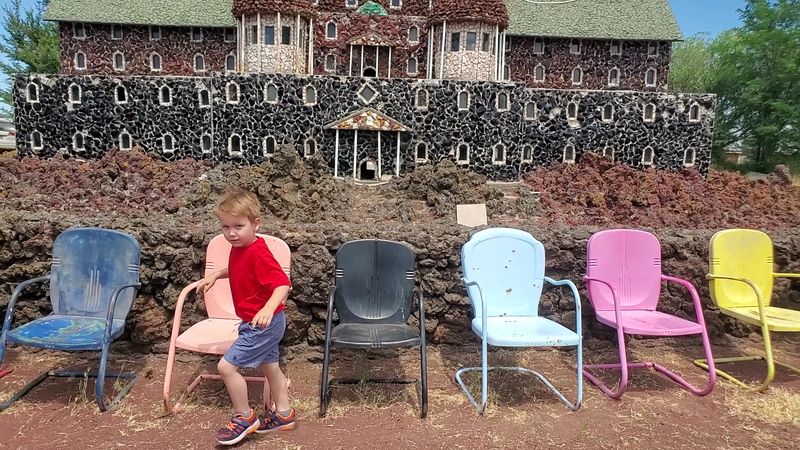
The garden works remarkably well as a family outing, which is not always a given with attractions that lean heavily on history and geology. Toddlers can wander the wide paths safely, older kids get genuinely engaged by the peacock feeding and the black light display, and adults find enough depth in the structures and museum to keep them occupied for well over an hour.
Dogs are welcome on leash, which is a detail that makes a real difference for families traveling with pets. Parking on the property is plentiful, and the open layout of the grounds means there is plenty of room for kids to move around without feeling cramped or restricted.
The recommended donation is ten dollars per adult, with a more relaxed approach for children, and the payment system runs on an honor basis. That pricing makes it genuinely accessible for families on a budget, which is increasingly rare among attractions that offer this much variety.
Several picnic tables are scattered around the property, so bringing food and spending a longer, unhurried afternoon here is a completely reasonable plan.
Ongoing Restoration and What Is Being Preserved
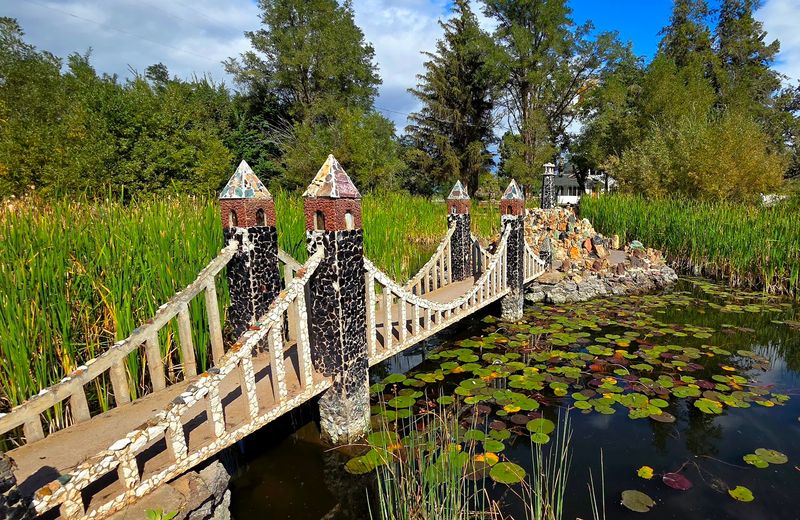
The property is actively in the middle of a restoration effort that has been gaining momentum over recent years. New volunteers and supporters have been working to repair weathered structures, restore water features, and renovate the historic farmhouse that sits on the grounds.
The grand reopening event in April 2025 marked a significant milestone in that ongoing process.
Perhaps the most surprising aspect of the restoration work is the ongoing discovery of additional rock displays created by Rasmus Petersen that had been hidden or overlooked for decades. The property apparently still holds surprises that even longtime volunteers are only now uncovering, which gives return visits a genuine sense of possibility.
The age and wear of some sections are visible, and that honesty is part of what makes the place feel authentic rather than overly polished. This is not a theme park or a manicured tourist destination.
It is a real piece of folk art history that people are working hard to keep alive for future generations. Supporting the garden through the suggested donation directly funds that work, and the difference between a maintained version and a neglected one is easy to see in the sections that have already been restored.
Planning Your Visit: Hours, Tips, and What to Know
The garden is currently open Friday through Monday from 10 AM to 4 PM, and closed Tuesday through Thursday. Those hours are worth double-checking before you go, since they have shifted seasonally in the past and the website at petersenrockgarden.org carries the most current information.
The phone number is 541-904-0557 if you want to confirm before making the drive.
The property sits between Redmond and Bend, making it a natural addition to a Central Oregon road trip rather than a detour that requires significant backtracking. The Painted Hills, Smith Rock State Park, and the High Desert Museum are all within reasonable driving distance, so this stop fits naturally into a broader regional itinerary.
Wear comfortable walking shoes, bring a camera, and set aside at least two hours if you want to see everything properly. The front section of the property near the road is easy to explore, but the area near the ponds and the wish shed requires a bit more deliberate exploration.
The gift shop is worth browsing seriously, not just as an afterthought, because the quality and pricing of the specimens and decorative pieces on offer genuinely stand out.
Share this story