Europe is home to some of the most breathtaking villages on the planet, where history, nature, and culture blend together in the most magical ways. Tucked between mountains, perched on clifftops, or nestled beside shimmering lakes, these places feel like stepping into a living painting.
While big cities get most of the attention, it is often the smallest places that leave the biggest impressions. Pack your bags and get ready to discover 15 European villages that will make your jaw drop.
Hallstatt, Austria
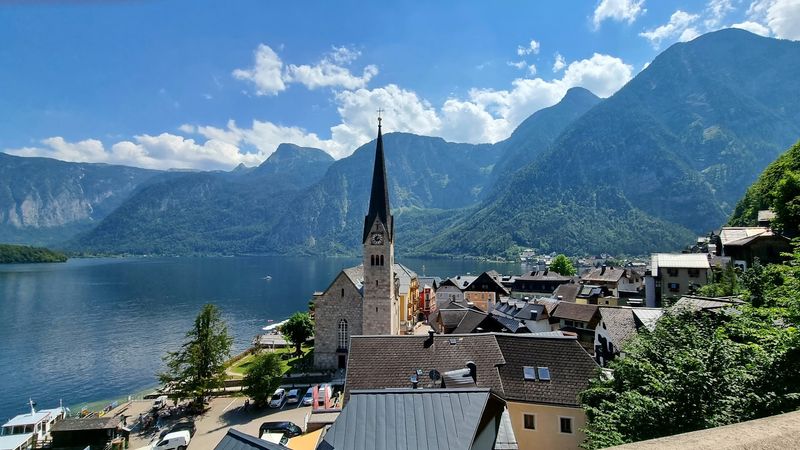
Photographers have been obsessing over Hallstatt for centuries, and honestly, who can blame them? This tiny Austrian village sits wedged between a glassy alpine lake and towering mountain peaks, creating a backdrop so stunning it almost looks digitally enhanced.
The pastel-colored houses along the waterfront are perfectly reflected in the calm surface of Hallstätter See.
Hallstatt has been inhabited for over 7,000 years, making it one of the oldest continuously occupied settlements in Europe. Salt mining was the village’s original claim to fame long before tourists arrived with their cameras.
The old salt mines are still open for tours and offer a fascinating underground adventure.
Winter wraps Hallstatt in snow and turns it into something resembling a snow globe. Summer brings lush greenery and boat rides across the lake.
No matter the season, every single corner of this village delivers a postcard-worthy moment that is almost unfair to the rest of the world.
Eguisheim, France
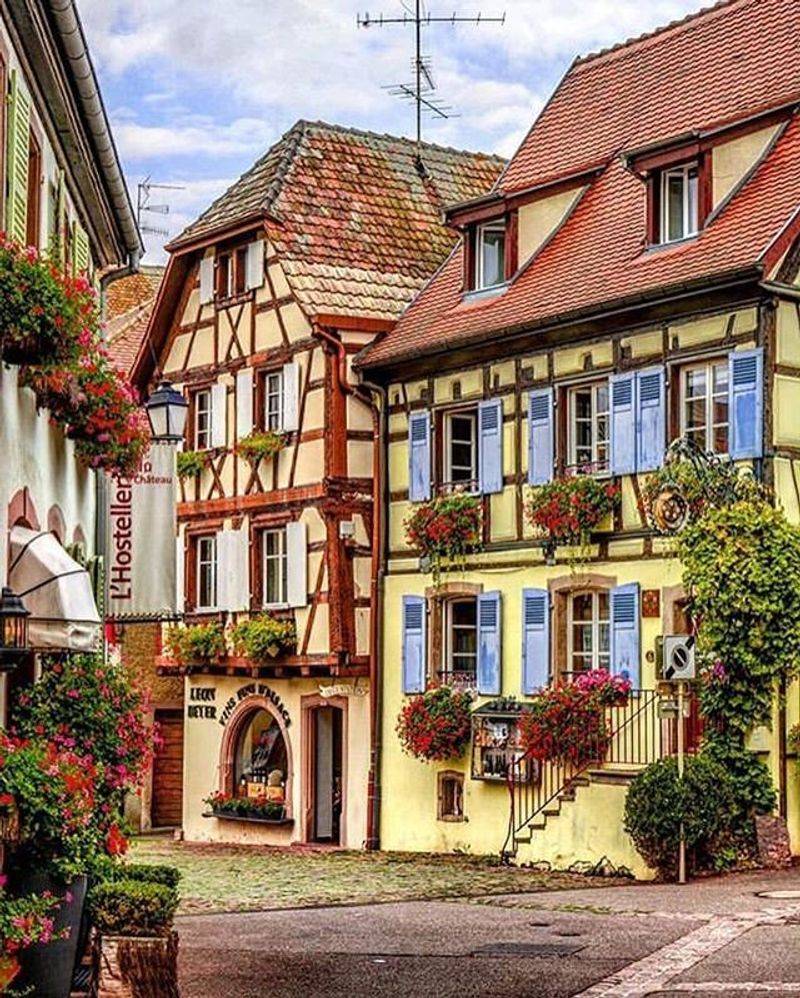
Walking through Eguisheim feels like being inside a carousel that never moves. The village is built in perfect concentric circles, meaning every street curves gently into the next one, lined with half-timbered houses painted in shades of yellow, orange, pink, and red.
Flower boxes overflow from nearly every window, especially in summer.
Eguisheim sits right in the heart of Alsace wine country in northeastern France, and the local Rieslings and Gewurztraminers are absolutely worth tasting. The village has been named one of France’s most beautiful villages multiple times, a title it wears with quiet confidence.
Ancient fountains dot the streets and add to the medieval atmosphere.
The village traces its roots back to the 8th century, when a local count built a castle here. That castle still stands in the center of the circular layout, surrounded by colorful houses that feel centuries removed from modern life.
Eguisheim is small enough to walk in under an hour, yet rich enough to fill an entire afternoon.
Giethoorn, Netherlands
Forget roads. Giethoorn runs on water.
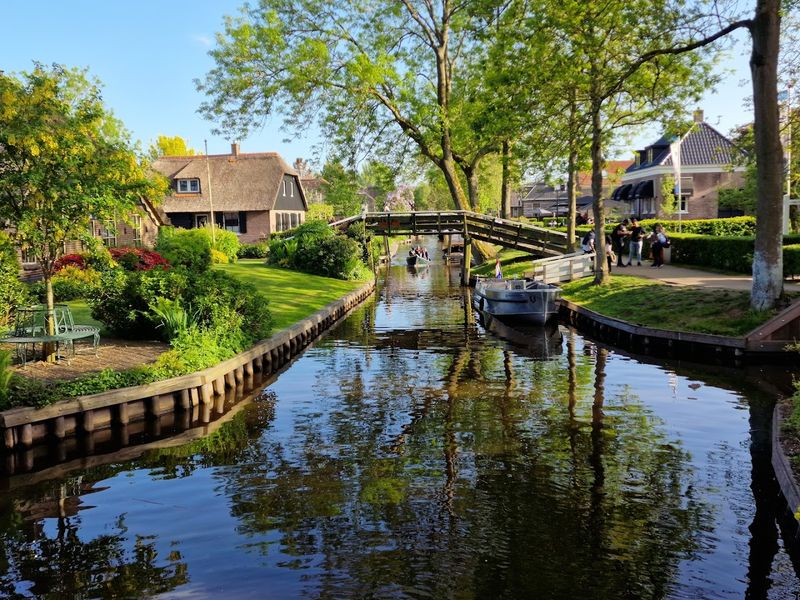
This Dutch village in the province of Overijssel has almost no traditional streets in its historic center, meaning the main way to get around is by boat, bicycle, or on foot along narrow footpaths. It earns its nickname, the Dutch Venice, every single day.
The thatched-roof cottages here look like they belong in a fairy tale. Wooden footbridges arch over the canals connecting one garden to the next, and weeping willows trail their branches into the still water below.
The whole village moves at a slower pace, almost as if it decided long ago that rushing was not worth the effort.
Giethoorn was founded in the 13th century by settlers who discovered enormous goat horns buried underground left behind by a flood. They named the place Geytenhorn, meaning goat horn, which eventually became Giethoorn.
Today, renting a small electric boat and drifting through the canals is the most popular activity, and it is every bit as peaceful as it sounds. Crowds can build on weekends, so visiting on a weekday gives a much calmer experience.
Reine, Norway
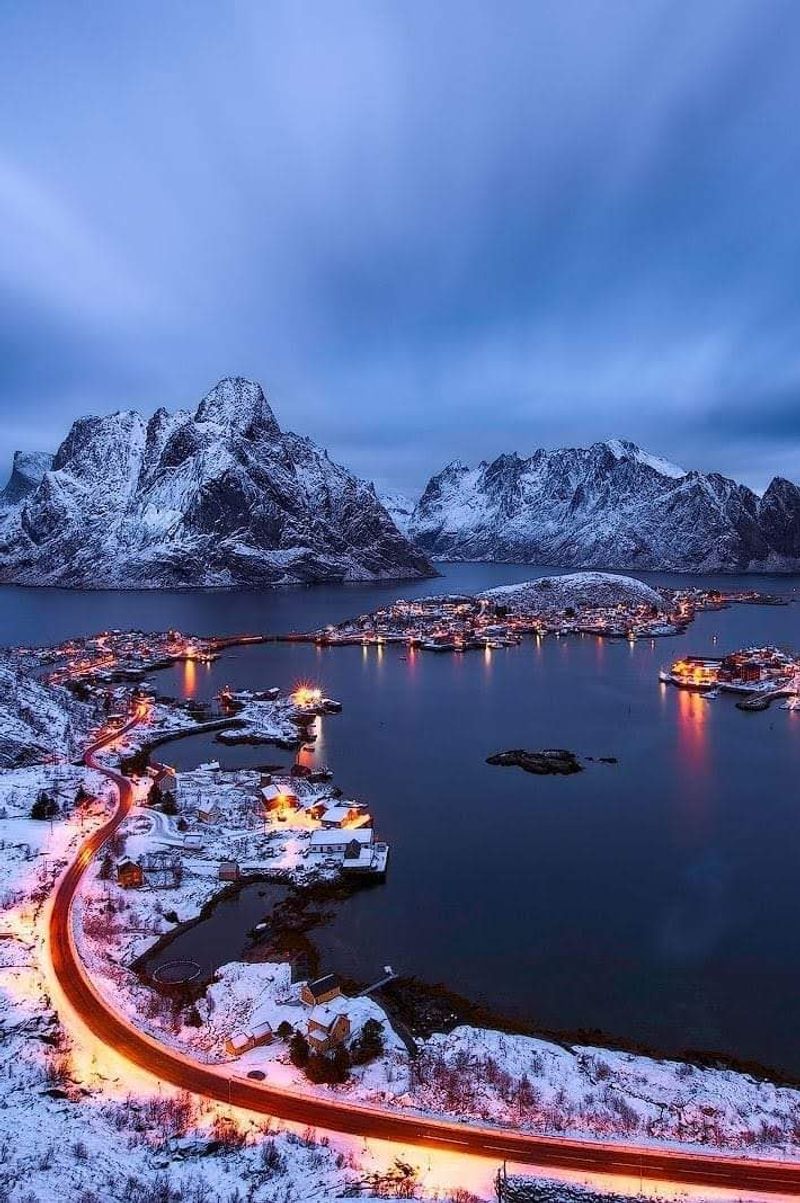
There is a reason Reine consistently tops lists of Norway’s most beautiful places. Perched on a small island in the Lofoten archipelago, this fishing village is surrounded by some of the most dramatic scenery in all of Scandinavia.
Jagged mountain peaks shoot straight up from the sea, and the red wooden cabins along the shore reflect perfectly in the Arctic water below.
These red cabins, called rorbu, were originally built for fishermen who traveled to Lofoten during the annual cod fishing season. Today, many of them have been converted into cozy guesthouses where visitors can stay overnight.
Waking up to a view of mountains rising from the sea is, without question, one of Norway’s finest experiences.
Summer brings the midnight sun, which means the sky glows golden even at midnight, creating an otherworldly atmosphere. Winter offers a completely different kind of magic, with the northern lights dancing above the snow-capped peaks.
Hiking trails around Reine lead to elevated viewpoints that reveal the full scale of the surrounding landscape. The village itself is tiny, but the experience it delivers is enormous.
Bibury, England
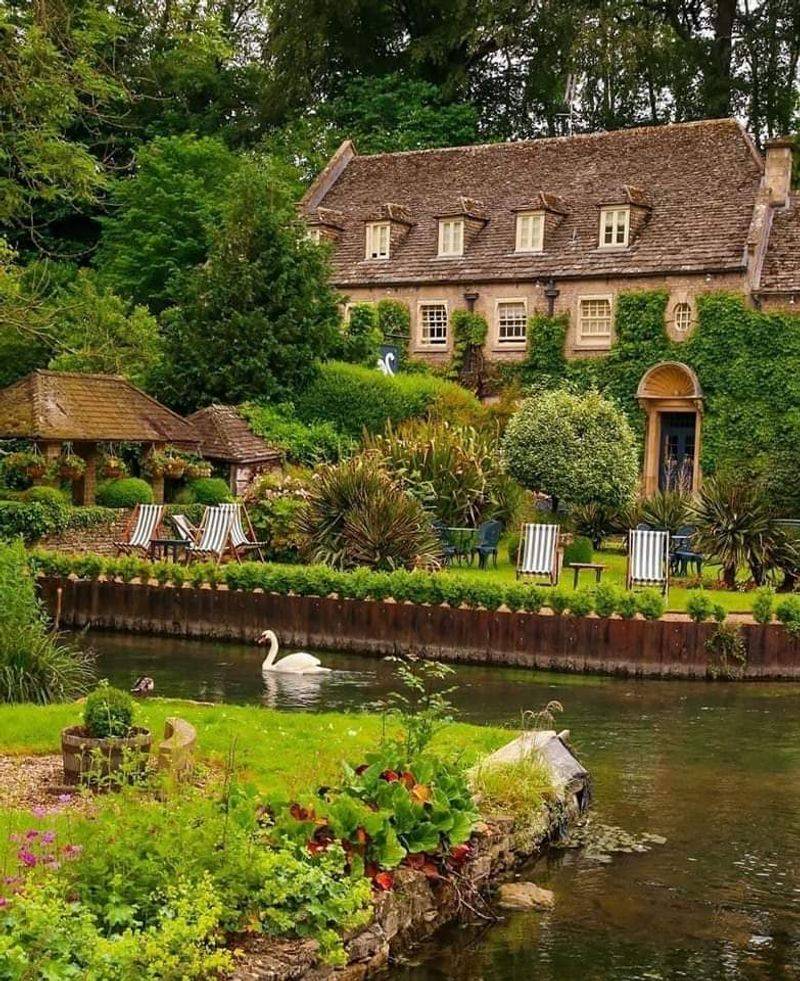
William Morris, the famous Victorian designer, once called Bibury the most beautiful village in England. That bold claim has held up remarkably well over the centuries.
The village sits in the Cotswolds, a region of rolling hills and golden stone architecture in central England, and it delivers exactly the kind of charm that makes visitors sigh with contentment.
Arlington Row is the village’s most famous landmark, a row of honey-colored stone cottages built in the 14th century that sit right beside the gentle River Coln. Swans glide along the water, ducks waddle across the footpath, and the whole scene feels almost too perfect to be real.
The cottages were originally built as a wool store and later converted into weavers’ homes.
Bibury is a popular stop on Cotswolds road trips, and the car park fills up quickly on summer weekends. Arriving early in the morning rewards visitors with quiet lanes and soft golden light that makes the stone glow.
The nearby Bibury Trout Farm is a fun bonus, especially for families. This village proves that sometimes the smallest places carry the most soul.
Oia, Greece
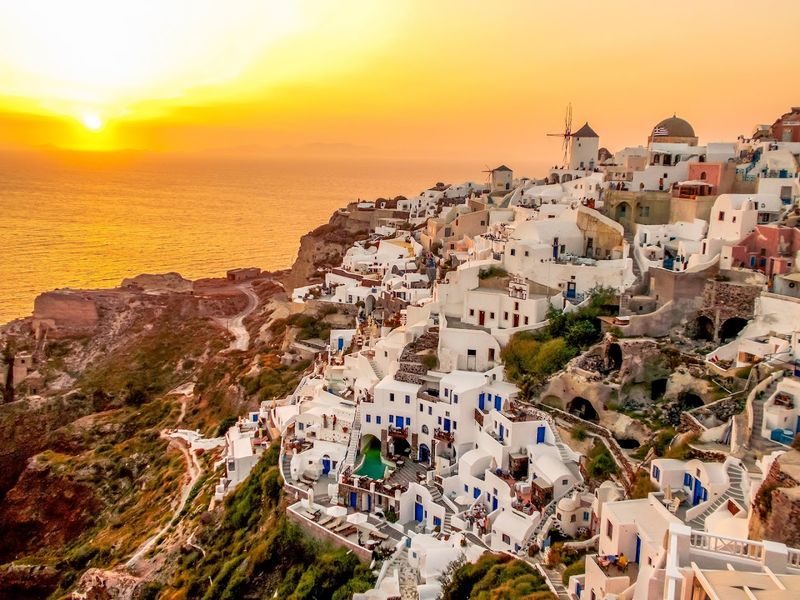
Sunsets in Oia are so famous that visitors gather hours early to claim the best viewing spots. Perched on the northern tip of Santorini, this clifftop village hangs dramatically above a volcanic caldera, offering views of the deep blue Aegean Sea that feel almost theatrical.
The combination of white walls, blue domes, and golden light at dusk is genuinely one of Europe’s most iconic sights.
Oia was largely destroyed by an earthquake in 1956 and was rebuilt with the brilliant white and blue color scheme that now defines it. The narrow cobblestone lanes wind between boutique shops, art galleries, and restaurants carved directly into the volcanic rock.
Cats lounge in doorways. Bougainvillea spills over walls.
The whole village moves slowly and elegantly.
Getting here requires either a cable car ride from the port, a donkey ride up steep steps, or a scenic hike along the caldera rim from the island’s capital. Each option comes with its own sense of arrival.
Staying overnight allows visitors to experience Oia after the day-trippers leave, when the village becomes quieter, cooler, and even more magical under the stars.
Albarracín, Spain
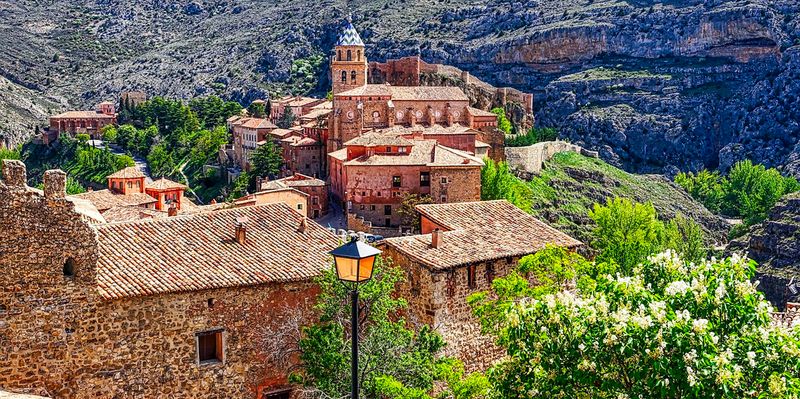
Stumbling upon Albarracín feels like finding a secret that most of Spain has forgotten to mention. Hidden in the hills of Aragón in central Spain, this medieval village is enclosed by ancient walls and built from rosy-pink stone that glows warmly in the afternoon sun.
The narrow streets twist and climb unpredictably, revealing new views at every turn.
The village sits on a rocky outcrop surrounded by a loop of the Guadalaviar River, which helped make it naturally defensible for centuries. Albarracín was ruled by the Moorish Banu Razin clan in the 10th and 11th centuries and later became a small independent kingdom.
That layered history is visible in the architecture, where Moorish, medieval, and Renaissance influences all coexist.
Very few tourists make it here compared to Spain’s more famous destinations, which means the streets are refreshingly uncrowded and the atmosphere feels genuinely authentic. Local restaurants serve hearty Aragonese dishes like roasted lamb and truffle-based recipes unique to the region.
The hilltop fortress above the village offers sweeping views of the valley below. Albarracín rewards the curious traveler who is willing to venture off the beaten path.
Civita di Bagnoregio, Italy
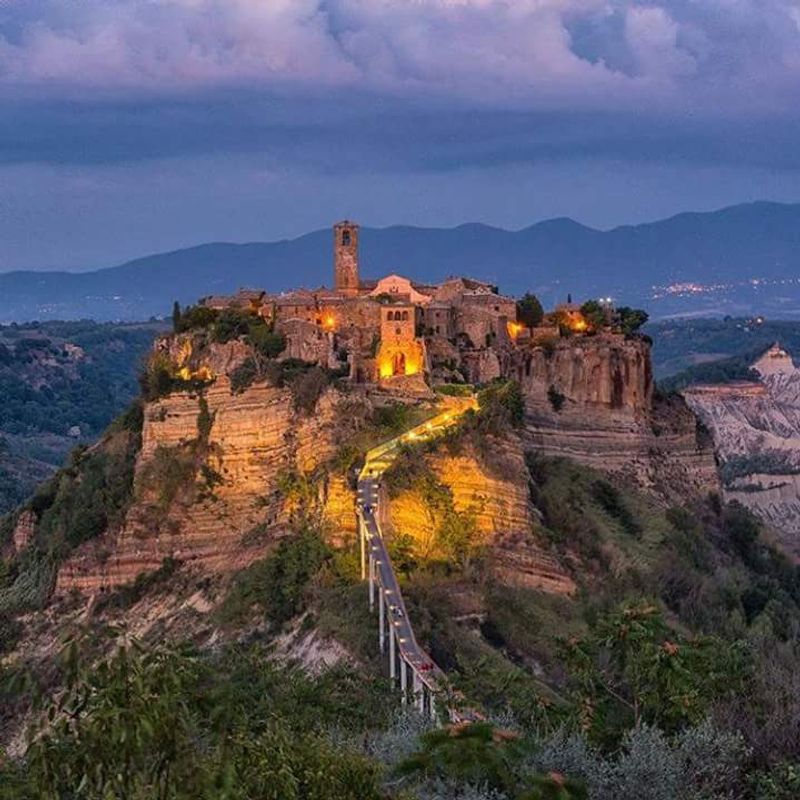
Civita di Bagnoregio has been slowly crumbling into the valley below it for centuries, which is exactly why locals call it la citta che muore, meaning the dying city. That sounds gloomy until you actually see it.
This ancient Italian village sits on top of an eroding plateau of volcanic tufa rock, surrounded by dramatic clay ravines that look like something from another planet entirely.
The only way in is across a narrow pedestrian bridge that stretches about 300 meters over the gorge. Cars cannot enter.
Noise from the outside world fades almost immediately. Inside, stone streets lead past Etruscan caves, medieval buildings, and tiny gardens that locals tend with remarkable dedication despite the village’s precarious future.
Fewer than ten people live here year-round today, making it one of Italy’s smallest inhabited villages. Yet thousands of visitors cross that bridge every year, drawn by the sheer drama of the setting and the extraordinary sense of stepping into a place untouched by time.
The best views of Civita are from the surrounding countryside at golden hour, when the plateau glows orange against a darkening sky. It is haunting and beautiful all at once.
Kotor, Montenegro
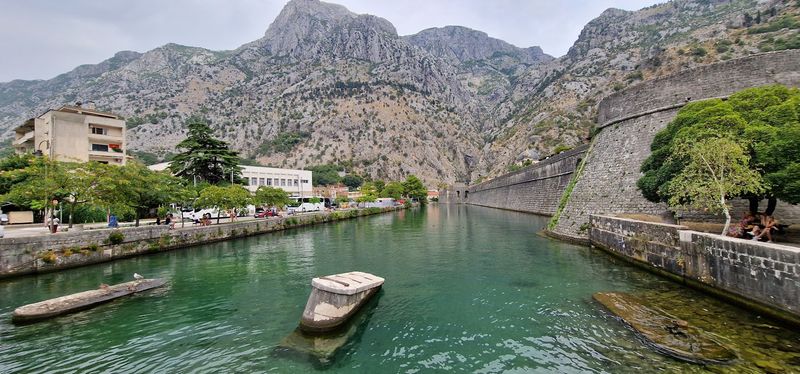
Kotor looks like someone dropped a medieval city into the bottom of a fjord and just left it there. Surrounded by enormous limestone mountains on three sides and the deep blue Bay of Kotor on the fourth, this fortified town in Montenegro has one of the most dramatic natural settings in all of Europe.
The ancient walls zigzag straight up the mountainside above the town.
Inside the walls, a maze of stone lanes connects Romanesque churches, small squares, and centuries-old palaces that speak to Kotor’s long history as a Venetian trading port. Cats are everywhere, and they are considered good luck by locals.
The town even has a small museum dedicated entirely to its feline residents.
Climbing the old fortress walls above the town takes about 45 minutes and rewards hikers with breathtaking views of the bay below. The Bay of Kotor is technically a submerged river canyon rather than a true fjord, making it geologically unique in Europe.
Kotor earned UNESCO World Heritage status in 1979, and it is easy to understand why. Whether explored by day or by night when the old stones are lit up dramatically, this town never stops impressing.
Gruyères, Switzerland
Yes, the cheese is real, and yes, it is absolutely delicious here. But Gruyères offers far more than just fondue.
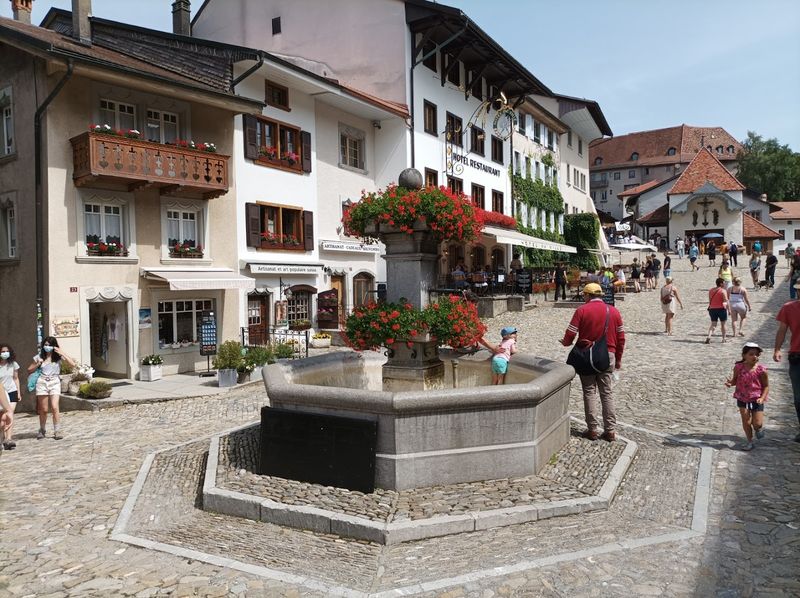
This perfectly preserved medieval village in the Swiss canton of Fribourg sits on top of a gentle hill, surrounded by rolling green pastures and framed by distant Alpine peaks. The single cobblestone main street is lined with old stone buildings, flower-draped balconies, and welcoming restaurants.
The village takes its name from the Counts of Gruyères, who ruled this area during the Middle Ages and built the magnificent castle that still stands at the top of the hill. That castle is open to visitors and contains a surprisingly eclectic mix of medieval art, tapestries, and a room dedicated entirely to the works of surrealist artist H.R.
Giger, the man who designed the creature in the Alien films.
Gruyères is small enough to walk end to end in about ten minutes, but there is enough to fill a very satisfying half-day visit. The nearby cheese factory and chocolate factory make it a genuinely delicious destination.
Arriving in the morning before the tour buses roll in allows for a much more peaceful experience of this charming hilltop gem.
Ceský Krumlov, Czechia
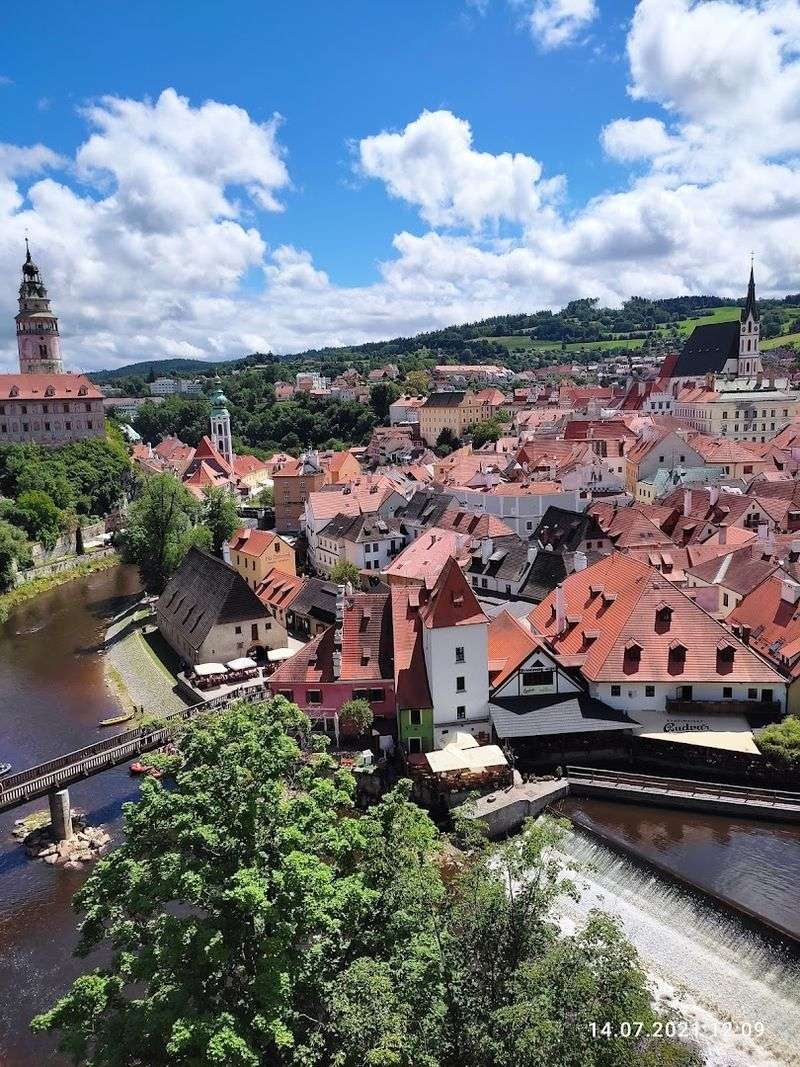
Ceský Krumlov wraps itself around a horseshoe bend in the Vltava River like it was specifically designed to look magnificent from above. And from above, it truly is.
The hilltop castle that towers over this South Bohemian town is the second largest in the Czech Republic, and its round tower, painted in pastel trompe-l’oeil patterns, has become one of the country’s most recognizable images.
The old town below the castle is a UNESCO World Heritage Site filled with colorful Baroque and Renaissance buildings, narrow cobblestone lanes, and small squares where locals and visitors mix comfortably. Canoe and kayak rentals are wildly popular here because paddling the river around the town’s natural moat offers a completely unique perspective on the architecture above.
Ceský Krumlov is only about three hours from Prague by bus, making it an ideal day trip or overnight stay. The town is small but packed with galleries, theaters, and excellent Czech restaurants.
The castle gardens host a summer baroque music festival that draws visitors from across Europe. Evening is particularly atmospheric, when the crowds thin and the castle lights up against the darkening sky above the river.
Sintra, Portugal
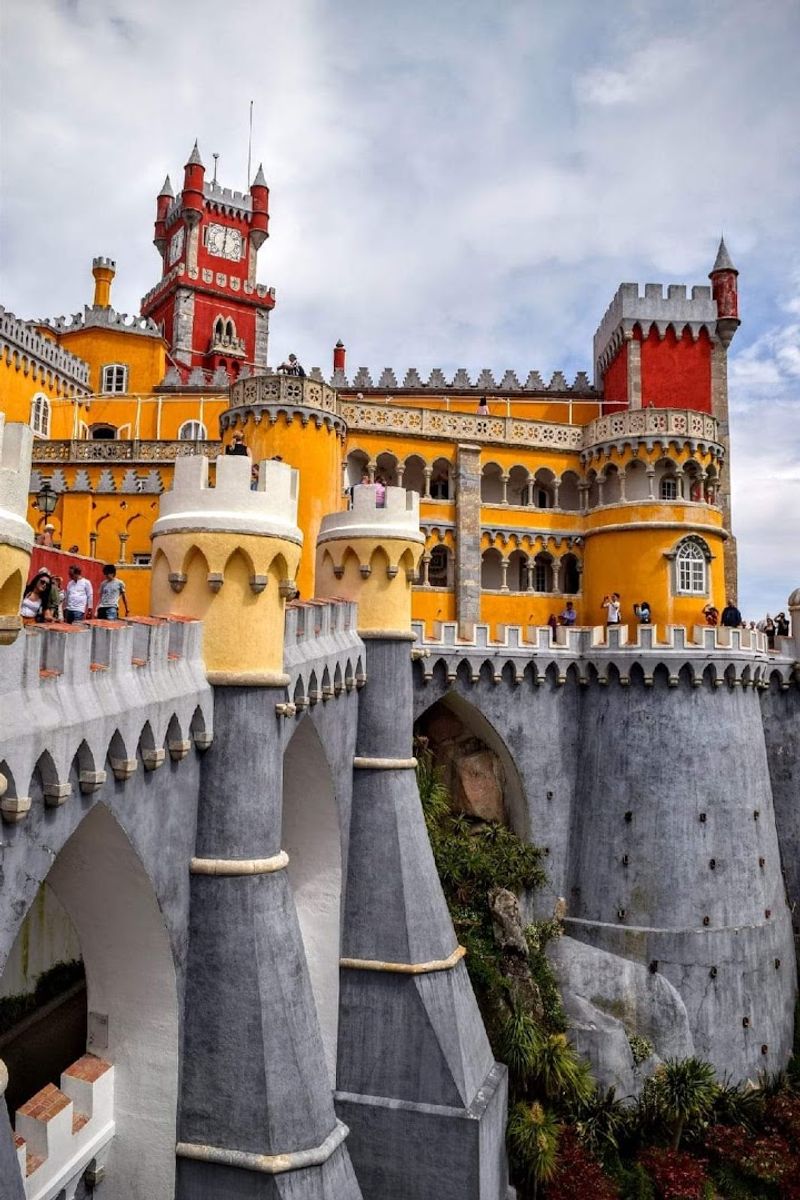
Sintra operates on a different level of whimsy compared to most European destinations. Just 40 minutes from Lisbon by train, this UNESCO-listed town tumbles across a series of forested hills dotted with palaces so colorful and elaborate they look like they were designed by someone who had never heard the word restraint.
The Pena Palace alone, painted in bold yellow and red, is worth the entire trip.
Portuguese royalty used Sintra as a summer retreat for centuries, which explains the extraordinary concentration of palaces and grand estates packed into such a small area. The National Palace in the town center, with its enormous twin conical chimneys, has been here since the Middle Ages.
The Moorish Castle, draped in moss and perched above the treeline, offers sweeping views of the Atlantic coastline on clear days.
Mist rolls through the hills regularly, giving Sintra a moody, romantic atmosphere that feels straight out of a Gothic novel. Lord Byron visited in 1809 and declared it the most beautiful village in the world.
Walking between the palaces is hilly and requires comfortable shoes, but the effort is absolutely rewarded. Sintra is one of those places that stays with you long after you leave.
Røros, Norway
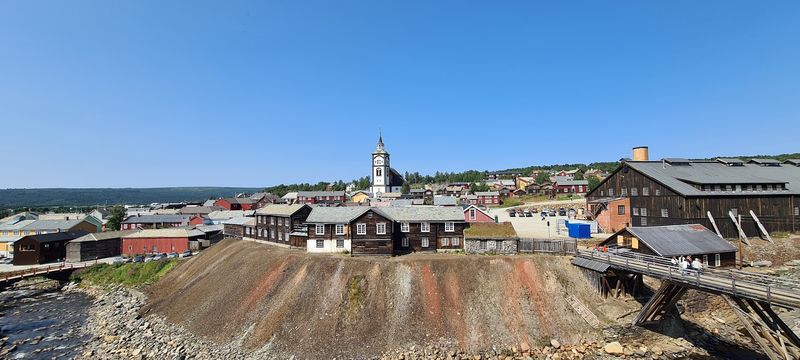
Røros looks like winter invented it on purpose. This small Norwegian town in the mountains of Trøndelag was built around copper mining in the 17th century, and its remarkably well-preserved wooden buildings give it a character unlike anywhere else in Scandinavia.
The colorful facades lining the main street stand out brilliantly against a backdrop of snow and bare birch trees.
The town earned UNESCO World Heritage status in 1980 thanks to its extraordinary collection of historic wooden architecture, some of which dates back 300 years. The old smelting works have been preserved as a museum, and the church that dominates the town center is one of the largest wooden churches in Norway.
Local craftspeople still practice traditional trades here.
Røros sits at around 628 meters above sea level, making it one of the highest towns in Norway and giving it reliably cold winters with deep snow. The annual winter market, held in February, has taken place for over 350 years and draws visitors from across the country.
Reindeer herding is still practiced by the Sami people in the surrounding region. Røros has a quiet, lived-in authenticity that feels rare and genuinely precious in a world of over-touristed destinations.
Gordes, France
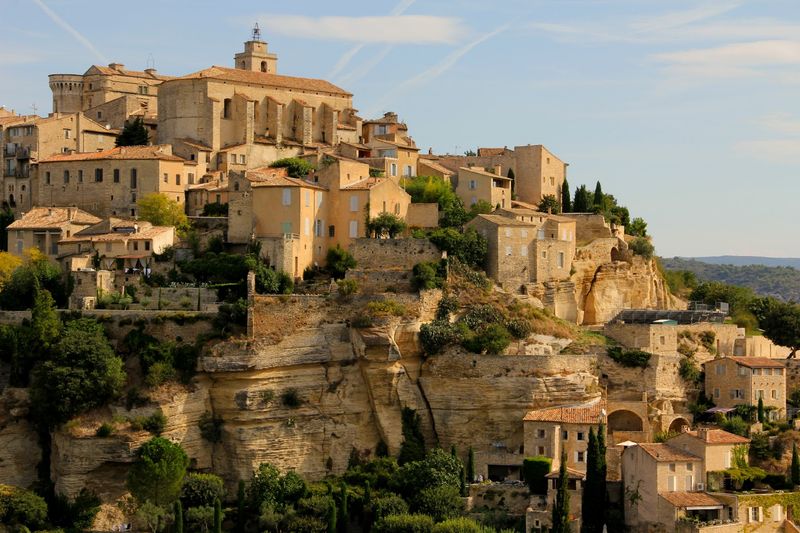
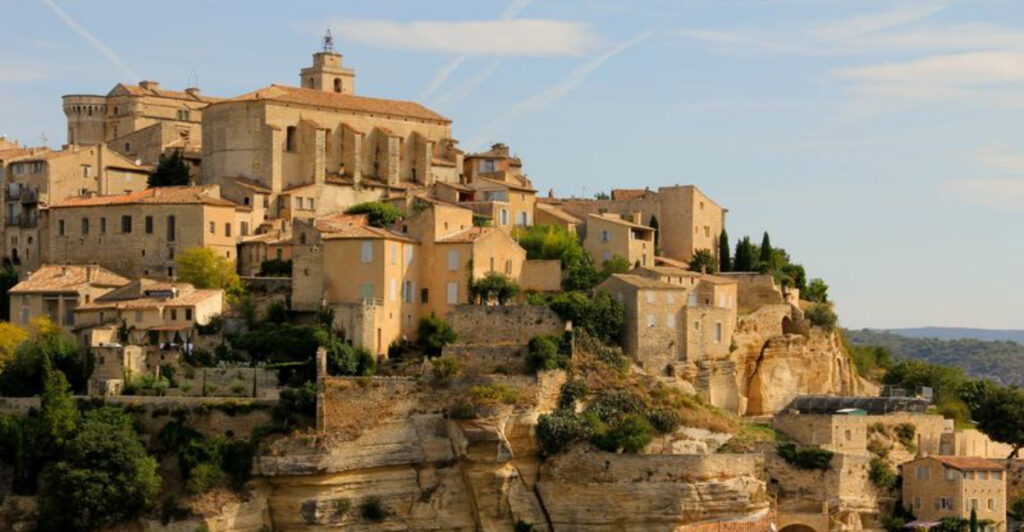
Gordes has a habit of stopping people in their tracks. Driving through Provence and rounding a bend to suddenly see this honey-colored village stacked dramatically on a rocky hilltop is one of those moments that makes travelers reach for their cameras instinctively.
The village rises in tiers above the Luberon Valley, and the view from the valley floor looking up is simply spectacular.
The stone buildings here are made from the same golden limestone that defines Provence’s landscape, giving Gordes a look that feels completely organic, as though it grew naturally from the rock below it. The village dates back to the 6th century and has attracted artists and intellectuals for decades.
Painter Marc Chagall lived nearby and adored the area.
Lavender fields bloom purple across the surrounding countryside in June and July, adding another layer of beauty to an already stunning setting. The nearby Sénanque Abbey, a 12th-century Cistercian monastery surrounded by lavender rows, is one of the most photographed spots in all of France.
Gordes has boutique hotels, excellent Provençal restaurants, and art galleries tucked into its steep lanes. It is a village that rewards slow exploration and multiple cups of coffee at a sunny terrace table.
Castle Combe, England
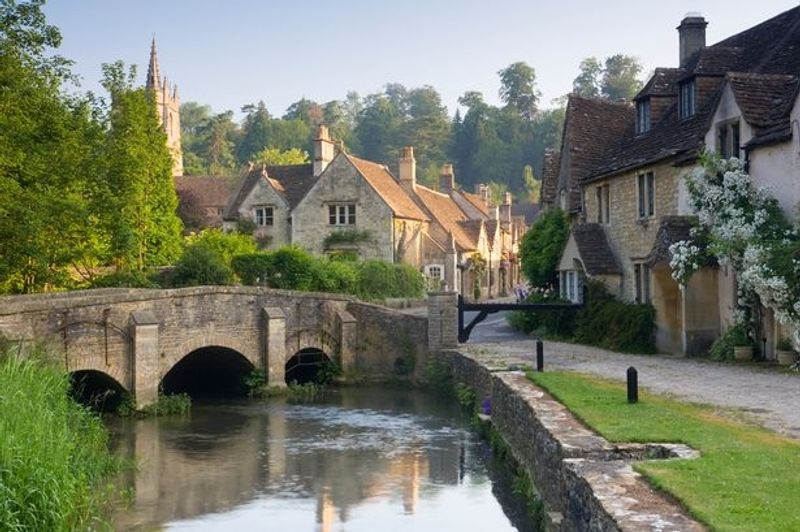
Castle Combe is so picture-perfect that film crews keep showing up to use it as a backdrop. The village has appeared in movies and television productions multiple times over the decades, and it is not hard to see why.
Every single building here is made from the same warm Cotswold stone, every rooftop is gently mossy, and the whole place looks like it has barely changed since the Middle Ages.
The village sits in a sheltered valley in Wiltshire, tucked away from main roads and easily missed if you are not specifically looking for it. A small stream called the By Brook runs alongside the main lane, passing under an ancient stone bridge that has become one of the most photographed spots in England.
The old market cross in the center of the village dates back to the 14th century.
Castle Combe grew wealthy during the medieval wool trade, and the prosperity of that era is still visible in the quality and scale of its stone architecture. The surrounding countryside is ideal for walking, with footpaths leading through fields and woodland in every direction.
The village has one pub, one hotel, and very few tourists compared to more famous Cotswolds spots, giving it a wonderfully peaceful atmosphere that feels genuinely unspoiled.
Share this story