There is something undeniably fascinating about places that time has left behind. Empty streets, crumbling walls, and silent rooms that once buzzed with everyday life have a way of pulling at your curiosity like nothing else.
The good news is that you do not have to be a reckless explorer to see them. Many of the world’s most haunting abandoned places are actually open to visitors, with guided tours, official permits, and real historical context waiting for you.
From a desert town being swallowed by sand in Namibia to a frozen Soviet settlement in the Arctic, this list covers 15 remarkable sites across the globe that you can genuinely plan a trip around. Each one tells a story that goes far beyond what you will find in a typical travel guide, and that is exactly what makes them worth the journey.
Kolmanskop Ghost Town, Namibia
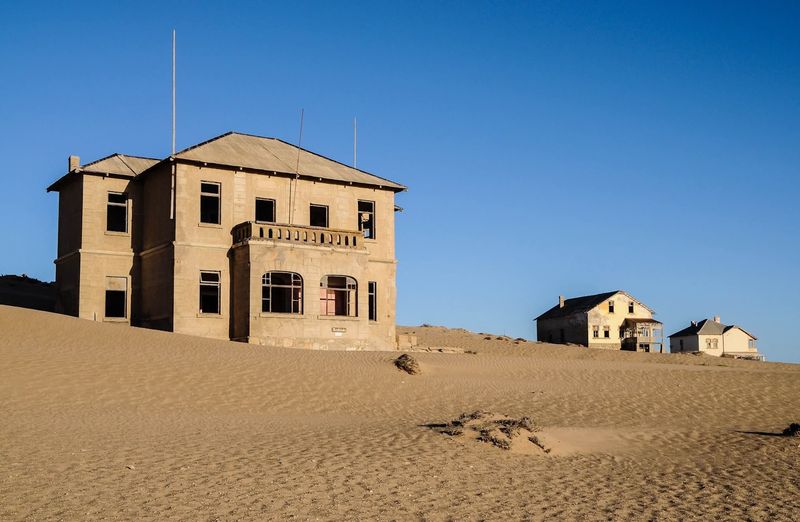
Sand does not wait for anyone in the Namib Desert, and Kolmanskop is living proof. This former diamond-mining settlement near Lüderitz was once one of the wealthiest towns in southern Africa, complete with a hospital, ballroom, and bowling alley built in full German colonial style.
When the diamond rush ended, residents left quickly, and the desert moved in just as fast. Today, rooms are half-buried in sand, doorways are blocked by dunes, and the peeling walls carry a faded elegance that photographers travel from all over the world to capture.
Visitors need a permit to enter, which can be arranged through Lüderitz Safaris and Tours, the official operator managing site access. Morning light is especially good for photography inside the buildings.
Guided tours are available and provide helpful historical context about the town’s surprisingly lavish boom-era lifestyle. Entry fees are reasonable, and the site is genuinely accessible for curious travelers.
Hashima Island, Japan
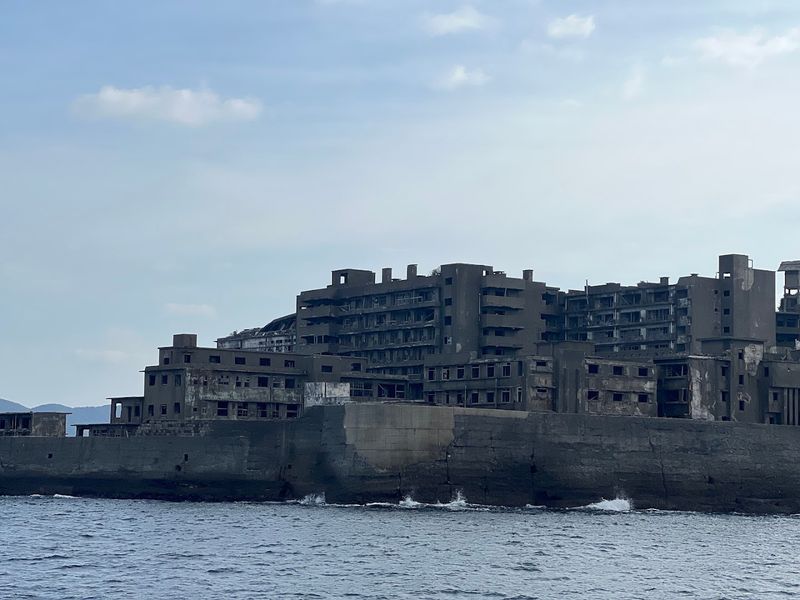
Off the coast of Nagasaki sits a concrete island that looks like a ship from a distance, which is exactly why locals nicknamed it Battleship Island. Hashima Island, officially known as Gunkanjima, was once home to thousands of coal miners and their families, packed into some of the densest residential structures ever built in Japan.
The mine closed in 1974, and residents left almost overnight. The concrete apartment blocks, school buildings, and industrial ruins have been deteriorating ever since, with the sea air accelerating the decay in dramatic fashion.
You cannot wander the island independently, but official boat tours depart from Nagasaki Port on a regular schedule when weather and sea conditions cooperate. The viewing platforms give visitors a clear look at the ruins up close.
Hashima was designated a UNESCO World Heritage Site in 2015 as part of Japan’s Meiji industrial revolution sites, which adds real historical weight to the visit.
Bodie State Historic Park, California, USA
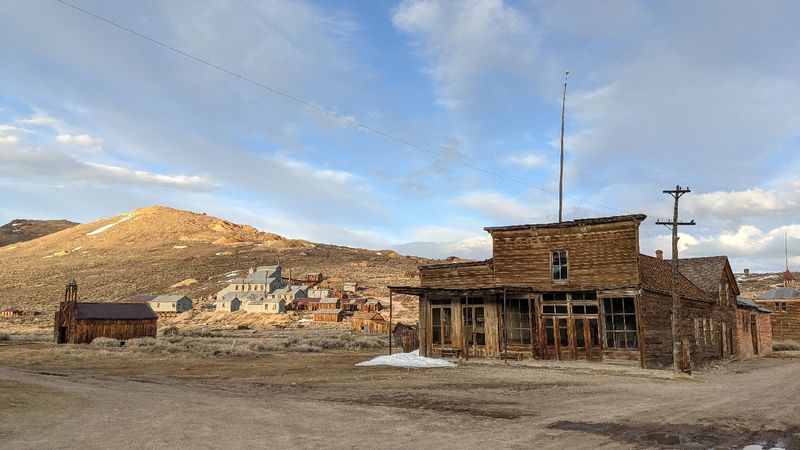
Bodie is the kind of ghost town that makes you feel like the residents just stepped out for a moment and never came back. California State Parks manages Bodie under a policy of “arrested decay,” meaning buildings are stabilized but not restored, so what you see is genuinely what was left behind when the gold ran out.
At its peak in the late 1870s and early 1880s, Bodie had a population of around 10,000 people and a reputation as one of the roughest towns in the American West. Today, more than 100 structures remain standing, including homes, a church, a schoolhouse, a jail, and a stamp mill used to process gold ore.
The park sits at about 8,400 feet elevation, so summer visits are the most practical. Winter can close the main road due to snow, though the last few miles are sometimes accessible on foot or skis.
Admission fees apply, and the park is open year-round when conditions allow.
Oradour-sur-Glane, France
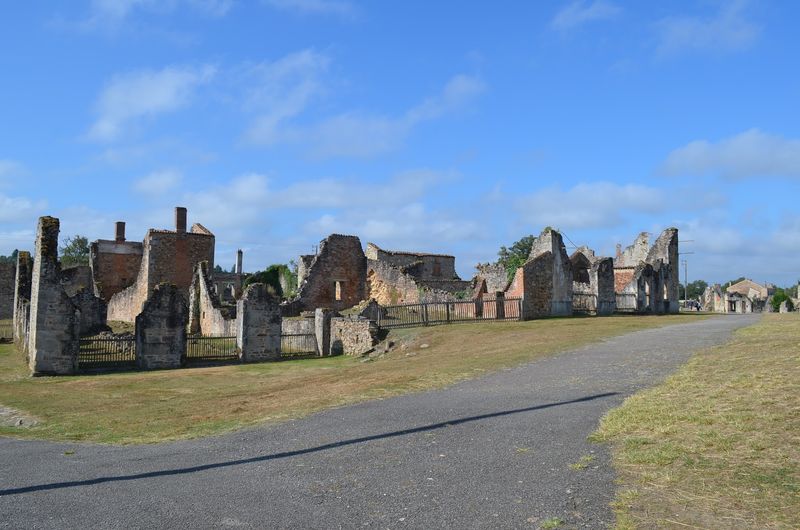
Oradour-sur-Glane is not a ghost town in the traditional sense. It is a preserved wound in French history, left standing exactly as it was after a 1944 wartime massacre that took the lives of hundreds of villagers.
The French government made a deliberate decision to leave the ruins untouched as a permanent memorial.
Walking through the village is a quiet and sobering experience. Rusted car frames still sit on the cobblestone streets.
Roofless stone houses stand open to the sky. The shell of the church where many villagers lost their lives remains in place as the most visible reminder of what happened here.
A new village was built nearby after the war, and the Memorial Center provides historical context for visitors. The ruins themselves remain accessible through visitor arrangements, even while renovation work on the Memorial Center continues.
Entry to the martyr village site is managed carefully, and respectful behavior is expected of all visitors. This is a place that stays with you long after you leave.
Craco, Italy
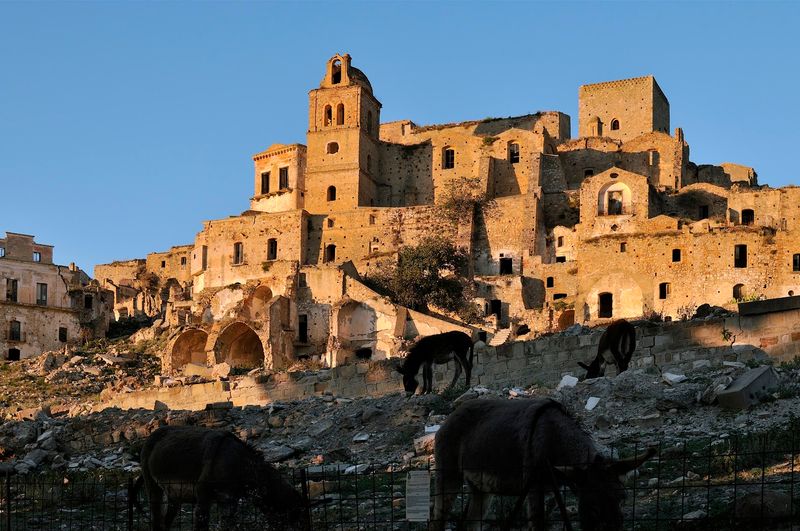
Perched on a steep rocky ridge in the Basilicata region of southern Italy, Craco looks like it was designed for a film set, and in a way, it has been. Several international productions have used the abandoned hilltop town as a backdrop, drawn by its naturally dramatic silhouette and crumbling stone architecture.
The town was not abandoned by choice. A combination of landslides, earthquakes, and ground instability made the old settlement increasingly dangerous through the mid-twentieth century.
Residents were relocated to a nearby valley town, and the old Craco was left to slowly settle into the hillside.
Access is controlled for safety reasons, and visitors should book guided tours through official or authorized operators rather than attempting to enter independently. Local tour companies in the Basilicata region offer structured visits that take you through the accessible parts of the town with a knowledgeable guide.
The views from the ridge over the surrounding valleys are genuinely striking and worth the trip on their own.
Kayaköy, Türkiye
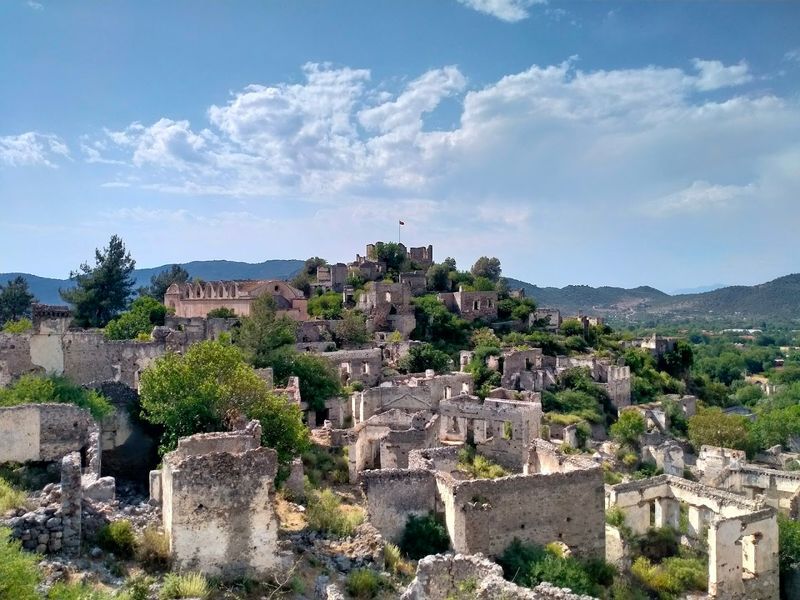
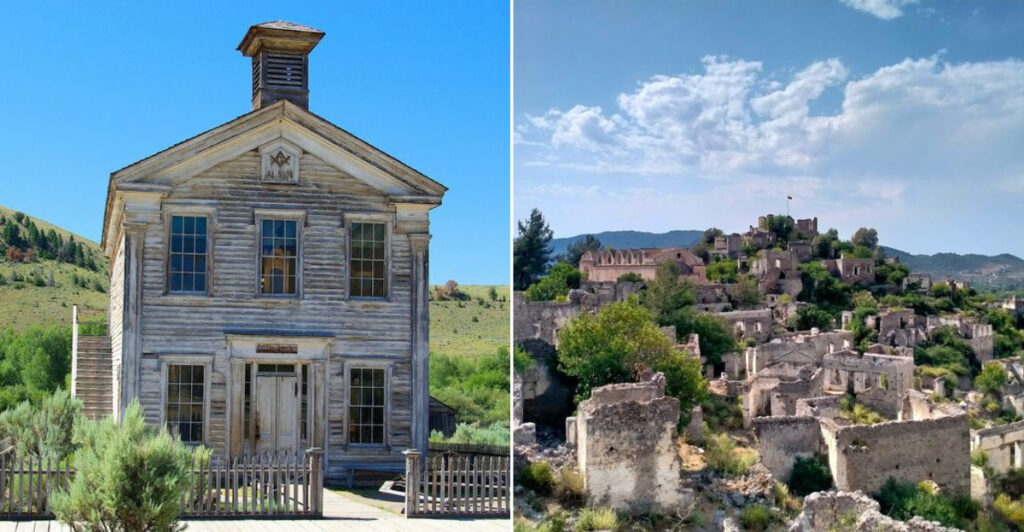
Just a few kilometers from the resort town of Fethiye on Turkey’s southwestern coast, Kayaköy feels like stepping into a completely different century. Hundreds of roofless stone houses climb the hillside in quiet rows, their empty windows looking out over the valley below.
Two Greek Orthodox churches still stand among the ruins, their interiors open to the sky.
The village was home to a Greek-speaking community for centuries before the population exchange following the Greco-Turkish War and the 1923 Treaty of Lausanne. Residents were relocated to Greece, and the town was never resettled.
It has remained largely untouched ever since.
Kayaköy now functions as a protected open-air historic site under Turkish cultural heritage law. Entry fees are posted at the site entrance, and the area is walkable without a guide, though local tours are available for those who want historical context.
The site is most comfortable to visit in spring or autumn, when the heat is manageable and the surrounding landscape is at its best.
Eastern State Penitentiary, Pennsylvania, USA
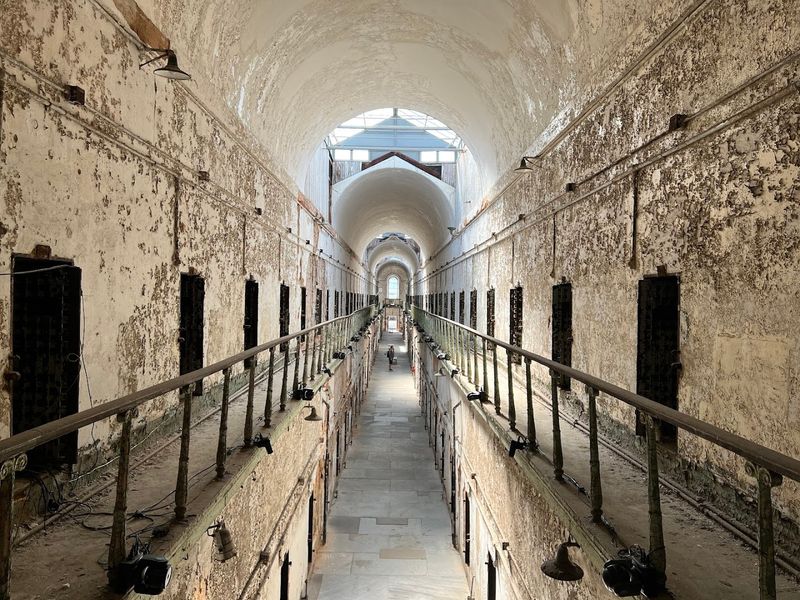
Eastern State Penitentiary opened in Philadelphia in 1829 and was considered one of the most influential prisons ever built. Its wagon-wheel floor plan, with cellblocks radiating from a central hub, was copied by prisons around the world.
Al Capone was among its most famous inmates, and his cell has been preserved with period furnishings as part of the tour experience.
The prison closed in 1971 and sat empty for decades before being opened to the public as a historic site. The crumbling cellblocks, vaulted corridors, and deteriorating guard towers were intentionally preserved in their decayed state rather than restored, giving the site an atmosphere that no museum renovation could replicate.
The site is open year-round, with daytime historic tours, audio guides, and special programming throughout the seasons. It also hosts a well-known Halloween event each autumn that draws large crowds.
Tickets can be purchased online in advance, which is the practical approach during busier months. The penitentiary is located in the Fairmount neighborhood and is reachable by public transit.
Humberstone and Santa Laura Saltpeter Works, Chile
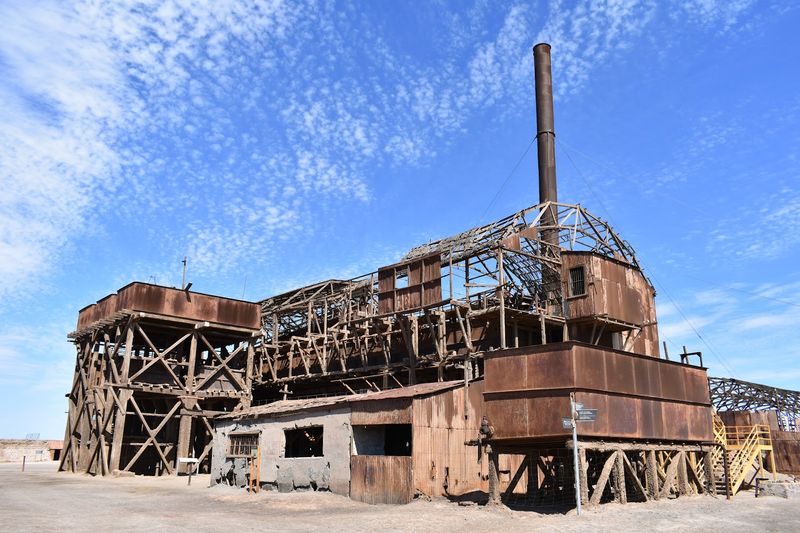
In the driest desert on earth, two ghost towns tell the story of an industry that once shaped the economy of an entire nation. Humberstone and Santa Laura were built in Chile’s Atacama Desert to support nitrate mining, a booming trade in the late nineteenth and early twentieth centuries before synthetic fertilizers made natural saltpeter obsolete.
At their peak, these towns had theaters, hotels, schools, and swimming pools, all built in the middle of a landscape that receives almost no rainfall. When the industry collapsed, the towns emptied out, and the dry desert air has done a remarkable job of preserving what was left behind.
The two sites were jointly designated a UNESCO World Heritage Site in 2005. Both operate as open-air museums with posted visitor hours and entry fees.
Humberstone is the larger and more developed of the two for tourism, while Santa Laura focuses more on the industrial machinery side of the story. The sites are located about 45 kilometers from Iquique, making them a manageable day trip.
Teufelsberg, Berlin, Germany
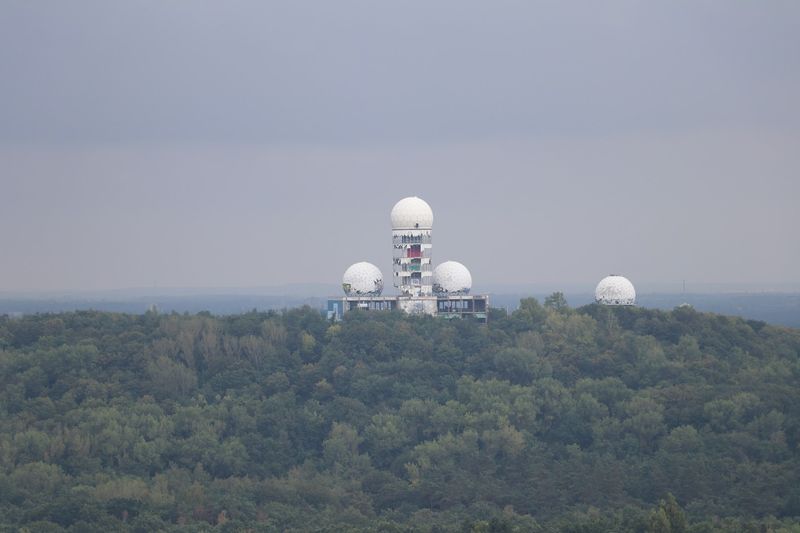
Built on top of a hill made entirely from wartime rubble, Teufelsberg has one of the stranger origin stories of any Cold War relic in Europe. After World War Two, Berlin had enormous amounts of debris that could not be removed, so it was piled up and eventually forested over.
The resulting hill, standing about 80 meters above the surrounding city, became the site of a major American listening station during the Cold War.
The facility was abandoned after German reunification, and the radar domes and concrete buildings have been deteriorating ever since. Street artists discovered the site, and the interiors are now covered in layered murals that have become attractions in their own right.
Parts of Teufelsberg are open to visitors through organized tours and open days, though some areas remain restricted for safety. The elevated position offers wide views over Berlin’s western districts and the Grunewald forest below.
Guided tours provide background on both the Cold War surveillance history and the street art culture that followed.
Spinalonga Island, Greece
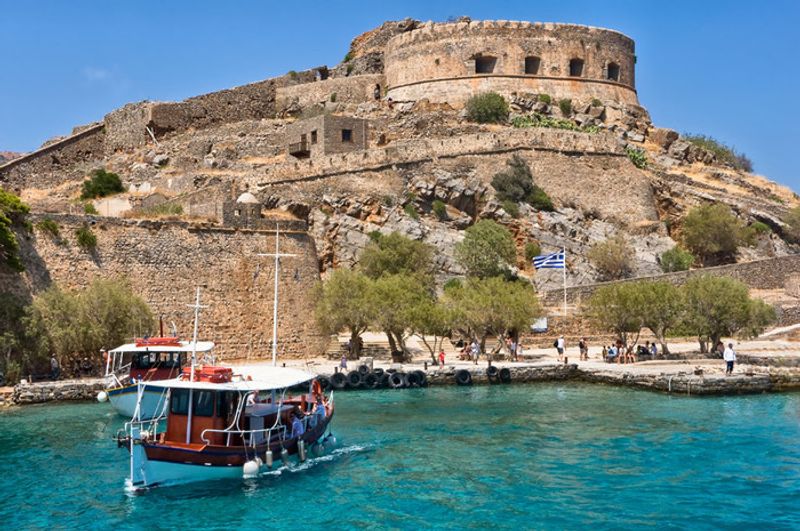
Spinalonga has played many roles over the centuries. The small island off the northeastern coast of Crete served as a Venetian fortress, then as an Ottoman settlement, and finally as one of Europe’s last operating leper colonies, which closed in 1957.
That layered history is visible in every wall and doorway across the island.
The island gained wider international attention after being featured in Victoria Hislop’s novel “The Island” and the Greek television series adapted from it. That cultural connection has made Spinalonga one of the most visited historic sites in Crete during the summer season.
Access is by boat from several nearby ports, including Elounda and Plaka, with seasonal ferry services running regularly during the warmer months. Greece’s Ministry of Culture oversees the site, and opening hours are typically posted for the summer season.
The island is compact enough to explore on foot in a few hours, with the fortress walls, ruined houses, and entry tunnel all accessible on a single loop path.
Pyramiden, Svalbard, Norway
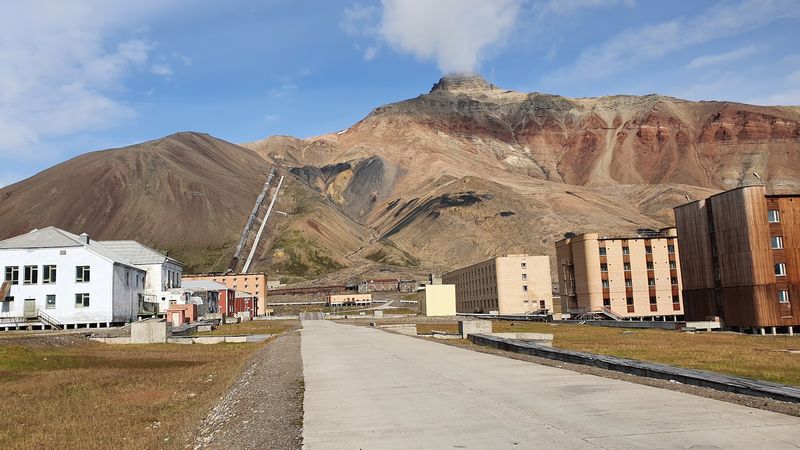
Pyramiden sits at roughly 78 degrees north, making it one of the most remote abandoned settlements you can actually visit on an organized tour. The Soviet Union established this coal-mining community in the Svalbard archipelago, and at its peak it housed over a thousand residents in what was essentially a self-contained Arctic town, complete with a cultural palace, swimming pool, and sports facilities.
The mine closed in 1998, and residents were flown out quickly. The cold, dry Arctic air has slowed deterioration significantly, leaving the town in a state of preservation that feels almost suspended in time.
Soviet-era murals, Lenin busts, and furniture remain in many buildings.
Guided tours depart from Longyearbyen by boat in summer and by snowmobile in winter, depending on conditions. Independent wandering is not practical here because polar bears are a genuine concern in the area.
The Pyramiden Hotel is reportedly operational during the tourist season, offering an overnight option for those who want a longer stay in this remote setting.
Port Arthur Historic Site, Tasmania, Australia
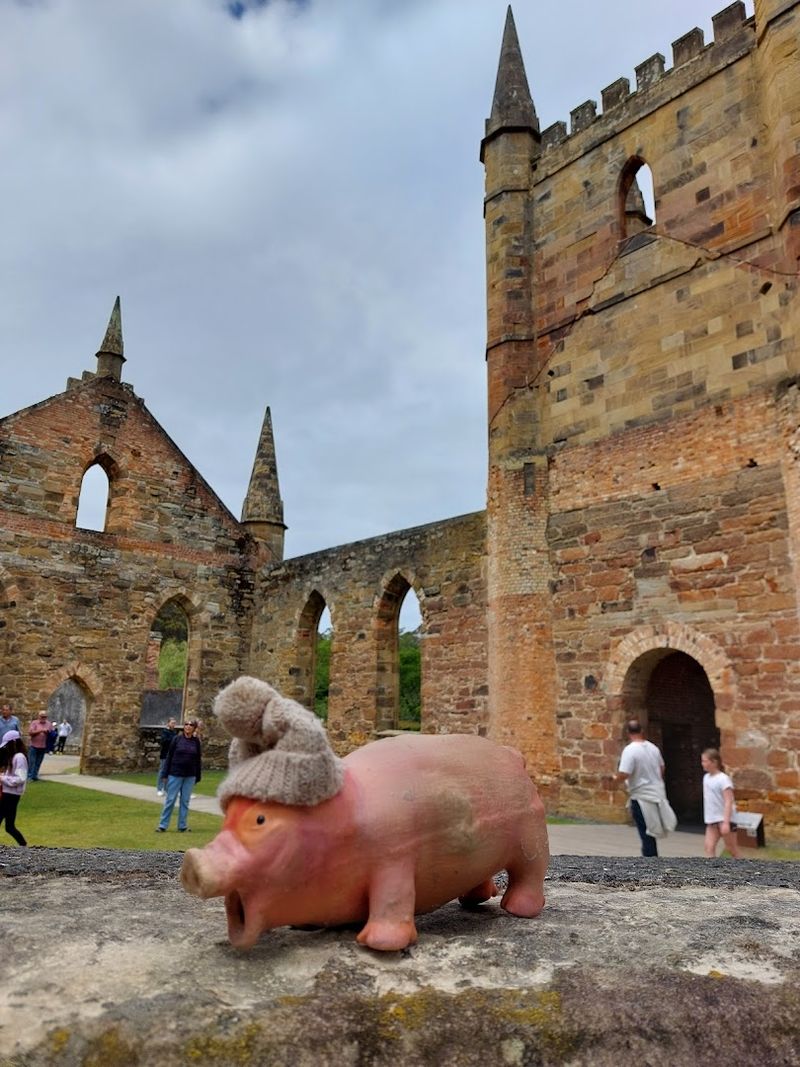
Port Arthur occupies a peninsula on Tasmania’s southeastern coast and carries one of the most significant histories in Australian colonial settlement. Established as a convict station in 1830, it grew into a major penal complex that held thousands of transported prisoners over several decades.
The site later included a church, a separate prison for boys, and various industrial facilities all within the same landscape.
Many of the original buildings now stand as roofless ruins, while others have been partially preserved. The combination of manicured grounds, intact structures, and atmospheric ruins spread across the waterfront makes Port Arthur feel more like an open landscape than a single building museum.
The site is open daily except Christmas Day, with self-guided access included in the admission price. Guided walking talks, harbor cruises that pass by the Isle of the Dead, and lantern-lit evening tours are available as add-ons.
Booking ahead is advisable for the evening tours, which are popular year-round. The drive from Hobart takes about 90 minutes along a scenic coastal road.
Alcatraz Island, California, USA
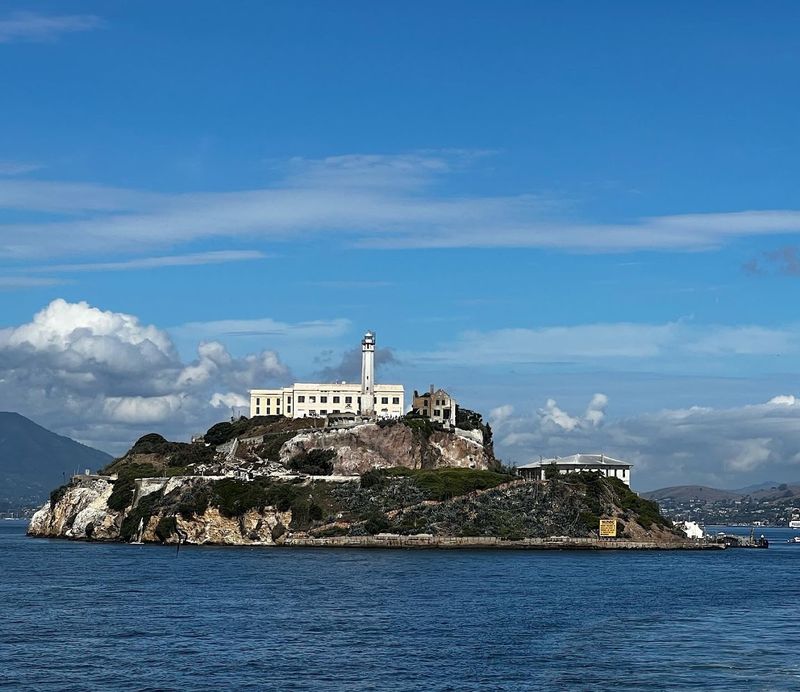
Alcatraz operated as a federal penitentiary from 1934 to 1963, housing some of the most notorious inmates in American criminal history, including Al Capone and Robert Stroud, known as the Birdman of Alcatraz. The island sits in San Francisco Bay, close enough to the city skyline to be visible from shore but surrounded by cold, fast-moving water that made escape attempts extremely difficult.
Since closing as a prison, Alcatraz has been managed by the National Park Service as part of the Golden Gate National Recreation Area. The cellhouse audio tour, narrated in part by former guards and inmates, is one of the most detailed and well-produced self-guided experiences at any historic site in the country.
Ferry service to the island is operated by Alcatraz City Cruises from Pier 33 in San Francisco. Tickets sell out well in advance, especially during summer and holiday periods, so booking early is genuinely important.
The island also has walking trails, historic gardens, and seabird nesting areas that extend the visit beyond the prison buildings alone.
Beelitz-Heilstätten, Germany
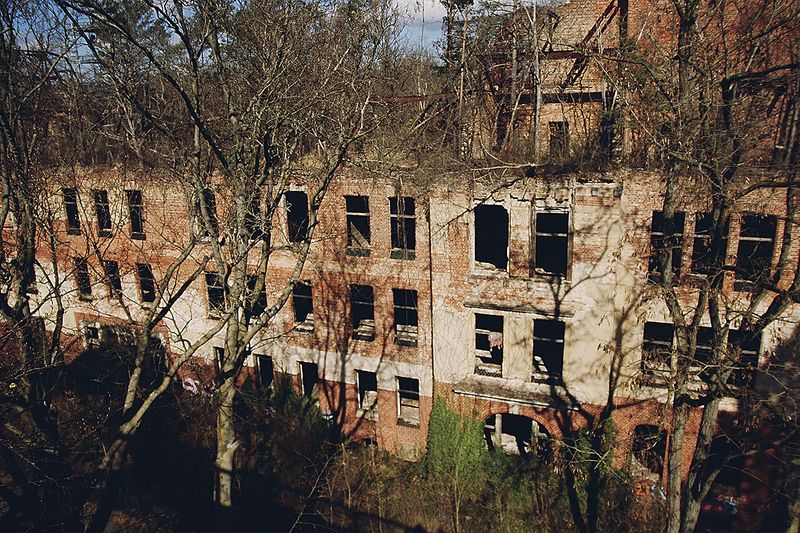
About 40 kilometers southwest of Berlin, a sprawling complex of abandoned hospital buildings sits quietly inside a forest, slowly being reclaimed by vegetation. Beelitz-Heilstätten was built in the late nineteenth century as a tuberculosis sanatorium for Berlin workers, and it later served as a military hospital through both World Wars.
Adolf Hitler reportedly recovered from a wound there in 1916.
After German reunification, most of the complex was left unused and fell into significant decay. The crumbling brick buildings, overgrown courtyards, and forest setting attracted urban explorers for years before official access options were developed.
Today, the main visitor experience is the Baumkronenpfad, a treetop walkway that runs above the forest canopy and gives elevated views over the decaying rooftops without requiring entry into the unsafe buildings themselves. The walkway is well-maintained and open to general visitors.
A separate area hosts a memorial related to the site’s wartime history. Guided tours of specific parts of the complex are also available through authorized operators for those who want a closer look.
Bannack State Park, Montana, USA
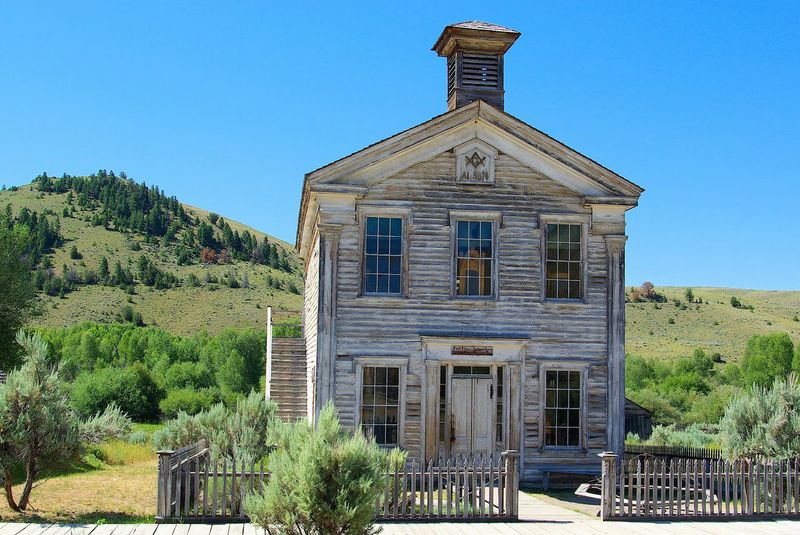
Montana’s gold rush history has a very specific starting point, and Bannack is it. Gold was discovered here in 1862, triggering the first major rush in the territory and briefly making Bannack the territorial capital of Montana.
The town’s population surged quickly, then faded just as fast as miners moved on to richer strikes elsewhere.
What makes Bannack stand out among American ghost towns is the number of structures that are still standing. More than 50 buildings remain, including a hotel, a Masonic lodge, a school, a jail, and a Methodist church that has become one of the most photographed buildings in the state.
The buildings are stabilized but not heavily restored, giving the town an authentic frontier feel.
Montana Fish, Wildlife and Parks manages Bannack as a state park with seasonal visitor services. The park is open year-round, though facilities are more limited in winter.
Bannack Days, held each July, brings living history demonstrations, period crafts, and guided tours to the site for a weekend event that draws visitors from across the region.
Share this story