There is a lake in southern Oregon so impossibly blue that first-time visitors often stop mid-sentence just to stare at it. The water is so clear and vivid that photos of it regularly get flagged online as over-edited, even when they are completely untouched.
This place sits inside a collapsed volcano, fed entirely by rain and snowmelt, with no rivers flowing in or out. Crater Lake National Park is one of the most jaw-dropping natural wonders in the entire country, and once you see it in person, every other lake you have ever visited will feel like it owes you an apology.
Where Exactly You Will Find This Natural Wonder
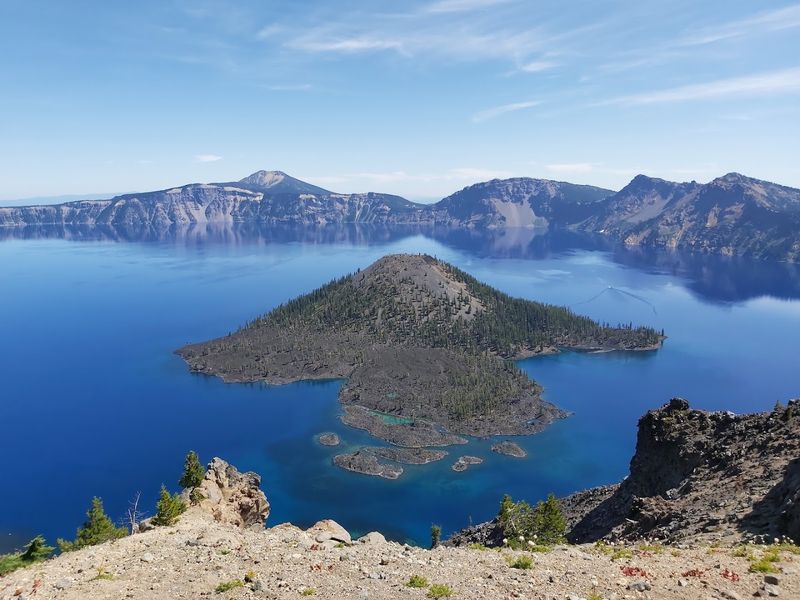
Crater Lake National Park sits in the Cascade Range of southern Oregon, roughly 60 miles north of Klamath Falls and about 80 miles northeast of Medford. The park’s official mailing address is Crater Lake, Oregon 97604, and you can reach the visitor center by calling +1 541-594-3000 or browsing the National Park Service website at nps.gov/crla.
The park covers 183,224 acres of volcanic terrain, dense forest, and dramatic rim cliffs that rise hundreds of feet above the lake’s surface. The main entrance on the south side stays accessible year-round, while the north entrance typically closes from late fall through late spring due to heavy snowfall.
Getting there requires some commitment. The roads leading into the park are scenic but remote, and cell service disappears well before you reach the rim.
Road 62 from the south is a particularly enjoyable approach, winding through tall pines before the landscape suddenly opens up to reveal the caldera in all its shocking blue glory.
The park is open 24 hours a day, every day of the year, so early risers and sunset chasers both have full access to the experience.
The Volcanic Story Behind the Lake
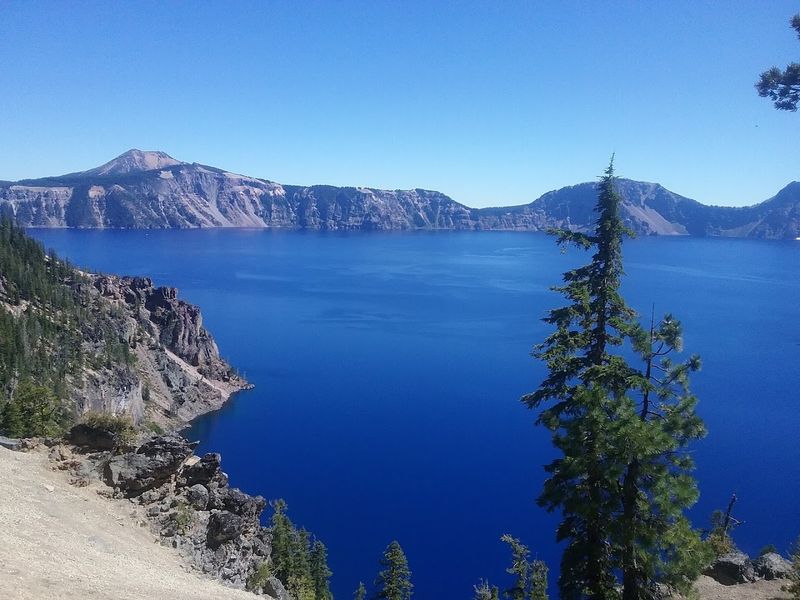
About 7,700 years ago, a massive volcano called Mount Mazama stood roughly 12,000 feet tall in what is now southern Oregon. Then, in one catastrophic eruption, the mountain essentially collapsed inward on itself, creating a massive bowl-shaped depression called a caldera.
Over thousands of years, rain and snowmelt slowly filled that caldera, forming the lake we see today. No rivers feed into Crater Lake, and no rivers drain out of it.
The water stays remarkably pure because the only things entering it are precipitation and underground seepage.
Native Klamath tribes witnessed the eruption and passed down accounts of it through oral traditions for generations. When geologists first studied the area in the 1800s, those oral histories helped confirm what the rock layers were already suggesting about the mountain’s dramatic end.
The park was officially established in 1902, making it Oregon’s only national park. The volcanic features throughout the surrounding landscape, from lava flows to pumice fields, tell the full story of a mountain that essentially traded height for depth, and ended up creating something far more extraordinary than a peak ever could be.
Just How Deep Is America’s Deepest Lake
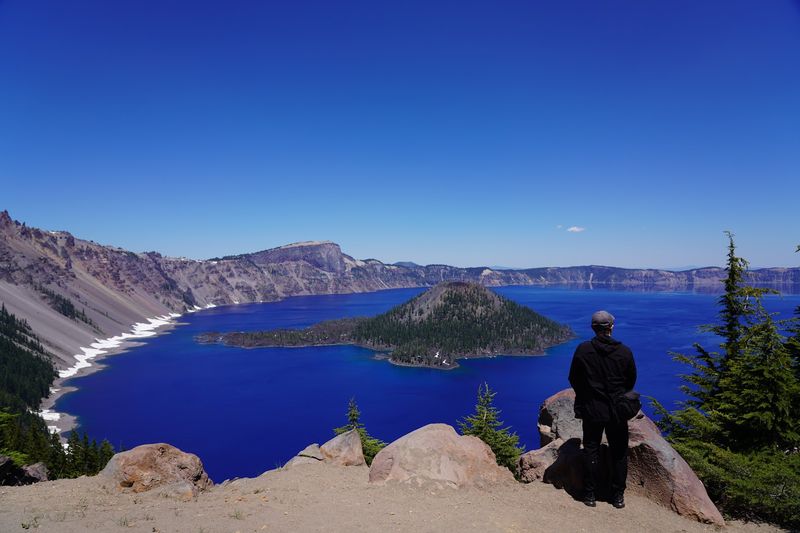
Crater Lake holds the title of the deepest lake in the United States, reaching a maximum depth of 1,943 feet. That number is hard to wrap your head around until you consider that the Empire State Building is only 1,454 feet tall, meaning you could sink it to the bottom and still have nearly 500 feet of water above it.
The average depth across the entire lake is around 1,148 feet, which is still extraordinary. Most lakes people visit on family road trips max out at a few dozen feet.
Crater Lake is operating on a completely different scale.
That extreme depth plays a direct role in the water’s color. Deep, pure water absorbs red and yellow wavelengths of sunlight and scatters blue light back toward the surface.
The greater the depth and the cleaner the water, the more intense that blue becomes.
Scientists have measured Crater Lake’s water clarity and found visibility extending nearly 142 feet below the surface, one of the highest clarity ratings ever recorded for any lake in the world. The depth is not just a fun fact to share at trivia night; it is the actual engine powering that otherworldly color.
That Color Is Not a Filter
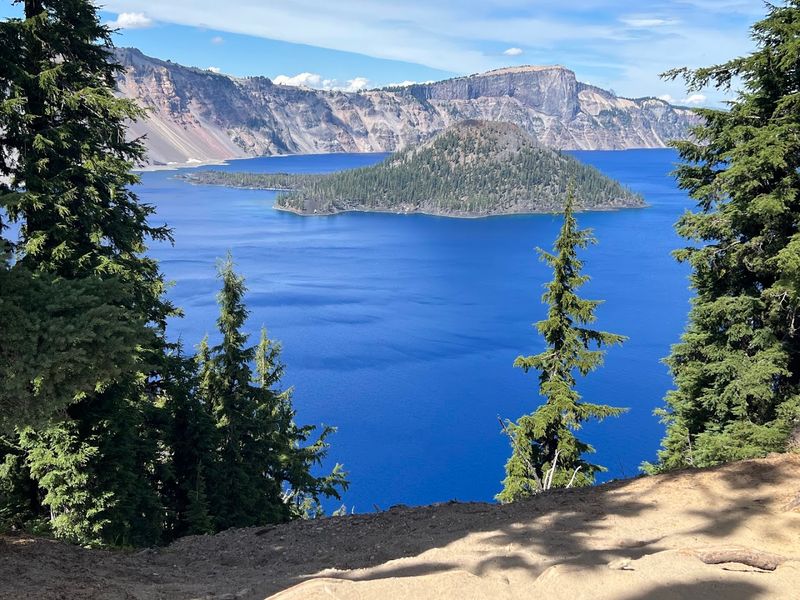
The single most common reaction from first-time visitors at Crater Lake is some version of disbelief. The water genuinely does not look real.
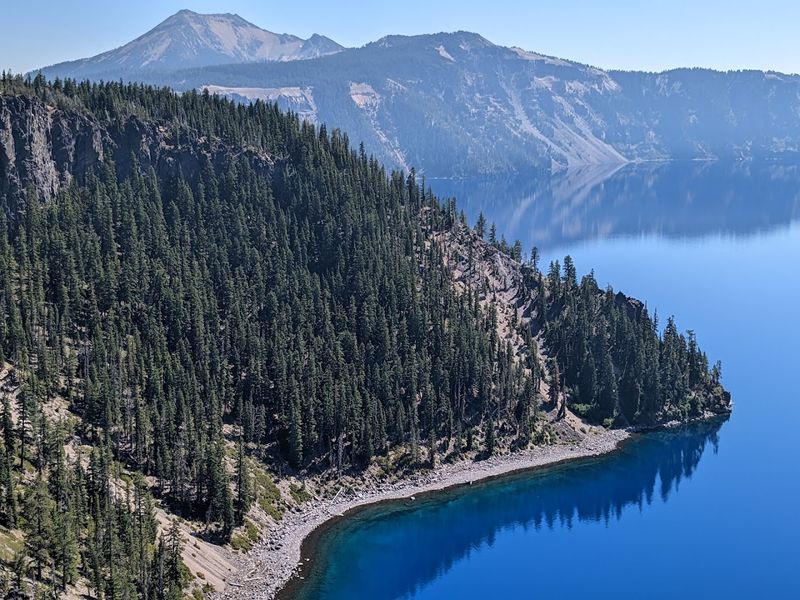
It sits in shades of deep cobalt and electric turquoise that seem too saturated to exist in nature, and yet there it is, completely unedited and fully natural.
The color comes from a combination of factors working together. The extreme depth means sunlight has to travel far before bouncing back, filtering out warmer tones along the way.
The absence of sediment-carrying rivers means the water stays free of the particles that make most lakes look murky or greenish.
On overcast days, the lake shifts to a steelier blue-gray that is somehow just as dramatic in a different way. On bright summer mornings, it can look almost luminescent, as if something beneath the surface is glowing.
Every lighting condition produces a different version of the same stunning scene.
Photographers who visit often spend hours trying to capture it accurately and leave mildly frustrated, not because the shots are bad, but because the actual view keeps outperforming every image. Crater Lake has a way of making even excellent cameras feel slightly inadequate.
Wizard Island and the Features That Share the Lake
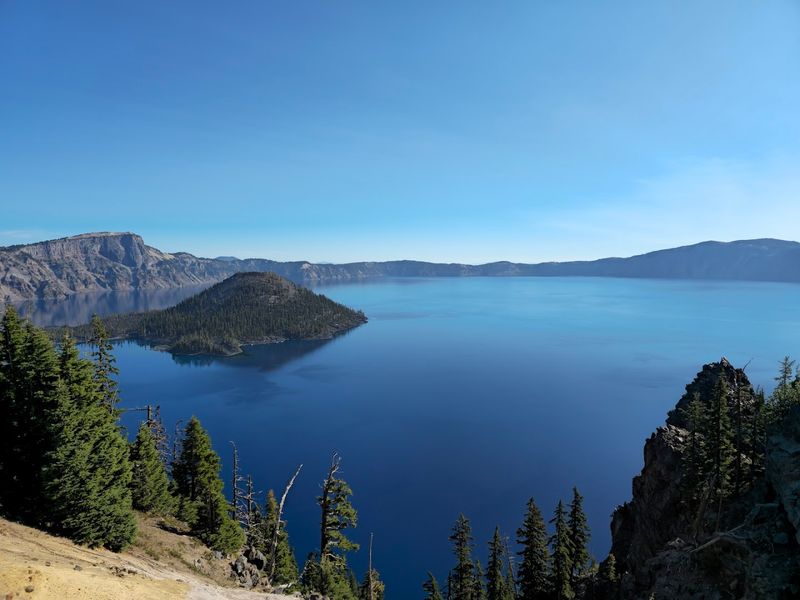
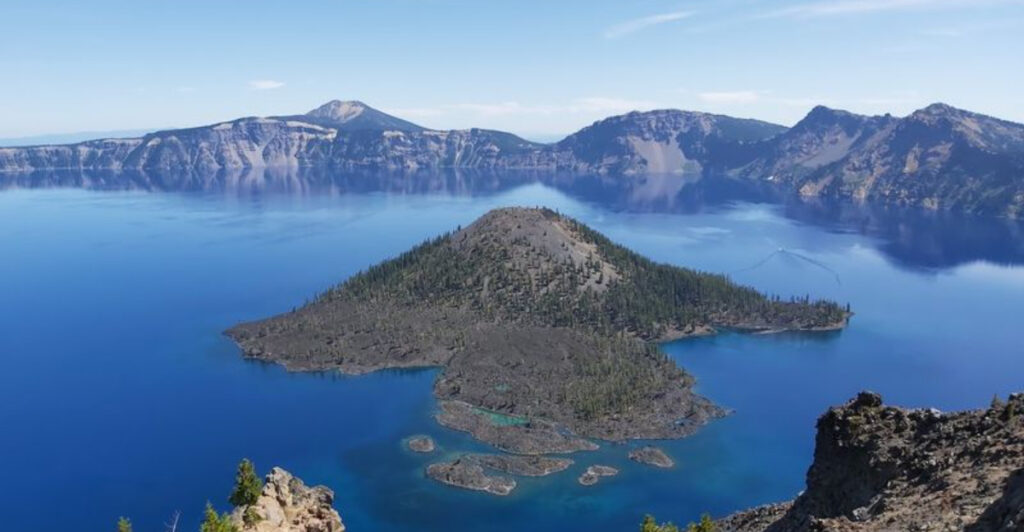
Right in the middle of Crater Lake sits a small cinder cone island called Wizard Island, rising about 755 feet above the water’s surface. The name alone makes it feel like something out of a fantasy novel, and the sight of it floating in all that impossible blue water does nothing to reduce that impression.
Wizard Island formed from volcanic activity that continued after the main caldera collapse, building up layers of lava and ash into the cone shape visible today. A small crater sits at its summit, adding one more layer of geological drama to an already dramatic setting.
A second, smaller feature called Phantom Ship juts out of the lake near the southern rim. This jagged rock formation rises about 170 feet above the water and looks like a crumbling stone ship caught mid-voyage.
In low-light conditions, it earns its name completely.
Boat tours to Wizard Island operate during summer months, departing from Cleetwood Cove, the only place where visitors can legally access the lake’s shoreline. The tours fill up quickly, so booking ahead is strongly recommended.
Reaching the cove requires hiking a steep, 1.1-mile trail down from the rim, which is strenuous but absolutely worth the effort.
Driving the Rim Road Around the Caldera
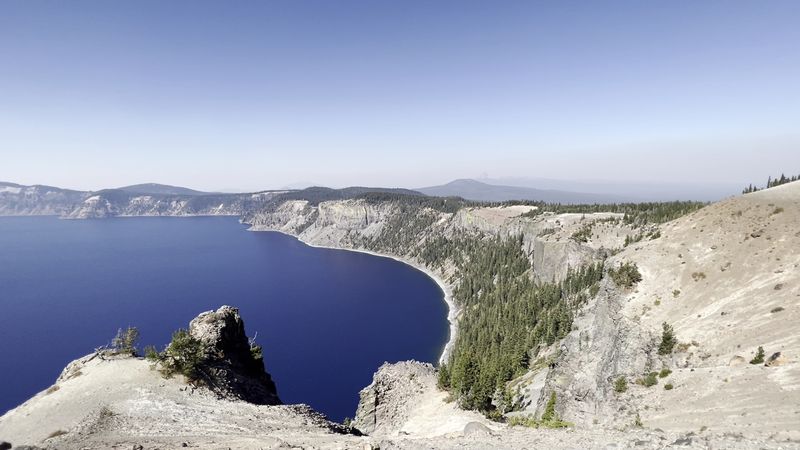
The 33-mile Rim Drive circles the entire caldera, and every single mile of it offers a view worth stopping for. The road sits right at the edge of the rim in many spots, giving unobstructed sightlines down the cliffs and across the water from constantly shifting angles.
There are more than 30 designated overlooks along the route, each one revealing a slightly different perspective on the lake, the islands, and the surrounding volcanic landscape. Driving the full loop without stopping would take under an hour, but most visitors end up spending half a day or more working their way around.
The north section of Rim Drive closes every winter and typically does not reopen until late June or July, depending on snowpack. Even in summer, the elevation sits above 7,000 feet in most places, so temperatures stay cool and afternoon thunderstorms are common.
Early morning drives offer the calmest conditions and the fewest other vehicles on the road. The light at that hour hits the water at a low angle that makes the blue look even more concentrated and vivid than it does at midday.
Arriving before 8 a.m. on a clear day is one of the best moves you can make at this park.
Hiking Trails for Every Level of Ambition
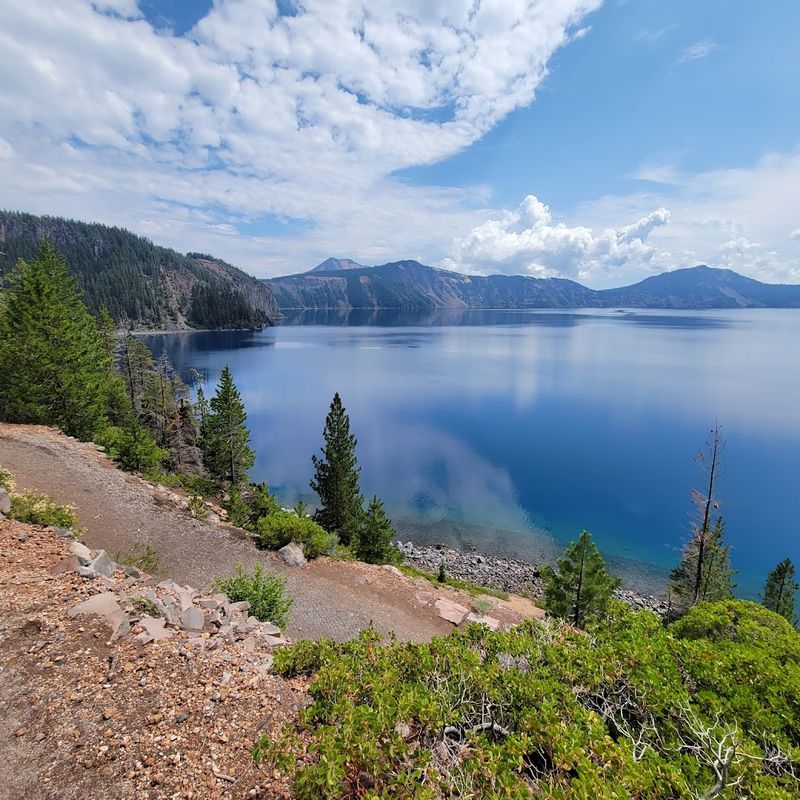
The trail system at Crater Lake National Park ranges from short, flat walks to serious elevation-gain hikes that leave your legs with strong opinions about your life choices. There is genuinely something available for every fitness level, and each trail offers a different angle on the park’s volcanic landscape.
The Garfield Peak Trail is one of the most popular routes, climbing about 1,000 feet over 1.7 miles to a summit with sweeping 360-degree views of the lake and the surrounding Cascades. The effort is real, but the payoff at the top is one of the best panoramas in the entire park.
The Watchman Peak Trail is shorter and slightly less strenuous, leading to a historic fire lookout with outstanding western views of Wizard Island and the lake. On clear days, Mount Shasta is visible far to the south.
For those who want to reach the water itself, the Cleetwood Cove Trail is the only legal route down to the lake’s shoreline. The 1.1-mile descent loses about 700 feet in elevation, which means the return trip back up is considerably less casual.
Note that the trail to the lake’s edge may be closed for maintenance during certain periods, so checking current conditions before visiting is always a smart move.
What Winter Looks Like at the Rim
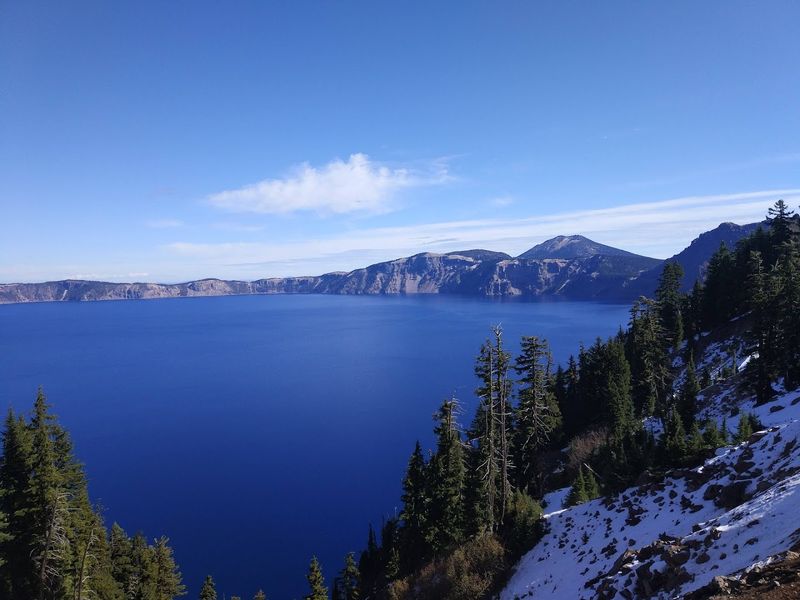
Crater Lake in winter is a completely different park from its summer version, and that is not a complaint. The snowfall here is legendary.
Annual totals regularly exceed 40 feet, and the walls of plowed snow along the roads can rise 10 to 15 feet high, creating narrow corridors that make the whole place feel like a scene from a completely different climate zone.
The south entrance and the area around the Rim Village stay accessible through most of winter, though road conditions can change quickly and chains or snow tires are often required. The day lodge at Rim Village stays open during winter months, offering a warm place to recover with snacks and a gift shop stocked with park merchandise.
Overnight lodging at Crater Lake Lodge closes for the winter season, so visitors planning a cold-weather stay need to look at accommodations in nearby towns like Klamath Falls or Medford. Planning ahead matters more in winter than at any other time of year.
Cross-country skiing and snowshoeing are popular winter activities, with groomed trails accessible from Rim Village. The park feels vast and quiet in the off-season, and the combination of snow-covered cliffs and that deep blue water below is genuinely unforgettable on the days when the lake is visible.
Wildlife You Might Spot Along the Way
The wildlife at Crater Lake does not announce itself with fanfare, but spend enough time in the park and you will start noticing the residents. Black-tailed deer are among the most commonly spotted animals, often wandering near Rim Village or along roadsides in the early morning and evening hours.
Bald eagles make appearances around the lake, particularly in the warmer months when they can be seen riding thermals above the rim or perching on exposed rock outcroppings near the water. Spotting one gliding over that blue expanse is the kind of moment that tends to stop conversations entirely.
Golden-mantled ground squirrels are practically park mascots at this point. They are bold, photogenic, and very interested in any snacks you might be carrying.
Feeding them is not allowed and genuinely not a good idea, but watching them scurry around the rim rocks is reliably entertaining.
The park also supports populations of black bears, Clark’s nutcrackers, and a variety of raptors. The lake itself hosts a fish species called the kokanee salmon, which was introduced to the lake in the early 1900s and has established a self-sustaining population.
Fishing in Crater Lake is allowed without a state license, a rare perk worth knowing about.
Tips for Planning the Best Possible Visit
July and August are the busiest months at Crater Lake, and the park can feel genuinely crowded at peak overlooks and trailheads during those weeks. Arriving early in the morning, before 9 a.m., makes a noticeable difference in both parking availability and the overall sense of space at the rim.
Late June and early September hit a sweet spot that many experienced visitors prefer. The Rim Drive is fully open, crowds are thinner, and the weather is generally stable without the peak-summer congestion.
Snow can still appear unexpectedly in September, so layers are always a good idea regardless of the forecast.
The entrance fee covers the vehicle and all passengers for seven days, and an America the Beautiful annual pass works here as well. Cell service is essentially nonexistent inside the park, so downloading offline maps before arrival is genuinely useful rather than just optional.
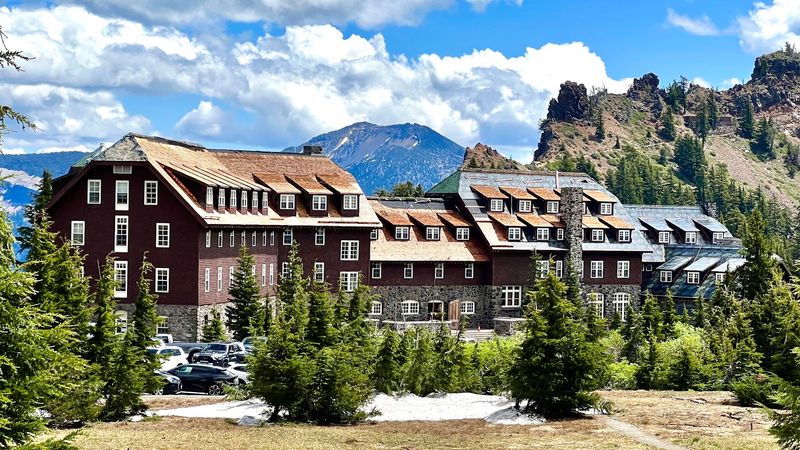
Crater Lake Lodge opens in late May and closes in mid-October, offering rooms right on the rim with direct lake views. Reservations fill up months in advance, so booking early is essential if staying on-site is part of the plan.
The lodge dining room serves breakfast and dinner with views that make every meal feel slightly surreal.
Share this story