There is a building in Minneapolis where the walls are scorched, the stone is cracked, and the whole structure looks like it survived something dramatic because it did. What stands here today was once the most powerful flour mill on the planet, and it burned not once but multiple times before finally being transformed into one of the most creative museums in the entire Midwest.
Instead of tearing down the ruins, the city decided to build inside them, weaving glass and steel through charred stone walls to create something that feels completely unlike any museum you have visited before. The story of how Minneapolis became the flour milling capital of the world is told right here, inside the very building where that history happened.
The Washburn A Mill and Its Explosive Past
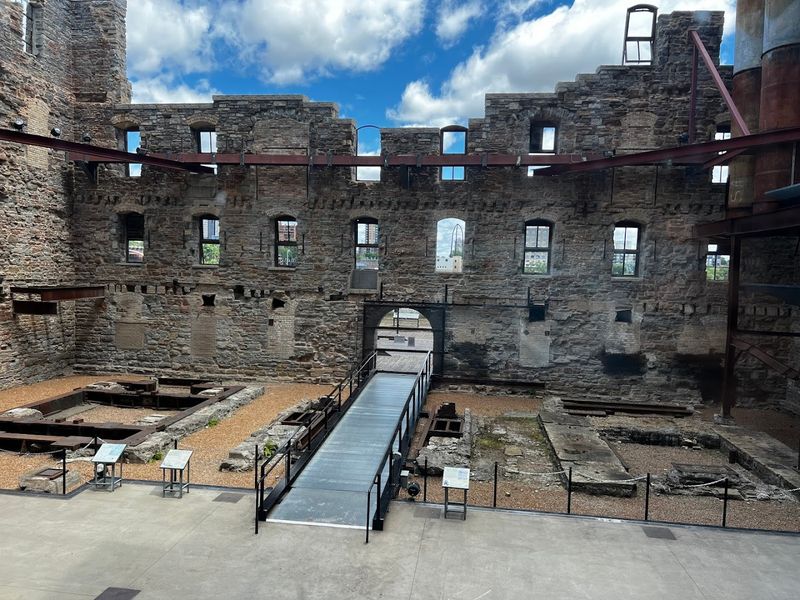
Before it became a museum, this site was the scene of one of the most dramatic industrial events in American history. The Washburn A Mill, once the largest flour mill in the world, was destroyed in 1878 by a catastrophic explosion caused by ignited flour dust suspended in the air.
The blast took out several nearby mills and reshaped the entire waterfront.
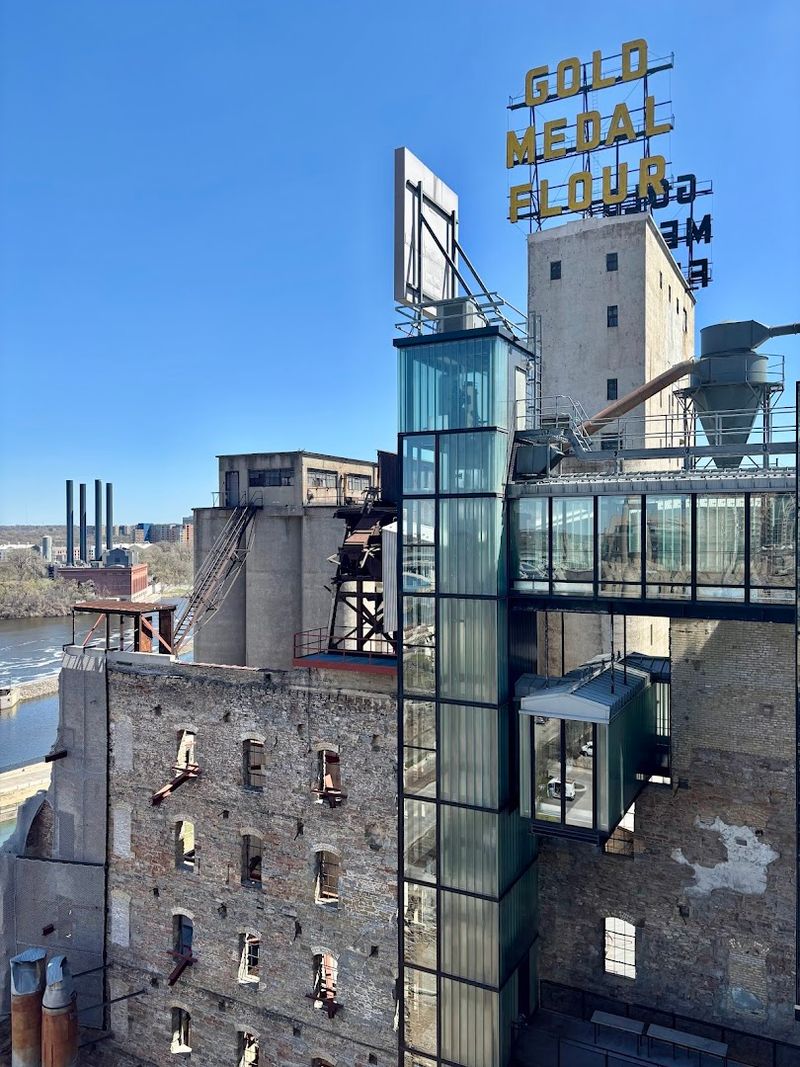
The mill was rebuilt and continued operating for decades, producing the Gold Medal Flour brand that became a household name across the country. A major fire in 1991 gutted what remained of the structure, leaving behind the haunting stone ruins that visitors see today.
What makes this site so striking is that the damage was never hidden. The scorched walls and broken stonework are preserved exactly as they were, serving as a raw and honest reminder of the dangerous world that powered Minneapolis.
Mill City Museum: Where the Building Is the Exhibit
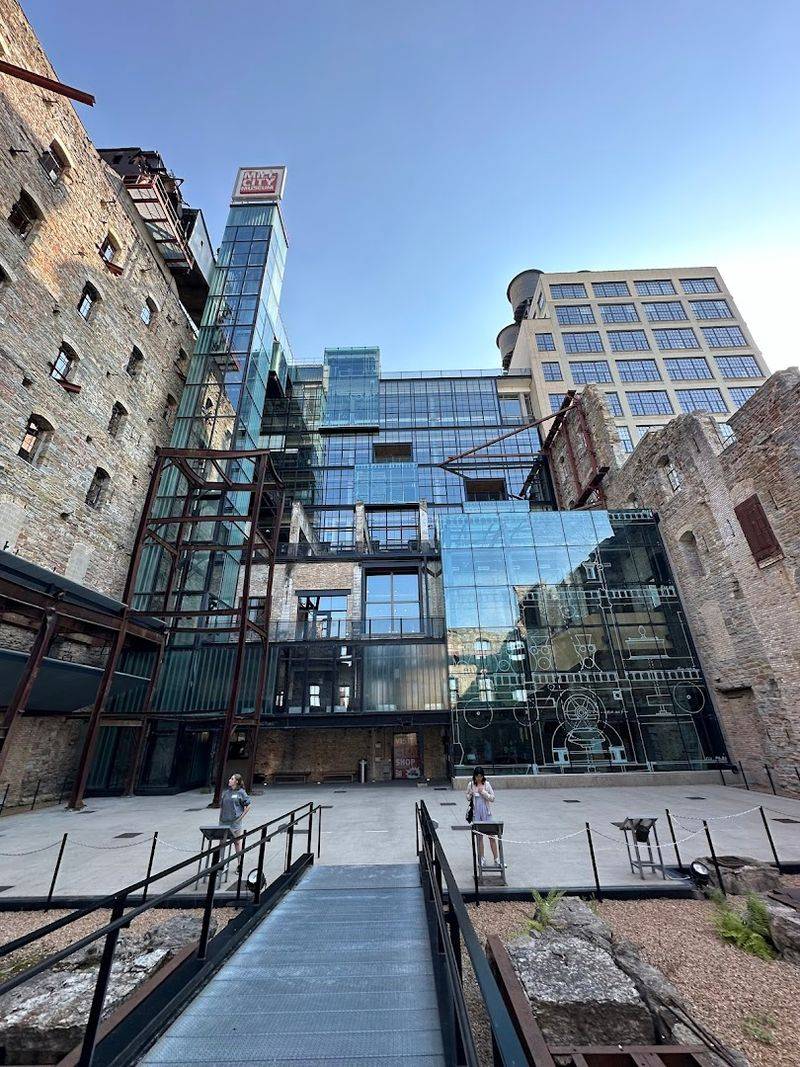
Mill City Museum, located at 704 S 2nd St, Minneapolis, MN 55401, is operated by the Minnesota Historical Society and sits directly on the ruins of the Washburn A Mill along the Mississippi River. The building itself is the first thing that stops you in your tracks.
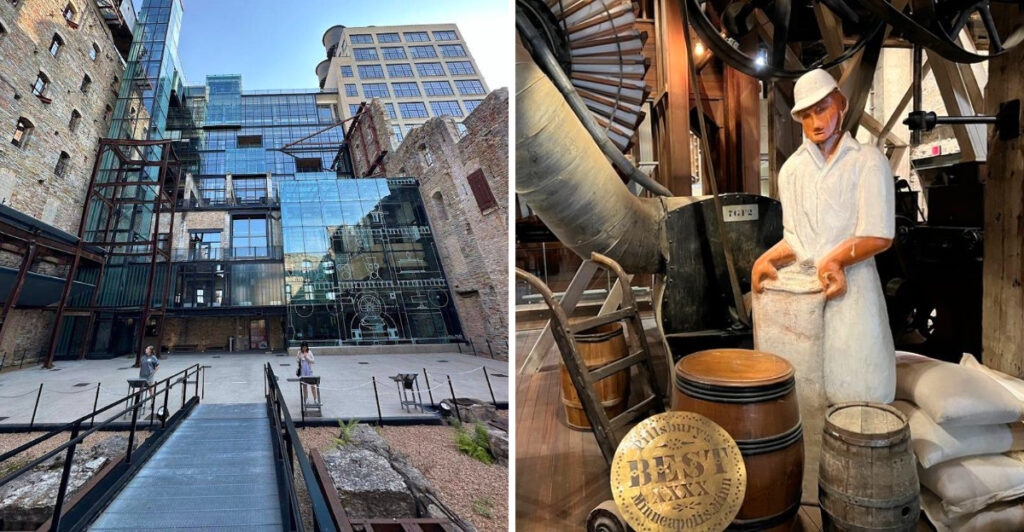
Architect Thomas Meyer designed the structure to weave modern glass and steel elements through the preserved stone ruins rather than replace them. The result is a building where old and new exist side by side in a way that feels intentional and thoughtful rather than awkward.
Standing outside, you can see the massive glass facade etched with mill schematics, and the contrast between the smooth modern panels and the rough, fire-darkened stone is genuinely arresting. The museum does not just tell the story of the mill.
In a very real sense, it is the story of the mill.
The Flour Tower Elevator Experience
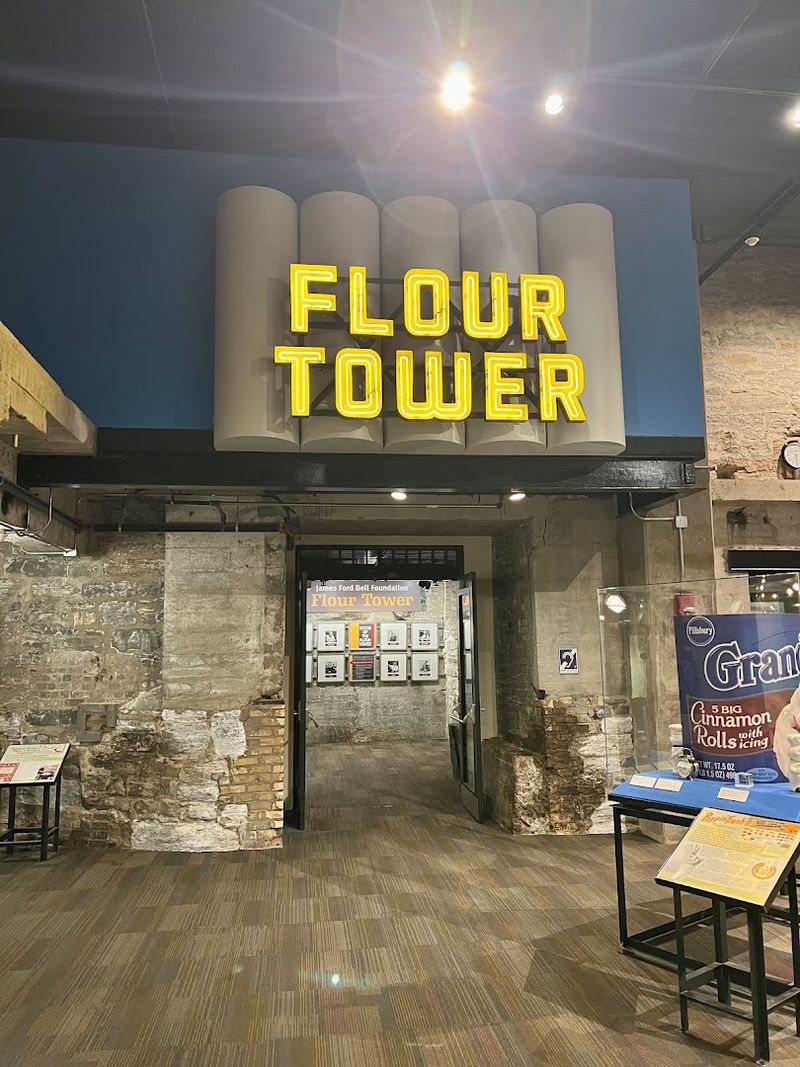
The Flour Tower is the centerpiece of the entire museum visit, and nothing quite prepares you for how clever it actually is. You board what feels like an old freight elevator, and as it rises through eight floors of the original mill structure, the walls around you come alive with projected scenes, recorded voices, and period details that recreate what the mill looked and sounded like when it was running at full capacity.
Real voices of former mill workers share their memories at different stops along the way, giving the experience a deeply personal quality that a traditional exhibit simply cannot replicate. The whole ride lasts about ten minutes, but it covers decades of history in a way that genuinely holds your attention from start to finish.
Children and adults react the same way when the doors open at each floor. There is a collective pause as everyone takes in what they are seeing around them.
The Rooftop Observation Deck Views
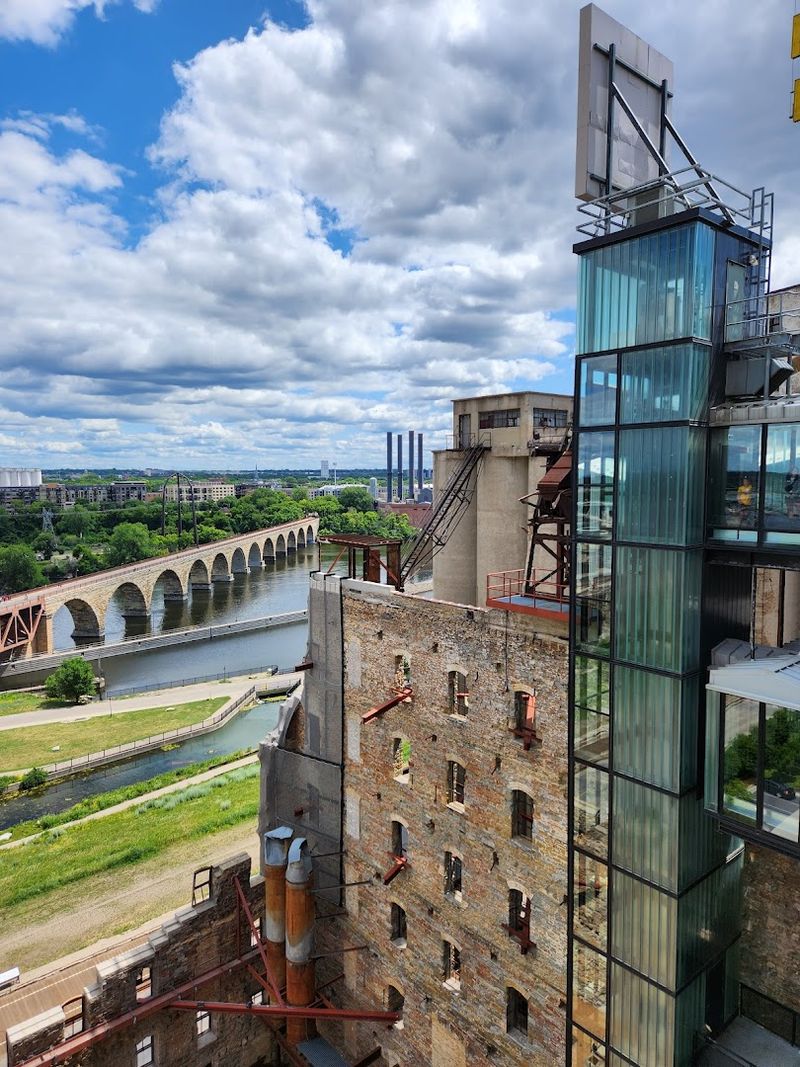
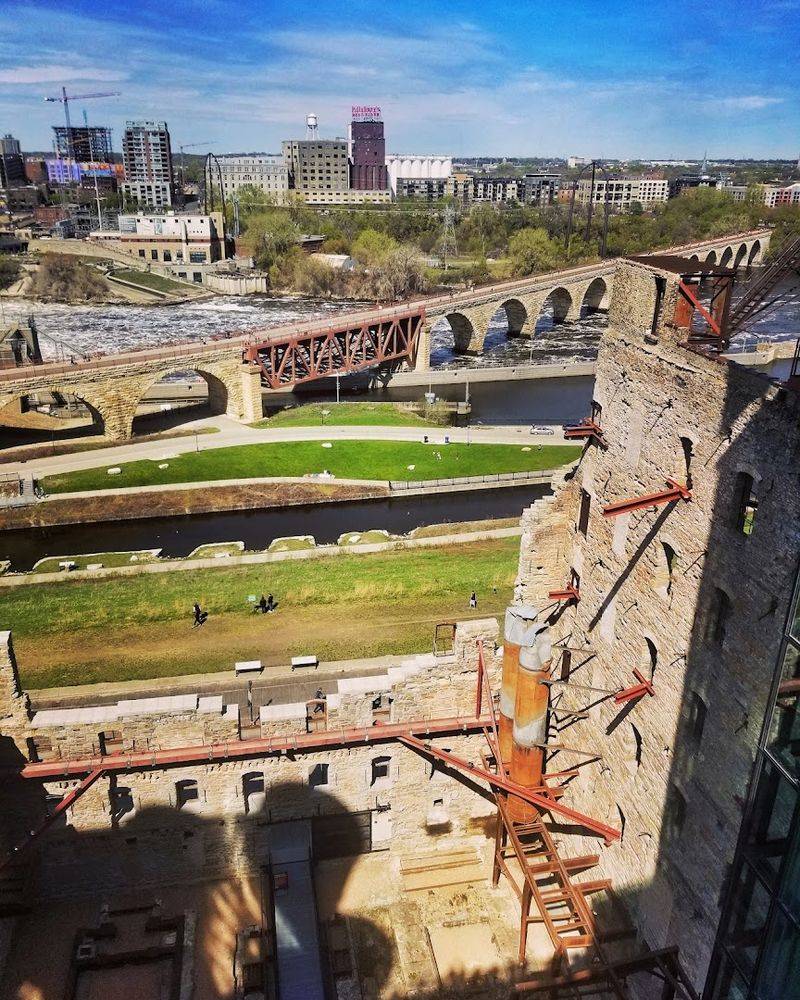
Nine floors above street level, the observation deck at Mill City Museum delivers one of the best views in the Twin Cities, and most people who visit say they were not expecting it to be quite this good. The Mississippi River stretches out below, wide and moving, and the Stone Arch Bridge curves gracefully across the water in the middle distance.
The Stone Arch Bridge, built in 1883 for the Great Northern Railway, is now a pedestrian and cycling path and looks particularly beautiful from this height. St. Anthony Falls, the only natural waterfall on the entire Mississippi River, is also visible from the deck, and understanding its role in powering the mills makes the view feel much more meaningful than a typical city overlook.
On a clear day, the skyline of downtown Minneapolis rises behind you while the river valley opens up ahead. It is the kind of view that makes you want to stay longer than you planned.
The Minnesota in 19 Minutes Film
Before heading into the main exhibits, most visitors are pointed toward a short introductory film that covers the history of Minneapolis and its connection to the milling industry. Narrated by a local comedian, the film is funny, fast-paced, and genuinely informative in a way that sets the tone for the rest of the visit.
Running approximately 19 minutes, it manages to cover the rise of Minneapolis as an industrial powerhouse, the role of the Mississippi River in generating power, and the dramatic story of how flour milling transformed a small frontier settlement into one of the most economically significant cities in 19th-century America. The humor keeps it from feeling like a lecture.
Several visitors who describe themselves as not natural museum-goers mention that this film was the moment the whole visit clicked for them. Starting here gives the rest of the exhibits much more context and makes the artifacts feel connected to a larger story.
The Flour Dust Explosion Demonstration
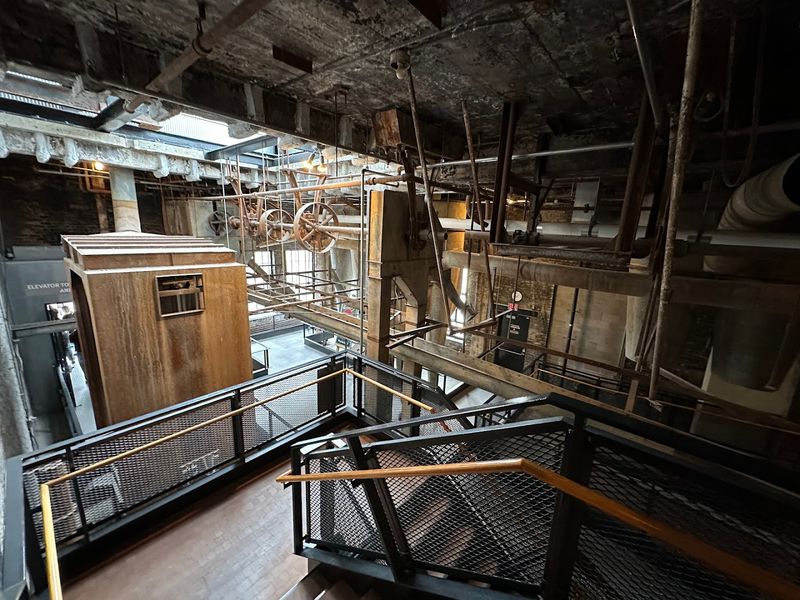
One of the most memorable moments in the museum is a live demonstration that shows exactly why flour mills were so dangerous. A small, controlled explosion is set off to illustrate how fine flour dust suspended in the air can ignite with dramatic speed and force when exposed to a spark or flame.
The 1878 explosion that destroyed the original Washburn A Mill is believed to have been triggered by exactly this kind of dust ignition. Seeing it demonstrated on a small scale makes the historical event feel suddenly very real and very close.
It is the kind of thing that children talk about long after leaving.
The demonstration also reframes the entire museum experience. Once you understand how volatile the milling environment actually was, the stories of the workers who spent their days inside these buildings take on a completely different weight.
It is a small moment with a lasting impression.
The Water and Baking Lab for Hands-On Learning
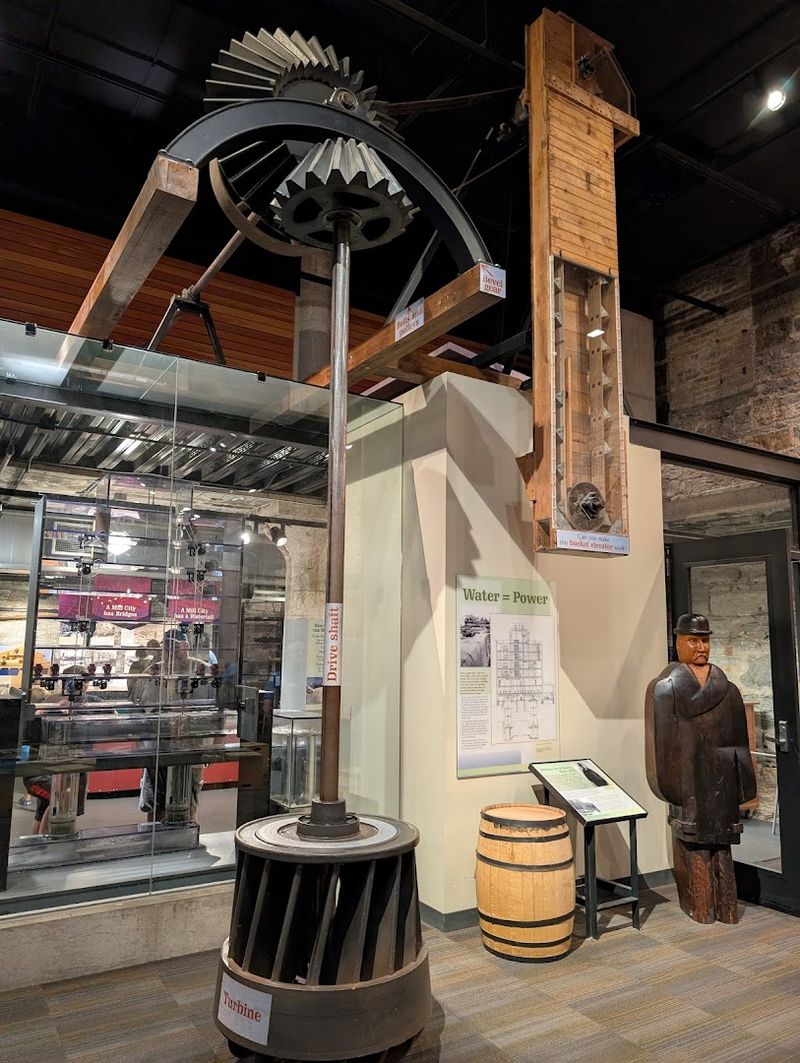
Not every great museum moment involves reading a plaque. The Water and Baking Lab at Mill City Museum is built entirely around doing things, and it draws in visitors of all ages rather than just the youngest ones in the group.
At the water table, you can experiment with how water flow and elevation generate mechanical power, which mirrors the exact system the Mississippi River used to drive the massive millstones that ground wheat into flour. The connection between the hands-on activity and the real industrial history happening just outside the walls is made clear throughout the space.
The baking lab section introduces the science of how flour behaves differently depending on how it is milled and what it is combined with. For kids, it is just fun.
For adults who pay attention, it quietly explains why the milling industry required constant innovation and why Minneapolis became so central to that story.
The Gold Medal Flour Sign and Brand Legacy
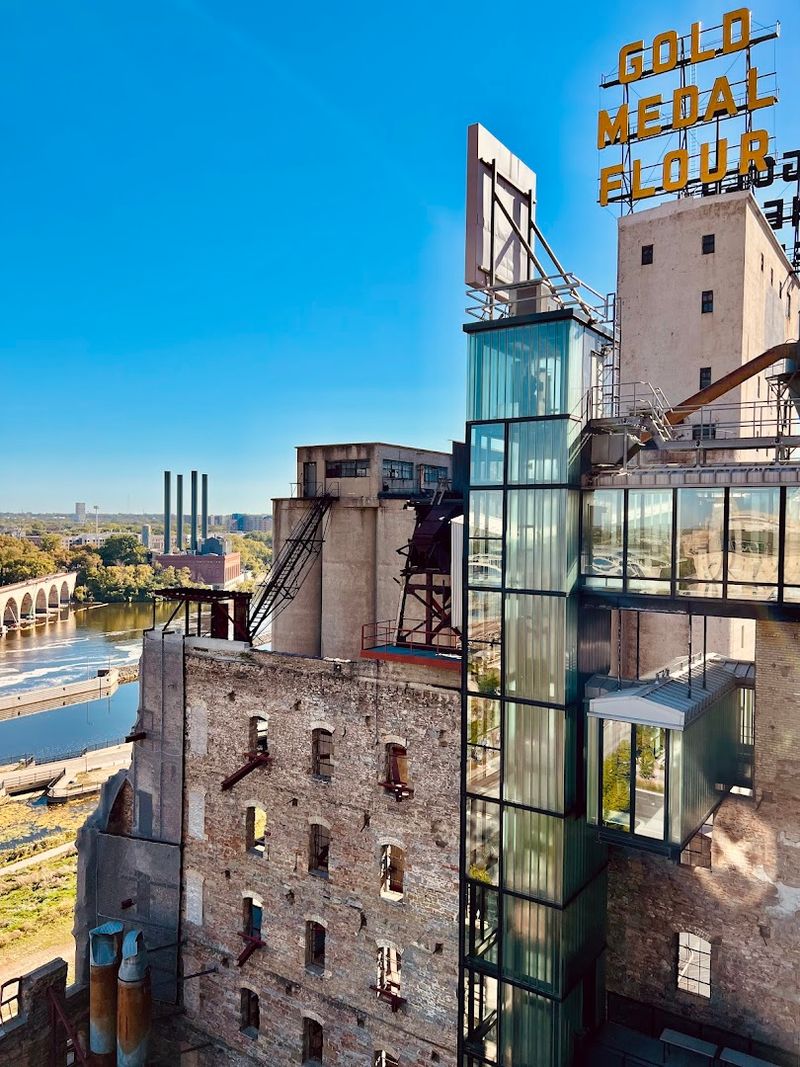
Few signs in Minneapolis carry as much historical weight as the Gold Medal Flour sign that still sits atop the grain elevators near the museum. It is one of those landmarks that locals pass without thinking twice, but for anyone who knows the history behind it, the sign is a direct link to a time when this stretch of the Mississippi riverfront was the most productive flour milling corridor in the world.
Gold Medal Flour was a brand that emerged from the Washburn A Mill and went on to become one of the most recognized names in American kitchens. The flour milling industry that built Minneapolis in the late 1800s was not a minor regional story.
At its peak, Minneapolis mills were supplying flour to markets across the United States and beyond.
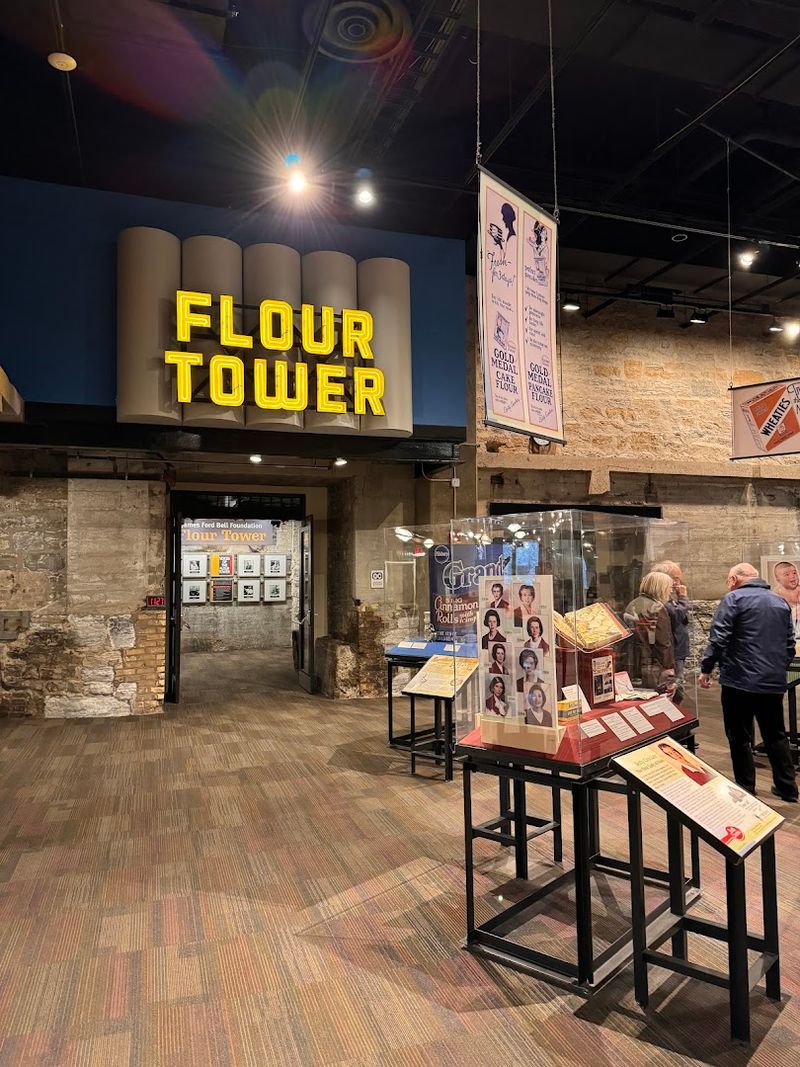
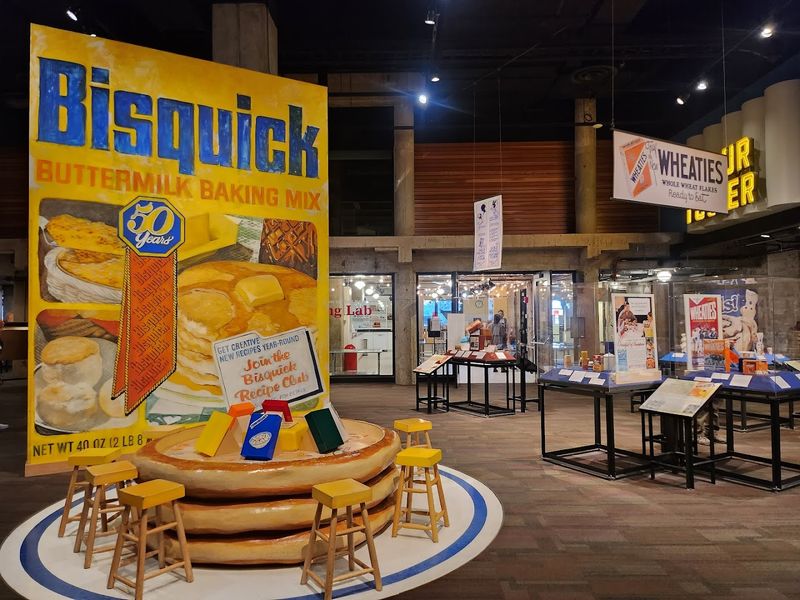
The museum traces this brand legacy through vintage advertisements, original packaging, and exhibits that show how marketing and industrial production grew up together in this city.
The Story of the Mill Workers
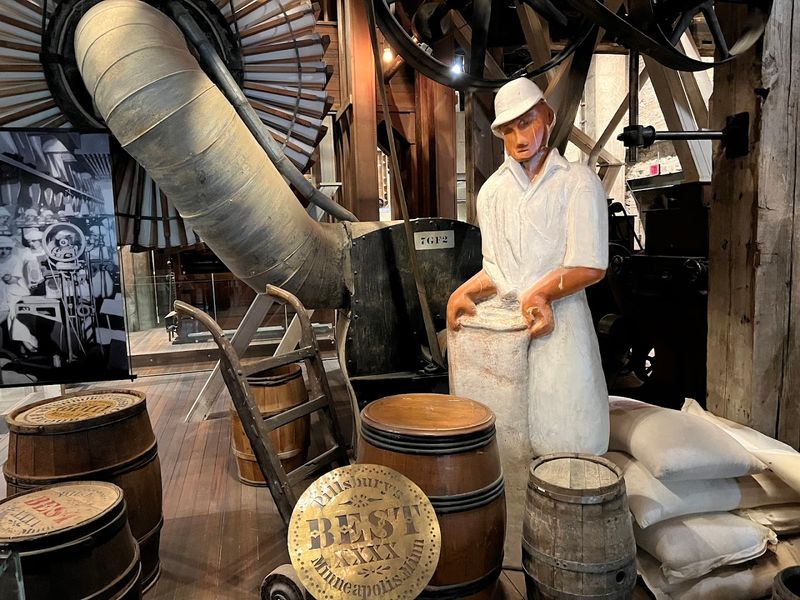
The machinery and architecture at Mill City Museum are genuinely impressive, but the exhibits that focus on the people who worked inside the mills are the ones that tend to stay with you longest. The museum does a thoughtful job of highlighting the lives of immigrant workers, women, and laborers whose daily routines powered an industry that made other people wealthy.
Photographs, personal accounts, and period artifacts bring these individuals into focus in a way that feels respectful rather than sentimental. You learn about the physical demands of mill work, the hours, the noise, the heat, and the ever-present risk of fire or explosion.
The Flour Tower’s recorded voices of actual former workers are part of this effort, giving real names and real memories to a workforce that could easily be reduced to an abstract historical footnote. The museum resists that reduction, and the result is a more complete and honest picture of what the milling era actually meant for ordinary people.
The Preserved Ruins as Living Architecture
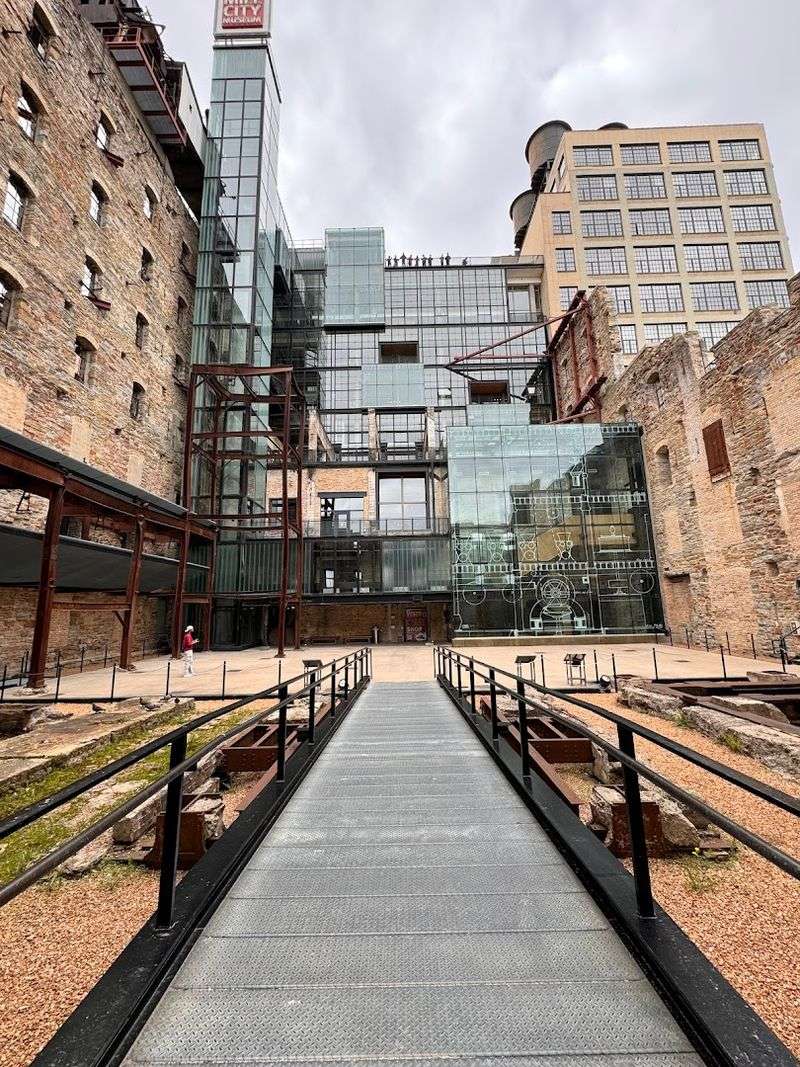
Walking through the interior of Mill City Museum, you are constantly aware that the building around you is not a reconstruction. These are the actual walls that survived the fire, and the decision to incorporate them into the museum rather than demolish them was both architecturally bold and historically significant.
The contrast between the rough, fire-darkened stone and the clean modern materials used in the museum’s construction creates an atmosphere that no purpose-built museum could replicate. There are moments where you round a corner and find yourself standing in front of a section of original mill wall that still shows the marks of intense heat, and the effect is genuinely arresting.
The design won recognition for its thoughtful approach to adaptive reuse, the practice of repurposing existing structures rather than replacing them. For anyone interested in architecture, the building itself is worth studying as carefully as any exhibit inside it.
St. Anthony Falls and the Power of the Mississippi
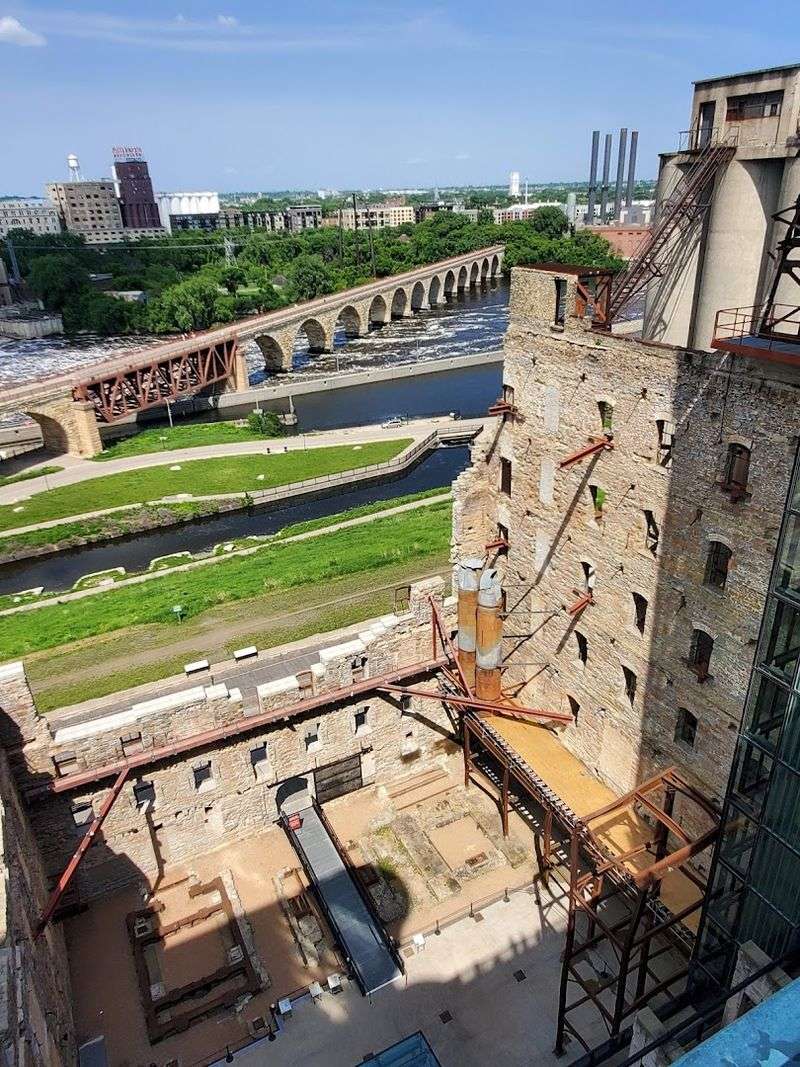
The Mississippi River did not just happen to flow past the flour mills of Minneapolis. The mills were built here specifically because of St. Anthony Falls, the only natural waterfall on the entire length of the Mississippi River.
The falling water generated the mechanical power that drove the millstones, and without it, the entire industry that built Minneapolis would have developed somewhere else entirely.
Mill City Museum dedicates real attention to explaining this relationship between geography and industry. The interactive water exhibits inside the museum are designed to help visitors understand how engineers harnessed the falls and distributed that energy across multiple mill operations simultaneously.
From the observation deck, you can look down and see the falls still moving, still generating the same energy they always have, now channeled into hydroelectric power rather than millstones. It is one of those moments where the past and present overlap in a way that is hard to fully articulate but easy to feel.
The Interactive Scavenger Hunt for Families
Families visiting with children of different ages often wonder how to keep everyone engaged in a museum setting. Mill City Museum addresses this directly by offering an interactive scavenger hunt guide that sends visitors searching through the exhibits for specific details, objects, and clues hidden throughout the space.
The scavenger hunt is clever because it is not just busy work. Each item on the list connects to a real piece of history or a specific exhibit, so children are learning as they search rather than simply completing a checklist.
It also gives kids a sense of ownership over the visit, which tends to make them more curious and more willing to slow down and actually read the displays they encounter along the way.
Parents report that the combination of the scavenger hunt, the Flour Tower ride, and the hands-on labs keeps children genuinely occupied for the full duration of the visit, which runs comfortably between one and two hours for most families.
The Outdoor Courtyard and Mill District Setting
The museum does not end at the front door. The outdoor courtyard is an extension of the experience, offering open views of the river, the surrounding mill ruins, and the broader Mill District neighborhood that grew up around the flour industry and has since transformed into one of Minneapolis’s most interesting urban areas.
The courtyard is also where the scale of the original mill complex becomes most apparent. The ruins surrounding the museum site are extensive, and standing in the open air with charred stone walls rising around you gives a much better sense of how large and industrially intense this operation once was than any interior exhibit can fully convey.
The Mill District itself is worth exploring before or after your museum visit. The Stone Arch Bridge is a short walk away, and the riverfront path offers a completely different perspective on the same history you just encountered inside the museum walls.
The On-Site Cafe and Visitor Amenities
After spending a couple of hours moving through the exhibits and climbing to the observation deck, having a place to sit down and eat inside the museum is genuinely useful. The cafe at Mill City Museum offers a straightforward menu in a space that benefits from the same dramatic surroundings as the rest of the building.
Visitors consistently mention that the cafe is a reasonable option rather than an afterthought, which is not always the case with museum dining. The setting does a lot of the heavy lifting here, since eating with views of the river and the ruins creates an atmosphere that would be hard to replicate anywhere else in the city.
Practical amenities like clean restrooms and nearby paid street parking also make the logistics of a visit smooth and uncomplicated. Several visitors mention finding street parking for around five dollars for two hours, which is more than enough time to see everything the museum offers.
Planning Your Visit to Mill City Museum
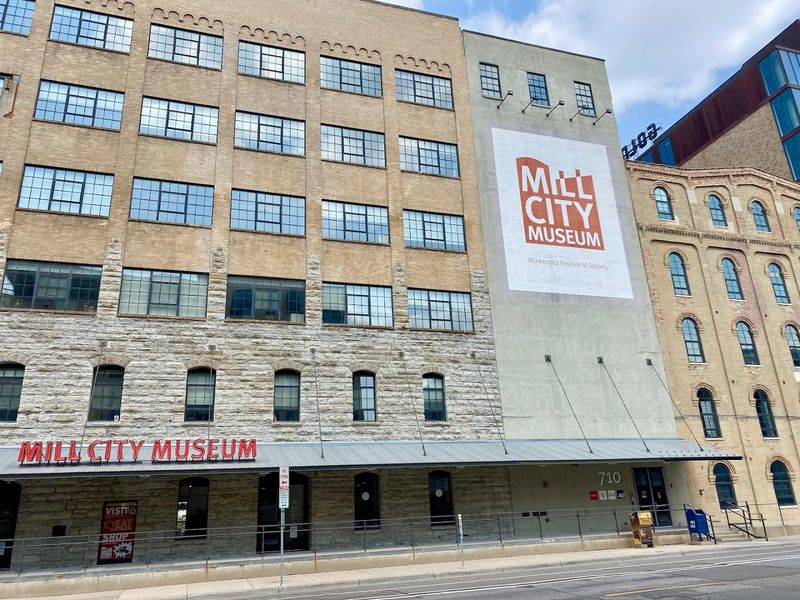
Mill City Museum is open Thursday and Friday from 10 AM to 4 PM, and Saturday and Sunday from 10 AM to 5 PM. The museum is closed Monday through Wednesday, so checking the schedule before you go is worth the thirty seconds it takes.
Most visitors find that one to two hours covers the full experience comfortably, though those who linger on the observation deck or spend extra time in the interactive labs tend to stretch it closer to two and a half hours. Arriving when the museum opens on a weekend morning tends to mean smaller crowds and easier access to the Flour Tower, which can draw a line later in the day.
The museum is managed by the Minnesota Historical Society, and admission pricing is available on their website at mnhs.org/millcity. For anyone spending time in the Twin Cities, this is the kind of stop that ends up being the most memorable part of the trip.
Share this story