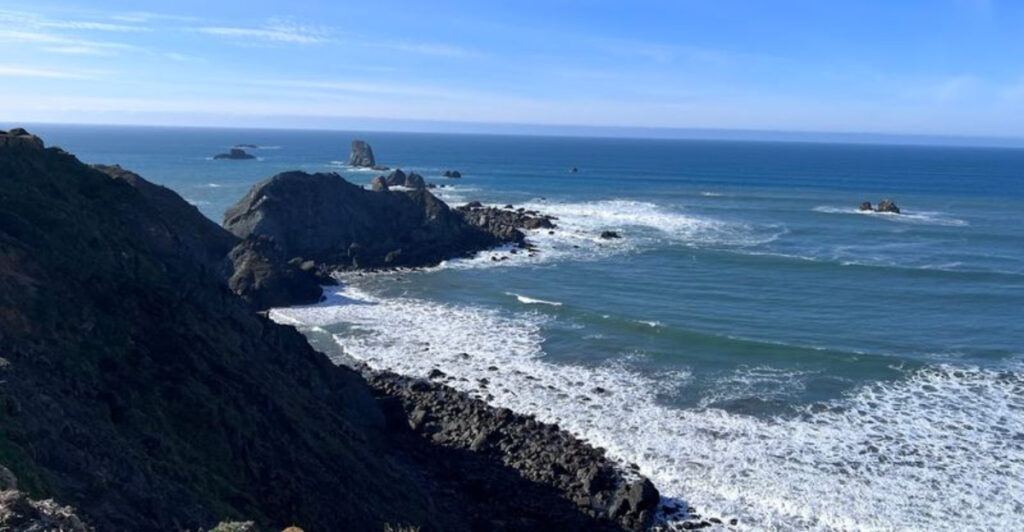
There is a stretch of the Oregon coast that most people drive right past, never knowing what is hiding just beyond a scrubby old airstrip. Black sand meets dramatic sea cliffs, a hidden waterfall drops straight onto the beach, and sea caves carve deep into the basalt like nature’s own secret rooms.
The trail that leads you there winds through forests, past a glittering coastal lake, and opens up to views so raw and wide they genuinely stop you mid-step. This is not the kind of place you find on a crowded travel list, and honestly, that is a big part of what makes it so worth the trip.
Where the Trail Begins: Address, Access, and First Impressions
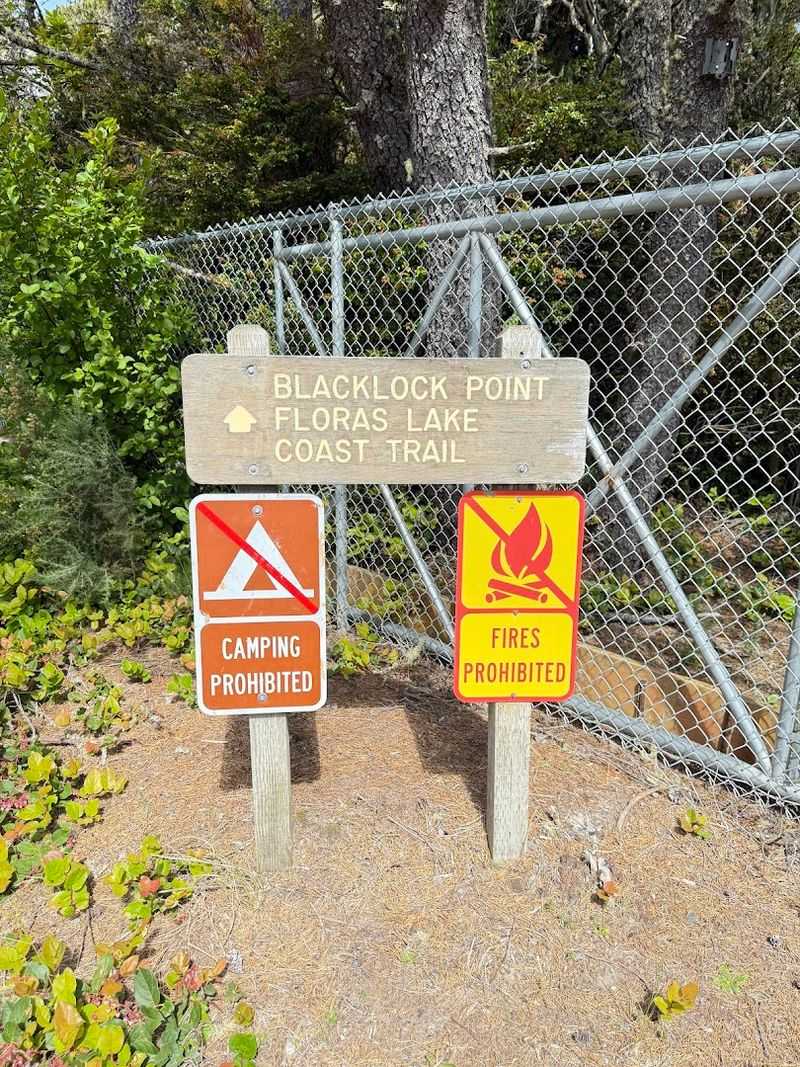
The trailhead for Blacklock Point sits at 92200 Airport Rd, Sixes, OR 97476, right along the border of a decommissioned airstrip that looks a little rough around the edges at first glance. Sixes is a small community on the southern Oregon coast, tucked between Port Orford and Bandon, and most visitors zoom past it on Highway 101 without a second thought.
The parking area is modest and the trailhead sign is easy to miss, but once you spot it, you are committed to something genuinely special. The old airport setting can throw people off since it does not exactly scream scenic adventure, but that is exactly the kind of underdog story this trail loves to tell.
Follow the signs specifically for Blacklock Point rather than Floras Lake if dramatic cliff views are your goal. The two destinations share the same trail system, so clear signage matters here.
Cell service is unreliable in this area, so downloading an offline map before you arrive is a smart move that saves a lot of confusion later on the trail.
The Trail Itself: Terrain, Distance, and What to Expect Underfoot
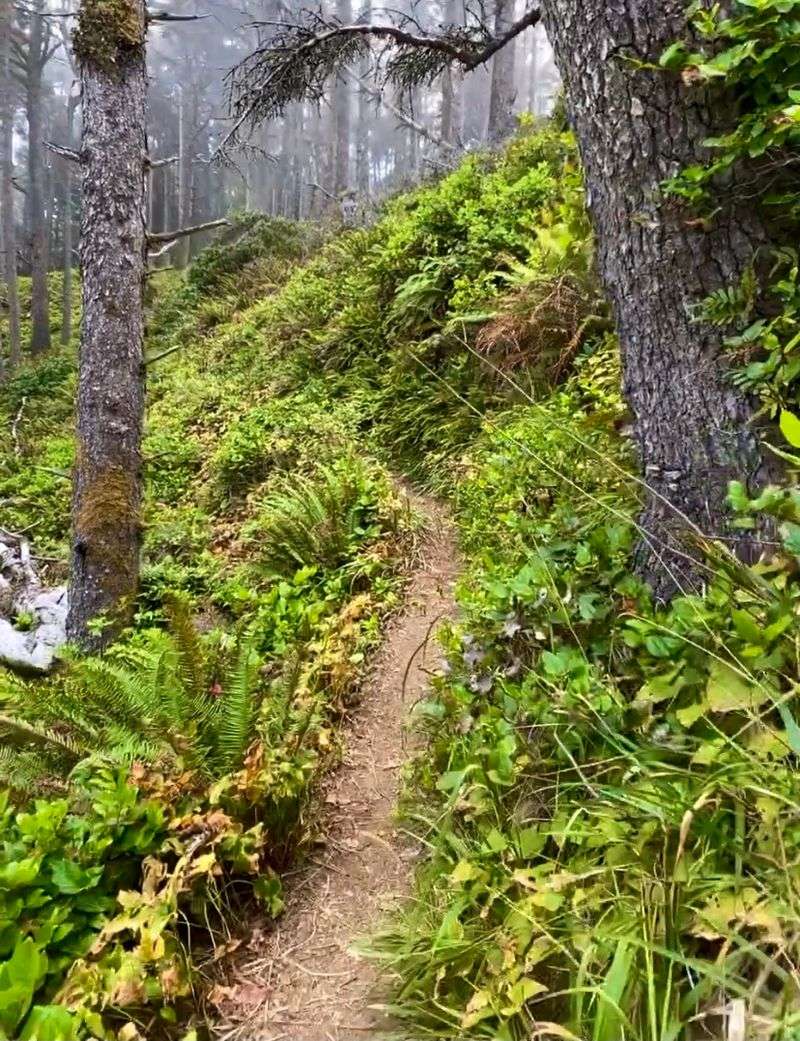
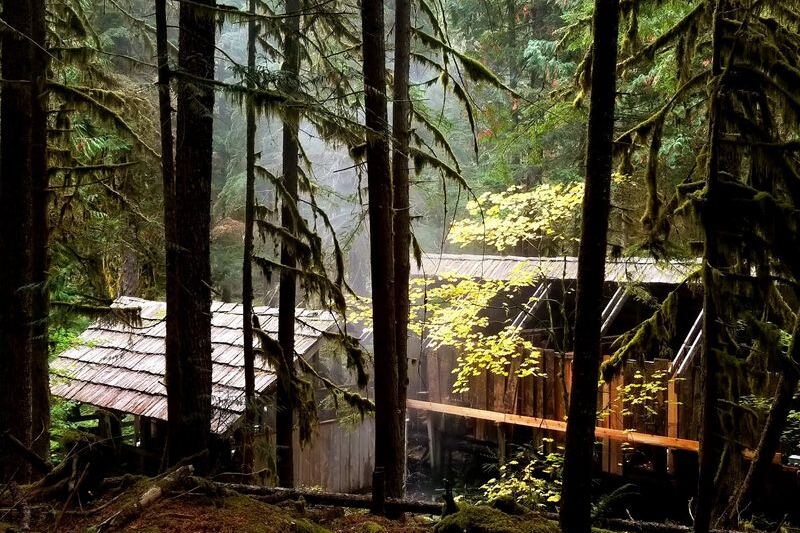
The round trip from the Airport Road trailhead to Blacklock Point clocks in at about 3.2 miles, with the majority of the route running flat and easy through a shaded coastal forest. The trail is well-marked, which matters because the park has multiple intersecting paths that can send you in the wrong direction if you are not paying attention.
Whoever maintains these trails deserves real credit. Clever boardwalks are placed over the muddiest sections, keeping your feet dry even when the surrounding ground looks like a swamp.
In winter and early spring, some puddles grow large enough to qualify as small ponds, so waterproof ankle-high hiking boots are not optional during those months.
The final stretch before the cliffs gets noticeably steeper, which is the one moment the trail asks you to work a little harder. That brief climb feels completely worth it the second the forest opens up and the Pacific Ocean spreads out below you.
The elevation change is modest enough that most fitness levels can handle this hike without much trouble at all.
The Black Sand Beach: A Geological Rarity on the Oregon Coast
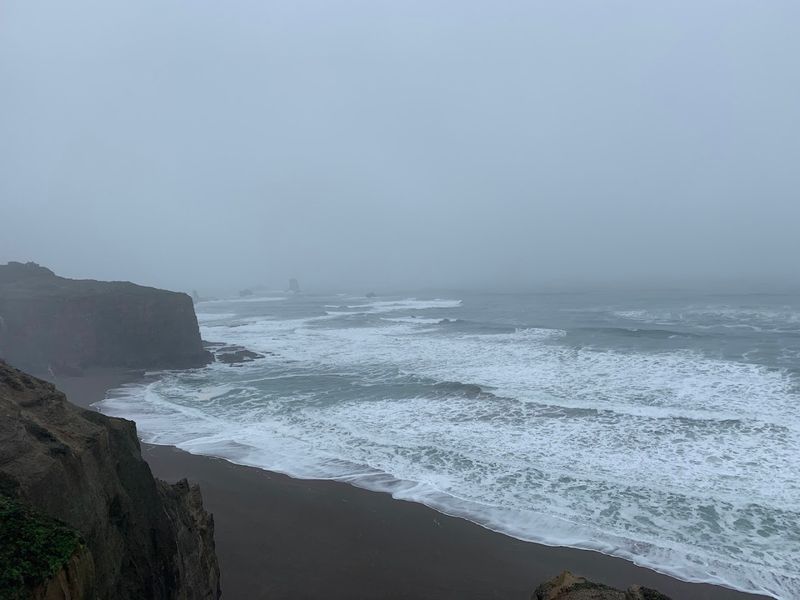
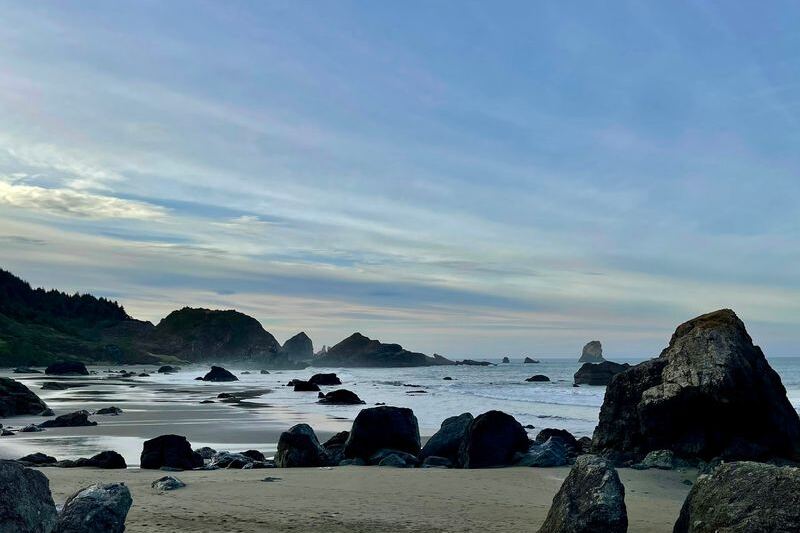
Most Oregon beaches are known for their wide, pale tan sand, which makes the dark shoreline at Blacklock Point genuinely unusual. The black sand here comes from the erosion of basalt, a volcanic rock that makes up much of the coastal headlands in this part of Oregon.
Over thousands of years, wave action has ground those dark rocks into fine grains that collect along the base of the cliffs.
Getting down to the beach requires taking a side trail that branches off near the top of the main route. It is steep and requires some care, but the reward is standing on a stretch of dark sand that feels completely removed from the rest of the world.
Very few people make it all the way down, so the beach often feels entirely private.
The contrast between the black sand, the green headlands above, and the gray-blue Pacific is a color combination that photographs beautifully and looks even better in person. This beach does not appear on most Oregon coast itineraries, which keeps it quiet, uncrowded, and genuinely wild in a way that is increasingly rare along this coastline.
The Sea Caves: Nature’s Hidden Architecture Along the Cliffs
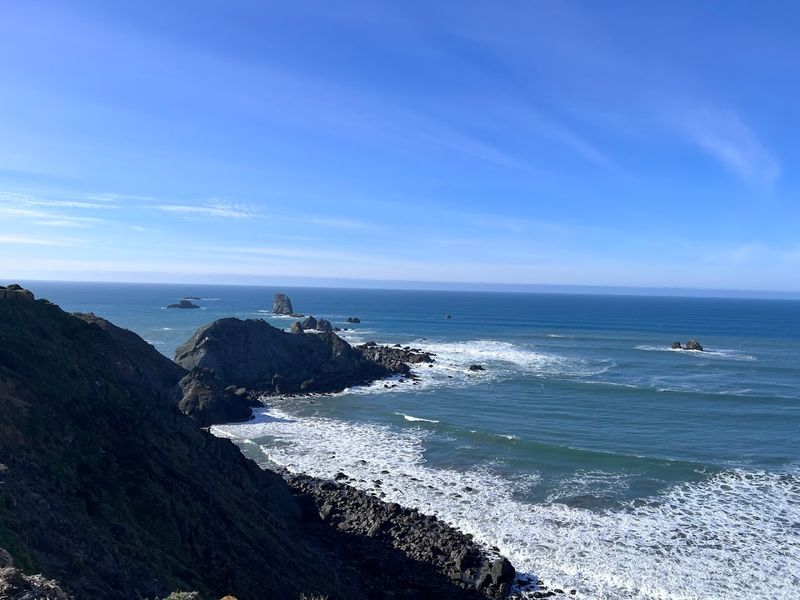
Along the base of the Blacklock Point headlands, the relentless Pacific has carved a series of sea caves into the basalt cliffs that are nothing short of spectacular. These caves form when waves repeatedly strike weak points in the rock over long periods of time, hollowing out chambers and tunnels that echo with every surge of the ocean.
Viewing the caves from the clifftop trail gives you a bird’s-eye perspective that is dramatic and a little dizzying in the best possible way. The openings look dark and cavernous from above, and the sound of water rushing in and out carries up to the rim with surprising force.
Getting closer to the caves at beach level is possible during low tide, but the area demands real caution since the surf here is powerful and unpredictable.
The caves are part of what gives Blacklock Point its reputation as one of the more otherworldly spots on the entire Oregon coast. They do not appear in most travel guides, which means the experience of discovering them still feels personal and unscripted.
Checking a tide chart before your visit helps you plan the safest and most rewarding approach to this part of the coastline.
The Waterfall on the Beach: A Surprise Worth Chasing
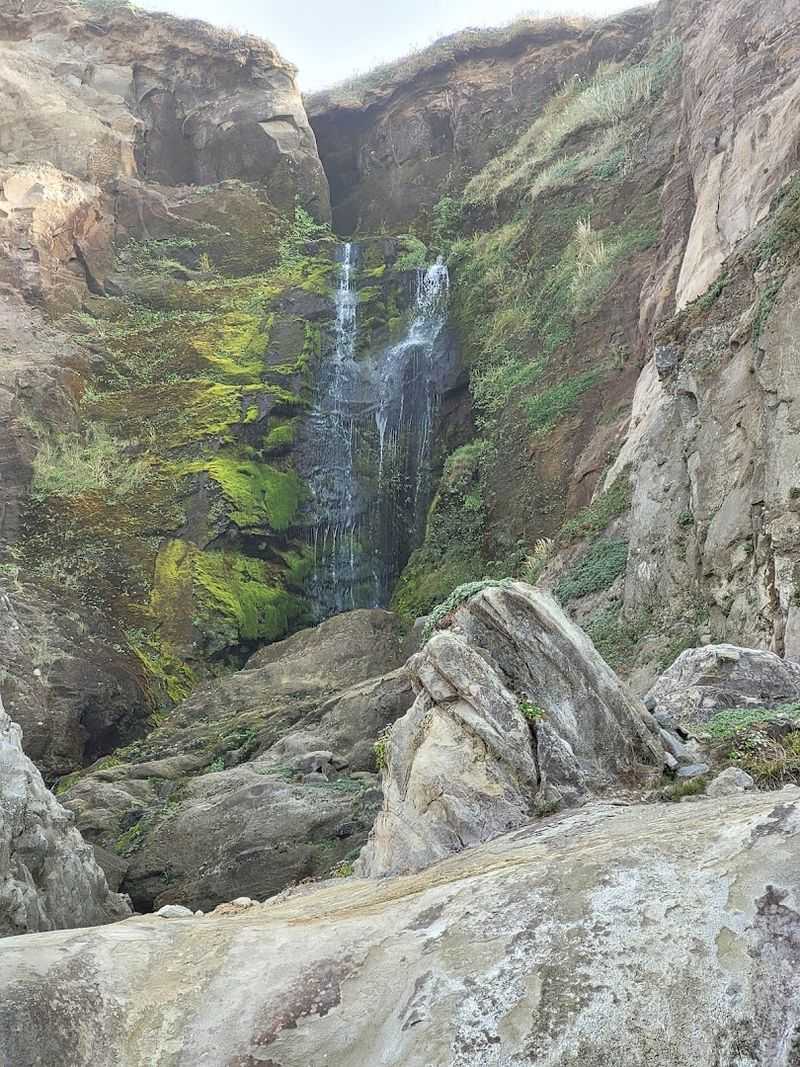
A waterfall that drops straight onto a beach is not something you come across every day, and Blacklock Point has exactly that. A small but striking cascade flows off the cliff edge and falls directly onto the dark sand below, creating a scene that feels almost theatrical in its drama.
Most visitors who stick only to the clifftop trail never even know it exists.
The waterfall is visible from certain vantage points along the upper trail, but the full experience happens at beach level where you can actually stand near the base of it. The fresh water mixes with the salt spray from incoming waves, and the sound of both together creates a layered, rushing backdrop that is oddly calming.
This feature tends to flow strongest in the wetter months, from late fall through early spring, when Oregon’s rainfall keeps the streams inland running full. By midsummer it can slow to a trickle, though the visual impact remains even then.
Finding this waterfall feels like a bonus prize the trail saves for people curious enough to take the extra steps down to the sand, and it never disappoints those who make the effort.
Floras Lake: The Calm Before the Cliffs
Floras Lake is the quieter, more meditative side of this trail system, and it offers a completely different mood from the dramatic cliff views at Blacklock Point. The lake sits just inland from the coast, separated from the ocean by a narrow strip of dunes and low vegetation.
It is one of the few coastal lakes in Oregon that sits this close to the open Pacific.
The trail around Floras Lake is mostly flat and shaded, making it a pleasant option on warm summer days when the forest canopy provides a welcome break from the sun. The lake itself is calm and reflective, popular with windsurfers and kiteboarders who take advantage of the reliable coastal winds that funnel through the area.
For hikers, the lake trail connects to the broader network that eventually reaches Blacklock Point, so you can combine both destinations into a longer loop if your legs are up for it. The total distance increases significantly when you add the lake circuit, so planning your time and water supply accordingly makes a real difference.
Early mornings at Floras Lake are particularly quiet, with mist sitting low over the water and very little human activity to interrupt the stillness.
Wildlife and Vegetation: What You Might See Along the Way
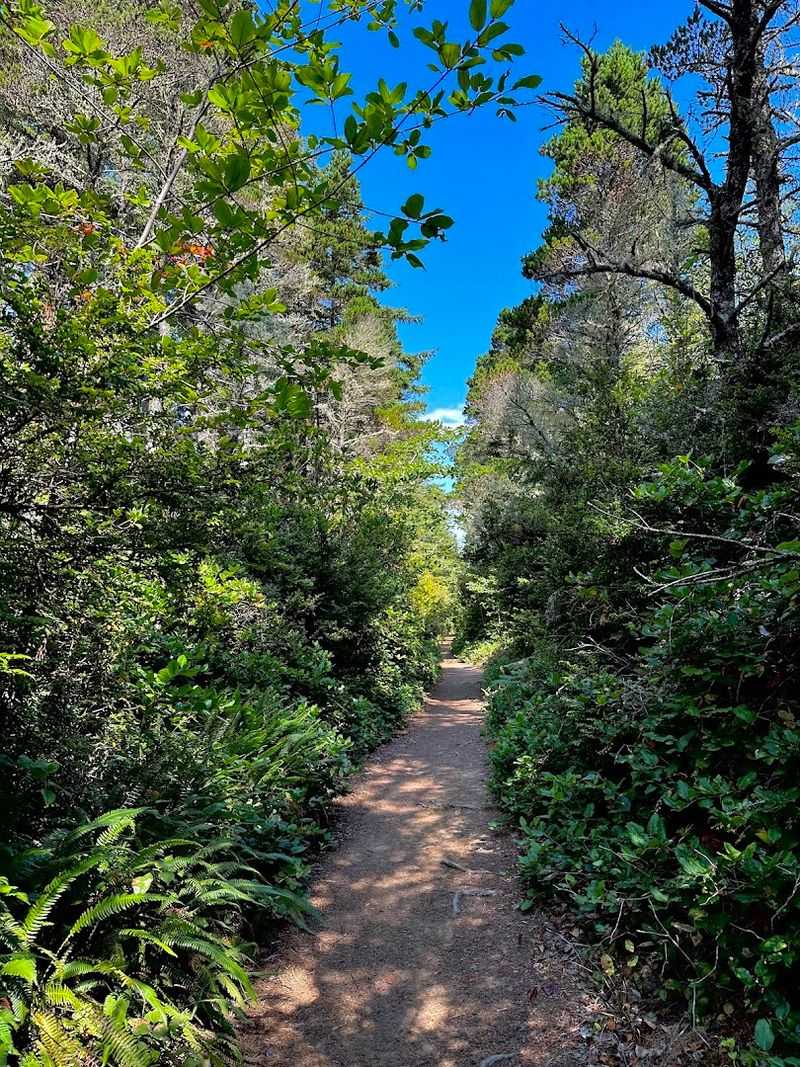
The forest sections of the Blacklock Point trail pass through a rich mix of shore pine, Sitka spruce, and dense coastal shrubs that create a layered, textured environment unlike anything you find further inland. The vegetation shifts noticeably as you move closer to the cliffs, transitioning from dark canopy forest to open headland grasses and wildflowers that hug the cliff edges.
Roosevelt elk are known to move through this area, particularly in the early morning and at dusk when they feed in the more open sections near the lake and the old airstrip. Spotting a small herd crossing the trail is one of those moments that makes you stop completely and hold your breath.
Shorebirds work the cliff edges and the beach below, and the tidepools along the base of the headlands host sea stars, anemones, and small crabs when the tide pulls back far enough. Birdwatchers find the trail especially productive in spring and fall migration seasons.
The variety of habitat packed into a relatively short distance is one of the reasons this trail keeps drawing people back for repeat visits throughout the year.
The Clifftop Views: What Waits at the End of the Trail
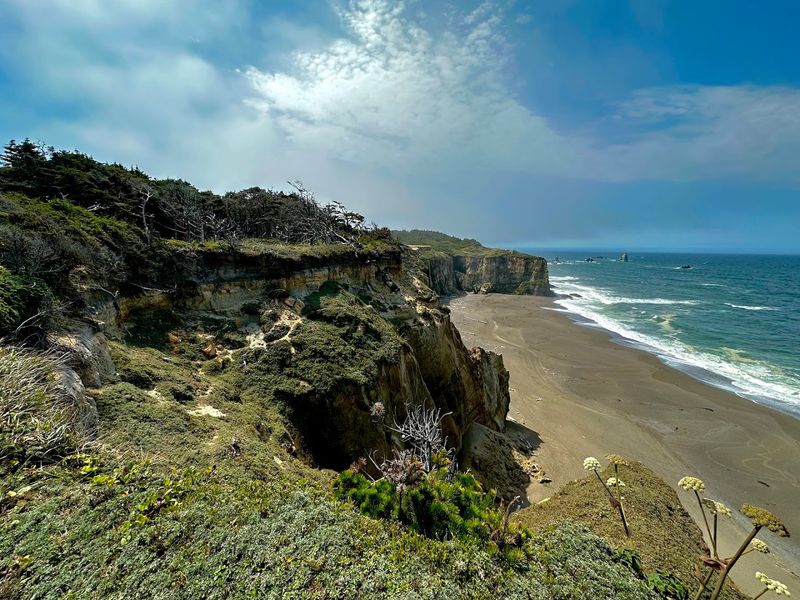
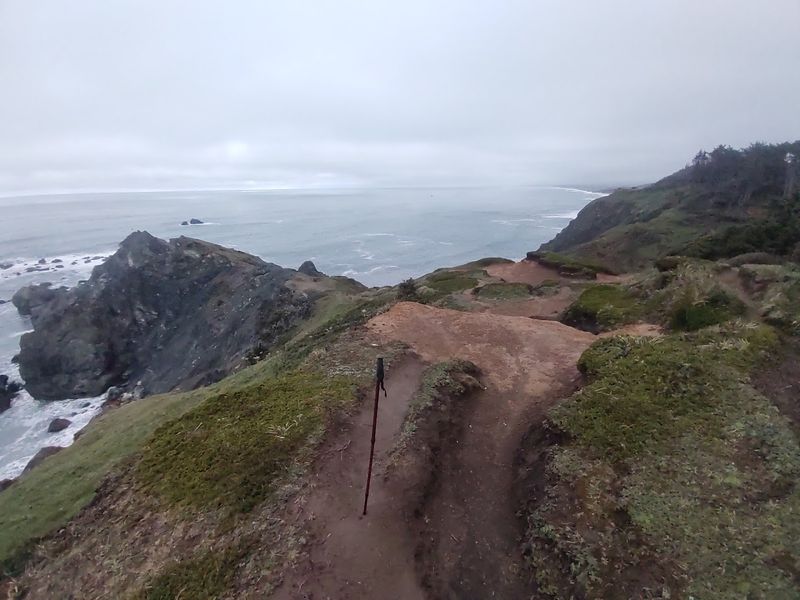
The payoff at the end of the Blacklock Point trail is the kind of view that makes you stand quietly for a few minutes before you even think about reaching for your camera. The cliffs drop sharply to the ocean below, and the Pacific stretches out to the horizon with nothing between you and Japan but open water.
On clear days the view is vast and blue; on foggy days it is moody and atmospheric in a completely different but equally compelling way.
The cliff edges are unfenced and require genuine respect. The terrain is uneven and the drop is serious, so staying well back from the rim is the only sensible approach.
The views are just as impressive from a safe distance, and there is no need to push your luck at the edge.
Fog is a regular visitor to this part of the coast, especially in summer when marine layer rolls in from the ocean in the mornings. Coming in late afternoon often gives you clearer skies and better light for the views.
The isolation of the clifftop, combined with the scale of the scenery, creates an atmosphere that feels genuinely removed from ordinary life in a way that is hard to put into words.
Best Time to Visit and What the Seasons Look Like
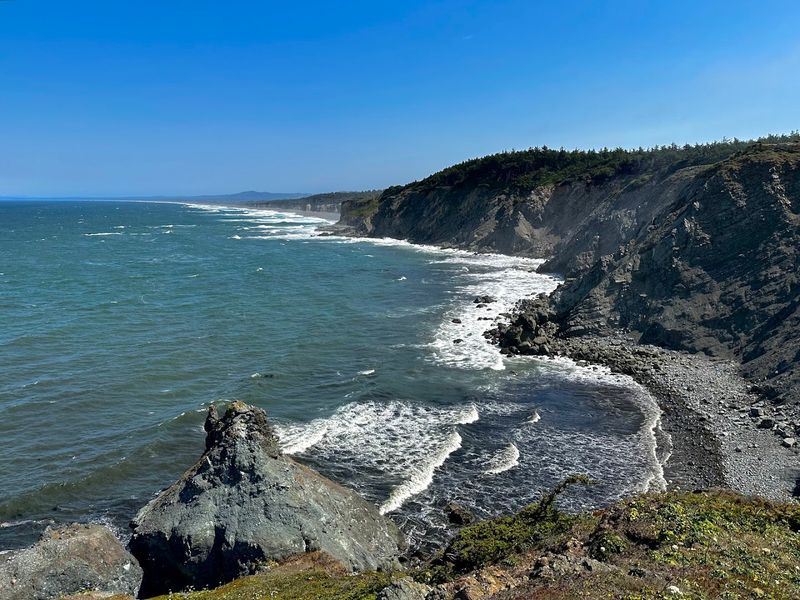
Every season brings a different version of this trail, and each one has genuine appeal depending on what kind of experience you are after. Late spring and early summer tend to offer the best combination of manageable trail conditions, mild temperatures, and longer daylight hours that give you plenty of time to explore without rushing.
Summer brings drier trail conditions overall, though the famous Oregon coast fog can still roll in thick during the mornings. The boardwalks handle the lingering wet sections well, and the wildflowers along the headland are at their most colorful from May through July.
Fall is less crowded and the light turns golden in a way that flatters the whole landscape beautifully.
Winter hiking here is an entirely different proposition. The trail can become genuinely waterlogged, with puddles stretching across the full width of the path in places.
Waterproof boots become non-negotiable rather than just a good idea. That said, winter storms create dramatic surf conditions at the cliffs that are spectacular to witness from a safe distance, and the trail sees almost no other visitors during those months, which has its own kind of appeal for people who enjoy solitude outdoors.
Practical Tips for First-Time Visitors to Blacklock Point
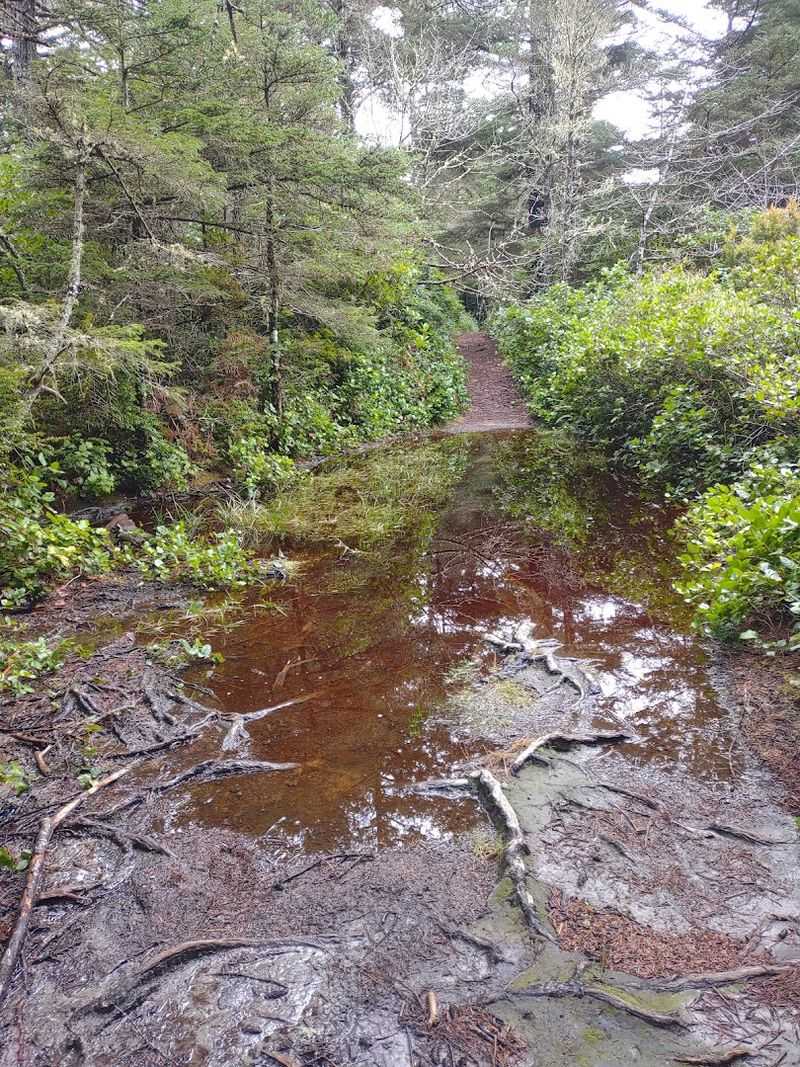
A few simple preparations make the difference between a frustrating outing and a genuinely memorable one at Blacklock Point. Waterproof hiking boots are the single most important piece of gear, regardless of the season.
The trail holds moisture well after rain, and the boardwalks help but do not cover every wet section you will encounter along the way.
Bring more water than you think you need since there are no facilities on the trail and no reliable freshwater sources that are safe to drink without treatment. A light snack goes a long way on the return trip, especially if you choose to extend your hike by adding the Floras Lake circuit.
The total time from parking lot to clifftop and back runs roughly two hours at a relaxed pace.
Download an offline map before you leave because cell service along Airport Road and throughout most of the trail is spotty at best. The trail signs are good but not perfect at every junction, and having a backup navigation option prevents wrong turns that add unwanted distance to your day.
Parking is free, the trail is free to access, and no permit is currently required, making this one of the most accessible wild coastal experiences on the entire Oregon coast.
Share this story