New Hampshire is known for its mountains and historic towns, but it also hides a surprising collection of unusual attractions. From mysterious stone ruins and a submarine on dry land to record-breaking arcades and year-round Christmas celebrations, the Granite State is full of unexpected discoveries.
Whether you’re interested in quirky roadside stops, fascinating history, or one-of-a-kind experiences, these destinations reveal a side of New Hampshire that many travelers overlook. These hidden gems prove there’s much more to the state than its famous scenery.
1. America’s Stonehenge, Salem, New Hampshire
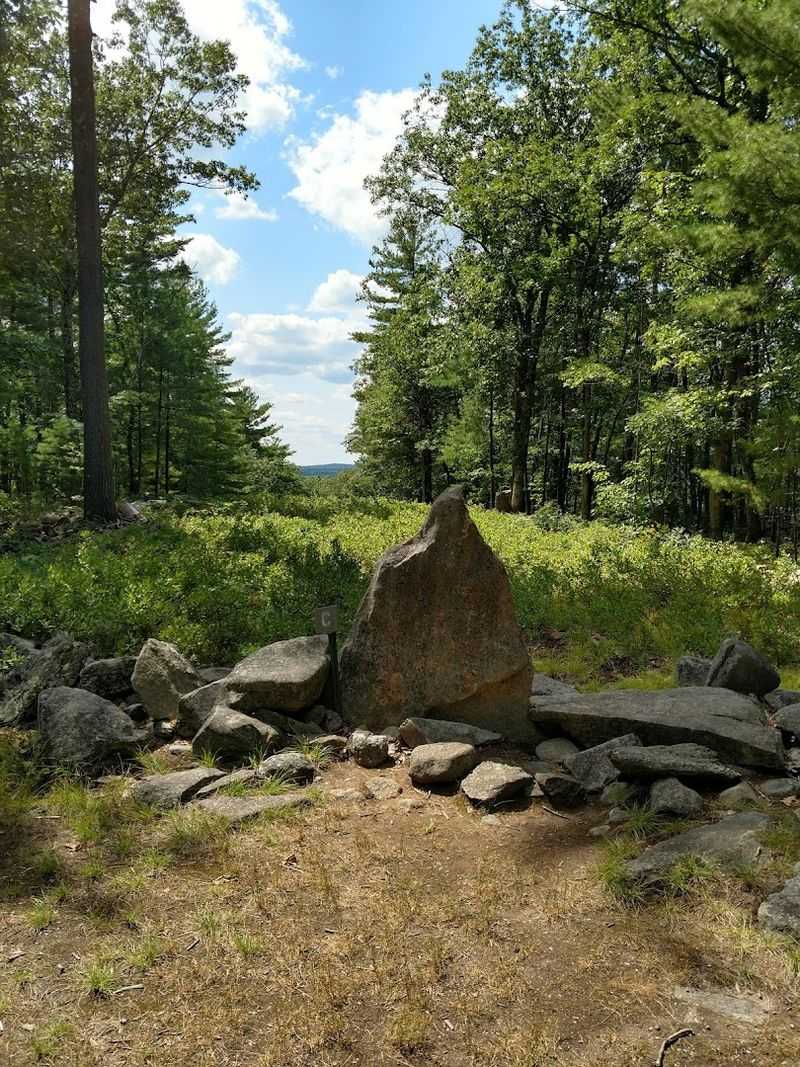
Nobody expects to find a 30-acre complex of ancient stone chambers and standing stones in a quiet New Hampshire town, yet here it is. Originally called Mystery Hill, the site was renamed America’s Stonehenge in 1982, and the name change only deepened the debate about who actually built it.
Radiocarbon dating of charcoal samples found on-site places human activity between 2,000 and 4,000 years ago, with evidence of visitation stretching back 7,000 years. The standing stones align with solar and lunar events, including the Winter Solstice Sunset, with some alignments matching positions from around 1800 BCE.
The Oracle Chamber is a highlight, featuring a speaking tube that carries a voice up from beneath the famous 4.5-ton Grooved Table. The site also has an alpaca farm, a gift shop, and seasonal events including candlelight snowshoeing.
2. Polar Caves Park, Rumney, New Hampshire
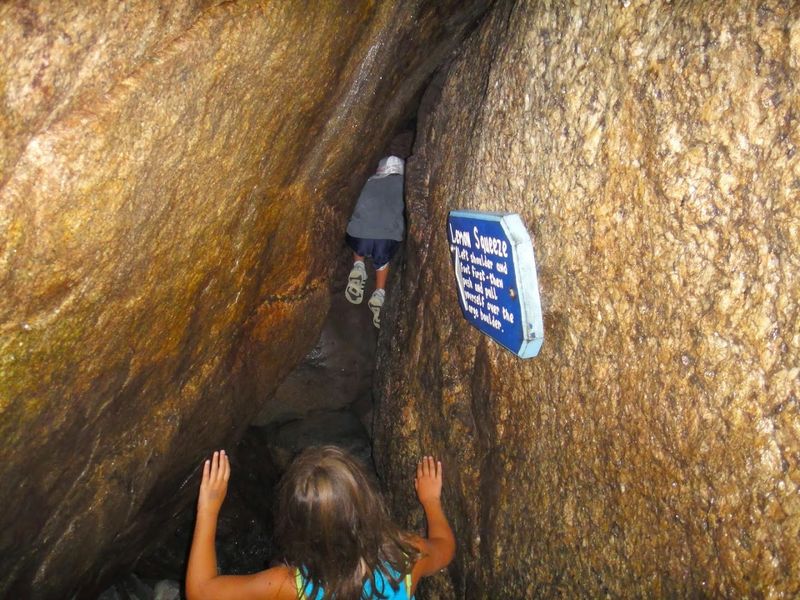
Open since 1922, Polar Caves Park sits beneath Hawk’s Cliff in Rumney and offers something that most nature parks cannot: nine named granite caves, each with its own personality and level of difficulty. The caves were formed during the last Ice Age when a continental glacier deposited enormous boulders, creating passageways that stay cool even on hot summer days.
Passages range from wide, easy walkways to tight squeezes like the Lemon Squeeze, which narrows to about 40 centimeters wide. Bypass routes exist for anyone who prefers not to test their claustrophobia tolerance. The park also contains what is reportedly the largest glacially deposited granite boulder in the world, measuring 110 feet long and weighing an estimated 50 million pounds.
Beyond the caves, visitors can pan for gemstones, try rock climbing on the Glacial Wall, feed European Fallow Deer, and tackle the Polar Ascent, a 172-foot iron way hammered into the cliff face.
3. Funspot, Laconia, New Hampshire
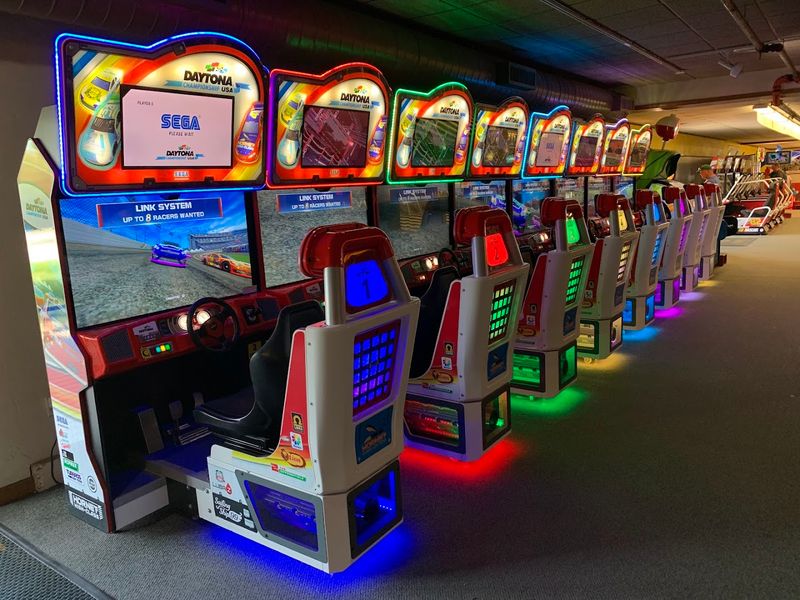
Guinness World Records made it official in 2008: Funspot, tucked into the village of Weirs Beach in Laconia, is the largest arcade in the world. The facility covers 75,000 square feet across three stories and houses over 600 games, from modern ticket redemption machines all the way back to genuine pre-1988 classics.
The American Classic Arcade Museum operates inside Funspot as a nonprofit dedicated to preserving coin-operated gaming history. Its collection of up to 300 playable vintage machines includes Pac-Man, Donkey Kong, Frogger, and Centipede, all available via token. Founded in 1952 and relocated to its current spot in 1964, Funspot also offers 20-lane bowling, a 400-seat bingo hall, and an 18-hole indoor miniature golf course.
The facility hosts an Annual International Classic Video Game Tournament that draws competitors from around the world. It is open every day of the year except Christmas, which makes it the rare arcade that outlasts the holiday season.
4. Woodman Museum, Dover, New Hampshire
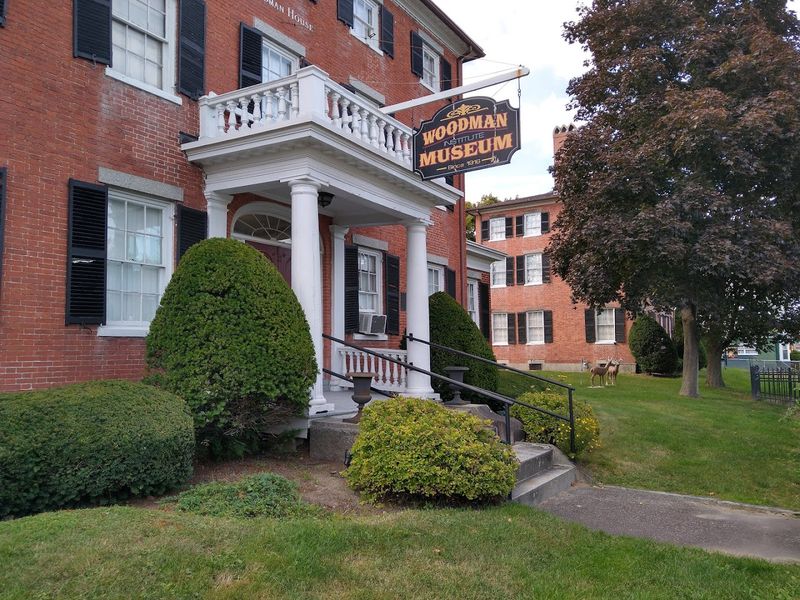
The Woodman Museum in Dover is the kind of place where a two-headed snake in a jar shares a building with a 10-foot polar bear, a Samurai warrior’s armor, and a saddle reportedly used by Abraham Lincoln. Founded in 1916 through a $100,000 trust from philanthropist Annie E. Woodman, the complex spans four historic buildings connected by a white colonnade.
The 1675 William Damm Garrison House is one of the oldest surviving colonial garrison structures in New England. The John Parker Hale House covers abolitionist history, Civil War artifacts, and 19th-century mill culture. The natural history collections in the Woodman House include a four-legged chicken and a stuffed manatee alongside more conventional specimens.
Outside, the grounds include the oldest Sycamore Tree in Strafford County, a Victorian funeral exhibit with an 1890s horse-drawn hearse, and a Civil War cannon from 1863. Docent-led tours help visitors connect the dots between four centuries of history.
5. Mount Washington Auto Road, Gorham, New Hampshire
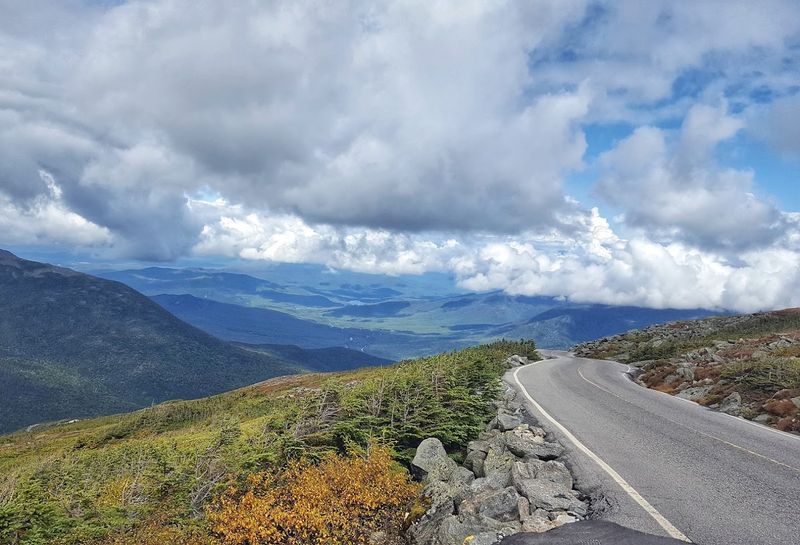
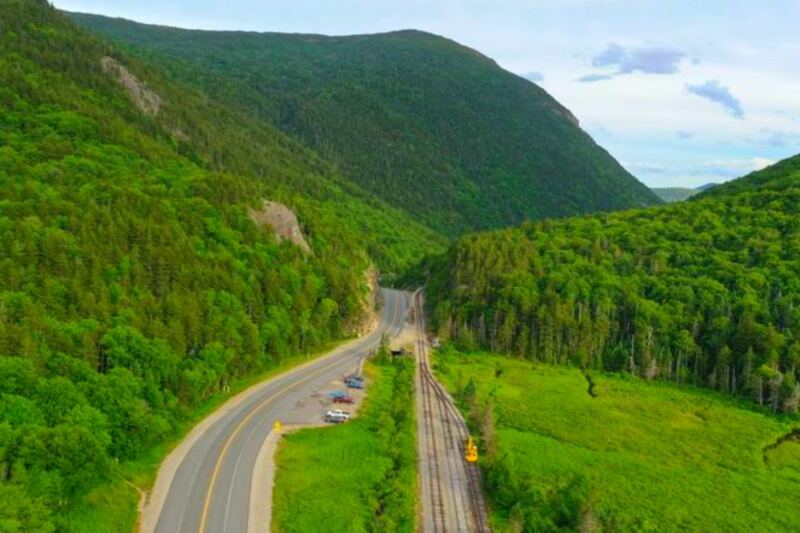
America’s oldest continuously operating man-made tourist attraction is not a museum or a theme park. It is a 7.6-mile private toll road that climbs 4,000 feet to the summit of the Northeast’s highest peak, with an average grade of 12 percent and a final 50-yard stretch at 22 percent. There are no guardrails.
First opened in 1861 as the Mount Washington Carriage Road, the route passes through four ecological zones before reaching the alpine tundra above the tree line. The first motorized ascent happened in 1899 via a Stanley Steamer, and the first hill climb race, called Climb to the Clouds, took place in 1904 and remains the oldest auto hill climb in North America.
Drivers who complete the trip receive the iconic bumper sticker reading “This Car Climbed Mt. Washington.” At the summit, the historic Tip Top House from 1853 still stands, along with an observatory, a cafeteria, and views that stretch into five states on a clear day.
6. Castle In The Clouds, Moultonborough, New Hampshire
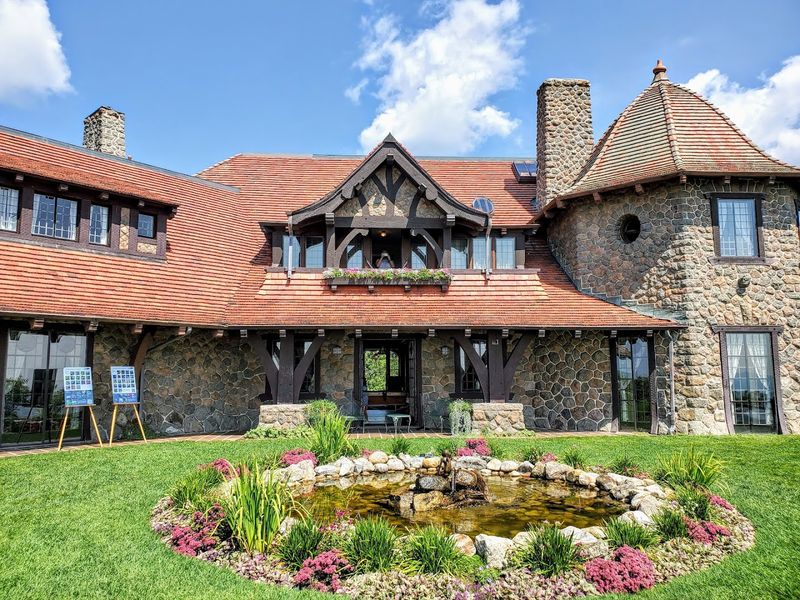
Thomas Gustave Plant built his 16-room mountaintop mansion between 1913 and 1914 after making a fortune as the owner of what was once the largest shoe factory in the world. He named the estate Lucknow and outfitted it with innovations including a central vacuum system, ammonia-brine refrigeration, pressurized needle showers, and a house-wide interphone system.
Many of the granite building blocks are shaped like pentagons, reportedly representing the five major world powers before World War I. Plant lost his fortune through bad investments and lived in the mansion until his passing in 1941, with creditors allowing him to remain. The estate was designated a National Historic Landmark in 2024.
Today, visitors can tour the mansion, hike 28 miles of trails, and walk the Brook Walk, which passes seven waterfalls along Shannon Brook. The 5,294-acre property overlooks Lake Winnipesaukee, and rainbow trout can be fed in Shannon Pond near the Carriage House Restaurant.
7. Santa’s Village, Jefferson, New Hampshire
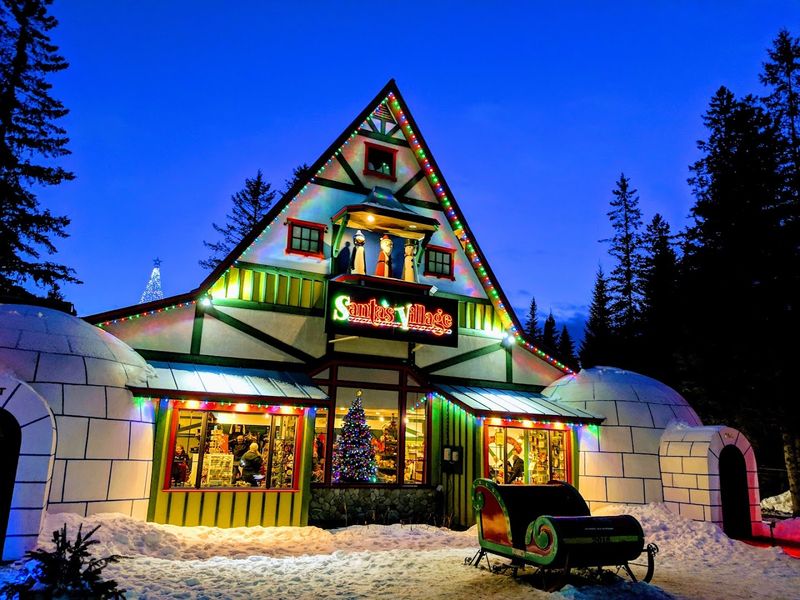
Christmas has been happening every month of the year in Jefferson, New Hampshire, since 1953, when Normand and Cecile Dubois opened Santa’s Village on Father’s Day. Now in its third and fourth generations of family ownership, the park runs from May through December and features 23 rides with names like the Midnight Flyer, Chimney Drop, and Rockin’ Around the Christmas Tree.
The Skyway Sleigh is an elevated monorail that soars more than 30 feet above the ground in sleigh-shaped vehicles, while the Great Humbug Adventure is a multi-level interactive dark ride where guests shoot at targets. Real reindeer are available to meet and feed at the Reindeer Rendezvous, and Santa himself can be visited in his home year-round.
The Ho Ho H2O Water Park adds waterslides from May through September. An Elfabet Card scavenger hunt rewards guests who locate all the hidden elves, and during Christmastime the park is lit with millions of lights.
8. The Flume Gorge, Franconia, New Hampshire
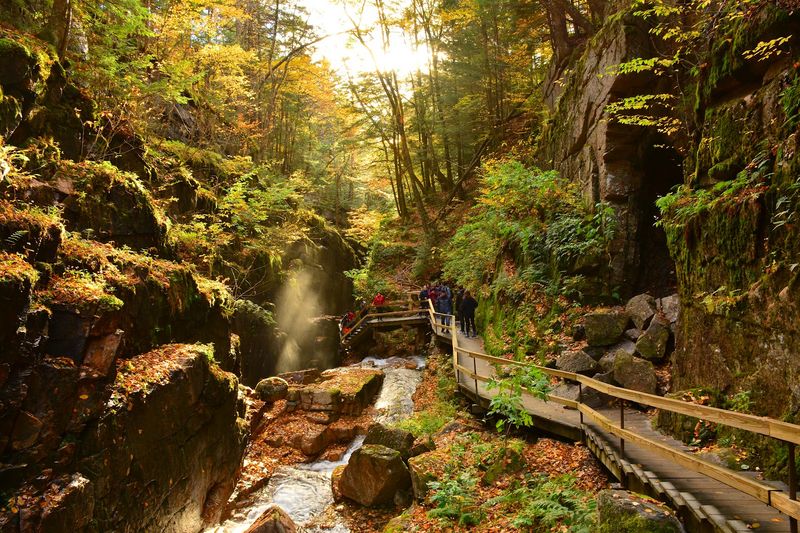
Discovered in 1808 by a 93-year-old woman named Jess Guernsey while she was out fishing, the Flume Gorge stretches 800 feet through the base of Mount Liberty in Franconia Notch State Park. Glaciers carved the chasm roughly 20,000 years ago, leaving granite walls that rise 70 to 90 feet and narrow to as little as 12 feet wide in places.
Wooden boardwalks carry visitors through the heart of the gorge past Avalanche Falls, a 45-foot cascade that formed during a severe storm in 1883, and Liberty Gorge Cascade, where water fans across a steeply angled ledge. The two-mile loop trail takes about 90 minutes and crosses the 1866 Flume Covered Bridge and the Sentinel Pine Bridge, built atop a 175-foot uprooted pine over a 40-foot-deep basin.
A glacial boulder garden along the route contains rocks weighing more than 300 tons. The visitor center includes a cafeteria, gift shop, and geology exhibits. Advance reservations are strongly recommended during peak season.
9. The Basin, Franconia, New Hampshire
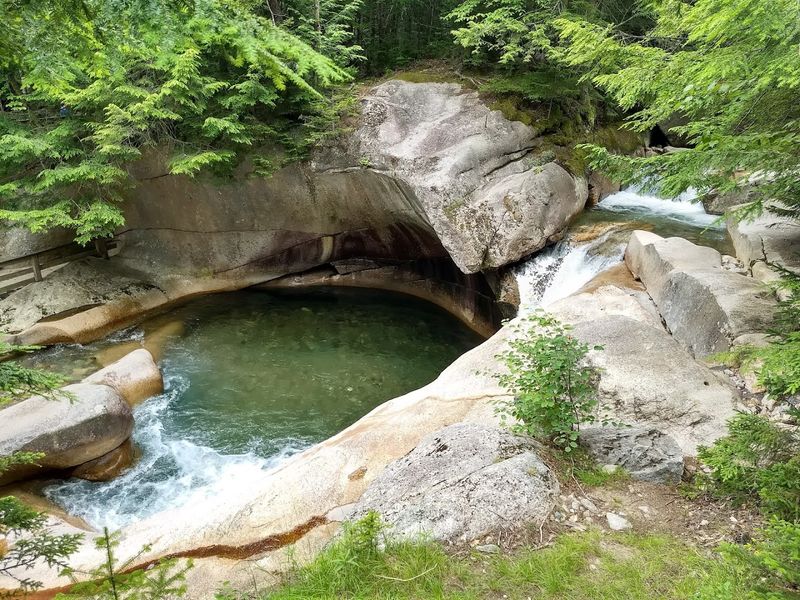
Glacial meltwater is a remarkably patient sculptor. Over 15,000 to 25,000 years, swirling water carrying sand and stones ground a large boulder against the granite bedrock of Franconia Notch until it carved out a nearly perfect circular pothole roughly 20 feet across and 15 feet deep.
The Basin sits within Franconia Notch State Park and is one of the most accessible geological features in the region. Short, well-maintained paths bring visitors right to the edge of the formation, and boardwalks and bridges allow close-up views of the smooth, curved walls that water alone created.
It is a quick stop rather than a full-day destination, but the precision of the circular shape consistently leaves visitors impressed. The Basin works well as a companion stop alongside the Flume Gorge, since both are located within the same state park and showcase what glacial forces left behind in this part of New Hampshire.
10. The Frost Place, Franconia, New Hampshire
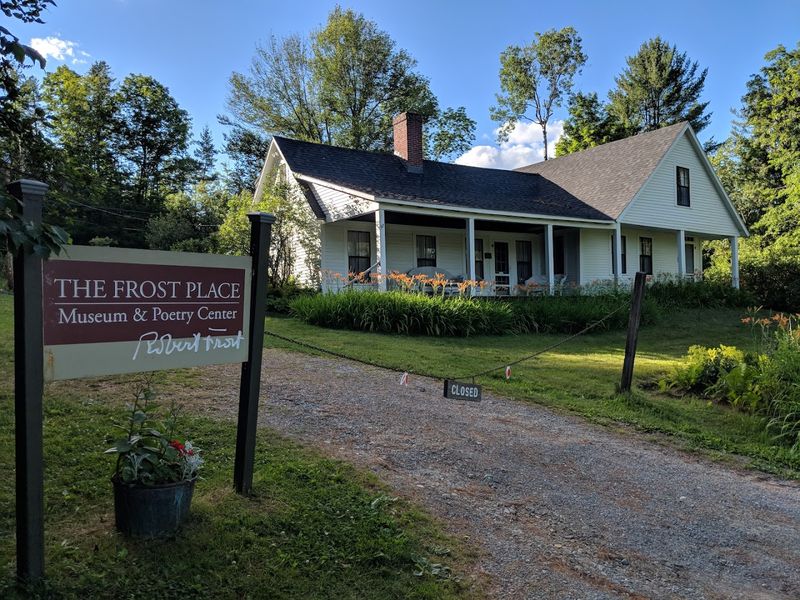
Robert Frost wrote some of his most enduring poems while living on a hillside farmhouse in Franconia between 1915 and 1920. The farmhouse, built around 1883, is preserved to reflect that exact period, with original furnishings and personal belongings still in place alongside exhibits covering his life and literary contributions.
The property’s Poetry Trail is what sets it apart from a standard historic house tour. A wooded walking path displays lines from Frost’s poems on plaques, placed along the same landscape that directly inspired the work. Visitors walk the trail he walked, reading the poems that came out of it.
The Frost Place operates as both a museum and an active poetry center, running literary programs, workshops, and public readings throughout the season. Views of the White Mountains from the property are expansive and unobstructed. The museum is open seasonally from May through mid-October, with paid admission and discounts available for students and seniors.
11. Madame Sherri Forest And Castle Ruins, Chesterfield, New Hampshire
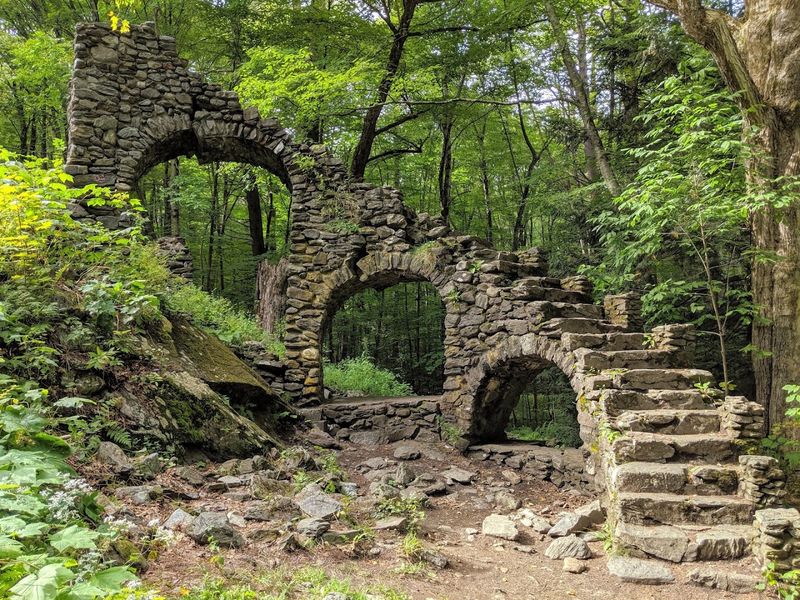
Antoinette Sherri was a Ziegfeld Follies costume designer who built a three-story Romanesque-style summer retreat in the woods of Chesterfield in 1931. She named it Castle Les-A-Mores and filled it with stone terraces, an indoor fountain, and a grand staircase. She was also known for arriving by chauffeured white Packard in elaborate capes, accompanied by her Pekinese dogs.
The estate was abandoned in the 1960s after financial difficulties and was largely destroyed by fire, leaving behind the foundation, a stone archway, and the famous staircase. Those ruins now sit inside the 516-acre Madame Sherri Forest, managed by the State of New Hampshire.
Well-maintained hiking trails lead to the remnants, which are gradually being reclaimed by the surrounding woodland. T
12. USS Albacore Museum, Portsmouth, New Hampshire
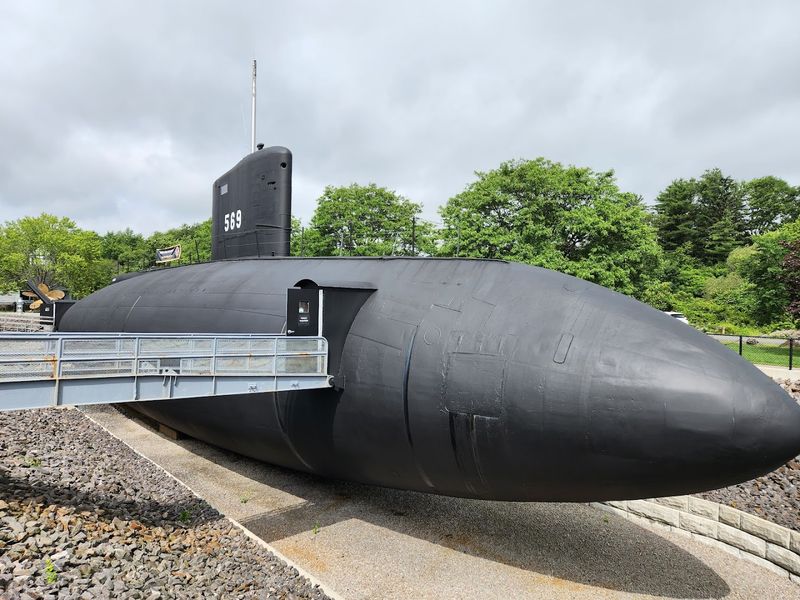
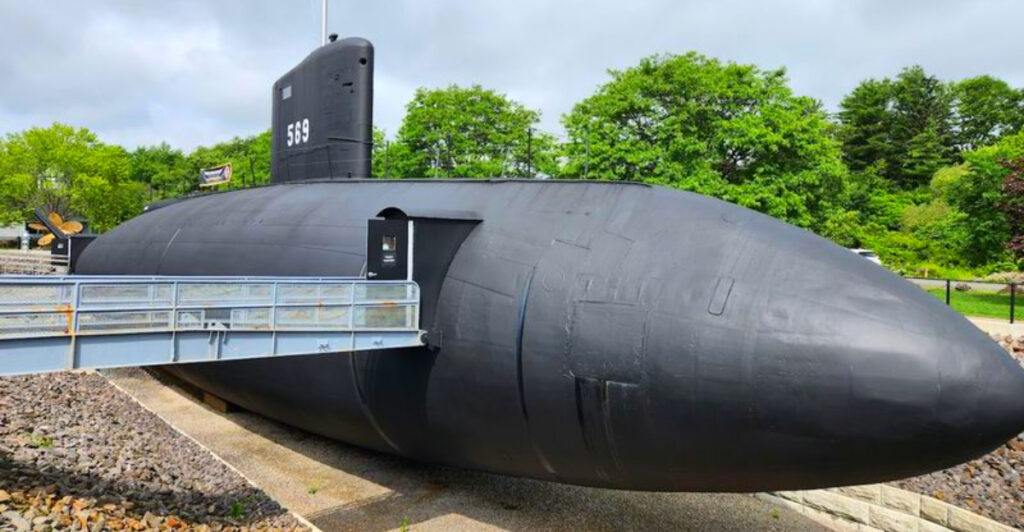
Most submarines end up on the ocean floor or in a scrapyard. The USS Albacore ended up in a custom-built land basin in downtown Portsmouth, where visitors can walk completely around and underneath the entire vessel. That unusual presentation is not the only thing that makes this museum stand out.
Launched in 1953, the Albacore was an experimental research submarine that pioneered the teardrop hull design now used in every modern submarine in the world. She served as a floating laboratory testing hydrodynamics, propulsion systems, and aircraft-type control surfaces that gave submarines unprecedented speed and maneuverability for the era.
Decommissioned in 1972, the vessel was relocated to its current site in 1985 and opened as a museum in 1989. Self-guided audio tours take visitors through the cramped interior where a crew of 55 once lived and worked. The visitor center adds interactive exhibits and artifacts covering the Albacore’s specific contributions to naval engineering history.
13. Chutters, Littleton, New Hampshire
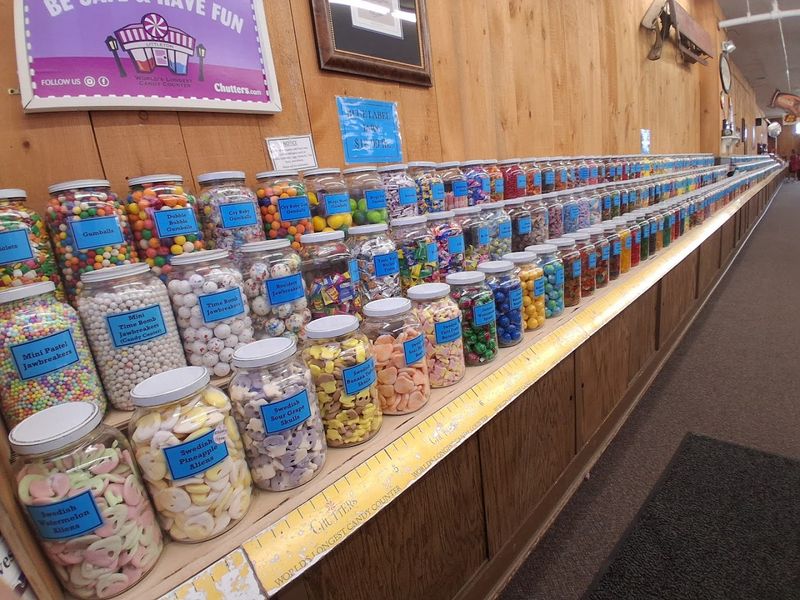
At 112 feet and 6 inches, the candy counter at Chutters in Littleton holds the Guinness World Record for the longest in the world, a title it has held since 2000. The counter displays over 300 varieties of bulk candy, including jelly beans, gummies, sours, and old-fashioned classics that most people stopped expecting to find years ago.
Chutters has operated in downtown Littleton since 1985 and now occupies two adjacent buildings, one dedicated to bulk candy and one to chocolates. Handmade fudge, gourmet popcorn, retro novelty candies, and handcrafted chocolates fill the second building. A second location in Lincoln, New Hampshire, has since joined the original.
14. Andres Institute Of Art, Brookline, New Hampshire
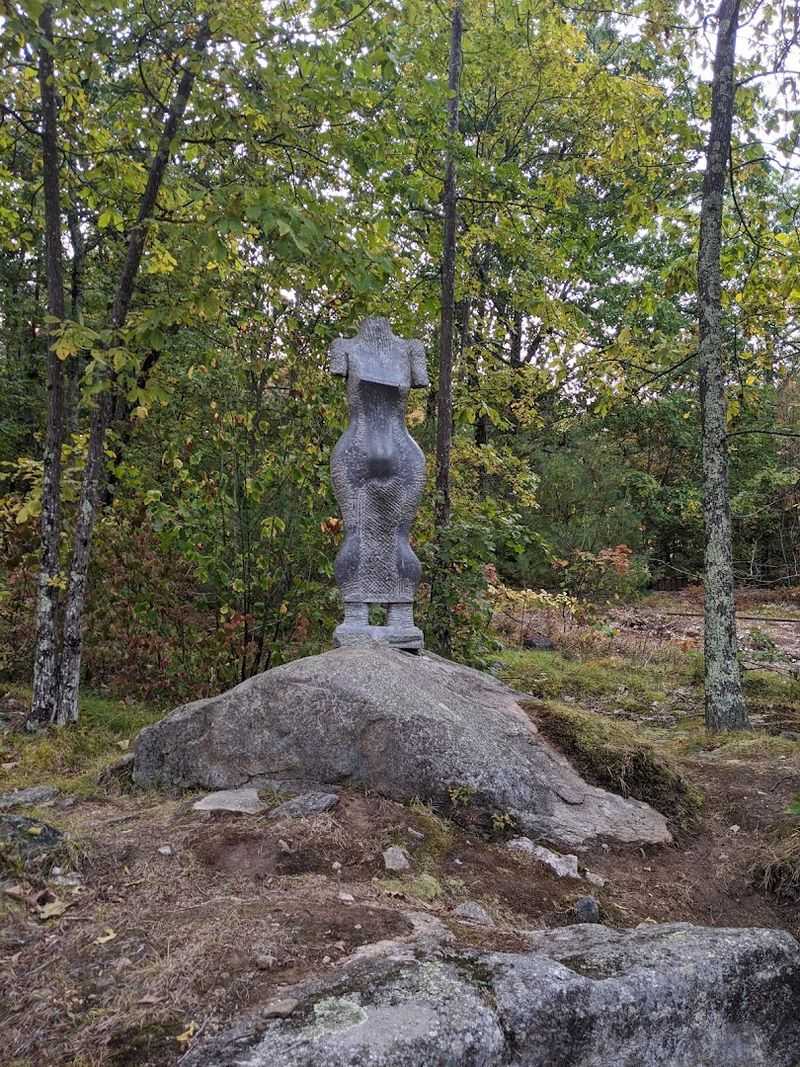
Somewhere on the slopes of an old ski hill in Brookline, a granite sculpture sits next to a steel installation that sits next to something made entirely of wood, and none of it is inside a gallery. The Andres Institute of Art was founded in 1996 by engineers Paul Andres and John Weidman with the specific goal of placing large-scale contemporary art directly into a natural landscape.
More than 100 sculptures created by artists from multiple countries are distributed across six miles of walking and hiking trails on 140 conserved acres. Some works are designed to be climbed. Others incorporate the surrounding trees and terrain as part of their structure. Trail difficulty ranges from easy strolls to routes with elevated viewpoints overlooking the New Hampshire hills.
Share this story