There is a small pond in eastern Massachusetts that changed American literature forever. More than 170 years ago, a writer named Henry David Thoreau built a tiny cabin on its shore, lived there for two years, and wrote a book that people around the world still read today.
That book, Walden, turned a quiet kettle hole lake into one of the most recognized natural landmarks in the United States. The pond itself sits just outside the town of Concord, and it holds a story that goes far deeper than its clear, still water.
Whether you are a nature lover, a history buff, or just someone curious about what one man found when he stepped away from the noise of everyday life, this place has something genuinely worth knowing about.
How A Glacier Created This Pond
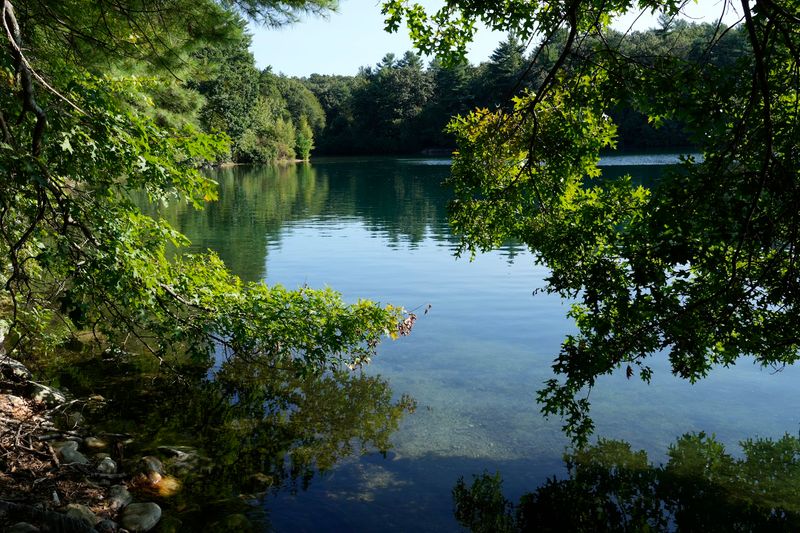
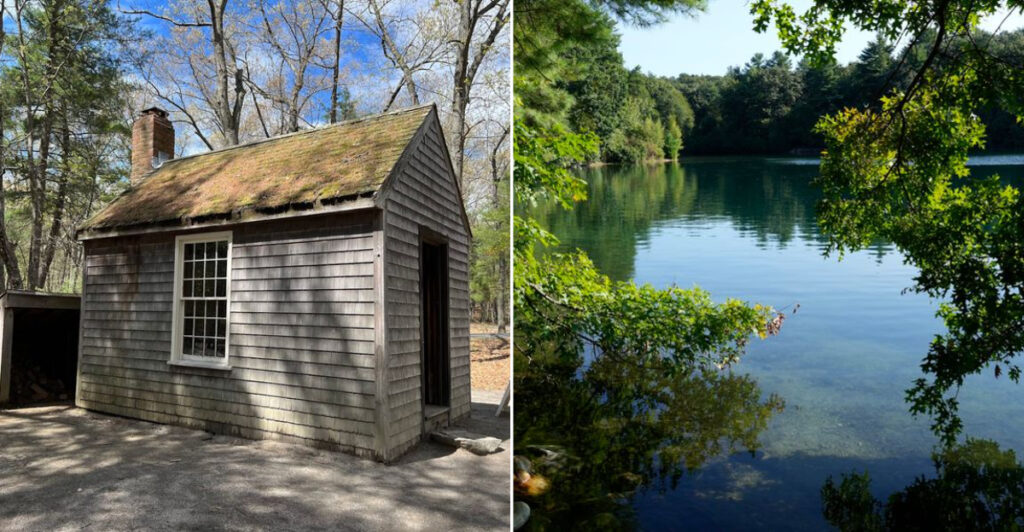
Long before Thoreau ever set foot near its shore, Walden Pond was shaped by forces far older than any human story. The pond is what geologists call a kettle hole lake, formed roughly 10,000 to 15,000 years ago at the end of the last Ice Age.
As massive glaciers retreated northward across New England, large blocks of ice were left behind, buried under layers of sand, gravel, and sediment. When those ice blocks eventually melted, the ground above them collapsed inward, creating bowl-shaped depressions that filled with groundwater.
Walden Pond is one of the clearest examples of this geological process in Massachusetts. Its depth reaches about 102 feet at its deepest point, which is unusually deep for a pond of its size.
That depth, combined with the fact that it is fed primarily by groundwater rather than surface runoff, explains why the water stays remarkably clean and clear throughout the year.
The Man Who Made It Famous
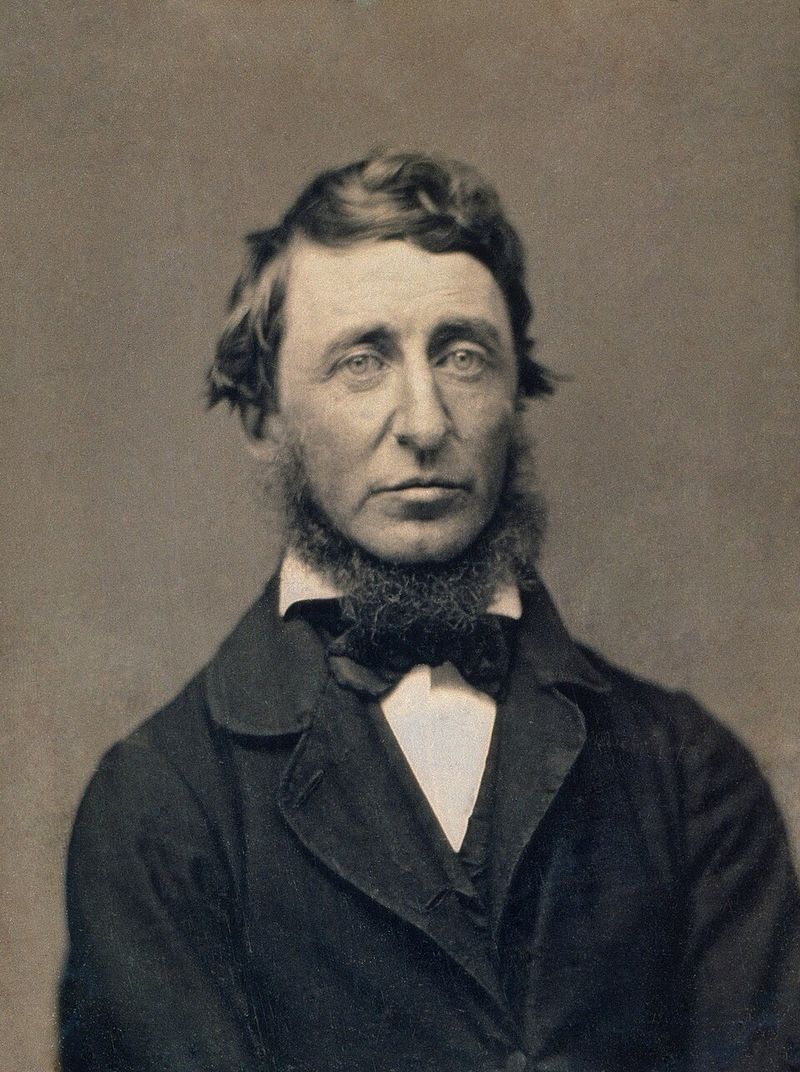
Henry David Thoreau was born in Concord in 1817, and for most of his life, he never strayed very far from home. He attended Harvard College, worked as a schoolteacher, and spent years as a surveyor, but writing and nature were always at the center of his life.
On July 4, 1845, Thoreau moved into a small wooden cabin he had built himself on the north shore of Walden Pond. The land belonged to his friend and mentor, the philosopher Ralph Waldo Emerson, who gave Thoreau permission to use it.
Thoreau lived at the pond for two years, two months, and two days. During that time he grew his own food, kept detailed journals, and observed the natural world around him with extraordinary attention.
His goal was not to escape society entirely, but to strip life down to its most essential parts and figure out what truly mattered. That experiment became the foundation for one of America’s most enduring books.
The Book That Came Out Of The Woods
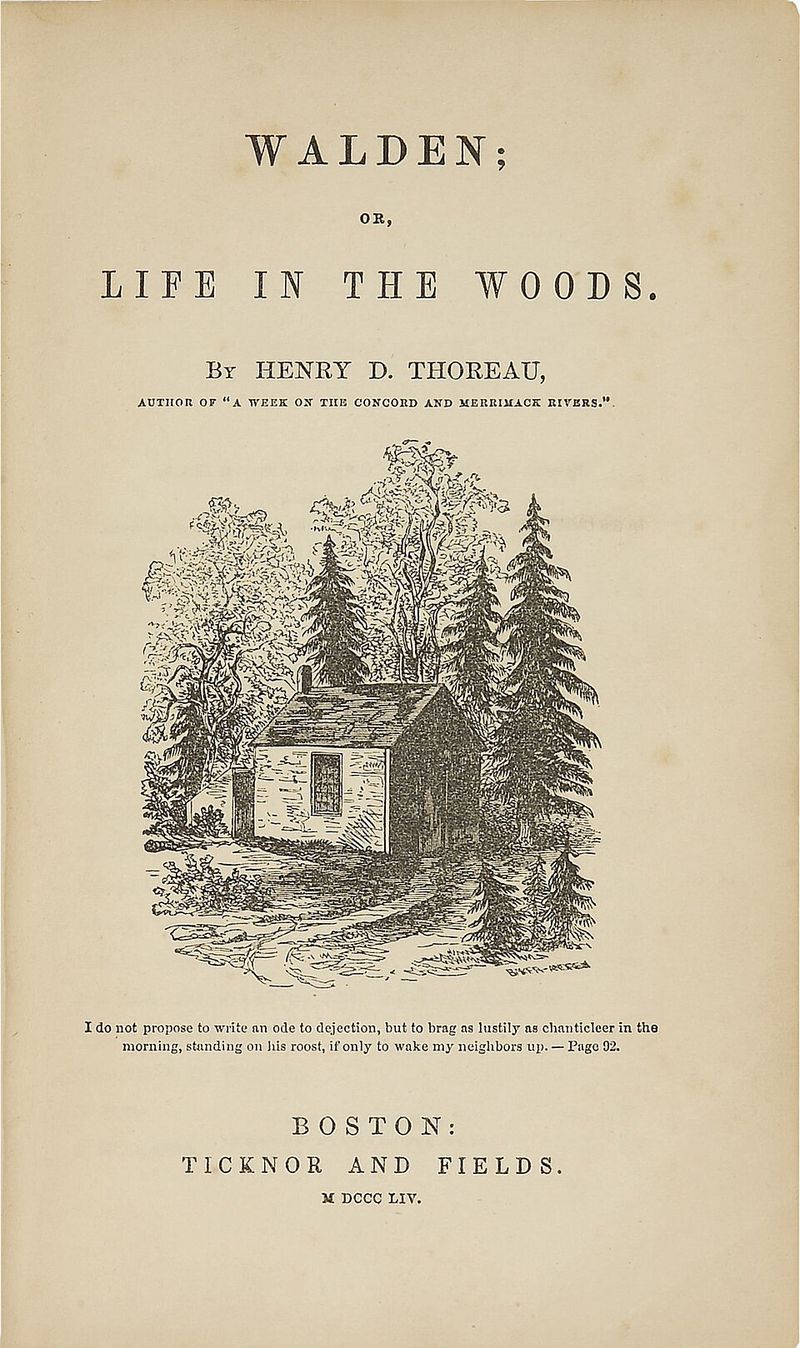
Published in 1854, Walden; or, Life in the Woods is the direct result of Thoreau’s two-year stay at the pond. The book is part memoir, part nature writing, part philosophy, and part social criticism, all woven together in a way that still feels fresh and relevant today.
Thoreau did not simply describe what he saw outdoors. He used the pond and the surrounding woods as a lens through which to examine how people spend their time, what they value, and what they might be missing by living too fast or too conventionally.
The book was not an instant bestseller. In fact, it sold modestly during Thoreau’s lifetime.
But over the following century, it grew into one of the most widely read and cited works in American literature.
Today, Walden is considered a cornerstone of environmental writing and a founding text of the American conservation movement. Lines from the book appear on monuments, in speeches, and in conversations around the world.
An Unexpected Inspiration Behind Thoreau’s Experiment
The story of what inspired Thoreau to live alone in the woods is more layered than most people realize. One significant figure in that story is Zilpah White, a formerly enslaved woman who had lived on the common land bordering Walden Road years before Thoreau arrived.
White supported herself by spinning flax into linen fibers, living independently at a time when very few women in Concord, and almost no formerly enslaved people, managed to do so entirely on their own terms.
Thoreau was aware of her story, and her example of self-sufficiency appears to have influenced his own thinking about what it meant to live simply and independently. The idea that a person could provide for themselves outside the usual social and economic structures was central to what he was trying to prove at the pond.
This connection adds a dimension to Walden that is often overlooked, reminding readers that the book grew out of a broader human conversation about freedom, self-reliance, and what it means to truly live on your own terms.
The Replica Cabin And What It Tells You
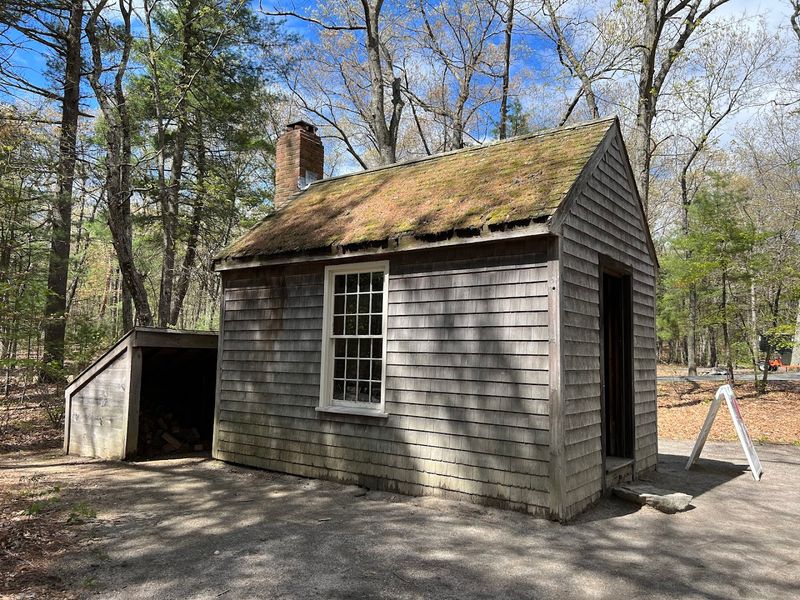
One of the most visited spots within Walden Pond State Reservation is the replica of Thoreau’s original cabin. The structure stands near the parking area and visitor center, giving people a concrete sense of just how small and deliberate his living space actually was.
The cabin measures roughly 10 by 15 feet. It contains a bed, a small desk, three chairs, and a fireplace.
Thoreau famously said he kept three chairs: one for solitude, two for friendship, and three for society.
The original cabin no longer exists. After Thoreau left the pond in 1847, the structure was moved and eventually dismantled.
What stands today is a carefully researched reconstruction based on Thoreau’s own detailed descriptions in Walden.
Signs throughout the reservation guide visitors to the actual site of the original cabin foundation, where a stone marker and a cairn of rocks left by past visitors mark the spot. The cairn grows a little taller with each passing season.
Walking The Trail Around The Pond
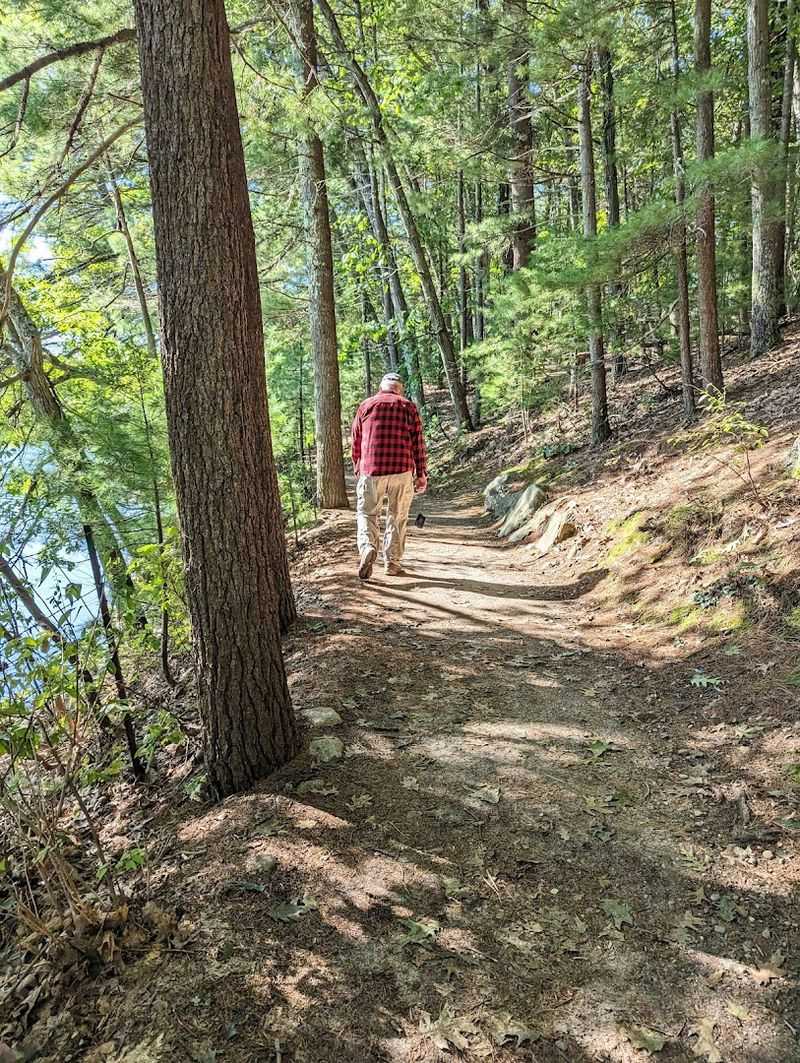
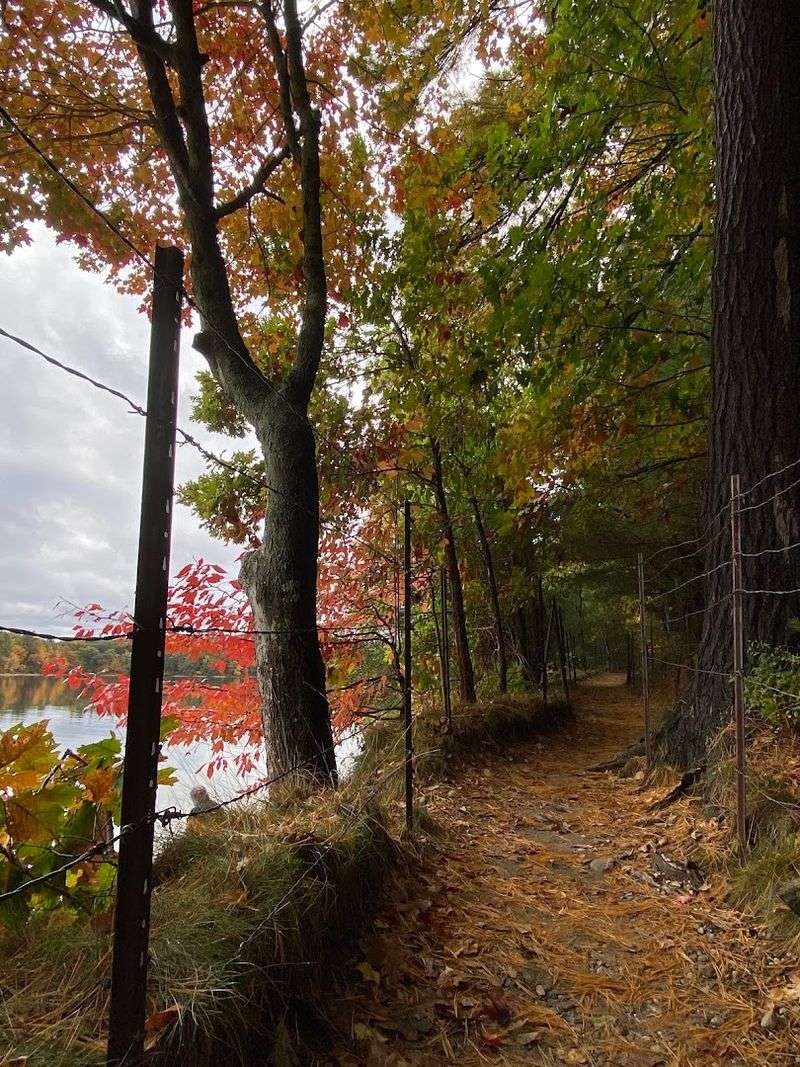
The most popular activity at Walden Pond is also one of the simplest: walking the perimeter trail that circles the entire pond. The loop measures approximately 1.7 miles and is almost entirely flat, making it accessible to a wide range of ages and fitness levels.
The path stays close to the water for much of its length, passing through mixed forest and offering regular views across the pond. At certain points, the trail widens into small clearings where people stop to rest or take in the surroundings.
For those who want more of a workout, additional trails branch off into the surrounding reservation and connect to a broader network of paths through the woodlands. These secondary trails can add distance and some elevation to the outing.
Most people complete the main loop in about 45 minutes at a relaxed pace. The trail is well-maintained year-round, and signage throughout the reservation keeps navigation simple even for first-time visitors to the area.
Swimming In A Historically Significant Lake
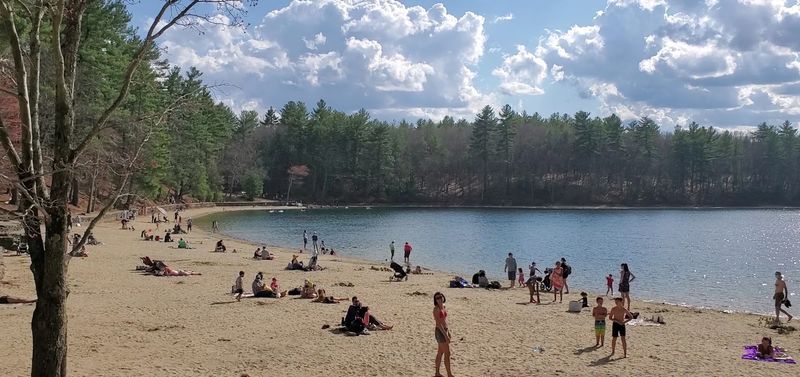
Not many historic landmarks allow you to swim in them, but Walden Pond is one of them. The pond is open for swimming during the warmer months, and the water quality is consistently rated as clean and clear thanks to the groundwater-fed system that keeps the pond naturally filtered.
There is a small sandy beach near the main entrance area where most swimmers gather. The bottom is sandy in the shallower sections, and the water stays cool even in midsummer due to the pond’s considerable depth.
Dogs are not permitted at the pond or beach areas, and there are rules in place to protect the water quality and the surrounding natural environment. Lifeguards are on duty during designated swimming hours in the summer season.
On hot summer days, the parking lot can fill up quickly and may close early once capacity is reached. Arriving early in the morning or later in the afternoon helps avoid the busiest windows and gives a more relaxed experience overall.
The Visitor Center And What It Offers
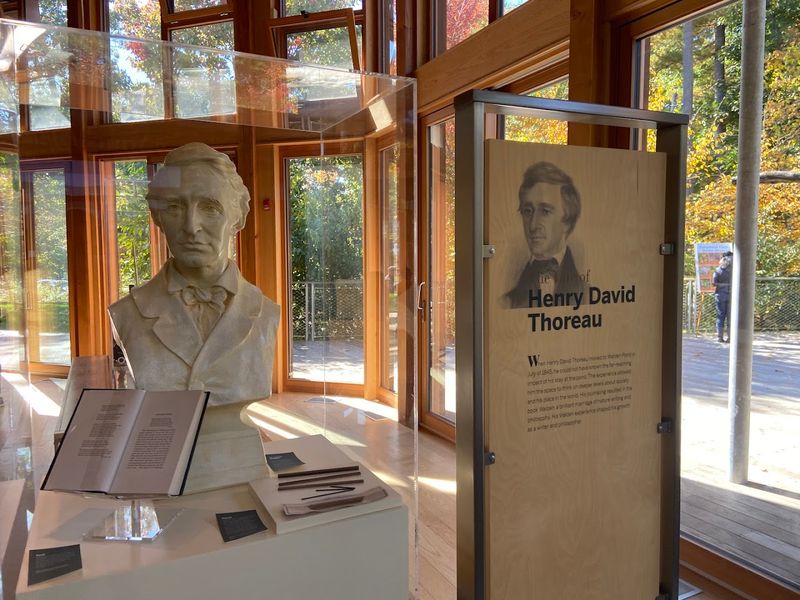
The visitor center at Walden Pond State Reservation serves as a solid starting point for anyone who wants context before heading out to the pond. It is well-maintained and staffed by knowledgeable rangers who can answer questions about the history of the site and the best trails to take.
Inside, exhibits cover Thoreau’s life and the broader significance of Walden as both a literary work and an environmental landmark. There is also a small gift shop where visitors can pick up books, maps, and other items related to the site’s history.
The visitor center connects naturally to the path that leads toward the replica cabin and the original cabin site, making it easy to move from learning to exploring without any confusion about where to go next.
Restroom facilities are available at the center, which is particularly helpful for families and those planning longer visits. The overall setup reflects a genuine effort to make the reservation both welcoming and educational for everyone who arrives.
Parking, Fees, And Getting There
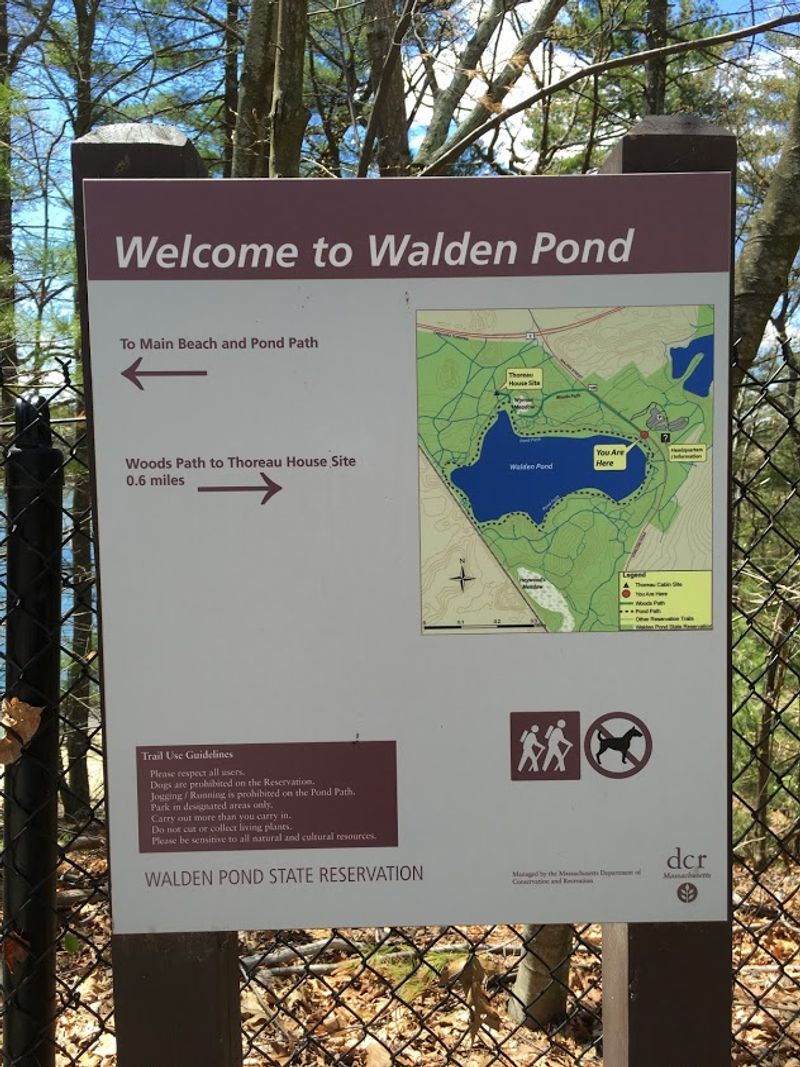
Practical planning goes a long way when visiting Walden Pond. The reservation charges a parking fee year-round, and the rates differ depending on your vehicle’s registration.
Massachusetts license plates are charged around eight dollars per day, while out-of-state plates are charged significantly more, typically around thirty dollars.
Payment machines and online payment options are available at the lot, so having exact cash is not required. The parking lot fills up fast on warm weekends and holidays, so arriving early is always the better strategy.
For those who prefer not to deal with parking at all, renting a bike from the Concord Visitor Center is a practical alternative. The ride to the pond takes roughly 20 minutes and the bikes can be locked at the reservation while you explore.
Public transit is another option. The Fitchburg Commuter Rail line from Boston stops at Concord Station, and from there the pond is an easy 20 to 25 minute walk through a pleasant New England town setting.
What Makes Fall The Most Talked-About Season
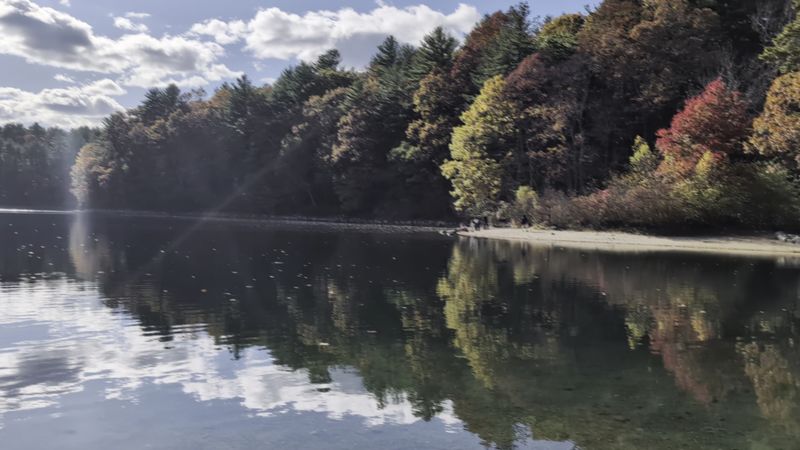
Autumn brings a particular kind of energy to Walden Pond that draws people from across New England and well beyond. As the surrounding forest transitions through its full range of fall color, the pond reflects the canopy above it, creating a landscape that photographers and casual walkers both find hard to leave.
The foliage typically peaks in mid to late October in the Concord area, though the exact timing shifts slightly from year to year depending on temperature and rainfall patterns throughout the season.
Fall also tends to bring slightly smaller crowds than the peak summer swimming season, which means the trail around the pond feels more open and the overall atmosphere more contemplative. That quality fits well with the reflective spirit Thoreau associated with the place.
Visiting during fall also means the parking situation is generally more manageable, though weekends during peak foliage can still get busy. A weekday visit in October often delivers the best combination of color, quiet, and accessibility.
Winter At The Pond: A Different Kind Of Visit

Most people think of Walden Pond as a warm-weather destination, but the reservation stays open year-round, and winter offers an entirely different kind of experience. The trails remain accessible and well-maintained even after snowfall, and the quieter atmosphere during the colder months gives the place a more reflective quality.
Thoreau himself was a keen observer of the pond in winter. He spent hours measuring the ice, recording temperatures, and documenting the behavior of animals and birds during the cold season.
His winter observations make up some of the most detailed and scientific sections of Walden.
On calm winter mornings, the parking lot tends to clear out faster and the path around the pond can be nearly empty. That kind of solitude connects directly to what Thoreau was after when he chose to live at the pond in the first place.
Dressing in warm layers and wearing appropriate footwear for icy or snowy trails makes a winter visit both safe and genuinely worthwhile for anyone willing to make the trip.
The National Historic Landmark Designation
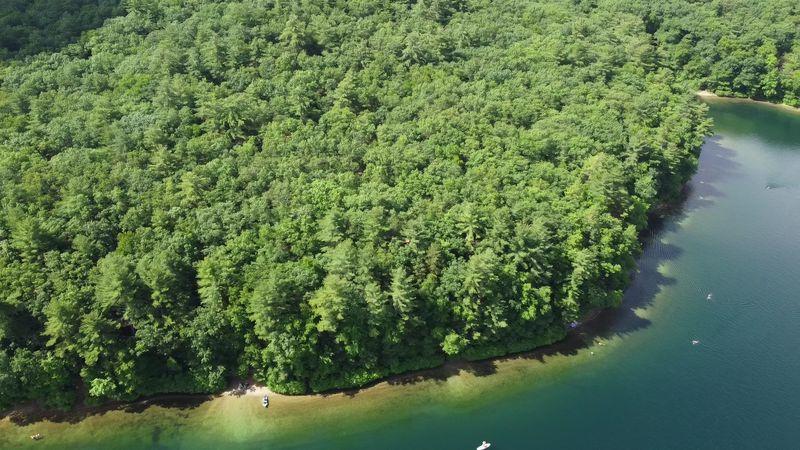
In 1962, Walden Pond and the surrounding reservation were officially designated a National Historic Landmark by the federal government. That designation places Walden Pond in the same category as sites recognized for their exceptional significance to American history and culture.
The designation was not just about the pond’s natural beauty. It was a formal acknowledgment that the ideas Thoreau developed while living at the pond had shaped American thinking about nature, conservation, and the relationship between individuals and the environment.
The landmark status has helped protect the site from development and ensured that the surrounding 335 acres remain preserved as a state park. That protection means future generations will be able to walk the same shoreline and visit the same cabin site that Thoreau described in his writing.
The recognition also ties Walden Pond to the broader history of the American conservation movement, connecting it to later figures and legislation that built on the foundation Thoreau helped establish through his time and writing at the pond.
Tips For A Tick-Safe Visit
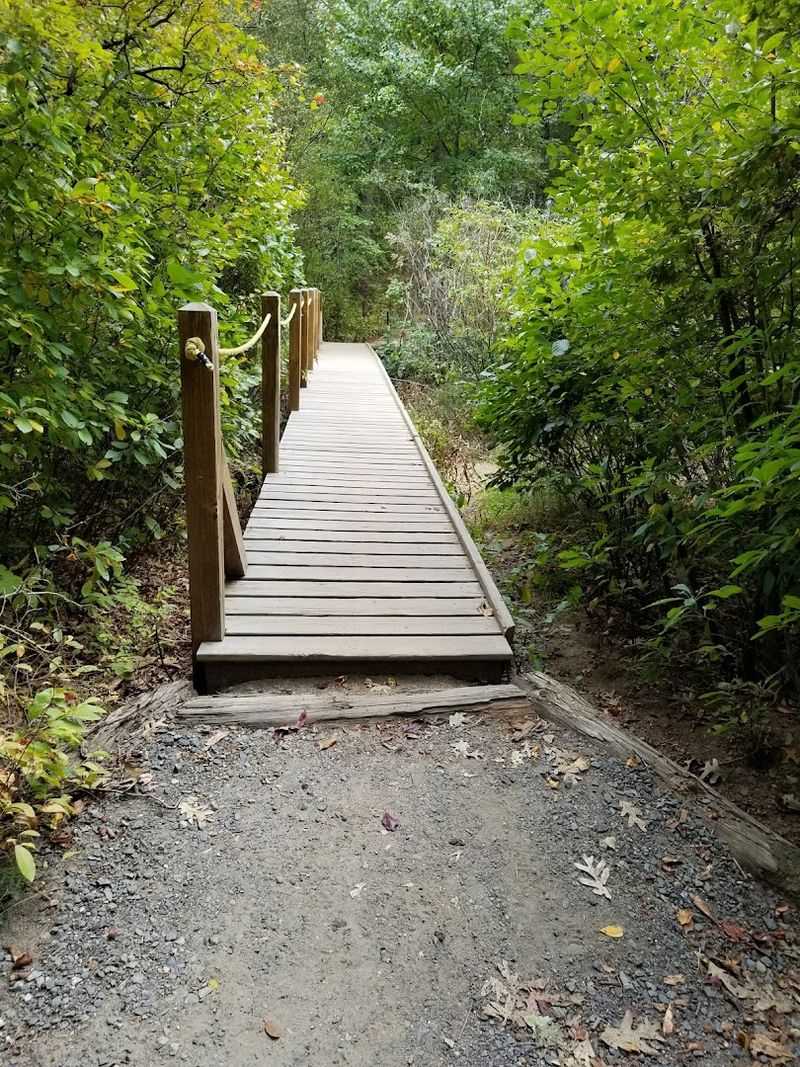
Walden Pond is a natural environment, and like most wooded areas in Massachusetts, it comes with a practical concern that every visitor should know about: ticks. The reservation posts visible warning signs during warmer months reminding people to take precautions before and after spending time on the trails.
Wearing long pants and closed-toe shoes when walking through grassy or brushy areas reduces exposure significantly. Applying insect repellent that contains DEET or permethrin to clothing before heading out adds another layer of protection against tick bites.
After any trail visit, doing a thorough tick check on clothing and skin is an important step, especially for children and pets. Removing ticks promptly and correctly reduces the risk of any tick-related illness considerably.
The reservation staff takes the issue seriously and keeps signage updated throughout the season. Being aware of the risk does not need to change the experience of visiting the pond, but taking a few simple steps beforehand makes the outing safer and more enjoyable for everyone involved.
Why Walden Pond Still Matters Today
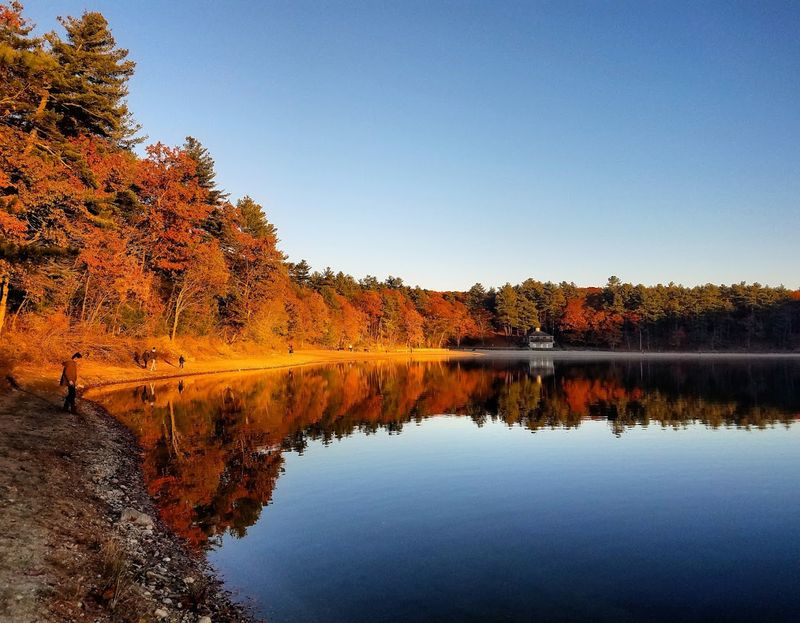
More than 170 years after Thoreau left his cabin on the shore, Walden Pond continues to draw people who are looking for something they struggle to find in everyday life. The pond has not changed dramatically in size or character, and that consistency is part of what makes it so compelling as a destination.
The ideas Thoreau worked through at Walden, about living with intention, paying attention to the natural world, and questioning what society tells us is necessary, feel just as pointed today as they did in the 1840s. The book he wrote there has been translated into dozens of languages and continues to be assigned in schools and universities worldwide.
The pond also stands as a model for conservation. Its protected status demonstrates what can happen when a community decides that some places are worth preserving simply because of what they represent, not just what they produce.
A visit to Walden Pond is not just a walk in the woods. It is a chance to stand in a place where one person’s quiet attention to the world around him changed the way millions of people think about their own lives.
Where Exactly Walden Pond Sits
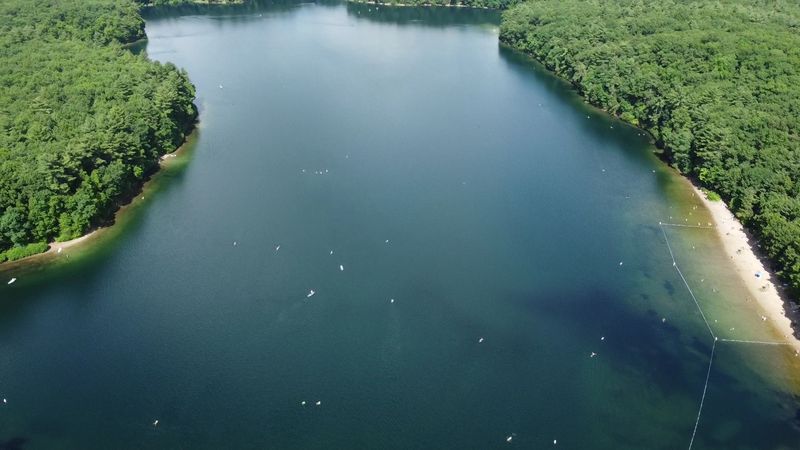
Most people have heard the name Walden Pond, but fewer know exactly where to find it. The pond is located in Concord, MA 01742, a town in Middlesex County about 20 miles northwest of Boston.
It sits within Walden Pond State Reservation, a 335-acre protected state park that was designated a National Historic Landmark in 1962. The reservation is managed by the Massachusetts Department of Conservation and Recreation.
Getting there by car is straightforward, with a paid parking lot on site. For those coming from Boston without a car, the Fitchburg Commuter Rail line stops at Concord Station, and the pond is roughly a 20 to 25 minute walk from there.
The town of Concord itself is worth exploring before or after a visit. It carries deep historical roots and offers a welcoming, small-town atmosphere that pairs naturally with a trip to the pond.
Share this story