The year 1982 was not a quiet one. Between landmark scientific procedures, chart-topping albums, and a global war fought over islands most people had never located on a map, it delivered a steady stream of stories that felt almost too strange to believe. Computers were creeping into living rooms, movie theaters were packed with audiences crying over fictional aliens, and a simple punctuation mark was quietly laying the groundwork for how billions of people would one day communicate. Some of what happened that year reshaped industries, policies, and everyday habits in ways that still hold today.
Whether you lived through 1982 or are discovering it for the first time, the events that defined it are far more surprising than most history books let on. Here are 13 strange but completely true events that made 1982 one of the most fascinating years of the entire decade.
1. A Tiny Arcade Character Became a Global Superstar
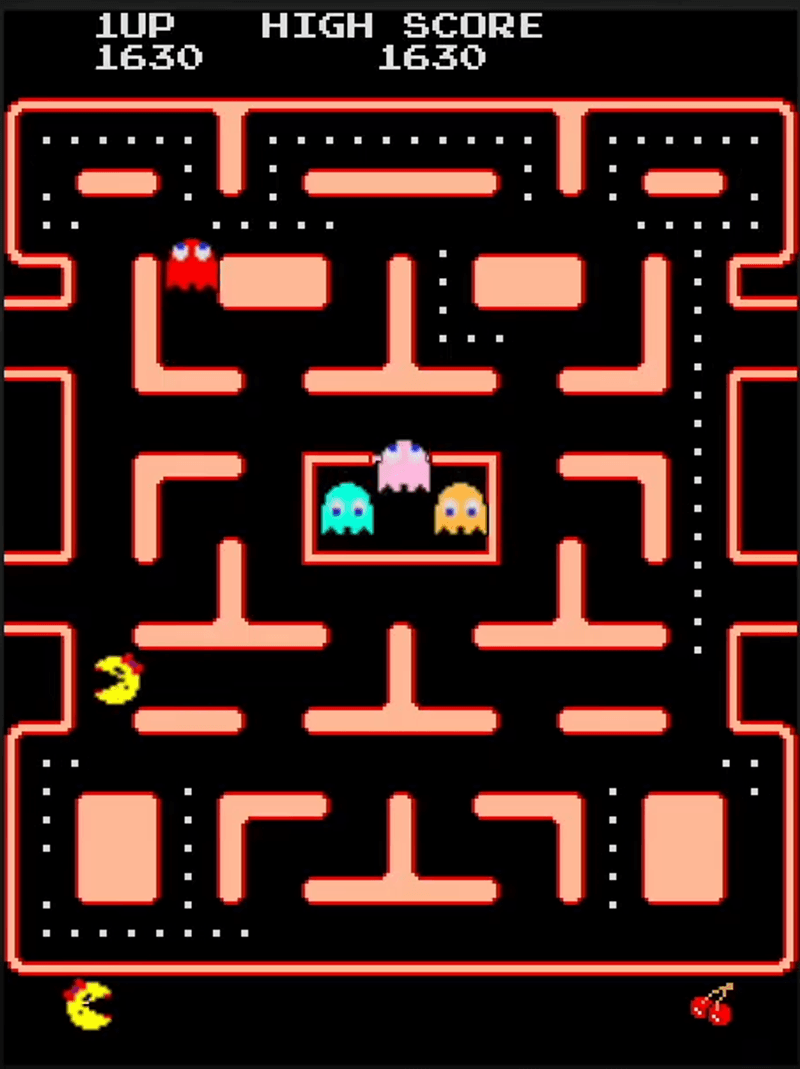
Pac-Man had technically arrived in American arcades in 1980, but by 1982 the yellow dot-muncher had reached a level of cultural saturation that no video game character had ever achieved before. Merchandise, lunchboxes, board games, and clothing all carried his circular face.
The Pac-Man craze was not just about quarters in machines. A Saturday morning cartoon series aired on ABC, and Buckner and Garcia released a novelty song called “Pac-Man Fever” that climbed to number nine on the Billboard Hot 100 chart in early 1982. A video game had produced a legitimate pop hit.
Atari released a home version of Pac-Man for the Atari 2600 in April 1982, and it became the console’s best-selling cartridge despite widespread criticism over its quality. The gap between arcade and home gaming was still enormous, but Pac-Man proved that video game characters could drive mainstream popular culture in ways nobody had fully predicted.
2. The Falklands War Began Over Remote Islands Few Had Heard Of
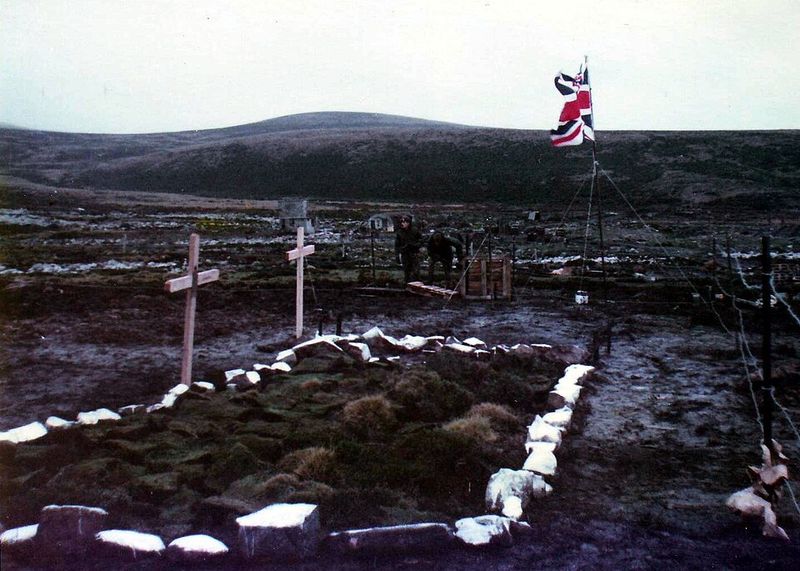
Argentina’s military dictatorship sent troops to the Falkland Islands on April 2, 1982, asserting its longstanding claim to the archipelago, which Argentina calls the Islas Malvinas. Britain had exercised control over the islands since 1833 after reasserting its authority and removing an Argentine settlement, and it maintained them as a colonial possession despite Argentina’s continued sovereignty claim. Prime Minister Margaret Thatcher responded by dispatching a naval task force to retake the islands.
The 74-day war involved naval engagements, air attacks, and ground combat across harsh terrain before Argentine forces surrendered on June 14. More than 900 people were killed during the conflict, including military personnel from both countries and three Falkland Islanders who died in a British friendly-fire incident.
Sovereignty over the islands remains disputed between Britain and Argentina. Most Falkland Islanders, whose population is largely descended from British settlers and later immigrants, have consistently expressed a preference to remain a British Overseas Territory, while Argentina maintains that the islands are part of its national territory.
3. The First Permanent Artificial Heart Was Successfully Implanted
On December 2, 1982, a team of surgeons at the University of Utah Medical Center implanted the Jarvik-7 artificial heart into 61-year-old retired dentist Barney Clark. The device was designed by physician Robert Jarvik and was intended to permanently replace Clark’s failing natural heart rather than serve as a temporary bridge to transplant.
The surgery lasted seven and a half hours. Clark, who had severe congestive heart failure and was not considered a candidate for a natural heart transplant, agreed to the experimental procedure knowing it carried enormous risks. He remained connected to a large external air compressor that powered the mechanical device.
Clark survived for 112 days after the operation before passing away from complications unrelated to the device itself. His case generated intense global media coverage and opened serious ethical debates about quality of life, experimental medicine, and the boundaries of cardiac science. The Jarvik-7 was a flawed but genuinely historic step in the development of mechanical heart technology that continues today.
4. E.T. Made Millions Cry Over an Alien

Steven Spielberg’s E.T. the Extra-Terrestrial opened on June 11, 1982, and almost immediately became a cultural phenomenon. The film followed a lonely boy named Elliott who befriends a stranded alien, and it connected with audiences of all ages in a way that few science fiction films had managed before.
By the end of its theatrical run, E.T. had earned over 792 million dollars worldwide, making it the highest-grossing film in history at that point and surpassing Star Wars. Critics praised its emotional honesty, and audiences returned to theaters multiple times, which was still a common practice in 1982.
One of the film’s most commercially interesting side effects involved candy. Reese’s Pieces appeared prominently in the movie after M&M’s turned down the placement opportunity. Sales of Reese’s Pieces reportedly increased by 65 percent following the film’s release. It became one of the earliest and most documented examples of product placement driving real consumer behavior, and marketers have studied it ever since.
5. The Tylenol Murders Changed Medicine Forever
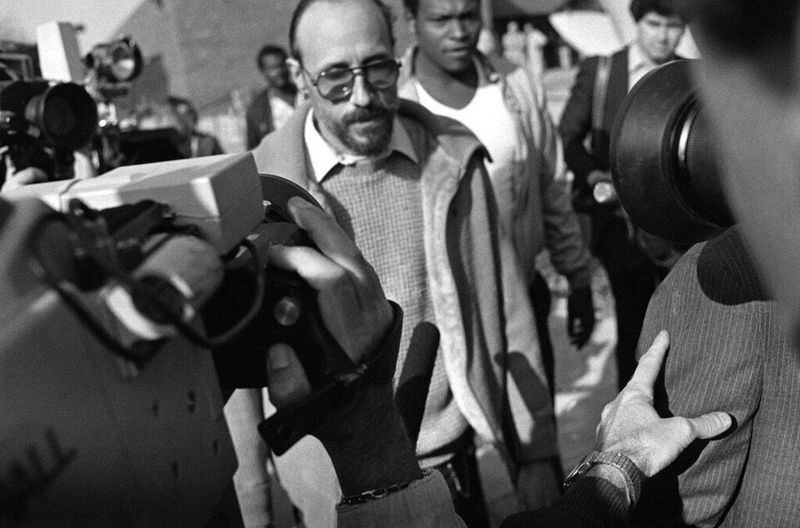
Seven people in the Chicago area lost their lives in September and October of 1982 after taking Extra-Strength Tylenol capsules that had been secretly laced with cyanide. The victims ranged from a 12-year-old girl to several adults, and the case sent shockwaves across the country.
Johnson and Johnson recalled more than 31 million bottles of Tylenol almost immediately. It was one of the largest product recalls in American history at that point, and the company acted faster than most corporations had ever responded to a public safety crisis.
The long-term consequences were enormous. By November 1982, the FDA had published new requirements for tamper-resistant packaging on over-the-counter medications. The following year, Congress passed the Federal Anti-Tampering Act, making it a federal crime to tamper with consumer products. The foil seals and safety caps that now appear on virtually every medicine bottle in the world exist directly because of this unsolved case.
6. Michael Jackson Released Thriller
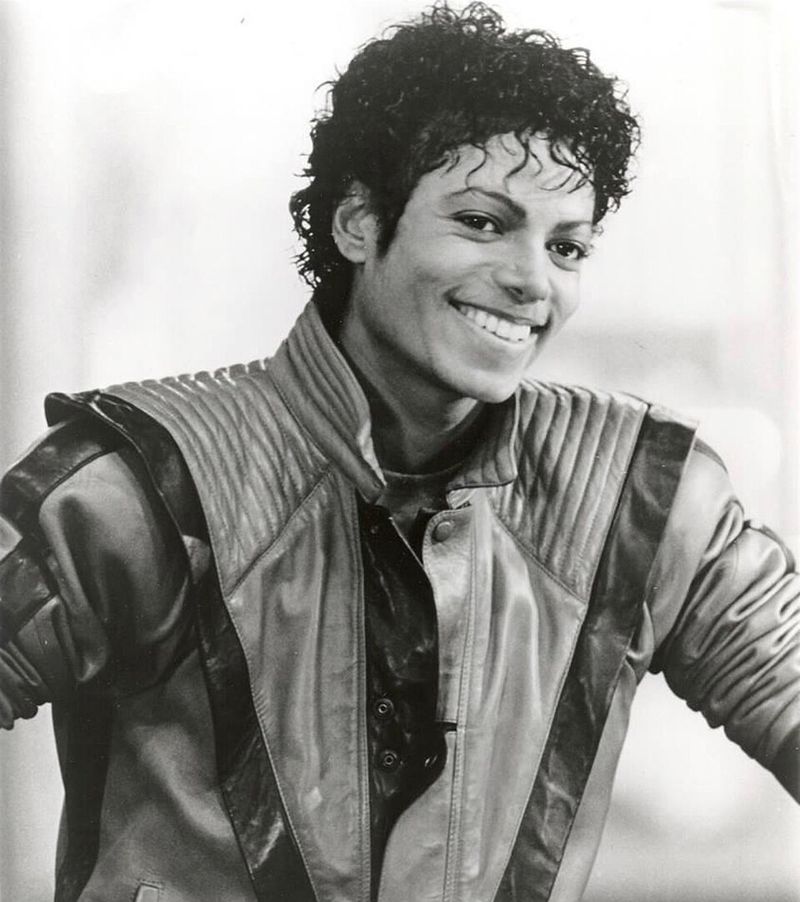
Released on November 30, 1982, Thriller was Michael Jackson’s sixth studio album and the follow-up to Off the Wall, which had already made him a major solo star. Few could have predicted that the new record would go on to become the best-selling album in recorded music history.
The album produced seven Top 10 singles on the Billboard Hot 100, a feat that had never been achieved before from a single album. Songs like “Billie Jean,” “Beat It,” and the title track each generated their own cultural moment, and the music video for “Thriller” transformed the format into a cinematic event when it aired in December 1983.
Beyond the numbers, Thriller broke racial barriers on MTV, which had largely avoided playing videos by Black artists before Jackson’s label pressured the network to air “Billie Jean.” That shift opened the door for a wider range of artists on the channel and permanently changed how the music industry approached music video promotion and visual storytelling.
7. The World’s First Commercial CD Was 52nd Street
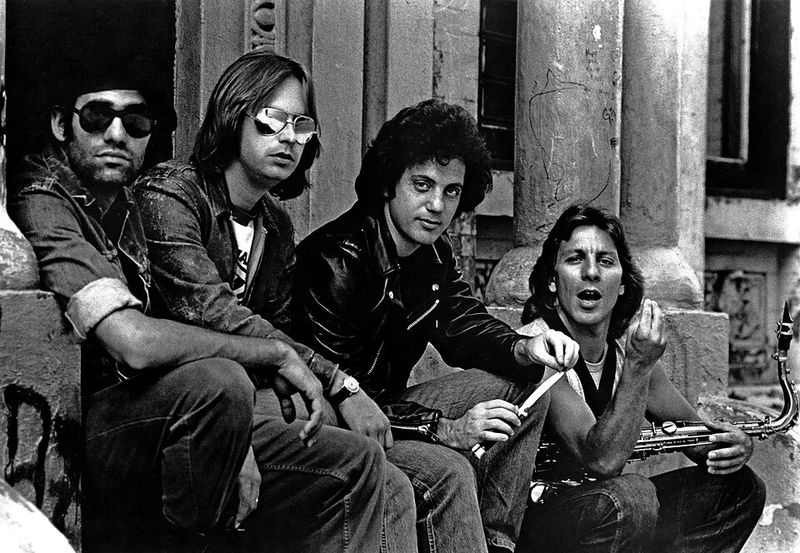
Billy Joel did not set out to make history with 52nd Street, but the 1978 album became the first commercially released compact disc ever pressed when the CD format officially launched in Japan on October 1, 1982. The choice was largely practical: it was already a popular album in Sony’s catalog and served as a convenient test title for the new format.
The disc itself was a technical marvel by the standards of 1982. At 4.72 inches in diameter, it could store up to 74 minutes of digital audio, a specification reportedly chosen so that it could hold Beethoven’s Ninth Symphony in its entirety, though that story has been disputed over the years.
Most consumers in 1982 had no idea what a compact disc was or how it worked. The idea that music could be stored digitally and read by a laser felt more like science fiction than a trip to the record store. Within a decade, the format would make vinyl and cassette tapes almost obsolete in mainstream retail markets worldwide.
8. Time Magazine Didn’t Choose a Person of the Year
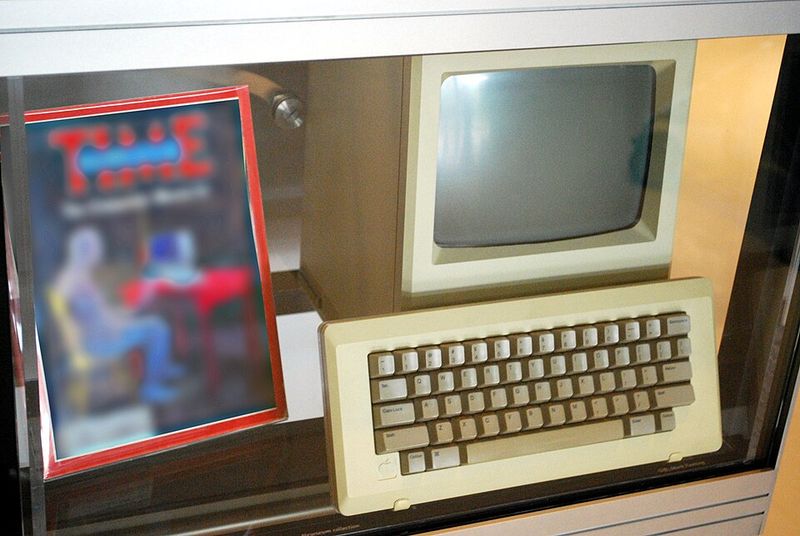
Every year since 1927, Time magazine had selected a Person of the Year to honor the individual who most influenced global events. In January 1983, covering the year 1982, the editors broke with tradition in a way that nobody had anticipated. They chose a machine instead of a person.
The Computer became Time’s Machine of the Year for 1982, appearing on the cover in a now-iconic illustration. The decision reflected growing public awareness that personal computers were no longer just tools for scientists and engineers. IBM had introduced its Personal Computer in 1981, and by 1982, machines were appearing in offices, schools, and homes at a rapidly increasing rate.
The editors explained their choice by noting that the computer had moved from a background technology to a central force in American life within just a few years. It was a prescient call. The 1980s would see home computing go from a novelty to a necessity, and Time’s decision captured that turning point with unusual accuracy for a mainstream publication.
9. A Theme Park Opened Inside EPCOT Center
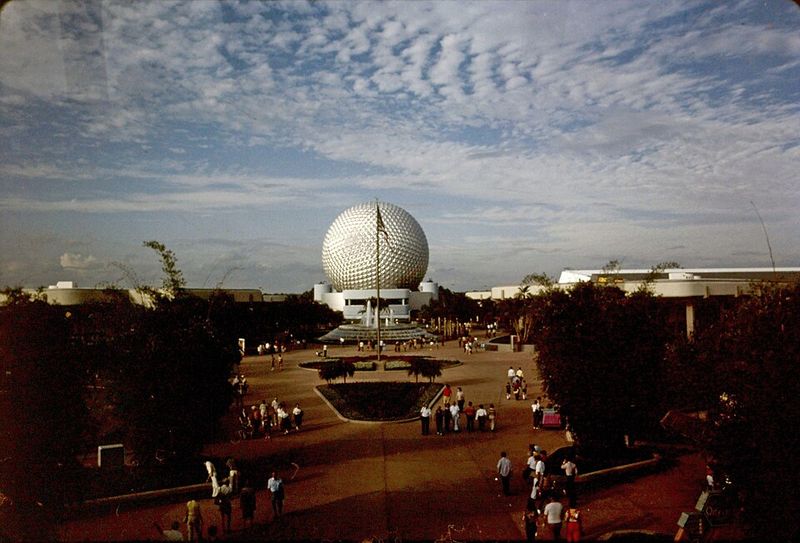
Walt Disney had originally envisioned EPCOT as an actual functioning city of the future, a planned community where cutting-edge technology would improve everyday life. By the time EPCOT Center opened at Walt Disney World on October 1, 1982, the concept had evolved into something far more unusual for a theme park: a permanent world’s fair.
The park was divided into two sections. Future World featured pavilions sponsored by major corporations including General Motors, Exxon, and Kodak, each presenting optimistic visions of technology’s potential. World Showcase offered permanent representations of eleven countries arranged around a large lagoon, giving visitors a walkable version of international culture.
EPCOT Center received mixed reactions from traditional Disney fans who expected rides and characters. The park had relatively few attractions in the conventional sense, and some critics found it more educational than entertaining. Over time, however, it developed a devoted following and became one of Disney’s most distinctive creative achievements, a place that genuinely attempted to make learning feel like a destination worth traveling to.
10. The First Compact Discs Went on Sale

On October 1, 1982, Sony and Philips jointly launched the compact disc format in Japan, placing both hardware and software on sale to consumers for the first time. The launch titles included 50 albums, mostly classical and jazz recordings, chosen to showcase the format’s audio clarity.
The CD had been in development since the mid-1970s, the result of a collaboration between two competing electronics giants who agreed to standardize the format rather than fight a format war. That decision was itself unusual in an industry prone to competing standards, and it likely accelerated the CD’s global adoption considerably.
Early adopters in Japan paid the equivalent of roughly 1,000 U.S. dollars for a CD player, and individual discs cost significantly more than vinyl records. Despite the price, the format gained momentum quickly. By the late 1980s, CD sales had surpassed vinyl in most major markets, and by the mid-1990s, the compact disc had become the dominant format for recorded music worldwide.
11. The First Emoji’s Ancestor Was Born

On September 19, 1982, Carnegie Mellon University computer scientist Scott Fahlman posted a message to an online bulletin board suggesting that the character sequence 🙂 be used to indicate that a message was meant as a joke. It was a practical solution to a specific problem: text-based communication had no reliable way to signal tone or humor.
Fahlman also proposed that 🙁 be used to mark serious messages. The idea spread quickly through academic computer networks, and within a few years, text emoticons had become a standard feature of online communication culture. The original post was later recovered from backup tapes in 2002 after having been thought lost.
The leap from Fahlman’s keyboard emoticon to the modern emoji took several decades and passed through Japanese mobile phone culture in the late 1990s before becoming a global standard. Today, billions of emoji are sent every day across every major messaging platform. The entire visual language of digital expression can trace its origin to a three-character suggestion typed on a university computer in 1982.
12. The First CD Player Reached Consumers
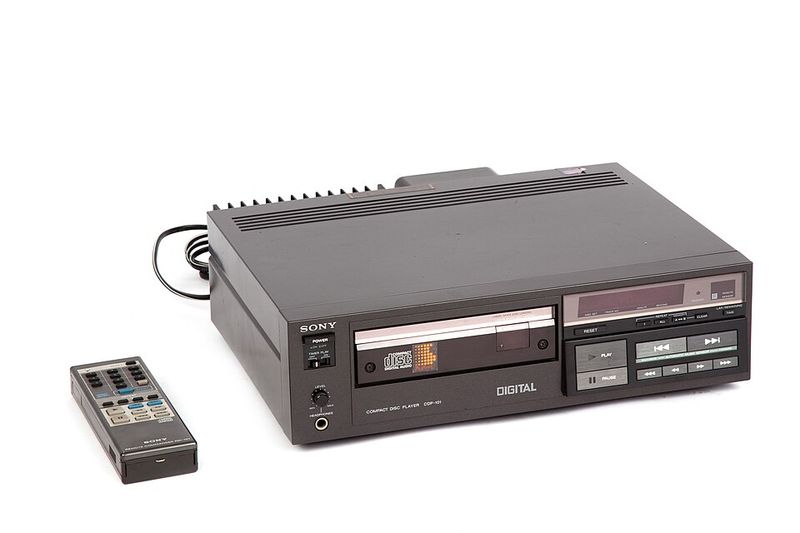
Sony released the CDP-101, the world’s first commercially available CD player, in Japan on October 1, 1982, the same day the first compact discs went on sale. The machine was a sleek, front-loading device with a digital display and a price tag of around 168,000 Japanese yen, which translated to roughly 740 U.S. dollars at the time.
The CDP-101 was aimed squarely at audiophiles and early technology adopters who were willing to pay a premium for what Sony marketed as perfect sound quality. The player could read data from the disc using a laser, with no physical contact between the needle and the recording surface, which meant theoretically the disc would never wear out from repeated play.
Europe received its first CD players and discs in March 1983, and the United States followed shortly after. The format’s rollout was carefully staged to build demand before flooding the market. Within five years of the CDP-101’s debut, CD players had moved from luxury items to standard household electronics found in living rooms across the developed world.
13. The Commodore 64 Became the Best-Selling Computer of All Time
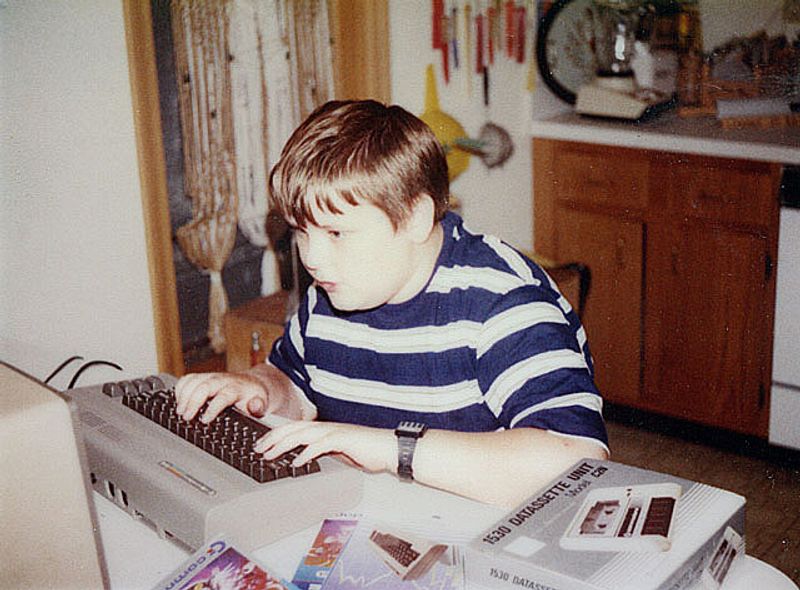
Commodore International introduced the Commodore 64 at the Consumer Electronics Show in January 1982, and it went on sale later that year at a price of 595 dollars. That figure was significantly lower than competing home computers, and it gave millions of families their first realistic path to owning a personal computer.
The machine came with 64 kilobytes of RAM, a color display, and sound capabilities that were genuinely impressive for a home computer at that price point. Software developers quickly recognized its potential, and a library of games, educational programs, and business applications grew rapidly throughout the early 1980s.
By the time production ended in 1994, an estimated 12.5 to 17 million units had been sold, making the Commodore 64 the best-selling single personal computer model in history. It introduced an entire generation to programming, gaming, and the idea that a computer was a household appliance rather than a corporate or academic tool. Its influence on the personal computing era is difficult to overstate.
Share this story