Millions of travelers once passed through this grand Omaha train station, but today it’s home to one of Nebraska’s most rewarding museum experiences. Visitors can walk through beautifully restored passenger train cars, admire one of America’s finest Art Deco railroad stations, browse exhibits featuring everything from rare historic coins to recreated 1940s storefronts. Every floor reveals another piece of American history, making it easy to spend hours exploring.
The museum continues to surprise returning visitors with rotating Smithsonian-affiliated exhibitions, interactive displays for all ages, and galleries that tell the story of the American West, the railroads, and everyday life across generations. Whether you’re fascinated by architecture, trains, history, or simply looking for one of Omaha’s standout attractions, there’s far more here than most people expect.
Here’s why The Durham Museum has become one of Nebraska’s most popular museums and a must-visit destination in downtown Omaha.
Where Grand Journeys Once Began: The Address and Setting
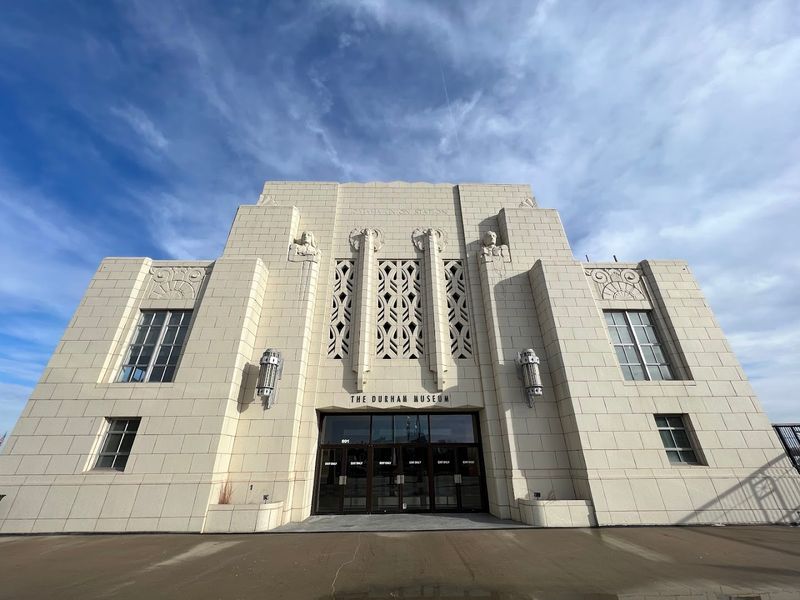
There is something immediately commanding about the building that stands at 801 South 10th Street, Omaha, NE 68108, right in the heart of Downtown Omaha near the Historic Old Market district. The Durham Museum occupies what was once Omaha’s Union Station, a proud architectural landmark that served as a primary gateway to the American West for decades.
The building is a designated National Historic Landmark, recognized not only for its historical importance but also for its exceptional architectural character. Approaching it for the first time, the sheer scale of the structure signals that something significant is housed within. Intricate sculpted figures of a brakeman, locomotive engineer, civil engineer, and railroad mechanic are carved above the grand entrances, each one nodding respectfully to the workers who built and ran the railroads.
The museum holds a 4.7-star rating across thousands of visitor reviews, a number that speaks for itself. Its location makes it easily accessible from multiple directions, and a free two-level parking deck on site is a genuine bonus in a busy downtown area.
The Architecture That Stops Visitors in Their Tracks
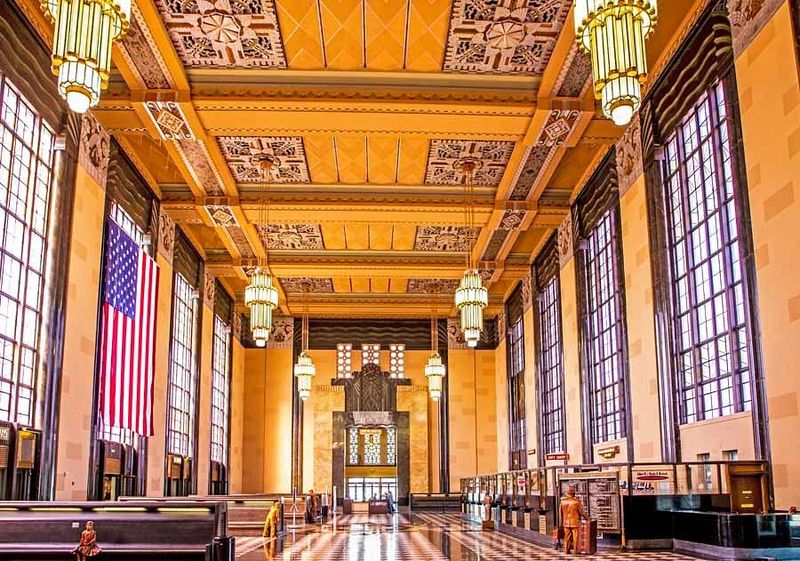
Not every building has a single creative mind behind every detail, from the ceiling down to the door handles, but this one does. Gilbert Stanley Underwood, the celebrated architect commissioned by Union Pacific Railroad, designed the station that opened in 1931 as an architectural showpiece for the railroad’s headquarters city.
Underwood’s dedication to cohesion was extraordinary. He personally oversaw the design of light fixtures, filing cabinets, and doorplates, ensuring that the Art Deco aesthetic ran consistently through every corner of the building. This was also the first railroad station Union Pacific had ever built in the Art Deco style, making it a milestone in both the company’s history and American architectural history.
The exterior is clad in glazed terra cotta over a steel frame, giving the building a luminous quality in natural light. Inside, the Suzanne and Walter Scott Great Hall measures 160 feet by 72 feet with a 60-foot ceiling, adorned with gold and silver leaf plasterwork, blue and black Belgian marble, and six chandeliers each standing 13 feet tall. It is a space that earns the word breathtaking honestly.
From Bustling Hub to Historic Landmark: The Station’s Heyday
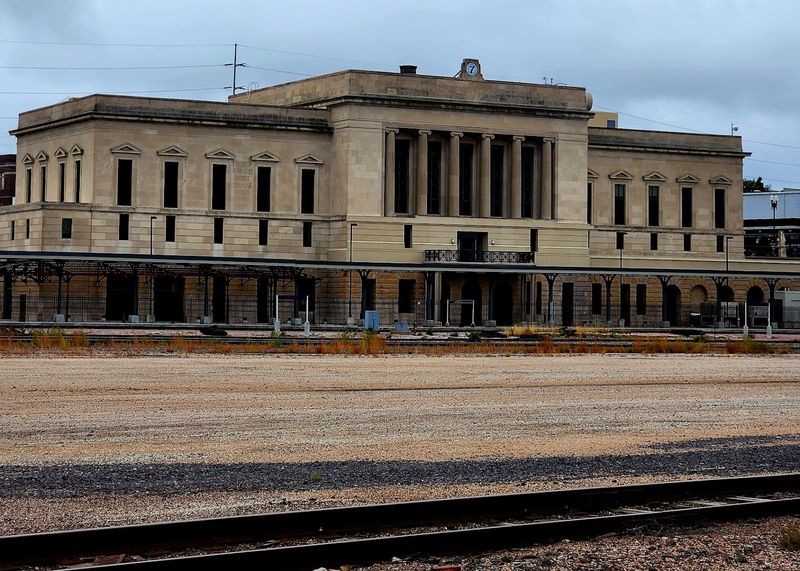
At its peak, Omaha’s Union Station was one of the busiest train stations in the entire country, and the numbers behind that claim are genuinely staggering. Up to 64 passenger trains moved through each day, carrying as many as 10,000 passengers daily through the station’s grand halls.
World War II transformed the station into a critical military hub. Troops and supplies moved through constantly, and a dedicated USO center was established inside, offering soldiers letter-writing facilities, dormitory space, and shower access. It was a place where ordinary people did extraordinary things during one of the most consequential periods in American history.
The postwar decades brought a different kind of pressure. As commercial aviation expanded and the interstate highway system grew, passenger rail traffic declined steadily across the country. By 1971, the station ceased passenger service entirely, closing a chapter that had defined it for four decades. But rather than fading quietly, this building was about to begin an entirely new story, one that would bring even more people through its doors than the trains ever did.
A New Purpose: The Museum’s Transformation and Naming Story
After Union Pacific donated the station to the City of Omaha in 1973, the building got a second chance that few historic structures ever receive. Two years later, in 1975, it reopened as the Western Heritage Museum, beginning its new life as a cultural institution dedicated to preserving the history of the American West and the greater Midwest region.
The next major turning point came in the mid-1990s, when a $22 million renovation project breathed fresh energy into the aging structure. Charles and Margre Durham, prominent Omaha civic leaders, contributed significantly to that effort, and the museum was renamed the Durham Western Heritage Museum in 1998 to honor their generosity and vision.
On April 6, 2008, the institution took on its current identity as The Durham Museum, a name that carries both a tribute to its benefactors and a forward-looking sense of purpose. This evolution from active train station to beloved community museum spans nearly a century of reinvention, and each chapter adds another layer to the building’s remarkable story. The next section reveals what is waiting on the track level below.
Climb Aboard: The Restored Train Cars That Steal the Show
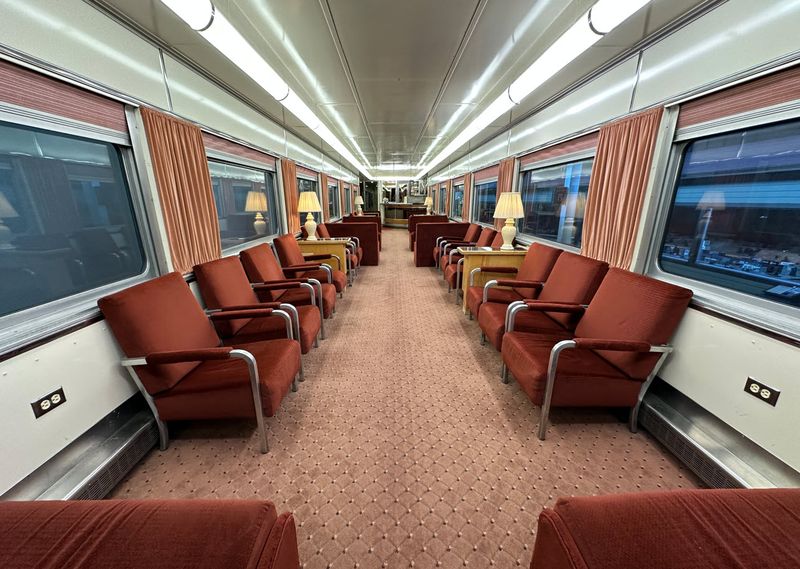
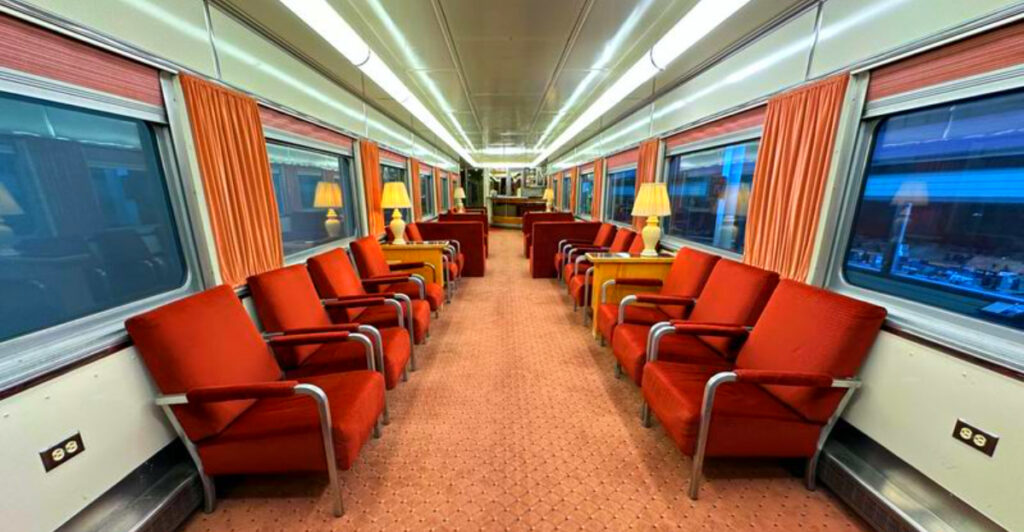
Ask almost any visitor what their favorite part of The Durham Museum was, and the answer is almost always the same: the trains. The track level of the museum houses an impressive collection of restored rail cars that you can actually board and walk through, which instantly sets this experience apart from a typical exhibit.
The collection includes the Union Pacific 1202 Pullman Sleeper named “National Command” from 1956, the Southern Pacific 2986 Lounge Car from 1949, and the Pullman Observation Car “Cornhusker Club” from 1924. Each car has been meticulously preserved, and the interiors genuinely transport you to a time when cross-country rail travel was considered a luxurious adventure rather than a commute.
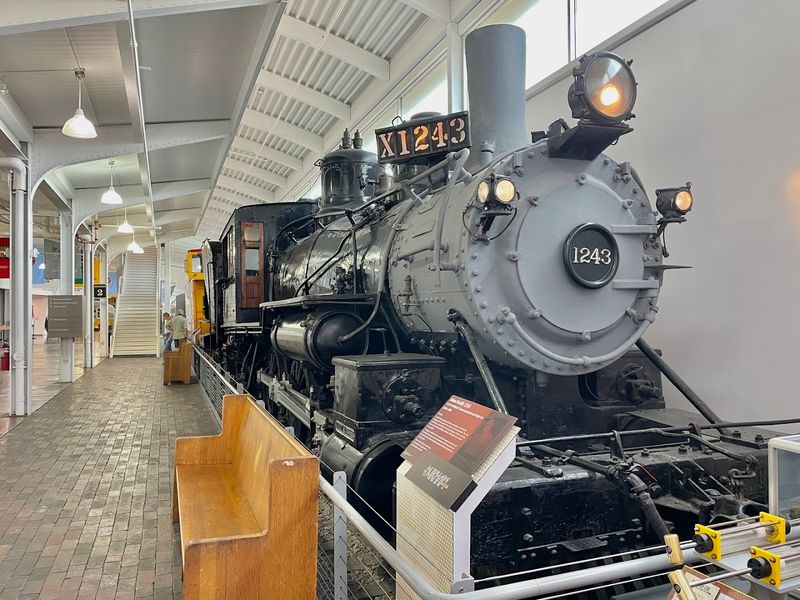
Rounding out the collection is a Union Pacific 1243 Steam Locomotive from around 1890 and a Union Pacific 25559 Caboose from 1962, along with an authentic Omaha and Council Bluffs Railway streetcar from the 1940s. Running your hand along the polished wood paneling of a Pullman sleeper is a tactile history lesson that no textbook can replicate.
Smithsonian Affiliate: World-Class Exhibits in the Heartland
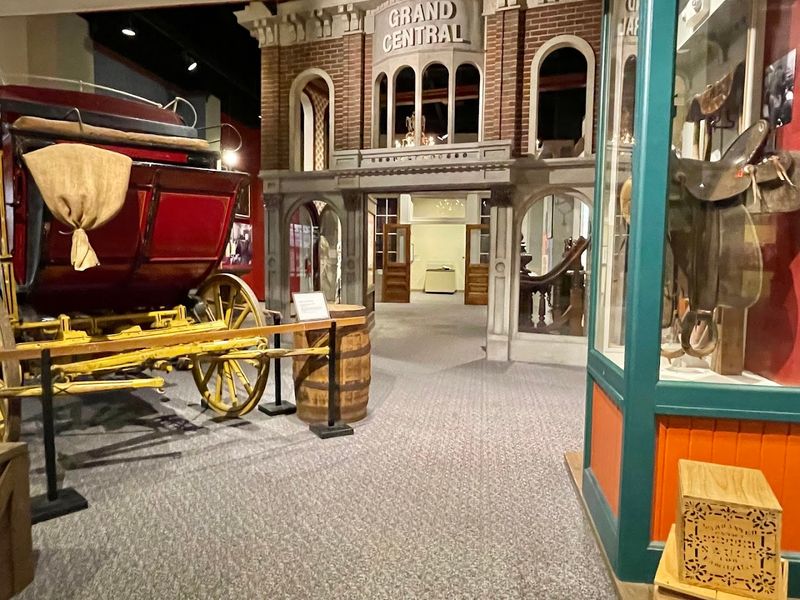
Being a Smithsonian affiliate is not a casual distinction. It means The Durham Museum has access to a network of traveling exhibitions that would typically only reach much larger cities, and the museum uses that access to consistently bring in programming that keeps regular visitors coming back.
Recent and upcoming highlights illustrate just how wide-ranging that programming can be. The “Heroes and Villains: The Art of the Disney Costume” exhibit brought nearly 70 original costumes from beloved Disney productions to Omaha, drawing visitors who might not have considered themselves museum regulars. Upcoming exhibits include “Antarctic Dinosaurs,” which explores prehistoric creatures from a surprising part of the world, and “Animation Academy: From Pencils to Pixels,” an interactive journey through the craft of animation.
The museum also plans to host “HOCKEY: Faster Than Ever,” an interactive science and culture exhibit, and a return of the popular “White Christmas: The Exhibition,” featuring original film costumes and props. These rotating exhibits, combined with speaker series and film screenings in the Stanley and Dorothy Truhlsen Lecture Hall, ensure the museum always has something new to offer no matter how many times you have visited before.
Hands-On History: Interactive Experiences for Every Age
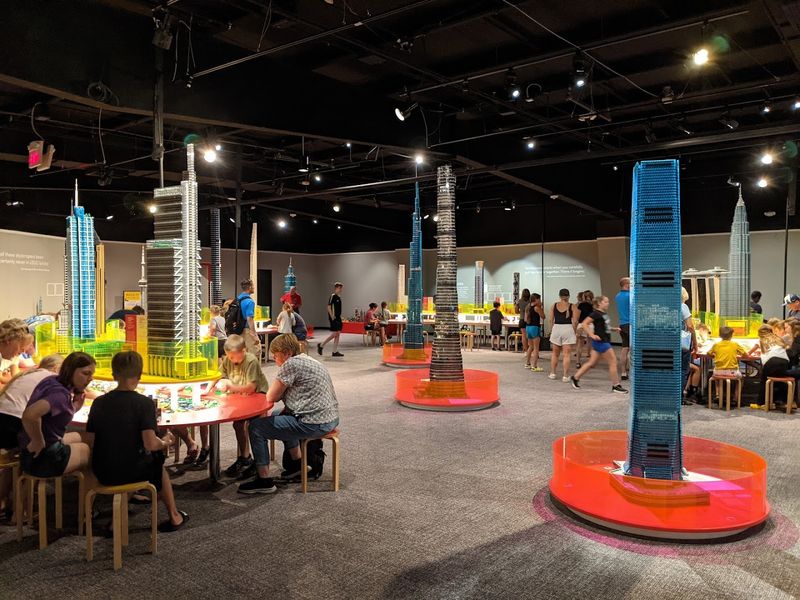
History museums sometimes get a reputation for being places where you look but do not touch, and The Durham Museum has clearly decided to challenge that idea. The O scale model train layout alone is worth the visit for anyone who has ever been even mildly fascinated by railroads. This detailed diorama represents Union Pacific’s double-track main line from Omaha to Ogden, Utah, as it appeared in the 1950s, and push-button interactives let you lower crossing guards, light up buildings in “Durham Junction,” and keep the trains running on time.
For younger visitors, a dedicated children’s area next to the passenger train is stocked with toy trains, LEGOs, and building materials that encourage creative play and early problem-solving. The “Conflict Brings Change” area addresses more serious historical territory, including Omaha’s Red Summer of 1919, with digital interactives that provide context and nuance appropriate for older children and adults.
The museum also hosts programs like “Fairy Tale Storytime and Platform Play,” where children can dress in costumes, and “Disney Trivia” events that bring a playful competitive energy to the space. There is genuinely something here for every type of visitor, regardless of age or interest.
Art Woven Into Every Corner: Sculptures and Murals
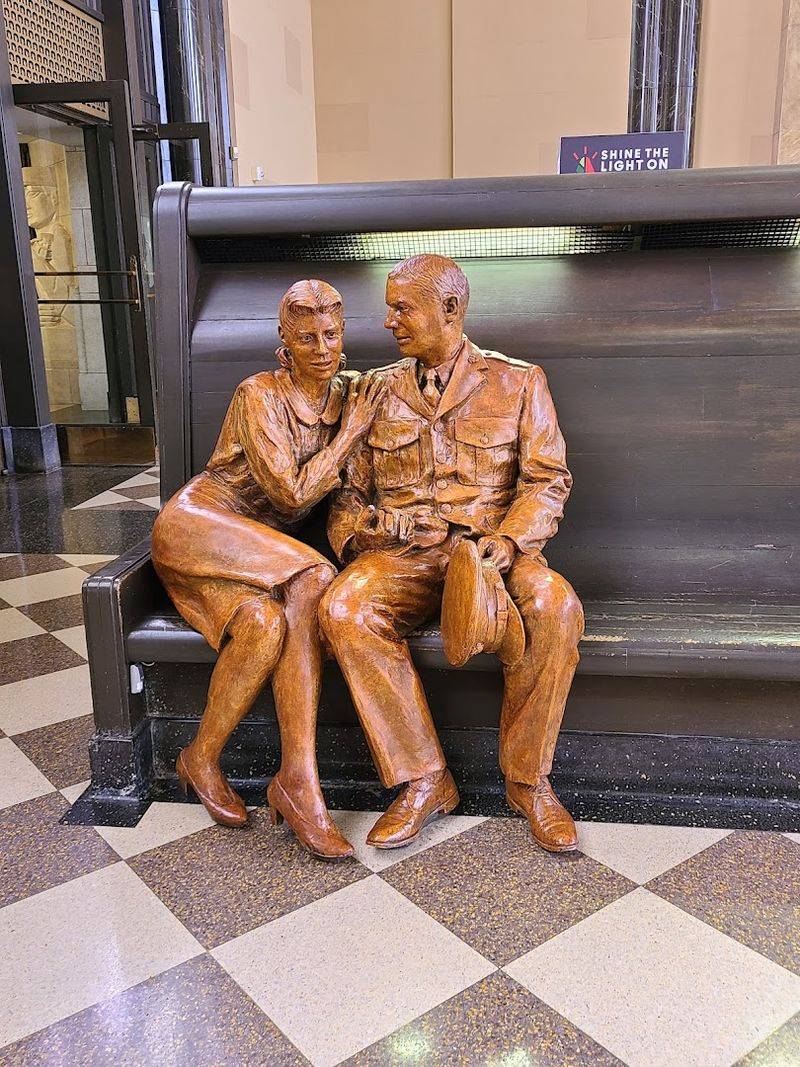
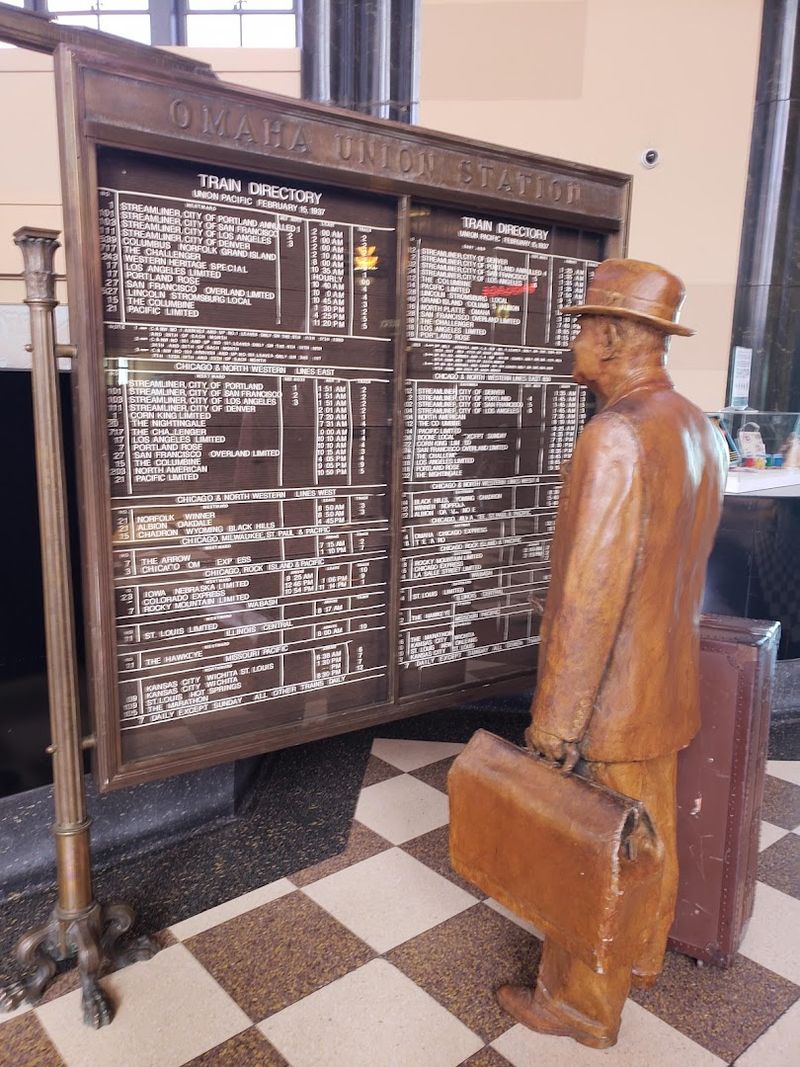
The artistic dimension of The Durham Museum extends well beyond the building’s famous architecture. Throughout the Suzanne and Walter Scott Great Hall, life-like sculptures by Omaha artist John Lajba are positioned to help visitors visualize the people who once filled this space. These figures are not decorative afterthoughts; they are carefully placed to tell stories, adding a human dimension that transforms the hall from a beautiful room into a populated moment in time.
Lajba, whose other notable public works include the “Road to Omaha” sculpture at Charles Schwab Field, has a particular talent for capturing the weight and movement of ordinary human experience. The museum holds the largest collection of his sculptures, making it an important destination for anyone interested in contemporary public art alongside historical exhibits.
In what was once the Hayden House restaurant, now known as the Swanson Gallery, six murals painted in 1931 by Los Angeles artist Joseph Keller depict the history of transportation. These murals were an original feature of the station, commissioned to reflect the building’s purpose, and they remain a striking visual record of how Americans understood progress and movement nearly a century ago. Art and history rarely blend this seamlessly.
Planning Your Visit: Hours, Tickets, and Practical Tips
Getting the most out of a visit to The Durham Museum starts with a few practical details that make a real difference. The museum is located at 801 South 10th Street in Omaha, accessible from both 10th Street and Leavenworth Street, and a free two-level parking deck is available on site. Note that the 10th Street entrance has a 7.5-foot height restriction, while the Leavenworth Street entrance accommodates taller vehicles.
Hours vary by day: Sunday runs from noon to 4 PM, Monday and Wednesday through Friday from 10 AM to 4 PM, and Tuesday from 10 AM to 8 PM, which is a particularly good option for those who want a quieter, later visit. During summer months, the museum is open seven days a week. Admission is $17 for adults, $14 for seniors aged 62 and over and military or veteran visitors, and $10 for children aged 3 to 12, with children under 2 and members admitted free.
Most visitors comfortably cover the main exhibits in two to three hours, though dedicated history fans often stay longer. Weekday afternoons, particularly Wednesday and Thursday, tend to be the quietest times. The museum can be reached by phone at 402-444-5071 or online at durhammuseum.org for the latest exhibit and event schedules.
Share this story