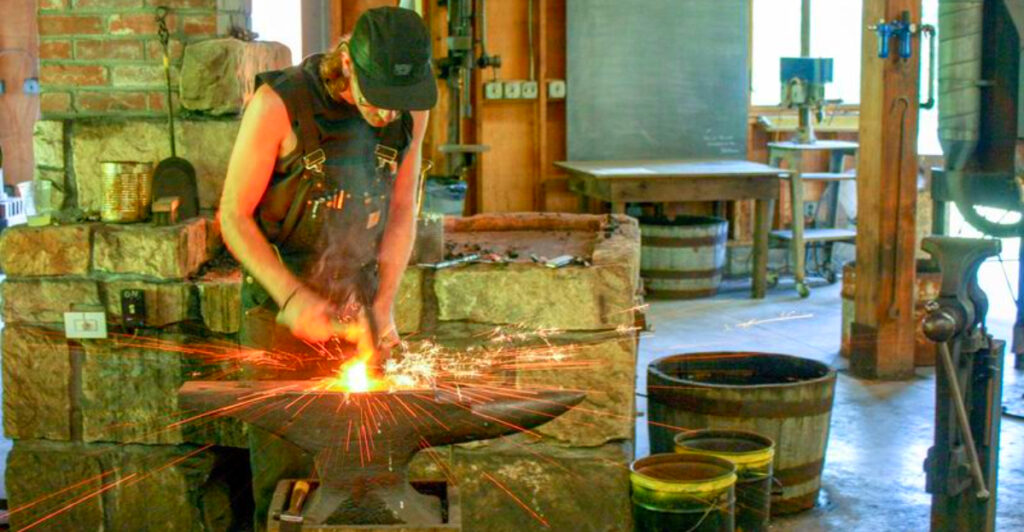
While many traditional crafts have faded with time, blacksmithing continues to thrive in workshops where centuries-old techniques are still practiced. Across the world, skilled artisans keep this historic trade alive, shaping iron by hand and preserving an important part of our shared heritage.
From historic forges to mountain craft schools, these 14 destinations celebrate the enduring art of blacksmithing. Each offers a unique glimpse into a profession that once stood at the heart of everyday life and continues to inspire new generations of makers.
1. Colonial Williamsburg Blacksmith Shop, Williamsburg, Virginia
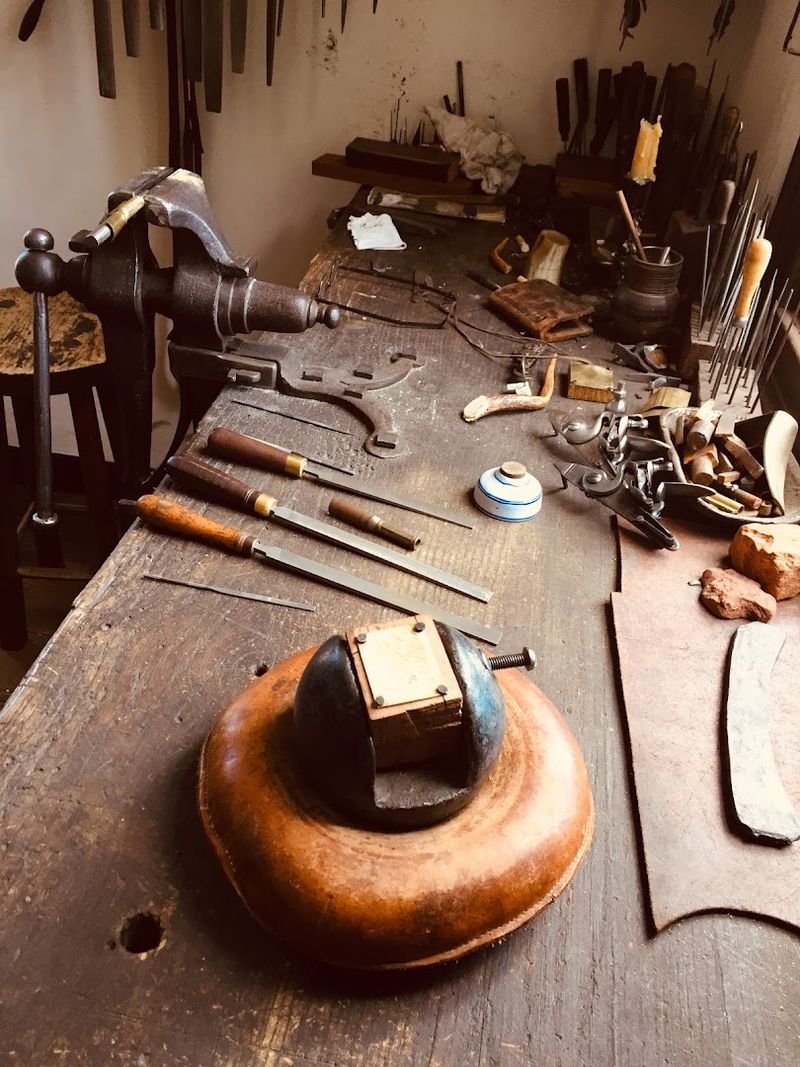
Long before hardware stores existed, the blacksmith was the person every colonial town depended on to keep daily life running. At Colonial Williamsburg in Virginia, that reality is not just taught in textbooks but demonstrated live, every day, in one of the most authentic working trade shops in any living history museum in the United States.
Skilled artisans use actual 18th-century tools and methods to transform heated iron into tools, architectural hardware, and historical weaponry. The demonstrations are rooted in accuracy, not theater, replicating processes that were standard practice in colonial America.
Visitors can watch the full sequence from raw metal to finished object, gaining a clear picture of how labor-intensive and precise this trade really was. It is the kind of hands-on history that makes a much stronger impression than any display case ever could.
2. Old Sturbridge Village Blacksmith Shop, Sturbridge, Massachusetts
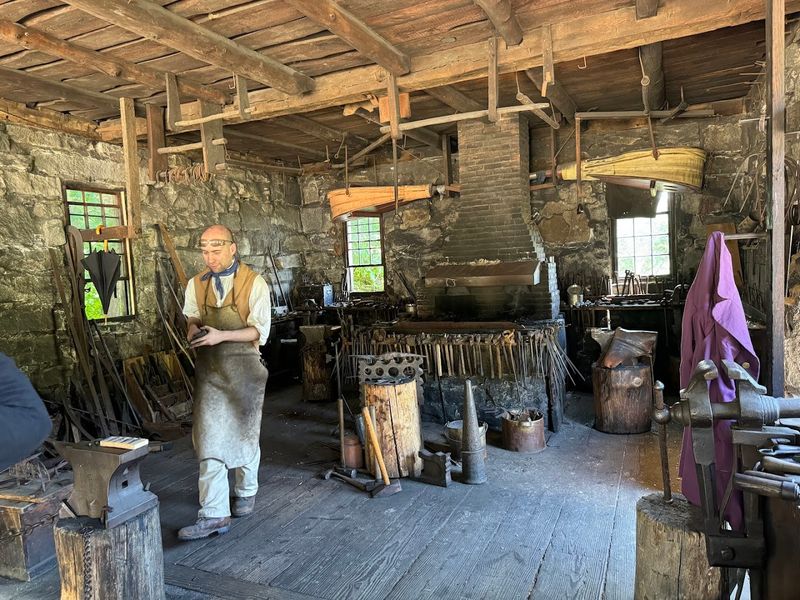
The blacksmith shop at Old Sturbridge Village has a surprisingly specific origin story. The building was constructed between 1802 and 1810 by a craftsman named Moses Wilder in Bolton, Massachusetts, using roughly 400 granite stones he quarried himself. It was relocated to the museum in 1957 and has been demonstrating rural New England ironwork ever since.
The shop features a double forge built from brick and mortar, sharing a single chimney, which allowed two blacksmiths to work side by side in a space of about 25 by 30 feet. Only hand-powered tools are used here, keeping the experience true to the late 1700s and early 1830s period the village recreates.
One current blacksmith at the village can produce over 100 nails per hour on a slow day, which puts the pace and demand of colonial ironwork into sharp perspective.
3. Black Country Living Museum, Dudley, West Midlands, England
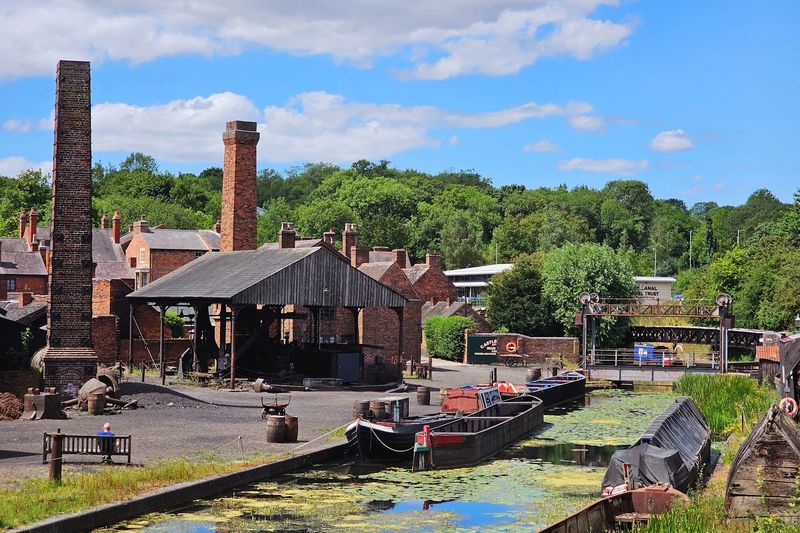
The Black Country in England got its name from the coal dust and iron smoke that once covered the region, and the Black Country Living Museum in Dudley makes sure that industrial identity is never forgotten. This open-air museum reconstructs a canalside village from the 1830s to the 1960s, complete with workshops that show how deeply ironworking was woven into everyday community life.
Traditional metalworking here is not framed as a curiosity from the past. It is presented as the backbone of a real working landscape, where families, trades, and entire neighborhoods were shaped by the forge and the factory.
The reconstructed workshops give visitors a concrete sense of how ironwork moved through every layer of industrial society, from the tools used in homes to the hardware that kept canal boats and collieries operating across the region.
4. Blists Hill Victorian Town, Telford, Shropshire, England
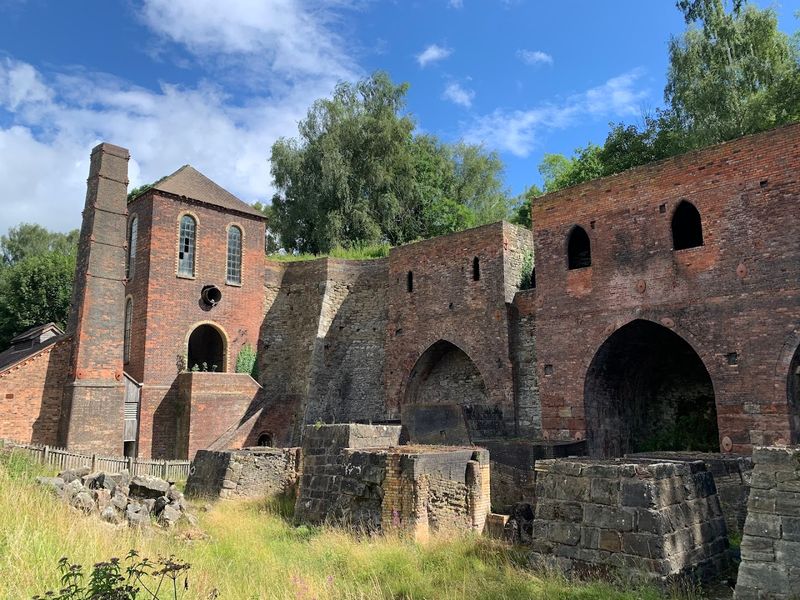
Blists Hill Victorian Town, part of the Ironbridge Gorge Museum Trust in Shropshire, does not just recreate the look of a Victorian community. It recreates the work. A recently installed 1880s William Allday and Co. cast iron forge sits at the center of the blacksmithing program, allowing for live demonstrations of traditional ironworking techniques in a fully period-appropriate setting.
Visitors can book Victorian Blacksmith Experience Days, where they learn to prepare and light a coke-fired forge under expert guidance before attempting to make their own coat hook, fire poker, or bottle opener to take home. All staff work in period dress, which keeps the immersion consistent throughout.
Historically, the village blacksmith kept the forge burning all day to meet constant community demand, repairing tools, forging nails, shaping horseshoes, and producing farming implements. That rhythm is still felt here.
5. Beamish Museum, Stanley, County Durham, England
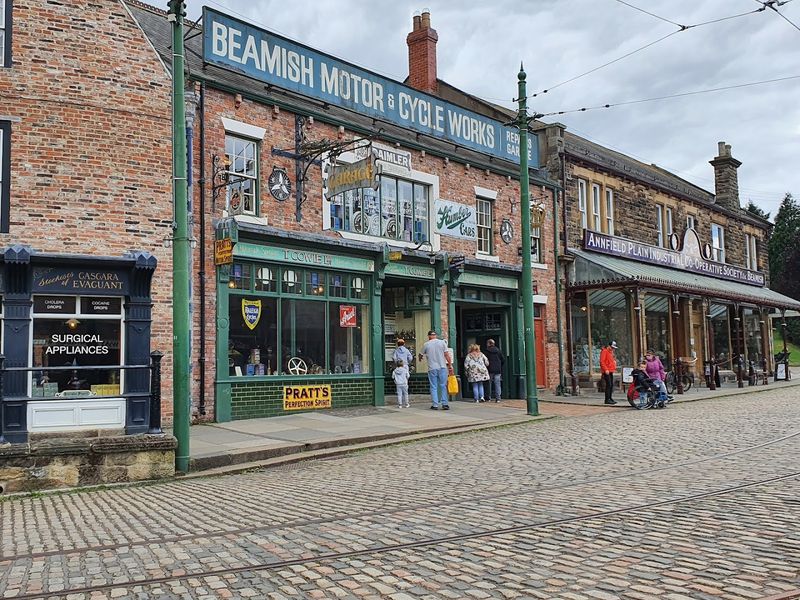
Beamish Museum in County Durham covers more ground than most living history sites, both literally and historically. Its landscape includes reconstructed streets, farms, shops, and workshops representing distinct eras including the 1820s, 1900s, and 1940s, each period built to reflect how working people actually lived and labored in Northern England.
Traditional skills are not preserved here as background decoration. They are active parts of the visitor experience, with interpreters demonstrating trades that kept communities running long before modern supply chains existed. Blacksmithing would have been essential across every era Beamish represents, from agricultural villages to growing industrial towns where metal repair and fabrication were constant needs.
The museum’s core commitment is to make history tangible rather than theoretical, which means visitors encounter working trades rather than static exhibits. That approach gives the whole site an energy that purely display-based museums rarely manage to match.
6. Sovereign Hill, Ballarat, Victoria, Australia
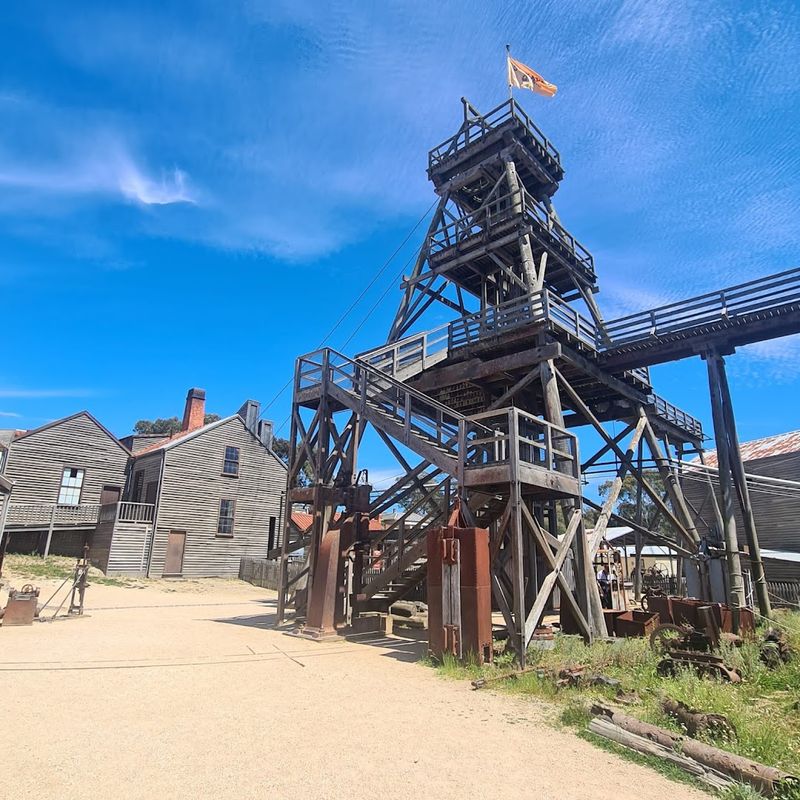
Gold rush towns were noisy, chaotic, and completely dependent on the blacksmith. At Sovereign Hill in Ballarat, Victoria, that dependence is front and center. The outdoor museum recreates Australia’s 1850s goldfields in full operational detail, and the working forge explains exactly why a skilled smith was one of the most sought-after people on the entire diggings.
Blacksmiths at Sovereign Hill shaped and repaired mining tools, maintained wagons, produced pieces of mining equipment, and shoed the horses that powered transport and labor across the settlement. Without that constant metalwork, the goldfields would have ground to a halt within days.
The demonstrations reveal the physical effort and ingenuity required to sustain a fast-growing frontier community through pure handcraft. For visitors who assumed gold rush history was only about prospectors and luck, the forge offers a grounded and compelling counterargument about who really kept things moving.
7. Skansen, Stockholm, Sweden
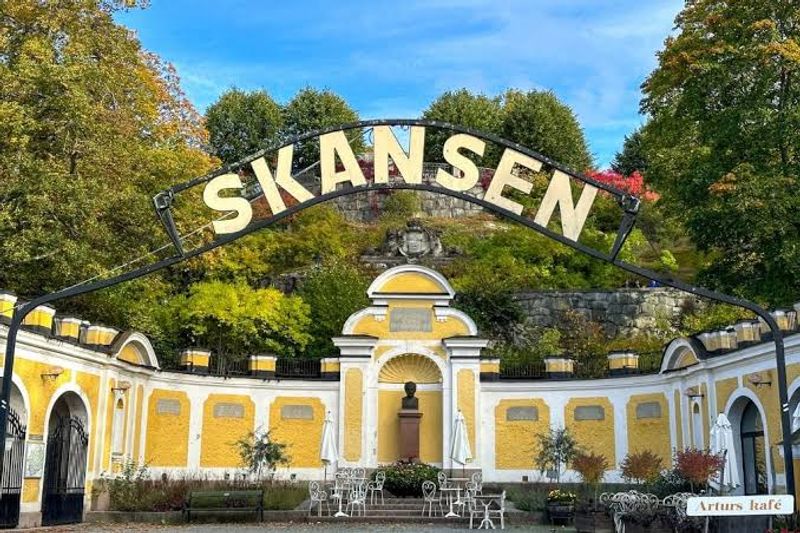
Founded in 1891, Skansen holds the distinction of being the world’s oldest open-air museum, and it has spent well over a century proving that traditional Swedish crafts deserve more than a museum label. Blacksmithing demonstrations take place outside the Smithy at Bollnas Square, where a master blacksmith and a striker work together using pre-industrial forging methods that predate the power hammer entirely.
The craft on display is practical rather than decorative, focused on household necessities like locks, hinges, fittings, and door bolts, the kind of ironwork that once made a home function. Visitors who want more than observation can book a time slot at a nearby market stall, choose from four pendant designs, and forge their own piece to take home on a leather cord.
The program is open to anyone aged nine and up, which makes it one of the most accessible hands-on blacksmithing experiences anywhere in Europe.
8. Ballenberg Swiss Open-Air Museum, Hofstetten bei Brienz, Bern, Switzerland
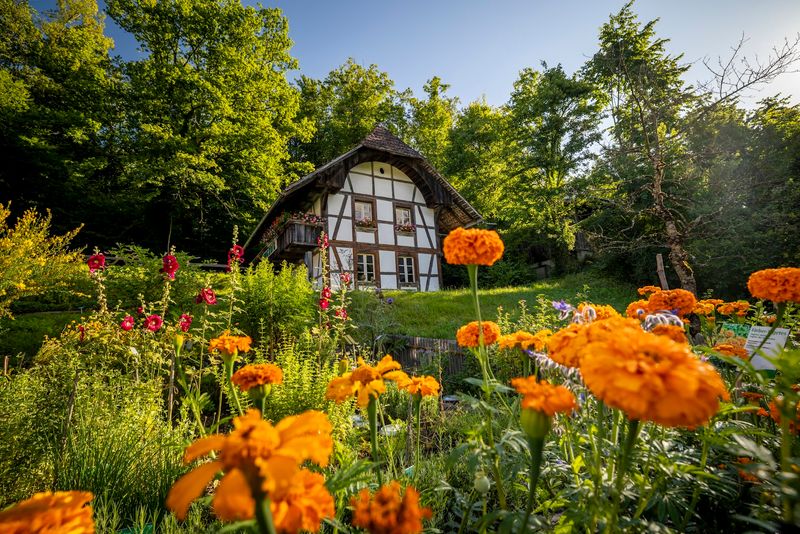
Ballenberg is the kind of place that makes you realize how much effort went into ordinary rural life. The Swiss Open-Air Museum near Brienz features over 100 original buildings relocated from across Switzerland, spanning the 14th through 19th centuries, and arranged across a mountain-framed landscape that feels genuinely unhurried.
Among its workshops and farmsteads, the Smithy from Bumpliz is a regular demonstration site where visitors can watch expert craftspeople forge iron using traditional techniques, or sign up for hands-on participation. The museum offers courses and workshops that go beyond observation, allowing guests to develop real foundational skills in traditional crafts.
What Ballenberg communicates particularly well is how central the blacksmith was to Swiss village self-sufficiency. Every farm, every household, and every seasonal cycle depended on someone who could work iron into functional tools. That practical necessity is what gives the forge demonstrations here their genuine weight.
9. Den Gamle By, Aarhus, Central Denmark Region, Denmark
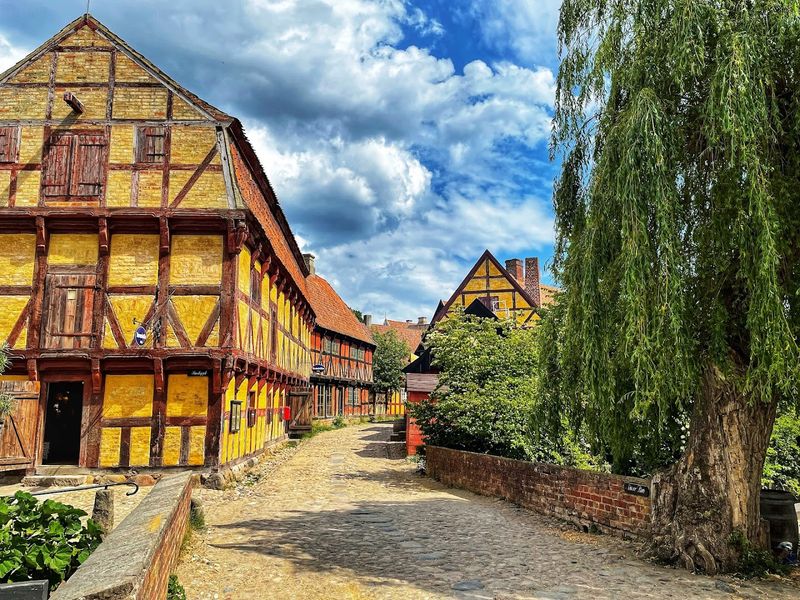
Den Gamle By in Aarhus takes its commitment to old urban trades seriously enough to host an entire festival around one of them. The annual Blacksmithing Festival, organized in partnership with the Danish Artistic Blacksmiths Association, transforms the festival grounds into a working smithy under a large tent, where visitors can watch the Danish Championship in artistic blacksmithing unfold in real time.
The competition draws highly skilled smiths who produce finished pieces that look closer to small sculptures than practical objects, which says a great deal about how far the craft has evolved while still honoring its roots. Guests are also invited to try forging themselves, guided by members of Den Gamle By’s Blacksmiths’ Guild.
The museum frames blacksmithing as a tradition worth actively protecting, not just archiving. That distinction makes the festival feel less like a heritage event and more like a genuine community effort to keep a craft from disappearing.
10. Weald and Downland Living Museum, Chichester, West Sussex, England
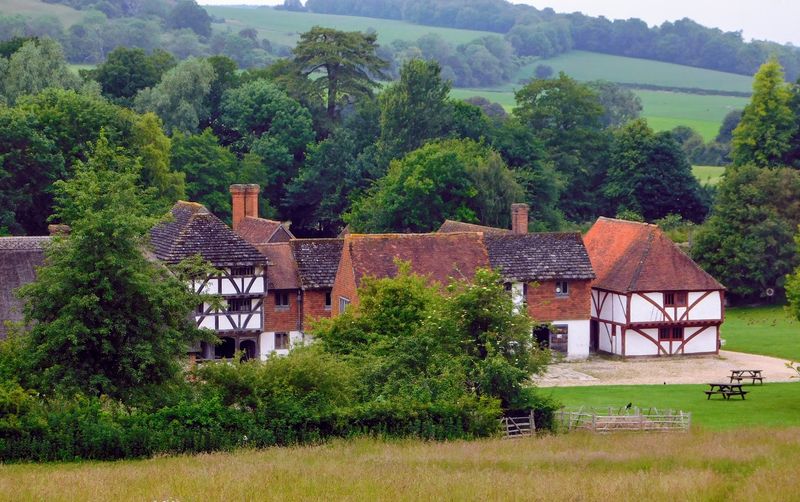
The Smithy from Southwater has a straightforward but quietly remarkable history. Built around 1850 in Sussex, it served as a working blacksmith’s shop until 1971, when it was carefully dismantled and rebuilt at the Weald and Downland Living Museum near Chichester. The forge inside is constructed from local stone and brick, and it houses early heart-shaped bellows identical in size to the originals, which are now kept at Horsham Museum.
Rural blacksmiths in communities like Southwater were considered second only to farmers in importance, which reflects just how broadly their skills were needed. They made and mended tools for farmers and craftsmen, shod horses, and produced hardware that kept the whole local economy functioning.
Daily demonstrations at the museum bring these trades back into action across its 40-acre site in the South Downs National Park, giving visitors a clear and grounded view of why the village forge was never a luxury.
11. John C. Campbell Folk School, Brasstown, North Carolina
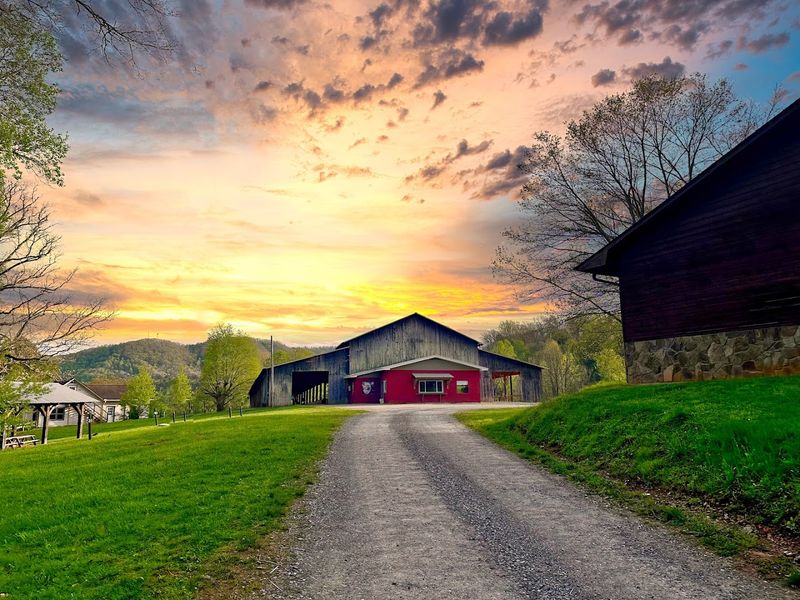
Tucked into the Appalachian Mountains of North Carolina, the John C. Campbell Folk School runs one of the most respected blacksmithing programs in the country, and the facility behind it is genuinely impressive. The Clay Spencer Blacksmith Shop opened in 2009 and holds 12 student forges alongside a dedicated instructor demonstration forge, all fully equipped with hand tools, power hammers, shears, grinders, drills, and welders.
Weeklong and weekend classes run for all skill levels, covering fundamentals like tapering, twisting, punching, bending, and upsetting steel, while advanced students tackle more complex projects including axes, medieval armor, and full iron tables built using traditional joinery methods.
The curriculum also covers alloy selection, heat treatment, and both hand and power hammer techniques, making it a serious education rather than a casual introduction. Students leave with practical mastery at the anvil, not just an appreciation for old craft from a safe distance.
12. Touchstone Center for Crafts, Farmington, Pennsylvania
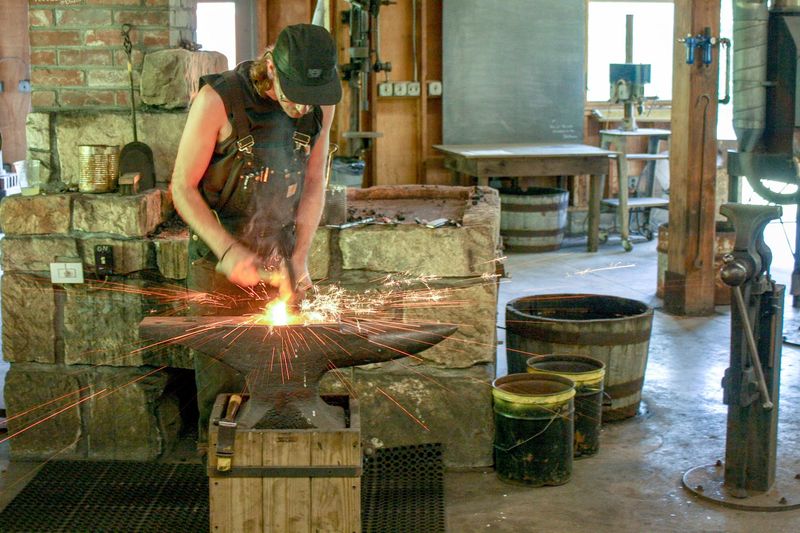
Founded in 1972 on a former campground in the Laurel Highlands, Touchstone Center for Crafts has built a reputation as a working school rather than a heritage showcase, and its blacksmithing program reflects that practical orientation clearly. Workshops range from short community classes to intensive five-day programs, all led by skilled instructors in a dedicated studio environment surrounded by Pennsylvania woodland.
Beginner classes focus on the core processes of tapering, twisting, punching, bending, and upsetting steel, and students leave with finished pieces like spoons and spatulas as concrete proof of what they learned. The campus model, where lodging and communal meals are all managed on-site, allows participants to stay fully focused on the work rather than logistics.
Touchstone started with traditional crafts and has since expanded to include contemporary techniques, making it a school that respects where blacksmithing came from while staying relevant to where it is heading.
13. New England School of Metalwork, Auburn, Maine
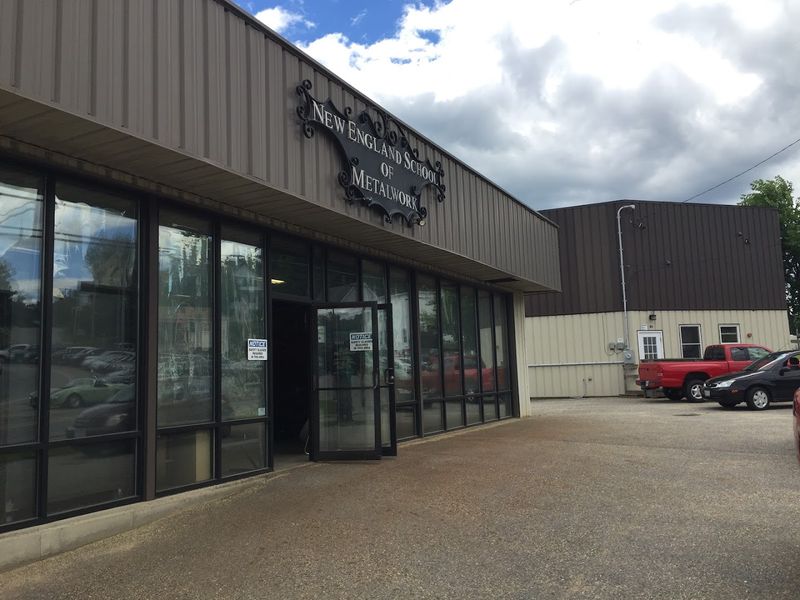
The New England School of Metalwork in Auburn, Maine, operates as a non-profit institution with a clear educational mission: keep blacksmithing, bladesmithing, and metalwork instruction rigorous, accessible, and genuinely useful for modern students. The school is recognized as one of the premier metalworking programs in the country, and the facility backs that reputation with eight fully equipped forging stations, each fitted with both coal and gas forges, a vise, and an anvil.
The blacksmithing curriculum centers on what the school calls Controlled Hand Forging, building skills in bending, forge welding, stock sizing, and hammer control before moving students into power hammer and oxy-acetylene torch operation.
The school also holds accreditation from the American Bladesmith Society and offers ABS-certified courses, which places it firmly within the professional tier of metalwork education. For anyone treating blacksmithing as a serious pursuit rather than a weekend hobby, this is a destination worth the trip.
14. Peters Valley School of Craft, Layton, New Jersey
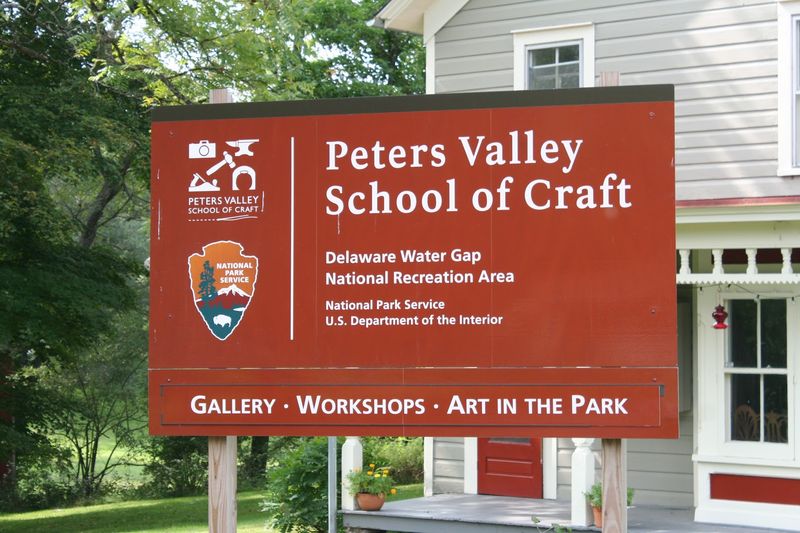
Peters Valley School of Craft occupies a cluster of historic buildings inside the Delaware Water Gap National Recreation Area in New Jersey, and the setting genuinely suits what goes on there. The campus has the character of a repurposed village, where old structures have been thoughtfully adapted into studios and workshops for makers across multiple craft disciplines, blacksmithing included.
The school is known for intensive workshop experiences led by master craftspeople, with a teaching philosophy built around deep engagement rather than quick introductions. Students work through foundational principles and more advanced applications under direct instructor guidance, building real competence with metal rather than surface-level familiarity.
Peters Valley sits at the serious end of craft education, attracting both beginners looking for a strong start and experienced smiths who want to push their skills further. The combination of a dedicated learning environment and a distinctive natural setting makes it a compelling place to study an ancient trade.
Share this story