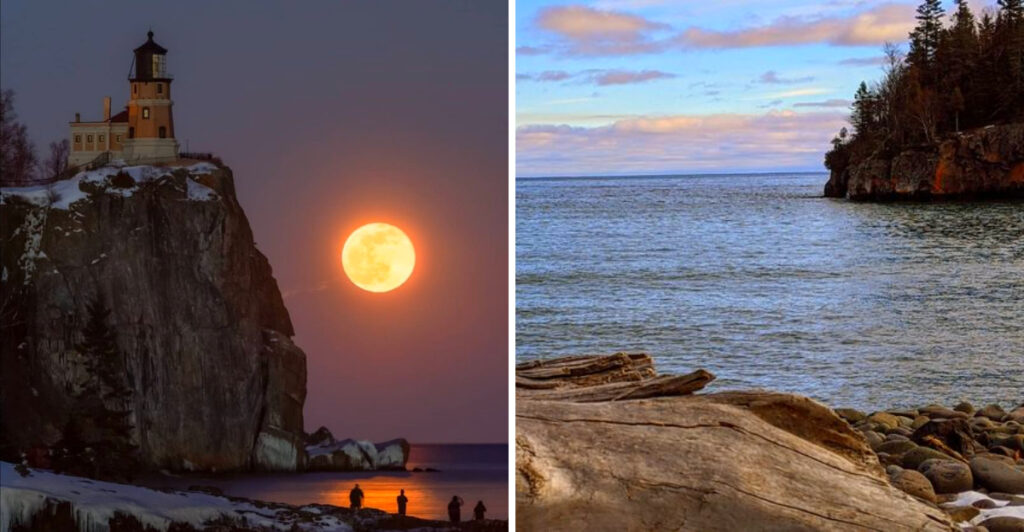
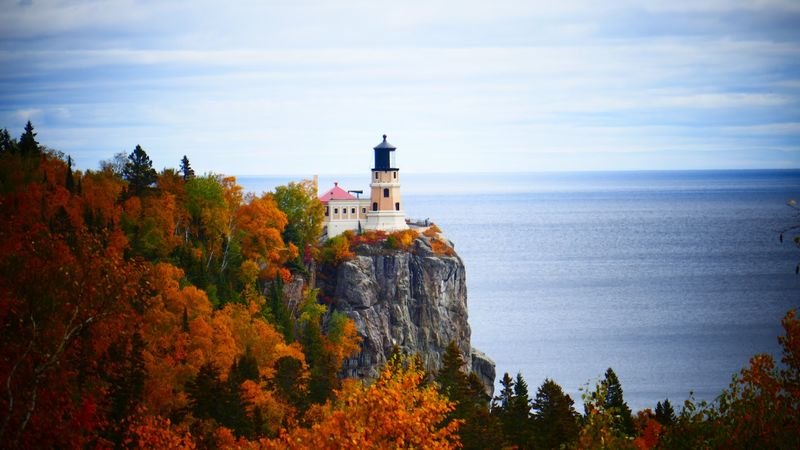
There is a spot along the Minnesota North Shore where a lighthouse sits on a sheer volcanic cliff, rising 130 feet above the surface of Lake Superior, and the view from that ledge is the kind that stops you mid-step. The tower itself is only 54 feet tall, yet the cliff does all the dramatic work, pushing the light so high that ships could spot it from 22 miles away on a clear night.
This place has been drawing visitors for over a century, and once you see it in person, it becomes obvious why. The history packed into this lighthouse, the geology beneath it, and the stories of the storms that made it necessary all combine into something genuinely worth the drive up the North Shore.
A Lighthouse Born from Disaster
Not every lighthouse has a dramatic origin story, but this one absolutely does. The November 1905 storm known as the Mataafa Blow tore across Lake Superior with terrifying force, wrecking or grounding more than two dozen ships in a matter of days.
Several of those ships were iron ore carriers operating near the rocky Minnesota coastline, and their losses prompted the U.S. Lighthouse Board to act quickly.
Congress authorized funds for a new lighthouse on the North Shore shortly after, and construction began in 1909 on a basalt cliff that had no road access at the time. Workers and materials had to be hauled up by derrick directly from boats on the lake below.
Split Rock Lighthouse, located along Split Rock Lighthouse Road in Beaver Bay Township, Minnesota, first lit its light in 1910 and immediately became one of the most important navigational aids on the entire Great Lakes system.
The Cliff That Does All the Heavy Lifting
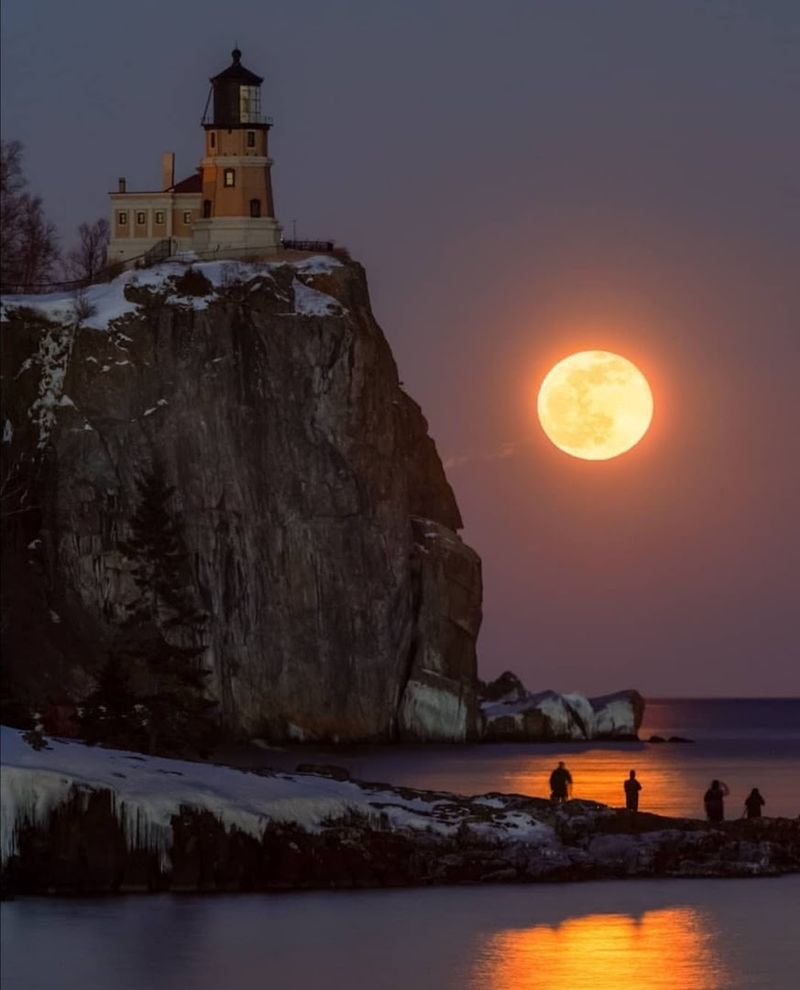
Most lighthouses stand tall because the tower itself is built high. Split Rock works differently.
The tower is a relatively modest 54 feet from base to light, but the cliff it stands on rises 130 feet straight up from the lake’s surface. That combination put the light at an elevation that made it visible from an impressive distance across open water.
The cliff itself is ancient volcanic basalt, formed roughly a billion years ago during a period of intense geological activity in the Lake Superior region. Standing at the edge and looking down at the water far below gives you a real sense of how powerful those natural forces were.
The rock is dark, jagged, and surprisingly beautiful up close.
That dramatic vertical drop is also what makes the lighthouse so photogenic. No matter the season or the light conditions, the cliff alone makes the scene feel monumental.
What the Fog Signal Building Tells You
Most visitors focus entirely on the lighthouse tower, which makes sense. But the fog signal building sitting just below it deserves its own moment of attention.
Before radio navigation and modern GPS, fog was one of the most dangerous conditions a ship captain could face on Lake Superior, and a reliable fog signal was just as critical as the light itself.
The building housed powerful steam-powered fog horns that could blast warning signals through dense fog banks rolling in off the lake. The machinery inside was substantial, requiring constant maintenance and fuel.
Keepers had to monitor conditions around the clock and be ready to fire up the system at any moment.
Today the building is preserved as part of the historic site, and you can walk through it to understand what daily operations actually looked like. The scale of the equipment makes it clear that running this station was serious, demanding work year-round.
Life Inside the Keeper’s Dwelling
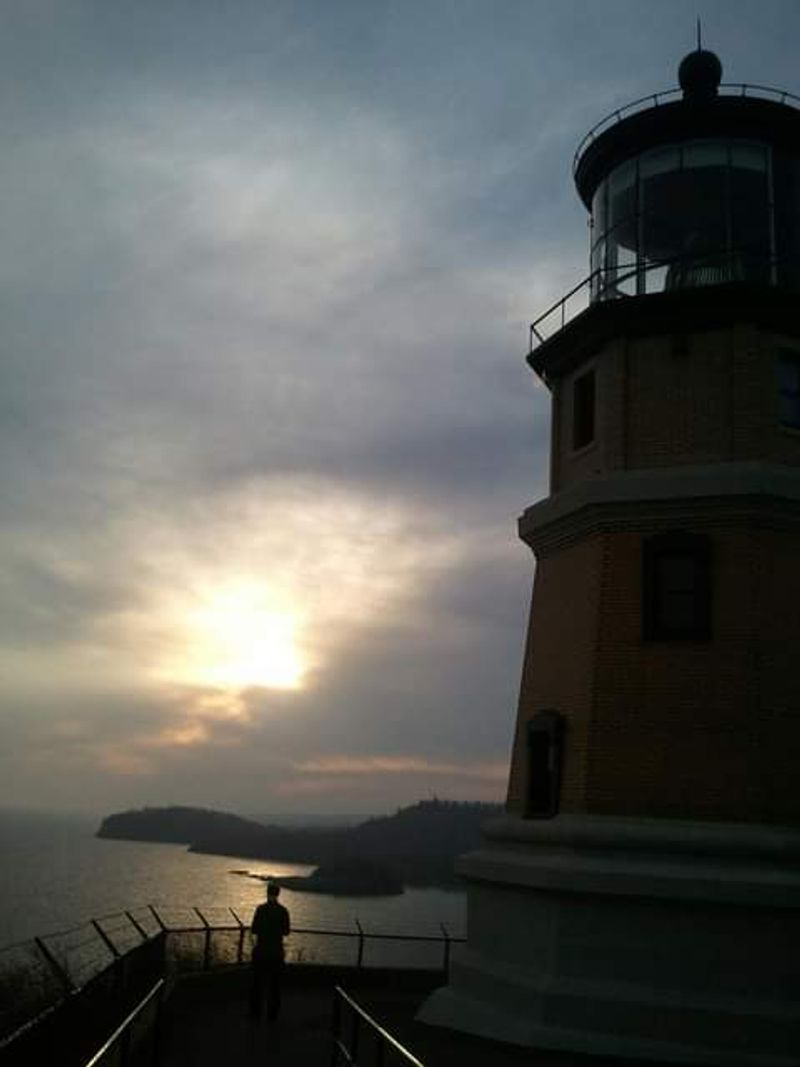
The keepers who lived here were not just tending a lamp. They were managing a full operation on a remote cliff with limited access to the outside world for much of the year.
The site includes three keeper dwellings that have been carefully restored to reflect life as it was during the lighthouse’s active years.
Walking through the main keeper’s house, you get a surprisingly intimate look at what domestic life looked like in such an isolated setting. The furnishings, the kitchen tools, the simple layout of the rooms all speak to a life that was functional first and comfortable second.
Families lived here, children grew up here, and daily routines revolved entirely around the demands of keeping the light operational.
The Minnesota Historical Society, which now manages the site, has done meticulous work to ensure the interiors feel authentic rather than staged, and that effort shows in every room.
The Fresnel Lens That Commanded the Lake
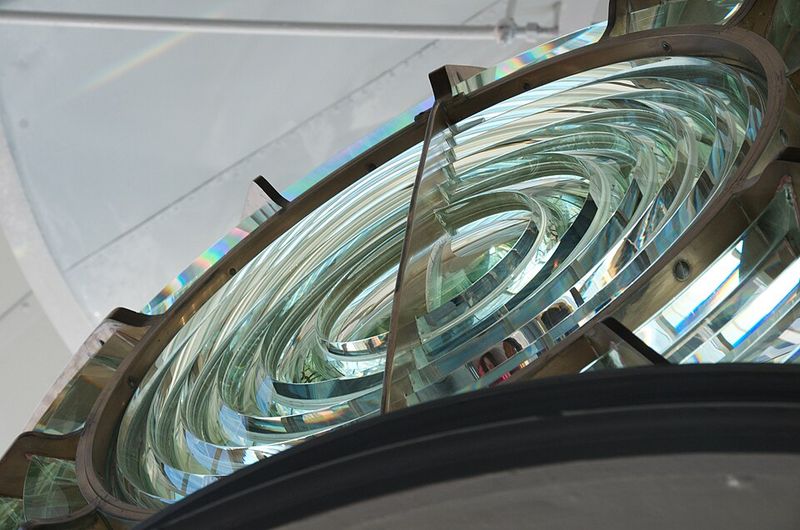
The heart of any lighthouse is its lens, and the one at Split Rock is genuinely worth studying up close. The station used a third-order bioptic Fresnel lens, a precision optical instrument that concentrated light into a powerful rotating beam visible for miles across the open water of Lake Superior.
Fresnel lenses work by using a series of concentric glass prisms arranged to bend and focus light far more efficiently than a simple reflector could. The result is a beam that punches through darkness and weather with remarkable intensity, even from a relatively modest lamp source.
The lens at Split Rock was designed to rotate, creating the distinctive flashing pattern that ship captains used to identify the station.
The original lens is still in the tower today, and guided tours take you right up into the lantern room to see it. Few lighthouse lenses on the Great Lakes remain so completely intact in their original location.
When the Light Finally Went Dark
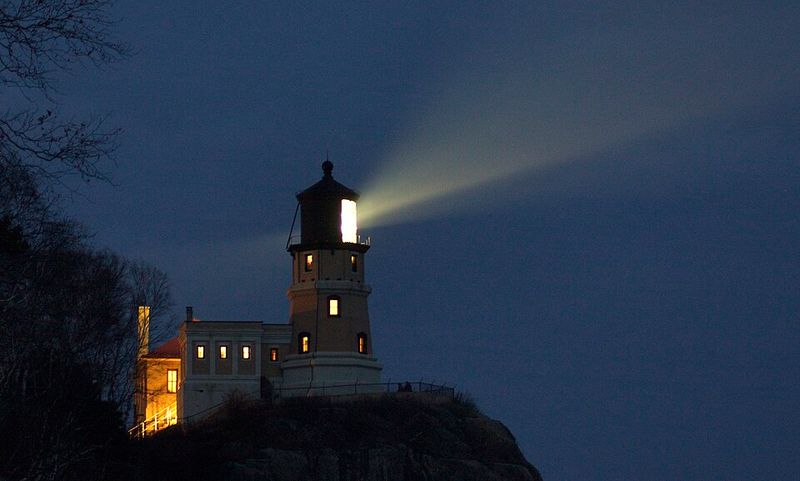
The lighthouse served mariners faithfully for decades, but technology eventually made it unnecessary. By the 1960s, advances in radio navigation and updated charting systems meant that a fixed lighthouse on this stretch of the North Shore was no longer the critical tool it once had been.
The U.S. Coast Guard decommissioned Split Rock Lighthouse in 1969.
Rather than let the site deteriorate, the State of Minnesota stepped in. The property was transferred to the Minnesota Department of Natural Resources and eventually came under the stewardship of the Minnesota Historical Society, which manages it today as a historic site open to the public.
Decommissioning did not diminish the lighthouse’s importance. If anything, it freed the site to become something more than a working station.
It became a place where visitors could genuinely explore the history of Great Lakes navigation rather than simply observe a lighthouse from a distance.
The Annual Edmund Fitzgerald Memorial

Once a year, on the anniversary of the Edmund Fitzgerald sinking, something remarkable happens at Split Rock. The lighthouse light is ceremonially relit in honor of the 29 crew members lost when the freighter went down on Lake Superior on November 10, 1975.
It is one of the most moving annual events on the entire North Shore.
The ceremony draws visitors who gather on the cliff and along the shoreline to watch the light sweep across the dark water. Names of the lost crew members are read aloud, and the atmosphere is quiet, respectful, and genuinely emotional.
The Gordon Lightfoot song about the tragedy has made the Edmund Fitzgerald one of the most recognized shipwreck stories in American history.
Attending this event is a completely different experience from a standard daytime visit. The lighthouse looks entirely different at night, and the ceremony gives the site a weight and solemnity that sticks with you long after you leave.
Trails That Reveal the Full Landscape
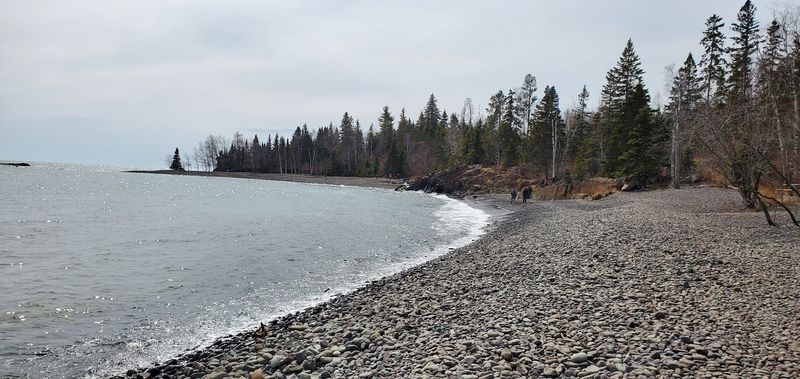
The lighthouse itself gets most of the attention, but the surrounding state park offers trails that put the whole landscape in perspective. Hiking down toward the lake gives you the chance to look back up at the cliff and fully appreciate just how dramatically the lighthouse site sits above the water.
The trails wind through boreal forest, across rocky outcroppings, and along stretches of Lake Superior shoreline where the wave action can be intense, especially in autumn. The rock surfaces along the shore are ancient and smoothed by thousands of years of wave energy, and the colors in the stone shift from deep charcoal to rusty orange depending on the light.
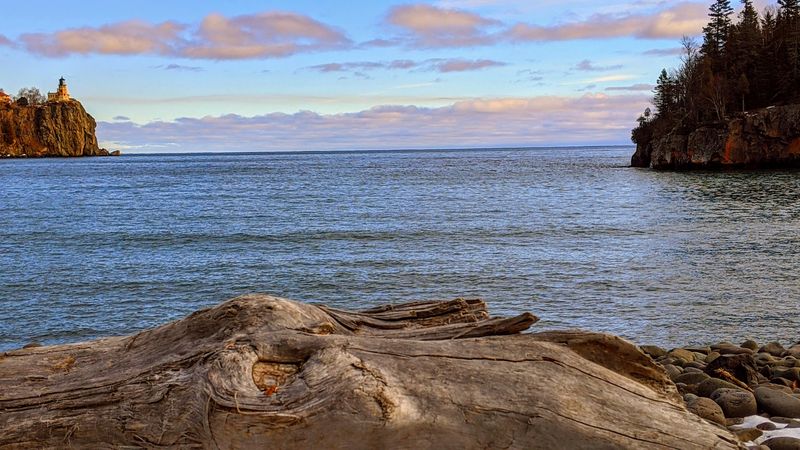
One of the best vantage points for photographing the lighthouse is from the rocky beach below, where you can frame the tower against the cliff with the lake in the foreground. The hike down is manageable, and the view from the bottom makes every step worthwhile.
Photography at Every Hour of the Day
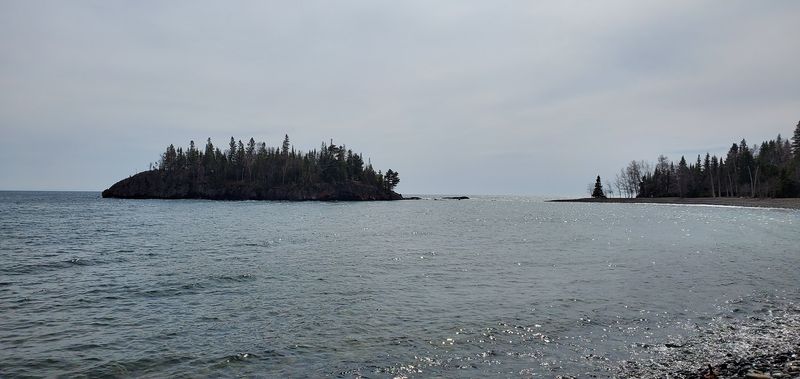
Few spots in Minnesota reward photographers as consistently as this one. The combination of the cliff, the lighthouse tower, the lake, and the surrounding boreal forest creates compositions that shift dramatically depending on the time of day and season.
Sunrise is particularly striking when the light catches the face of the basalt cliff and turns it amber.
Overcast days produce their own kind of drama. The grey tones of Lake Superior under cloud cover pair naturally with the dark volcanic rock, and the white lighthouse tower stands out sharply against that muted background.
Storm light, which happens frequently on the North Shore, adds another layer of intensity.
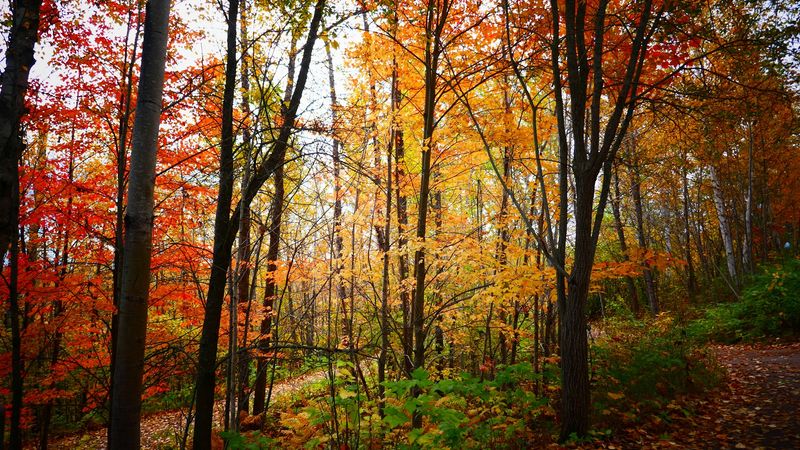
Autumn is widely considered the peak season for photography here, when the surrounding forest turns gold and red against the dark cliff and deep blue water. Winter visits offer frozen shorelines and snow-covered grounds that make the lighthouse look like something from a completely different world.
What the Visitor Center Adds to the Experience
Before heading up to the lighthouse tower, spending time in the visitor center genuinely improves the whole visit. The Minnesota Historical Society has put together exhibits that cover the history of Great Lakes shipping, the storms that shaped navigation policy, and the daily realities of lighthouse keeping in the early twentieth century.
There are artifacts, photographs, and interpretive displays that fill in the context you need to fully appreciate what you are looking at when you stand on that cliff. Understanding why this lighthouse was built where it was, and what conditions keepers faced, makes the physical site feel far more meaningful.
The center also covers the geology of the North Shore, which helps explain why the cliff looks the way it does and why this particular stretch of coastline was so hazardous to early shipping. It is a well-organized space that manages to be genuinely informative without feeling like a school lecture.
North Shore Geology Hiding in Plain Sight
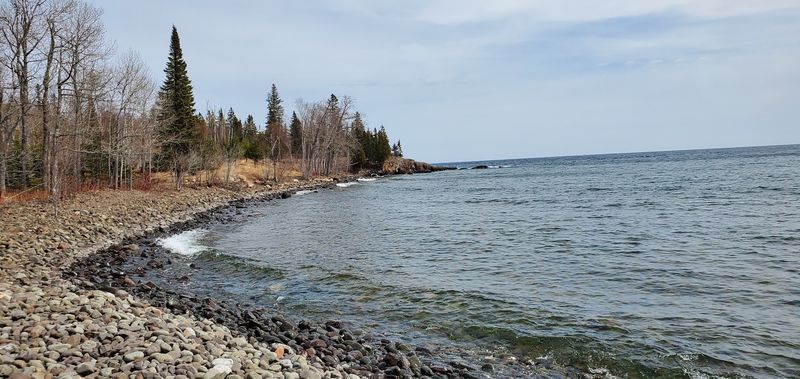
The cliff beneath the lighthouse is not just dramatic scenery. It is a billion-year-old geological record sitting right at the surface.
The basalt that forms the cliff was created during the Midcontinent Rift, a period when the North American continent nearly split apart and massive lava flows poured across the region.
Lake Superior itself occupies the basin created by that ancient rifting, which is part of why it is so deep and why the shoreline has such rugged, hard-edged character. The rock you are standing on when you visit Split Rock is some of the oldest exposed volcanic rock you can see anywhere in the United States.
Running your hand along the cliff face, you can feel the texture of cooled lava that solidified roughly a billion years ago. That detail alone gives the site a geological significance that goes well beyond its role in maritime history, and it is something most visitors walk right past without realizing.
Seasonal Changes That Reshape the Whole Visit
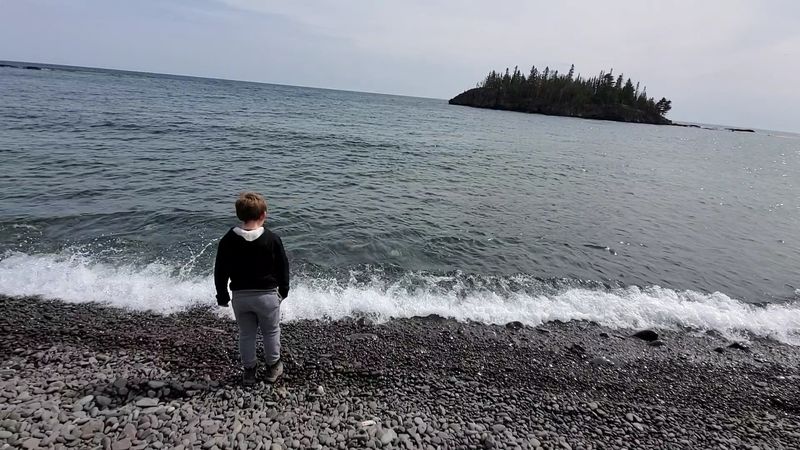
Visiting in different seasons produces experiences so different that it can feel like you are going to a completely different place. Summer brings the largest crowds, the warmest weather, and the longest days, which means you have plenty of daylight to explore the trails and the historic buildings at a relaxed pace.
Autumn transforms the surrounding forest into a vivid display of color that frames the lighthouse in a way no other season can match. The air is sharp, the lake is restless, and the crowds thin out noticeably after Labor Day, making the site feel much more personal.
Winter visits require more preparation, but the reward is a landscape that looks almost surreal. Ice formations build up along the shoreline, snow covers the grounds, and the lighthouse stands in quiet isolation above a frozen or churning grey lake.
Spring brings snowmelt, rushing water, and the first green returning to the boreal forest.
Practical Tips for Planning Your Visit
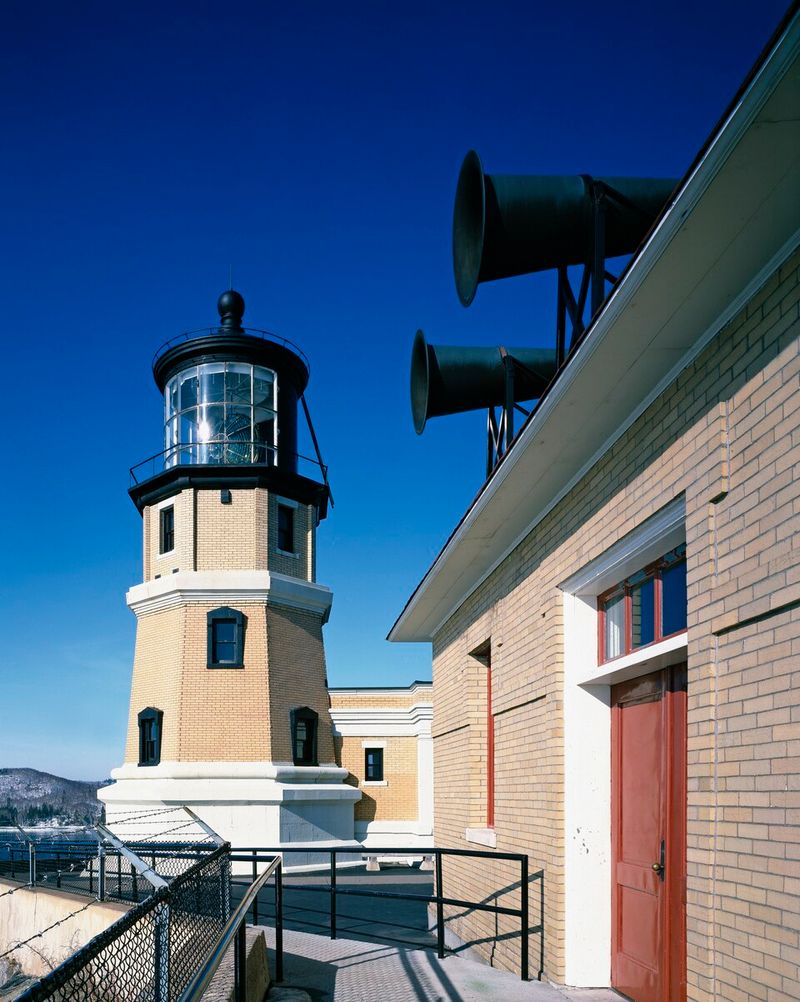
Getting the most out of a visit here takes a little planning. The site is managed by the Minnesota Historical Society, and there is an admission fee to access the historic buildings, the tower, and the keeper’s dwellings.
The grounds and overlooks are accessible without a fee, but the interior tours are worth paying for.
Arriving early in the morning on weekdays gives you the best chance of having the lighthouse grounds to yourself for at least a little while, particularly during summer. The parking area can fill up quickly on weekends and during peak fall color season.
Comfortable walking shoes matter because the terrain is uneven in places, especially on the trails leading down toward the lake.
The site is located about 20 miles northeast of Two Harbors along Highway 61, which runs the length of the North Shore. Building in extra time to stop at the rocky shoreline pull-offs along the way is always a good idea.
Why This Place Stays With You Long After You Leave
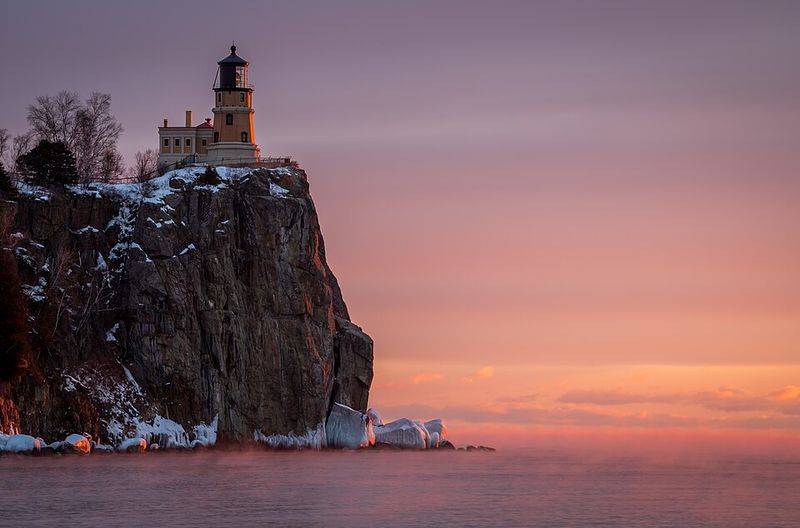
There are plenty of lighthouses scattered across the Great Lakes region, but very few of them leave the same impression as this one. The combination of physical drama, historical weight, and raw natural setting creates something that is hard to shake once you have experienced it in person.
Standing on that cliff with Lake Superior stretching out below you and the lighthouse tower rising behind you, you feel the full scale of what early mariners were up against. The lake is enormous, the weather is unpredictable, and the coastline is unforgiving.
The lighthouse was a lifeline in the most literal sense.
That feeling of being somewhere genuinely significant is what keeps people coming back to Split Rock year after year. It is not just a pretty building on a cliff.
It is a place where history, geology, and human ingenuity came together in a way that still resonates more than a century later, and that combination is rare enough to be worth every mile of the drive.
Share this story