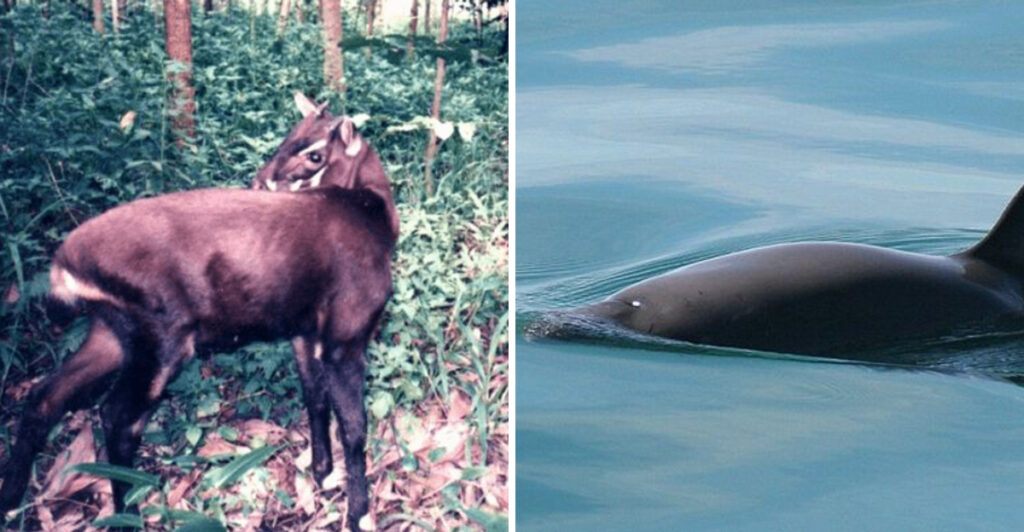
Some of the most extraordinary creatures on our planet will never be found behind zoo glass or swimming in an aquarium tank. Many of them live in some of the most extreme environments imaginable, from pitch-black ocean depths to frozen polar seas.
Their survival depends on conditions so specific that even the world’s best zoos cannot replicate them. Here are 14 remarkable animals that remain almost entirely beyond the reach of human display.
1. Colossal Squid (Mesonychoteuthis hamiltoni)
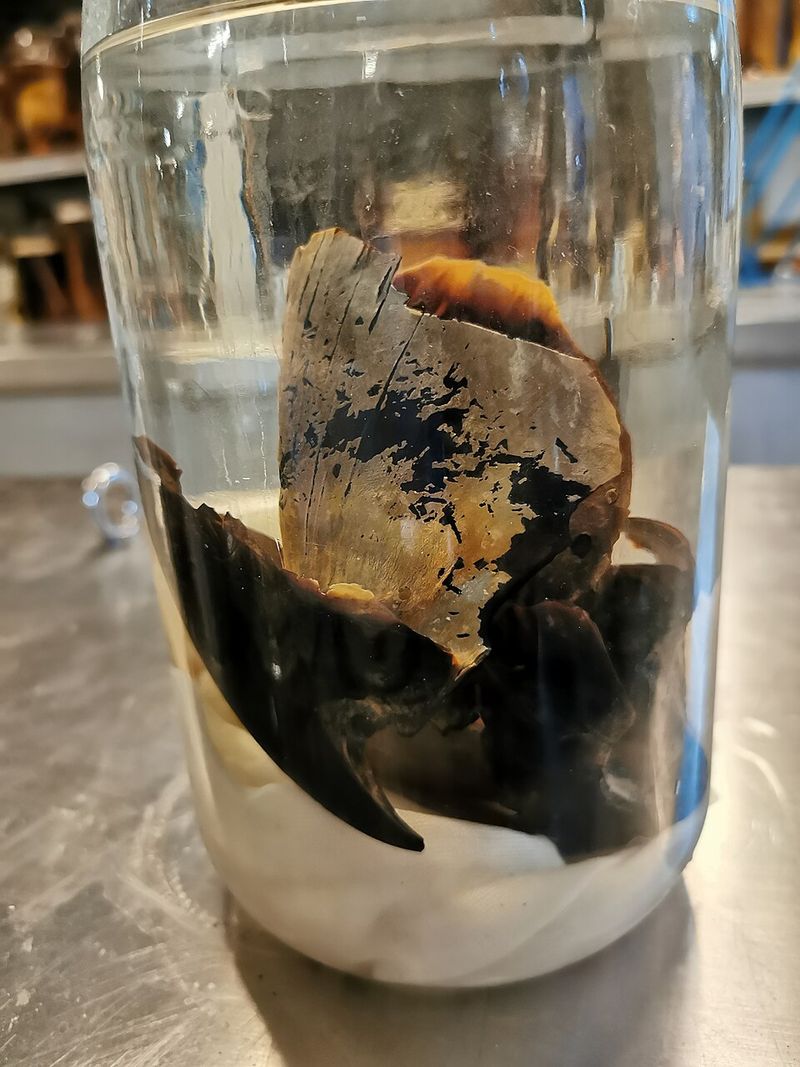
Picture the largest invertebrate ever documented on Earth, and you have the Colossal Squid. Reaching lengths of up to 46 feet and weighing over 1,000 pounds, this ocean giant makes the famous giant squid look modest by comparison.
It lives in the frigid depths of the Southern Ocean, sometimes descending to 7,000 feet below the surface.
No zoo or aquarium has ever kept one alive, and the reason is straightforward. The colossal squid is built for crushing deep-sea pressure, near-freezing temperatures, and total darkness.
Bringing it to the surface typically kills it within hours. Scientists have only ever studied dead or dying specimens hauled up accidentally in fishing nets.
Even its eyes, the largest of any known animal at roughly the size of a dinner plate, hint at a life perfectly engineered for the deep. This squid belongs to a world humans can barely visit.
2. Giant Squid (Architeuthis dux)
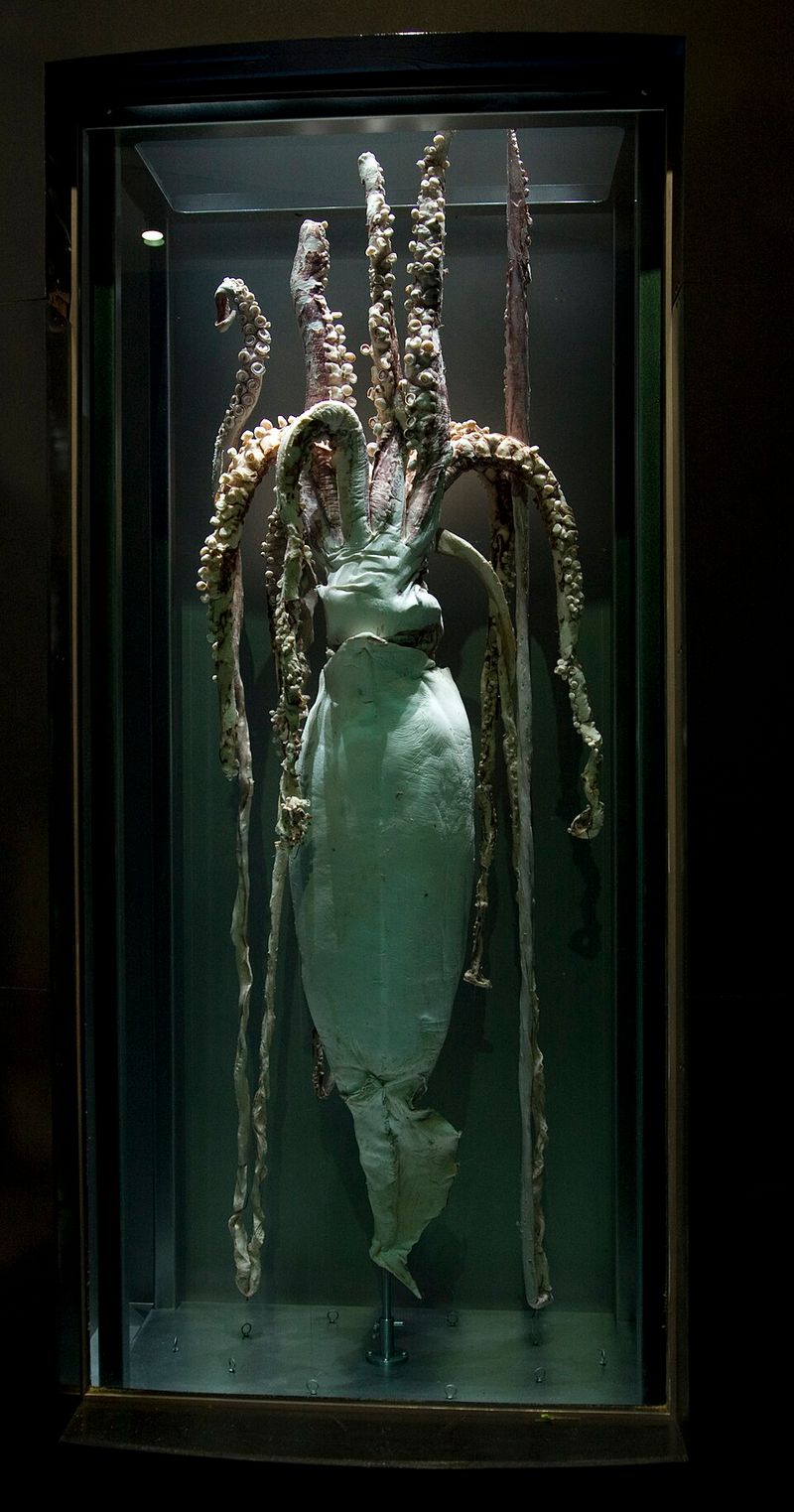
For centuries, sailors told terrifying stories about sea monsters dragging ships into the abyss. The giant squid turned out to be very real, though no less mysterious.
Growing up to 43 feet long, it roams the deep ocean in almost every part of the world, yet almost no one has ever seen a healthy one up close.
Aquariums have tried repeatedly to display live giant squid. Every attempt has ended in failure.
The animals deteriorate rapidly once removed from deep water, and their complex biology simply cannot be supported in a tank environment. A few juveniles have survived briefly, but none have lasted more than a few hours or days.
The first footage of a living giant squid in its natural habitat was only captured in 2004. That fact alone says everything about how elusive this creature truly is.
It remains one of the ocean’s greatest living mysteries.
3. Vaquita (Phocoena sinus)
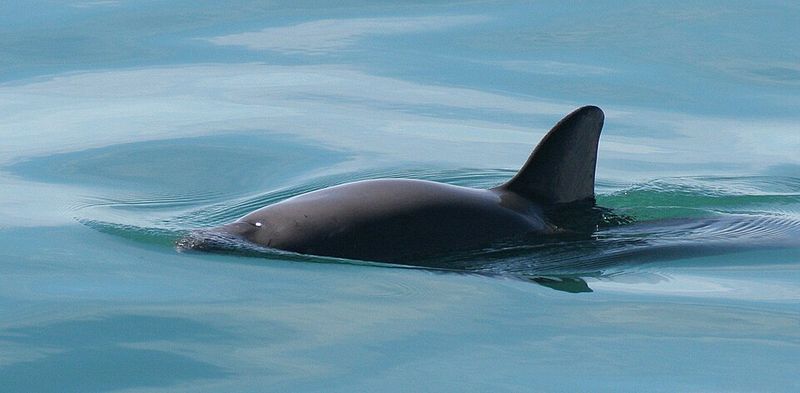
Fewer than 10 vaquitas are believed to survive in the wild today, making this tiny porpoise the most critically endangered marine mammal on the planet. Found only in the northern Gulf of California in Mexico, the vaquita has never been successfully kept in captivity, and every attempt to rescue the species has met heartbreaking results.
In 2017, conservationists made a last-ditch effort to capture and breed vaquitas in a protected sea pen. The plan was abandoned after one animal died from the stress of capture.
These porpoises are extraordinarily sensitive, and removing them from their natural environment appears to be fatal.
All conservation energy is now focused on protecting the few remaining individuals in the wild by removing illegal gillnets from their habitat. The vaquita is a sobering reminder of how quickly a species can slip toward extinction.
Seeing one in a zoo is simply not possible.
4. Saola (Pseudoryx nghetinhensis)
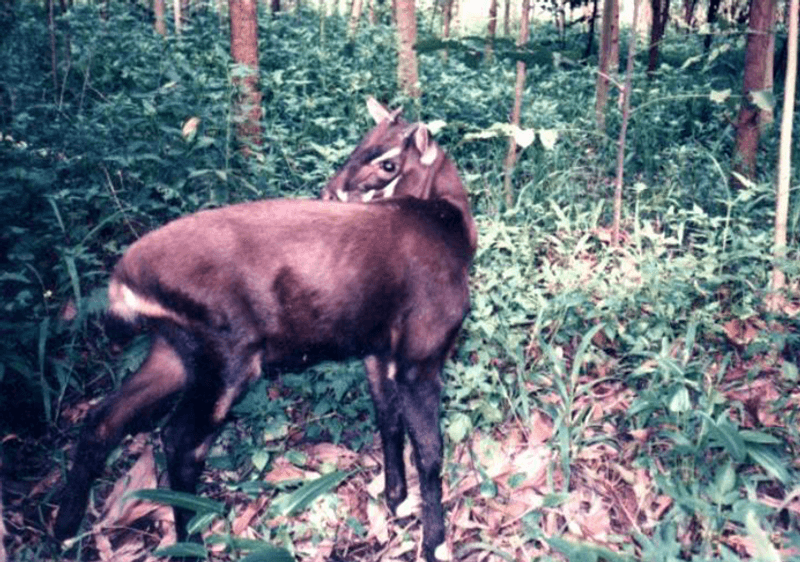
Scientists only discovered the saola in 1992, and it immediately became one of the most wanted animals in conservation. Nicknamed the “Asian unicorn,” this slender, ox-like mammal lives in the forests along the Vietnam-Laos border and has been photographed in the wild just a handful of times.
No one alive can claim to have seen one in person reliably.
Despite enormous interest from zoos and breeding programs worldwide, no saola has ever thrived in captivity. The few animals captured over the years died within weeks or months.
Their precise habitat needs, dietary requirements, and stress responses are still poorly understood.
Not a single saola exists in any zoo today. Conservationists estimate the wild population may number fewer than a few hundred, though even that figure is uncertain.
The saola represents one of the most urgent wildlife mysteries of the modern era, hiding in plain sight in a forest no one can fully search.
5. Goblin Shark (Mitsukurina owstoni)
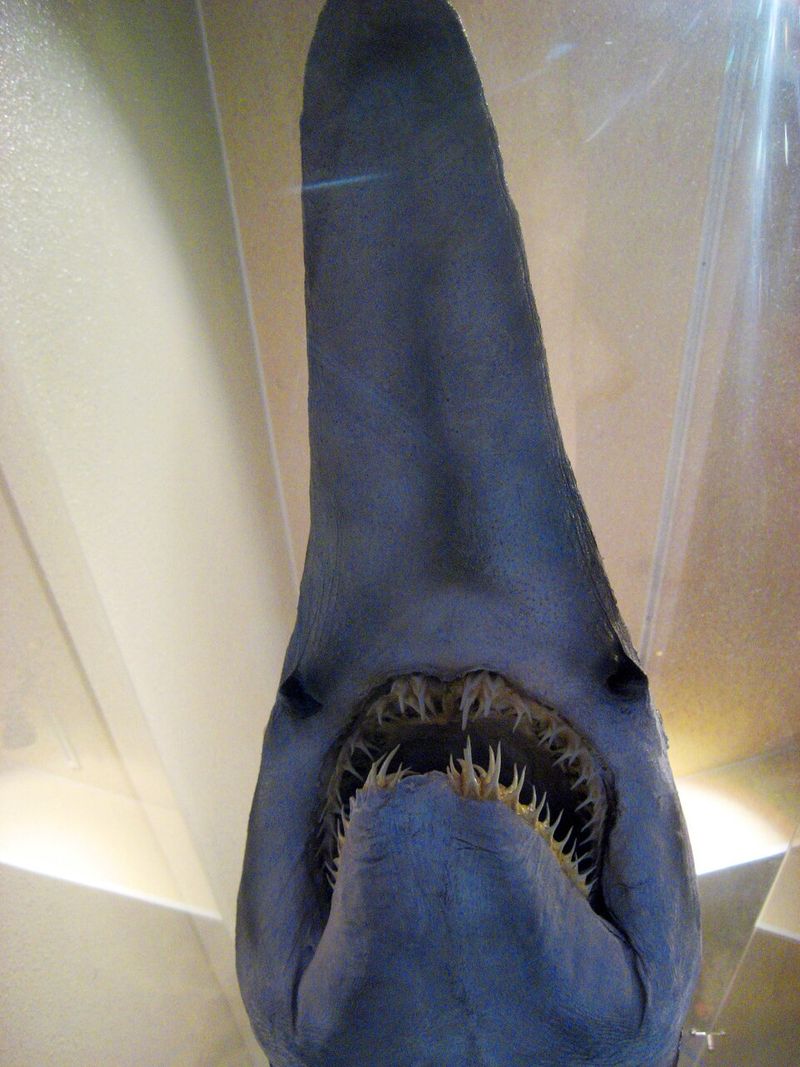
With its long, flattened snout and jaw that launches forward to snatch prey, the goblin shark looks like something pulled from a nightmare. It is the only living member of a family of sharks that dates back 125 million years, earning it the nickname “living fossil.” Most sightings happen when fishermen accidentally drag one up from depths of 330 to 4,300 feet.
A goblin shark was briefly displayed at the Tokyo Sea Life Park in 2007, but it died after just two days. That remains one of the only documented attempts to exhibit one alive.
The species is so rarely encountered that even basic facts about its behavior and reproduction remain largely unknown.
Its unique jaws, which extend outward on elastic ligaments to catch prey, make it one of the strangest predators in the ocean. Studying a live goblin shark remains a dream for most marine biologists.
6. Frilled Shark (Chlamydoselachus anguineus)
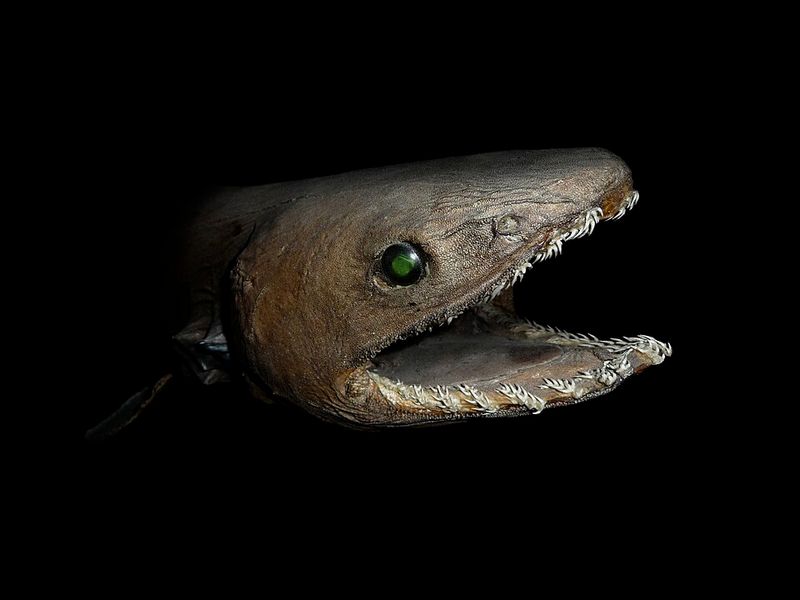
The frilled shark is so ancient in appearance that researchers often describe it as a “living relic.” With its eel-like body, six pairs of frilly gill slits, and mouth full of trident-shaped teeth, it looks more like a prehistoric sea serpent than a modern shark. It lives at depths between 160 and 5,150 feet and very rarely comes near the surface.
When frilled sharks are accidentally brought up in fishing nets, they almost never survive. A single notable exception occurred in 2007 when a specimen was captured off Japan and briefly placed in a marine park.
It died within hours. Their bodies are simply not equipped to handle surface pressure, temperature, or lighting conditions.
Scientists believe frilled sharks may carry their pups for up to three and a half years, the longest known gestation of any vertebrate. Almost everything else about their lives remains a mystery tucked away in deep water.
7. Barreleye Fish (Macropinna microstoma)
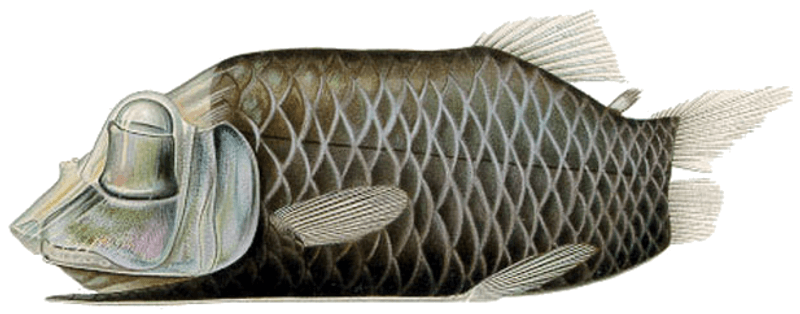
Few animals in the ocean are as visually surreal as the barreleye fish. Its head is covered by a transparent, fluid-filled dome, and inside that dome sit two bright green tubular eyes that can rotate to look upward, forward, or sideways.
For years, researchers mistakenly thought the dome was its face, until underwater cameras finally revealed the truth.
The Monterey Bay Aquarium Research Institute captured the first clear footage of a living barreleye in its natural habitat in 2004. Before that, the dome almost always collapsed when specimens were brought to the surface, leaving scientists confused about what they were actually looking at.
No aquarium has ever successfully displayed a live barreleye. The fish requires the specific pressure, temperature, and darkness of the mesopelagic zone, roughly 2,000 to 2,600 feet deep.
Its biology is so finely tuned to that environment that survival outside of it is essentially impossible.
8. Pacific Viperfish (Chauliodus macouni)
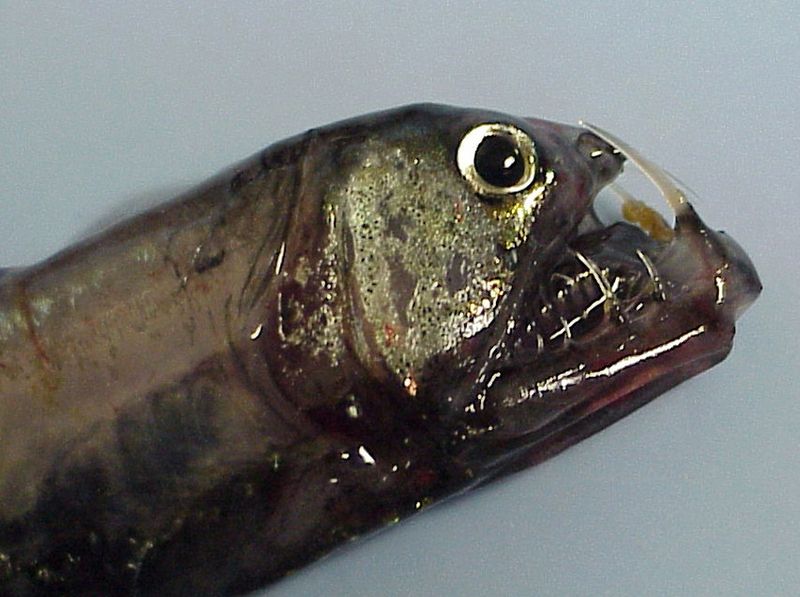
At first glance, the Pacific viperfish looks like the ocean decided to design the scariest possible predator it could imagine. Its teeth are so long they cannot fit inside its closed mouth, curving back toward its own eyes instead.
Despite its fierce appearance, the viperfish is only about a foot long, making it a surprisingly compact nightmare.
Found at depths of up to 4,400 feet during the day, viperfish migrate closer to the surface at night to hunt. They use a bioluminescent lure on their dorsal fin to attract prey in the darkness.
This daily vertical migration makes them incredibly difficult to capture without injury.
No public aquarium has ever successfully maintained a viperfish for display. They deteriorate almost immediately after being brought to the surface.
Most of what scientists know about them comes from stomach content analysis of dead specimens and rare deep-sea camera footage.
9. Dumbo Octopus (Grimpoteuthis spp.)
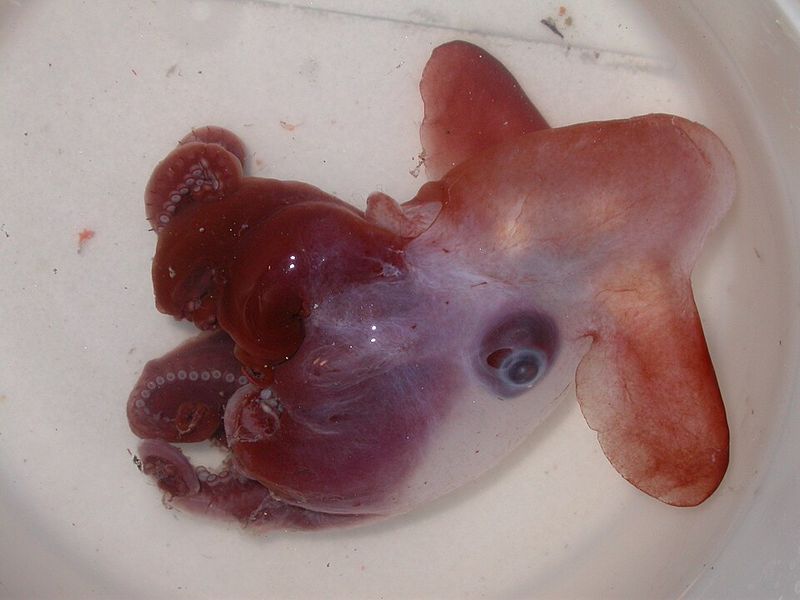
Named after the famous Disney elephant because of the two large ear-like fins that flap gently on either side of its mantle, the dumbo octopus is one of the most endearing creatures in the deep sea. It hovers just above the seafloor using those fins and a jet propulsion system, searching for worms and small crustaceans to eat.
Dumbo octopuses live at depths between 9,800 and 23,000 feet, making them the deepest-living octopus group known to science. At those depths, the pressure is crushing, the water is near freezing, and there is no light whatsoever.
These conditions are completely impossible to recreate in any aquarium setting.
Researchers occasionally spot them during deep-sea submersible dives, and the footage is always remarkable. One specimen was even briefly observed releasing eggs.
But keeping one alive in captivity has never been achieved, and given what we know about their environment, it is unlikely to happen anytime soon.
10. Yeti Crab (Kiwa hirsuta)
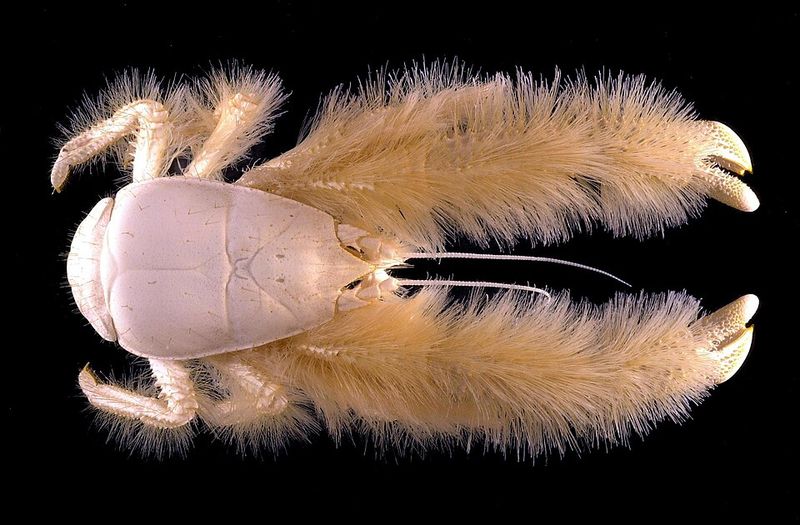
Discovered in 2005 near hydrothermal vents in the South Pacific, the yeti crab immediately captured the imagination of the scientific world. Its claws are covered in dense, silky, hair-like filaments called setae, which it waves rhythmically over the vent openings.
Scientists believe it is farming bacteria on those filaments to eat, a feeding strategy unlike almost anything else in the animal kingdom.
Hydrothermal vents are among the most extreme environments on Earth. They release superheated, mineral-rich water from cracks in the ocean floor, often at depths exceeding 7,200 feet.
The yeti crab has evolved to live right at the edge of these vents, where the temperature gradient is just right for its particular needs.
Replicating that environment in a tank is currently beyond the reach of any aquarium. The yeti crab needs specific water chemistry, temperature, and vent chemistry that cannot be manufactured on land.
It remains entirely a creature of the deep.
11. Mariana Snailfish (Pseudoliparis swirei)
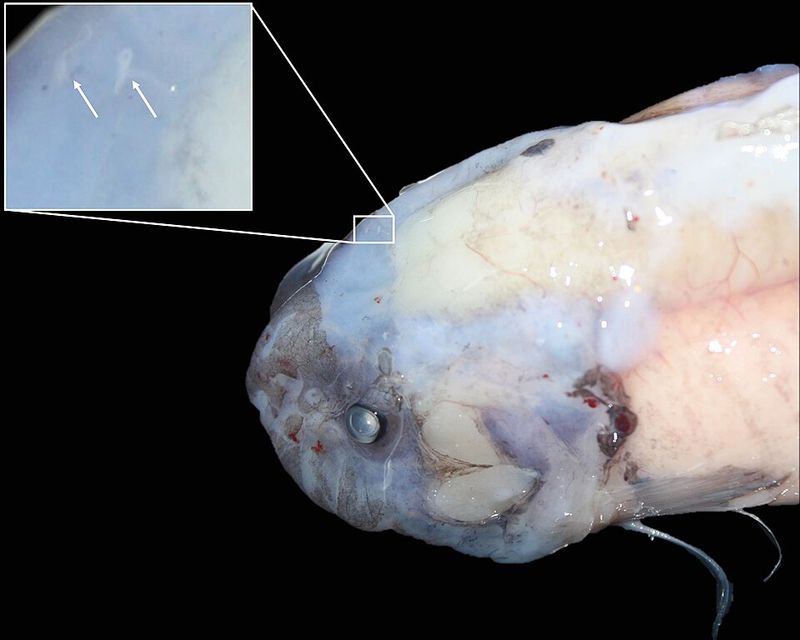
At nearly 27,000 feet below the ocean surface, the Mariana Trench is the deepest place on Earth, and the Mariana snailfish owns it. Formally described by scientists in 2017, this pale, gelatinous little fish holds the record as the deepest-living fish ever reliably documented.
It looks almost translucent, with a soft body and tiny fins that ripple as it moves.
The snailfish thrives because of the pressure, not in spite of it. Its cells contain special compounds that stabilize proteins at extreme depth.
Bring it to the surface, and those same adaptations become useless. The fish essentially falls apart as pressure decreases, which is why no aquarium has ever come close to displaying one alive.
Footage from deep-sea landers shows snailfish moving in groups, picking off small crustaceans from the trench floor. They are remarkably active for animals living in such an extreme environment, which makes their inaccessibility to zoos all the more intriguing.
12. Icefish (Family Channichthyidae)
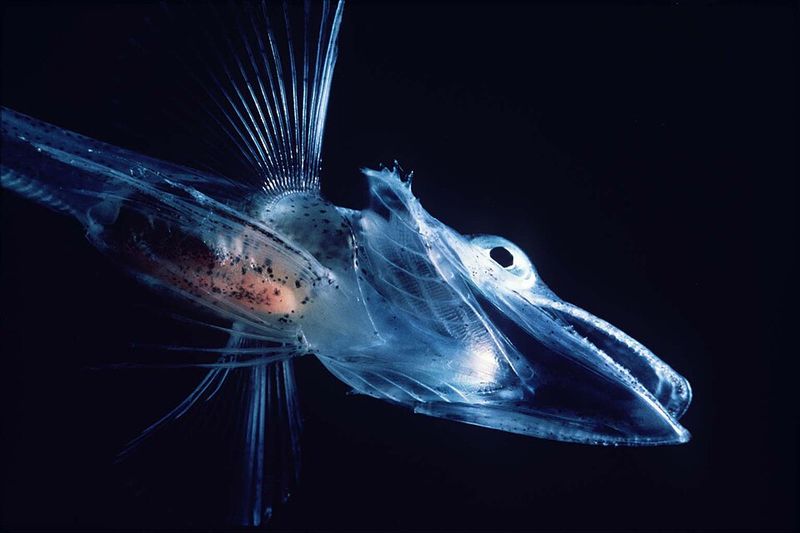
The icefish is the only known vertebrate on Earth that has no hemoglobin in its blood. While most animals rely on hemoglobin to carry oxygen through the bloodstream, icefish have evolved to absorb dissolved oxygen directly through their skin and gills.
As a result, their blood is completely colorless, and their gills appear ghostly pale pink or white.
Native to the waters surrounding Antarctica, icefish live in temperatures that hover just above freezing year-round. Their bodies produce antifreeze proteins that prevent ice crystals from forming in their tissues.
These adaptations are extraordinary but make captivity essentially impossible for most facilities outside of specialized polar research stations.
No public zoo or aquarium in a temperate climate has ever successfully maintained icefish for long-term display. The logistical challenge of maintaining Antarctic water temperatures while also replicating the specific oxygen levels they need is simply too great.
They are a marvel of evolution locked away in the coldest seas on Earth.
13. Pelican Eel (Eurypharynx pelecanoides)
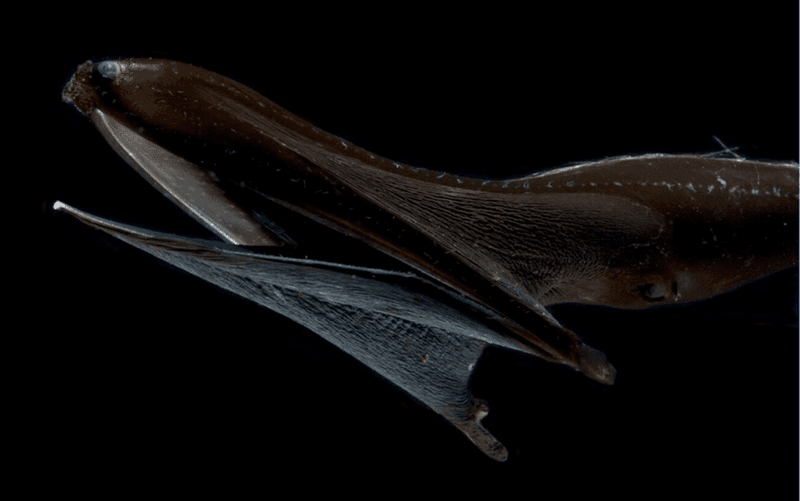
Imagine an animal that is mostly mouth. The pelican eel, also called the gulper eel, has a jaw so enormous it can open wider than its own body to engulf prey much larger than itself.
Its stomach stretches to accommodate oversized meals, and its long, whip-like tail ends in a small bioluminescent pink tip that it may use to lure curious prey in the darkness.
Found at depths between 1,600 and 9,800 feet across tropical and subtropical oceans, the pelican eel is rarely encountered even by deep-sea researchers. When specimens are accidentally caught in nets, they rarely survive long enough to be studied in detail.
Their unusual anatomy appears to be extremely sensitive to changes in pressure and environment.
No aquarium has ever managed to keep one alive. Most of what researchers know about this species comes from dead specimens and brief submersible observations.
Its bizarre design makes it one of the deep sea’s most unforgettable inhabitants.
14. Glass Octopus (Vitreledonella richardi)
Transparency is a clever survival strategy in the open ocean, where there is nowhere to hide. The glass octopus takes this approach to an extreme.
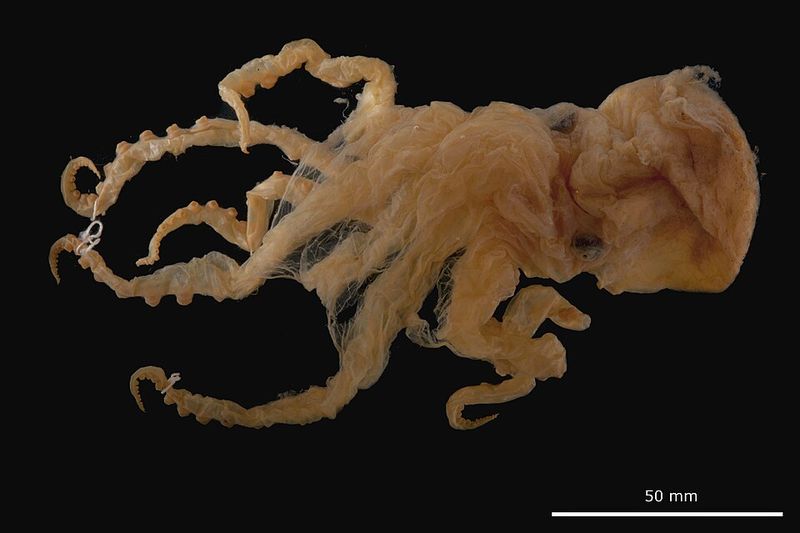
Its body is almost entirely see-through, with only its optic nerves, digestive tract, and rectangular eyes visible beneath the surface. It is like watching a living anatomy lesson drift through the water.
First described scientifically in 1918, the glass octopus remained poorly understood for over a century because it lives in the deep mesopelagic and bathypelagic zones and is almost never captured intact. In 2021, researchers on a Schmidt Ocean Institute expedition captured remarkable high-definition footage of two glass octopuses in the Pacific Ocean near the Phoenix Islands, giving scientists the best look yet at their behavior.
No public aquarium has ever exhibited one. Their extreme fragility and specialized pressure requirements make captivity a near impossibility.
The glass octopus is one of the ocean’s most elegant and elusive residents.
Share this story