Washington state has a way of making you feel like you spent a fortune without actually spending much at all. From the buzzing waterfront markets of Seattle to the quiet prairie mysteries near Olympia, this state packs in experiences that genuinely stick with you.
Whether you are planning a weekend road trip or just looking for a new spot closer to home, this list covers 15 places that deliver real value without draining your wallet. These are the kinds of stops that make you slow down, look around, and actually enjoy where you are.
Pike Place Market, Seattle, Washington
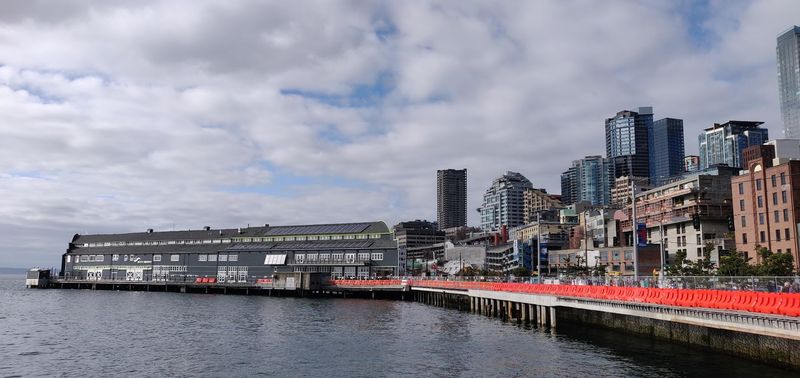
Few places in Seattle carry as much energy as Pike Place Market on a busy morning. Established in 1907, it is one of the oldest continuously operated public farmers markets in the United States, and it still functions as a working market where local farmers, fishmongers, and craftspeople sell their goods directly to the public.
Wandering through the main arcade costs nothing. You can browse fresh flowers, local honey, handmade crafts, and seasonal produce without spending a dime.
The famous fish toss at Pike Place Fish Co. is a free show that never gets old, even if you have seen it before.
If you want to eat, options range from a few dollars for a crepe or a bowl of chowder to sit-down spots with views of Elliott Bay. Come early on weekdays to avoid the biggest crowds and get the best selection from vendors.
Olympic Sculpture Park, Seattle, Washington
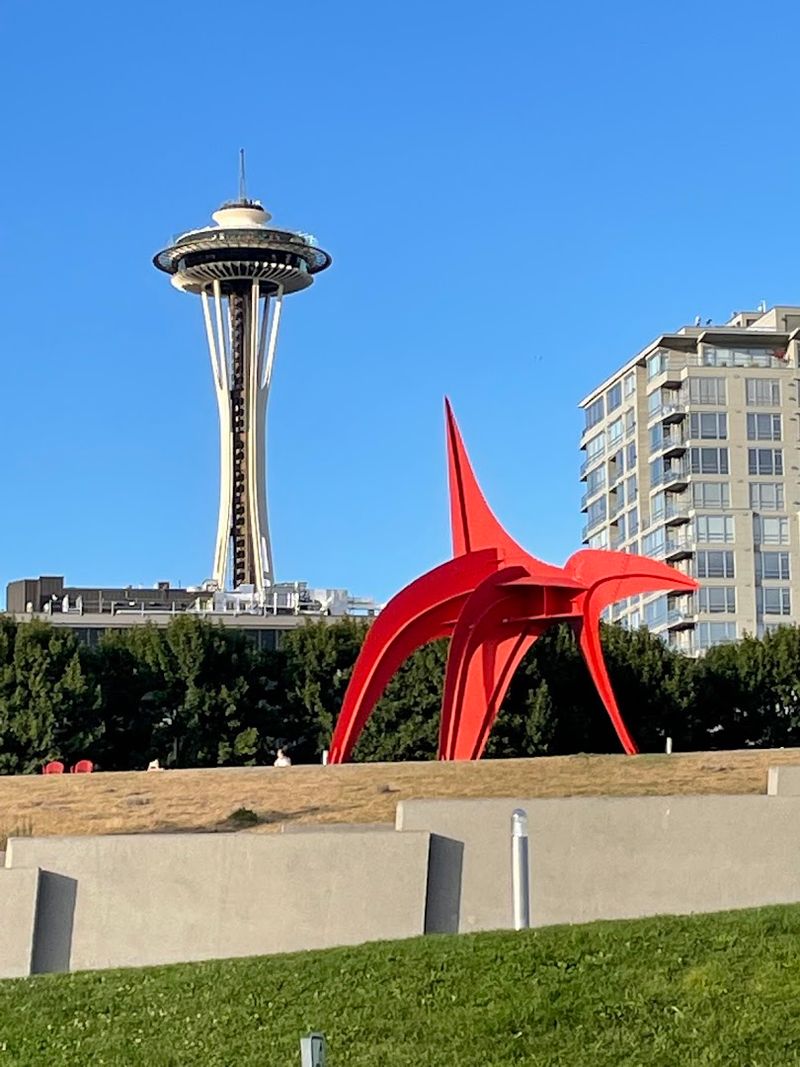
Right on the Seattle waterfront, the Olympic Sculpture Park is one of those rare places where world-class art and outdoor space come together at no cost to visitors. The park is free and open every day of the year, managed by the Seattle Art Museum.
The nine-acre site stretches from a former industrial property down to the water’s edge, offering views of Puget Sound and the Olympic Mountains as a backdrop to rotating and permanent sculptures. Alexander Calder’s bright red “Eagle” is one of the most photographed pieces on the grounds.
The zigzag path through the park is easy to walk and accessible for most visitors. It works well as a morning stroll, a lunch break destination, or a late afternoon visit when the light on the water changes.
There are no tickets, no reservations, and no pressure to rush through anything.
Frye Art Museum, Seattle, Washington
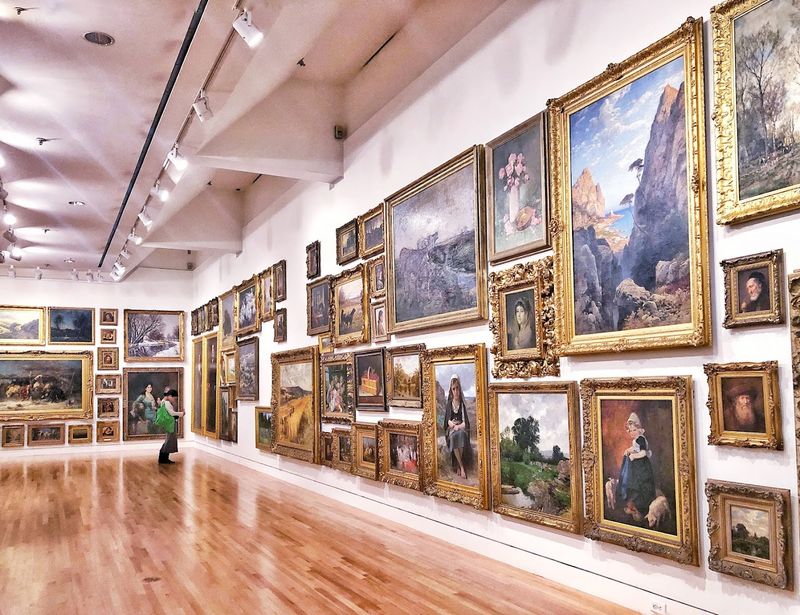
The Frye Art Museum in Seattle’s First Hill neighborhood has been free to visit since it opened in 1952, and that has never changed. Founded by Charles and Emma Frye, the museum was built around their personal collection of 19th and early 20th century European and American paintings.
The permanent collection includes works by artists such as Franz von Stuck, Winslow Homer, and Anders Zorn. The museum also hosts rotating contemporary exhibitions that often push in very different directions from the classical core collection, which keeps the space feeling current and worth revisiting.
The building itself is well designed and calm, with natural light in the main galleries and a courtyard cafe that serves coffee and light food at reasonable prices. Parking in the area can be tight, so arriving by bus or rideshare is a practical option.
The museum is open Tuesday through Sunday and stays free for all visitors, every time.
Ballard Locks, Seattle, Washington
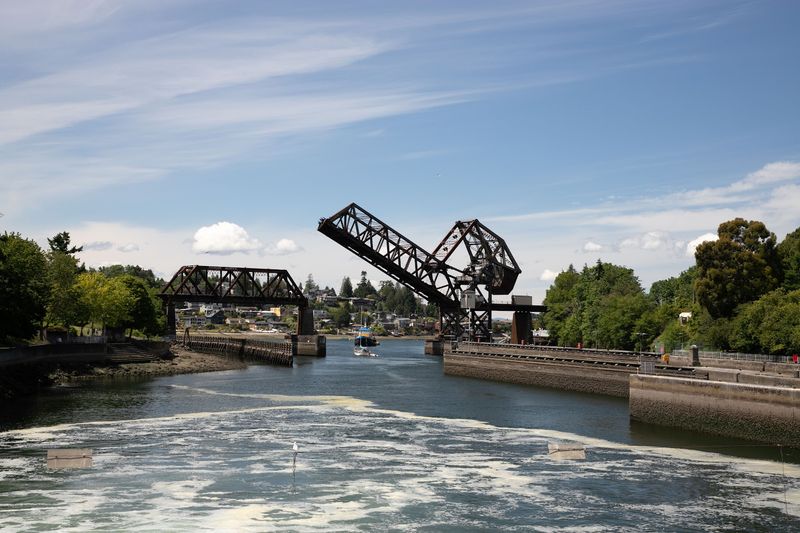
Watching a massive vessel rise or drop several feet in a matter of minutes is genuinely impressive, and at the Hiram M. Chittenden Locks in Ballard, you can do exactly that for free.
The locks connect Puget Sound to Lake Union and Lake Washington, and they have been operating continuously since 1917.
Boat traffic moves through all day, ranging from small fishing vessels to large commercial ships. There is a visitors center with exhibits on the history and engineering of the locks, and the adjacent Carl S.
English Jr. Botanical Garden is a well-maintained green space that is also free to explore.
One of the best features is the fish ladder on the south side of the locks, where an underground viewing window lets you watch salmon and steelhead migrating through during the summer and fall months. It is a surprisingly compelling thing to see up close, especially with kids in tow.
Snoqualmie Falls, Snoqualmie, Washington
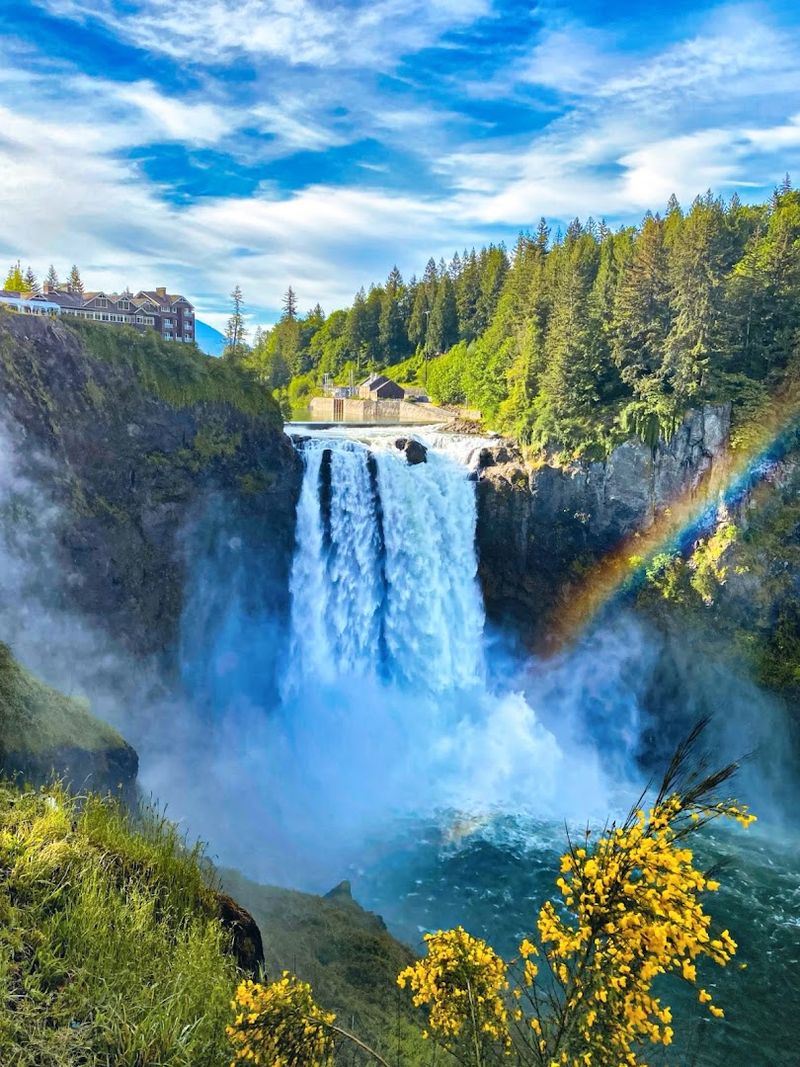
At 268 feet tall, Snoqualmie Falls is taller than Niagara Falls, and it sits less than 30 miles east of Seattle. The falls have been considered a sacred site by the Snoqualmie Tribe for generations, and the power of the water is immediately obvious when you stand at the upper viewing platform.
Parking costs a few dollars, but the overlook itself is free and accessible from a short paved path. A steeper trail leads down to a lower viewing area near the base of the falls, which takes about 20 to 30 minutes round trip and rewards the effort with a completely different perspective.
The surrounding area has a small gift shop and the historic Salish Lodge perched right at the top of the falls. You do not need to go inside to enjoy the view, but the setting gives the whole visit a dramatic quality that photographs rarely fully capture.
Go on a weekday to avoid peak crowds.
Washington Park Arboretum, Seattle, Washington
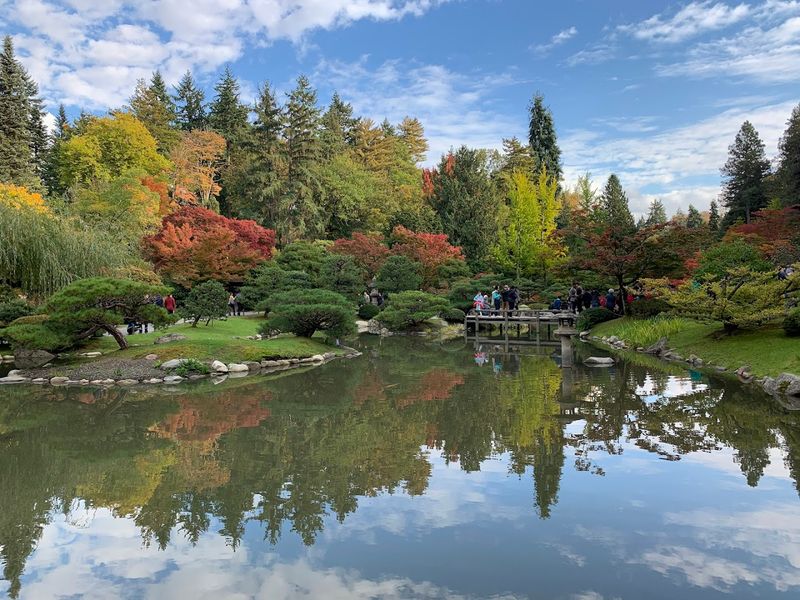
Managed jointly by the University of Washington and the City of Seattle, the Washington Park Arboretum covers about 230 acres in the Madison Valley neighborhood and is free to visit year-round. It functions as both a public park and a living plant collection with over 20,000 plants representing thousands of species.
Spring is particularly striking when the Japanese cherry trees and magnolias bloom, but the arboretum holds interest in every season. The Azalea Way trail is one of the most popular routes, offering a long, wide path through a canopy that changes color from spring through fall.
The Japanese Garden within the arboretum is a separate ticketed section, but the rest of the grounds are completely free. Waterfront Trail along the lake offers calm water views and occasional wildlife sightings including great blue herons and turtles.
It is a reliable spot for a long walk without any agenda.
Kubota Garden, Seattle, Washington
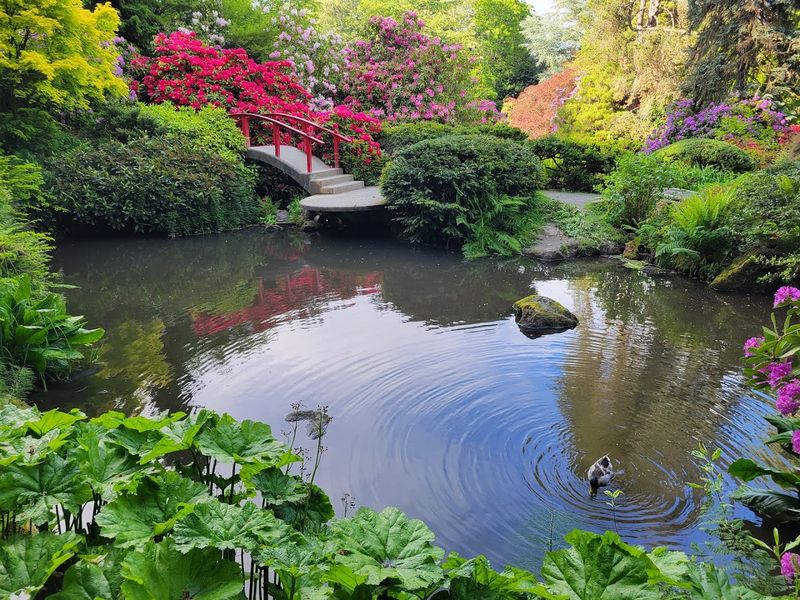
Kubota Garden in the Rainier Beach neighborhood is one of Seattle’s best-kept public spaces and one of its most moving stories. Fujitaro Kubota, a Japanese immigrant with no formal training in garden design, began building this 20-acre garden on a swampy lot in 1927.
He spent decades shaping it by hand into a landscape that blends Japanese garden principles with Northwest plants.
The city purchased the property in 1987 to preserve it, and it has been maintained as a public park ever since. Admission is completely free.
The garden features stone lanterns, koi ponds, moon bridges, and winding paths through mature trees and groundcover. It is peaceful in a way that feels earned rather than designed for show.
Fall color here is outstanding, with Japanese maples turning deep red and orange. Visit on a quiet weekday morning and you may have large sections of the garden entirely to yourself.
Discovery Park, Seattle, Washington
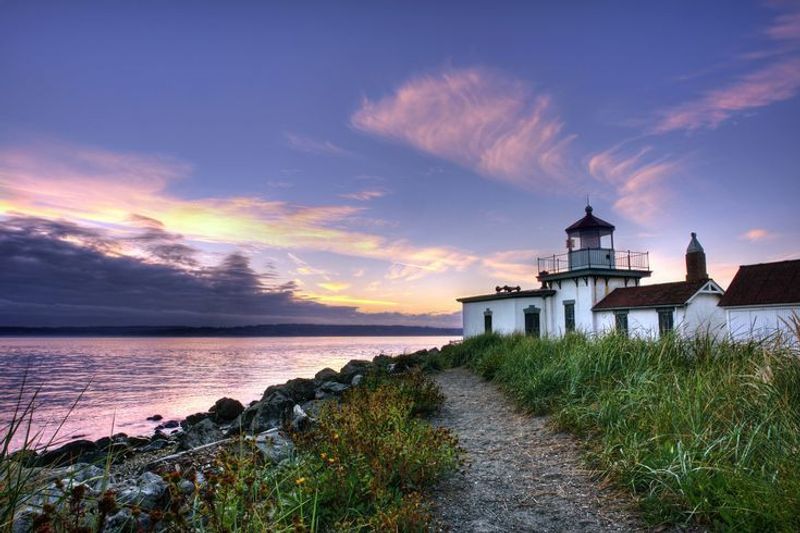
At 534 acres, Discovery Park is the largest green space within Seattle city limits, and it offers more variety than most visitors expect. The park occupies a former military base on Magnolia Bluff, and the transition from dense forest to open meadow to bluff-top views happens over a relatively short distance.
The Loop Trail covers about 2.8 miles and takes most walkers through the park’s main habitats, including old-growth forest, restored prairie, and views over Puget Sound toward the Olympic Mountains. A separate trail leads down to a small beach below the lighthouse.
West Point Lighthouse is one of the most photographed spots in the park, and reaching it requires a walk down a service road or beach path depending on conditions. Entry to the park is free, and the visitor center near the main entrance has maps and information about the park’s natural and cultural history.
Dogs are welcome on leash.
Klondike Gold Rush National Historical Park, Seattle, Washington
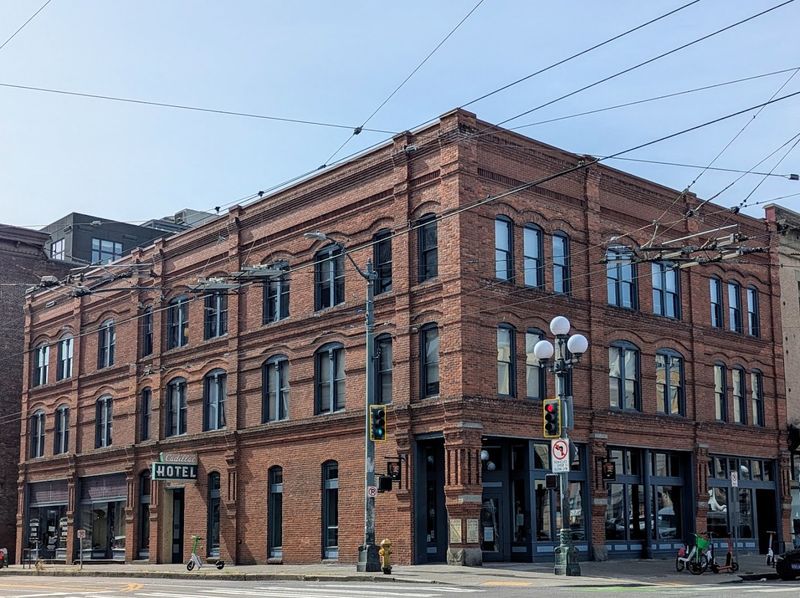
Seattle played a central role in the Klondike Gold Rush of the late 1890s, serving as the primary outfitting city for prospectors heading north to Alaska and the Yukon. The national historical park in Pioneer Square tells that story through well-designed exhibits inside a restored 1889 building.
Admission is free, which makes it one of the most accessible National Park Service sites in the region. The exhibits cover the economic boom Seattle experienced as a supply hub, the harsh realities of the journey north, and the experiences of the prospectors who flooded through the city.
Rangers give talks and walking tours regularly, and the park connects to the broader Pioneer Square neighborhood, which is worth exploring on foot. The area has some of Seattle’s oldest architecture, including several buildings that survived the 1889 Great Seattle Fire.
For history enthusiasts or curious first-time visitors, this is a genuinely informative stop that takes about an hour to experience fully.
Deception Pass State Park, Oak Harbor, Washington
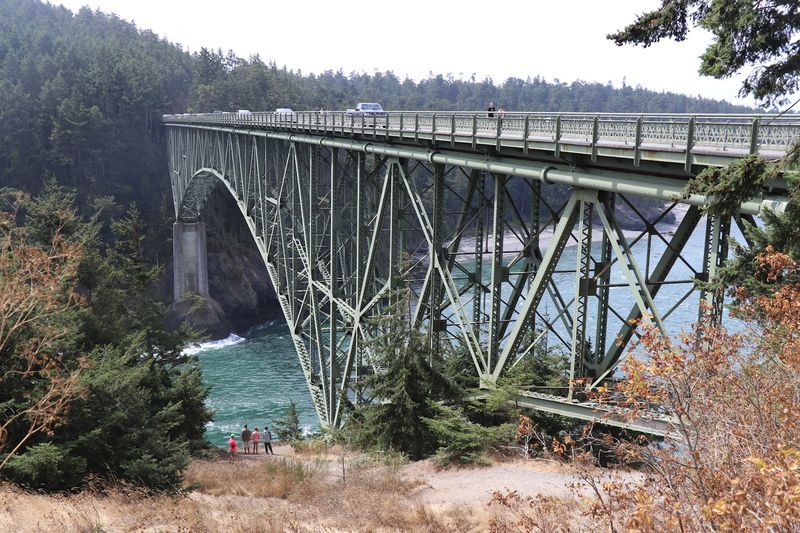
The bridge at Deception Pass is one of the most dramatic spans in Washington, connecting Whidbey Island to Fidalgo Island over a narrow, churning channel where tidal currents run fast and strong. Standing on the bridge while the water rushes below is a genuinely striking experience.
The park covers over 4,000 acres and includes ocean beaches, freshwater lakes, old-growth forest, and miles of trails. Rosario Beach and North Beach are popular spots for tidepooling and shoreline walks, and the views from the bluffs above the pass are among the best in the state.
A Discover Pass is required for parking and costs around $10 for a day pass if you do not already have one. The park is about 90 minutes north of Seattle and makes an excellent day trip from the city.
Summer weekends draw large crowds, so arriving early in the morning or visiting mid-week gives you more room to move around.
Billy Frank Jr. Nisqually National Wildlife Refuge, Olympia, Washington
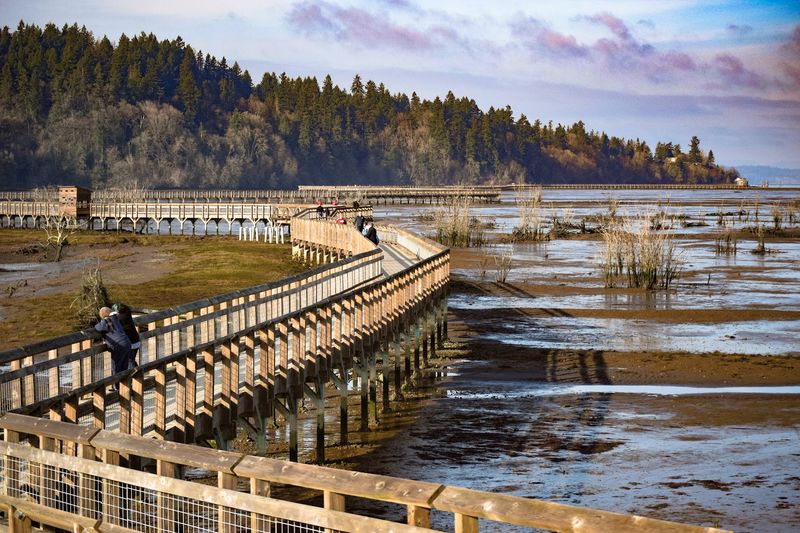
Named for the late Nisqually tribal leader and environmental activist Billy Frank Jr., this wildlife refuge at the mouth of the Nisqually River is one of the most productive birding spots in the Pacific Northwest. The estuary habitat supports over 300 bird species throughout the year, including migratory shorebirds, raptors, and waterfowl.
A boardwalk trail of about 5 miles loops through the refuge, crossing tidal flats and freshwater wetlands with clear views across the marsh to Mount Rainier on clear days. The walk is flat and easy, making it accessible for most fitness levels and great for families with younger children.
Entry costs $3 per person, and the refuge is open during daylight hours every day. Binoculars are useful but not required.
The visitor center near the entrance has exhibits on the refuge’s restoration history and the role of the Nisqually River in the regional ecosystem. Fall and winter bring the largest concentrations of waterfowl.
Mima Mounds Natural Area Preserve, Olympia, Washington
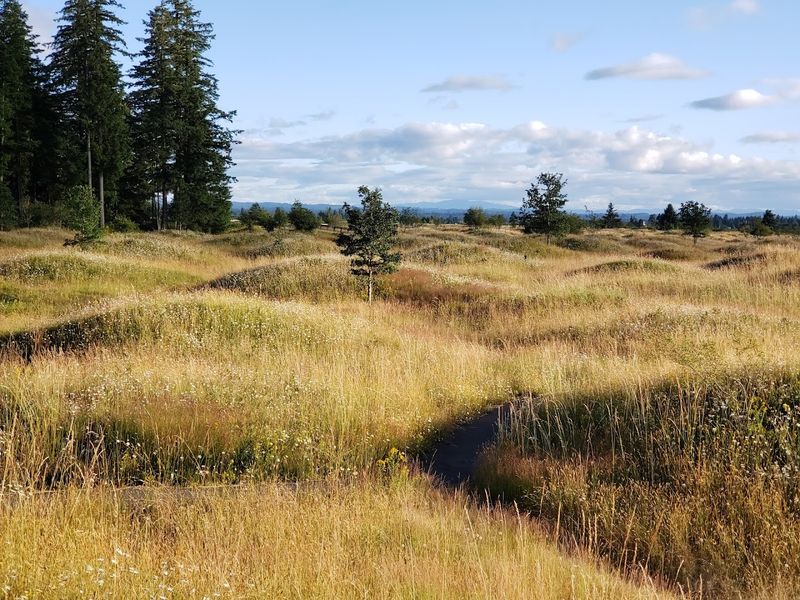
Few places in Washington produce as many puzzled expressions as the Mima Mounds. Spread across an open prairie south of Olympia, these rounded earthen mounds each stand roughly six to eight feet tall and can reach 30 feet in diameter.
Hundreds of them dot the landscape in a pattern that looks almost intentional.
Scientists have debated their origin for decades. Current research points toward the activity of pocket gophers over long periods of time as the most supported explanation, though the mystery is part of what makes the site interesting to visit.
The preserve is free to enter and includes an interpretive trail of about a mile that explains the geology and ecology of the area.
Spring is the best time to visit when wildflowers cover the prairie between the mounds. The site is managed by the Washington Department of Natural Resources and is open during daylight hours.
It sits about 15 miles south of Olympia and is easy to reach off Highway 121.
Riverfront Park, Spokane, Washington
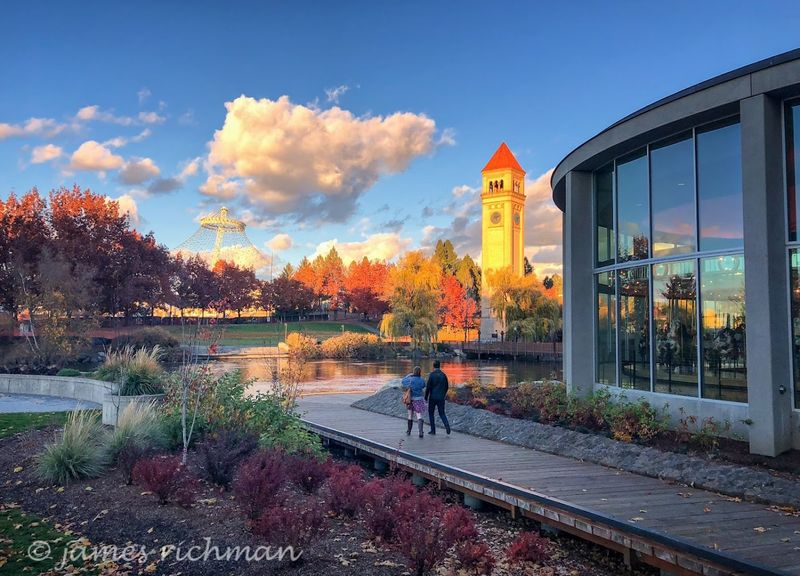
Riverfront Park sits at the center of Spokane and follows the Spokane River through a stretch of rapids and falls that run right through the middle of the city. The park was developed as the site of Expo ’74, the first World’s Fair focused on the environment, and some of its original structures and infrastructure are still part of the grounds.
The park is free to enter and covers about 100 acres with walking and biking paths along the river. The historic Great Northern clocktower and the renovated carousel are popular landmarks within the park.
The Spokane Falls are best viewed from the SkyRide gondola, which runs seasonally and costs a small fee, though you can also see them from bridges and overlooks at no charge.
There are paid attractions within the park, including an IMAX theater and the carousel, but simply walking through and spending time along the river requires no admission at all. It is a central gathering space that works well any time of year.
Palouse Falls State Park Heritage Site, Washtucna, Washington
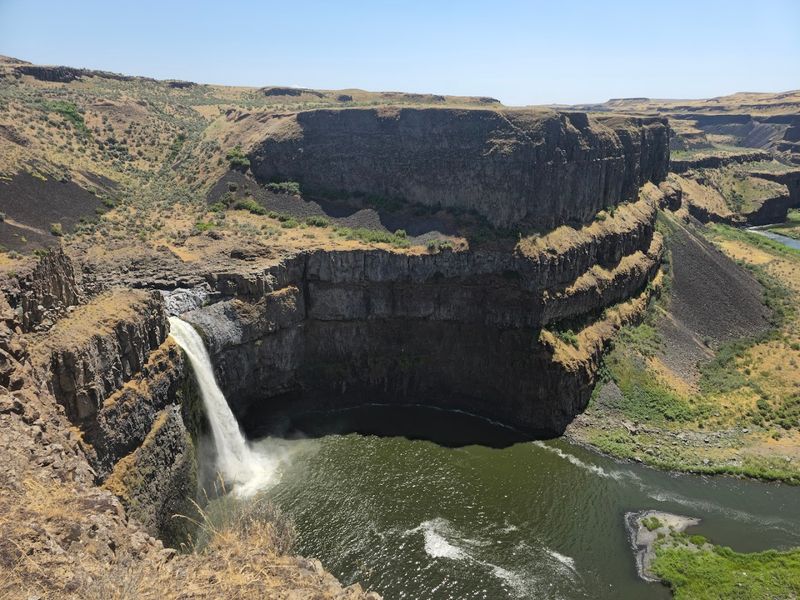
Washington’s official state waterfall drops about 198 feet into a wide basalt canyon in a remote corner of eastern Washington, and the drive to reach it is part of what makes the visit feel like a real adventure. Palouse Falls sits within a landscape carved by the Missoula Floods, massive glacial outburst events that reshaped the Columbia Plateau thousands of years ago.
The upper viewpoint is a short walk from the parking area and delivers an unobstructed view of the falls and the canyon below. A steeper trail leads closer to the rim, offering a more dramatic angle but requiring more caution.
The surrounding terrain is stark and open, with basalt columns, rolling wheat fields in the distance, and very little development in sight.
A Discover Pass is required for parking. The park is about two hours from Spokane and three and a half hours from Seattle.
It is the kind of stop that rewards the effort with a view that feels genuinely remote and impressive.
Bloedel Reserve, Bainbridge Island, Washington
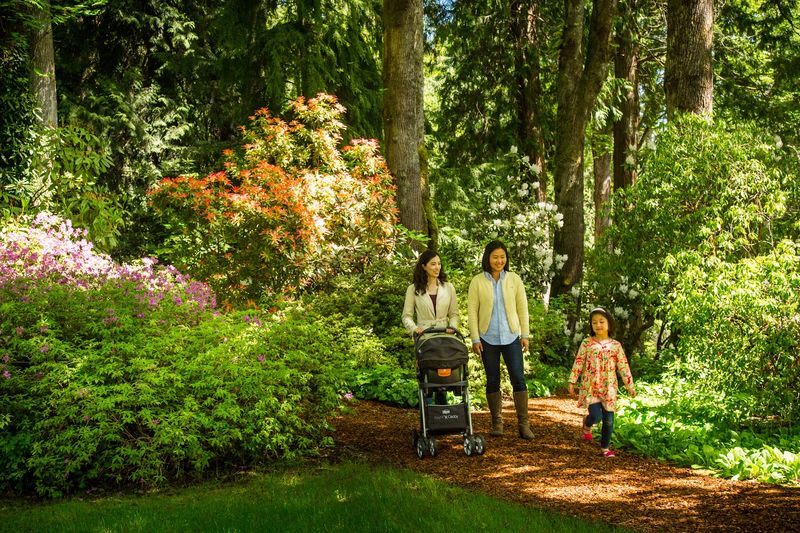
Getting to Bloedel Reserve already feels like part of the experience. A short ferry ride from Seattle to Bainbridge Island is followed by a quick drive to 150 acres of designed gardens, natural forest, and quiet meadows that the Bloedel family began shaping in the 1950s.
The reserve opened to the public in 1988 and is managed by a nonprofit foundation.
Admission is $20 for adults, which is reasonable given the quality and scale of what you get. The reserve includes a Japanese garden, a moss garden, a reflection pool garden, a bird refuge, and miles of walking paths through second-growth forest.
Each section has its own character and pace.
Reservations are required and capacity is intentionally limited, which keeps the experience calm and uncrowded. The reserve is open Wednesday through Sunday.
Spring and fall offer the most dramatic seasonal color, but the evergreen sections make it a rewarding visit in any month. Plan for at least two hours to move through it at a comfortable pace.
Share this story