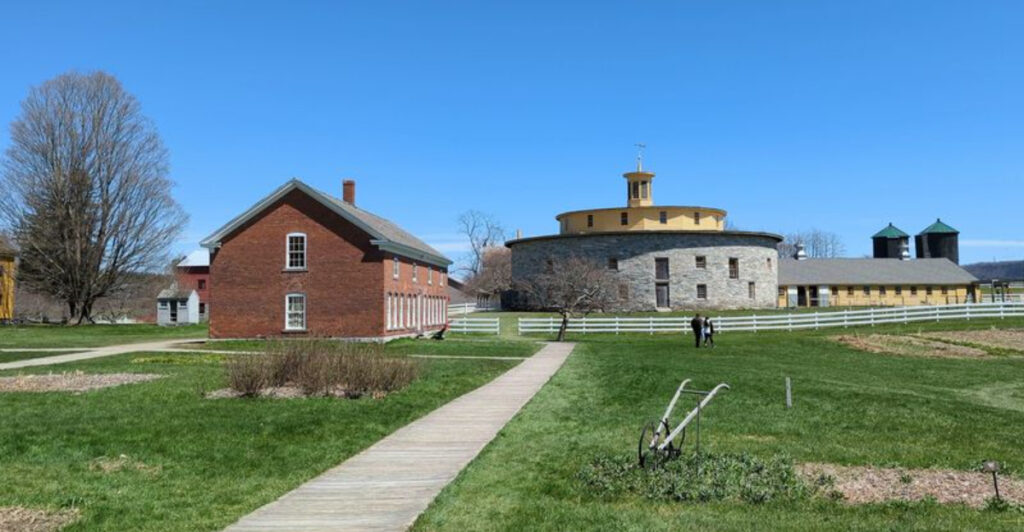
Tucked into the rolling hills of western Massachusetts, a 200-year-old community tells one of the most unusual stories in American history. The Shakers built their lives around simplicity, hard work, and thoughtful design, and nowhere is that more clear than in the Berkshires.
One structure in particular stops every first-time visitor cold: a massive round stone barn that solved a farming problem with almost shocking cleverness. This is the story of Hancock Shaker Village, a living history museum that brings the past to life across 20 restored buildings, working farm fields, heritage-breed animals, and hands-on craft demonstrations.
Whether a history buff or just someone looking for a genuinely interesting afternoon, this place delivers far more than expected.
Who Were the Shakers, Really?
The name “Shaker” tends to draw a blank stare or a vague association with furniture. The full picture is far more interesting than most people expect.
The Shakers were a religious sect formally known as the United Society of Believers in Christ’s Second Appearing. They broke away from the Quakers in England and arrived in America in 1774, eventually establishing communities across the northeastern United States.
Their belief system centered on communal living, equality between men and women, celibacy, and a deep commitment to doing every task as perfectly as possible.
That last principle is what gave Shaker craftsmanship its legendary reputation. A chair was not just a chair; it was an act of devotion.
The village at Hancock was one of their most productive and long-lasting communities, operating continuously from 1783 until 1960. That is nearly 180 years of uninterrupted Shaker life on this exact piece of land.
The Round Barn That Changed Everything
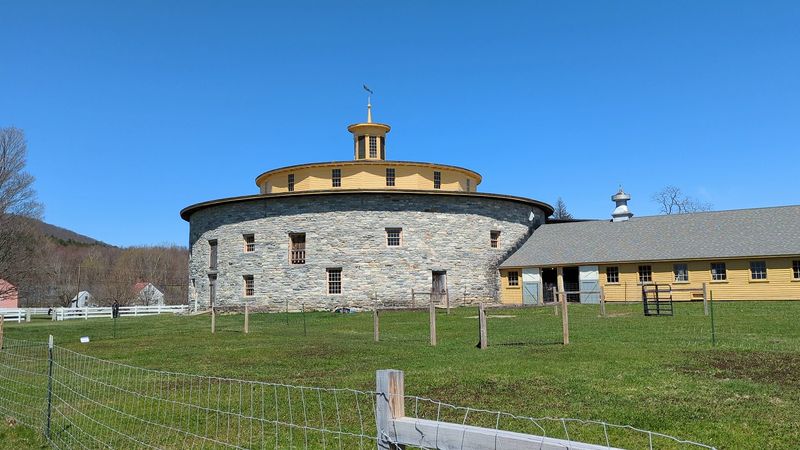
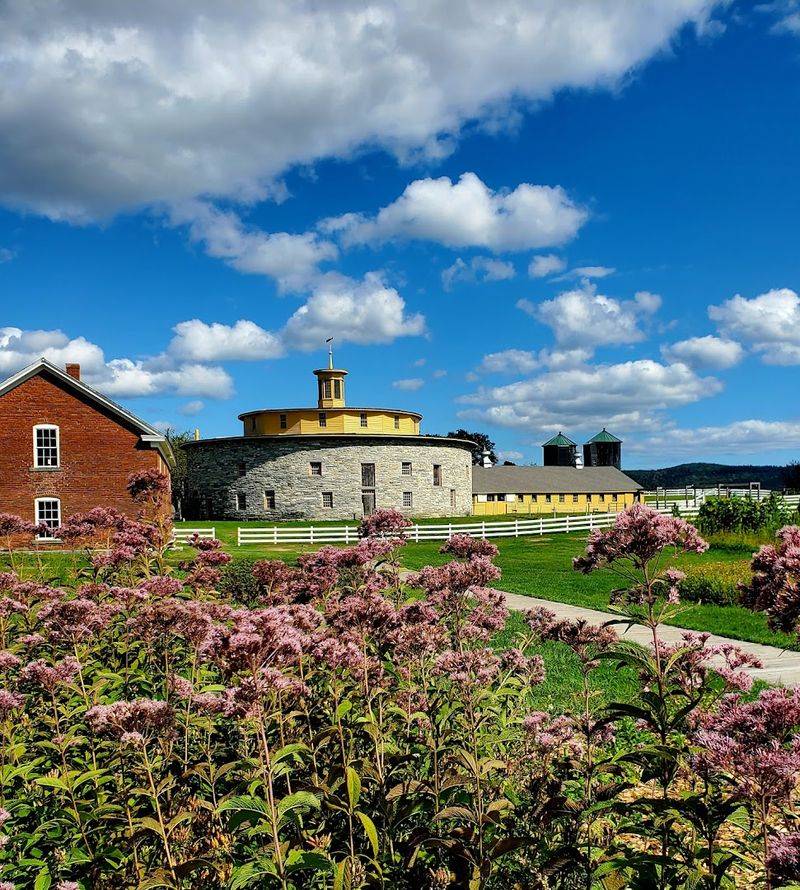
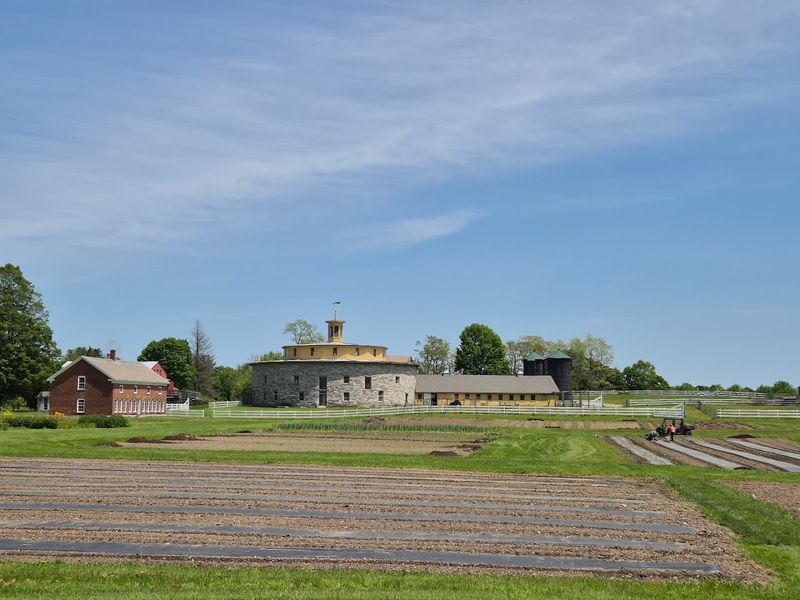
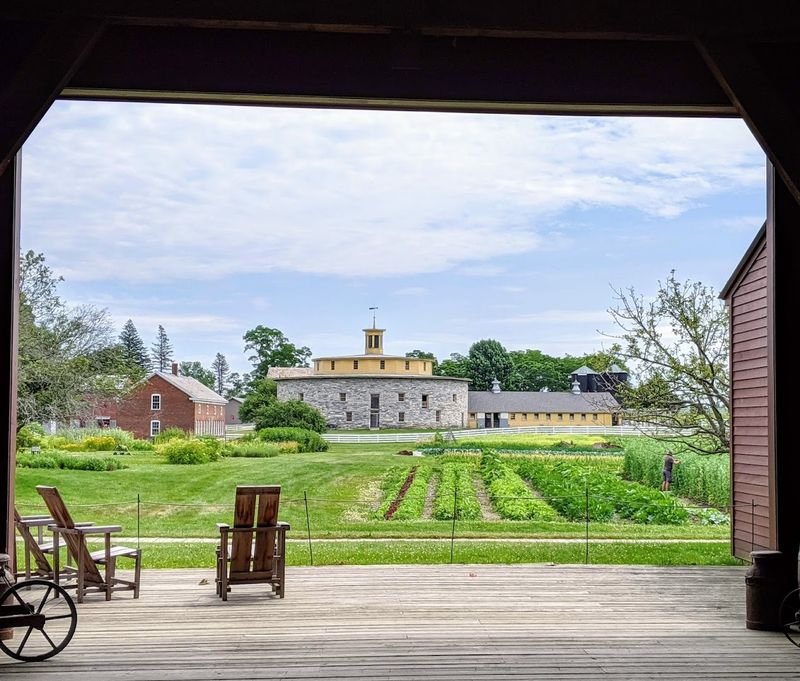
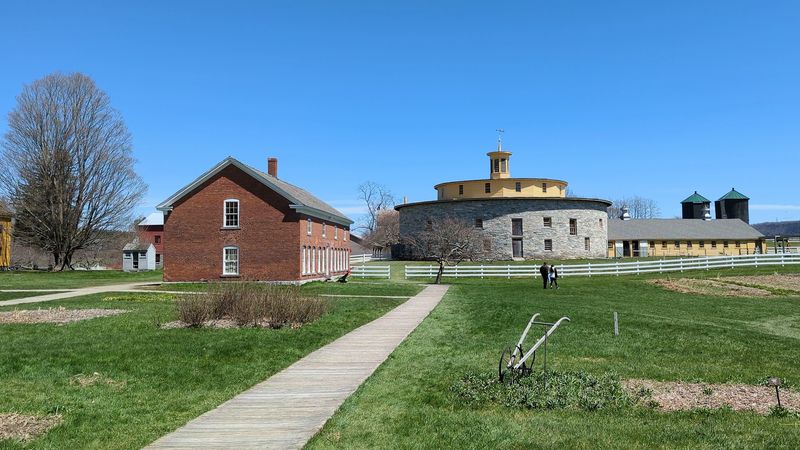
No single structure at Hancock Shaker Village gets more attention than the round stone barn, and for very good reason. Built in 1826, it is the only circular barn the Shakers ever constructed, and its design solved a real logistical problem with elegant efficiency.
Before this barn existed, hay wagons had to back out of a traditional barn after unloading, which was slow and awkward. The round design allowed wagons to enter from the upper level, travel in a full circle around the interior deck, and exit through the same door without ever reversing.
Multiple wagons could unload simultaneously, dramatically cutting the time needed to bring in a harvest.
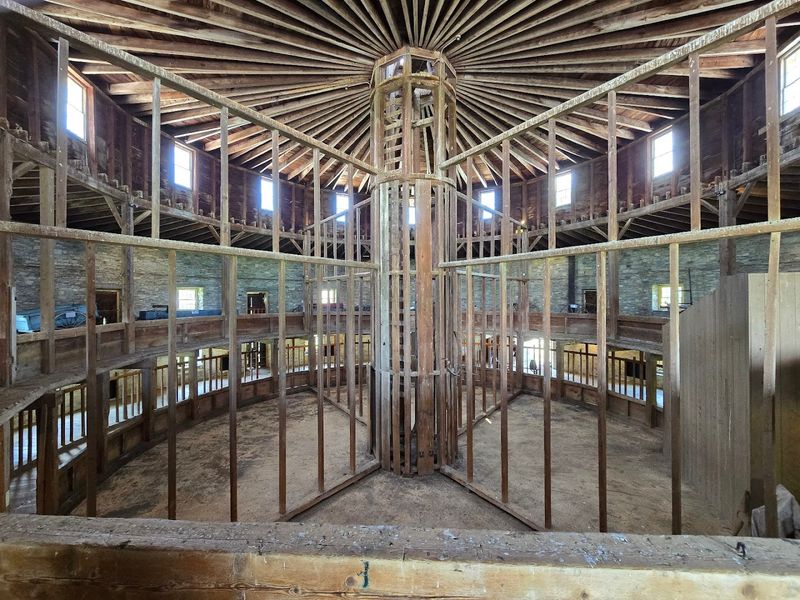
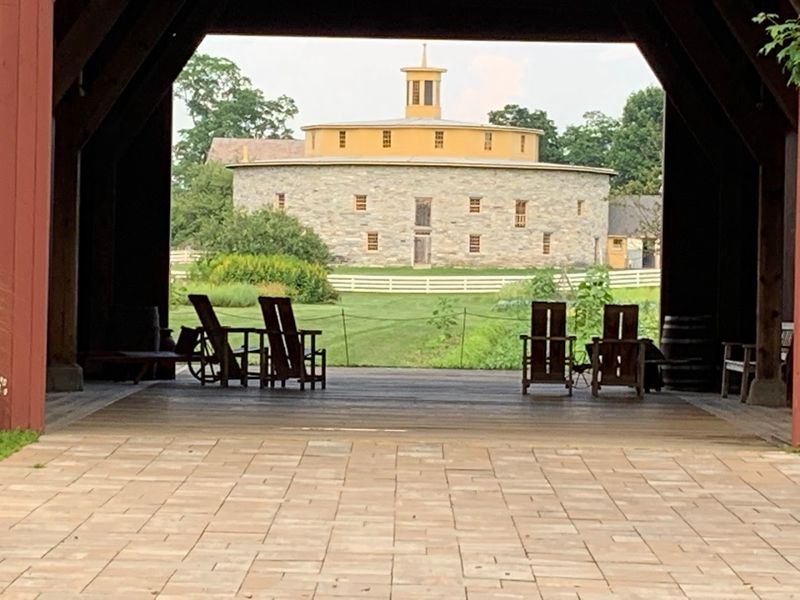
The barn is three stories tall, built from locally quarried limestone, and topped with a wooden cupola. Cattle stalls line the ground floor, and the entire structure radiates outward from a central hay storage core.
Tours of the barn regularly include live animals, which adds a completely different layer to the experience.
Engineering Genius Hidden in Plain Sight
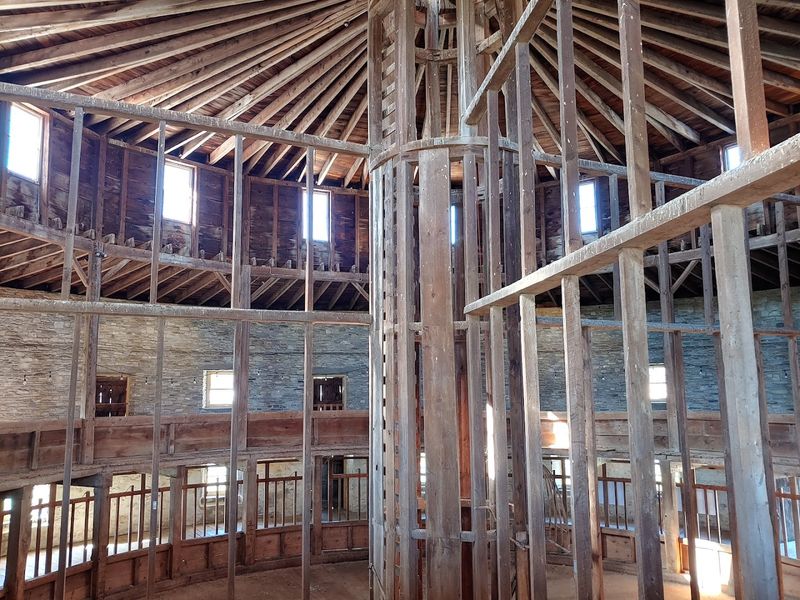
The round barn is not just visually striking; it is a masterclass in practical problem-solving that holds up even by modern standards. The Shakers were not trained architects or engineers in any formal sense, yet they designed a structure that solved workflow inefficiencies in a way that no rectangular barn ever could.
The interior is organized around a central wooden column and radiating beams that support the upper wagon deck. Cattle were housed on the ground level, where they could be fed directly from the hay dropped through the center of the structure above them.
The entire system minimized wasted labor at every step.
What makes this even more remarkable is that the barn was built without power tools, without steel reinforcement, and without any of the construction technology taken for granted today. The limestone walls have stood for nearly 200 years.
Guided tours of the barn walk through both the construction details and the agricultural logic behind every design decision.
A Working Farm That Actually Works
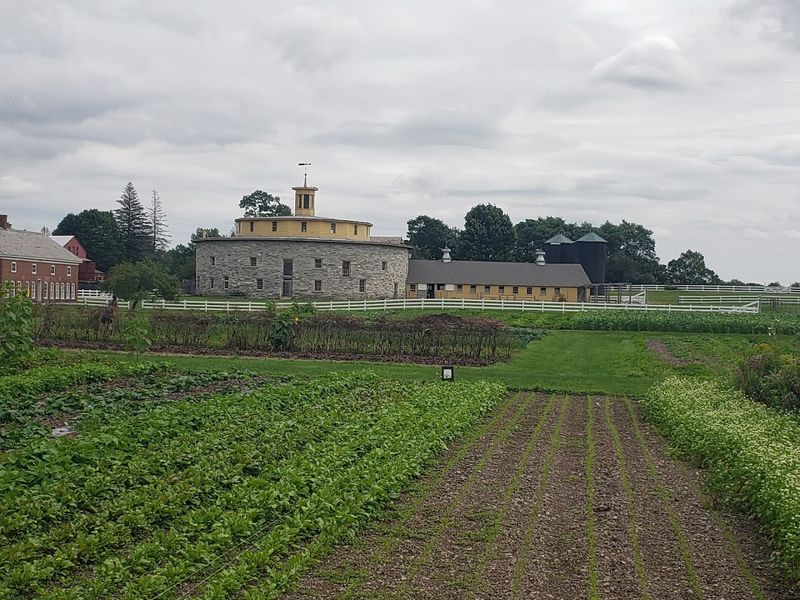
Hancock Shaker Village is not a museum where everything sits behind glass. The farm is actively managed, and the animals are very much part of daily operations.
Heritage-breed cattle, goats, sheep, chickens, and pigs all live on the property, and their presence turns a history lesson into something far more tangible.
Spring is particularly popular because that is when the baby animals arrive. Families with young children often make the trip specifically during this season, and the appeal is obvious.
Getting close to farm animals in a historically accurate setting is a different experience from a petting zoo.
The heirloom gardens are another highlight of the working farm. The Shakers were well ahead of their time when it came to agriculture, developing seed-packaging techniques that they commercialized nationally.
The gardens at Hancock reflect that tradition, with varieties carefully chosen to match what would have been grown during the community’s active years. The whole farm feels purposeful rather than decorative.
Craft Demonstrations That Go Beyond Display
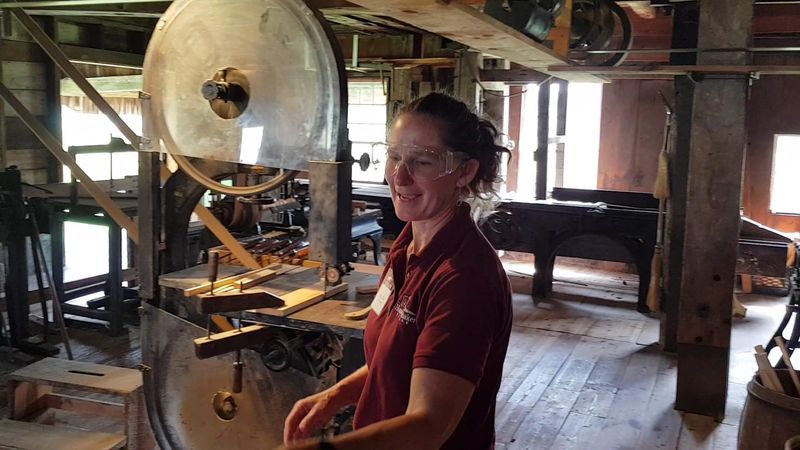
Plenty of museums describe old crafts. Hancock Shaker Village actually performs them.
Throughout the day, skilled interpreters demonstrate blacksmithing, weaving, basket making, woodworking, and other trades that defined Shaker daily life. These are not theatrical performances; they are working demonstrations using period-appropriate techniques and tools.
The blacksmith shop draws consistent crowds. Watching a blade or a tool take shape from raw iron at a working forge is genuinely compelling, and the interpreters are knowledgeable enough to answer detailed questions about both the craft and its historical context.
Weaving demonstrations show how the Shakers produced textiles on traditional looms, and visitors can sometimes try the equipment themselves. Basket weaving workshops go even further, with structured sessions where participants create their own baskets under the guidance of an experienced instructor.
Checking the daily schedule before arriving is a smart move, especially for anyone with a specific craft in mind. The schedule changes, and some demonstrations run only at certain times.
Buildings That Tell Their Own Stories
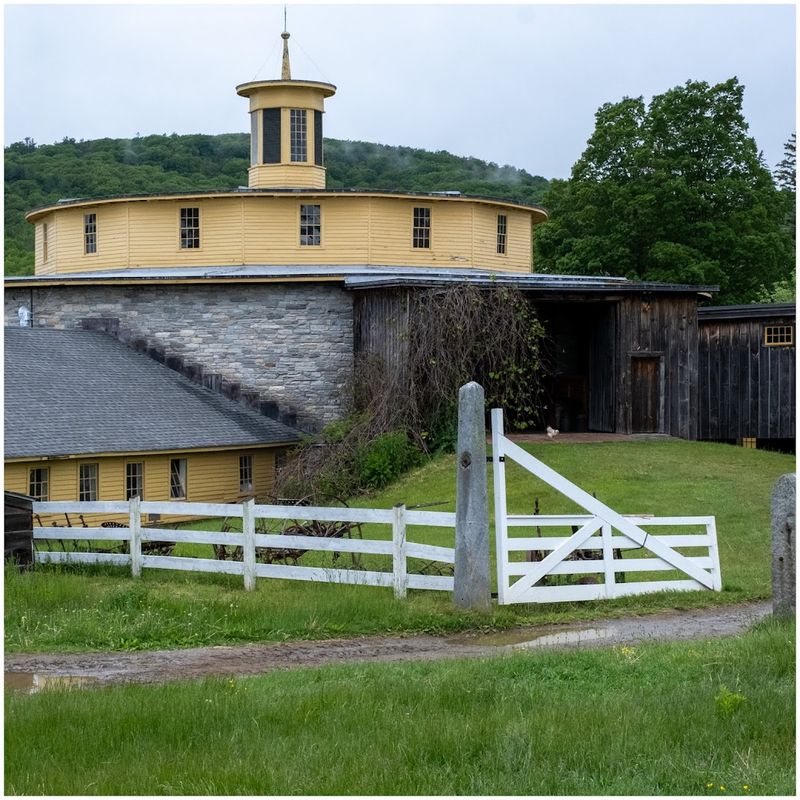
Twenty buildings spread across the Hancock Shaker Village campus, and each one has a distinct story tied to its original function. The Brick Dwelling, which housed the community’s brothers and sisters in separate quarters under the same roof, is one of the most architecturally striking.
Built in 1830, it is a testament to Shaker efficiency, with built-in storage, communal dining, and meeting spaces all organized with precise logic.
The laundry, the school, the icehouse, the machine shop, and the poultry house all survive in restored condition. Signage throughout each building explains its original purpose and how it fit into the larger rhythms of community life.
Some buildings have costumed docents stationed inside; others are self-guided.
The variety keeps the tour from ever feeling repetitive. Each structure introduces a new angle on Shaker life, whether it is domestic, agricultural, industrial, or spiritual.
The grounds require a fair amount of walking, so comfortable footwear is a practical necessity rather than a casual suggestion.
What the Shakers Got Right About Design
Shaker furniture has been admired and imitated for well over a century, and seeing the original pieces in the buildings where they were made and used puts that admiration into a completely different context. The chairs, tables, cabinets, and built-in storage units at Hancock are not reproductions.
They are the real things, still in the rooms they were built for.
The design philosophy was straightforward: nothing should be added to a piece of furniture that does not serve a function. No decorative carving, no unnecessary ornamentation, no flourish for its own sake.
The result is furniture that looks remarkably current even two centuries later, which explains why Shaker-style design remains a major influence in both architecture and product design today.
The craftsmanship is also exceptional by any standard. Joints are tight, surfaces are smooth, and proportions are carefully considered.
The Shakers believed that making something well was itself a form of worship, and that belief is visible in every piece on display throughout the village.
Hands-On Learning for All Ages
Hancock Shaker Village is structured so that visitors of almost any age can find something genuinely engaging. Young children can interact with farm animals, try milking a replica cow, and participate in simple craft activities.
Older kids and teenagers tend to connect with the demonstrations and the engineering story behind the round barn. Adults often find the deeper historical and philosophical context of Shaker life to be the most absorbing part of the visit.
The museum does a thoughtful job of layering information so that a seven-year-old and a seventy-year-old can both walk away having learned something meaningful. Docents adjust their presentations depending on who is in the room, and the hands-on nature of many exhibits keeps attention levels high across the board.
Face painting and seasonal activities add a festive element during certain times of year. Workshops in basket weaving, woodworking, and other Shaker crafts are available for those who want a more structured, participatory experience beyond the standard self-guided tour.
The Grounds Beyond the Buildings
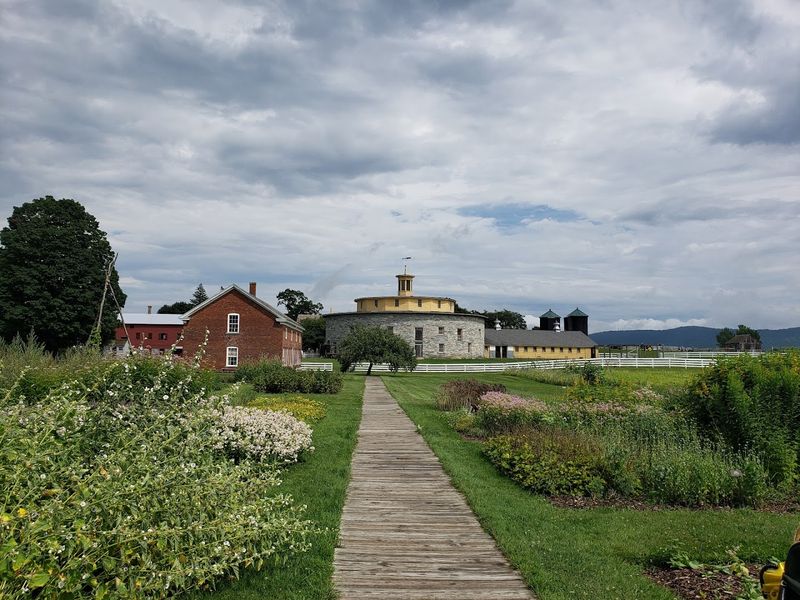
The buildings get most of the attention, but the landscape surrounding them is worth slowing down to appreciate. Trails wind through fields and woodlands across the property, offering a quieter way to experience the setting that the Shakers chose for their community.
The Berkshire hills frame the horizon in every direction, and the terrain shifts from open farmland to denser tree cover as the paths move away from the main campus.
Fall is particularly striking at Hancock. The foliage change across the Berkshires is well documented, and the village grounds offer a front-row view of that seasonal shift without any of the traffic that clogs the more popular leaf-peeping routes nearby.
The combination of historic buildings and changing leaves makes for an afternoon that is hard to replicate anywhere else in the region.
Summer brings the heirloom gardens to full production, and the working farm is busiest during warmer months. Each season genuinely offers something different, which is why many visitors return more than once across the calendar year.
The Cafe and the Shop Worth Lingering Over
Near the main entrance, the village cafe offers a practical and pleasant stopping point during or after a tour. The menu covers sandwiches and lighter fare, with options that work for a quick break between buildings without derailing the rest of the visit.
The cafe also displays miniature replicas of the rooms found throughout the village, which gives it an unexpectedly interesting quality beyond just being a place to refuel.
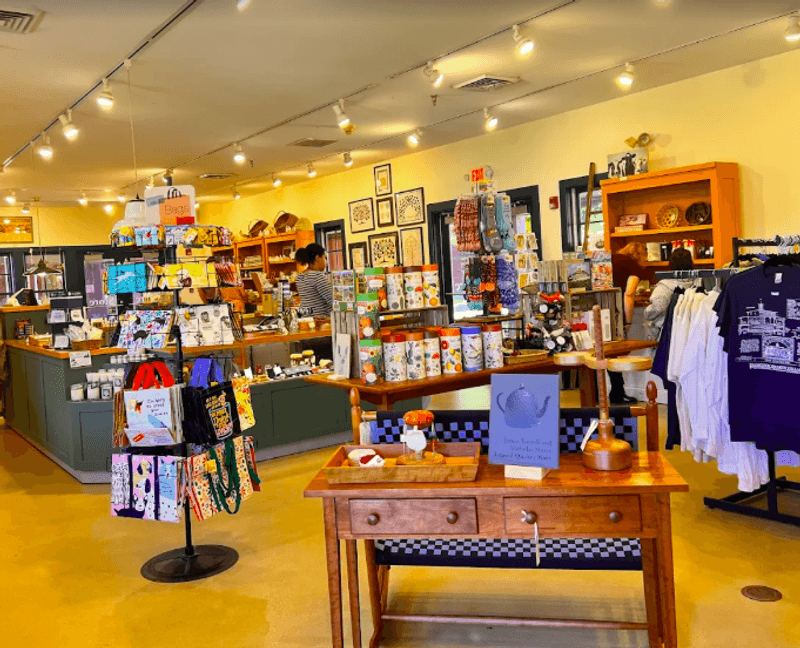
The gift shop is worth spending genuine time in rather than treating as an afterthought. Local honey, organic spices, handmade items, and books related to Shaker history and design fill the shelves.
The selection leans toward quality over volume, which fits the Shaker ethos appropriately.
Books on Shaker craft and design make particularly good souvenirs for anyone who leaves the village wanting to understand the aesthetic more deeply. Some items in the shop are produced by contemporary artisans working in the Shaker tradition, making them functional pieces rather than purely decorative keepsakes from a day out.
Planning Your Visit Without the Guesswork
A few practical details make the difference between a rushed visit and a genuinely satisfying one. The museum is open seven days a week from 11 AM to 4 PM, which gives a reasonable window for exploration, but 20 buildings across a spread-out campus take longer than most people initially budget.
Plan for at least three to four hours to cover the main highlights without feeling pressured.
Mobility considerations matter here. Most of the historic buildings involve steps and uneven surfaces, which limits access for anyone using a wheelchair or mobility assistance device.
The main entrance area and the round barn are the primary exceptions. Checking the museum’s website at hancockshakervillage.org before visiting allows for better planning around accessibility and daily demonstration schedules.
Comfortable walking shoes are a genuine necessity rather than a suggestion. The grounds are beautiful but require real walking across varied terrain.
Arriving earlier in the day, particularly on weekends, helps avoid the busier midday and early afternoon periods when tour groups tend to cluster around the most popular exhibits.
Why the Shaker Story Still Resonates
The Shakers are often described as a community that designed for eternity but built for practicality, and that tension is exactly what makes their story so compelling two centuries later. They created furniture, tools, and buildings that were meant to last, and at Hancock, the evidence that they succeeded is everywhere.
Their social structure was also ahead of its time in specific ways. Men and women held equal standing within the community.
Equality of labor was a genuine operating principle rather than an aspiration. Inventions credited to Shaker communities include the flat broom, the circular saw, and packaged garden seeds, all of which changed everyday American life in practical ways.
The community at Hancock eventually dwindled as fewer people chose to join, and the last residents left in 1960. But the village itself did not disappear.
It was preserved and converted into a living museum, ensuring that the story remains accessible rather than being absorbed quietly into history. That decision has given the Berkshires one of its most distinctive and genuinely irreplaceable cultural sites.
A Place That Rewards Returning Visitors
Not many museums earn repeat visits from the same people, but Hancock Shaker Village has built a reputation for exactly that. The seasonal programming is one reason: spring brings baby animals, summer fills the heirloom gardens, fall transforms the landscape, and winter offers a quieter, more contemplative version of the same campus.
Rotating art exhibitions mean the gallery content changes throughout the year. Craft workshops are scheduled on a rolling basis, so a basket weaving session available in April may be replaced by a woodworking or textile program by July.
Checking the website before each visit reveals what is currently on offer beyond the permanent exhibits.
The deeper reason people return is harder to quantify. Hancock Shaker Village operates at a pace that feels different from most tourist attractions.
There is no rush built into the experience, no timed entry, no crowds being herded from station to station. That quality is increasingly rare, and once discovered, it tends to bring people back year after year to this corner of the Berkshires.
A Village Frozen in Purpose, Not Just Time
Most historic sites rope off the good stuff behind velvet barriers. At Hancock Shaker Village, located at 1843 W Housatonic St, Pittsfield, MA 01201, the buildings are open, the tools are real, and the stories are alive.
This living history museum sits on land the Shakers first settled in the 1780s, and the community thrived here for nearly two centuries. The campus covers a significant stretch of the Berkshire landscape, with 20 restored structures spread across both sides of Route 20.
Each building served a specific purpose in Shaker daily life, from the laundry house to the icehouse to the meeting house, and each one still tells that story today. The property is open Tuesday through Sunday from 11 AM to 4 PM, with Monday hours available as well.
Plan to arrive early to get the most out of the grounds before the afternoon winds down.
Share this story