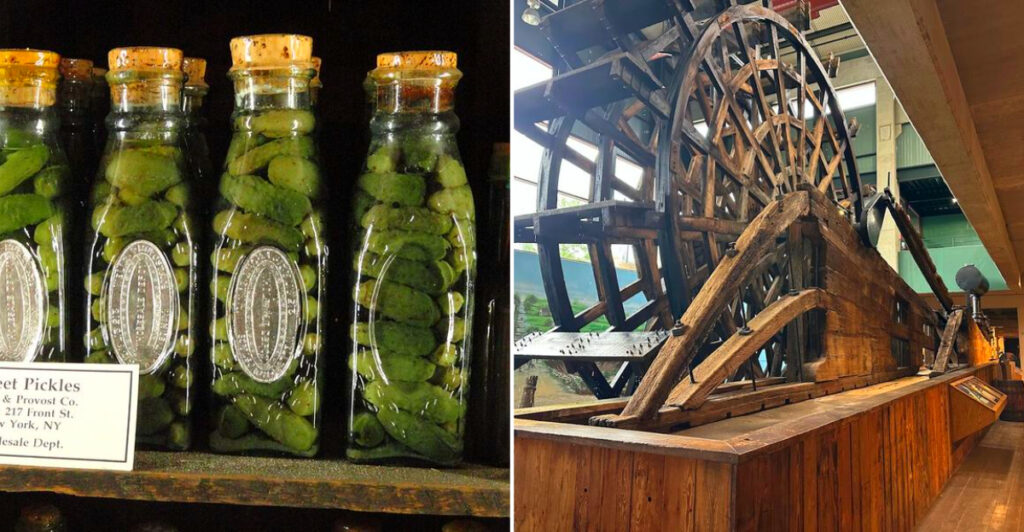
Beneath a Kansas cornfield, 45 feet below the surface, an 1856 steamboat sat hidden for 132 years before a family of treasure hunters uncovered one of America’s greatest archaeological discoveries. Inside were more than 200 tons of remarkably preserved frontier goods, including boots, clothing, tools, glassware, food, and even jars of bright green pickles that survived almost exactly as they had been packed before the Civil War. Today, those discoveries fill one of Kansas City’s most unforgettable museums.
Visitors can walk beside the remains of the steamboat, explore thousands of original artifacts, watch conservators restore newly recovered treasures, and learn how a river changing course accidentally created a perfectly preserved time capsule of everyday life in the 1850s. It’s the kind of museum that surprises history buffs and first-time visitors alike.
Here’s why the Arabia Steamboat Museum has become one of Missouri’s most remarkable attractions and a must-visit destination for anyone fascinated by history, archaeology, or incredible true stories.
Where the Adventure Begins: Location and Setting
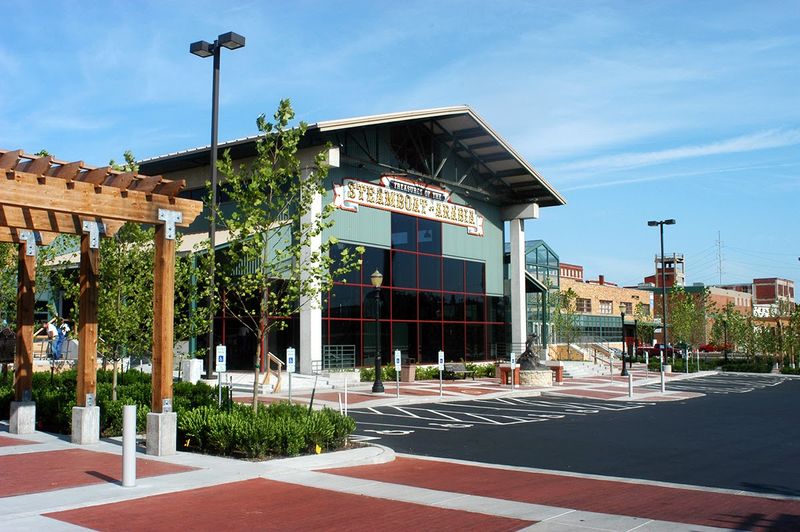
The Arabia Steamboat Museum sits at 400 Grand Boulevard, Kansas City, Missouri 64106, right in the heart of the historic River Market district. The neighborhood itself has a lively, market-town energy that feels oddly fitting for a place dedicated to frontier commerce.
Getting there is straightforward. Paid parking lots sit directly in front of the museum, and free two-hour parking is available Monday through Friday inside the City Market square, entered from 5th Street and Walnut Street. The KC Streetcar stops at the City Market stop, making it an easy ride from downtown.
The building does not look like much from the outside, which makes the experience inside all the more surprising. Hours run Monday through Saturday from 10 a.m. to 5 p.m. and Sunday from noon to 5 p.m., with last admission at 3:30 p.m. Plan to spend at least two hours, though three is better.
The Steamboat That Vanished Into the Mud
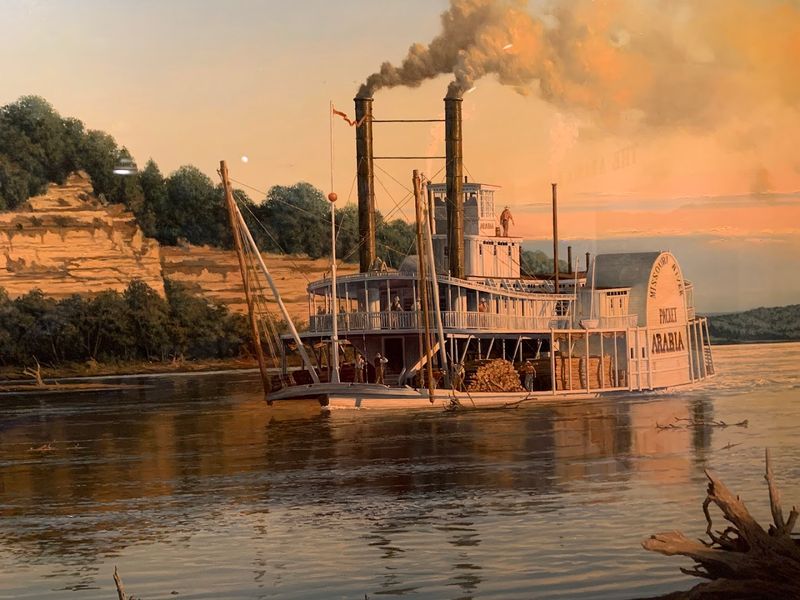
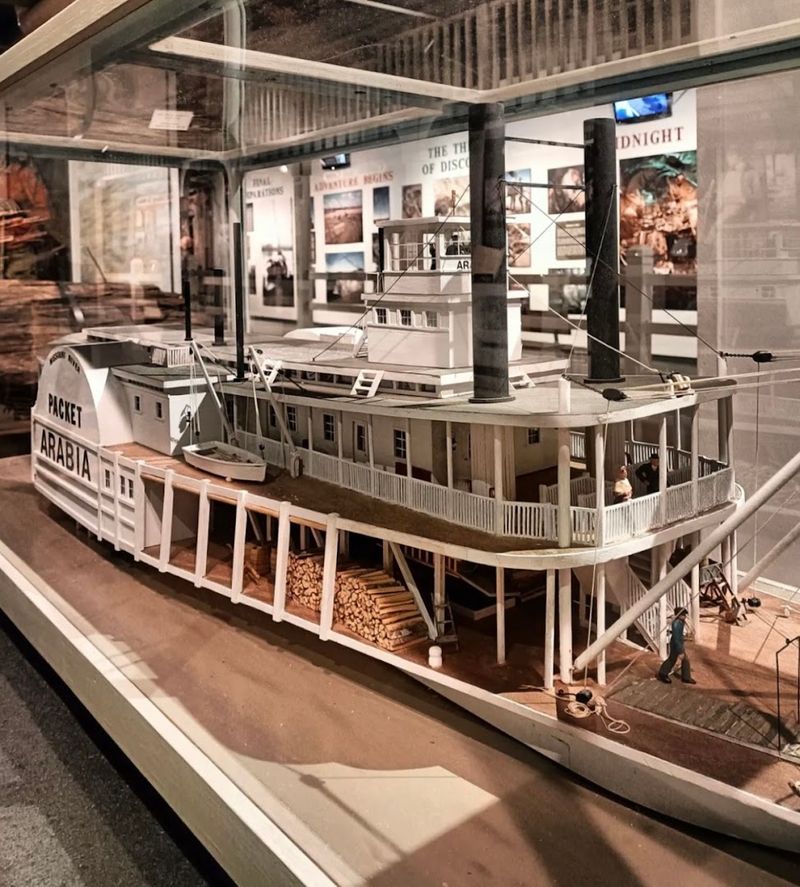
The Arabia was a side-wheel steamer built in 1853 in West Brownsville, Pennsylvania, measuring 171 feet long and capable of hauling up to 222 tons of cargo. She was a working boat, not a glamorous riverboat, and she spent her years hauling supplies across the Ohio, Mississippi, and Missouri Rivers to frontier settlements hungry for goods.
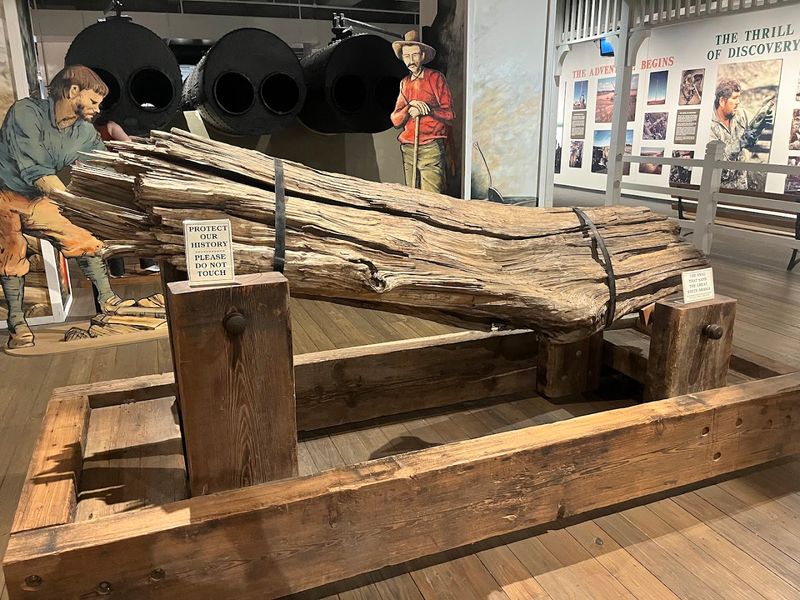
On September 5, 1856, the Arabia struck a submerged tree snag at Quindaro Bend near Parkville, Missouri. The hull tore open and the boat went down in minutes. All 130 passengers and crew members made it off safely, which is genuinely remarkable given the speed of the sinking.
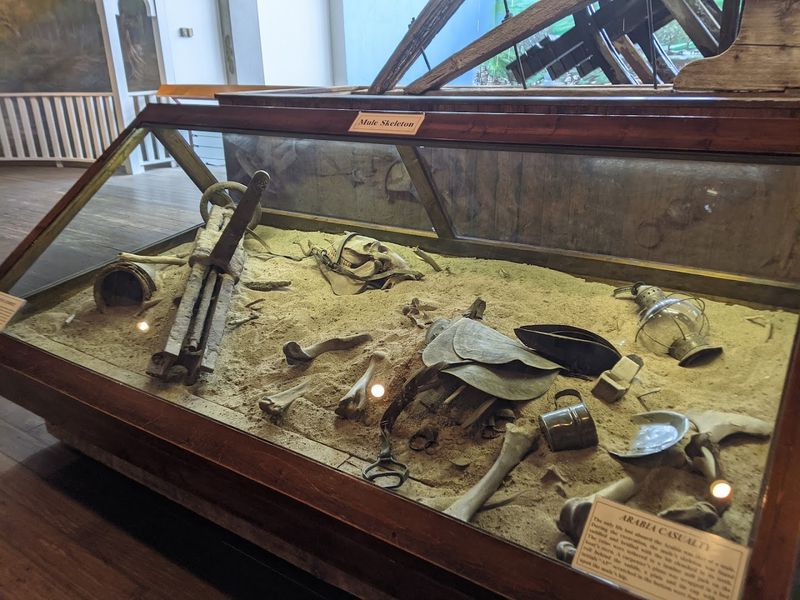
The only reported casualty was a carpenter’s mule tied below deck that was overlooked in the chaos. The mule became something of a legend, and the museum honors that story with characteristic warmth. The cargo, all 200 tons of it, vanished into the muddy riverbed and was not seen again for over 130 years.
How a Cornfield Hid a Steamboat for 132 Years
After the Arabia sank, the Missouri River did something rivers do quietly and relentlessly: it shifted. Erosion and drifting sand gradually moved the channel, and the sunken steamboat ended up buried roughly 45 feet underground, about half a mile from where the river now runs. Farmers planted corn directly above it for generations without knowing what was underneath.
The mud that buried the Arabia turned out to be its greatest protector. The anaerobic, or oxygen-free, environment created by the thick river sediment prevented the kind of decay that destroys organic materials. Leather, textiles, food, and wood were all sealed away from the air that would have rotted them.
This accidental preservation is what makes the Arabia’s cargo so extraordinary compared to most archaeological finds. Most shipwrecks lose their organic contents entirely. The Arabia lost almost nothing. That scientific twist of fate is the reason the museum’s collection feels less like a ruin and more like a warehouse that was simply locked and forgotten.
The Incredible Excavation Behind the Museum
Bob Hawley, an air conditioning and furnace repair company owner from Kansas City, became obsessed with finding the Arabia after years of research. In the winter of 1988, he teamed up with his sons David and Greg, along with family friends Jerry Mackey and David Luttrell, to track down the exact location using old maps and a proton magnetometer.
The excavation began on November 13, 1988, and the conditions were brutal. The team worked through freezing temperatures and faced a serious problem: an underground river kept threatening to flood the site. Their solution was both creative and slightly absurd. They drilled 65-foot deep wells and ran 20 irrigation pumps removing 20,000 gallons of water per minute to keep the pit dry enough to work in.
The dig lasted four and a half months. What they uncovered was so staggering in quantity and quality that the original plan of a small exhibit quickly grew into something far more ambitious. Members of the Hawley family are still regularly present at the museum today, ready to share the story firsthand.
A Collection That Rewrites What a Museum Can Be
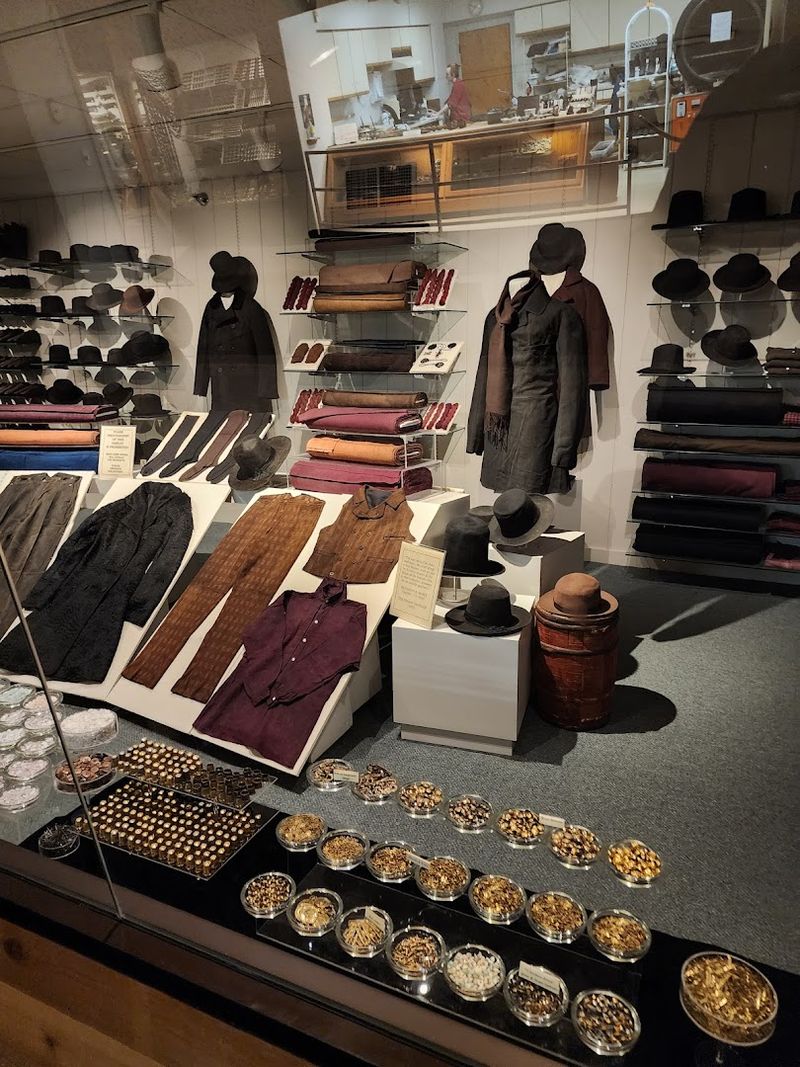
The Arabia Steamboat Museum holds the largest single collection of pre-Civil War artifacts in the world. That is not a casual boast. The cargo was meant for general stores and pioneer households across the frontier, so the range of items is staggering in its everyday practicality.
The collection includes over 4,000 boots and shoes, 247 hats, wool shirts, plaid pants, silk and wool textiles, fine dishware, cast iron cookware, 235 ax heads, carpentry tools, pocket knives, grinding stones, wagon wheels, full-size leather hides, glassware, coffee pots, buttons, beads, and children’s toys including one doll. There are also rare Sharps Model 1853 Carbine rifles and an Ames bayonet, items that had been seized during an earlier smuggling attempt for anti-slavery forces.
Walking through the exhibit rooms, the cumulative effect hits hard. These were not luxury items destined for wealthy buyers. They were the practical building blocks of ordinary frontier life, and seeing them in such quantity makes the 1850s feel less like a history lesson and more like a neighborhood you almost recognize.
The Pickles That Outlasted the Civil War
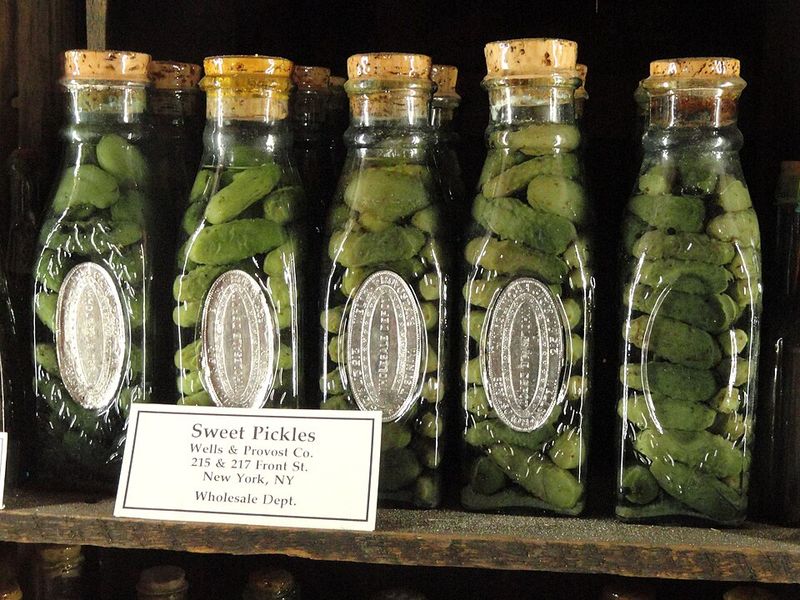
Few things stop visitors in their tracks quite like the food. The Arabia was carrying bottled fruits intended for pies, ketchup, olives, and bright green sweet pickles, all of which survived more than 130 years underground in near-perfect condition. The anaerobic mud sealed the jars so effectively that some of the pickles were reportedly still edible when the boat was first excavated.
The preservation team now injects bottled food items with nitrogen to stabilize them for long-term display, which keeps the contents visible without further deterioration. Seeing a jar of 1856 pickles sitting in a museum case with its original color intact is one of those moments that makes the timeline of history feel genuinely surreal.
It is also a reminder of how mundane the Arabia’s cargo really was. These were grocery items, the kind of thing someone would have unpacked from a box in a general store and shelved without a second thought. The fact that they are now museum pieces says everything about how completely the boat disappeared from the world.
Boots, Hats, and Textiles That Time Could Not Touch
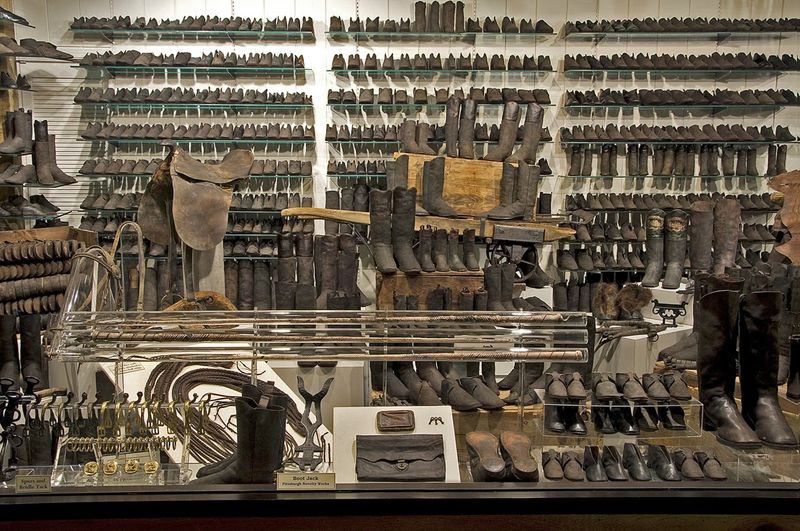
The clothing and textile collection from the Arabia is the kind of thing that makes fashion historians go quiet with awe. Over 4,000 boots and shoes came out of the mud in recoverable condition, along with 247 hats, wool shirts, plaid pants, and bolts of silk and wool fabric. The variety suggests the Arabia was stocking frontier stores with a full seasonal inventory.
Cotton thread had completely disintegrated by the time of excavation, but the fabric panels themselves survived. Museum conservators carefully re-stitched those textiles so they could be displayed without falling apart. The restoration of a single pair of shoes can take up to three months of careful cleaning and treatment before it is ready for a display case.
The sheer number of boots on display in one room is quietly overwhelming. They are stacked and arranged in ways that make you realize these were not rare luxury goods but standard commercial inventory, the kind of thing a frontier storekeeper would have sold to a farmer on a Tuesday afternoon without ceremony.
Standing Next to the Actual Steamboat
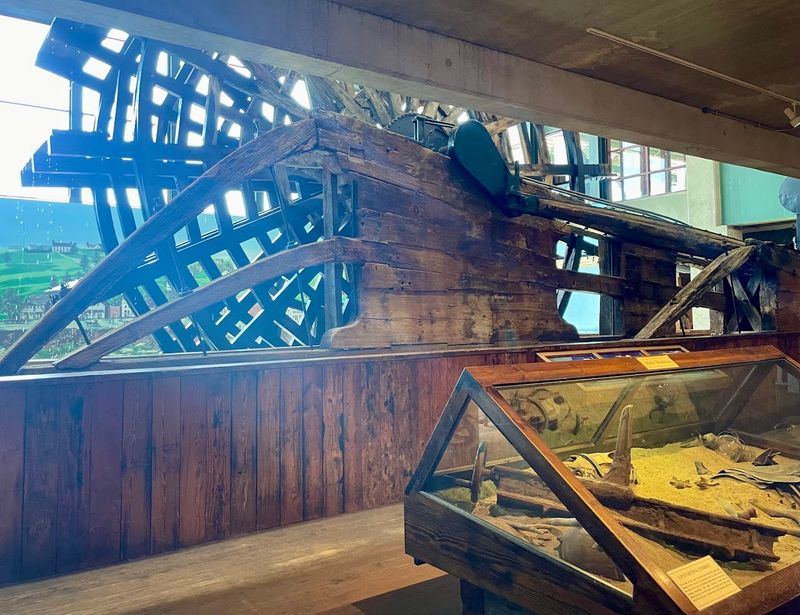
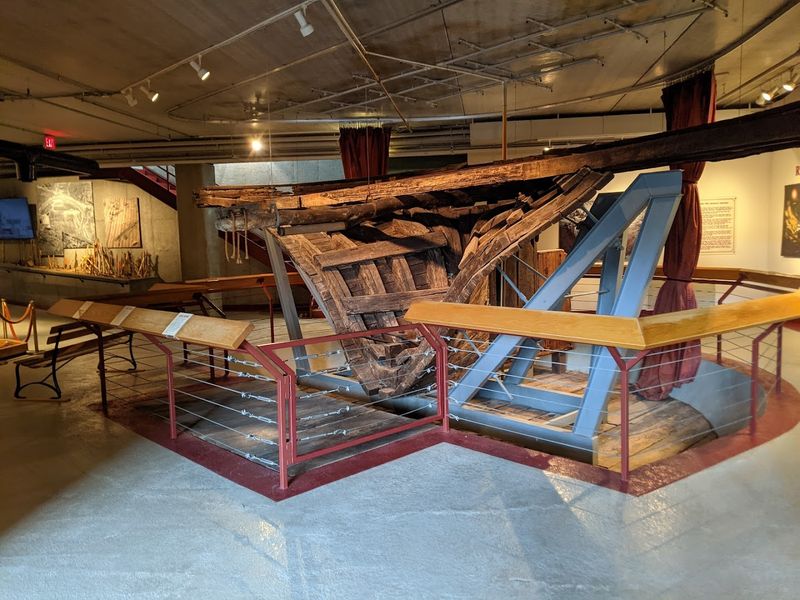
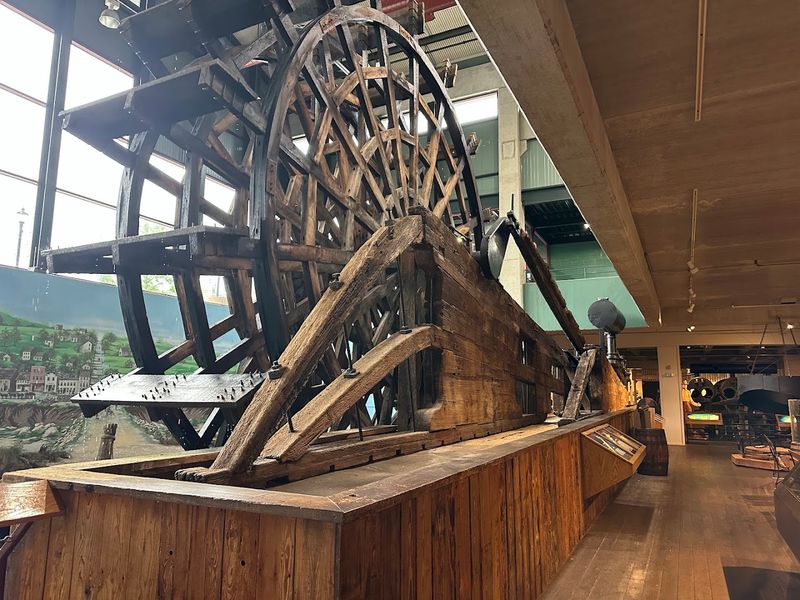
The museum does not just show you what was on the boat. It shows you parts of the boat itself. The paddlewheel, the stern, and the actual tree snag that tore open the Arabia’s hull are all on display, and standing next to them gives the story a physical weight that no amount of reading can replicate.
The engine of another steamboat, the Missouri Packet, is also part of the exhibit, giving visitors a broader sense of how these vessels were constructed and powered. The scale of the machinery is genuinely impressive, especially when you consider that these engines were driving boats up a notoriously unpredictable river loaded with cargo and passengers.
A full-scale replica of the Arabia’s main deck stretches 171 feet, complete with original boilers and anchors, and walking alongside it recalibrates your sense of how large these working boats actually were. The combination of real wreck components and reconstructed deck space makes the Arabia feel less like a historical abstraction and more like something you could almost board.
Short Videos That Tell a Big Story
The museum structures its self-guided tour around a series of short videos placed throughout the exhibit space, each one covering a different chapter of the Arabia’s story. The production quality is solid, and the pacing keeps things moving without feeling rushed. There is also a dedicated theater showing a longer documentary for visitors who want the full narrative arc in one sitting.
The video segments cover the original voyage, the sinking, the decades of burial, the discovery process, and the excavation itself. Watching footage of the Hawley family digging through frozen Missouri mud while pumps roared around them adds a dramatic layer that no placard could match.
The storytelling approach works particularly well for younger visitors, who tend to engage more readily with video than with text-heavy displays. The museum has clearly thought carefully about how to make a 19th-century cargo manifest feel genuinely exciting to a modern audience, and the video strategy is a big part of why it succeeds. The theater film alone is worth arriving early for.
Practical Tips Before You Go
A few logistical details can make your visit significantly smoother. Admission runs $16.50 for adults, $15.50 for seniors aged 60 and older, $6.50 for children between 4 and 14, and free for children 3 and under. Group and school rates are available, which makes this an excellent field trip destination.
The museum is fully accessible with no required stairs and seating available throughout the space. Photography is permitted without flash, so bring your camera. The gift shop carries a mix of steamboat-related merchandise and general Kansas City souvenirs, and the Lawrence the donkey sticker is apparently a crowd favorite among younger visitors.
Plan for a minimum of 90 minutes, though two to three hours is a more realistic estimate if you watch the videos and spend time in the conservation lab area. The museum closes on New Year’s Day, Easter, Thanksgiving, Christmas Eve, and Christmas Day, and closes one hour early on several holidays including July 4th and Halloween. Check the website at 1856.com before your trip to confirm current hours.
A Museum Racing Against Its Own Clock
There is an urgency to visiting the Arabia Steamboat Museum right now that goes beyond typical travel advice. The museum’s lease at its current Kansas City location expires in November 2026, and the future of the collection is actively being planned. Proposals include relocating and expanding to Jefferson City or Marshall Junction, Missouri, with ambitions to create a National Steamboat Museum that could eventually excavate and display additional sunken steamboats.
That vision is genuinely exciting, but the transition period creates real uncertainty. Visitors who have gone recently describe a bittersweet quality to the experience, knowing they are seeing the collection in its current home for what may be the last time.
The museum has earned extraordinary recognition over the years, with coverage from National Geographic Traveler, Smithsonian Magazine, PBS, Good Morning America, CNN, and the History Channel, among others. It holds a 4.7-star rating from nearly 4,000 reviews on Google Maps. Whatever happens next with the location, the Arabia Steamboat Museum has already secured its place as one of the most genuinely surprising and rewarding museum experiences in the American Midwest.
Share this story