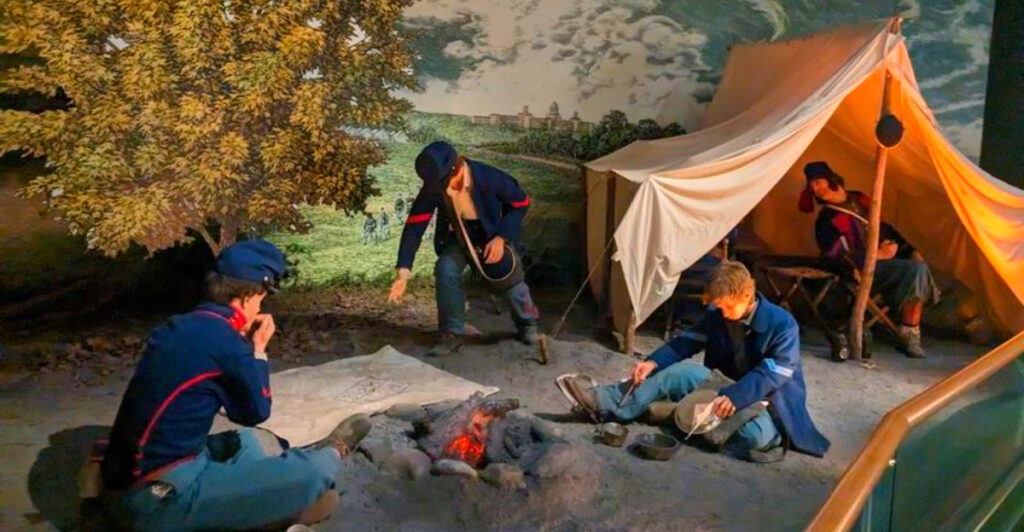
Perched above Harrisburg in Reservoir Park, the Smithsonian-affiliated National Civil War Museum offers one of the country’s most comprehensive looks at the Civil War. Through more than 4,000 artifacts, immersive exhibits, and 17 galleries, it explores the experiences of soldiers, civilians, enslaved people, and political leaders from the years before the war through Reconstruction.
Original artifacts linked to figures such as Abraham Lincoln and Ulysses S. Grant, along with interactive displays and personal stories, bring this pivotal era to life. Combined with its historic setting and panoramic views, the museum is one of Pennsylvania’s premier destinations for American history.
Where History Literally Rises Above the City
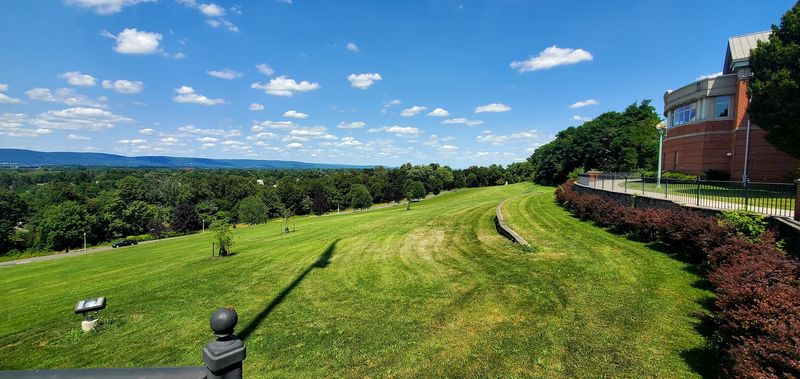
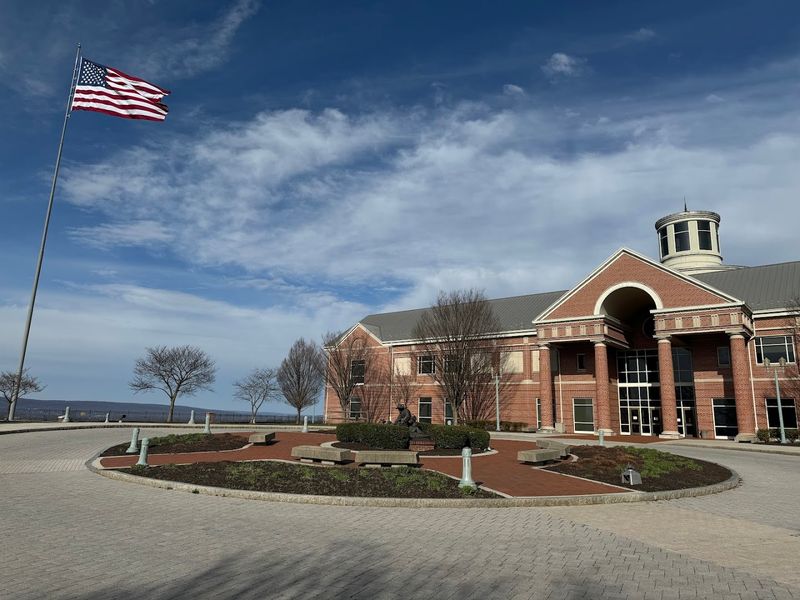
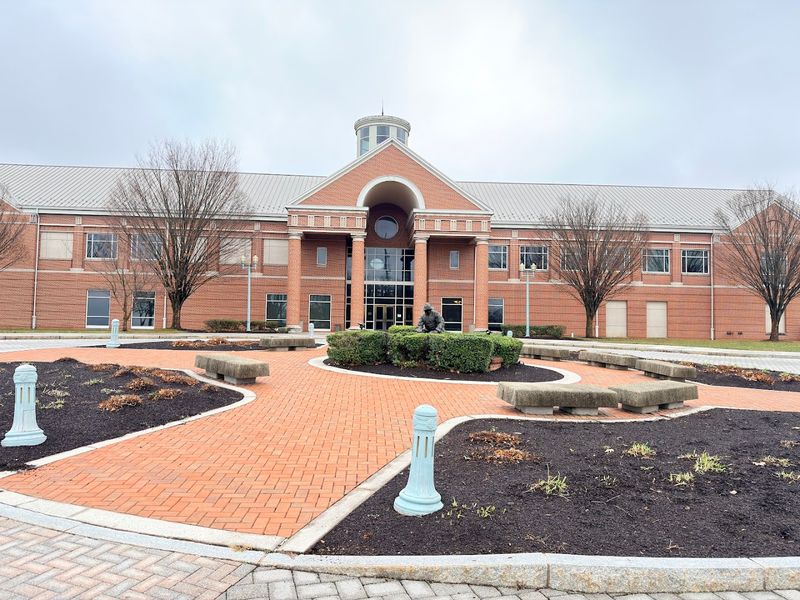
Reservoir Park in Harrisburg is the city’s oldest and largest municipal park, and the National Civil War Museum claims its highest ground with quiet authority. The address is 1 Lincoln Circle, Harrisburg, PA 17103, and the drive up through the park’s winding roads already sets a contemplative mood before you reach the front entrance.
The building is a 66,000-square-foot neo-classical structure owned by the city. Its elevated position is not just a geographical fact but a fitting metaphor for the perspective the museum strives to offer visitors who arrive expecting a simple retelling of the war.
From certain vantage points on the grounds, you can see the Pennsylvania state capitol dome rising above the city below. Harrisburg served as a major Union logistics hub and railroad center during the war, so the location carries genuine historical weight. That context makes even the parking lot feel like a meaningful starting point for the experience ahead.
The Bold Philosophy That Sets This Museum Apart
Many institutions dedicated to this era lean visibly in one direction, whether through the artifacts they choose to highlight or the language they use on their wall panels. This museum made a deliberate and founding decision to do something different, and that choice shapes every single gallery inside.
The mission here is to present the full human story of the American Civil War without championing one side over the other. Union and Confederate perspectives share equal floor space, equal lighting, and equal interpretive care. Civilian voices, enslaved experiences, and the stories of women are woven throughout rather than tucked into a single corner exhibit.
What results is a museum that invites critical thinking instead of passive reception. Visitors leave with questions as much as answers, and that is entirely by design. The approach has earned the museum a Smithsonian affiliation since 2009, a recognition that underscores its scholarly credibility and national significance. That balance is genuinely rare and genuinely powerful.
Harrisburg’s Own Chapter in the Civil War Story
Pennsylvania’s state capital was far more than a symbolic backdrop to the conflict. Harrisburg functioned as a critical Union railroad hub, a major supply corridor, and the home of Camp Curtin, which processed more than 300,000 soldiers and became the largest Union training camp of the entire war.
During the Gettysburg Campaign of 1863, Confederate forces pushed close enough that Harrisburg residents genuinely feared an attack. That proximity to real danger gives the museum’s location a layer of authenticity that a museum built in a neutral city simply could not replicate.
The museum leans into this local history thoughtfully, using Harrisburg’s wartime role to ground the broader national narrative in a specific place and time. A large window inside the building frames a view toward the former site of Camp Curtin, connecting the exhibits inside to the actual landscape where so much of this history unfolded. Geography and history rarely align this neatly.
Two Floors, 17 Galleries, and a Story That Unfolds Chronologically
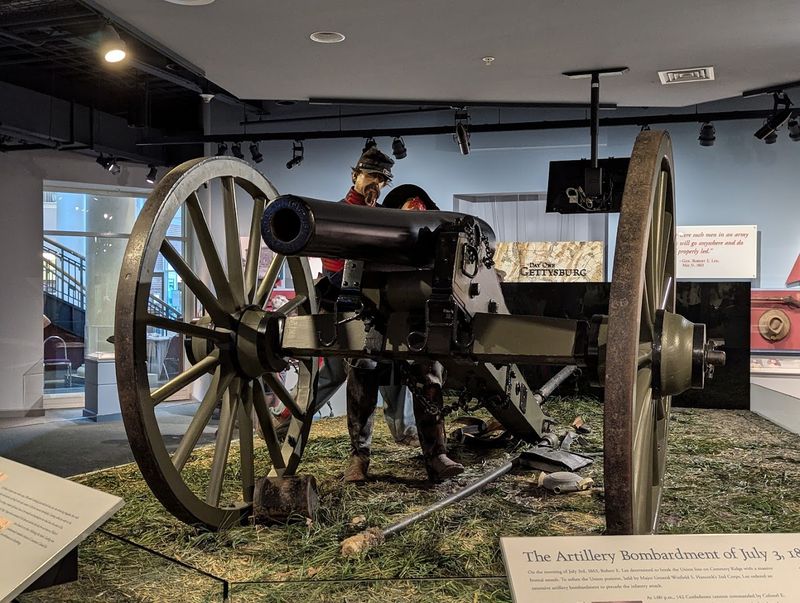
The self-guided tour begins on the second floor and works its way chronologically from the 1850s through the Reconstruction era, covering the period from 1850 to 1876 across 17 distinct galleries. The layout is deliberate, designed so that each room builds on what came before rather than presenting isolated snapshots of the war.
A thorough visit runs two to four hours for most people, though serious history enthusiasts routinely spend five or six hours working through every display panel and video presentation. The museum blends audio, video, dioramas, and original artifacts in a way that accommodates different learning styles without feeling chaotic.
There is also a cozy reading nook stocked with Civil War books for visitors who want to slow down and absorb the material at their own pace. The pacing of the tour rewards curiosity, and the chronological structure means that by the time you reach the final galleries, the weight of the full story lands with genuine force.
The Uncomfortable Truths Confronted Head-On
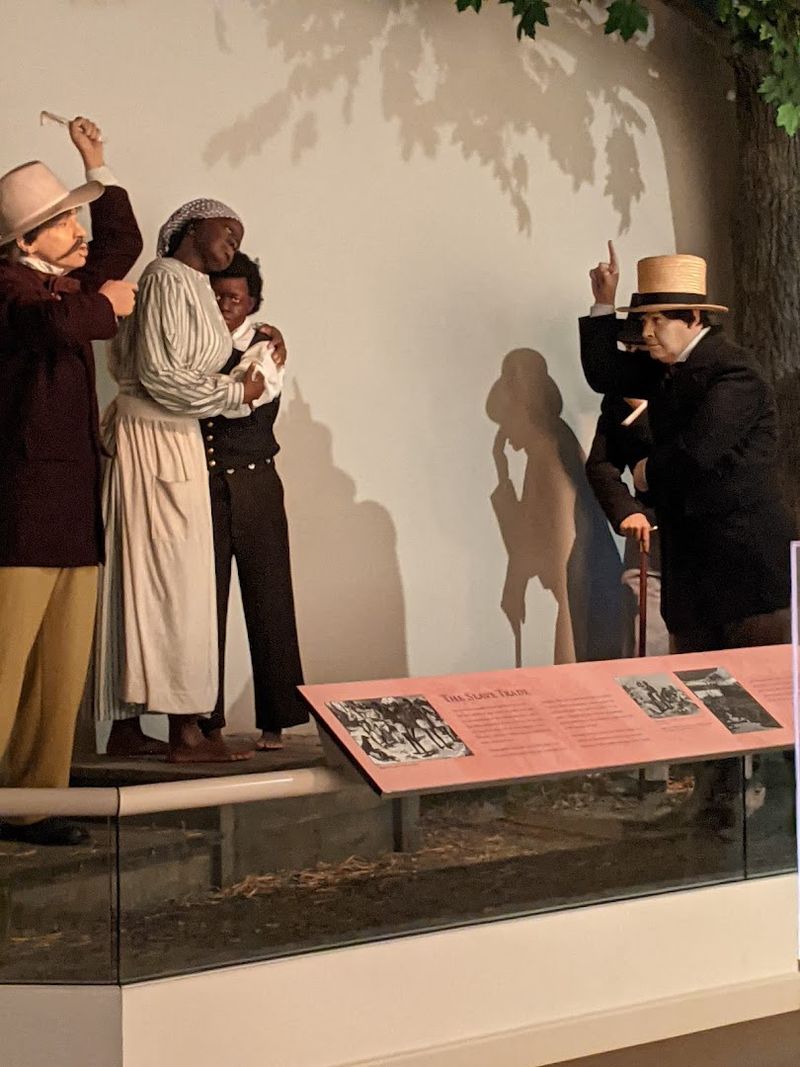
Among the most affecting galleries in the museum is the one dedicated to American slavery, presented under the heading ‘The Peculiar Institution.’ The exhibit does not soften the subject or relegate it to a footnote. A life-size diorama of a slave auction, complete with recorded dialogue, confronts visitors with the human reality behind the political debates that fractured the nation.
Artifacts in this section include a brass slave collar and iron shackles, objects that carry a weight no wall panel alone could convey. The exhibit traces how 19th-century Americans understood and debated the institution, presenting those perspectives without endorsing them, which requires a careful curatorial hand.
The museum handles this material with both honesty and sensitivity, ensuring that the moral stakes of the conflict are clear from the very beginning of the tour. By the time visitors move into the war years themselves, they carry a fuller understanding of what was actually being fought over, and that understanding changes everything that follows.
Artifacts That Put the Past Directly in Front of You
The collection here is genuinely impressive in both scale and specificity. Over 4,000 cataloged artifacts and 21,000 archival documents form the backbone of the museum, with approximately 850 items on permanent display at any given time. These are not reproductions filling space between text panels.
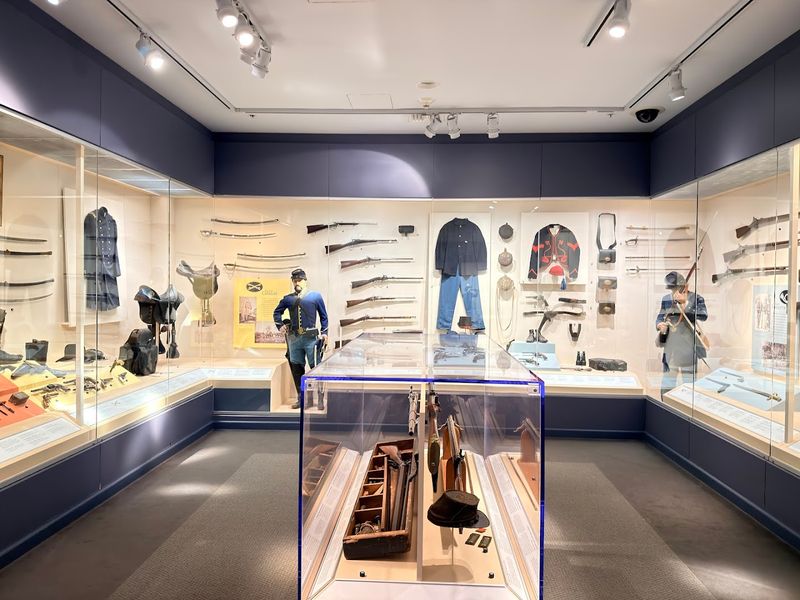
Among the highlights are Ulysses S. Grant’s wooden saddle and tack box, J.E.B. Stuart’s saber, Winfield Scott’s portable writing kit, and Abraham Lincoln’s leather hat box from his 1860 campaign. A fragment of Mary Todd Lincoln’s dress worn on the night of the assassination is also part of the collection, as is the key to Libby Prison and Robert E.
Lee’s Bible.
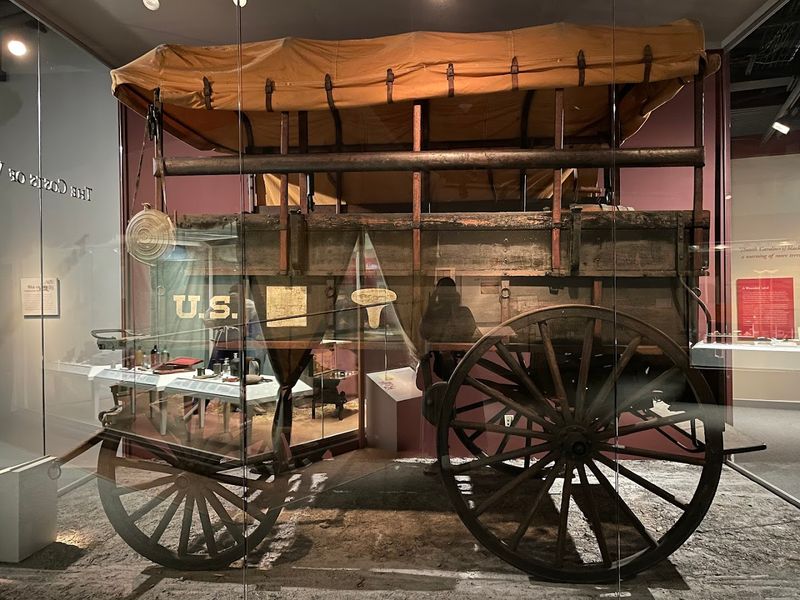
One of the rarest items on display is one of the only remaining intact Civil War ambulances, a vehicle that tells a quieter but equally significant story about the war. The collection was initially acquired by the city of Harrisburg in the 1990s, and its depth continues to surprise even visitors who consider themselves well-read on the subject.
The Sculpture Outside That Stops People in Their Tracks
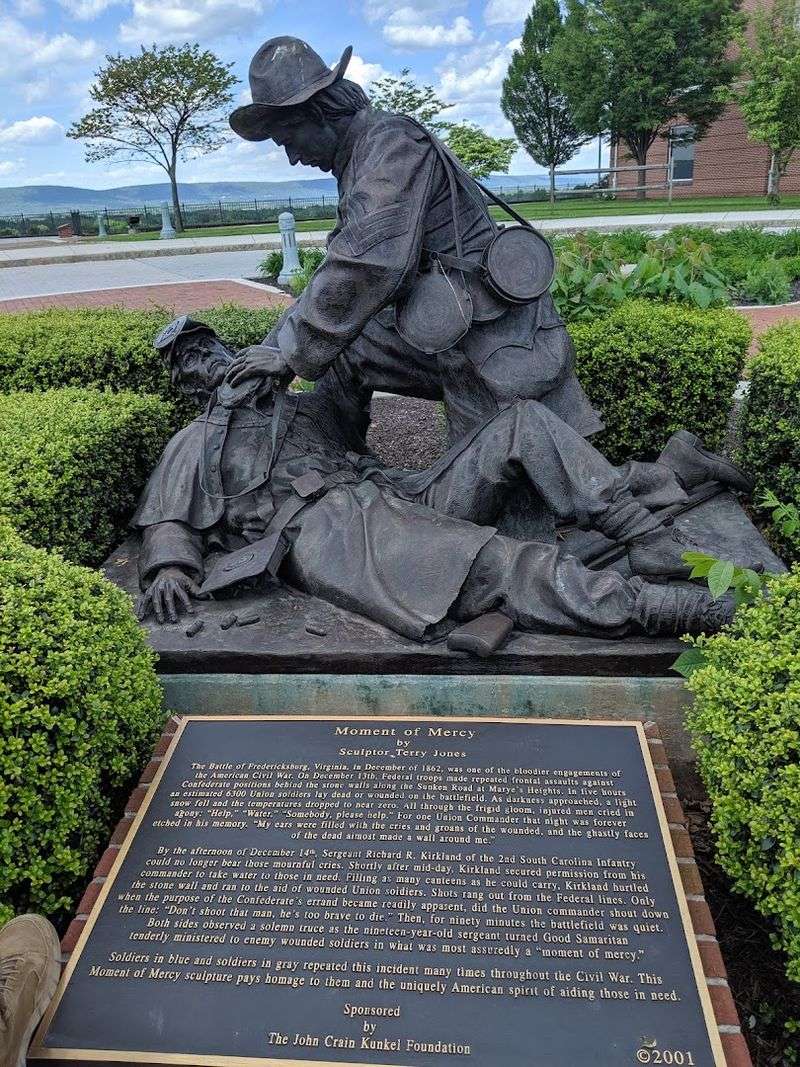
Before most visitors even reach the front door, a bronze sculpture on the museum grounds tends to pull them off the path entirely. ‘Moment of Mercy,’ created by sculptor Terry Jones, depicts an event from the Battle of Fredericksburg in December 1862 that became one of the war’s most quietly remarkable stories.
Confederate Sergeant Richard R. Kirkland of the 2nd South Carolina Infantry could not bear the sound of wounded Union soldiers crying out in the freezing no-man’s land between the lines. He secured permission from his commander, crossed into open ground, and spent ninety minutes distributing water to enemy soldiers while both sides held their fire.
The Union commander reportedly ordered his men not to shoot, calling Kirkland too brave to target. The statue captures that suspended moment of shared humanity, and it aligns perfectly with the museum’s broader message that compassion did not disappear simply because a war was being fought. It is a powerful place to begin the visit.
Soldiers on Both Sides, Shown With Equal Respect
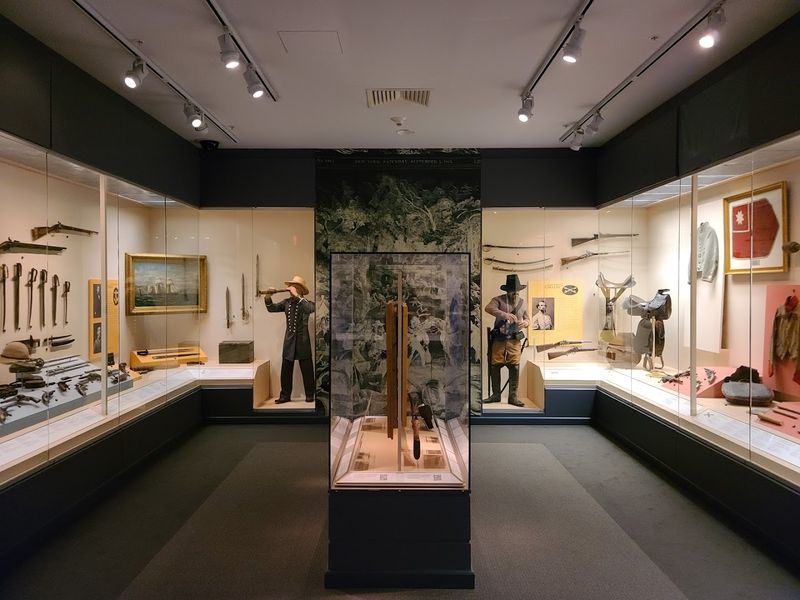
The galleries covering the actual years of combat take a disciplined approach to symmetry. Union and Confederate military experiences are presented in parallel, with exhibits on recruitment, training, equipment, and strategy showing how both armies functioned, struggled, and adapted across four years of conflict.
The weapons gallery holds a world-class collection of firearms and edged weapons, while miniature battlefield layouts help visitors visualize troop movements during key campaigns including Shiloh. Rare Confederate Zouave uniforms sit in display cases alongside their Union counterparts, giving equal visual representation to both fighting forces.
The ‘Costs of War’ exhibit takes a more sobering turn, featuring dioramas of field surgery and actual medical instruments including pain bullets that soldiers bit down on during procedures. The museum notes that some of these displays may be intense for younger children, which is an honest and appreciated heads-up. The unflinching portrayal of wartime medicine is a reminder that the conflict’s human cost extended far beyond the battlefield itself.
Women, Music, and the Voices That History Often Skips
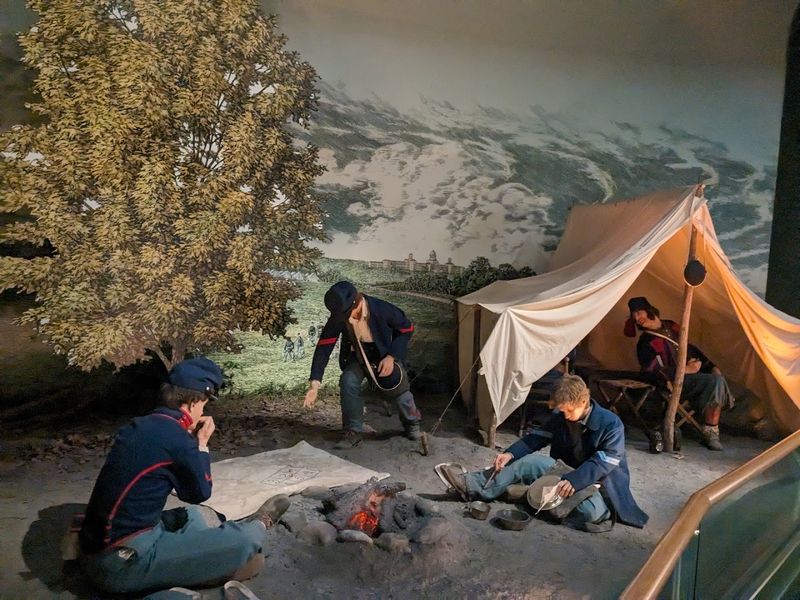
One of the more recently expanded sections of the museum focuses on women during the Civil War, and it covers far more ground than the standard nursing-and-homefront narrative. Women served in hospitals, operated as intelligence agents, supported troops in camps, and challenged the social expectations of their era in ways that often went unrecorded in official histories.
The Civil War music exhibit offers a genuinely different kind of engagement. Visitors can listen to period recordings of battle songs, spirituals, and bugle calls, experiencing the emotional texture of the era through sound rather than sight. It is a small gallery with an outsized effect on how the war feels rather than just how it looks.
The interactive ‘Meet Mr. Lincoln’ exhibit allows visitors to pose questions to historical figures including President Lincoln, John Wilkes Booth, and Elizabeth Keckly, with recorded responses that feel surprisingly personal. These varied entry points into the story ensure that the museum reaches visitors who might not connect as deeply with a purely artifact-and-text format.
A Walk Outside Worth Taking Before You Leave
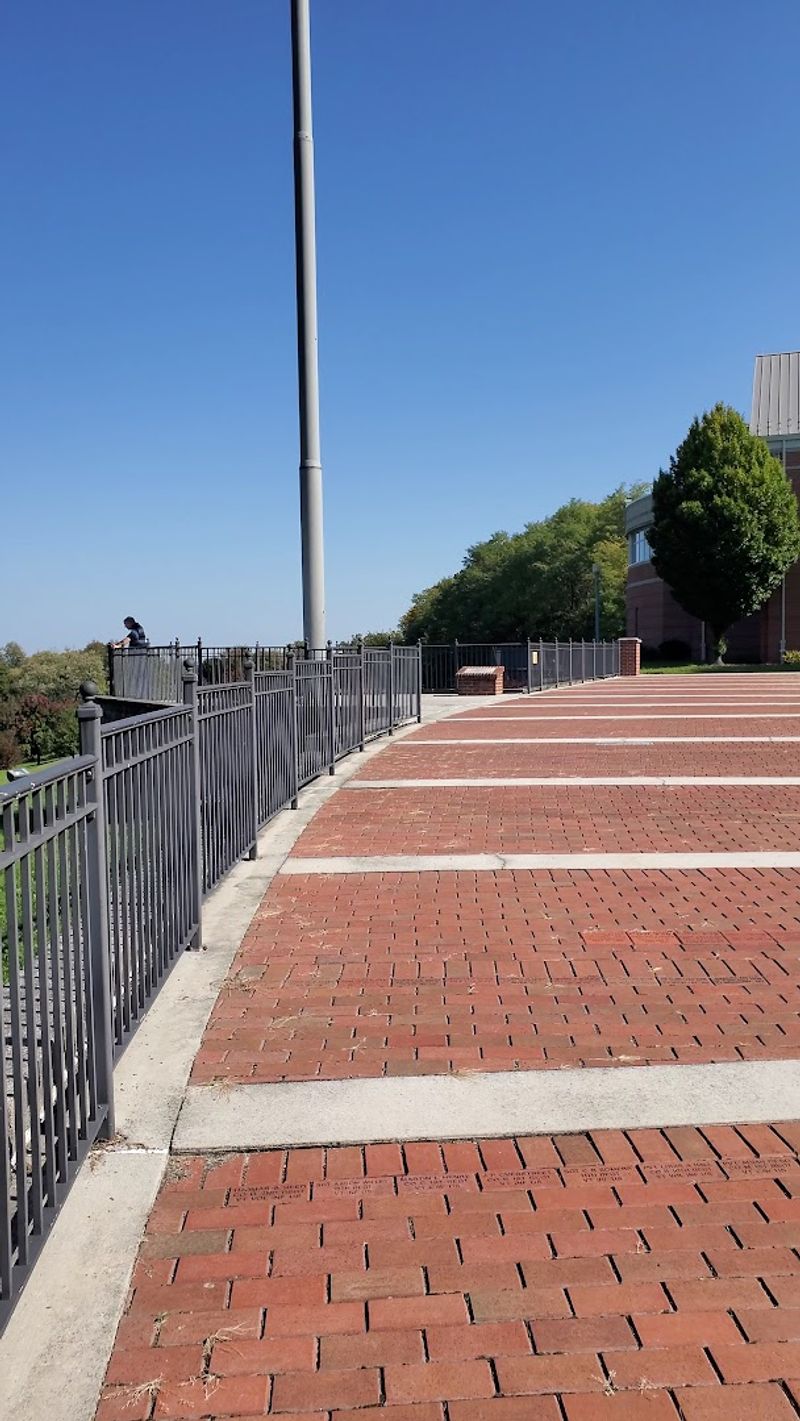
The museum experience does not end at the exit door. The grounds of Reservoir Park surrounding the building offer their own layer of meaning, starting with the Walk of Valor, a ribbon of red bricks bearing the names of Civil War veterans honored by their descendants. Walking along it feels like a quiet act of acknowledgment.
A Friends Walkway runs along the east side of the building, and the grand rotunda inside features reproductions of period flags hanging in the three-story entrance, visible from both floors. From certain windows within the museum, the view extends toward the former site of Camp Curtin, connecting the collection inside to the actual ground where history happened.
Free on-site parking is available for all visitors, including designated spaces for RVs and buses, which makes logistics simple even for larger groups. The park itself is a pleasant place to decompress after a few hours of heavy history, and a picnic lunch on the grounds is a perfectly reasonable way to extend the visit.
Reasons to Return More Than Once
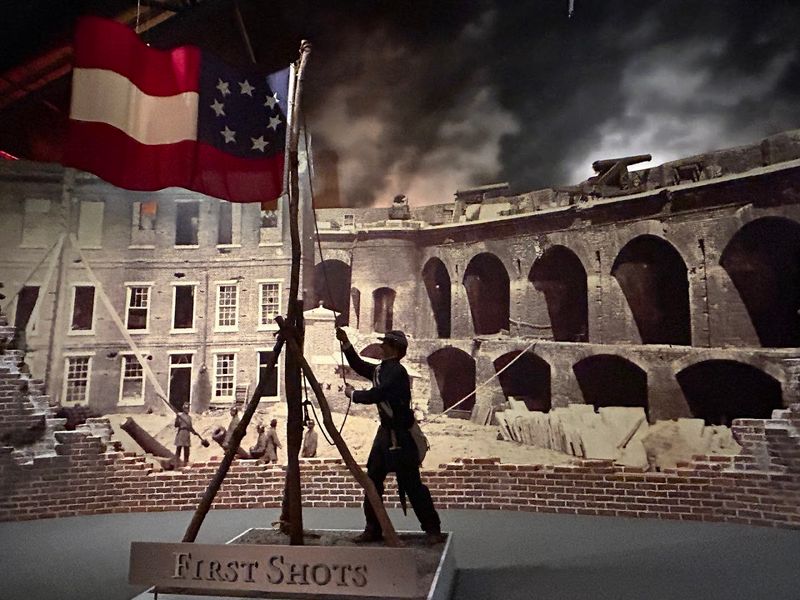
The museum runs a calendar of events that gives repeat visitors genuine new reasons to return. Living history programs bring reenactors into the galleries and onto the grounds, while lectures and book signings by historians add an academic dimension that complements the permanent exhibits. The museum celebrated its 25th anniversary with costumed actors stationed throughout the building, and the energy that day reportedly transformed the space entirely.
School programs are tailored to state curriculum standards and emphasize critical thinking over passive memorization, making the museum a productive destination for class trips at multiple grade levels. Community Free Days honor veterans and open the galleries to everyone without admission cost, which is a meaningful gesture given the subject matter.
For those who want something livelier, the museum has hosted fundraising evenings complete with Civil War trivia and the opportunity to fire a cannon, which is about as memorable a fundraiser as any institution could design. The variety of programming ensures the museum functions as a living civic institution rather than a static archive.
Planning Your Visit and What to Know Before You Go
The museum is open Monday through Sunday from 10:00 a.m. to 5:00 p.m., with the last entry typically well before closing. Adult admission is $20, seniors 60 and older pay $19, and students ages 6 and up are $18. A family pass covering two adults and up to three students runs $76, which is reasonable for the amount of content packed into a full visit.
The building is fully accessible, with elevators serving all public floors and seating available throughout the galleries. Service animals are always welcome. There are no in-house dining options, but the park setting makes a packed lunch a practical and pleasant solution. The gift shop carries a solid selection of Civil War and museum-related items worth browsing on the way out.
The museum sits about 40 miles northeast of Gettysburg, making it an excellent first or final stop on a broader Civil War itinerary through central Pennsylvania. For questions or reservations, the museum can be reached at +1 717-260-1861 or through its website at nationalcivilwarmuseum.org.
Share this story