There is a place in North Carolina where you can stand just a few feet away from a bald eagle and feel the wind from a hawk’s wings as it soars past your head. Not many wildlife experiences come close to that kind of thrill.
Tucked inside a forested nature preserve near Charlotte, this sanctuary has been quietly doing extraordinary work for decades, rescuing and rehabilitating birds of prey while opening its trails to curious visitors of all ages. Whether you are a bird enthusiast, a parent looking for a meaningful outing, or simply someone who has always wanted to see a great horned owl face to face, this place delivers in a way that few attractions can match.
Keep reading to find out everything worth knowing before your visit.
Where It All Begins: Location and First Impressions
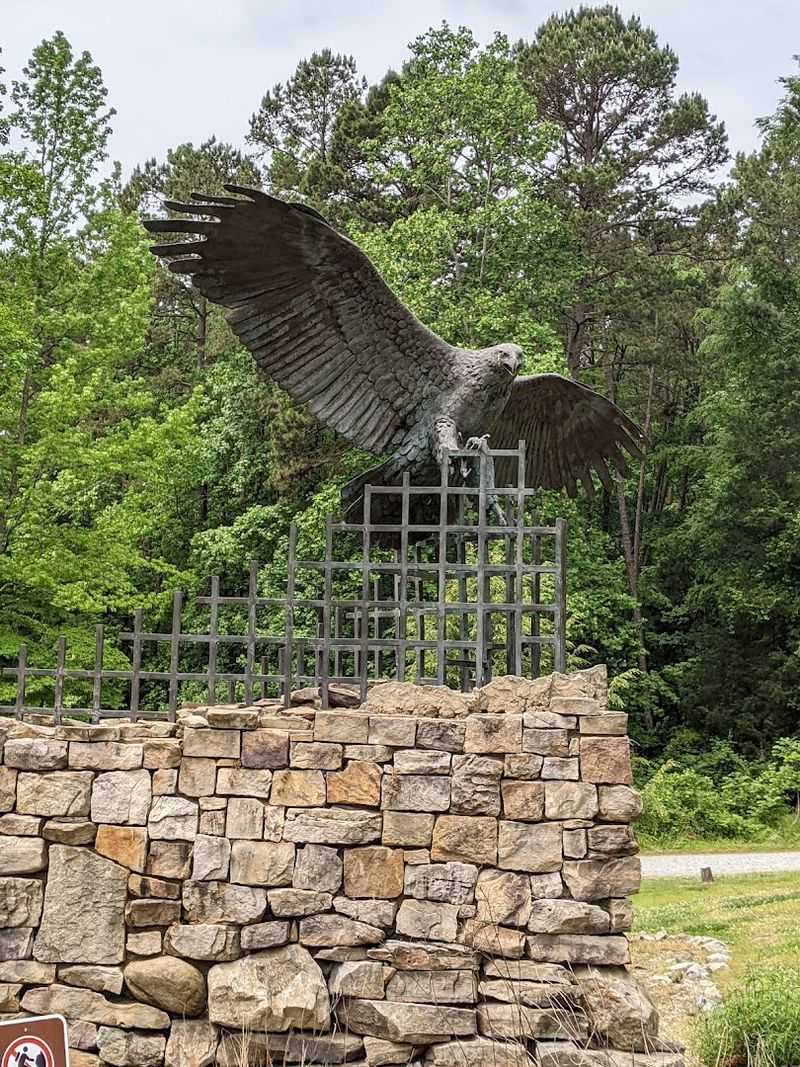
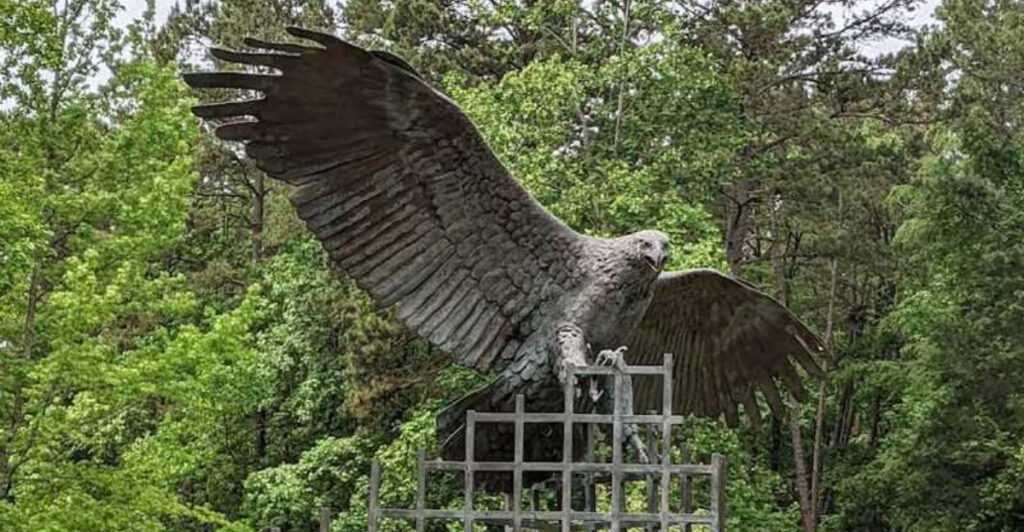
The address is 6000 Sample Rd, Huntersville, NC 28078, and the drive itself gives you a preview of what is ahead. You wind through Latta Nature Preserve, passing tall trees and quiet woodland scenery before the parking area appears almost unexpectedly in a forest clearing.
Carolina Raptor Center sits right inside the preserve, which means the natural habitat is not just a backdrop but an actual part of the experience. The moment you step out of the car, the air feels cooler and the canopy overhead filters the sunlight into soft, shifting patterns on the ground.
The center is open from 10 AM to 4 PM every day of the week, which makes planning a visit refreshingly simple. Parking is easy to navigate, there is rarely a long wait at the entrance, and the staff greets you with genuine enthusiasm rather than the bored efficiency you sometimes find at busier attractions.
The whole setup feels welcoming without being overdone, and that tone carries through every part of the visit.
The Mission Behind the Magic: Conservation and Rescue Work
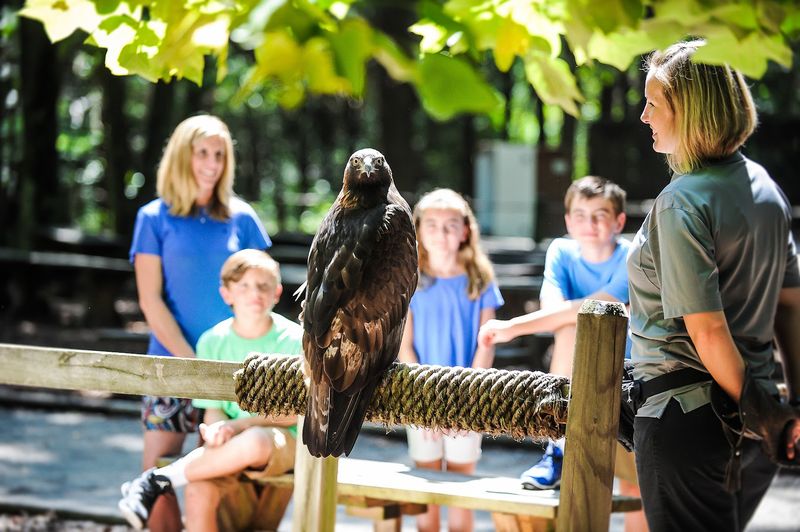
Most people show up expecting a wildlife exhibit, and they get that, but what makes Carolina Raptor Center genuinely different is the purpose running underneath everything you see. This is a nonprofit organization dedicated to the rescue, rehabilitation, and release of injured birds of prey across the region.
Many of the birds on the trail are permanent residents because their injuries prevent a safe return to the wild. Others pass through the on-site wildlife hospital and eventually head back into the forest.
The center has been operating since 1981, which means decades of hands-on conservation work that has helped thousands of birds.
The staff and volunteers who run the programs bring a level of passion that you can feel in every interaction. They are not just presenting birds; they are telling real stories of survival, care, and second chances.
For anyone who cares about wildlife or conservation, understanding this mission before walking the trail adds a layer of meaning to every bird you encounter along the way. It turns a fun outing into something genuinely moving.
The Trail Experience: A Walk Through the Woods with Wings
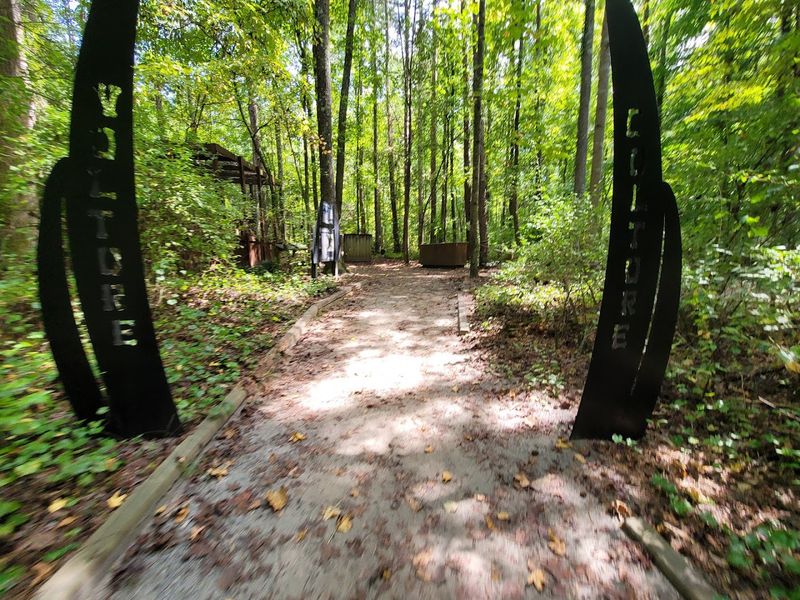
The outdoor trail is the heart of the visit, and it earns its reputation quickly. Roughly three-quarters of a mile long, the flat dirt path winds through dense forest, with raptor enclosures placed naturally along both sides so that each bird feels like a discovery rather than an exhibit.
The tree canopy keeps the trail shady and noticeably cooler than open areas nearby, which makes the walk comfortable even on warmer days. Benches are scattered throughout, so you can pause, sit, and watch a particular bird for as long as you like without feeling rushed.
The whole loop takes about an hour at a relaxed pace, though plenty of visitors linger longer. Guides are stationed along the trail, ready to answer questions and share details about each bird’s story, behavior, and species.
The path is flat enough to be accessible for visitors with mobility concerns, and strollers navigate it without much difficulty. It genuinely feels like a hike through the woods where the wildlife just happens to be extraordinary.
That combination of nature walk and wildlife encounter is hard to find anywhere else.
Meet the Birds: From Tiny Owls to Bald Eagles
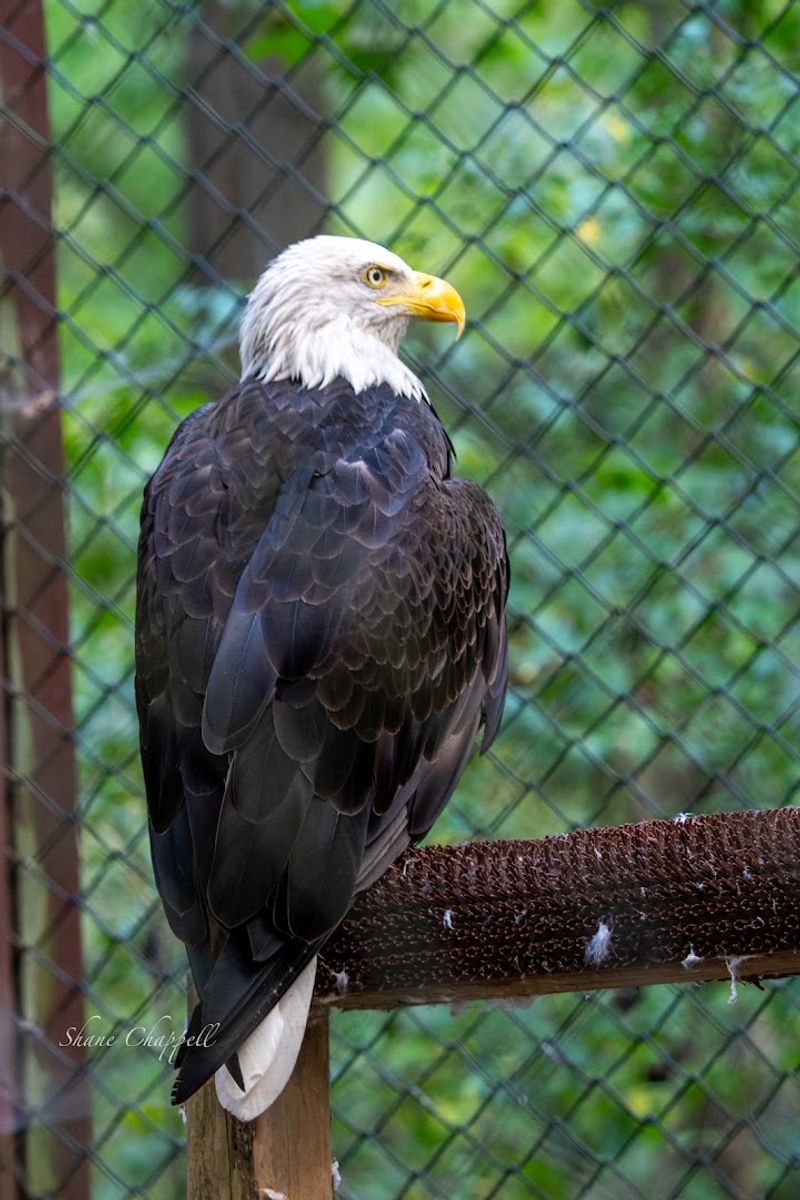
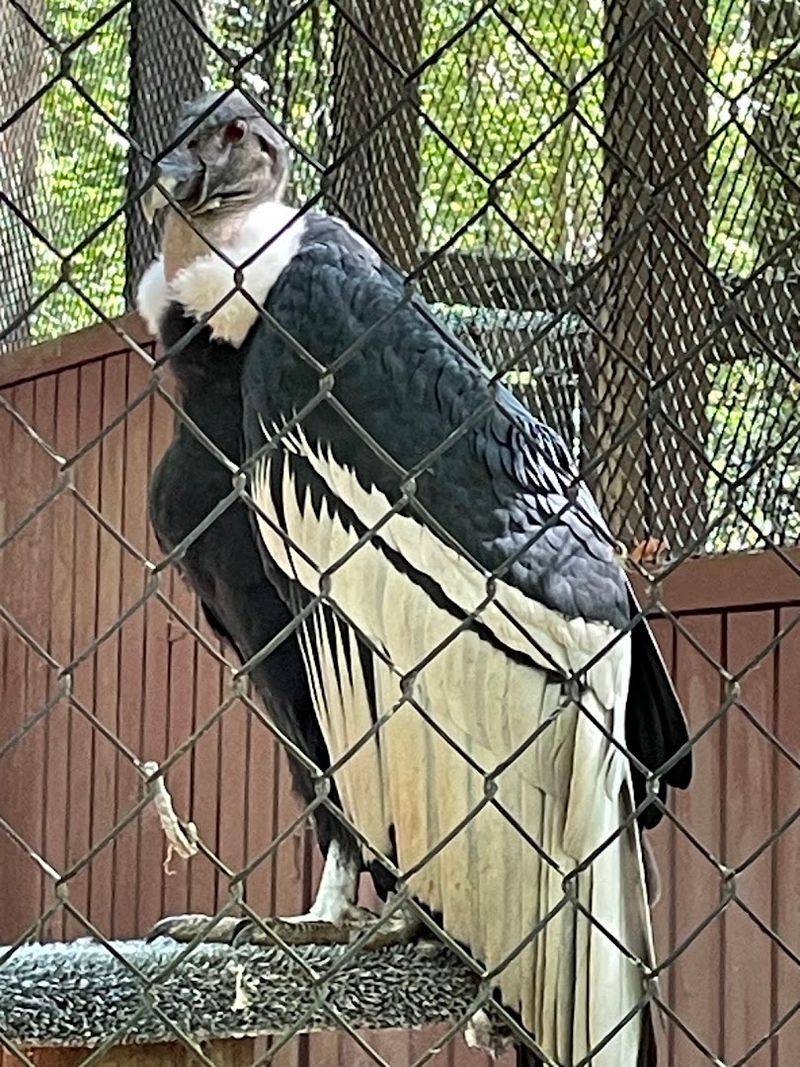
The variety of birds on display is genuinely impressive. You will encounter everything from the smallest screech owls to bald eagles with wingspans that stop you mid-step.
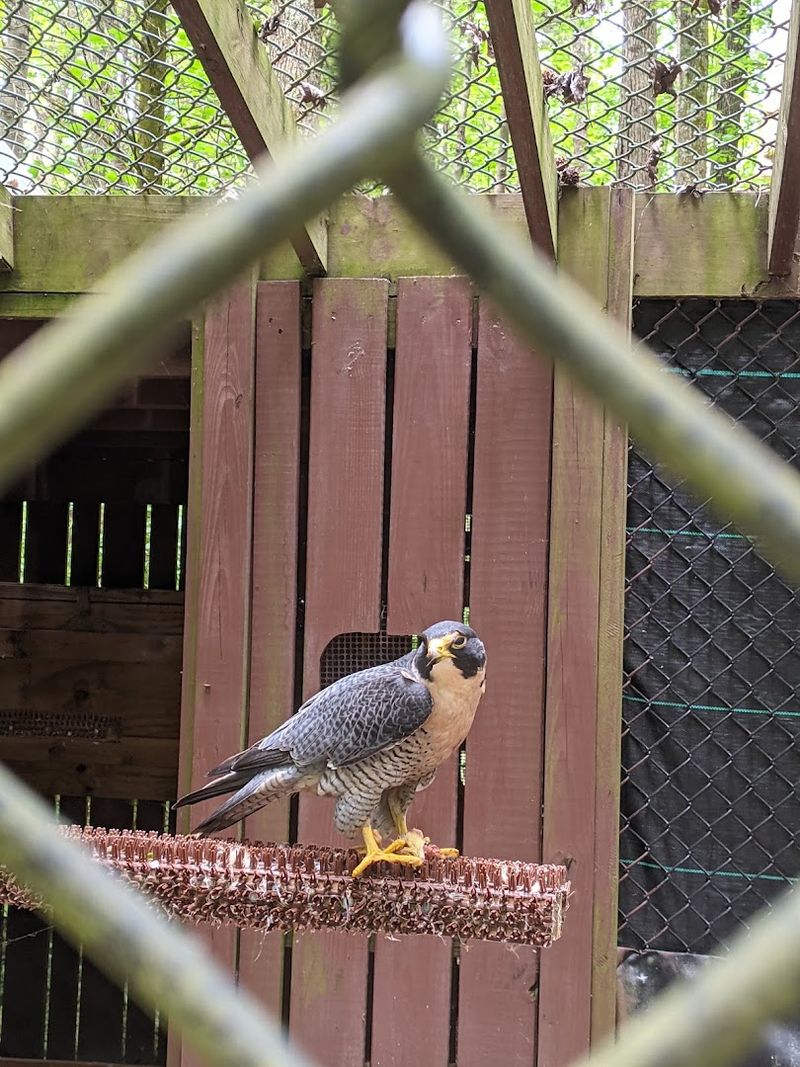
Great horned owls, red-tailed hawks, peregrine falcons, ospreys, and turkey vultures are all part of the lineup, representing both local North Carolina species and birds from farther afield.
Each enclosure is labeled with detailed information about the individual bird, including how it arrived at the center and what makes its species unique. Reading those stories while the bird watches you from a few feet away creates a connection that no nature documentary can replicate.
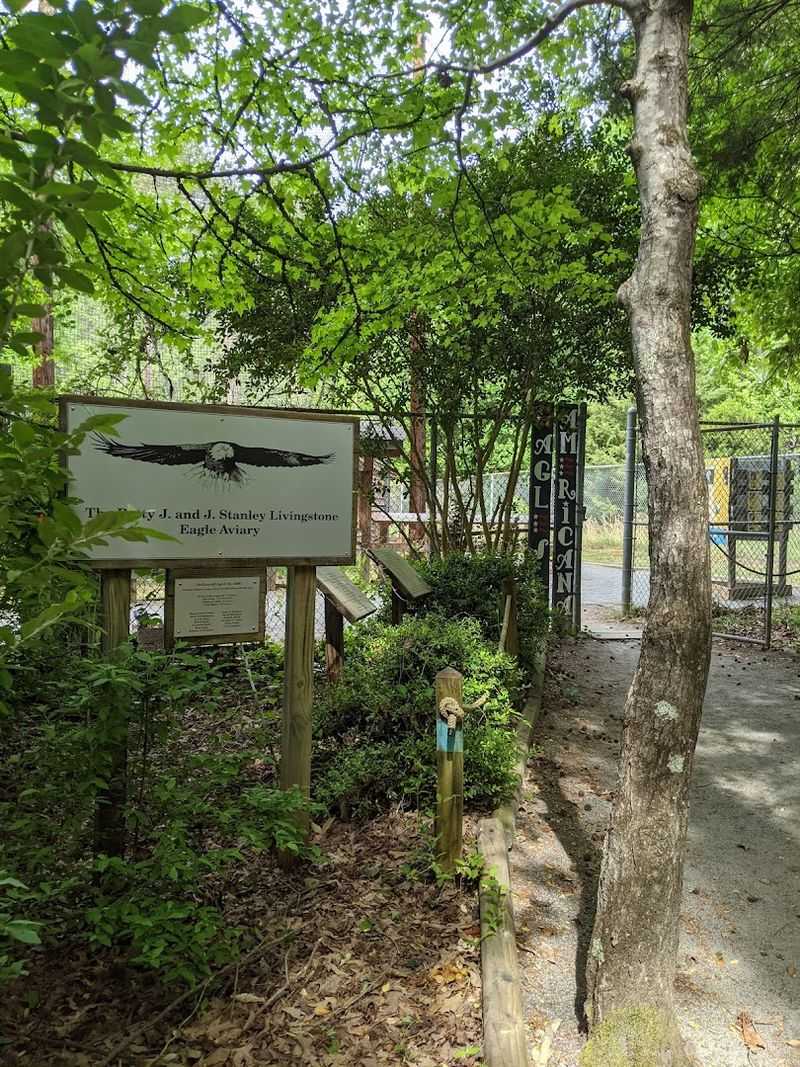
The bald eagle is a crowd favorite, and for good reason. There is something quietly powerful about being that close to a bird that typically soars hundreds of feet overhead.
Falcons tend to surprise visitors with their sharp, alert eyes, and the owls have a way of staring at you that makes you feel like you are the one being studied. Every bird brings something different to the trail, and no two stops feel the same.
The Fly-By Show: Watching Raptors in Full Flight
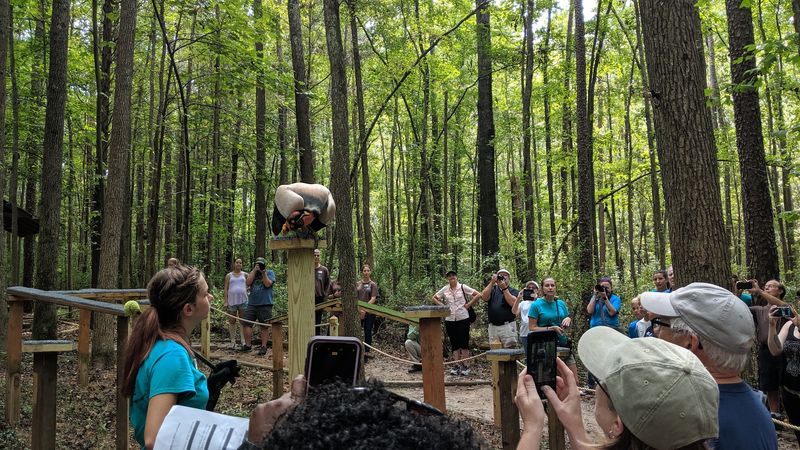
One part of the visit stands out above everything else for sheer spectacle: the flight demonstration. Watching a raptor soar, bank, and land with precision just feet above your head is the kind of moment that stays with you long after the drive home.
The center offers scheduled flight programs where trained birds are flown in an open area, giving visitors a front-row view of natural hunting behaviors and aerial agility. The handlers narrate throughout, explaining wing structure, hunting techniques, and the specific adaptations that make each species so effective in the wild.
These sessions are engaging for all ages, but kids tend to react with the kind of wide-eyed excitement that reminds adults why wildlife experiences matter. The birds used in these programs are well-conditioned and clearly comfortable with the routine, which speaks to the quality of care they receive daily.
Arriving early enough to catch a session is absolutely worth planning around. The fly-by moment, when a bird swoops low over the crowd, draws a collective gasp every single time without fail.
Meet a Raptor Sessions: Up-Close Encounters Worth Booking
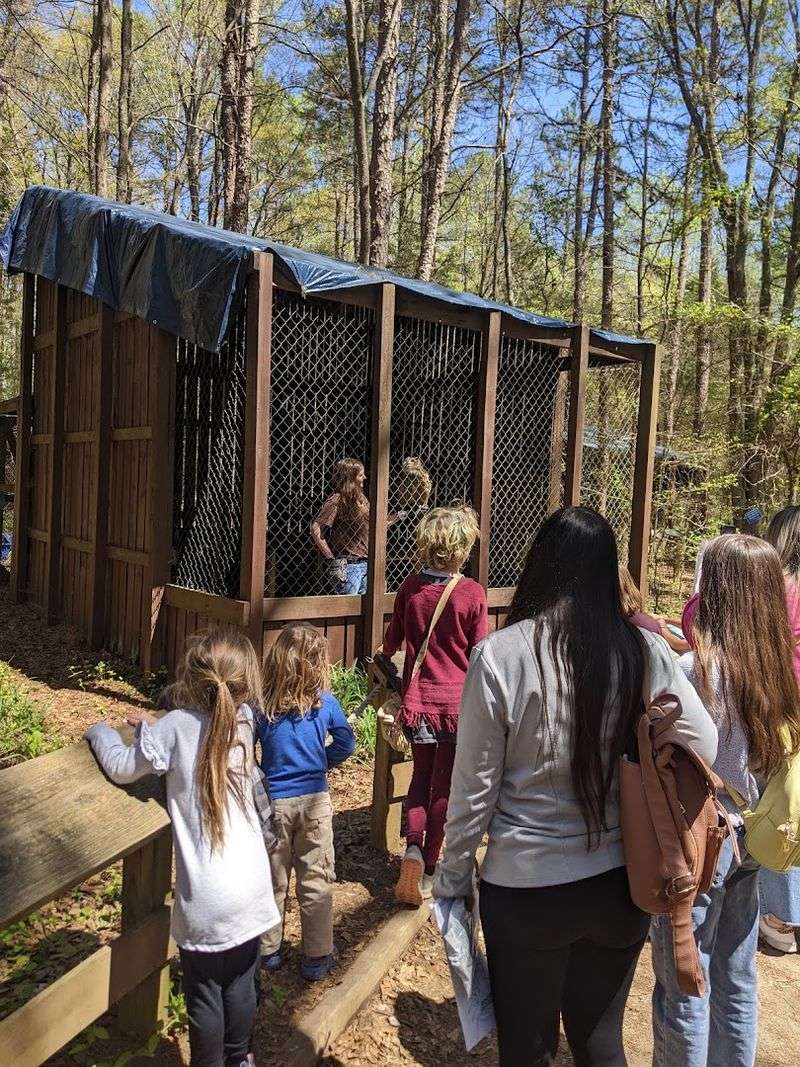
Beyond the trail and the flight shows, Carolina Raptor Center offers special meet-a-raptor sessions that take the experience to a completely different level. These smaller, more intimate programs put you directly in the presence of a bird with a trained handler guiding the interaction and explaining everything in real time.
The sessions are available in the morning, and booking one in advance is a smart move since space fills up quickly, especially on weekends. Participants get to observe the bird from a close distance, ask questions freely, and learn details that go well beyond what the trail signs cover.
Adults tend to find these sessions just as captivating as the kids do, sometimes more so. The handlers bring a storytelling quality to their presentations that makes the information stick.
You walk away knowing the specific bird’s name, its rescue story, its diet, and its personality quirks. That personal connection to a wild animal, even through a brief structured encounter, has a way of shifting how you think about the natural world around you.
It is the kind of experience that earns its price tag easily.
A Place Built for Learning: Education Programs and School Groups
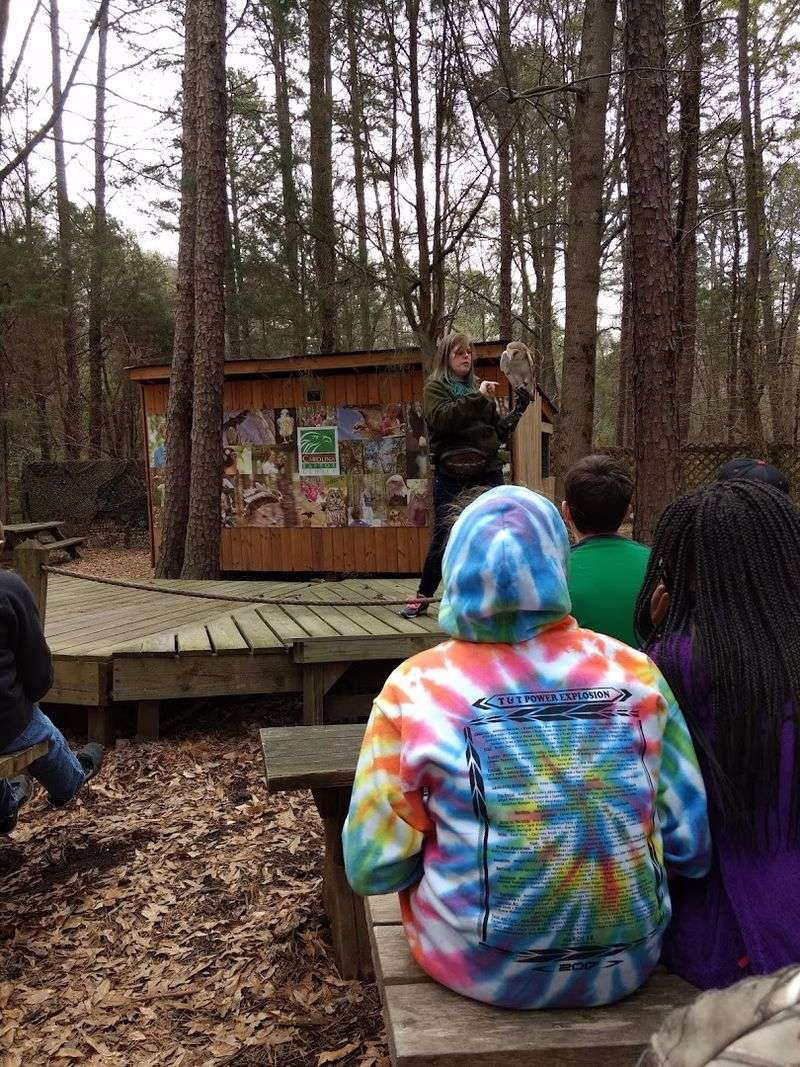
Carolina Raptor Center has built a strong reputation as an educational destination, and it shows in how thoughtfully the programs are designed. School groups visit regularly, and the center tailors its presentations to match different age groups and curriculum goals.
Teachers and homeschool families particularly appreciate the hands-on, observation-based learning that the trail and programs provide. Kids who might tune out a classroom lesson about ecosystems tend to pay close attention when a live hawk is perched nearby and a knowledgeable guide is explaining exactly how it hunts.
The educational content woven throughout the trail, through signage, stationed guides, and live demonstrations, covers topics like food chains, habitat conservation, bird anatomy, and the human impact on wildlife populations. It is genuinely curriculum-rich without feeling like a lecture.
The center also offers structured group programs that can be booked in advance, and these are popular enough that scheduling early is worth the effort. For families looking to make outdoor education a regular habit, the center offers membership options that make repeat visits an easy and affordable choice throughout the year.
The Wildlife Hospital: Where Healing Happens Behind the Scenes
Not everything at Carolina Raptor Center is visible from the trail, and that is part of what makes the place so layered. Behind the visitor experience, the center runs an active wildlife hospital that treats injured and orphaned raptors brought in from across the region.
Birds arrive with injuries from vehicle collisions, window strikes, gunshot wounds, and other encounters with the human world. The hospital team works to stabilize, treat, and rehabilitate as many birds as possible, with the goal of releasing them back into the wild whenever their condition allows.
While the hospital is not always open to general visitors, the center occasionally offers access during special programs and events. For anyone with a background in animal care or a deep interest in wildlife medicine, these opportunities are particularly compelling.
Even without stepping inside, knowing the hospital is operating just beyond the trail adds a quiet sense of purpose to the whole visit. The birds you see in the enclosures are the ones whose stories did not end at injury, and that knowledge makes every encounter feel more significant.
Practical Tips: Making the Most of Your Visit
A few practical details can make the difference between a good visit and a great one. The center is open seven days a week from 10 AM to 4 PM, and arriving closer to opening time means fewer crowds and a quieter experience on the trail, especially on weekends when school groups tend to clear out by midday.
Comfortable closed-toe shoes are the right call since the trail is a natural dirt path. The tree canopy provides enough shade that sunscreen is rarely necessary, but the shaded environment also holds moisture, so bug repellent is worth bringing along, particularly in warmer months.
Admission runs approximately $45 for a group of two children and one adult, and the center also offers seasonal passes and memberships for families who plan to return. There is no food available on-site, so packing snacks and drinks, especially if you are visiting with young children, is a practical move.
The gift shop carries reasonably priced items, and the staff there is generally helpful. Bathrooms are available on-site, though they can get busy during peak school visit hours, so planning accordingly saves some waiting time.
Why It Stays With You: The Lasting Impact of the Experience
Some places leave you entertained for an afternoon and then fade from memory within a week. Carolina Raptor Center tends to stick around longer than that.
There is something about standing close to a bird that can see eight times better than a human, that can hear a mouse under three feet of snow, that weighs less than a loaf of bread but commands the sky, that reframes the natural world in a lasting way.
The center holds a 4.7-star rating across more than 1,500 reviews, and that kind of consistent praise reflects something real. Families return season after season, often noting how different the trail feels in fall versus spring, with the changing light and foliage creating a completely fresh atmosphere each time.
The work being done here, rescuing birds, educating visitors, training the next generation of wildlife advocates, is meaningful in a way that goes beyond a single afternoon outing. A visit to Carolina Raptor Center has a quiet way of reminding you that the natural world is worth paying attention to, and worth protecting, one feathered resident at a time.
Share this story