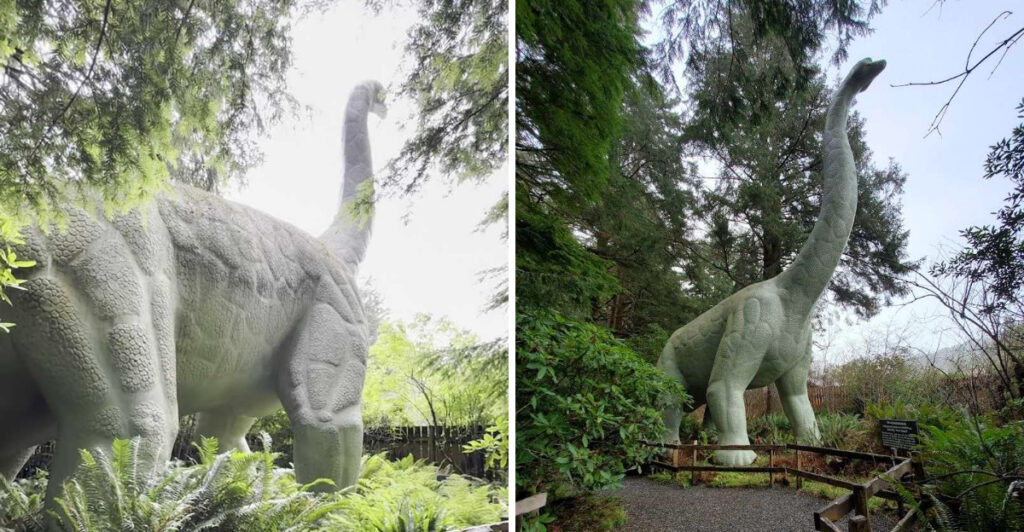
There is a stretch of Highway 101 on the Oregon coast where the trees grow so thick and the ferns curl so wide that you half expect something ancient to peek out from behind the undergrowth. And then, suddenly, something does.
Tucked against a rainforest hillside south of Port Orford, a collection of life-size dinosaur sculptures stands frozen in time among towering trees draped in hanging moss. I had heard about this place for years before I finally stopped, and I can tell you honestly that the reality is every bit as wonderfully strange as the description.
This is the kind of roadside stop that reminds you why slow road trips along the Oregon coast beat any itinerary you could plan.
Where the Dinosaurs Actually Live
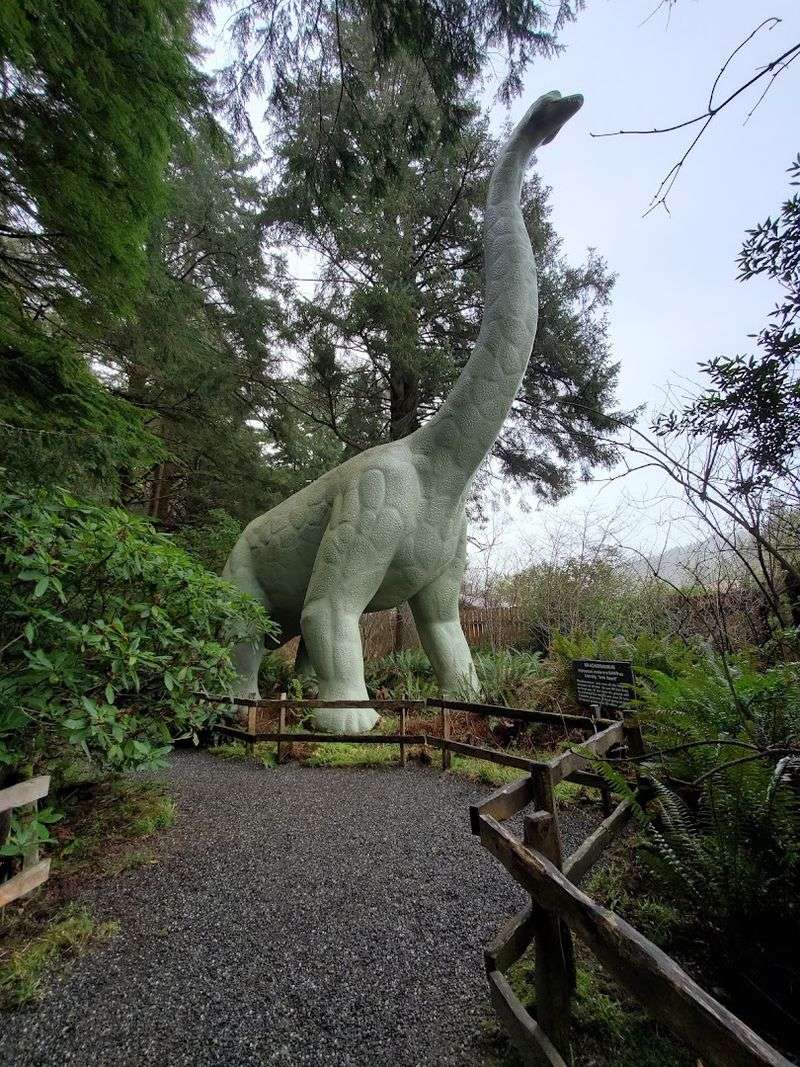
The address is 36848 US-101, Port Orford, Oregon 97465, and it sits right along the coast highway where the forest presses in from both sides of the road. Port Orford is a small coastal town in Curry County, and this stretch of Highway 101 is one of the most scenic drives on the entire West Coast.
The property hugs the base of a forested hillside, and from the road you can already spot a massive T-Rex head looming above the entrance. That first glimpse is honestly a little surreal, because the scale of the sculpture against the real trees is genuinely impressive.
The parking area is easy to access and well maintained. You pull in, see the gift shop ahead of you, and immediately feel like you have stumbled onto something that belongs to a different era of American road tripping.
Open daily from 9 AM to 6 PM, the park is reachable by phone at 541-332-4463, and more information is available at prehistoricgardens.com. The location feels remote enough to feel like a discovery but convenient enough to make a clean stop on any coastal drive.
The Story Behind the Sculptures
Ernie Nelson was the man who started all of this, and his story is the kind of thing that makes you appreciate stubborn creative ambition. He began building the dinosaur sculptures by hand in 1953, constructing them from steel and concrete right there in the rainforest.
Nelson was not a trained paleontologist or a professional sculptor. He was a self-taught artist who simply decided that the world needed life-size prehistoric creatures standing in an Oregon forest, and then he spent decades making that happen.
Each sculpture was built on-site, which means these creatures were never trucked in from somewhere else. They grew out of this specific patch of land.
Today the park is run by Kiki, Nelson’s granddaughter, who carries on the family tradition with genuine care for the history of the place. When I learned that detail during my visit, the whole park took on a different kind of weight.
This is not a corporate attraction that was assembled from a catalog. It is a multigenerational family project that has been quietly delighting travelers on the Oregon coast for over seventy years, and that legacy is part of what makes it feel so worth stopping for.
The Rainforest Setting That Makes It All Work
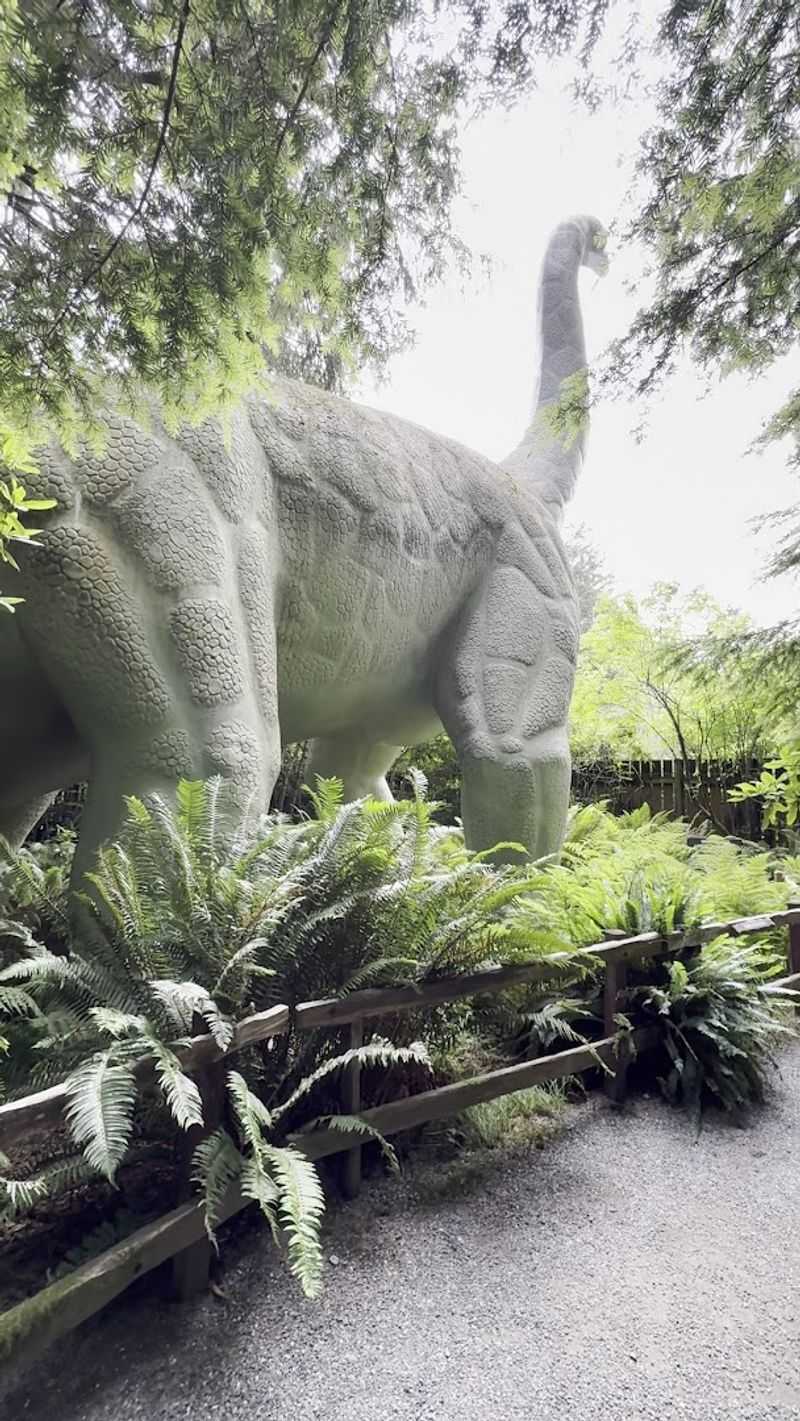
What separates this place from a simple collection of dinosaur statues is the forest itself. The trail winds through a genuine temperate rainforest, the kind where ferns grow taller than your waist and the tree trunks are wrapped in thick green moss.
The plant life here is extraordinary on its own terms. Skunk cabbage fans out in enormous tropical-looking leaves.
Ancient-looking conifers tower overhead. The light filters down in soft columns through the canopy, and on overcast days the whole forest takes on a deep, saturated green that feels almost unreal.
The connection between the setting and the theme is not accidental. The ancient plant species that grow in this rainforest are close relatives of the flora that existed during the age of dinosaurs, so the environment actually reinforces the educational angle of the exhibits.
The forest does not just frame the sculptures; it contextualizes them. Standing next to a Brachiosaurus surrounded by giant prehistoric-looking ferns, you get a genuine sense of how lush and overgrown the world once was, long before humans showed up to tidy things.
The Dinosaur Sculptures Up Close
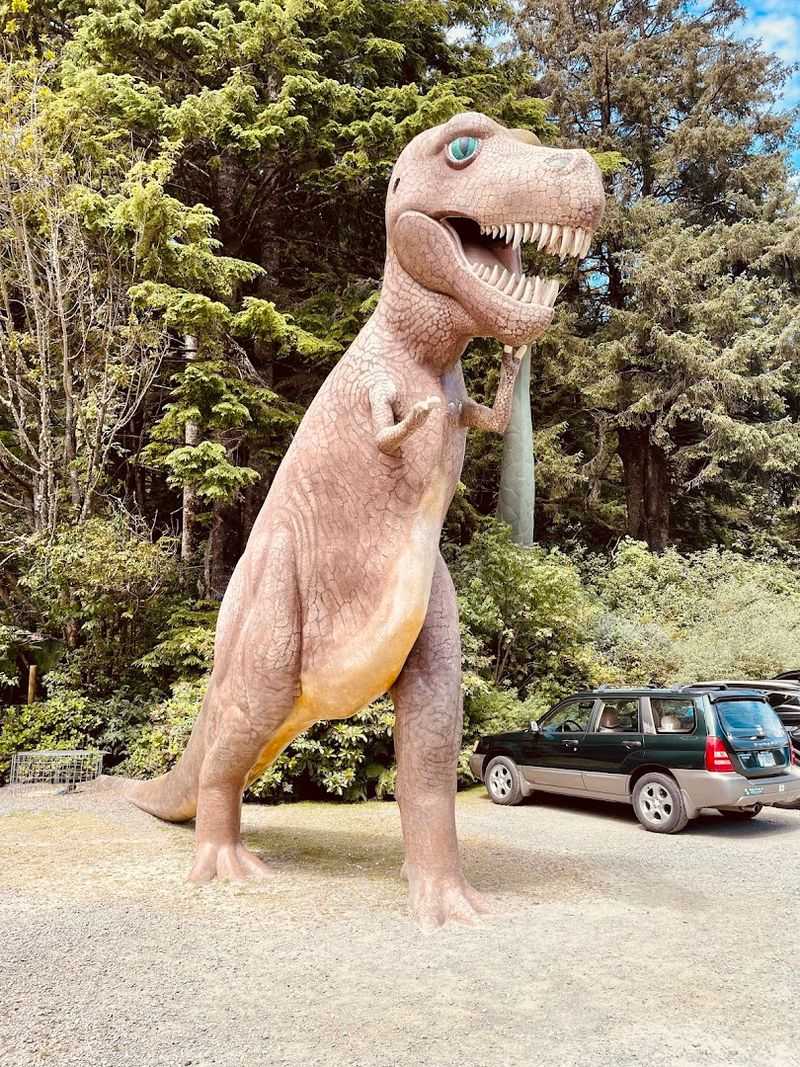
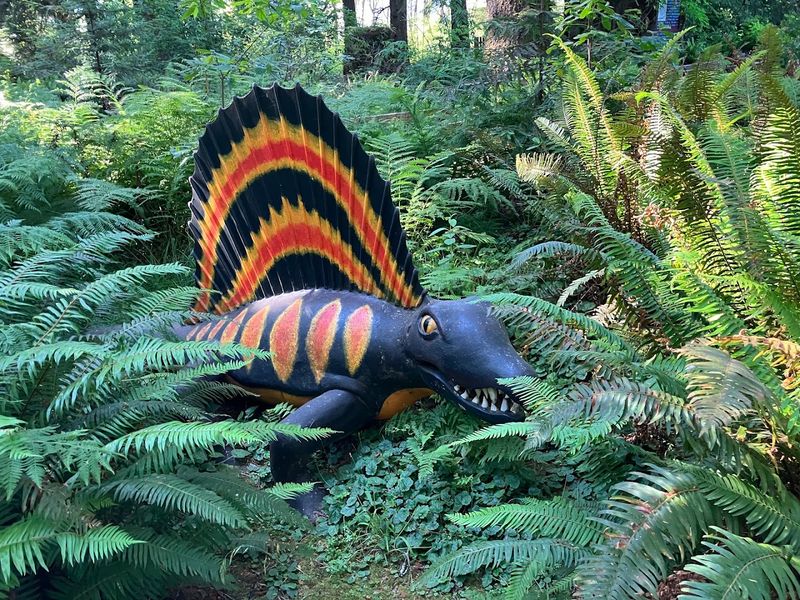
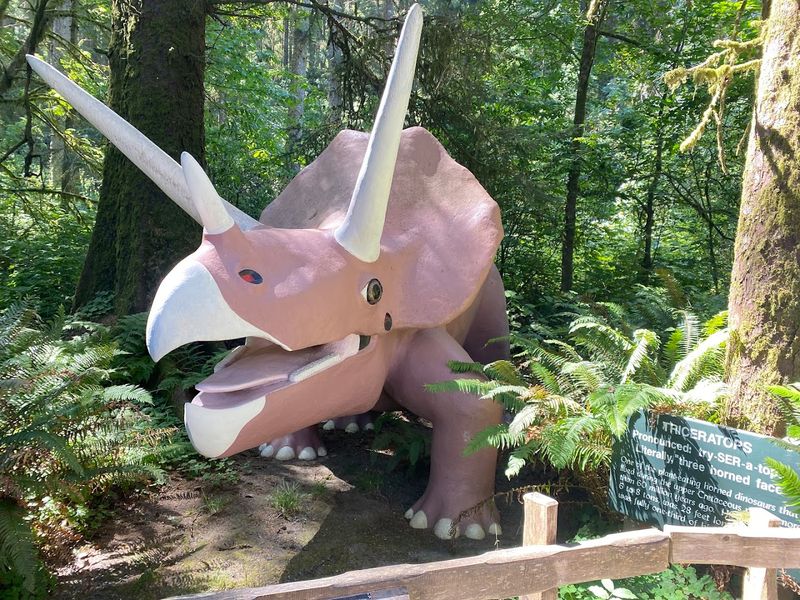
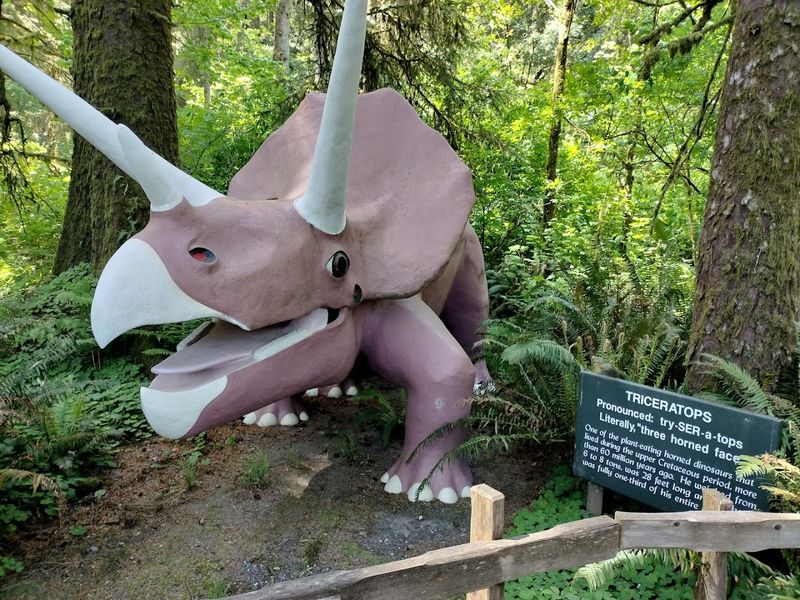
There are around two dozen dinosaur models spread along the trail, and each one has its own personality. The sculptures lean retro in style, which is part of their charm.
These are not the hyper-accurate CGI-influenced recreations you might expect from a modern museum. They have a handmade, slightly expressive quality that makes them feel friendly rather than frightening.
The T-Rex near the entrance is the crowd favorite, and for good reason. It is enormous, and the scale of it against the real trees is the kind of thing that makes you stop and just stare for a moment.
Further along the trail you encounter a Brontosaurus, a Triceratops, a Pteranodon, and a number of other species, each accompanied by an informational sign.
The signs are worth reading. They give accurate details about the species, their habits, their size, and their place in prehistoric ecosystems.
The combination of the retro visual style and the genuinely informative text creates a tone that is both nostalgic and educational. Kids absorb the facts without realizing they are learning, and adults find themselves reading every single panel with more interest than they expected.
Walking the Trail
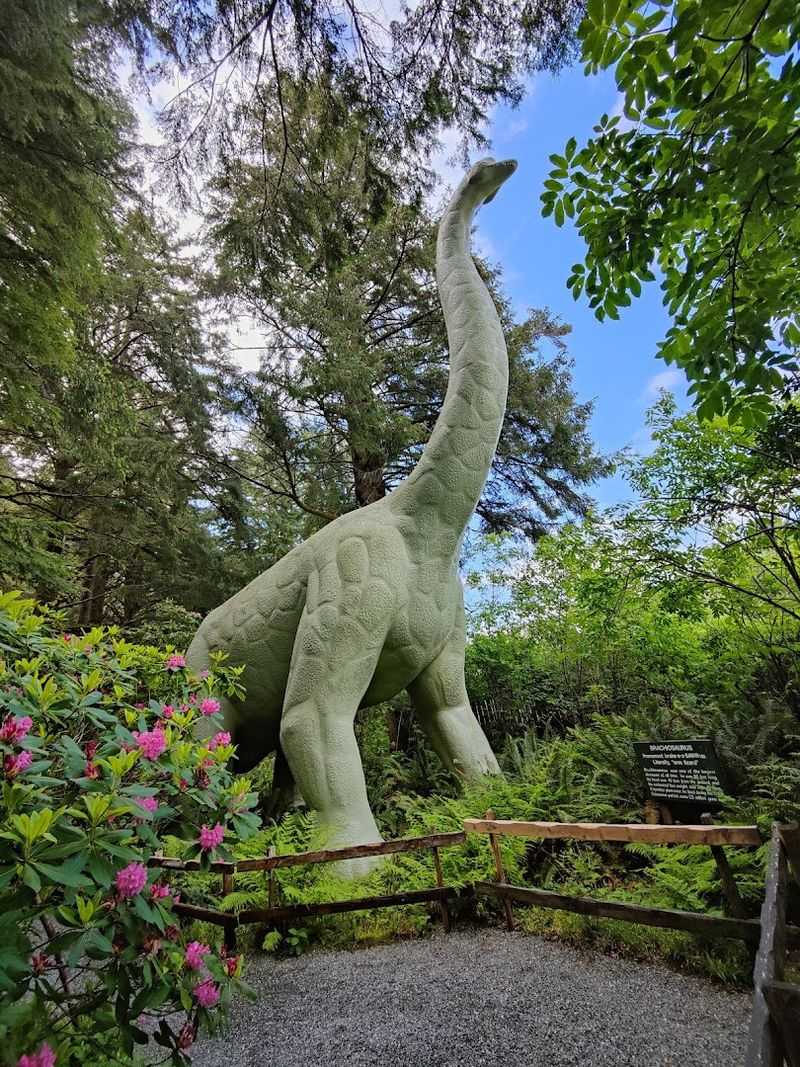
The trail itself is short, and that is worth knowing before you arrive so you can set your expectations correctly. A quick walk through takes about ten to fifteen minutes.
But if you stop at every sign, read the educational panels, and take your time with each sculpture, you can easily stretch the experience to forty-five minutes or more.
The path is well maintained and easy to walk. It is not a rugged hike, which makes it accessible for young kids, older visitors, and anyone who just wants a gentle stroll through extraordinary forest scenery.
The trail loops through the hillside and eventually deposits you back near the gift shop, which is a clever piece of design.
On rainy days, which are common on the Oregon coast, the park actually provides umbrellas for visitors to borrow free of charge. That small gesture says a lot about how the staff thinks about the visitor experience.
The forest in the rain has its own appeal anyway, with the moss deepening in color and the ferns glistening, and honestly the overcast light makes the sculptures look even more atmospheric than they do on sunny days.
Who This Place Is Really For
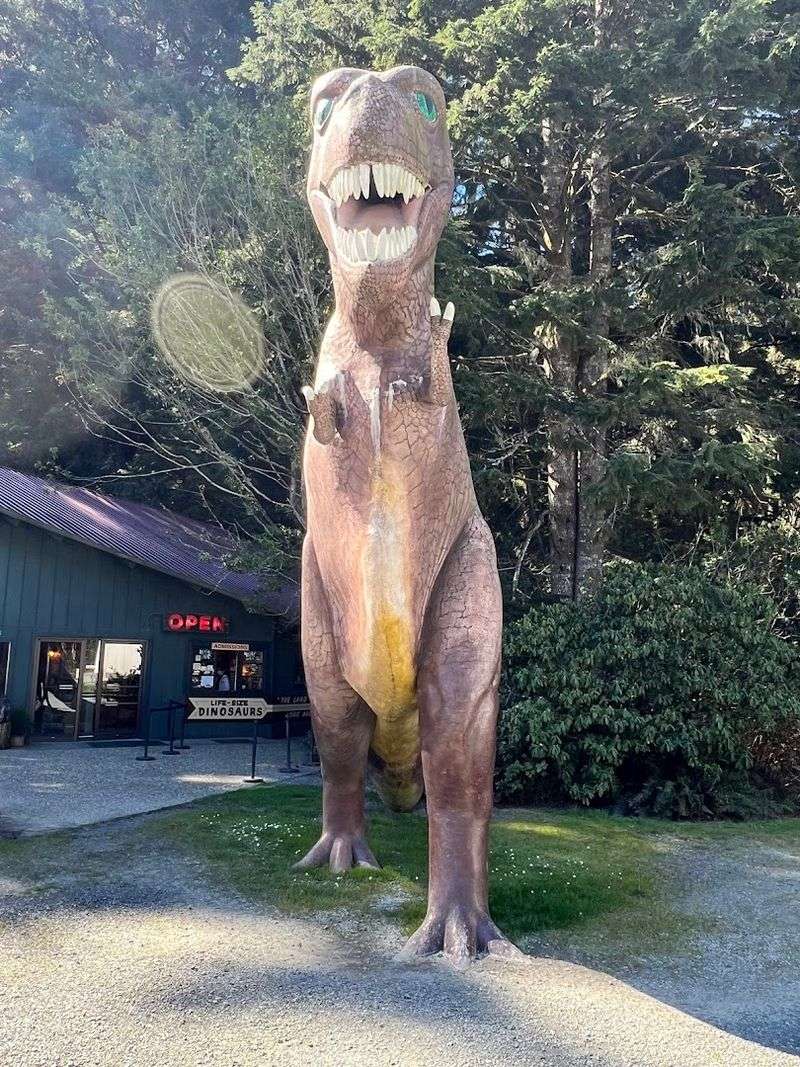
The honest answer is that Prehistoric Gardens works for a wider range of visitors than you might expect. Yes, kids absolutely love it.
The combination of giant creatures and an immersive forest environment hits something deep in the childhood imagination, and watching a child encounter a life-size T-Rex for the first time is genuinely entertaining for everyone nearby.
But adults without kids find plenty to appreciate here too. The retro aesthetic of the sculptures triggers a specific kind of nostalgia for mid-century American roadside culture.
The forest is beautiful enough to justify the stop on its own. And there is something quietly charming about a place that has been doing exactly the same thing, in exactly the same way, for over seven decades without chasing trends or modernizing itself into something generic.
Dinosaur enthusiasts of any age will find the informational signs satisfying, and photography lovers will spend more time than they planned composing shots of sculptures emerging from the ferns. The park has a 4.5-star rating across over 1,500 reviews, which tells you that the experience lands well across a broad audience.
It is one of those rare stops that earns its reputation without overpromising.
Admission and Practical Details
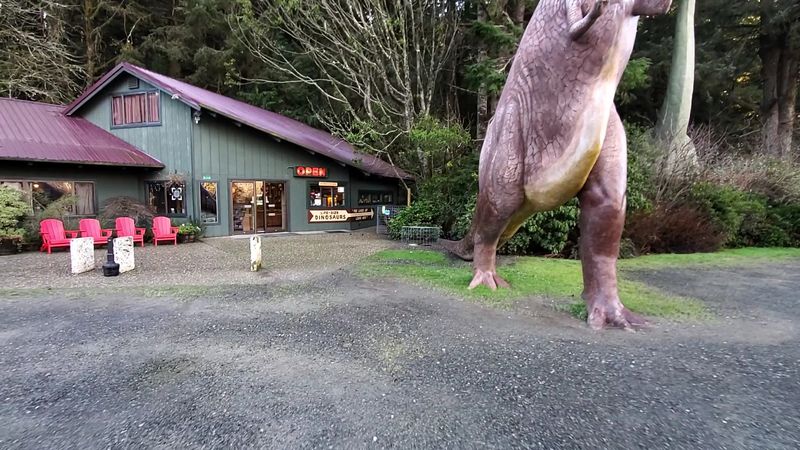
Admission runs around fourteen dollars for adults and approximately ten dollars for children, based on recent visitor reports. Those prices put it in the range of a casual stop rather than a major budget commitment, though a few visitors feel the short trail length makes the value feel tight.
My take is that the price is fair if you go in with the right mindset. This is a scenic forest walk with extraordinary decorations, not a full-day theme park.
Treat it as a quality stretch-your-legs stop on a coastal drive and it delivers well above expectations.
The park is open every day of the week from 9 AM to 6 PM, which makes it easy to work into almost any travel schedule. The gift shop at the end of the trail is stocked with dinosaur-themed items, keepsakes, and the kind of charming knickknacks that are hard to resist.
It is worth budgeting a few extra minutes there. Parking is free and easy, the restrooms are available on-site, and the staff at the ticket counter are generally warm and welcoming, making the whole arrival process smooth and low-stress.
The Gift Shop Experience
The gift shop at Prehistoric Gardens is not an afterthought. It sits at the end of the trail route and serves as both the exit point and a satisfying final chapter to the visit.
The selection leans heavily into the dinosaur theme, as you would hope, with toys, figurines, postcards, and assorted souvenirs that range from practical to purely delightful.
The shop has the feel of a place that has been curated over many years rather than restocked from a wholesale catalog. Some items have a vintage quality that matches the overall tone of the park.
If you are the kind of traveler who collects small mementos from roadside stops, this is a good one.
One detail that stuck with me was learning that the current owner, Kiki, received a care package of historic Prehistoric Gardens memorabilia from a local historian who had been collecting items about the park for years, including an old postcard featuring her grandparents. She then gifted him items in return.
That kind of story, rooted in community and shared history, is exactly the spirit the gift shop seems to carry. Every small purchase here feels like it goes toward keeping something genuinely worth keeping alive.
Why This Stop Belongs on Your Oregon Coast Drive
The Oregon coast has no shortage of beautiful things to look at, but Prehistoric Gardens earns its place on the itinerary for a different reason than the usual scenic overlooks and beach access points. It represents a specific strand of American travel culture that is becoming rarer every year, the kind of quirky, handmade, family-run roadside attraction that asks nothing more of you than a little curiosity and an hour of your afternoon.
The drive along Highway 101 through this part of Oregon is stunning on its own, and this stop adds a layer of fun that makes the journey memorable rather than just pretty. Port Orford itself is worth exploring, with access to Gold Beach and a handful of good dining options nearby.
Prehistoric Gardens has been standing in that rainforest since 1953, outlasting trends, economic shifts, and the general acceleration of modern life. The fact that it still draws visitors, earns consistent praise, and is still run by the same family that built it is a quiet kind of triumph.
Some things are worth slowing down for, and this is absolutely one of them.
Share this story