Tucked into the cultural corridor of Santa Fe, New Mexico, there is a museum that quietly holds some of the most remarkable Native American art, jewelry, and living traditions in the country. The Wheelwright Museum of the American Indian has been doing this since 1937, and it has never stopped growing in depth and relevance.
What started as a space dedicated to Navajo ceremonial traditions has evolved into a full celebration of Native creativity across generations and tribes. From antique silverwork to contemporary mixed media, every corner of this museum tells a story that most people have never heard before, and that is exactly what makes it worth the trip.
The Hogan Design That Sets It Apart
Not every museum announces its purpose through its architecture, but this one does. The hogan-shaped structure at the Wheelwright Museum is based on the eight-sided Navajo hogan, a form that holds deep cultural and spiritual meaning in Navajo tradition.
The design was created by architect William Penhallow Henderson, who worked to translate the hogan’s proportions into a public building without stripping away its significance. The result is a structure that feels grounded and purposeful rather than decorative.
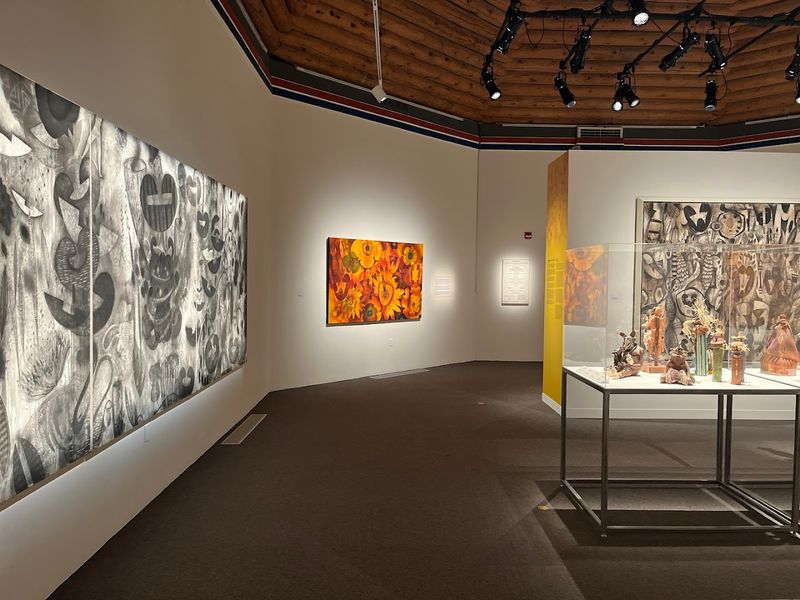
Visitors often note how the building itself changes the experience of moving through the exhibits. The curved walls and careful proportions create a natural flow from one section to the next.
There are no sharp corners pushing you through the space in a hurry. The architecture encourages a slower pace, which turns out to be exactly the right speed for absorbing art that carries centuries of cultural meaning behind every piece.
What the Permanent Collection Actually Holds
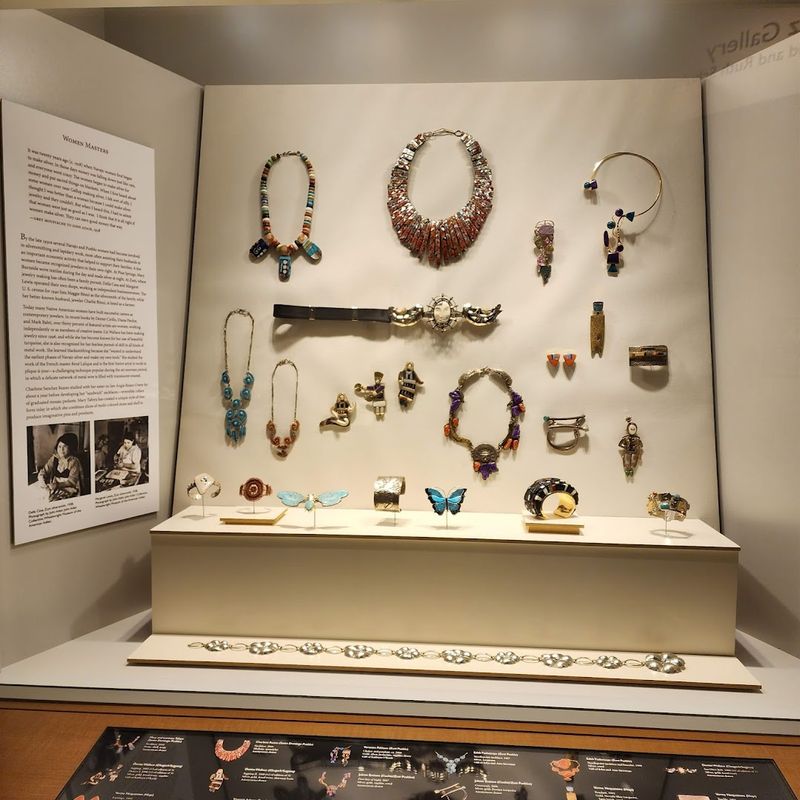
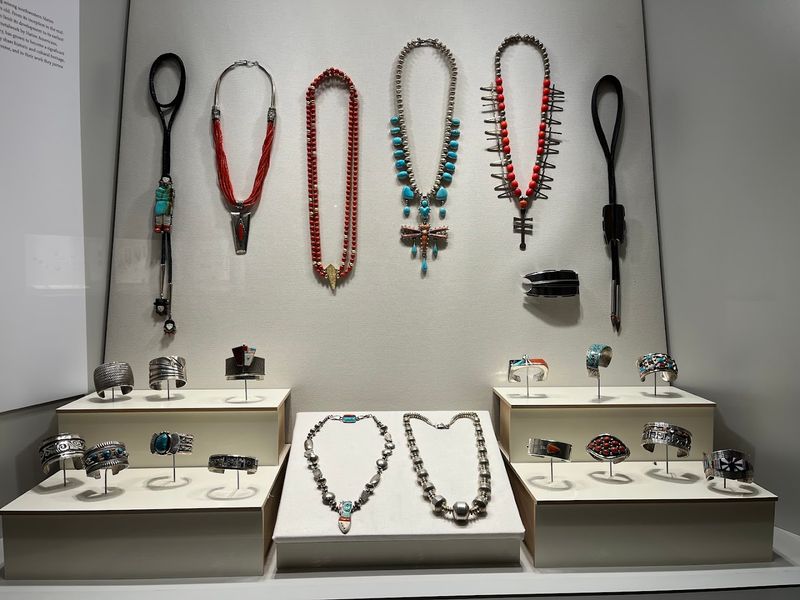
The permanent collection at the Wheelwright Museum covers a wide range of Native American artistic traditions, but the jewelry holdings are particularly remarkable. The gallery dedicated to Native silverwork traces the history of the craft from its earliest forms in the Southwest to the refined techniques used by contemporary artists today.
Each piece in the jewelry collection is identified by tribe, which gives context that transforms the display from a showcase into a lesson. Seeing how different communities developed their own distinct approaches to silversmithing, beadwork, and ornamentation makes the collection feel like a conversation between cultures across time.
Beyond jewelry, the permanent holdings include ceramics, textiles, and sculpture. The range of materials and techniques represented means that no two sections of the collection feel repetitive.
There is a consistent curatorial commitment to showing both the historical depth and the ongoing vitality of Native American artistic practice, which keeps the experience from feeling like a history-only exercise.
Rotating Exhibits That Keep Every Visit Fresh
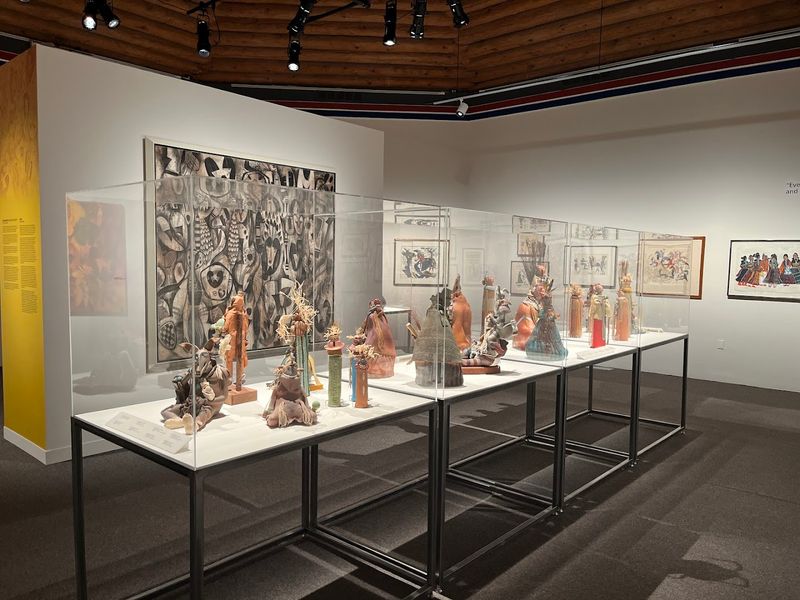
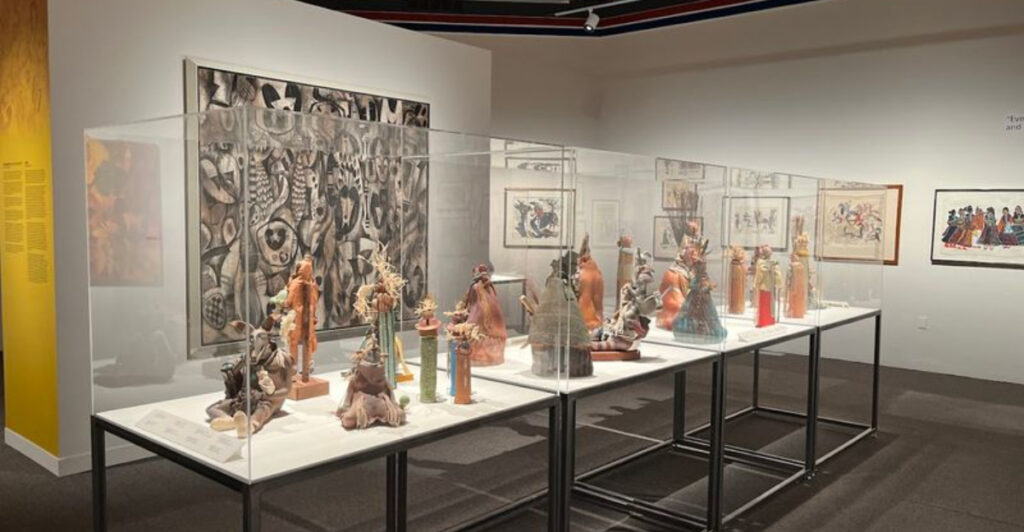
One of the strongest reasons to return to the Wheelwright Museum more than once is its rotating exhibition program. The museum regularly hosts temporary shows featuring both emerging and established Native American artists working across a wide variety of media, from painting and photography to sculpture and installation work.
These rotating exhibits are not filler content placed between the permanent collection highlights. They are carefully curated shows that often come with companion programming, including artist lectures and community events that bring the work into direct conversation with the public.
The mix of traditional and contemporary perspectives in these shows is one of the museum’s most consistent strengths. A visitor might encounter a centuries-old weaving technique displayed alongside a video installation exploring modern Indigenous identity.
That kind of curatorial range keeps the museum from feeling static, and it reflects a genuine commitment to showing Native art as a living, evolving tradition rather than a finished chapter in history.
The Silversmithing Story You Did Not Know You Needed
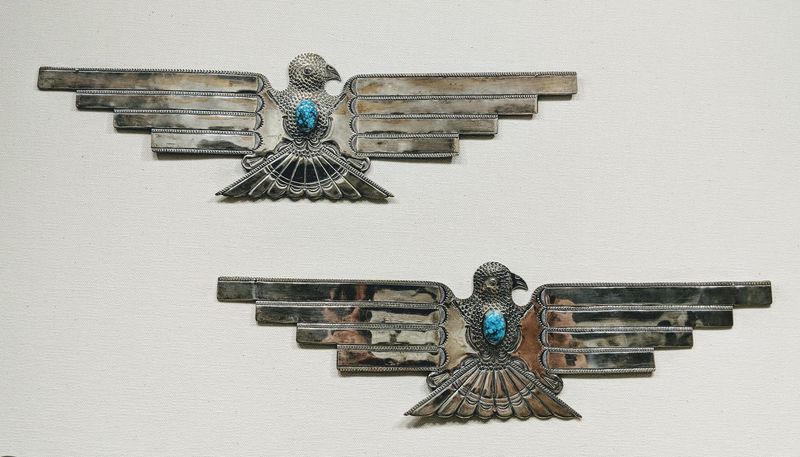
Most people who walk into the jewelry gallery at the Wheelwright Museum are surprised to learn how recently silversmithing became a major art form in the Southwest. The history of the craft is relatively short in historical terms, but the level of skill and innovation that developed within that time is extraordinary.
The exhibit traces the introduction of silverworking to Navajo and Pueblo communities in the nineteenth century and follows its rapid evolution into a sophisticated art form with distinct regional and tribal styles. Seeing the early pieces alongside modern work makes the progression tangible in a way that reading about it never quite does.
The labels and context provided throughout the display are thorough without being overwhelming. The exhibit manages to be genuinely educational while still letting the objects speak for themselves.
By the time most people reach the end of the silversmithing section, they leave with an entirely new appreciation for the craft and the communities that shaped it.
The Case Trading Post Below
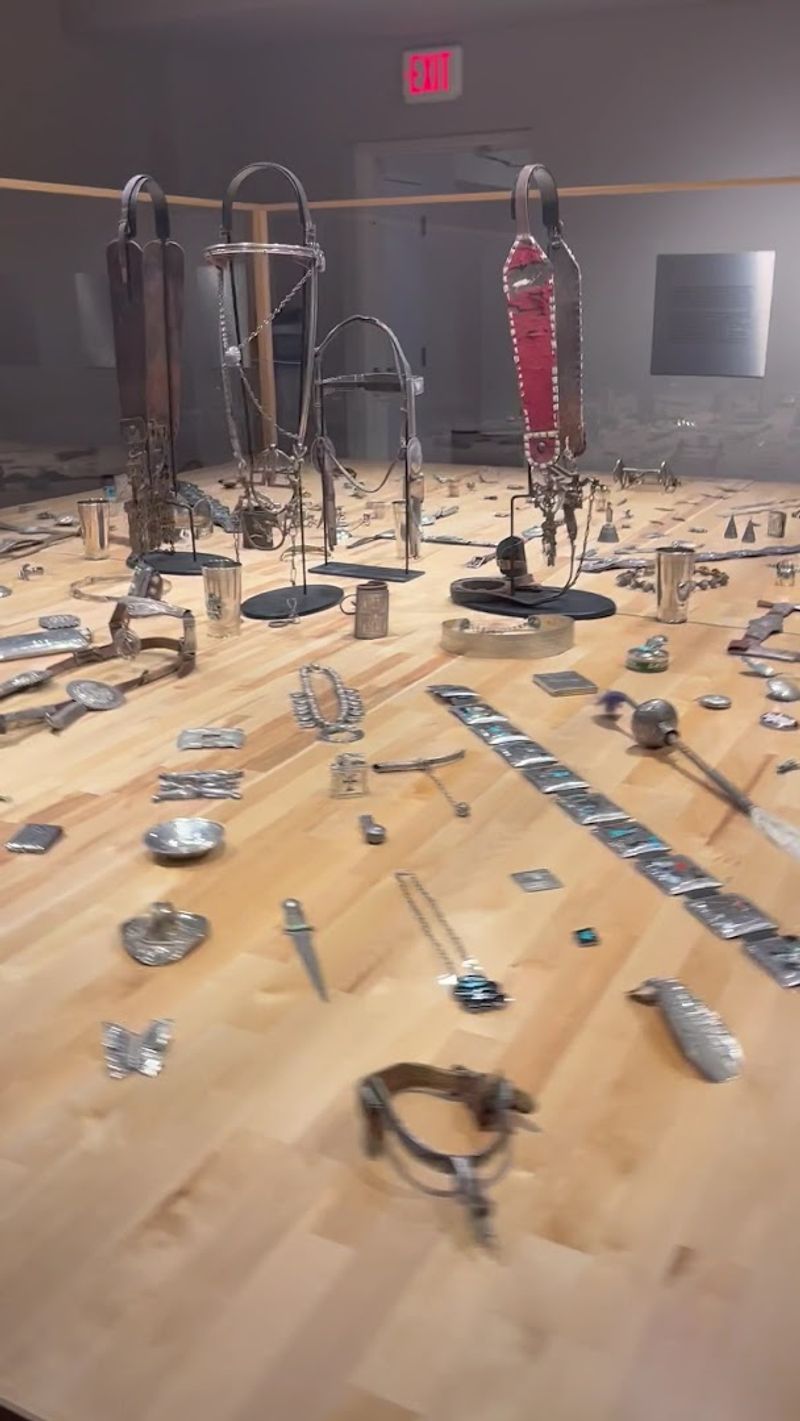
The lower level of the Wheelwright Museum holds one of the most distinctive museum shops in Santa Fe. The Case Trading Post was designed to resemble a historic trading post from the early days of the Southwest, complete with wooden floors that creak underfoot and display cases filled with handmade works by Native American artists.
The shop carries an impressive selection of jewelry, pottery, textiles, and prints, with each piece accompanied by information about the artist who created it. That transparency about origins and makers is not always standard practice in gift shops, and it makes the purchasing experience feel more meaningful than a typical souvenir run.
The inventory leans toward quality over quantity. There are vintage and antique pieces alongside contemporary work, and the price range reflects the craftsmanship involved.
The Case Trading Post has built a reputation among serious collectors of Native art as a reliable source for authentic, well-documented pieces, making it worth a dedicated visit on its own terms.
Art That Comes With Context
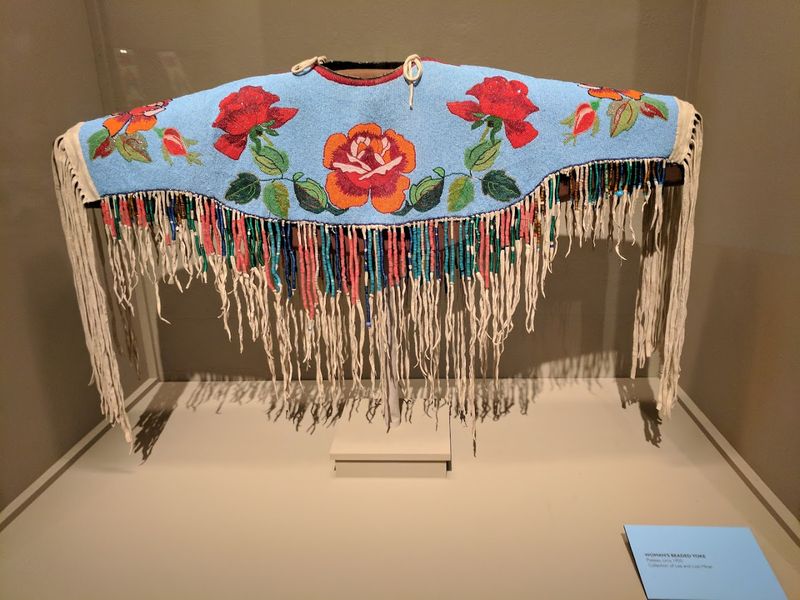
Context is everything in a museum dedicated to living cultural traditions, and the Wheelwright does this particularly well. Every piece in the collection is labeled with its tribal origin, the artist’s name where known, the approximate date, and often a brief explanation of the technique or cultural significance involved.
That level of detail transforms the act of looking at art into something closer to a conversation. Rather than standing in front of a beautiful object with no frame of reference, the visitor is given enough background to understand what they are actually seeing.
That does not mean the labels are dry or academic. They are written to be accessible and informative without talking down to the reader.
The docents at the museum add another layer to this experience. Knowledgeable and approachable, they are available to answer questions and often volunteer additional context that does not appear on the labels.
The combination of strong written materials and engaged staff makes the Wheelwright one of the more intellectually rewarding stops on Museum Hill.
Museum Hill and Its Unique Position
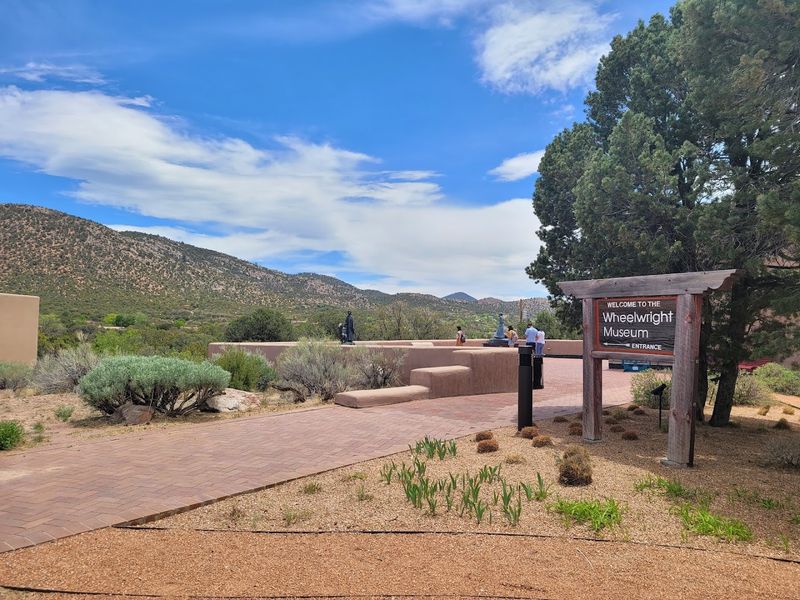
The Wheelwright Museum sits on Museum Hill, a cluster of cultural institutions on the southeastern edge of Santa Fe that includes several other significant museums. The location puts it within easy walking distance of the Museum of International Folk Art and the Museum of Indian Arts and Culture, making it a natural part of a longer cultural day out.
Museum Hill is also directly across from the Santa Fe Botanical Garden, which gives the area a pleasant outdoor dimension for visitors who want to break up gallery time with a walk through the grounds. The neighborhood feels calm and unhurried compared to the busier downtown plaza area, which makes it a good choice for anyone looking to avoid the most crowded parts of the city.
The drive up to the museum along Camino Lejo passes through a residential stretch of Santa Fe that gives a sense of how the city lives away from its tourist center. It is a short trip from downtown, but it feels like a different, quieter version of the same city.
The Humor in Native Art Exhibit
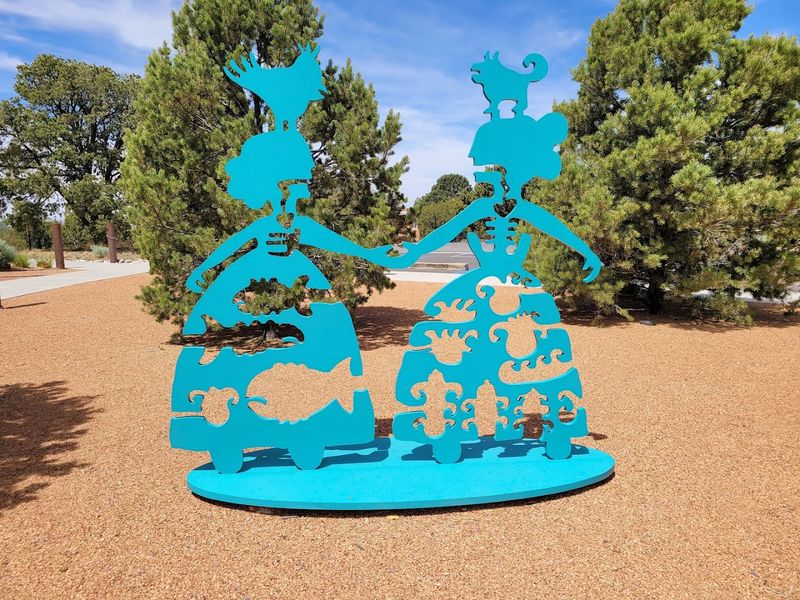
One of the more unexpected pleasures of a visit to the Wheelwright Museum is the recurring presence of humor in its programming. The museum has hosted exhibits specifically dedicated to humor in Native American art, a subject that challenges the assumption that Indigenous art is always solemn or ceremonially serious.
These shows present work by Native artists who use satire, wit, and playfulness to comment on history, identity, and contemporary life. The result is a genuinely funny and thought-provoking experience that catches many visitors off guard in the best possible way.
Humor turns out to be a powerful vehicle for cultural commentary, and the artists featured in these exhibits use it with considerable skill.
The willingness to include this kind of work reflects the museum’s broader commitment to showing Native art in its full range. Not every piece needs to be a solemn artifact to carry meaning.
The Wheelwright understands that, and it makes the overall programming feel more honest and complete as a result.
What the Buffalo Man Display Tells You
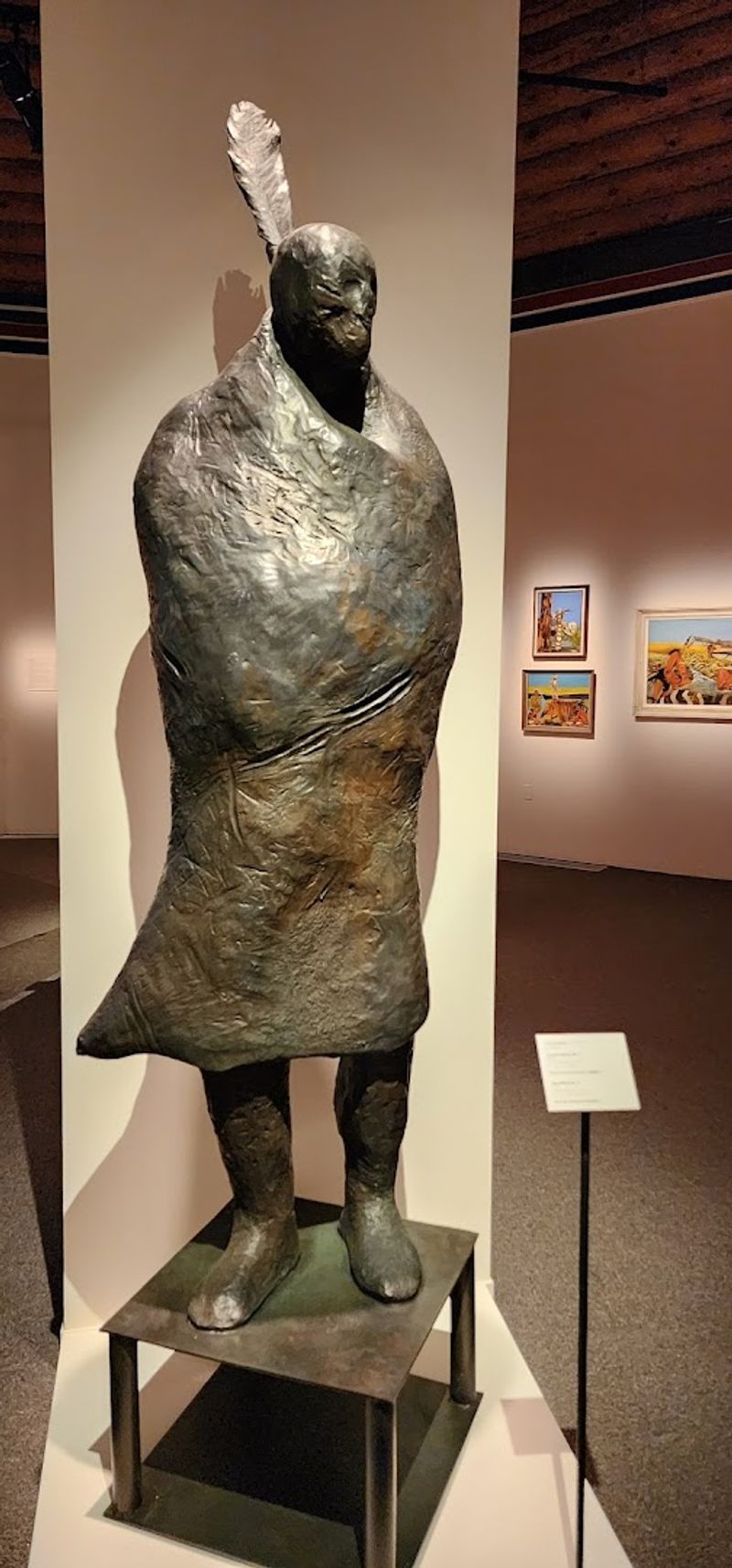
Among the specific pieces that tend to leave a strong impression on visitors is the Buffalo Man display, a figure that represents the intersection of ceremonial tradition and artistic craftsmanship that defines much of what the Wheelwright holds. The display draws attention not just for its visual presence but for the cultural narrative it carries.
Figures like this one serve as a reminder that Native American art has never been purely decorative. Objects made within ceremonial or communal contexts carry layers of meaning that extend well beyond their physical form.
The Wheelwright presents these pieces with enough context to make that depth accessible without reducing the work to a simple explanation.
The display also illustrates why the museum’s founding commitment to preservation was so important. Many of the ceremonial traditions that produced work like this were under significant pressure in the early twentieth century.
Having a dedicated institution that treated them with scholarly seriousness helped ensure that the knowledge surrounding these objects was documented alongside the objects themselves.
Artist Lectures and Community Programming
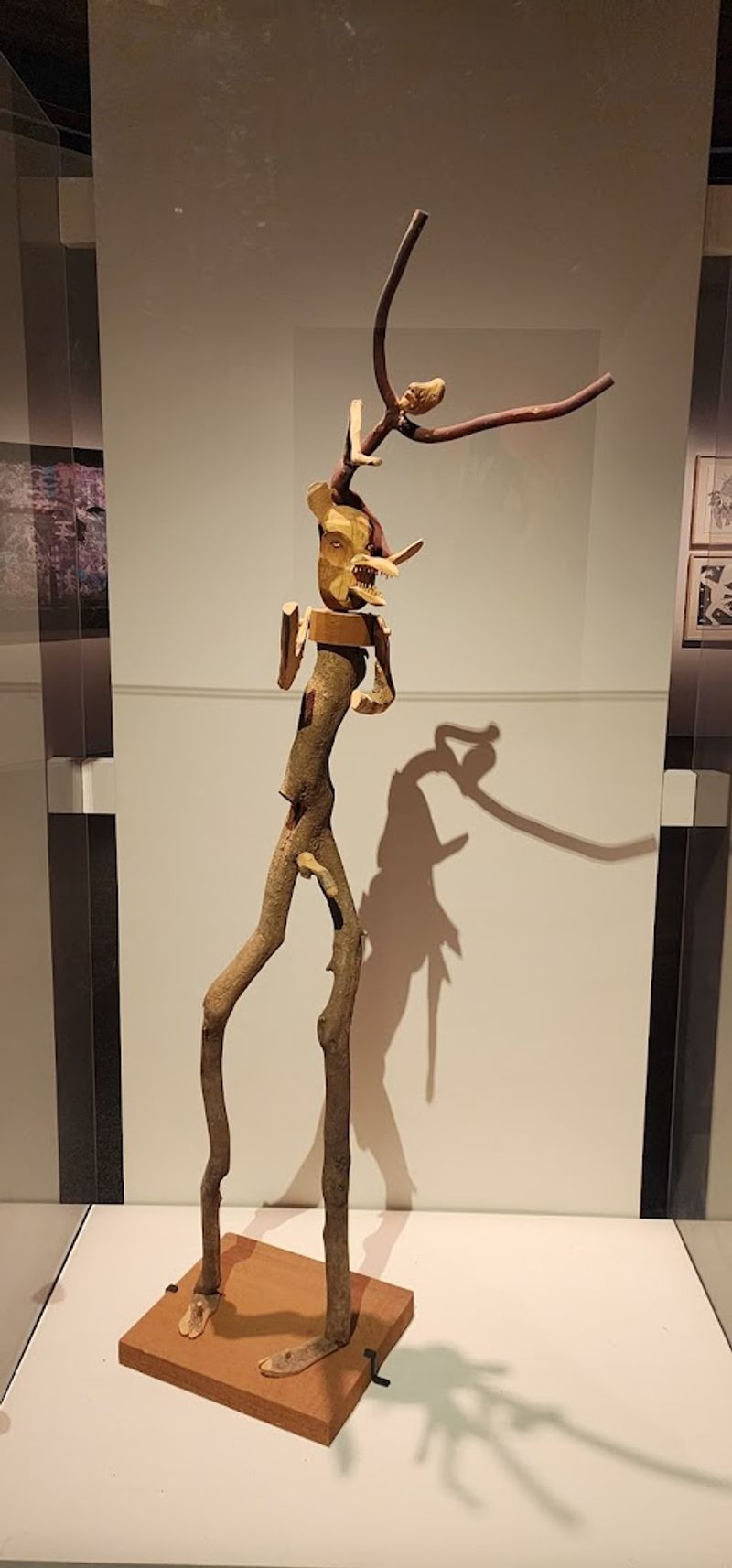
The Wheelwright Museum is not a place that locks its content behind glass and calls it done. The institution runs an active program of public events that bring artists, scholars, and community members into direct conversation with the work on display.
Artist lectures are a regular feature of the programming calendar, and they offer a level of access to creative process that most museums do not provide.
These events are typically tied to the rotating exhibitions, meaning the artist whose work is currently on view may be the same person standing at the front of the room explaining how and why they made it. That kind of direct connection between maker and audience is rare and valuable.
The programming also extends into educational events aimed at younger audiences and school groups, reflecting the museum’s interest in building a connection to Native art that starts early. For anyone planning a visit, checking the museum’s current event calendar before arriving is worth the extra step.
Admission, Hours, and Planning Your Visit
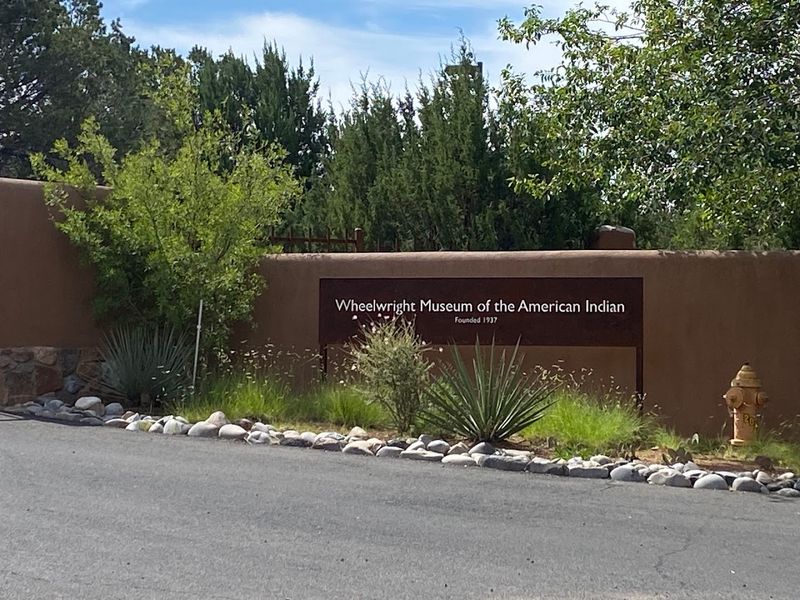
Getting to the Wheelwright Museum is straightforward, and the cost of admission is reasonable for what the experience delivers. The museum is open Tuesday through Saturday from 10 AM to 5 PM, and it is closed on Sundays and Mondays.
That Tuesday through Saturday schedule is worth keeping in mind when planning a Santa Fe itinerary.
Admission is priced accessibly, making it an easy addition to a day that might also include other Museum Hill institutions. The Wheelwright is a private museum and is not included in the New Mexico cultural pass used at some of the state-run institutions nearby, so visitors should plan to pay separately at the door.
Spending at least an hour inside the museum is a reasonable minimum, but the combination of permanent collection, rotating exhibits, and the Case Trading Post below means that two hours passes quickly. Arriving closer to opening time on a weekday tends to give the quietest, most relaxed experience of the galleries.
Beadwork, Ceramics, and the Broader Collection
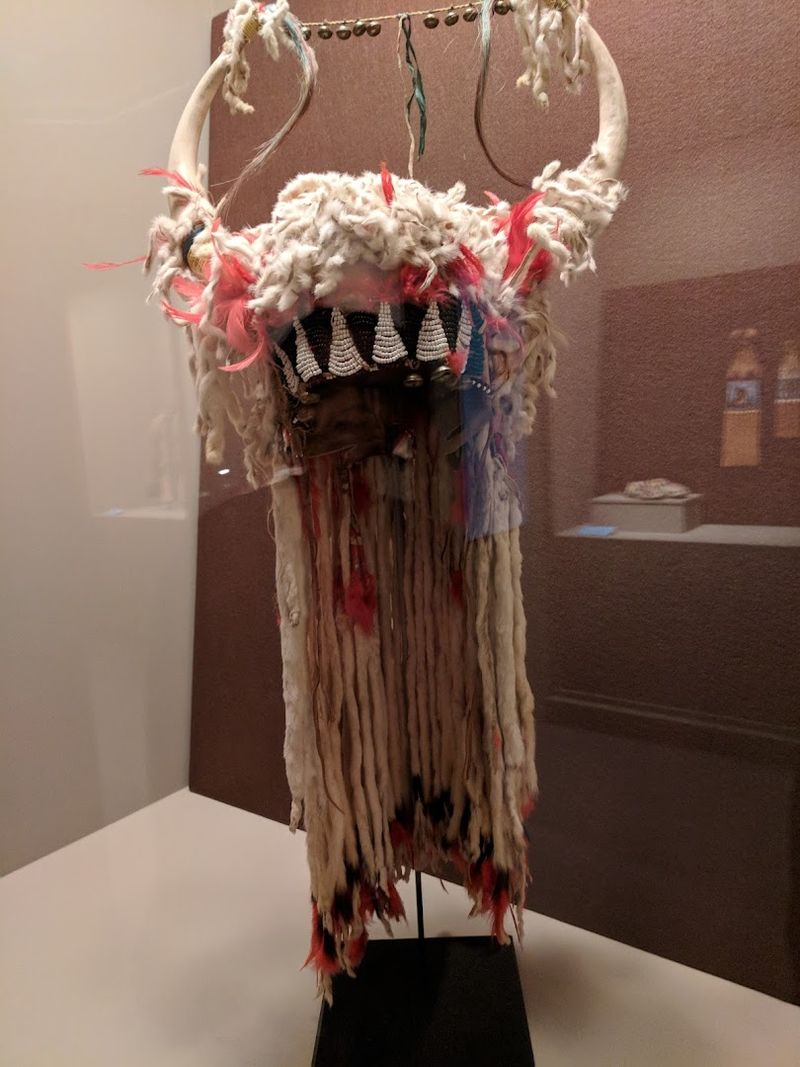
Beyond the silversmithing collection that draws so much attention, the Wheelwright holds a broader range of Native American artistic traditions that rewards a closer look. Beadwork is one of the areas where the collection shows particular depth, with examples from multiple tribal traditions that demonstrate the range of techniques and design philosophies across different communities.
The ceramics on display represent another area of genuine strength. Southwest pottery traditions have a long and well-documented history, and the pieces at the Wheelwright span both historical and contemporary examples.
Each piece is identified by tribal origin, which makes it possible to trace the visual and technical differences between communities even for visitors with no prior background in the subject.
Sculpture rounds out the collection in a way that gives the museum a three-dimensional quality that flat works alone cannot provide. The range of materials, scales, and cultural contexts represented across the full collection makes the Wheelwright feel genuinely comprehensive despite its relatively compact physical footprint.
Small Museum, Serious Impact
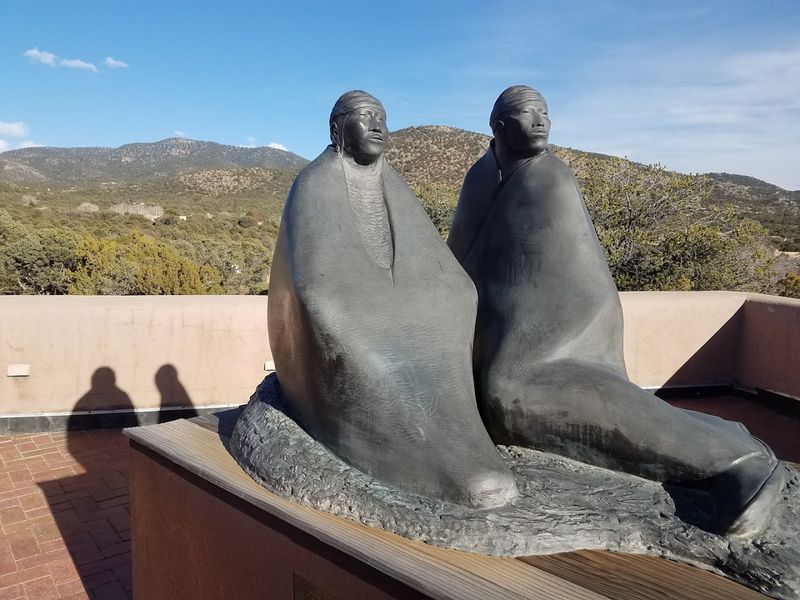
Size does not determine depth, and the Wheelwright Museum is one of the clearest examples of that principle in action. The building is compact compared to large state or national museums, but the quality of the curation and the density of meaningful content make it punch well above its weight class.
The focused scale actually works in the museum’s favor. There is no sense of being overwhelmed by too much material or of walking through rooms where the collection has been stretched thin to fill space.
Every exhibit feels intentional, and the overall experience has a coherence that larger institutions sometimes struggle to achieve.
The museum’s reputation on Museum Hill reflects this. Among the cluster of institutions in that part of Santa Fe, the Wheelwright consistently holds its own as a destination worth prioritizing.
For anyone who has ever walked out of a massive museum feeling exhausted rather than enriched, the focused and well-considered experience here offers a genuinely satisfying alternative.
Why the Wheelwright Stays With You After You Leave
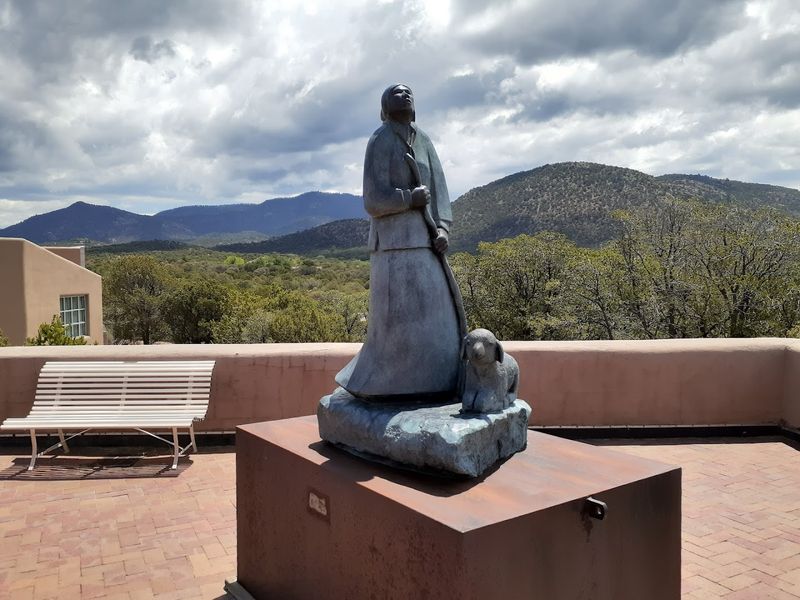
There is something about the Wheelwright Museum that lingers after the visit ends. Part of it is the quality of the collection, and part of it is the care with which every exhibit is assembled.
But a significant piece of the lasting impression comes from the sense that this is a museum with a real point of view.
The institution was founded on the belief that Native American traditions deserved serious, respectful preservation and celebration. That founding conviction has not faded over the decades.
It shows up in the way the collection is curated, in the programming choices, in the design of the building, and in the approach of the staff.
Leaving the Wheelwright with a deeper understanding of Native art, history, and living cultural practice is not an accident. It is the result of decades of intentional work by an institution that has never lost sight of why it was built.
That kind of purpose is harder to find than it should be, and it is exactly what makes this museum worth the detour.
A Museum Built on a Vision, Not Just a Building
Few museums in the American Southwest carry a founding story as compelling as this one. The Wheelwright Museum of the American Indian, located at 704 Camino Lejo, Santa Fe, NM 87505, was established in 1937 by Mary Cabot Wheelwright and Navajo medicine man Hastiin Klah.
Wheelwright, a wealthy Bostonian, had developed a deep respect for Navajo ceremonial traditions and wanted to preserve them in a meaningful way. Together with Klah, she created a space where those traditions could be honored rather than simply archived.
The building itself was designed to reflect that respect. Its distinctive hogan shape, modeled after the traditional Navajo dwelling, makes it one of the most architecturally intentional museums in New Mexico.
The circular form is not decorative. It is a deliberate nod to the culture the museum was built to celebrate, and that commitment to authenticity has shaped everything about the institution ever since.
Share this story