Most people think of cave homes as something from a history textbook, the kind of dwelling you read about in a chapter on prehistoric humans. But here is the surprising truth: thousands of people around the world still live in homes carved directly into rock, clay, and volcanic earth, and many of them would not trade their underground addresses for anything. Some of these communities have been continuously occupied for centuries, adapting ancient architecture to include Wi-Fi, modern kitchens, and running water. Others developed their underground lifestyle for purely practical reasons, like escaping brutal desert heat.
From the volcanic cones of Iran to the opal fields of Australia, cave living is alive, well, and frankly more interesting than most above-ground alternatives. Get ready to meet the communities that turned the earth itself into a blueprint.
1. Purullena, Granada, Andalusia, Spain
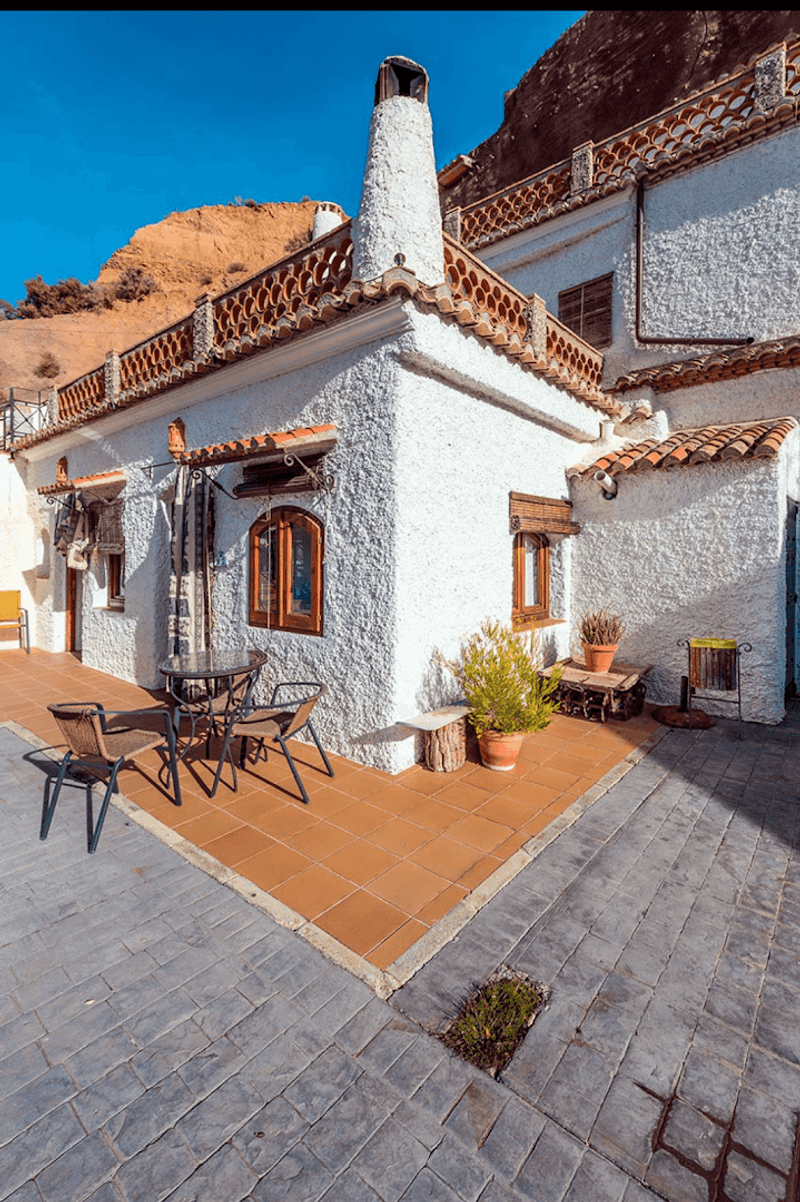
A short drive from Guadix sits Purullena, a town where some families are now in their sixth generation of cave living, which might be the most committed home loyalty streak in all of Andalusia.
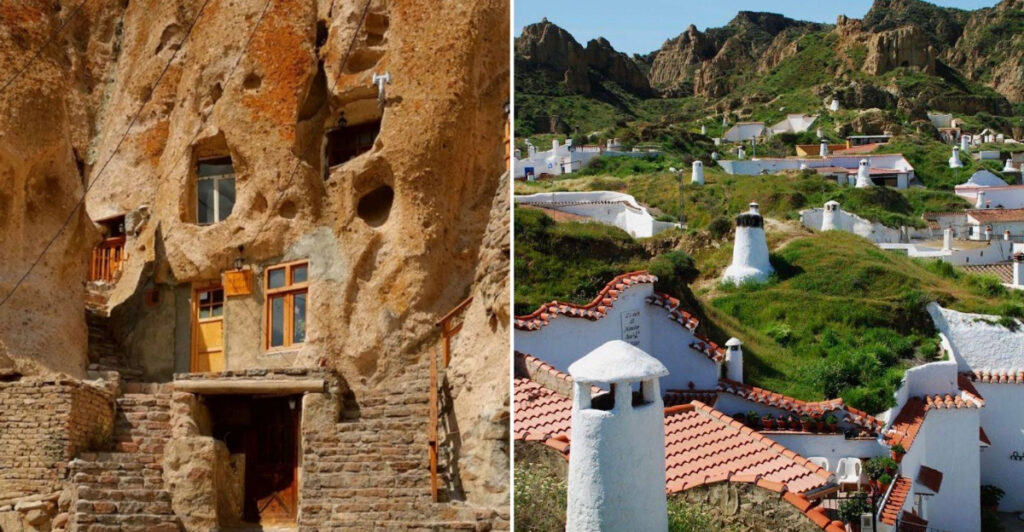
Cave entrances here are often disguised behind whitewashed facades, with only the tell-tale white chimneys poking above the hillside to suggest that entire homes exist beneath the surface. Indoor temperatures stay between 17 and 21 degrees Celsius year-round without any mechanical heating or cooling systems.
Several properties have been updated with modern kitchens, running water, and Wi-Fi, while sites like the Cueva Museo La Inmaculada preserve the original tools and furnishings of earlier generations. Local ceramic handicrafts are also a notable part of Purullena’s identity, reflecting the resourcefulness that has defined this community across many centuries of underground living.
2. Galera, Granada, Andalusia, Spain
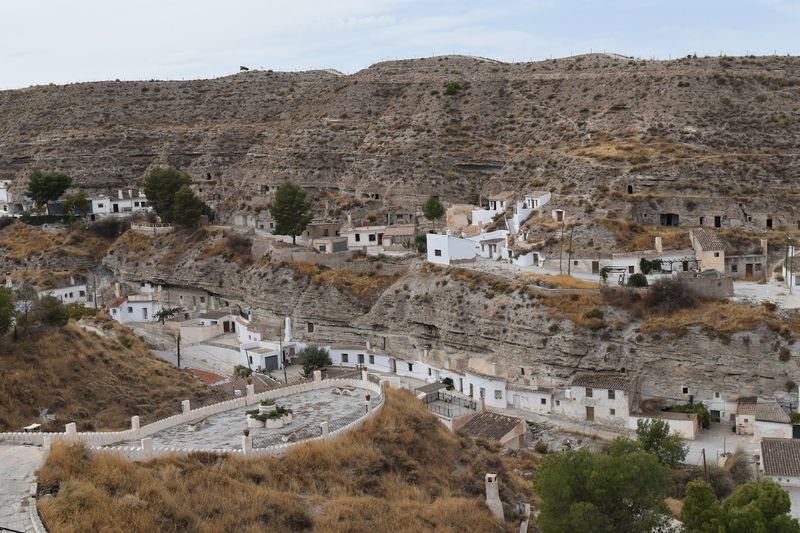
Archaeological traces around Galera date back to 2000 BC, which means humans have been finding reasons to stay in this corner of Granada’s Altiplano for a very long time, and the cave homes are a significant part of why.
The village hillsides are filled with casas cueva carved from soft clay and limestone, many still occupied as family homes. Earth walls maintain a steady 18 to 20 degrees Celsius indoors throughout the year, providing natural comfort across every season without mechanical systems.
Galera has developed a notable troglodyte tourism scene that has attracted international residents, including a community of British expats who have helped restore and repopulate previously abandoned dwellings. The Bronze Age site of Castellon Alto and the Iberian Necropolis of Tutugi add significant archaeological depth to a village that balances ancient heritage with an actively evolving residential community.
3. Kandovan, East Azerbaijan Province, Iran
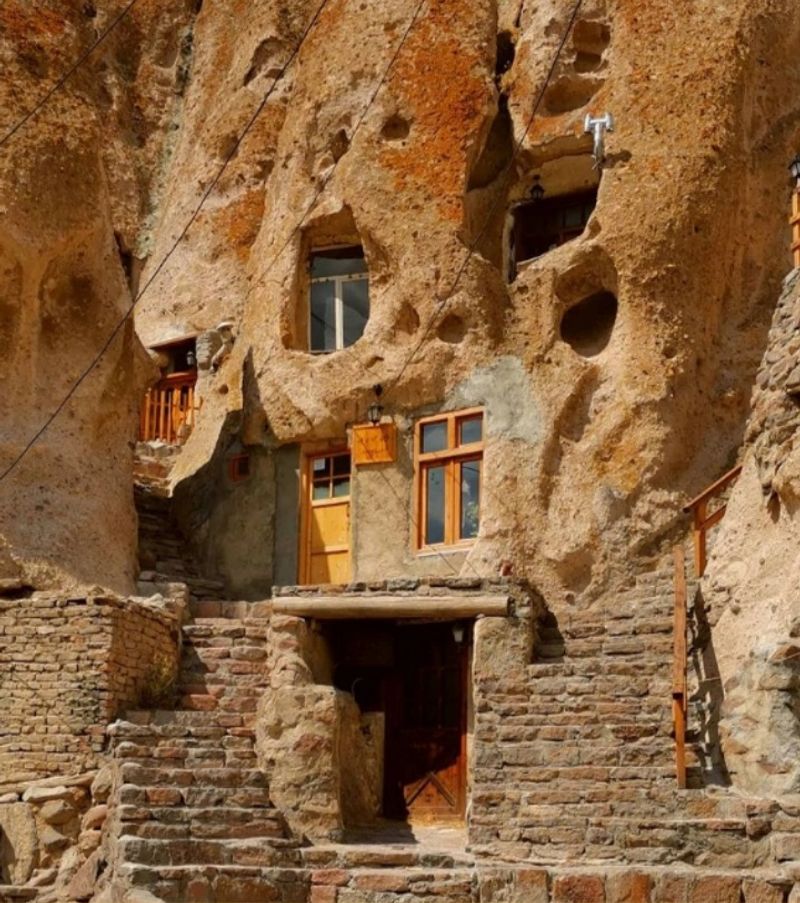
Kandovan looks like no other village on Earth. Residents here live inside towering cone-shaped volcanic formations called Karaan, a word meaning beehive, sculpted over millennia by erosion from Mount Sahand’s ancient eruptions.
Around 600 to 800 people still call these rock-cut homes their permanent address. Lower floors typically house livestock or storage, while living quarters occupy the upper levels, accessed by external steps carved directly into the stone.
The thick volcanic rock keeps interiors warm during heavy winters and cool through hot summers, making these some of the most naturally energy-efficient homes anywhere. During the 13th century, these formations famously sheltered residents fleeing Mongol invasions. Unlike many cave sites converted into hotels, Kandovan remains a fully functioning village where agriculture and handicrafts remain central to daily life.
4. Sacromonte, Granada, Andalusia, Spain
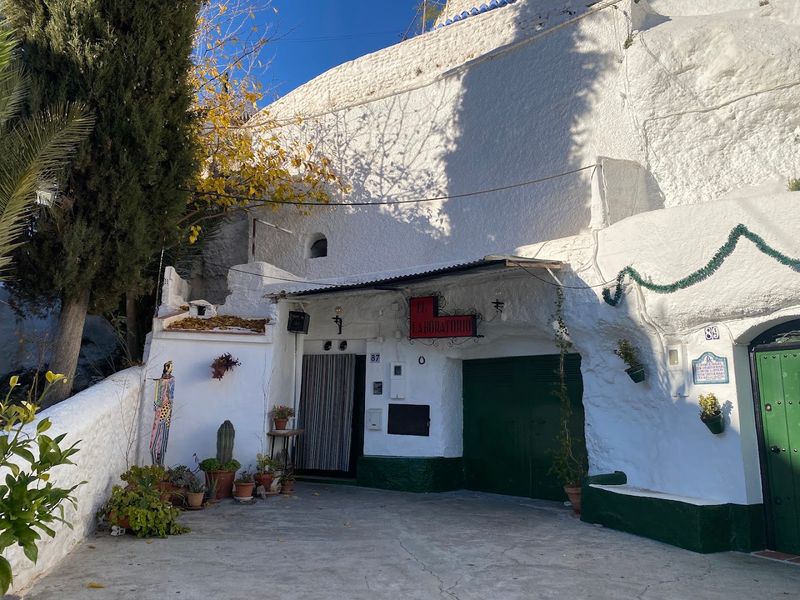
Sacromonte is the neighborhood where flamenco was born, and it happened underground. The Romani community settled into these hillside caves after the Christian conquest of Granada in 1492, carving out homes that became the birthplace of Zambra flamenco, a distinctive regional dance style.
Many of these whitewashed cave homes remain private residences today, occupied by families who have maintained a continuous connection to this hillside for generations. The Alhambra is visible from the upper paths, giving the neighborhood one of the most dramatic backdrops of any residential area in Europe.
Traditional flamenco venues called tablaos still operate inside several caves, hosting performances rooted in centuries of cultural tradition. The Sacromonte Caves Museum offers recreated interiors that show what cave life looked like before electricity and running water reached the hillside. Both the living homes and the museum exist side by side here.
5. Barrio de las Cuevas, Guadix, Granada, Spain
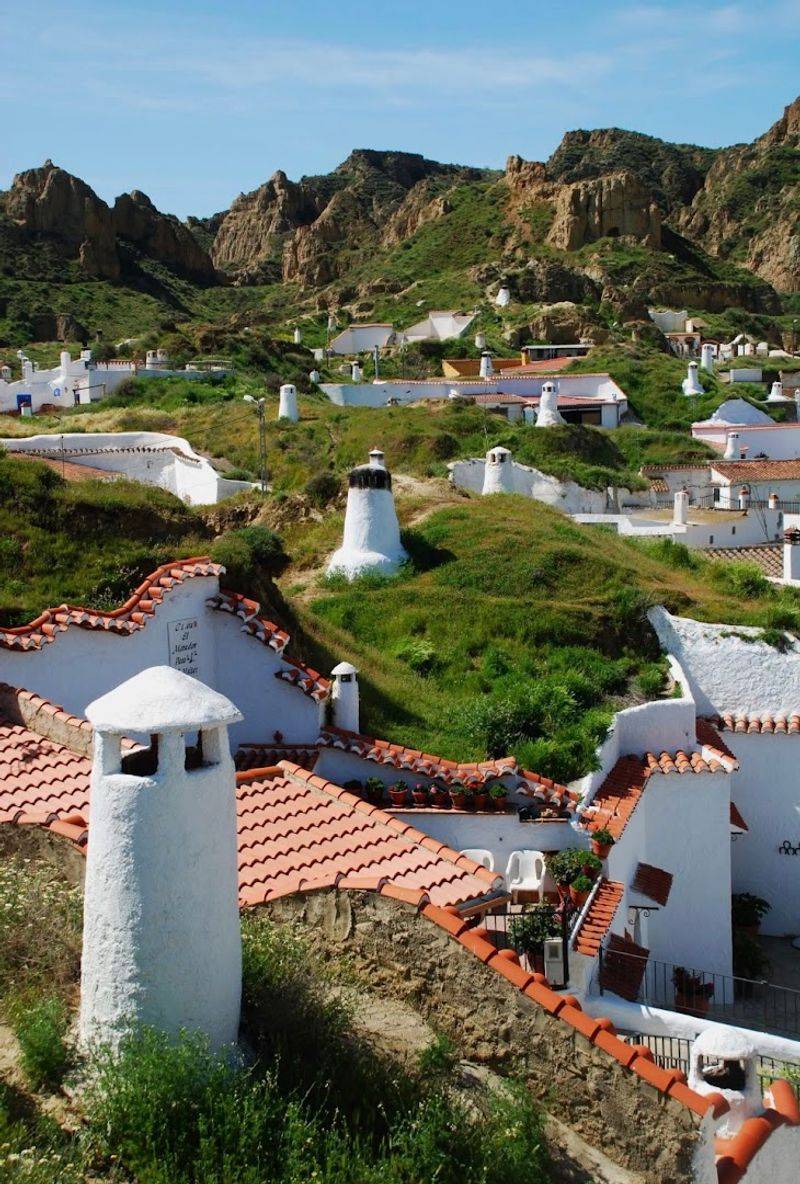
Guadix holds a title most cities never compete for: European Capital of Cave Culture. Close to 10,000 residents still live in underground homes here, making it one of the largest inhabited cave neighborhoods on the continent.
From a distance, the only clues to this subterranean community are rows of whitewashed chimneys scattered across the ochre hills, each one marking a home carved deep into soft clay and tufa rock below.
Many of these dwellings trace their origins to the post-Reconquista period after 1492, when Moorish communities sought refuge underground following the fall of Granada. Today the homes are fully modernized with equipped kitchens, bathrooms, electricity, and internet access. Some have been converted into cave hotels and museums, giving visitors a firsthand look at this enduring tradition without disturbing the living community around them.
6. Matmata, Tunisia
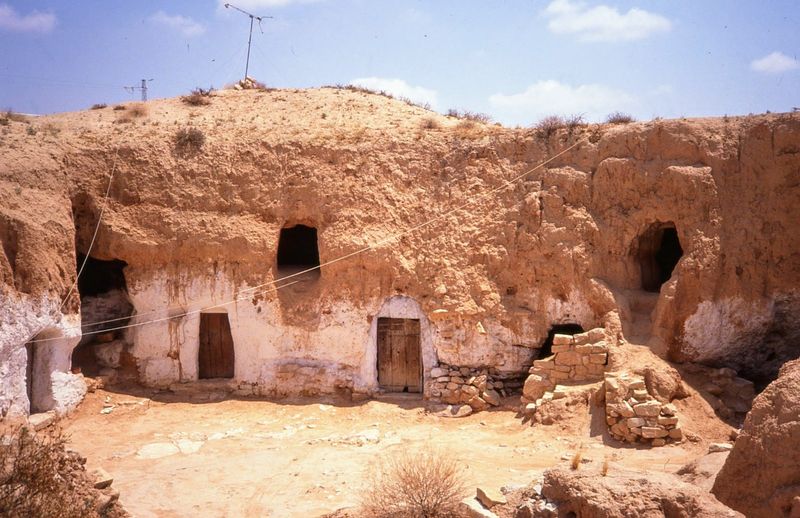
Star Wars fans might recognize Matmata as the filming location for Luke Skywalker’s home planet Tatooine, but the real story here belongs to the Berber families who have lived underground for generations, long before any film crew arrived.
Each home is built around a large circular pit, typically five to ten meters wide and up to nine meters deep, which serves as an open-air courtyard. Rooms for sleeping, cooking, and storage are carved horizontally into the pit walls.
The underground design keeps interiors up to 15 degrees cooler than the desert surface during summer. Today, many families continue this lifestyle while welcoming visitors to experience traditions like couscous preparation and rug-weaving. Rural depopulation remains an ongoing challenge for this remarkable living community.
7. Ortahisar, Nevşehir Province, Türkiye
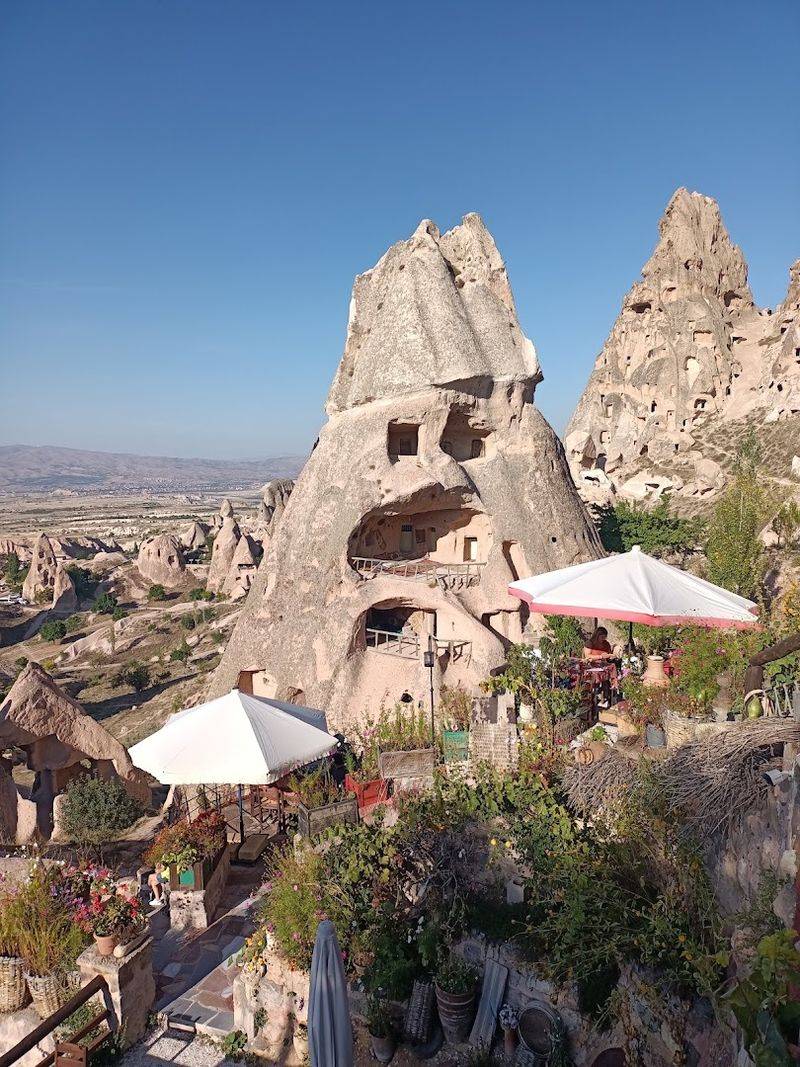
Ortahisar translates to Middle Fortress, and the name suits a town built around a 90-meter-high rock castle carved directly from volcanic tuff, one of Cappadocia’s most striking natural landmarks and a former shelter during Byzantine-era invasions.
A small number of families still occupy traditional cave homes here, maintaining a residential presence that distinguishes Ortahisar from cave communities that have converted entirely to hotels. The thick rock walls keep interiors cool during summers exceeding 40 degrees Celsius and warm during winters that can drop to minus 25 degrees.
The town is also famous for its lemon caves, naturally cool underground chambers used for centuries to store citrus fruits, apples, potatoes, and onions for months without refrigeration. Visitors can explore cave churches, browse handicraft shops, and stay in restored cave hotels equipped with heating systems, Wi-Fi, and terraces overlooking the surrounding valleys.
8. Uçhisar, Nevşehir Province, Türkiye
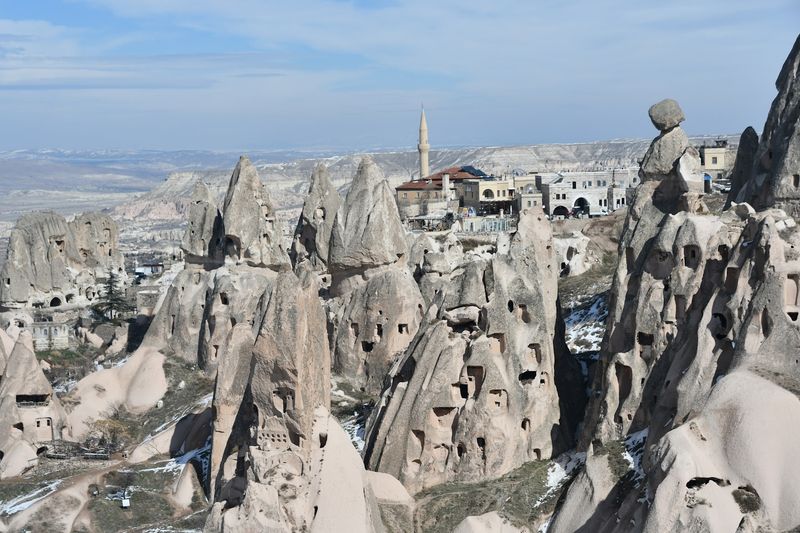
Uchisar holds the highest point in Cappadocia, a massive volcanic rock fortress riddled with tunnels, rooms, and stairways that civilizations from the Hittites to the Byzantines carved over thousands of years as both homes and defensive shelters.
The castle itself is now a tourist attraction rather than a residence, but the village spreading across the hillside below still contains inhabited cave homes and traditional stone houses sitting side by side. Pigeon houses carved into nearby rock formations were historically used to collect guano as agricultural fertilizer, adding a practical ecological dimension to the landscape.
The soft volcanic tuff provides natural insulation that keeps interiors comfortable across Cappadocia’s wide seasonal temperature range. Many cave properties have been converted into boutique hotels with private bathrooms, Wi-Fi, and views of Mount Erciyes, while the residential community continues maintaining a genuine village identity alongside the tourism economy.
9. Coober Pedy, South Australia, Australia
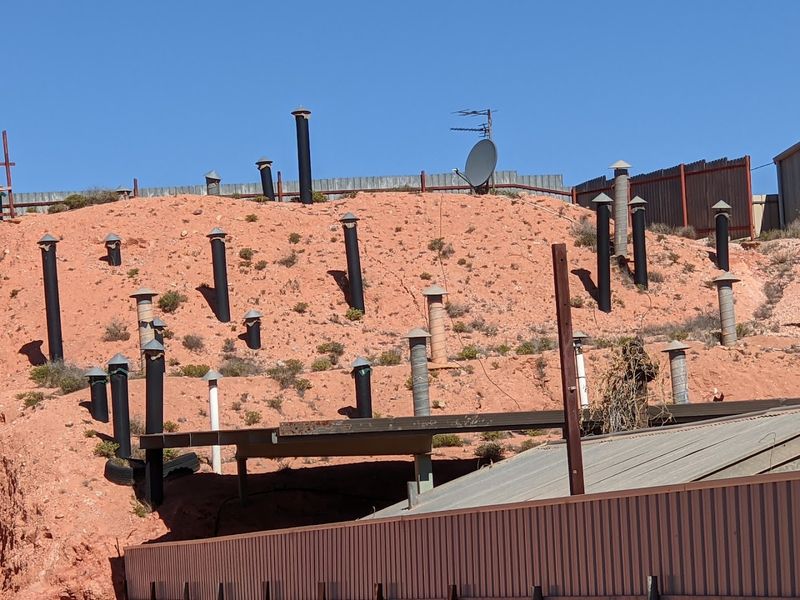
Coober Pedy earned the title Opal Capital of the World, but its underground homes, known as dugouts, might be an equally impressive achievement. When surface temperatures regularly exceed 40 degrees Celsius and dust storms are a standard seasonal event, moving your entire life below ground starts to sound less eccentric and more sensible.
Dugout interiors stay between 23 and 25 degrees Celsius year-round without air conditioning, which translates directly into lower energy bills and a more stable daily environment than anything available above the surface.
The town has committed fully to its subterranean identity with underground churches, hotels, shops, a museum, and a bookstore all operating beneath the arid landscape. Private dugouts are spacious and fully equipped with multiple bedrooms, fitted kitchens, bathrooms, and internet access. Coober Pedy proves that underground living is not an ancient curiosity but a rational, ongoing solution to an extreme environment.
10. Setenil de las Bodegas, Cádiz, Andalusia, Spain
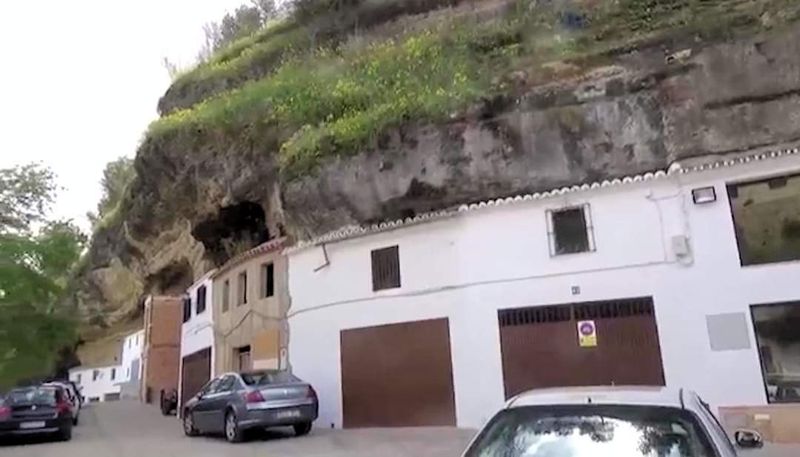
Most cave villages hide underground, but Setenil does exactly the opposite. Here, enormous limestone cliffs extend directly over streets, homes, cafés, and bakeries, creating one of the most recognizable landscapes in Spain. Rather than excavating deep into hillsides, residents built their houses beneath natural rock overhangs that provide shade in summer and insulation during winter.
Around 2,700 people live in Setenil today, and many of the cave-style homes remain permanent residences woven into everyday village life. Narrow lanes like Calle Cuevas del Sol and Calle Cuevas de la Sombra are lined with occupied houses alongside family-run restaurants and small shops tucked beneath the massive stone ceilings. Modern plumbing, electricity, and internet have blended seamlessly with architecture that has evolved over centuries, proving that one of Europe’s most extraordinary cave communities remains very much alive.
11. Marchal, Granada, Andalusia, Spain
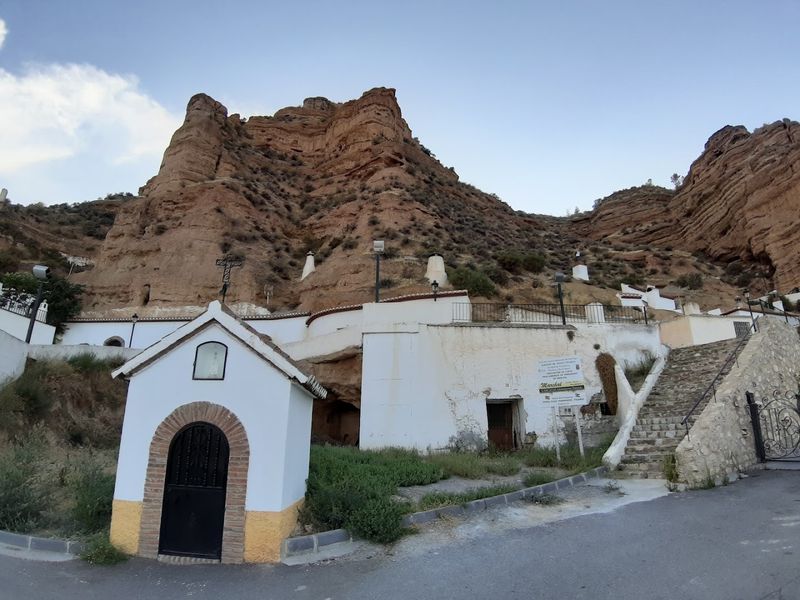
Marchal may have fewer than 500 residents, but it has preserved one of the most distinctive cave landscapes in the Guadix region. White chimneys rise from the reddish hillsides while the homes themselves remain almost invisible, carved deep into the soft clay beneath the surface in a style that has been passed down for centuries.
A number of these cave homes continue to be occupied by local families, while others have been sensitively renovated to welcome visitors interested in experiencing this unique form of architecture firsthand. Interiors combine vaulted earthen ceilings with modern conveniences including fitted kitchens, bathrooms, heating, and Wi-Fi, demonstrating how traditional cave living has successfully adapted to contemporary life. Surrounded by dramatic badlands and ravines, Marchal remains one of the smallest but most authentic communities where cave homes are still an everyday reality rather than simply a historical exhibit.
12. Göreme, Nevşehir Province, Türkiye
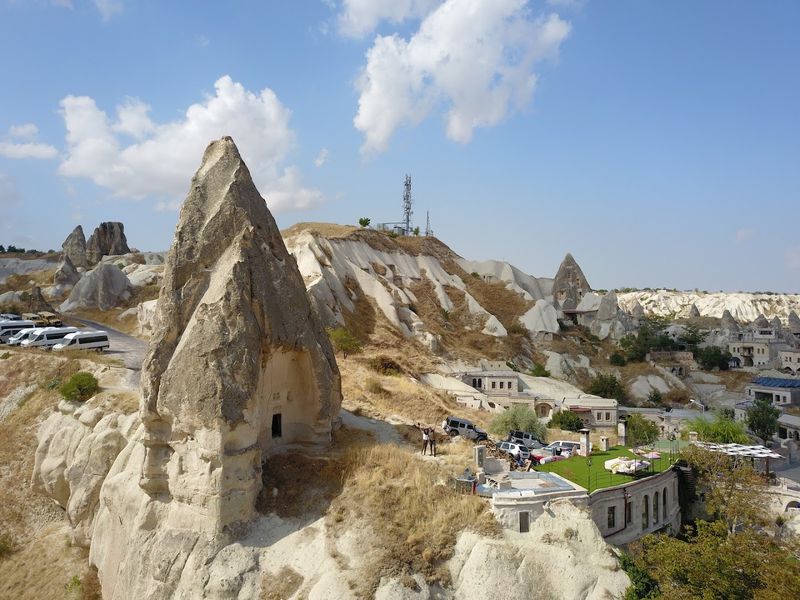
Göreme may be Cappadocia’s best-known destination, but behind the postcard scenery is a community where cave living remains part of everyday life. For centuries, people carved homes, churches, and storage rooms into the region’s soft volcanic tuff, creating neighborhoods that blended naturally into the landscape while providing excellent insulation against both summer heat and winter cold.
Although many historic cave dwellings have been transformed into boutique hotels, a number of residents still live in traditional cave homes or hybrid cave-and-stone houses throughout the town. Modern conveniences such as plumbing, heating, electricity, and internet have been carefully integrated into these centuries-old spaces, allowing ancient architecture to remain practical for contemporary life. Walking through Göreme reveals a place where tourism and a genuine residential community continue to exist side by side.
13. Meymand, Shahr-e Babak County, Kerman Province, Iran
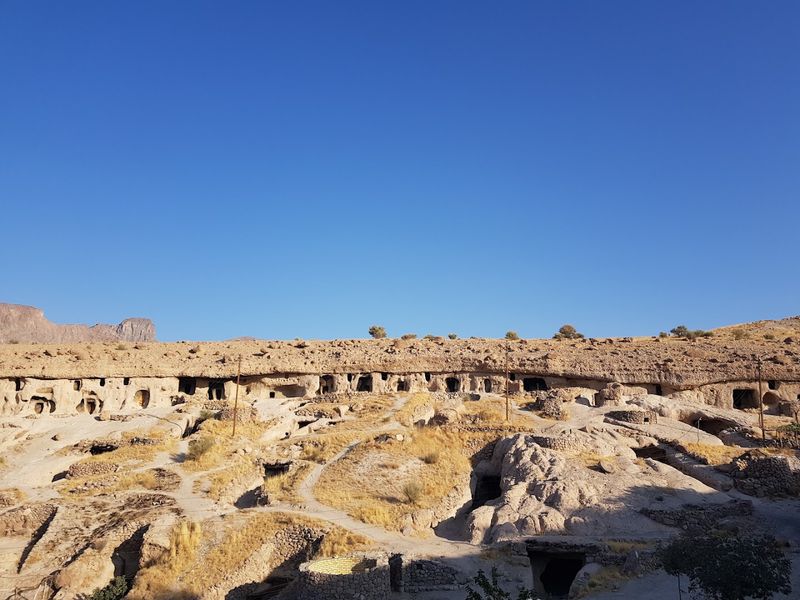
Meymand feels less like a village and more like a living museum where centuries-old traditions continue almost unchanged. Recognized as a UNESCO World Heritage Site, this remarkable settlement is famous for its hand-carved cave dwellings, known locally as kiches, cut directly into the soft rock of the surrounding mountains. Unlike many ancient cave villages that survive only as archaeological sites, Meymand remains a living community where residents continue practicing a traditional agro-pastoral lifestyle.
Throughout the year, many villagers move between seasonal settlements with their livestock, returning to the rock-cut cave homes during the colder winter months. More than a hundred of these troglodytic dwellings remain intact, several of them still occupied, while modern necessities such as electricity have been introduced without fundamentally changing their ancient character. The combination of permanent cave housing, seasonal migration, and a cultural tradition stretching back centuries makes Meymand one of the world’s most authentic examples of a community where cave living continues today.
14. Benalúa, Granada, Andalusia, Spain
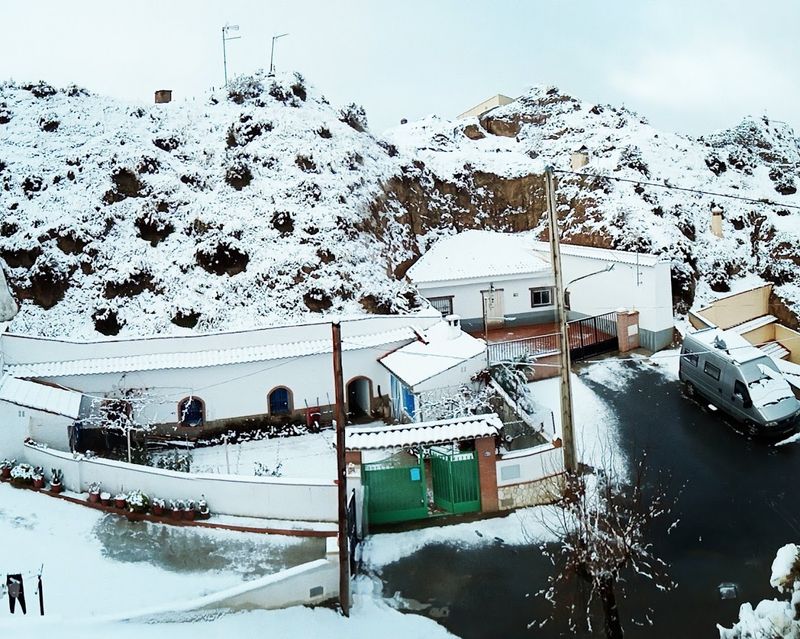
Benalua sits in a valley ringed by Sierra Nevada peaks and reddish clay hills, and its cave homes, known locally as casas cueva, have been part of the landscape since at least the Paleolithic period based on nearby archaeological findings.
About 3,300 people live in this village today, and many occupy homes with curved vaulted ceilings and earthen walls that function as a natural thermostat, holding indoor temperatures between 18 and 22 degrees Celsius without mechanical assistance throughout the year.
The rural tourism complex Cuevas La Granja has helped bring outside visitors into direct contact with this architecture, offering renovated cave accommodations with original paving, rustic furniture, fireplaces, and shared outdoor pools. The combination of Paleolithic heritage and functioning modern village life makes Benalua one of the more layered cave communities in all of Granada province.
Share this story