Most people think of Iowa as nothing but endless cornfields, but there is a place in the middle of the state where something wild and ancient is making a remarkable comeback. Thousands of acres of tallgrass prairie, the kind that once stretched across the entire Midwest, are being carefully stitched back together one seed at a time.
And roaming through it all are bison, real American bison, moving across the landscape exactly as their ancestors did for thousands of years. This is not a zoo or a theme park.
It is a serious conservation effort that also happens to be one of the most quietly stunning places to visit in the entire state.
The Refuge That Is Rewriting Iowa’s Natural History
Neal Smith National Wildlife Refuge, located at 9981 Pacific Street, Prairie City, Iowa, is one of the largest prairie restoration projects in the United States. The U.S.
Fish and Wildlife Service manages the refuge, which covers more than 5,000 acres of land that was once dominated by row crops.
The goal is straightforward but ambitious: bring back the tallgrass prairie ecosystem that covered roughly 85 percent of Iowa before European settlement. Today, less than one tenth of one percent of Iowa’s original prairie survives, making this refuge one of the most important conservation sites in the entire Midwest.
Walking through the refuge for the first time, I kept thinking about how radically the landscape had been transformed over 150 years, and how much patience and science it takes to reverse that kind of change. This place is proof that the work is possible.
Where the Bison Actually Are and How to Find Them
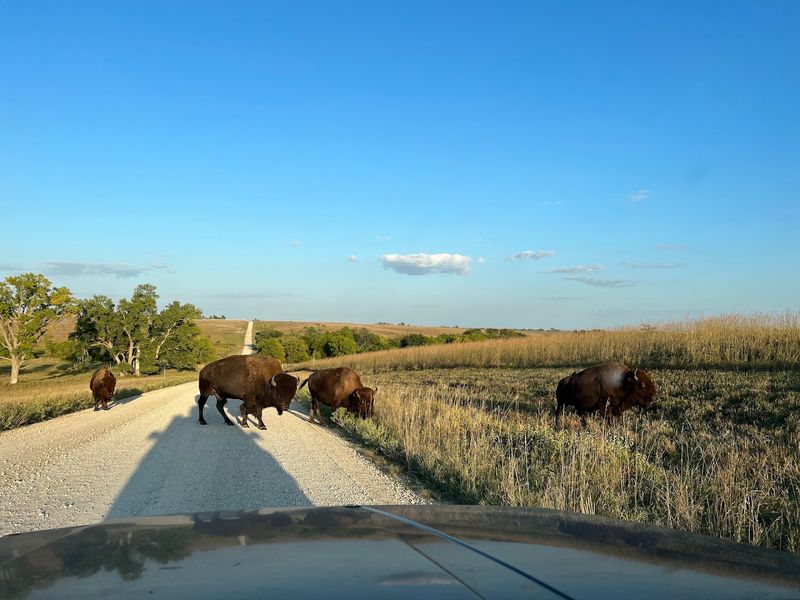
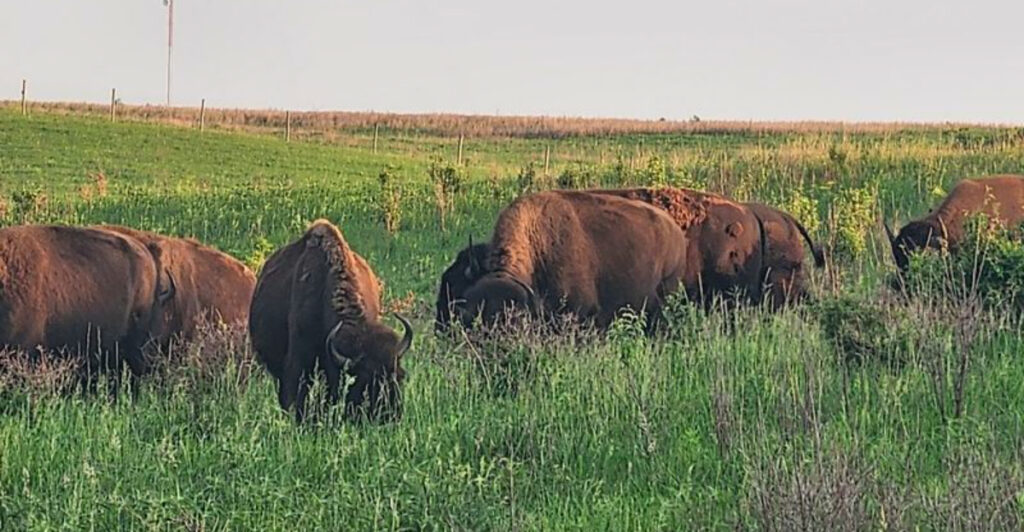
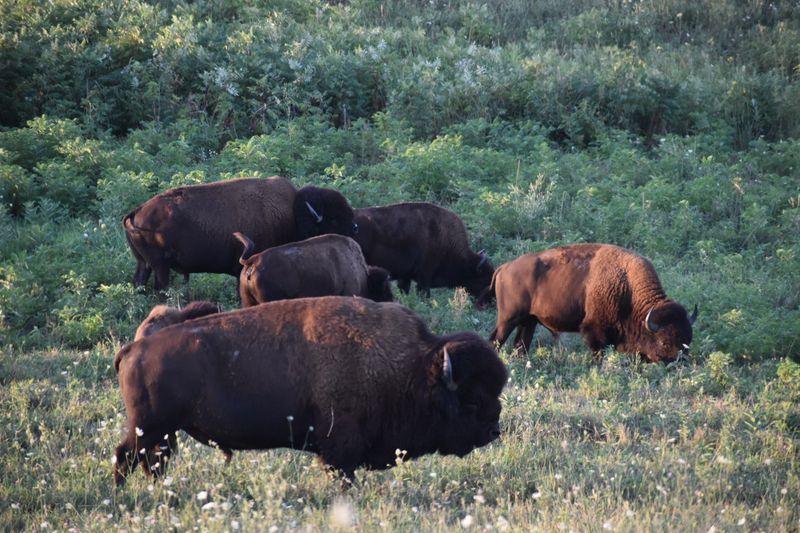
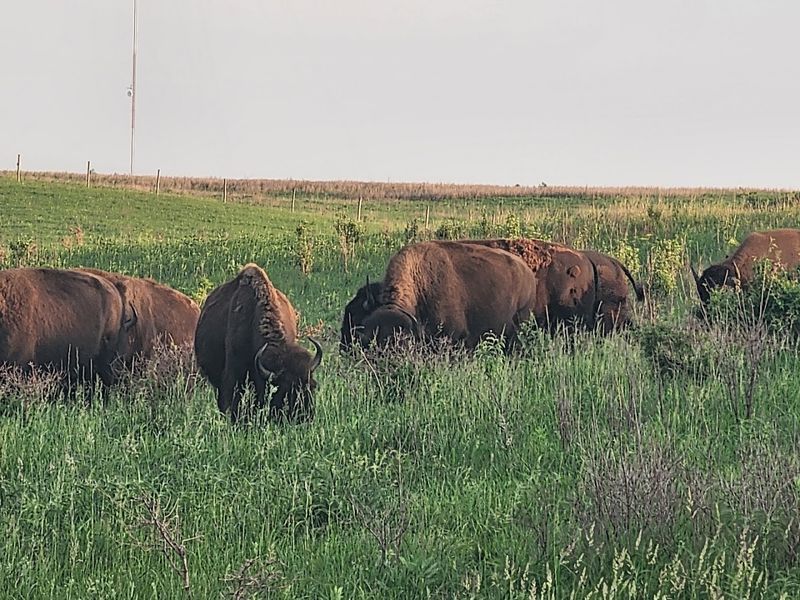
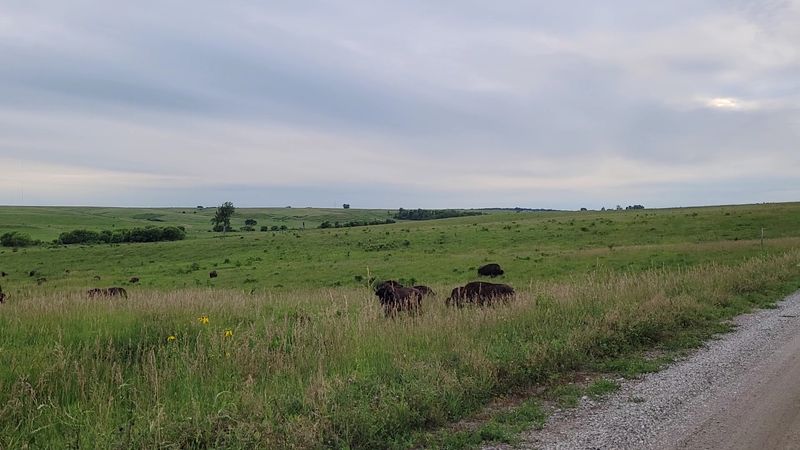
The bison herd at Neal Smith is not hidden. There is a dedicated auto tour route that winds through the refuge, and bison are frequently visible right from your car window.
The herd roams a large enclosed section of the prairie, so sightings are common but never guaranteed, which honestly makes spotting them feel more rewarding.
On my visit, I came around a gentle curve and found a small group grazing maybe fifty yards from the road. Nobody was honking or rushing.
Everyone just sat quietly and watched, which is exactly the right response when you are that close to an animal that weighs over a thousand pounds.
The best strategy is to drive slowly, keep your windows down, and give yourself more time than you think you need. Early morning and late afternoon tend to produce the most active bison behavior.
The Staggering Scale of the Prairie Restoration Work
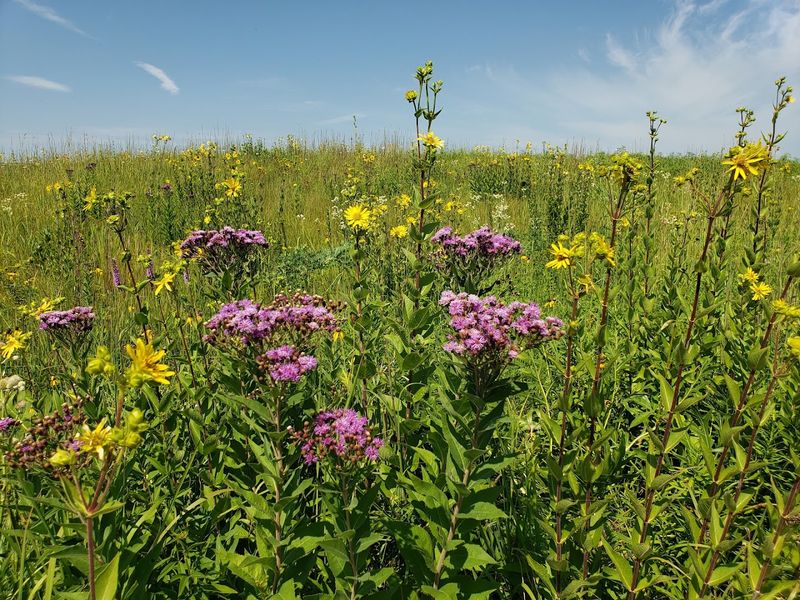
Restoring a prairie is not as simple as scattering a bag of wildflower seeds. The team at Neal Smith has spent decades collecting seeds from local remnant prairies, propagating native plants, and reintroducing species that had disappeared from the region entirely.
The process requires matching the right plants to the right soil conditions across thousands of acres.
More than 200 species of native grasses and wildflowers have been reestablished at the refuge. Some of those species exist in only a handful of locations in Iowa, making the refuge a genuine botanical rarity.
The scale of what has been accomplished here is easier to appreciate when you drive through sections that were farmland just a couple of decades ago and now look indistinguishable from historic prairie remnants.
That transformation does not happen by accident. It happens because of an extraordinary amount of careful, persistent, science-driven work happening every single season.
The Elk That Most Visitors Do Not Know About
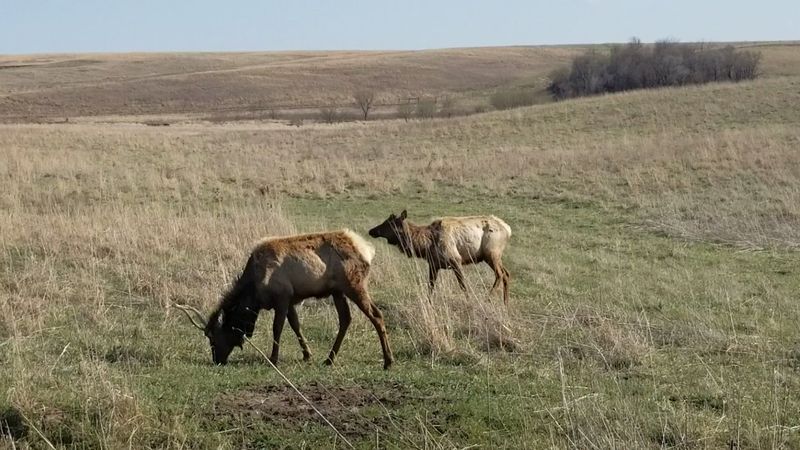
Bison tend to get all the attention, but Neal Smith is also home to a herd of elk. These animals were once native to Iowa’s prairies and were locally extinct for well over a century before being reintroduced at the refuge.
Seeing an elk in Iowa feels genuinely surreal the first time it happens.
The elk occupy a separate area of the refuge from the bison, and they can be harder to spot since they tend to move more during dawn and dusk. I got lucky on an early morning drive and watched three elk moving through the tall grass at the edge of a tree line, barely visible until one of them lifted its head.
The refuge does not advertise the elk as loudly as the bison, which means many visitors drive through without realizing they are sharing the landscape with two of North America’s most iconic large mammals at the same time.
The Visitor Center That Actually Teaches You Something
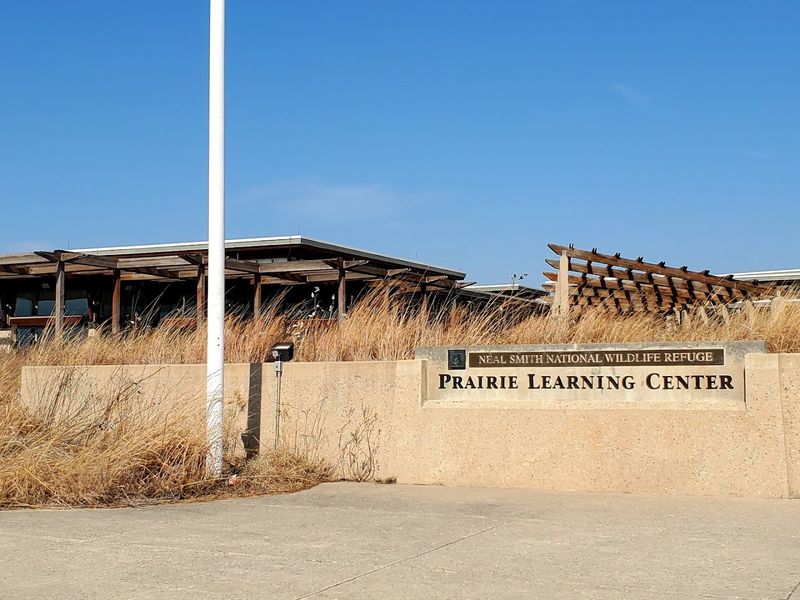
The Prairie Learning Center is the main visitor hub at Neal Smith, and it is worth spending real time inside before heading out onto the auto tour. The exhibits walk visitors through the natural and cultural history of the tallgrass prairie ecosystem in a way that makes the landscape outside feel much more layered and interesting.
There are displays covering the ecology of the prairie, the role that fire and grazing play in keeping the ecosystem healthy, and the specific challenges of restoring a habitat that was almost entirely eliminated. The center also features a large observation window that overlooks a section of the restored prairie, which is a surprisingly peaceful way to ease into the visit.
Staff members are knowledgeable and genuinely enthusiastic about the refuge’s mission. Stopping here first changed how I saw everything I encountered for the rest of the day, and that kind of context is hard to put a price on.
Why Fire Is One of the Refuge’s Most Important Tools
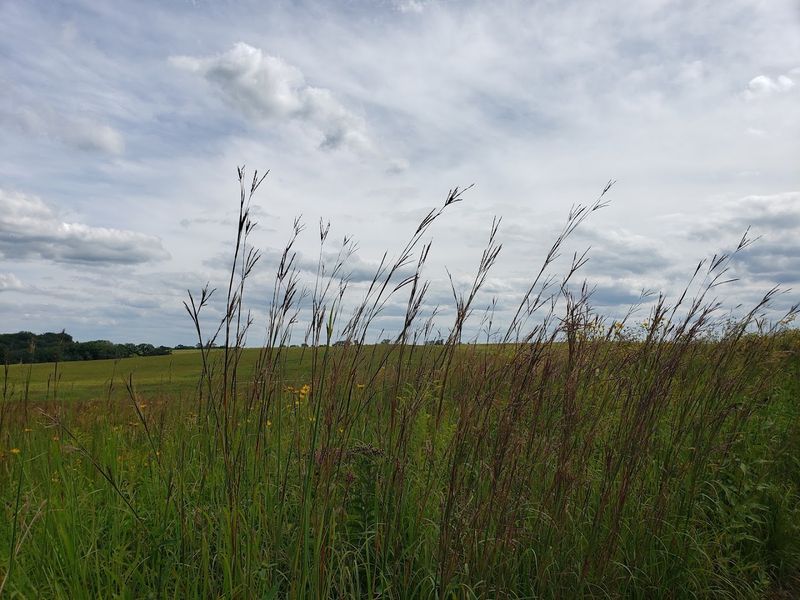
One of the most counterintuitive things I learned at Neal Smith is that fire is not the enemy of the prairie. It is one of its most essential tools.
The refuge conducts regular prescribed burns to remove dead plant material, suppress invasive woody species, and stimulate the growth of native grasses and wildflowers.
Before European settlement, fire moved across the prairie regularly, either set by lightning or by Indigenous peoples who understood its ecological value. Without periodic burning, trees and shrubs encroach on open grassland and the entire prairie ecosystem begins to collapse.
The refuge team manages this carefully, burning sections on a rotating schedule that mimics natural fire patterns.
If you visit in spring, you might see areas that were recently burned, with black soil just beginning to show the bright green of new growth pushing through. It looks stark at first, but within weeks that same ground is covered in new life.
The Native Wildflowers That Turn the Prairie Into a Color Show
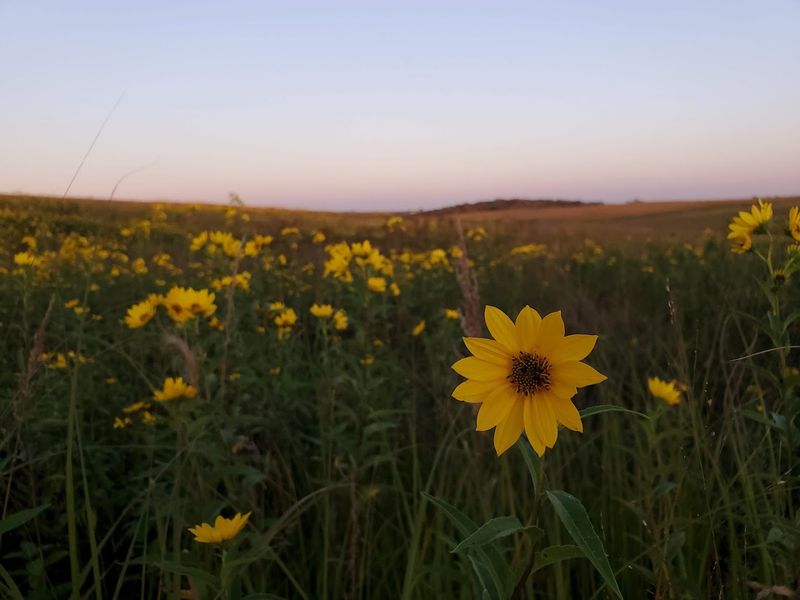
Summer at Neal Smith is when the prairie really earns its reputation. Purple coneflowers, black-eyed Susans, wild bergamot, rattlesnake master, and compass plants all bloom across the landscape in overlapping waves from late June through August.
The variety is genuinely surprising if you have only ever thought of prairie as a sea of brown grass.
The wildflowers serve a purpose beyond being beautiful. They support an enormous diversity of native pollinators, including dozens of bee species, butterflies, and moths that depend on these specific plants.
The relationship between native prairie plants and native insects is tightly woven, which is one reason why restoring the plants matters so much ecologically.
Walking the shorter trails near the visitor center during peak bloom is one of the best ways to experience this. The scale of color and the constant movement of insects around the flowers creates an atmosphere that feels completely alive in a way that is hard to describe but easy to remember.
The Trails That Put You Directly Inside the Prairie
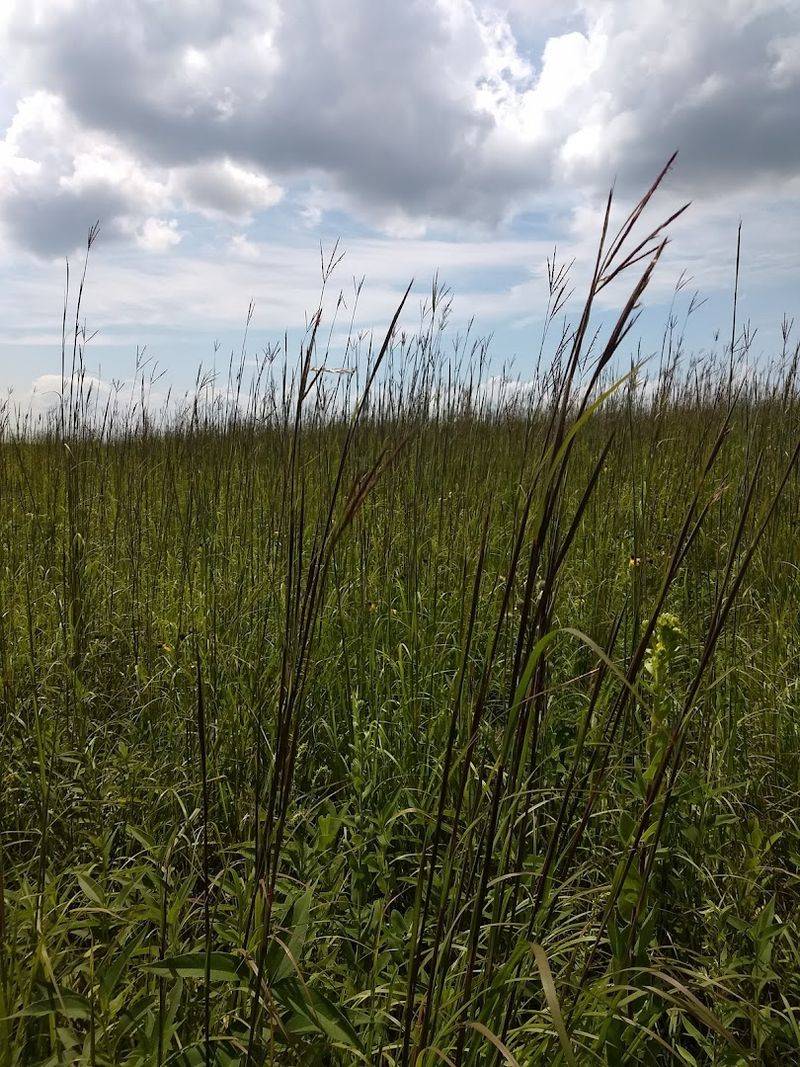
The auto tour route is the most popular way to experience the refuge, but the walking trails offer something the car cannot: the full sensory experience of being surrounded by ten-foot-tall prairie grasses with nothing between you and the landscape. The Tallgrass Trail and the Overlook Trail are both accessible from the visitor center area.
On the Overlook Trail, there is a wooden platform that gives you an elevated view across a broad section of restored prairie. On a breezy day, watching the grass move in long rolling waves across that view is something I have thought about many times since my visit.
The trails are not strenuous, which makes them accessible for most visitors. What they lack in difficulty they make up for in atmosphere.
There is a quality of quiet out on those trails, broken only by wind and birdsong, that feels increasingly rare in a loud world.
What the Landscape Looked Like Before the Refuge Existed
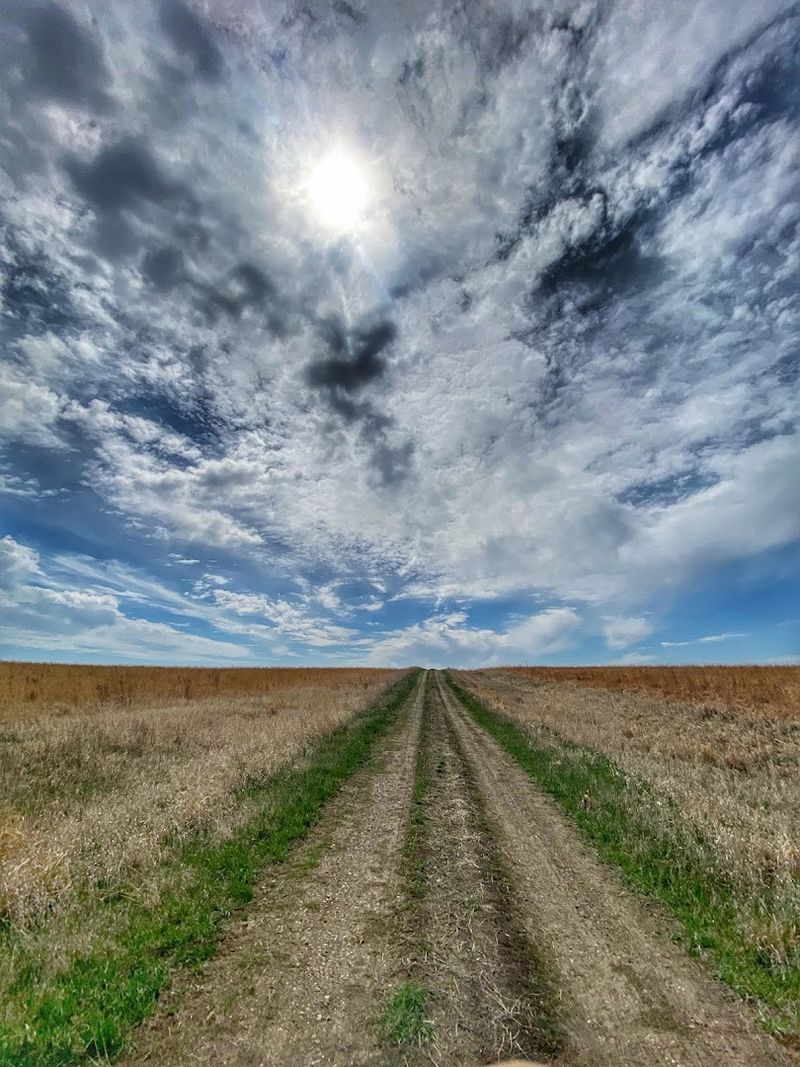
Most of the land that makes up Neal Smith today was row crop farmland before the refuge was established. The U.S.
Fish and Wildlife Service began acquiring land in the area in the late 1980s and early 1990s, and the painstaking work of removing agricultural infrastructure and beginning prairie restoration started almost immediately.
It is genuinely difficult to picture the current landscape as a patchwork of corn and soybean fields, but the transformation happened within a single human lifetime. Some of the oldest restored sections of the refuge are now mature enough that they are nearly indistinguishable from remnant prairie that was never plowed.
That contrast between what was there and what exists today is one of the most compelling parts of the Neal Smith story. Conservation efforts often feel abstract, but here the results are visible, tangible, and alive.
You can stand in the middle of something that should not exist anymore and does anyway.
The Best Times of Year to Plan Your Visit
Neal Smith is worth visiting in every season, but each time of year offers a genuinely different experience. Spring brings prescribed burns and the first flush of new green growth, along with migrating birds moving through.
Early summer is when wildflowers peak and the prairie buzzes with insect activity. Late summer features the full height of the big bluestem grass, which can grow well above head height in productive areas.
Fall is arguably the most dramatic season visually. The grasses turn shades of copper, rust, and gold, and the bison are particularly active as temperatures cool.
Seeing a bison against a backdrop of autumn-colored prairie grass is the kind of image that stays with you.
Winter visits are quieter but not without reward. Bison in snow are a striking sight, and the bare landscape reveals the structure of the prairie in ways that summer vegetation conceals.
Dress warmly and go early for the best light.
Practical Tips for Getting the Most Out of Your Visit
The refuge is free to enter and open year-round, which makes it easy to visit on short notice. The Prairie Learning Center has its own hours, so checking the U.S.
Fish and Wildlife Service website before your trip is a smart move to make sure it will be open when you arrive.
Wear sturdy shoes if you plan to walk the trails, since the paths can be uneven and muddy after rain. Bug spray is genuinely useful in summer, especially near the wetland areas at the edges of the prairie.
Sunscreen matters too, since the open landscape offers almost no shade.
Give yourself at least two to three hours to do the auto tour and walk at least one trail. Rushing through Neal Smith means missing the slow, cumulative effect of the landscape, which is really the whole point of being there.
The refuge rewards patience in a way that few places can match.
Share this story