The United States is home to some of the most jaw-dropping and downright strange places on Earth. From rainbow-colored geysers to beaches made of sea glass, this country has a talent for the unexpected.
Whether you are a seasoned traveler or just looking for your next adventure, these one-of-a-kind spots will leave you speechless. Get ready to explore 15 of the most unusual sights that exist nowhere else in the world.
1. The Wave, Arizona
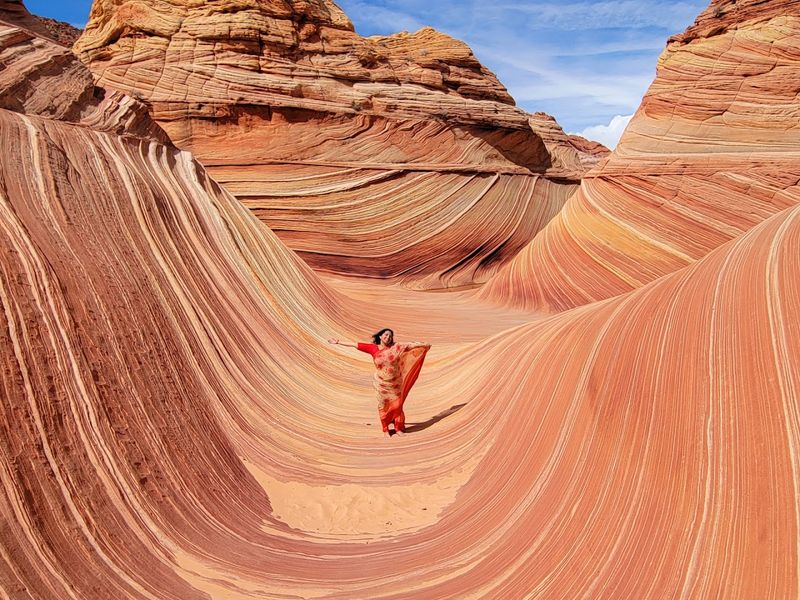
Tucked away in the Coyote Buttes North area of the Paria Canyon-Vermilion Cliffs Wilderness, The Wave is one of the most visually stunning rock formations on the planet. Its swirling red, orange, and gold layers look like someone froze a giant ocean wave mid-motion and turned it to stone.
Access is tightly controlled through a permit lottery managed by the Bureau of Land Management. Only 64 people are allowed to visit per day, making it one of the most exclusive natural attractions in America.
Winning a permit feels like hitting the jackpot.
The hike is about six miles round trip with no marked trails, so visitors must navigate using GPS coordinates and a detailed map. The best photos are taken in the morning when soft light hits the curved sandstone walls.
Plan well ahead if you hope to experience this extraordinary place.
2. Fly Geyser, Nevada
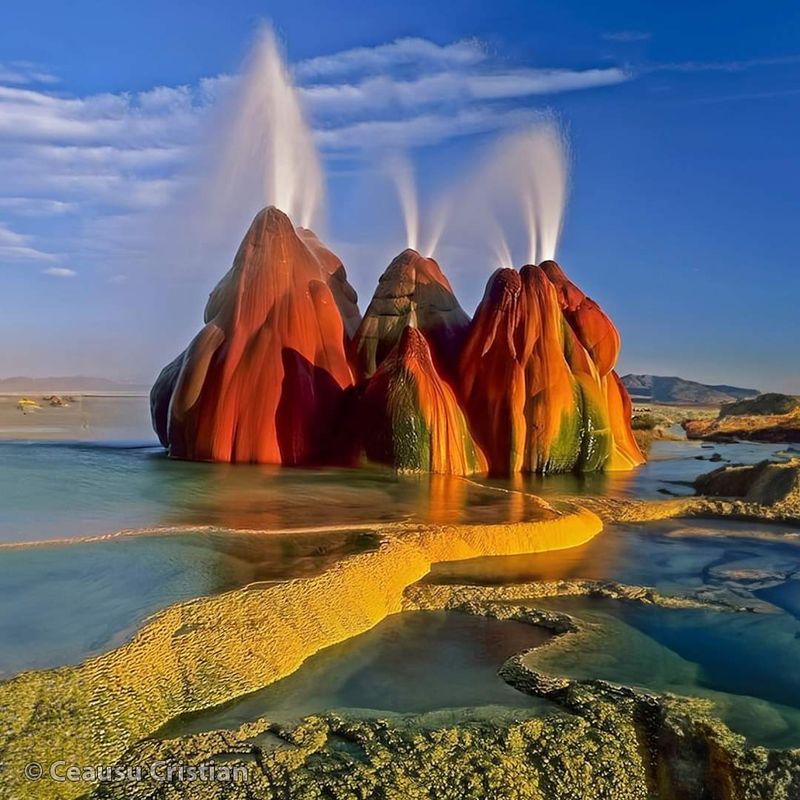
Fly Geyser was never meant to exist. Back in 1964, a geothermal energy company drilled a well on private land and accidentally tapped into a superheated underground water source.
When the project was abandoned, the pressurized water kept pushing upward, and a bizarre, colorful cone began to grow.
Over the decades, dissolved minerals like calcium carbonate built up around the opening, creating a sci-fi-looking mound that sprays water continuously. The vivid red and green colors come from thermophilic algae thriving in the hot, mineral-rich water.
For years, Fly Geyser sat hidden on private land and was nearly impossible to visit. The Burning Man Project purchased the property in 2016 and now offers guided tours during limited seasons.
Seeing it in person feels like stepping onto another planet entirely. It is a true accidental masterpiece of geology and time.
3. Carhenge, Alliance, Nebraska
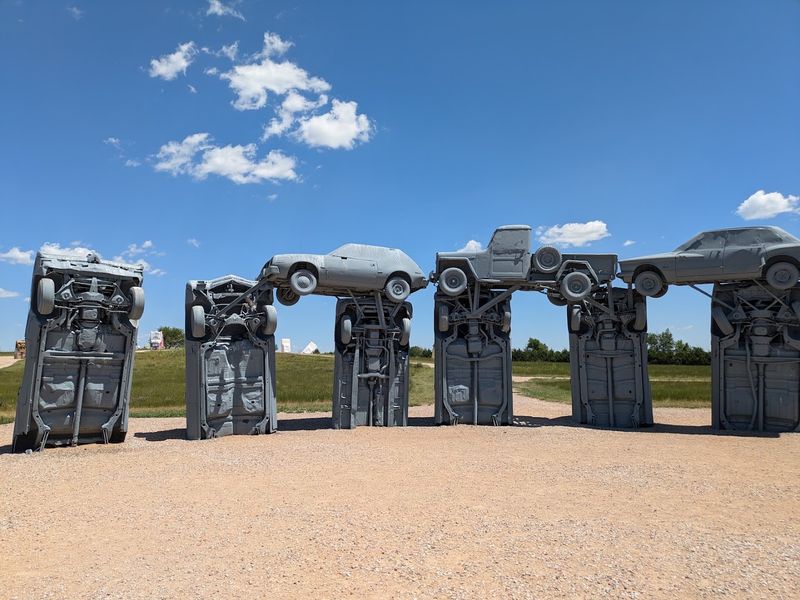
Forget ancient druids and massive limestone blocks. In Alliance, Nebraska, artist Jim Reinders built his own version of the famous Stonehenge monument using 38 vintage American automobiles.
Completed in 1987 as a tribute to his father, Carhenge sits in the middle of the Great Plains like something out of a quirky dream.
Every car is painted a uniform gray to mimic the look of the original Stonehenge stones in England. The arrangement follows the same layout as the real thing, making it a surprisingly accurate replica despite the unconventional materials.
Carhenge is free to visit and open year-round, which makes it an easy stop on any road trip through Nebraska. A small gift shop and a few other car-based sculptures surround the main attraction.
It is equal parts absurd and oddly moving, and that combination is exactly what makes it unforgettable.
4. Salvation Mountain, Niland, California

Leonard Knight spent more than 28 years building Salvation Mountain by hand in the California desert near the Salton Sea. Using adobe clay, straw, and thousands of gallons of donated paint, he created a sprawling, three-story monument dedicated to God and the message that love is universal.
The mountain is blanketed in bold reds, yellows, blues, and greens, with Bible verses, flowers, trees, and rivers painted across every surface. Visitors are welcome to walk through the tunnels and rooms built into the base of the structure, all decorated floor to ceiling in vivid murals.
Knight passed away in 2014, but volunteers and caretakers continue to maintain the site. In 1994, the U.S.
Congress officially recognized Salvation Mountain as a national treasure. It has appeared in movies, music videos, and countless travel blogs.
Few places in America carry the same personal devotion and raw creative energy.
5. Badlands National Park, South Dakota
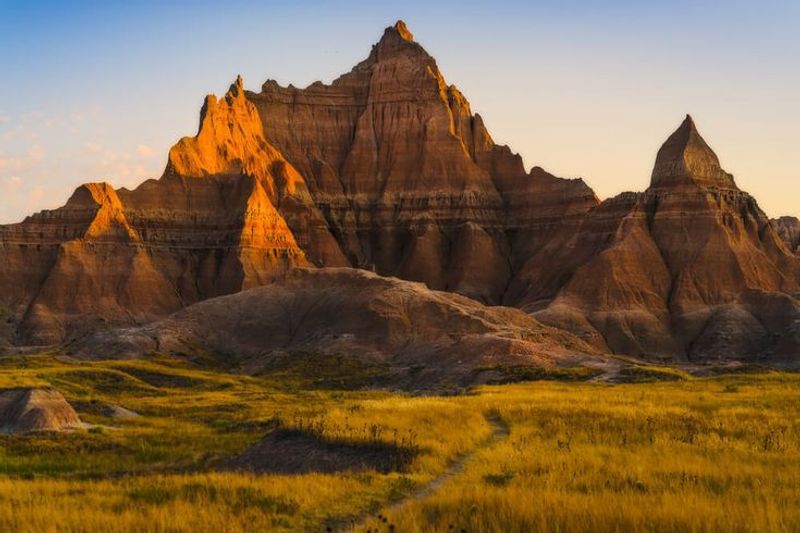
Standing at the edge of the Badlands feels like peering into a world that belongs somewhere far beyond Earth. Sharp spires, deep gullies, and layered sediment bands in shades of tan, red, and purple stretch as far as the eye can see across the South Dakota prairie.
These formations were shaped over millions of years by wind, rain, and the ancient inland sea that once covered the region. Fossils of prehistoric creatures including saber-toothed cats and three-toed horses have been discovered here, making it a goldmine for paleontologists.
The park covers about 244,000 acres and is home to bison, bighorn sheep, and black-footed ferrets. Sunrise and sunset are the most magical times to visit, when the light turns the rock formations into a glowing, otherworldly landscape.
Admission is affordable, and camping options are available for those who want to stay after dark.
6. Bonneville Salt Flats, Utah
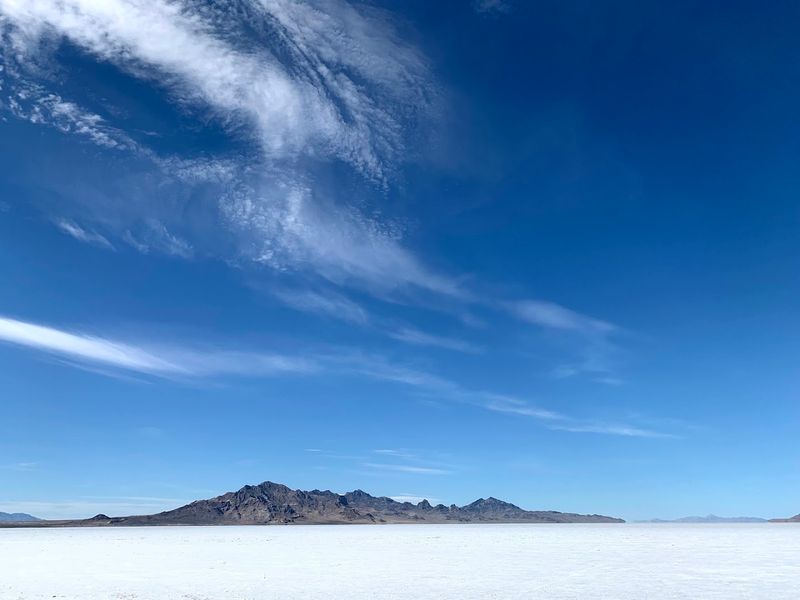
The Bonneville Salt Flats are so flat and so white that they look like a giant sheet of paper laid across the Utah desert. Spanning roughly 30,000 acres west of Salt Lake City, this ancient lakebed left behind a thick crust of salt when the prehistoric Lake Bonneville dried up thousands of years ago.
Speed enthusiasts know Bonneville well. For over a century, drivers have come here to break land-speed records on the hard, smooth surface.
Many world records have been set on this salt, and the annual Speed Week event still draws racers from around the globe.
After seasonal rains, a thin layer of water covers the flats, creating a mirror-like reflection of the sky that photographers absolutely love. Walking out onto the endless white expanse gives a strange, peaceful feeling of being completely alone in the world.
Bring sunglasses because the glare is intense.
7. Thor’s Well, Cape Perpetua, Oregon
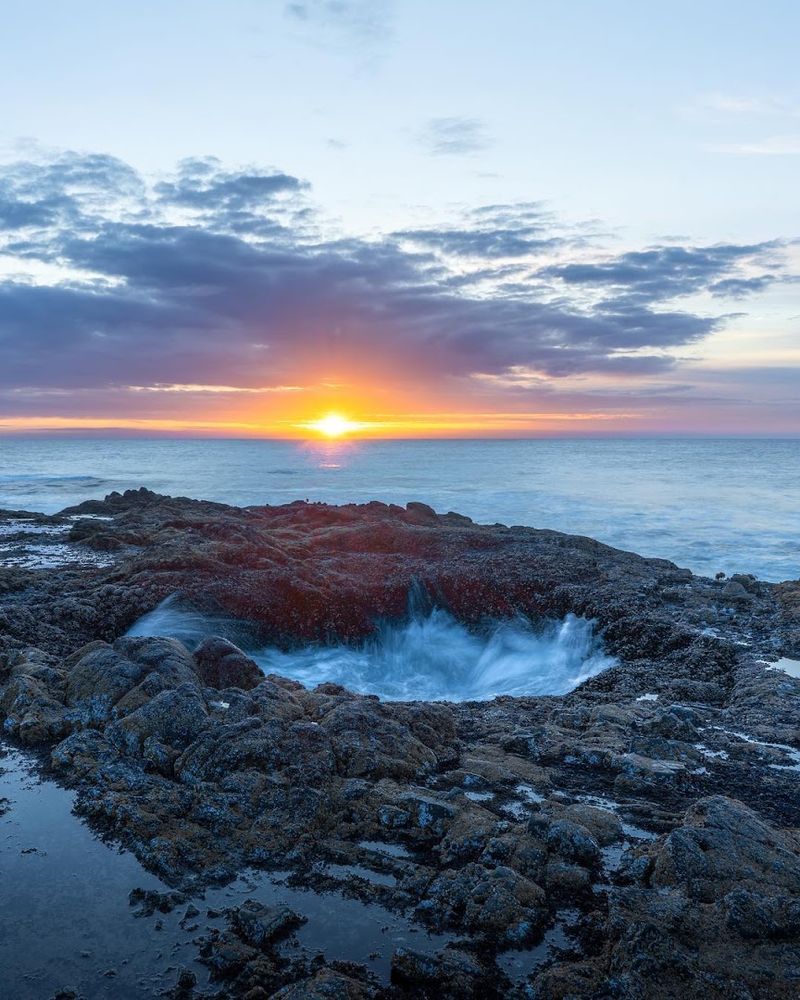
At first glance, Thor’s Well looks like it is swallowing the entire Pacific Ocean. Located along the rugged Oregon coast at Cape Perpetua, this natural rock formation is a bowl-shaped sinkhole carved into the basalt shoreline.
During high tide and stormy weather, waves crash over the edges and the water appears to funnel straight down into the earth.
The visual effect is dramatic and almost hypnotic. Photographers travel from across the country to capture the moment when a wave surges and the well seems to drain in a perfect, churning spiral.
Sunrise and high tide together create the most spectacular shots.
Getting close comes with real risk. The surrounding rocks are slippery, and sneaker waves can appear without warning.
Always check tide charts before visiting and keep a safe distance from the edge. The power of the ocean here is absolutely humbling and completely real.
8. Devil’s Kettle, Minnesota
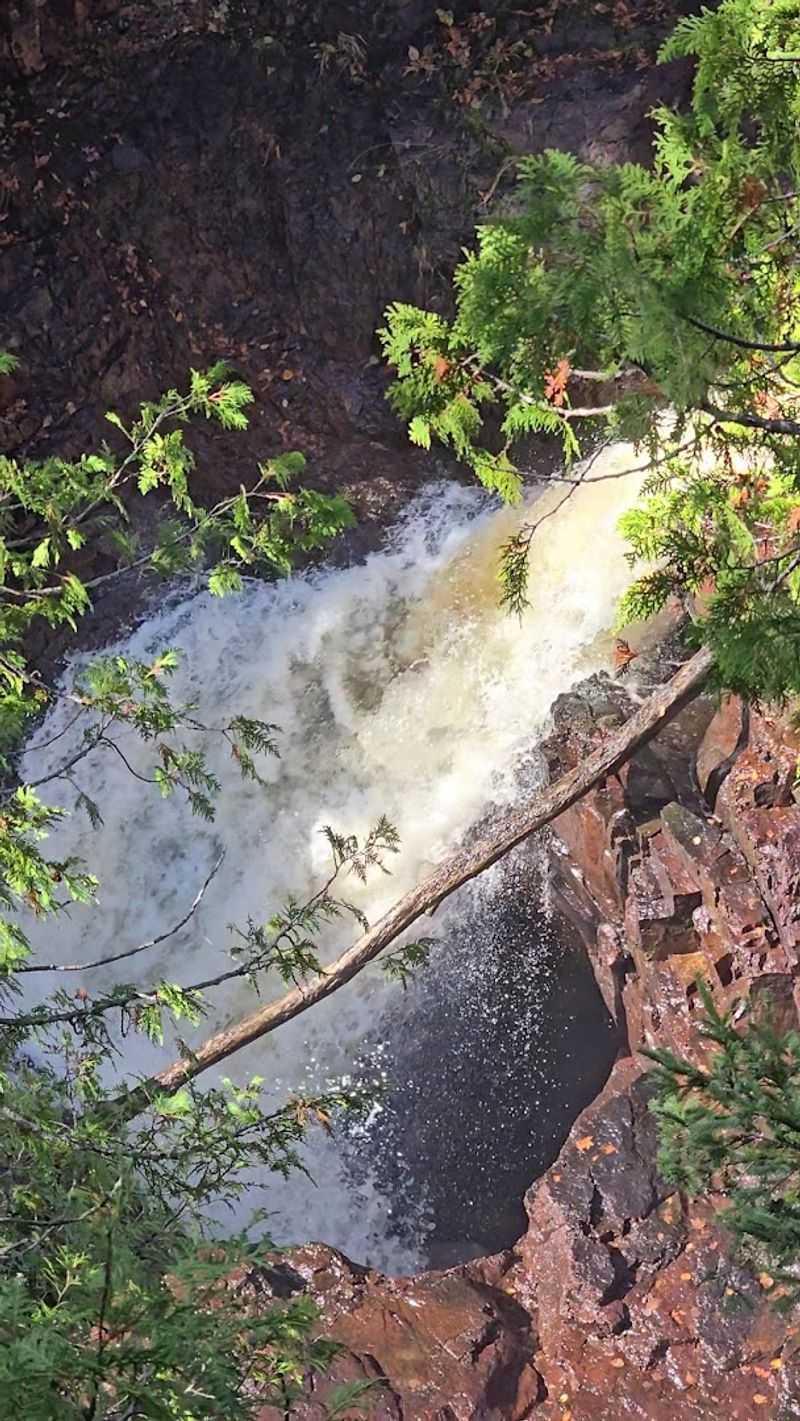
On the north shore of Lake Superior in Minnesota, the Brule River splits into two channels at a rocky outcrop. One side flows normally down a waterfall into the river below.
The other side drops into a mysterious pothole and simply vanishes. For decades, scientists and curious visitors had no idea where that water went.
Researchers tried pouring dye and dropping ping pong balls into the kettle to trace the water’s path, but nothing ever reappeared downstream. The mystery captivated geologists and adventurers alike for generations.
In 2017, scientists finally solved the puzzle using fluorescent dye and precise measurements, discovering the water rejoins the river not far downstream through underground cracks in the basalt. Even knowing the answer, watching half a river disappear into a rock feels genuinely surreal.
The hike to reach Devil’s Kettle is about four miles round trip through beautiful forest scenery.
9. Glass Beach, Fort Bragg, California
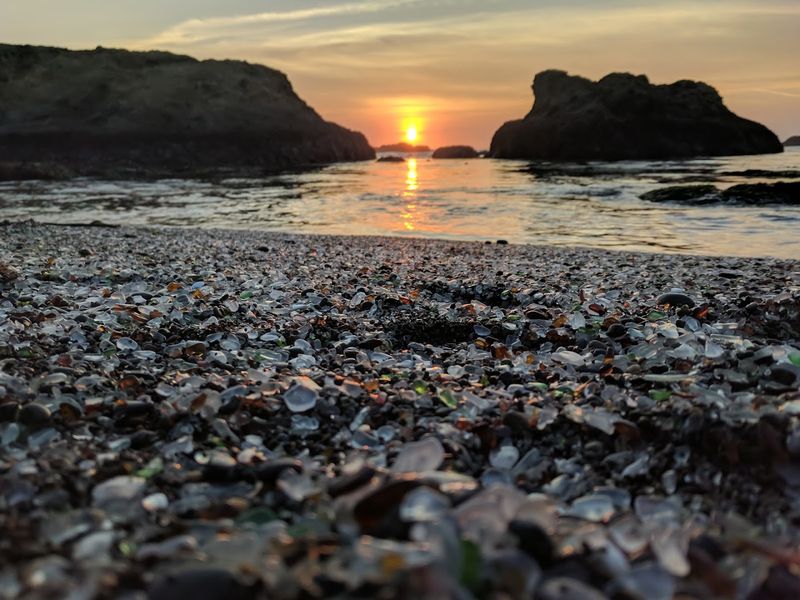
Glass Beach in Fort Bragg has one of the most unusual origin stories of any beach in the world. From the early 1900s through the 1960s, the town used the coastal bluffs as a dumping ground for garbage, including glass bottles, ceramic dishes, and metal scraps.
Ocean waves spent decades tumbling that debris against the rocks.
What emerged was something unexpectedly beautiful. The broken glass was smoothed and frosted by the constant wave action, transforming sharp shards into soft, jewel-like pieces in shades of green, blue, amber, and clear.
Today the beach sparkles like a mosaic underfoot.
Collecting sea glass is now prohibited to preserve what remains, but walking along the shore and admiring the colors up close is still allowed. The beach is part of MacKerricher State Park.
Low tide offers the best views of the glass-covered rocks. It is a reminder that nature can turn almost anything into art.
10. Monument Rocks, Kansas
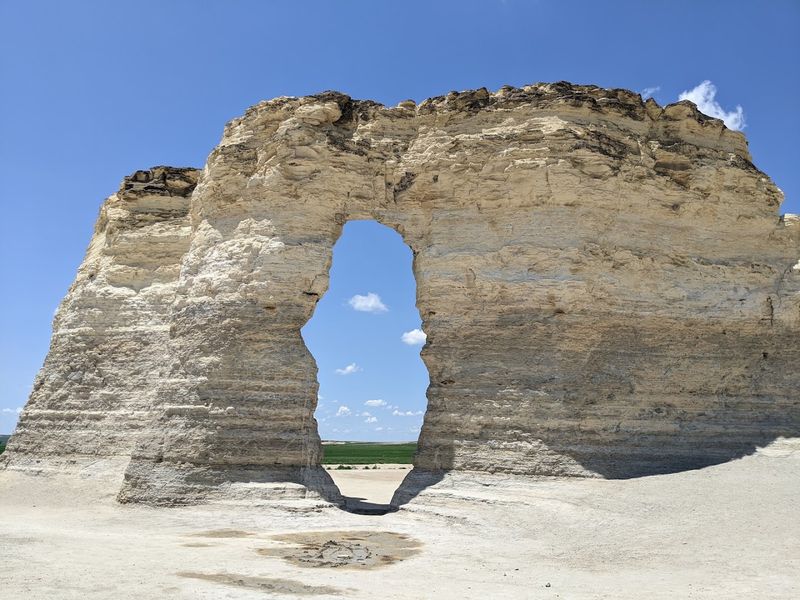
Most people picture Kansas as nothing but flat wheat fields and endless sky. Monument Rocks will completely change that assumption.
Rising abruptly from the floor of the Great Plains, these massive chalk formations stand up to 70 feet tall and stretch across a remote stretch of Gove County like the ruins of some ancient civilization.
Also called the Chalk Pyramids, these formations were created from the sediment of a vast inland sea that covered the region roughly 80 million years ago. Fossils of giant fish, sea turtles, and mosasaurs have been found embedded in the chalk walls.
Monument Rocks was the first natural landmark designated a National Natural Landmark in the United States back in 1968. The site is on private land but is open to the public free of charge.
Getting there requires driving on unpaved roads, so checking weather conditions before visiting is strongly recommended.
11. The House on the Rock, Spring Green, Wisconsin
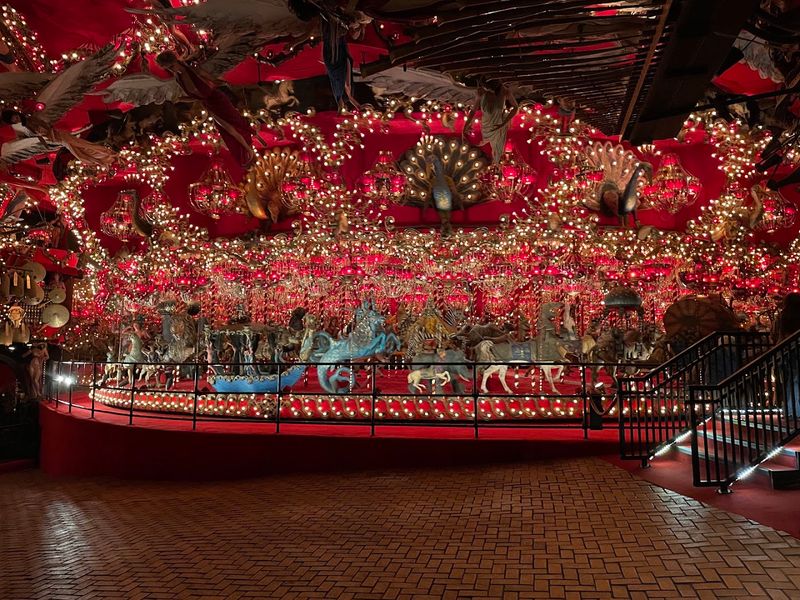
Built by eccentric architect Alex Jordan Jr. starting in the 1940s, the House on the Rock perches atop a 60-foot chimney of rock in the Wisconsin countryside. What began as a quirky personal retreat eventually grew into one of the most bizarre tourist attractions in the entire country.
Inside, visitors wander through a labyrinth of rooms crammed with armor collections, antique music machines, dollhouses, sea creature models, and thousands of other oddities. The centerpiece is the world’s largest indoor carousel, a colossal structure with 269 animals and more than 20,000 lights, though interestingly, not a single horse among them.
The Infinity Room, a narrow glass-enclosed hallway that extends 218 feet out over the valley below, is another unforgettable feature. Neil Gaiman famously featured the House on the Rock in his novel American Gods.
Plan for at least three to four hours to see everything.
12. Coral Castle, Homestead, Florida
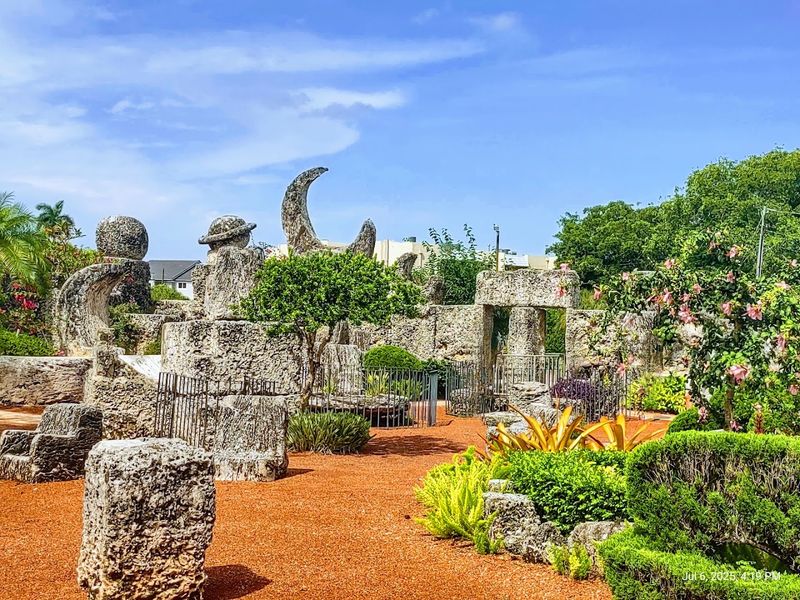
Edward Leedskalnin was a small man, standing just five feet tall and weighing barely 100 pounds. Yet between 1923 and 1951, he single-handedly quarried, carved, and moved more than 1,100 tons of coral rock to build an extraordinary monument in South Florida.
He worked entirely alone, always at night, and never let anyone watch him work.
The result is Coral Castle, a stunning collection of carved stone furniture, walls, towers, and sculptures. Among the most impressive features is a nine-ton gate so perfectly balanced that a child could push it open with one finger, though it has since been damaged and no longer moves as freely.
Leedskalnin claimed he had discovered the secrets of the ancient pyramid builders but never revealed his methods. Engineers and historians have studied the site for decades without a definitive explanation.
The mystery surrounding how he built it alone is as captivating as the castle itself.
13. Goblin Valley State Park, Utah
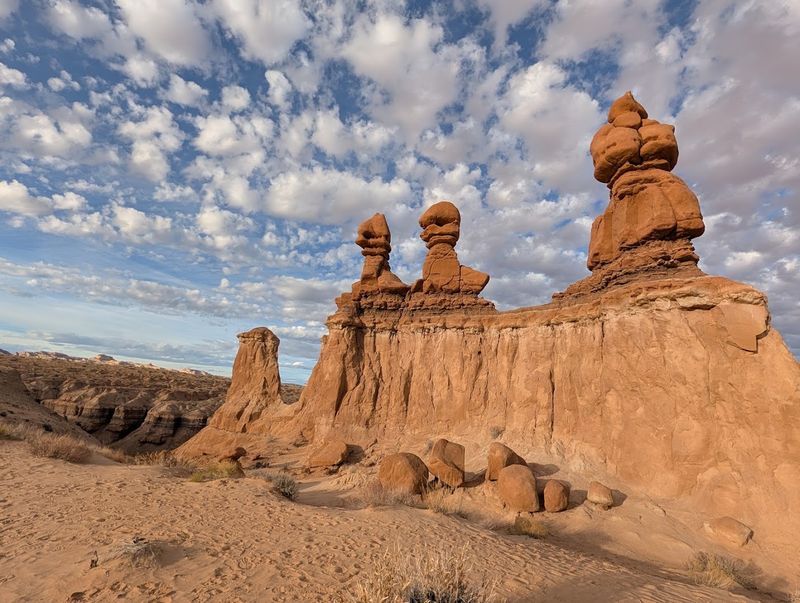
Goblin Valley earns its name the moment you set eyes on it. Spread across a broad desert basin in central Utah, thousands of rounded sandstone formations called hoodoos or goblins rise from the ground in every direction.
Some look like squat little creatures, others like melting sculptures, and a few resemble giant mushrooms frozen mid-growth.
The formations were carved over millions of years as softer rock eroded away around harder cores of Entrada sandstone. The result is a landscape so alien-looking that it has been used as a filming location for science fiction movies, including the 1999 film Galaxy Quest.
Unlike many Utah parks, Goblin Valley allows visitors to wander freely among the hoodoos without staying on designated trails. Kids especially love scrambling around the formations and hiding between them.
The park is relatively uncrowded compared to nearby Arches and Canyonlands, making it a rewarding and peaceful stop.
14. Bisti/De-Na-Zin Wilderness, New Mexico
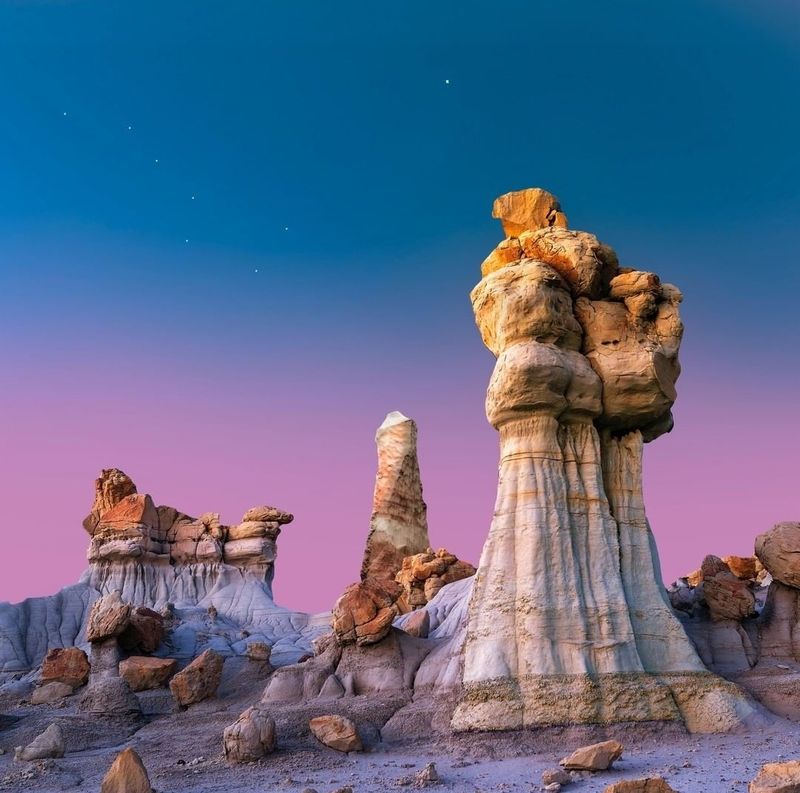
Remote, raw, and almost completely unknown to casual tourists, the Bisti/De-Na-Zin Wilderness in northwestern New Mexico is one of the most otherworldly landscapes in the country. No trails, no signs, and no facilities greet visitors here.
Just miles of cracked earth, bizarre rock formations, and a deep, humbling silence.
The area contains an extraordinary collection of hoodoos, some shaped like alien eggs, others like melting candles or towering mushrooms. Chunks of petrified wood and ancient fossils are scattered across the ground, remnants of a lush subtropical forest that existed here roughly 70 million years ago.
Reaching the best formations requires navigating with a map and compass or GPS, and the terrain can be disorienting. Early morning light brings out the most dramatic colors in the rock.
Visiting during spring or fall is recommended, as summer heat in this exposed landscape can become genuinely dangerous. Bring plenty of water regardless of season.
15. Mendenhall Ice Caves, Juneau, Alaska
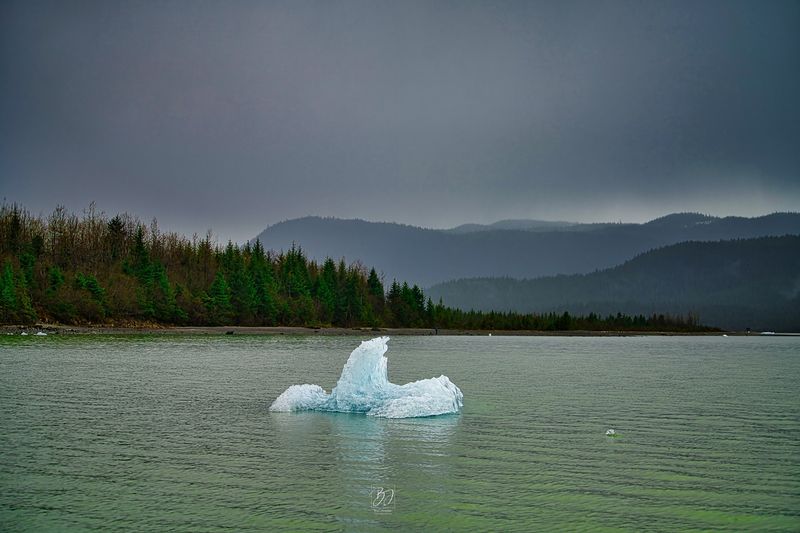
Hidden beneath the surface of Mendenhall Glacier just outside Juneau, Alaska, a world of brilliant electric blue awaits those willing to make the journey. The Mendenhall Ice Caves form as meltwater carves tunnels through the glacier, creating chambers with glowing walls of compressed, ancient ice that filter light into an almost unreal shade of blue.
Reaching the caves is genuinely challenging. Visitors must kayak across Mendenhall Lake, hike a steep trail, and then carefully navigate the glacier surface using crampons.
Guided tours are available and strongly recommended for safety reasons. Conditions change constantly, and the caves themselves shift as the glacier continues to melt.
Because of accelerating glacial retreat, scientists warn that the caves may not exist in their current form for many more years. Visiting now means witnessing something that future generations may never see.
Few experiences in nature match the quiet, glowing beauty of standing inside a glacier.
Share this story