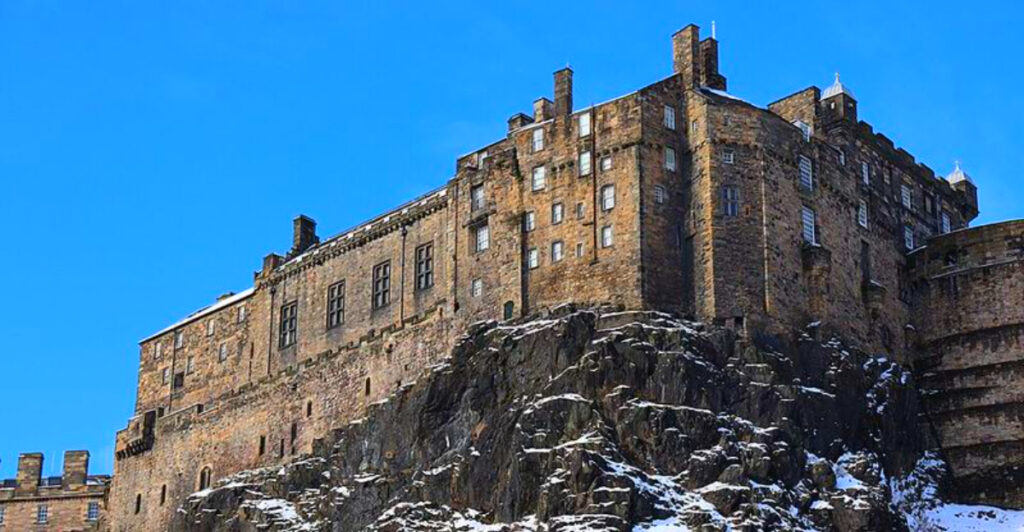
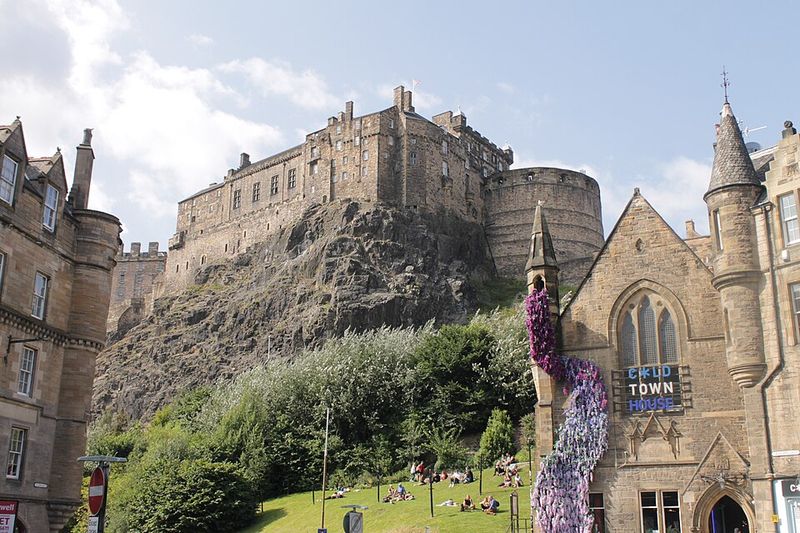
Edinburgh Castle has stood on its volcanic rock for centuries, watching over one of Europe’s most historically layered cities. Yet for all its stone walls and documented records, the castle holds a surprising number of questions that historians have never fully resolved. Some of these puzzles involve vanished structures, others concern hidden tunnels, disputed events, or artifacts whose true significance remains contested. The castle’s long history of warfare, royal drama, and political upheaval has left gaps in the record that continue to fuel serious academic debate.
Whether you are a history enthusiast or simply curious about what lies beneath the surface of a famous landmark, these fifteen unresolved questions offer a genuinely fascinating window into Scotland’s past. Each one reveals how even the most well-documented places can still hold secrets worth examining.
1. The True Origins of Castle Rock
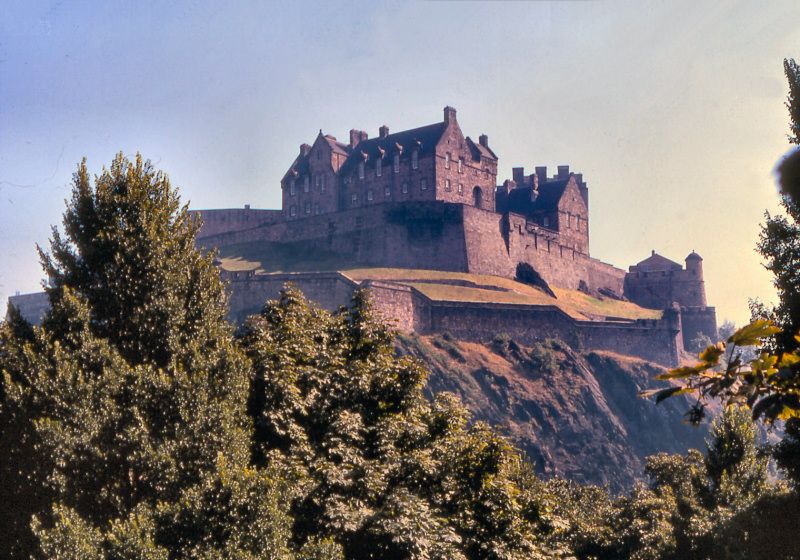
Long before any castle stood on it, Castle Rock was already doing something remarkable: resisting erosion for millions of years while everything around it wore away. Formed approximately 350 million years ago during the Carboniferous period, this volcanic plug originated when molten dolerite intruded through softer sedimentary layers and then cooled into an exceptionally hard mass.
Glacial movement during the last Ice Age carved the surrounding landscape, leaving the distinctive “crag and tail” landform that gives the castle its commanding defensive position. That natural advantage was not lost on early inhabitants. Archaeological evidence places human settlement on the rock as far back as 900 BC, associated with groups like the Votadini tribe.
What historians still debate is the precise sequence of early occupation and whether the rock held continuous strategic significance across those centuries before recorded history began.
2. What Really Happened to David’s Tower
Commissioned by King David II between 1368 and 1377, David’s Tower was once the tallest and most impressive structure on the castle rock, rising roughly 100 feet and serving as both royal lodging and a secure treasury. It was also a design pioneer, representing one of the earliest examples of the tower-house style that would dominate Scottish architecture for two centuries.
Its end came during the Lang Siege of 1573, when English artillery reduced it to rubble. The ruins were then buried and sealed beneath the newly constructed Half Moon Battery, essentially forgotten for more than three centuries.
Architect W. T. Oldrieve rediscovered the remains in 1912, finding walls still standing 12 meters high behind a coal cellar. Cannonballs recovered from the rubble confirmed the violent circumstances.
Historians continue to debate the full architectural scope of what was lost.
3. The Mystery of the Lost Scottish Crown Jewels
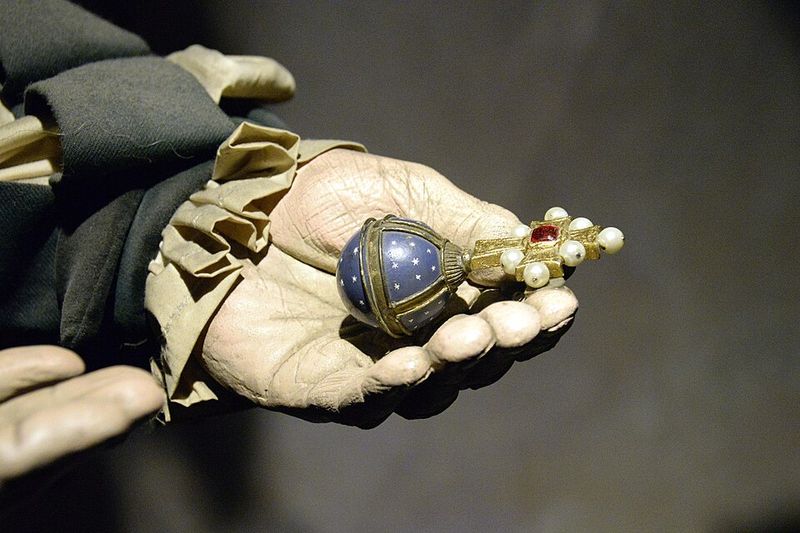
Known as the Honours of Scotland, the crown, sceptre, and sword of state are the oldest surviving crown jewels in Britain. But their history includes two distinct episodes of disappearance that historians have analyzed at length.
The first loss occurred in 1296, when Edward I of England seized Scotland’s royal treasures after capturing Edinburgh Castle. Those original regalia were never recovered. The current Honours faced their own period of obscurity after the Act of Union in 1707, when they were locked in a chest in the Crown Room and essentially forgotten for over a century.
Sir Walter Scott led the search that rediscovered them in 1818. During World War II, they were secretly buried inside David’s Tower for protection. The enduring debate centers on what exactly Edward I took and whether any trace of those original jewels could still exist.
4. Why St. Margaret’s Chapel Survived When So Much Else Did Not
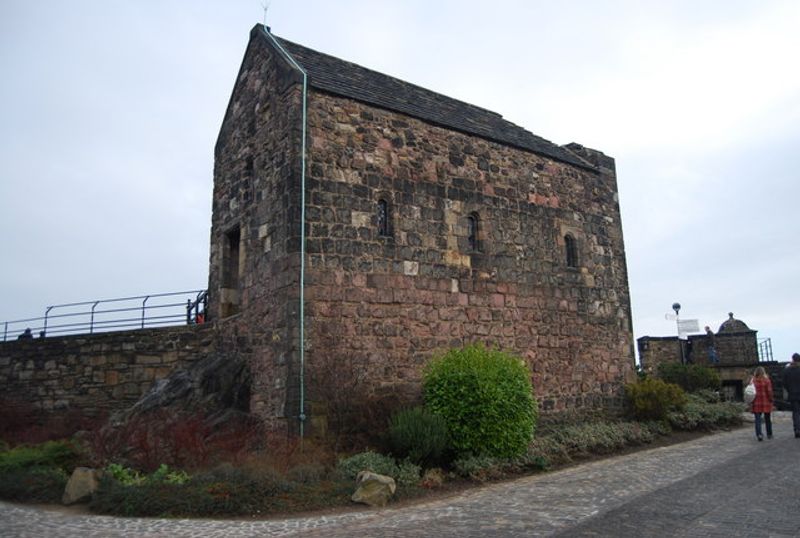
Built around 1130 and dedicated to his mother by King David I, St. Margaret’s Chapel is the oldest standing building in Edinburgh. That distinction is all the more striking because Robert the Bruce ordered the systematic destruction of Edinburgh Castle’s fortifications in 1314, intending to deny English forces a usable stronghold.
Nearly everything was torn down. The chapel was not. Historical accounts suggest Bruce deliberately exempted it, most likely because Margaret had been canonized in 1250, making the structure a recognized sacred site that commanded respect even in wartime.
After the Reformation, the chapel lost its religious function and spent centuries as a gunpowder store. Its historical significance was formally acknowledged again in 1845, prompting restorations supported in part by Queen Victoria. Historians still discuss whether the chapel’s survival was a calculated decision or simply a product of its small size making it seem strategically irrelevant.
5. Who Dug the Secret Tunnels Beneath the Castle
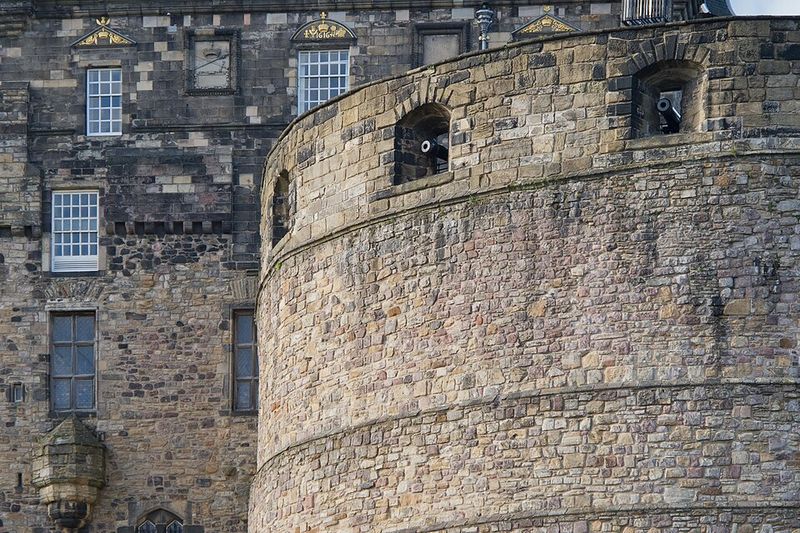
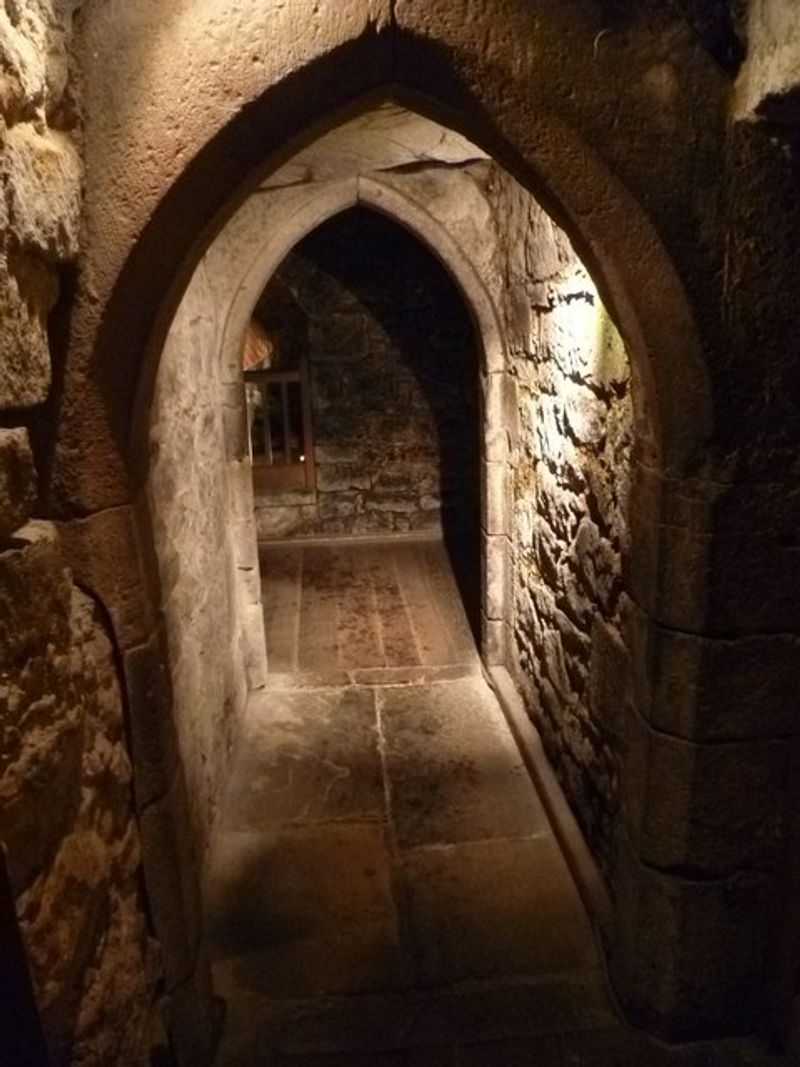
Few elements of Edinburgh Castle folklore are more persistent than the idea of secret tunnels running beneath the Royal Mile, possibly stretching all the way to Holyrood Palace. The castle does contain documented vaults, defensive passages, and the excavations required to reach the Fore Well deep in the volcanic rock. But a grand, interconnected clandestine tunnel network is a different claim entirely.
Archaeological work around the Half Moon Battery and David’s Tower has uncovered genuine subterranean spaces, but nothing that confirms a deliberate, large-scale secret passage system built for covert movement across the city. The identity of who might have ordered or constructed such a network remains entirely unverified.
Historians generally treat the tunnel legend as folklore rather than documented history. The real debate is whether future excavation might uncover something that shifts that assessment or whether the legend will remain permanently in the realm of local storytelling.
6. The Unfinished Story of the Lost Piper Legend
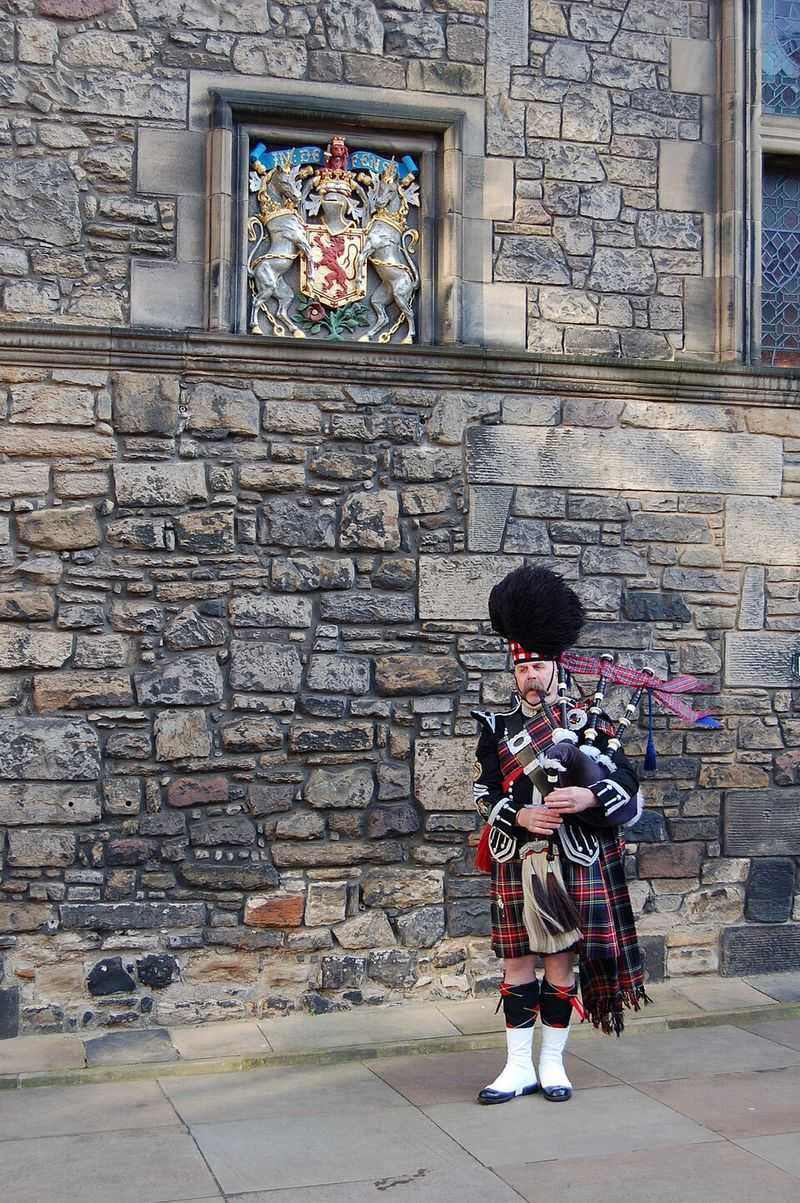
According to one of Edinburgh’s most repeated legends, a young piper was sent into tunnels beneath the castle with instructions to play his bagpipes continuously so those above ground could track his progress along the Royal Mile. Somewhere near the Tron Kirk, roughly halfway along the route, the music stopped. The piper was never found.
The story has circulated for centuries, and various versions add details like a rescue party, sealed tunnels, or even a skeleton discovered in the 18th century. Historians generally treat these additions as embellishments layered onto a core piece of urban folklore.
What makes the legend historically interesting is not whether it happened, but why it persisted and what it suggests about public awareness of the castle’s underground spaces. The “unfinished” quality of the story, with no resolution and no confirmed evidence, is precisely what keeps it in circulation and keeps historians occasionally revisiting it.
7. Why the One O’Clock Gun Tradition Began – and Whether It Was the First
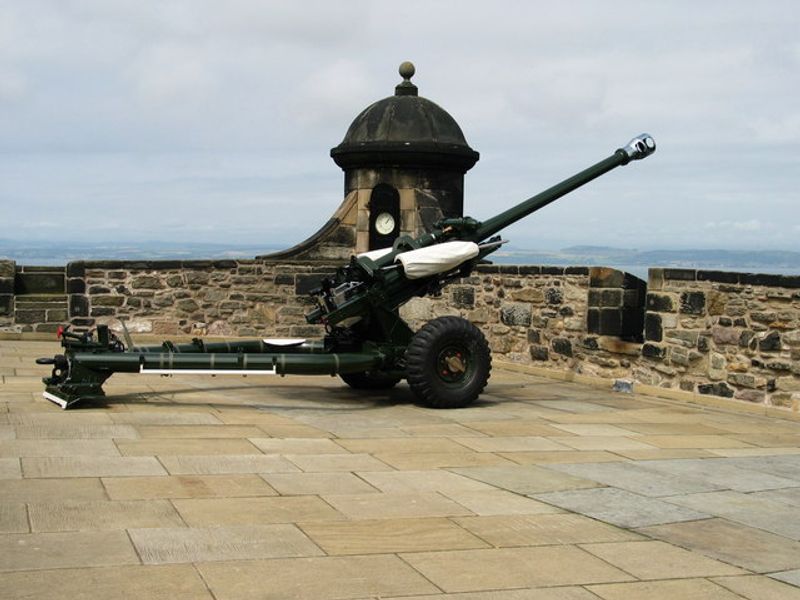
Every weekday at precisely 1 p.m., a cannon fires from Edinburgh Castle with enough force to rattle windows across the city center. The tradition dates to 1861 and was introduced to give ship crews in the Firth of Forth an audible time signal for synchronizing their navigation chronometers, which were essential for calculating longitude accurately at sea.
But the gun was not Edinburgh’s first time signal. That distinction belongs to the Time Ball installed in 1852 on the Nelson Monument at Calton Hill, a large ball lowered daily at 1 p.m. The gun was added because Edinburgh’s frequent coastal fog often obscured the visual signal entirely.
The idea reportedly came from Edinburgh businessman John Hewitt, who observed a noon cannon at the Jardin du Palais-Royal in Paris in 1846. Whether Edinburgh’s version was truly the first audible maritime time signal of its kind in Britain remains a point historians continue to examine.
8. The Real Identity of the Prisoners Who Left Their Graffiti Behind
Walk through the castle’s lower vaults today and you can still see carvings left by prisoners from the Seven Years’ War, the American War of Independence, and the Napoleonic Wars. French soldiers, and even some Americans captured during the fight for independence, spent years confined in these spaces and left their names and drawings behind in wood and stone.
The graffiti is real, documented, and genuinely moving as a historical record. The mystery is one of scale and specificity. For the vast majority of these carvings, no corresponding name appears in any surviving prisoner record. One account even mentions a five-year-old child among the prisoners, but no name is given.
Historians can confirm which conflicts produced prisoners held here, but connecting individual carvings to individual people has proven largely impossible. Each unidentified mark represents a person whose full story the historical record simply did not preserve.
9. What Caused the Great Lang Siege to Finally Break
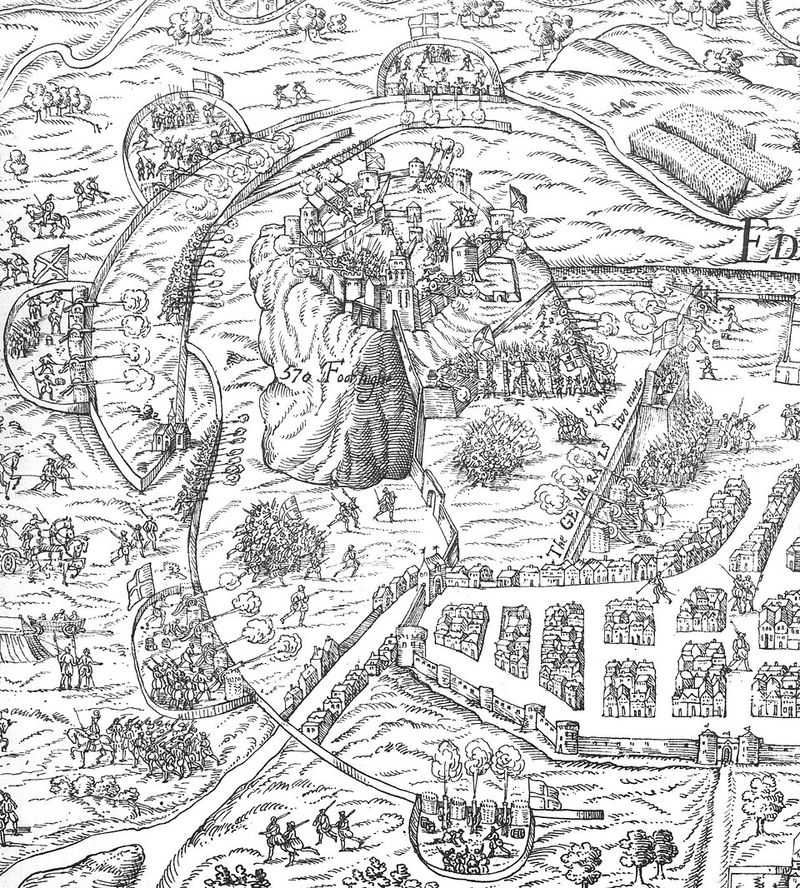
Running from June 1571 to May 1573, the Lang Siege was one of the most consequential military events in Scottish history. Sir William Kirkcaldy of Grange held the castle for the exiled Mary, Queen of Scots, while forces loyal to her infant son James VI pressed from outside.
The breaking point came from two directions simultaneously. Besieging forces under Regent Morton deliberately poisoned St. Margaret’s Well, one of the castle’s key water sources. At the same time, the relentless artillery bombardment of David’s Tower sent debris crashing into the Fore Well, blocking it completely and cutting off the garrison’s primary water supply.
English reinforcements arrived in April 1573, bringing 1,000 troops and 27 additional cannons. A 12-day barrage starting May 17 fired nearly 3,000 shots, destroying the main defensive structures. The garrison surrendered on May 28. Historians debate which factor, military firepower or water loss, was the true deciding blow.
10. The Debate Over Where Mary, Queen of Scots Actually Gave Birth to James VI

In June 1566, Mary, Queen of Scots gave birth to the future James VI of Scotland and James I of England inside Edinburgh Castle. A small chamber within the Royal Palace is traditionally identified as the precise room where this took place, and that identification has been maintained for centuries.
Historical consensus accepts Edinburgh Castle as the location. What occasionally surfaces in academic discussion is not a fundamental challenge to the castle itself as the birthplace, but rather questions about the specific room’s configuration, its original dimensions, and whether later renovations have altered what visitors see today.
Some historians have also examined the political motivations behind emphasizing a castle birth, as a royal birth in a secure fortress carried symbolic weight during an unstable period. The debate is narrow but persistent, centering on architectural detail and historical framing rather than any serious challenge to the established record.
11. Who Truly Controlled Edinburgh Castle During Scotland’s Wars of Independence
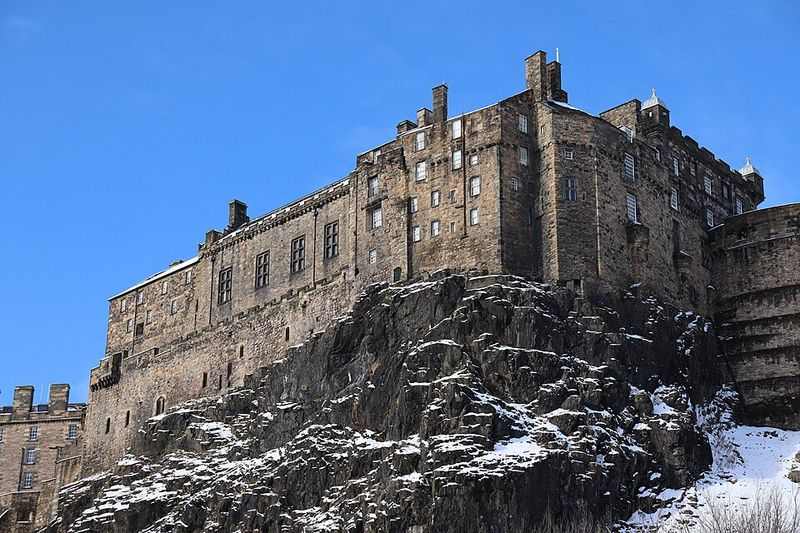
Control of Edinburgh Castle during the Wars of Independence changed hands multiple times across six decades, and each transfer involved a different combination of military strategy, political maneuvering, and outright audacity. Edward I seized it in 1296 after a three-day siege, removing Scottish royal records and installing an English garrison.
In 1314, Sir Thomas Randolph recaptured it in a night raid with just 30 men, scaling the rock face on the north side. Robert the Bruce then ordered the fortifications destroyed to prevent future English use. English forces reoccupied and rebuilt the castle in 1335.
William Douglas retook it again in 1341 by disguising his men as merchants and staging a cart accident at the gate. Historians debate which of these episodes most decisively shaped the castle’s long-term identity and which Scottish or English commanders held the most durable influence over its strategic direction during this period.
12. Whether Mons Meg Was Really the Most Powerful Cannon of Its Time
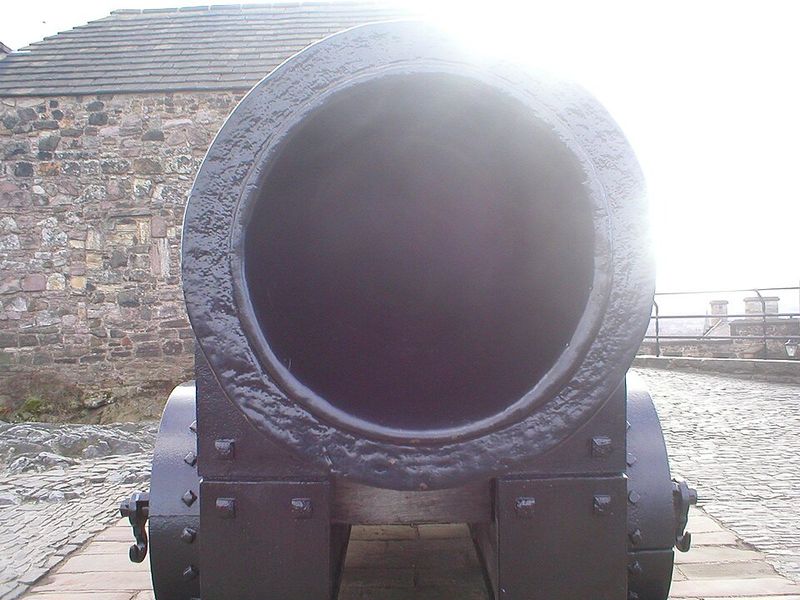
Presented to King James II of Scotland in 1457, Mons Meg is one of the most celebrated medieval cannons in existence. It was built to fire stone balls weighing up to 330 pounds across impressive distances, and its sheer scale made it a symbol of royal power as much as a functional weapon.
Historical sources tend to describe it as one of the greatest cannons of its era rather than definitively the most powerful. Comparing medieval artillery across different kingdoms involves variables like barrel design, ammunition composition, effective firing range, and logistical capability, none of which point to a single clear winner.
Mons Meg was removed to the Tower of London after Scotland’s disarmament following the 1745 Jacobite Rising, then returned in 1829 after lobbying that included Sir Walter Scott. The debate over its ranking among contemporary weapons is genuine and reflects the difficulty of applying modern performance metrics to 15th-century engineering.
13. The Purpose of the Mysterious Laird’s Lug Window
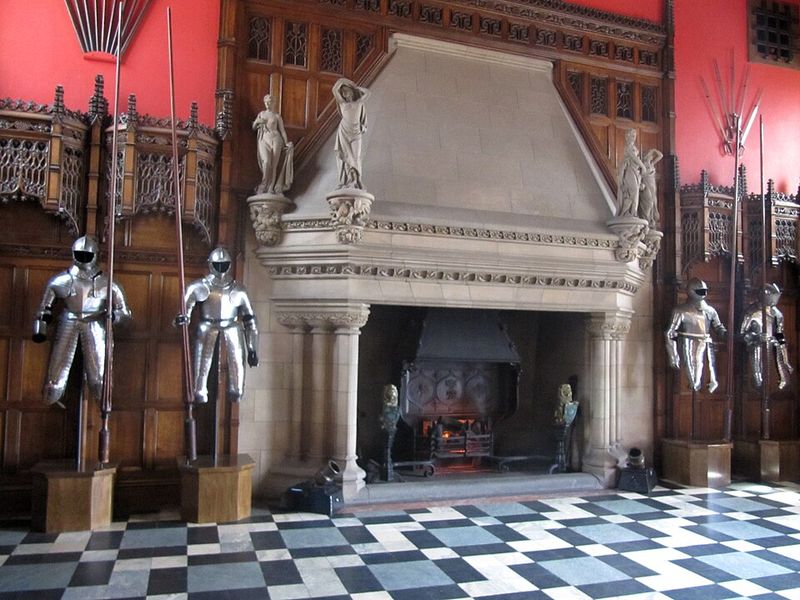
Set high above the fireplace in Edinburgh Castle’s Great Hall, the Laird’s Lug is a small concealed opening whose Scots name translates directly as “Lord’s Ear.” Its function was straightforward by medieval standards: it allowed the castle’s lord, typically the king, to secretly listen to conversations happening in the hall below without being seen.
Political intelligence gathered this way could confirm loyalties, expose conspiracies, or simply keep the monarch informed about the mood among his nobles. The feature was not unique to Edinburgh, but this example is particularly well-documented and still visible today.
Its relevance extended unexpectedly into the modern era. In 1984, the Soviet KGB reportedly demanded that the Laird’s Lug be sealed before a planned visit by Mikhail Gorbachev, apparently taking its eavesdropping potential seriously. Historians debate whether the feature was used systematically or only occasionally, and whether similar concealed listening points existed elsewhere in the original castle layout.
14. The Mystery of the Medieval Well That Kept the Castle Alive
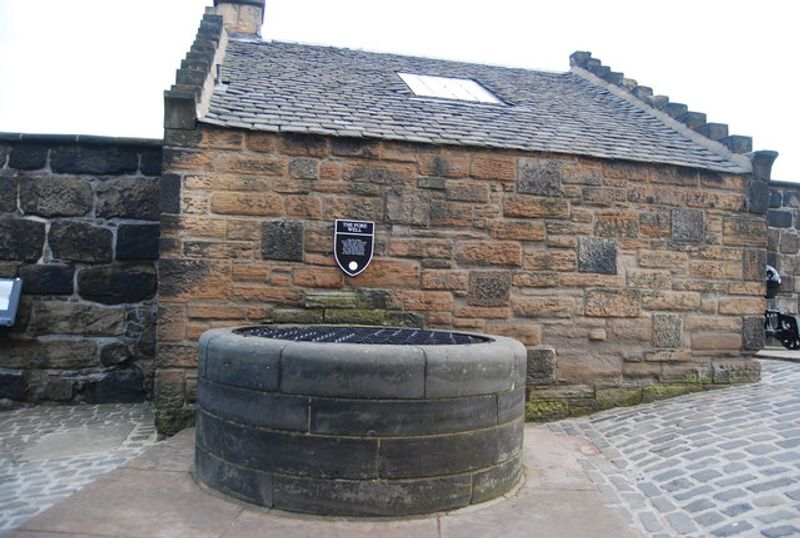
Cut more than 100 feet into the volcanic rock beneath the castle, the Fore Well was the primary water source for Edinburgh Castle throughout the medieval period. Excavating that depth through hard dolerite without modern tools represents a significant engineering achievement, and the exact methods and timeline of its original construction remain unclear.
Its importance is recorded as early as 1314, when Robert the Bruce’s forces deliberately blocked it during the castle’s destruction. The well’s role became critical again during the Lang Siege of 1573, when artillery debris from the collapse of David’s Tower fell into the shaft and rendered it unusable, directly contributing to the garrison’s surrender.
The well was later cleared and expanded, with storage tanks added during the construction of the Half Moon Battery. In 2018, 3D and laser scanning technology produced detailed surveys of the shaft, offering new data for comparison with architect W. T. Oldrieve’s 1912 manual survey, which he conducted by descending into the well himself.
15. How Much of Today’s Edinburgh Castle Is Truly Medieval
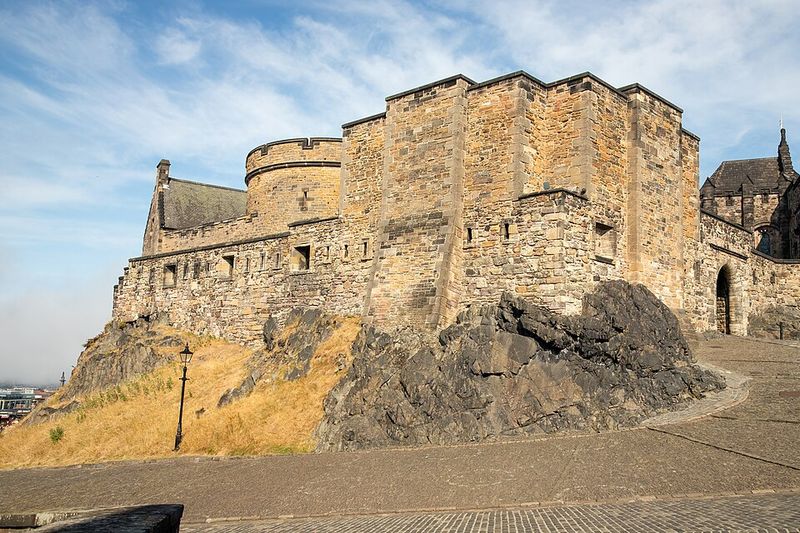
Edinburgh Castle sits on a site occupied since the Iron Age, and a royal castle has been present since the 11th century. But the age of the site and the age of the visible buildings are two very different things. Most of what visitors see today was built after 1573, following the destruction of the Lang Siege.
The exceptions are notable. St. Margaret’s Chapel dates to around 1130 and is Edinburgh’s oldest standing building. Parts of the Royal Palace retain 15th and early 16th-century fabric. The Great Hall still features sections of its original hammer-beam ceiling from 1511.
Beyond those elements, structures like the Half Moon Battery were built after the siege, often incorporating ruins of earlier buildings like David’s Tower into their foundations. Historians continue to debate exactly what percentage of the current fabric qualifies as genuinely medieval, and how much of the castle’s ancient reputation rests on a structure that is, in large part, post-medieval reconstruction.
Share this story