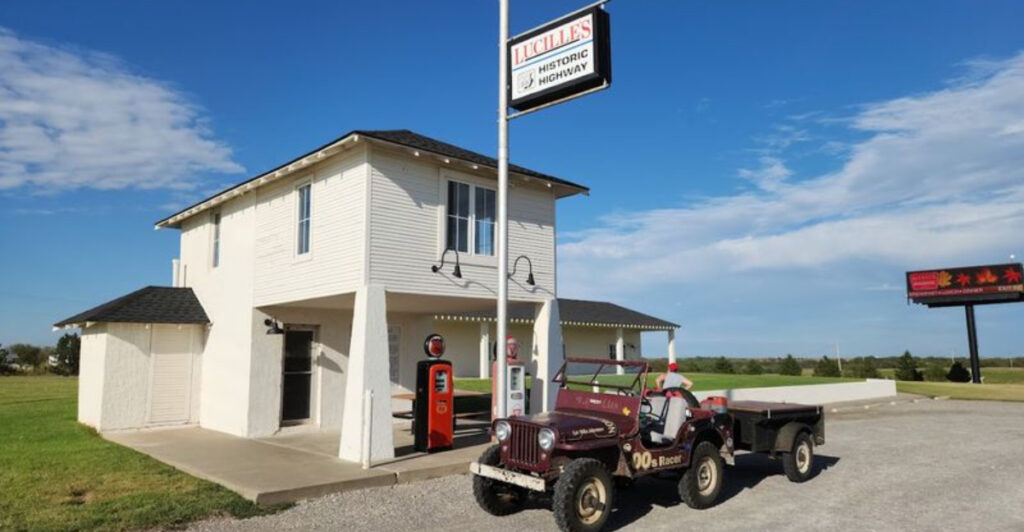
There is a stretch of old highway in central Oklahoma where time seems to slow down just enough for you to catch your breath and feel something real. A weathered building sits roadside, flanked by vintage gas pumps and an old truck that looks like it has a story or two to tell.
This is one of the most recognized stops along the entire length of Route 66, and it carries the name of a woman who became a legend simply by showing up every single day and caring for the travelers who passed through. Read on to find out why this modest little station in Hydro, Oklahoma, has earned a permanent place in American road trip history.
Where You Will Find It: The Address and Setting
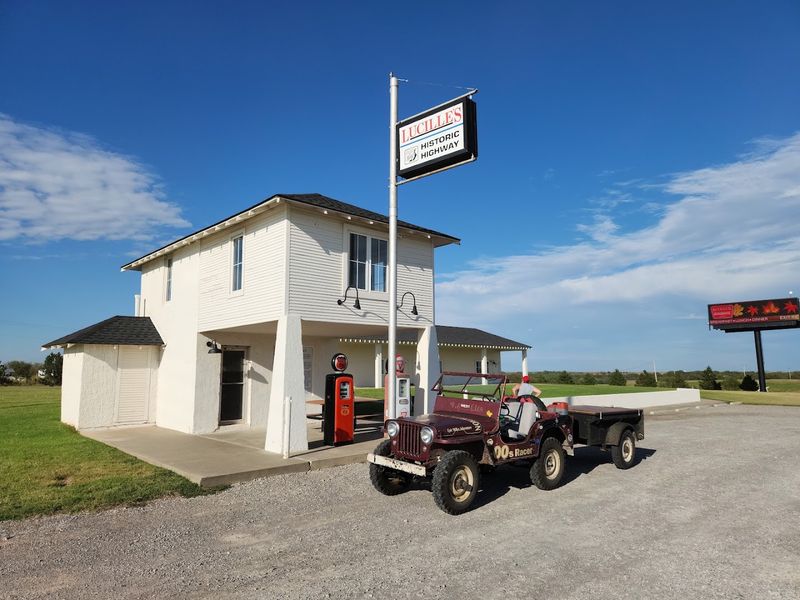
Right off the old two-lane blacktop at 3004 U.S. Route 66, Hydro, Oklahoma 73048, this historic station sits in a quiet stretch of Caddo County that feels worlds away from the interstate rush nearby.
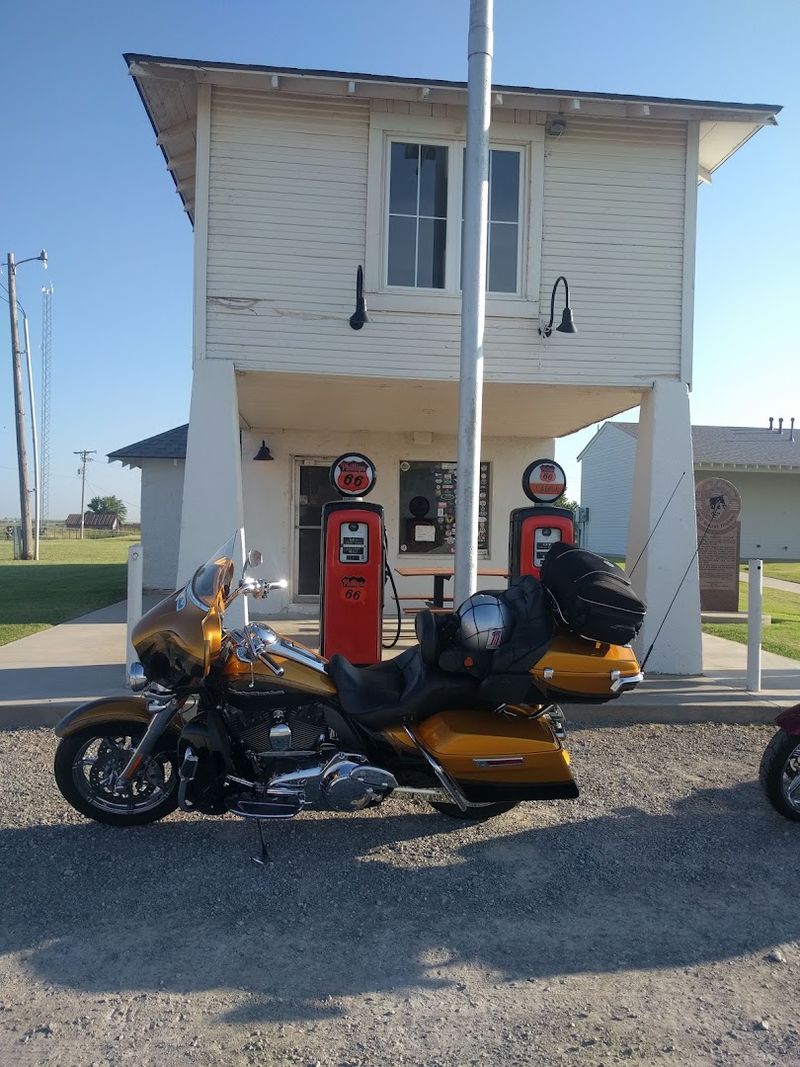
The building is modest in size but enormous in presence. A pair of vintage gas pumps stand out front like old sentinels, and an antique Chevy pickup truck rests nearby, adding to the authentic roadside tableau that greets every visitor.
Hydro is a small town, and the station fits right into that unhurried pace. You can spot it from Interstate 40, but seeing it up close is a completely different experience.
The grounds are well-maintained, the parking area is generous, and the whole setup is easy to navigate, even if you are pulling in with a larger vehicle. It is a roadside treasure hiding in plain sight along one of America’s most beloved historic routes.
The Woman Behind the Legend
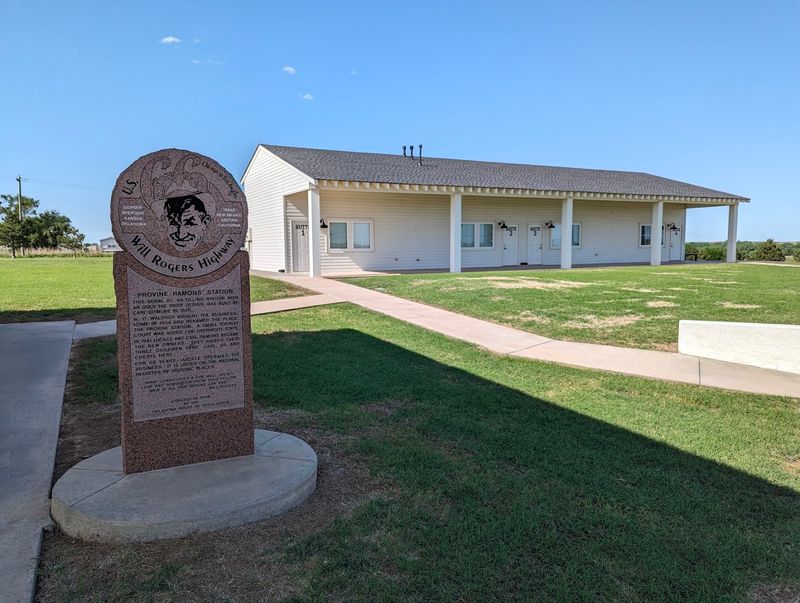
Lucille Hamons ran this station for over five decades, and her story is the kind that makes you pause and think about what it really means to build something with your own hands.
Born in 1904, Lucille and her husband Carl purchased the property in 1941. After Carl passed away, she kept the station going on her own, becoming one of the most recognized figures along the entire Mother Road.
She was known for her generosity during tough times, often helping stranded travelers with fuel, food, or a kind word when they had little to offer in return. Locals and long-distance drivers alike called her the “Mother of the Mother Road,” a title she earned through decades of consistent, warm-hearted service.
Lucille ran the station until 2000, just two years before she passed at the age of 96. Her legacy is not just preserved in the building she left behind, but in every traveler who still makes the detour to stand where she once stood.
A Building That Has Seen It All
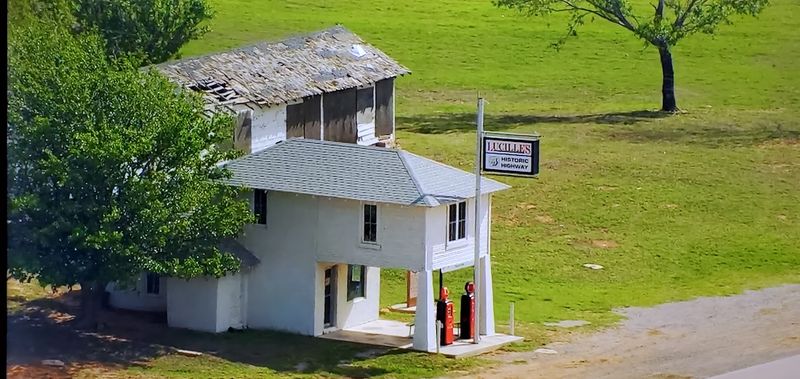
The station itself was built in 1929, which means it has been standing on this stretch of Oklahoma highway for nearly a century. That kind of longevity is rare for any roadside structure, and it speaks to both the quality of the original construction and the care that has gone into maintaining it.
The exterior has received a fresh coat of paint in recent years, and a Route 66 centennial pole was added in anticipation of the highway’s 100th anniversary in 2026. These updates keep the site feeling alive rather than just preserved.
Two original fuel pumps remain on the property, one from Conoco and one from Phillips 66, both of which serve as vivid reminders of the competitive roadside fuel market that once defined American highway culture.
The buildings cannot be entered, but peering through the windows gives you a glimpse of the interior, which remains in its original, unrestored state. That contrast between the polished exterior and the raw interior tells its own quiet story about time and what we choose to save.
The Vintage Gas Pumps Up Close
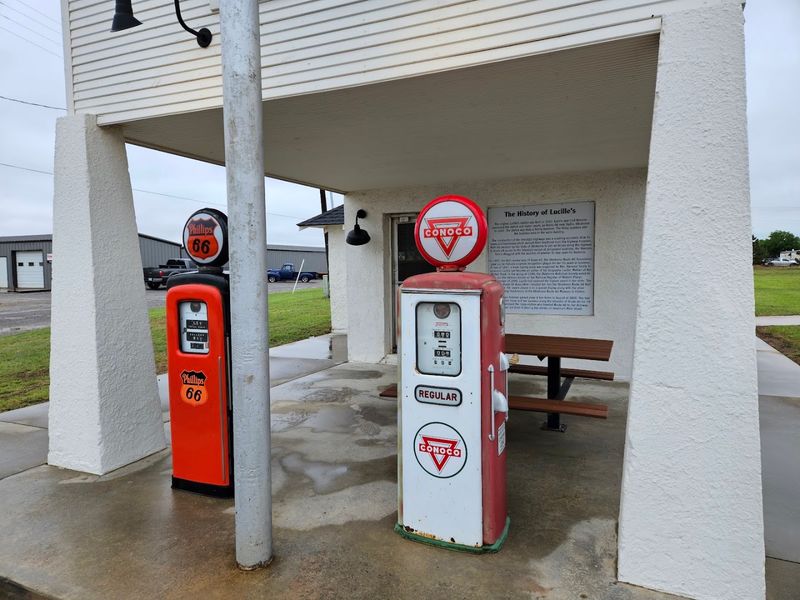
Few objects on a Route 66 road trip fire up the imagination quite like a pair of original vintage gas pumps, and the two standing at this station are genuinely special finds.
The Conoco and Phillips 66 pumps date back to the mid-twentieth century, and they still carry the faded color schemes and rounded shapes that defined roadside Americana for decades. Standing next to them, you get a real sense of what it felt like to pull off the highway, fill up your tank, and chat with the station attendant before heading back out onto the open road.
These pumps are not reproductions or decorative props. They are the real thing, and that authenticity is exactly what makes this stop resonate with Route 66 enthusiasts and casual visitors alike.
Photographers tend to linger around the pumps for a while, and it is easy to understand why. The light hits the old metal in a way that practically begs to be captured.
They are among the most photographed objects along this entire section of Oklahoma’s historic highway corridor.
The Old Chevy Truck Parked on the Grounds
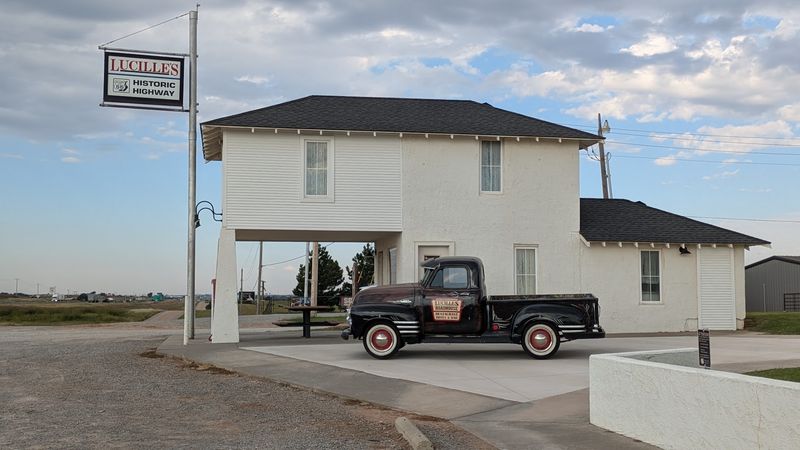
Parked on the grounds alongside the station is an old Chevrolet pickup truck that has become one of the most talked-about features of the entire property. It is not a showroom piece by any stretch, but that is exactly the point.
The truck carries the kind of honest wear that only comes from real use over real years. Its presence adds a layer of authenticity to the site that no decorative addition could ever replicate.
It fits the scene perfectly, looking like it rolled in one afternoon decades ago and simply never left.
Visitors consistently mention the truck in their accounts of the stop, noting how it completes the visual story the whole property is trying to tell. A gleaming, restored vehicle would feel out of place here.
This one does not.
The grounds around the truck are kept clean and tidy, which shows that whoever is caring for this property takes the responsibility seriously. The truck is not roped off or fenced in, so you can get close and really appreciate the details that decades of road life have left behind.
The Will Rogers Highway Marker
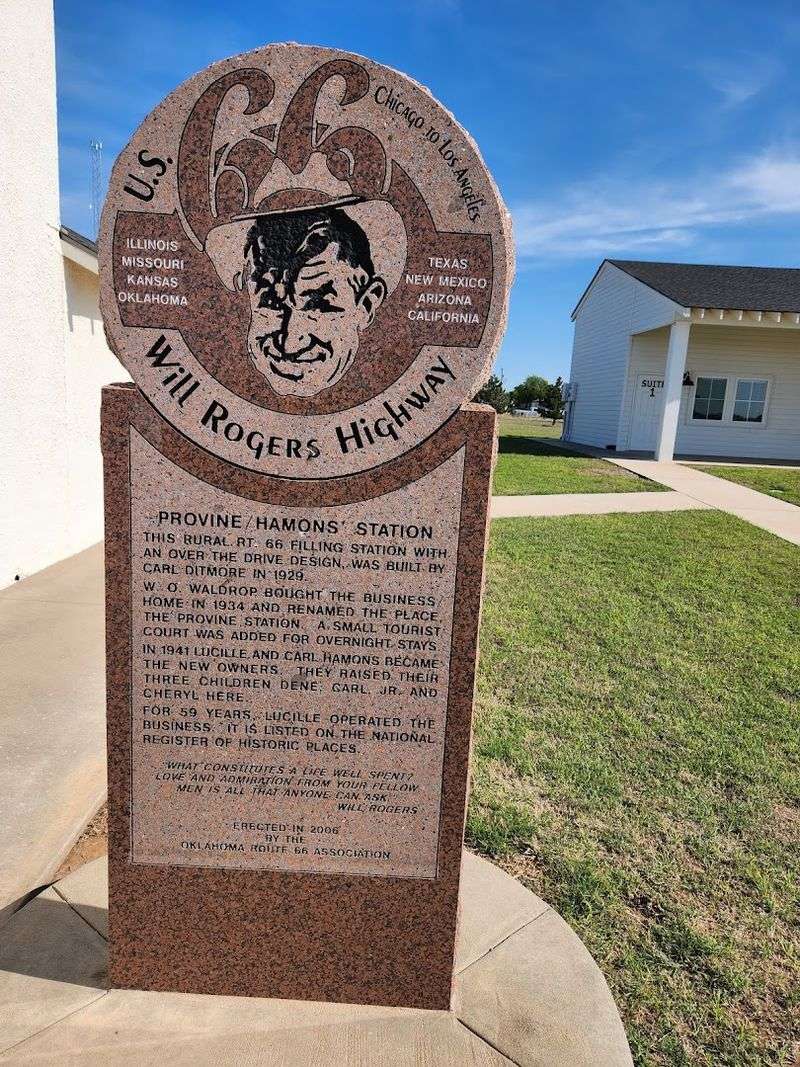
One detail that many visitors overlook on their first pass through is the Will Rogers Highway Marker located on the property. Route 66 was officially dedicated as the Will Rogers Highway in 1952, and markers like this one serve as formal acknowledgments of that designation.
Will Rogers was one of Oklahoma’s most beloved figures, a humorist, actor, and social commentator who embodied the spirit of the American West during the early twentieth century. Having his name attached to this highway, and having a marker at this specific stop, adds another layer of cultural depth to an already historically rich location.
The marker is easy to spot once you know to look for it, and it makes for a great photo opportunity alongside the gas pumps and the station itself. It is a small addition that carries a lot of historical weight.
For anyone tracing the cultural threads of Route 66, this marker is a meaningful touchpoint. It connects the story of Lucille and her station to the broader narrative of what this highway has meant to Oklahoma and to the country as a whole.
What the Grounds Feel Like on a Visit
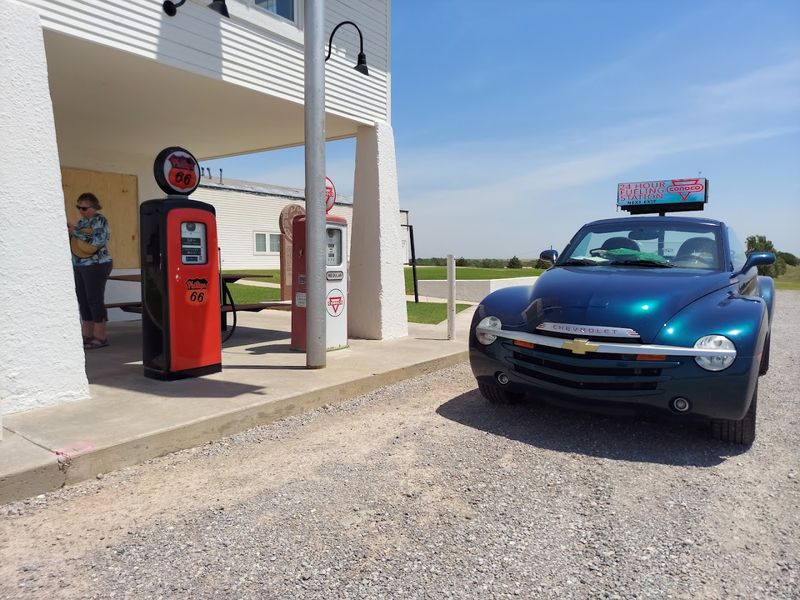
There is a particular quality to the atmosphere at this stop that is hard to define but very easy to feel. The grounds are quiet, clean, and unhurried, which is a refreshing contrast to the noise and speed of Interstate 40 just a short distance away.
The property has plenty of parking space, and the layout is open enough that multiple groups of visitors can spread out comfortably without feeling crowded. On most days, you will likely share the space with just a handful of other travelers, which keeps the experience personal and reflective.
Informational signs on the property give visitors a solid overview of Lucille’s life and the history of the station, so even if you arrive without any background knowledge, you leave with a clear picture of what this place meant and still means.
The overall feeling is one of respectful preservation. Nothing about the site feels overdone or commercialized.
It is simply a well-tended piece of history, left accessible to anyone willing to take the short detour off the main highway to see it for themselves.
How to Get There and When to Visit
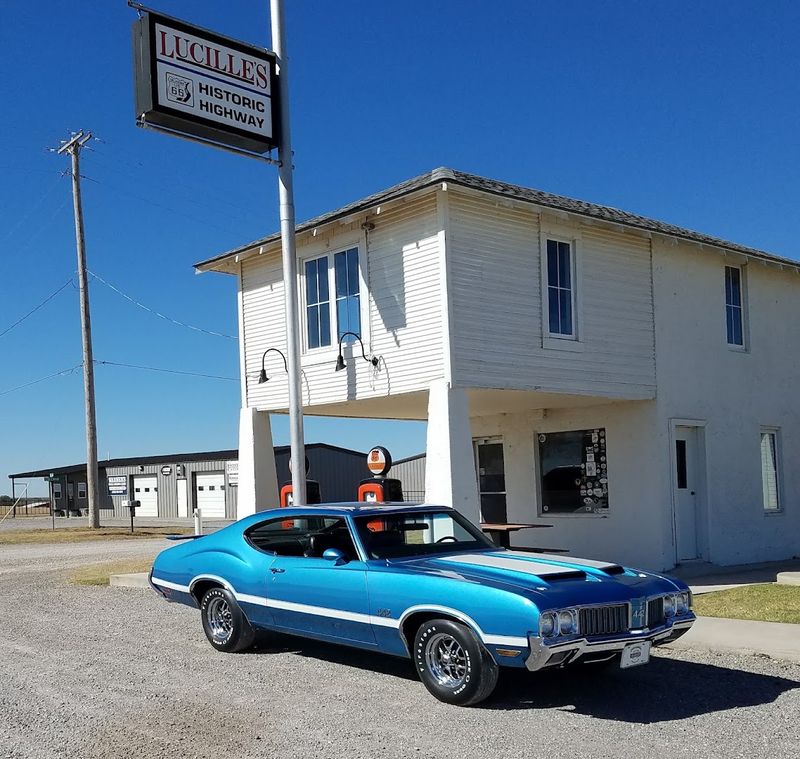
Getting to the station is straightforward. From Interstate 40, take the Hydro exit and follow the signs for Historic Route 66 heading west.
The station appears quickly on the right side of the road, and it is visible from the interstate itself, so you will have no trouble spotting it.
The site is accessible year-round, and since it is an outdoor attraction, there are no tickets, no entry fees, and no waiting in line. You simply pull in, park, and explore at your own pace.
That kind of no-barrier access is increasingly rare for destinations with this level of historical significance.
Spring and fall tend to offer the most comfortable weather for an outdoor stop in central Oklahoma. Summer visits are entirely doable but bring water and expect warm temperatures.
Winter visits can be brisk, but the site is just as photogenic with a grey sky overhead.
The station does not have set operating hours for the grounds, so a visit can happen at almost any time of day. Early morning light is particularly flattering for photography, and the site tends to be quieter then, giving you more space to take it all in without distraction.
The Broader Route 66 Experience Around Hydro
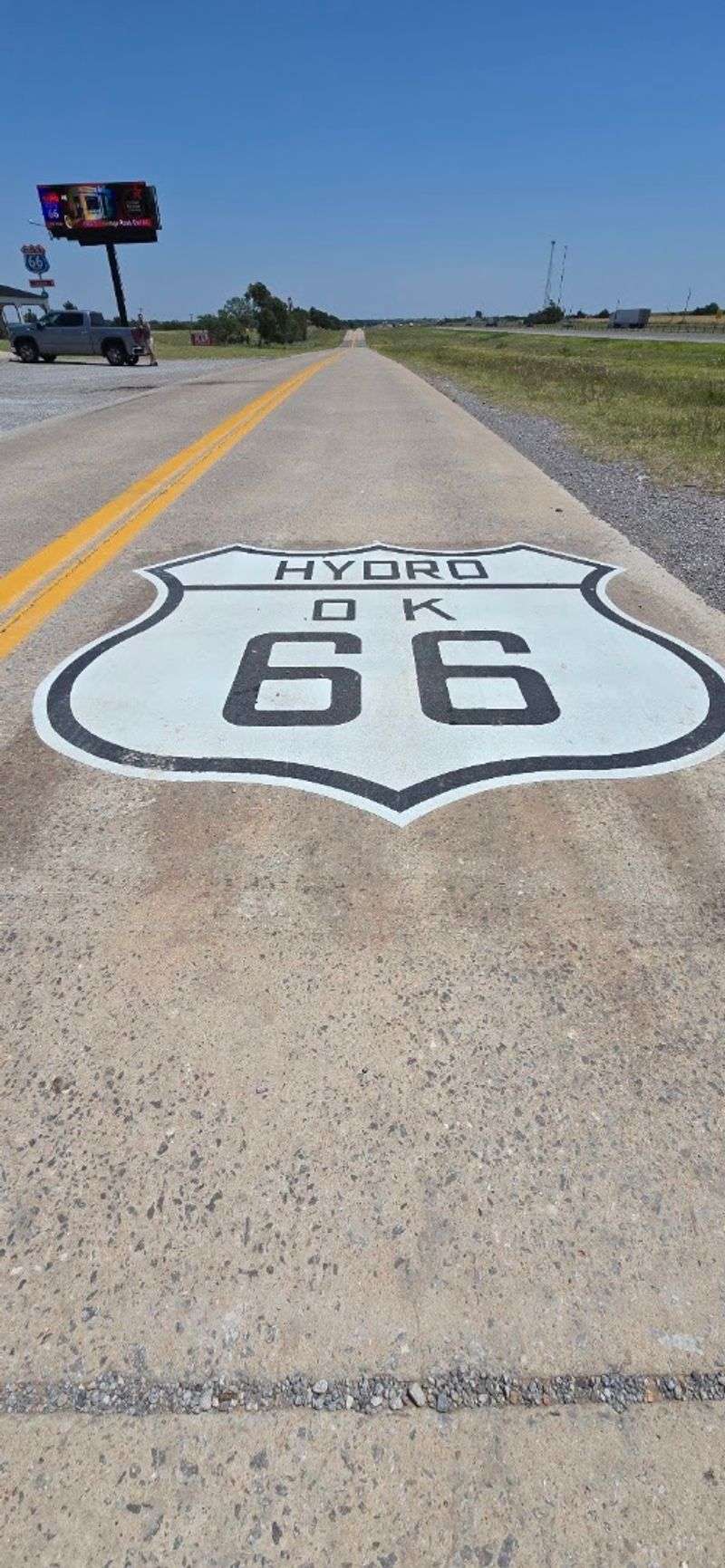
Hydro sits in a stretch of central Oklahoma that still has long, driveable sections of the original Route 66 pavement intact. That means a stop at this station can easily become part of a longer cruise along the historic two-lane road rather than just a quick detour off the interstate.
The surrounding landscape is classic Oklahoma plains, wide and open with big skies that make the drive feel cinematic in the best possible way. There are other roadside landmarks and small towns within a reasonable driving distance that round out the full Route 66 experience in this part of the state.
Elk City, Clinton, and Weatherford are all nearby communities with their own Route 66 museums, diners, and historic sites worth exploring. Combining a stop at the station with visits to some of these neighboring spots makes for a genuinely satisfying day on the road.
The relative lack of traffic on the original Route 66 alignment in this area is one of its biggest advantages. You can drive at a relaxed pace, stop whenever something catches your eye, and actually enjoy the road rather than just passing through it.
Why This Stop Stays With You Long After You Leave
Some places earn their reputation through spectacle, and others earn it through sincerity. This station falls firmly in the second category, and that is precisely why it leaves such a lasting impression on the people who visit it.
The story of one woman running a gas station on a famous American highway for more than fifty years, caring for strangers and building a community around a simple roadside stop, is the kind of story that resonates because it is fundamentally human. There is no marketing spin needed here.
Visitors from across the country and from countries as far as the Netherlands have made the detour to stand in front of this building, read the signs, and take a moment to appreciate what it represents. That kind of international draw says something important about the universal appeal of honest, well-told history.
Route 66 has hundreds of stops, but only a handful carry this kind of emotional weight. A visit to this station does not just teach you about a gas station or a highway.
It reminds you that ordinary people doing their work with care and consistency can leave a mark that outlasts them by generations.
Share this story