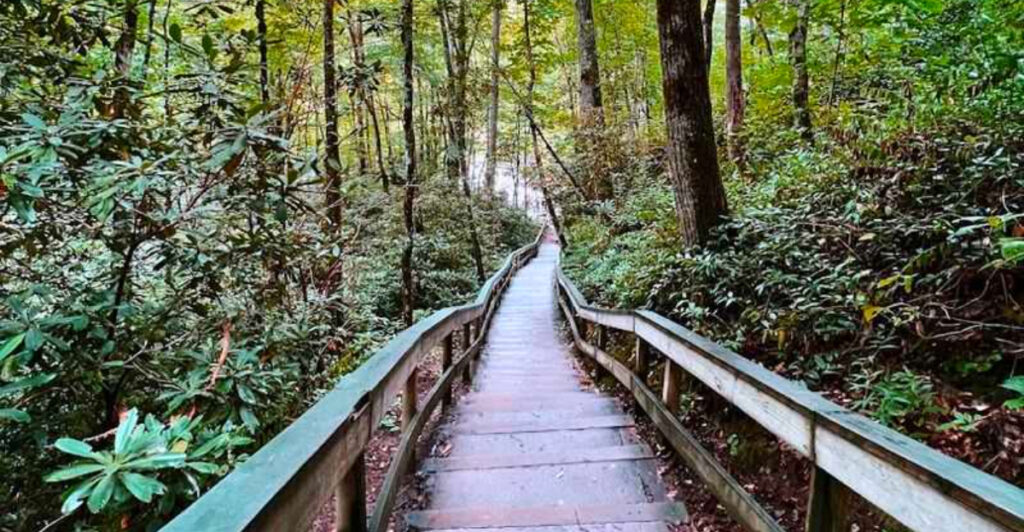
There is a waterfall tucked into the hills of western North Carolina that stops people in their tracks the moment they see it. The trail to reach it is short but memorable, built almost entirely of wooden stairs that climb through a forest so green it barely seems real in springtime.
The roar of the water reaches you before the falls ever come into view, and that anticipation alone is worth the trip. I made the climb on a warm April morning, and by the time I reached the top, I was already planning my next visit.
This place has a way of doing that to people.
Where the Trail Begins: Address and Access
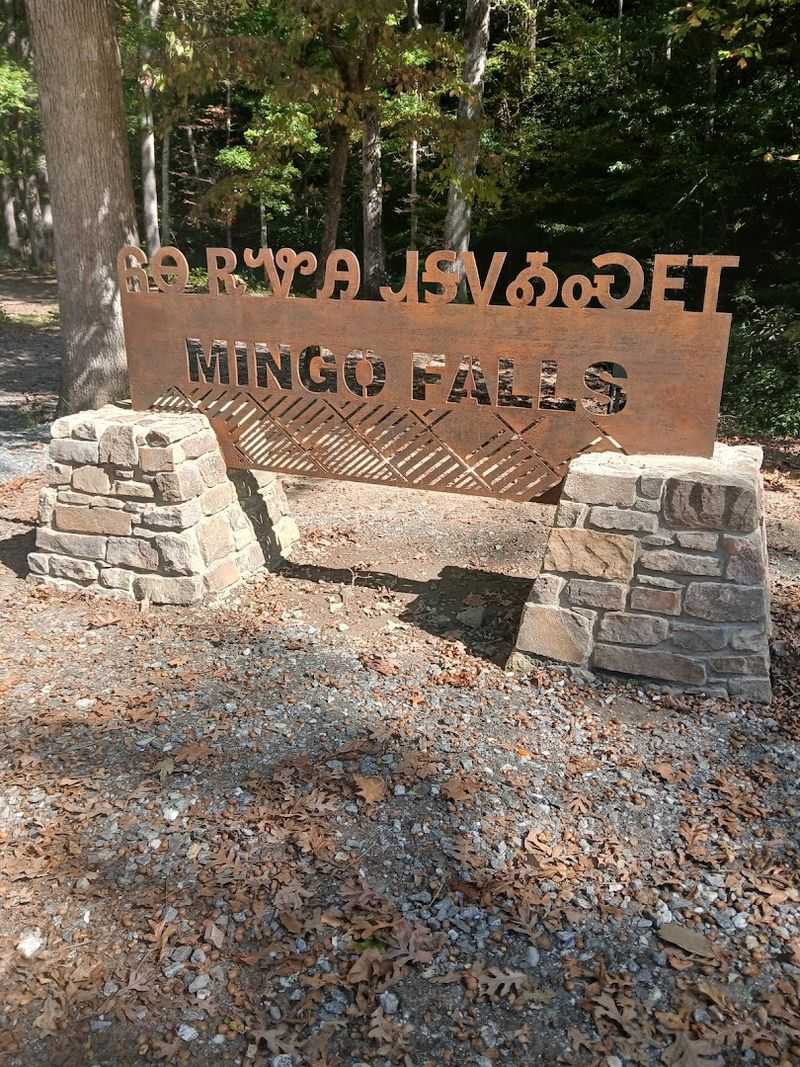
The trailhead sits right off Big Cove Road on the Eastern Cherokee Reservation in Cherokee, NC 28719, about five miles from the center of town. The parking area is a compact gravel lot, and it fills up faster than you might expect on weekends, so arriving early is a smart move.
There are portable restrooms on-site, which is a genuinely welcome detail after a winding mountain drive. Signage at the entrance is clear and informative, so you will not spend time guessing which direction to head.
The best part about access here is that this spot is not inside Great Smoky Mountains National Park, which means no parking permit is required. That saves you both time and money before you even take your first step up the trail.
The drive from Cherokee is scenic on its own, following a road that curves alongside Raven Fork Creek through a canopy of hardwoods and hemlocks. By the time you pull into that gravel lot, the mood is already set, and the anticipation of what waits at the top of those stairs starts to build in the best possible way.
The Famous 160 Steps: What the Climb Is Really Like
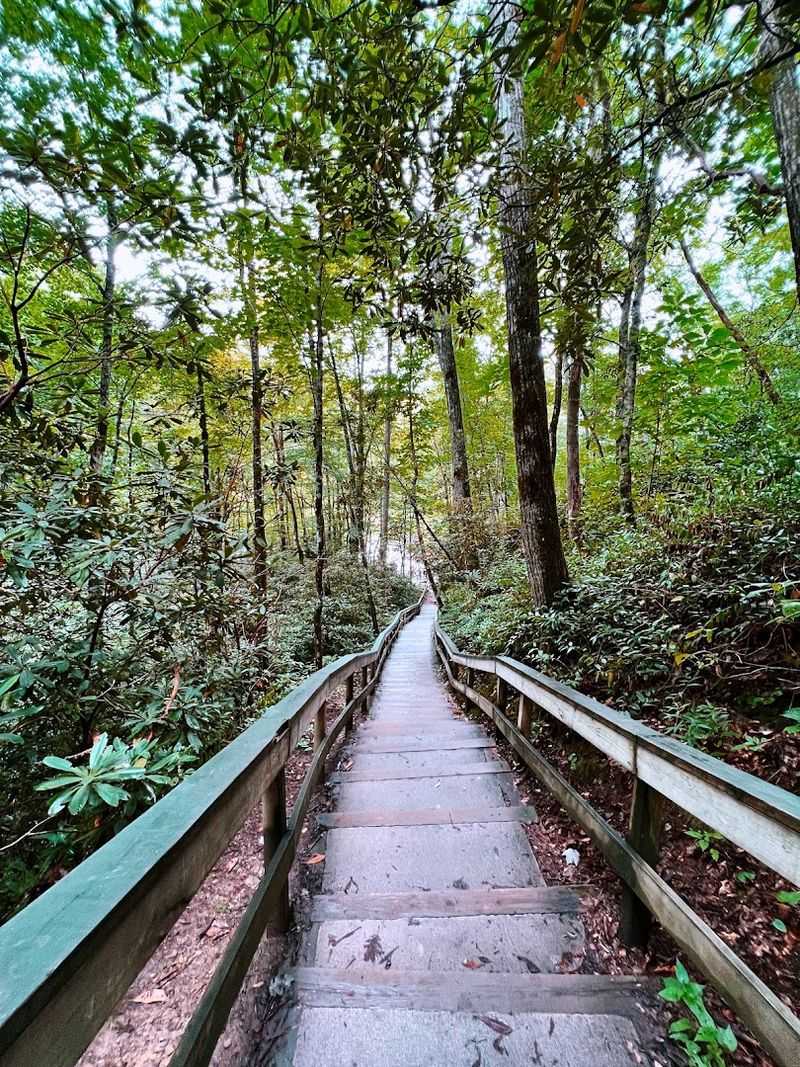
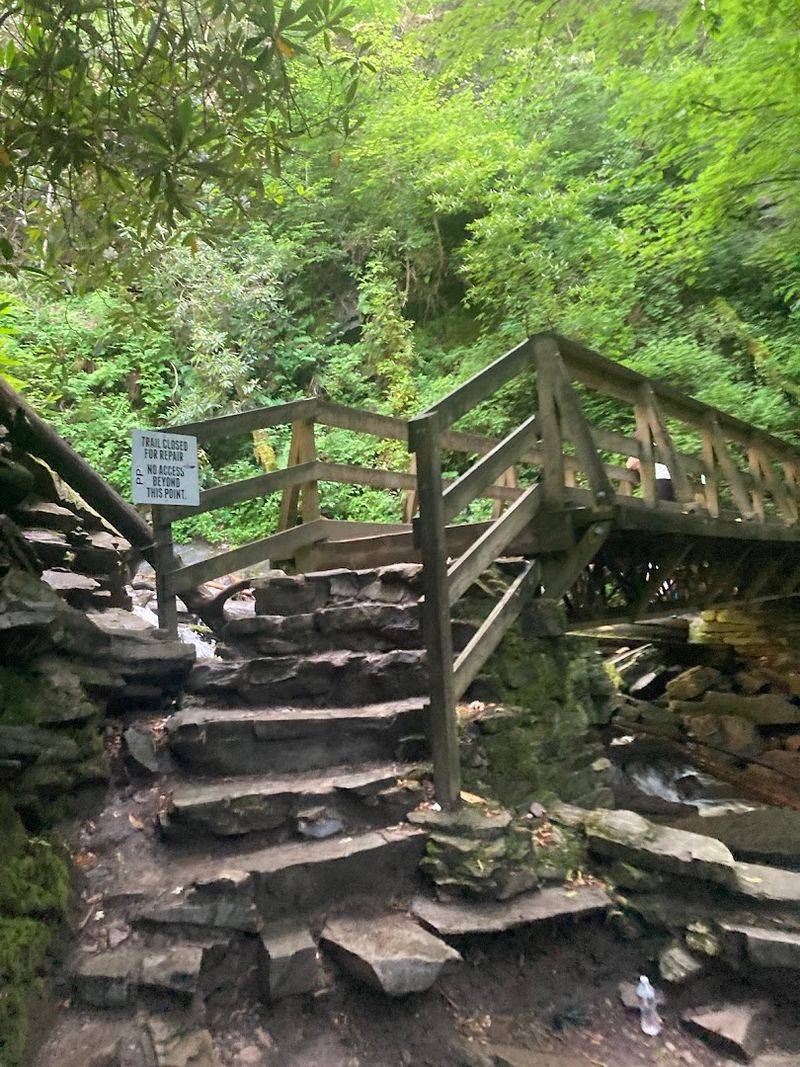
Those 160 steps have a reputation, and they earn it. The wooden staircase climbs at a steady, fairly steep angle through dense forest, and your legs will definitely feel the effort by the time you reach the top.
That said, the stairs are well-built and maintained, with a solid handrail running the full length of the climb. Kids, older couples, and casual hikers all make it up regularly, which says a lot about how manageable the trail actually is when you take it at your own pace.
There are benches placed strategically along the way, including one at the very top, so you can catch your breath and take in the surrounding forest while you rest. The trees close in around the staircase in a way that feels almost tunnel-like in spring, with fresh green leaves filtering the light from above.
The climb takes most people somewhere between five and ten minutes depending on their pace. The whole experience is short enough that even reluctant hikers in your group will agree to try it, and not one of them will regret it once they reach the top.
The Waterfall Itself: Height, Power, and Pure Drama
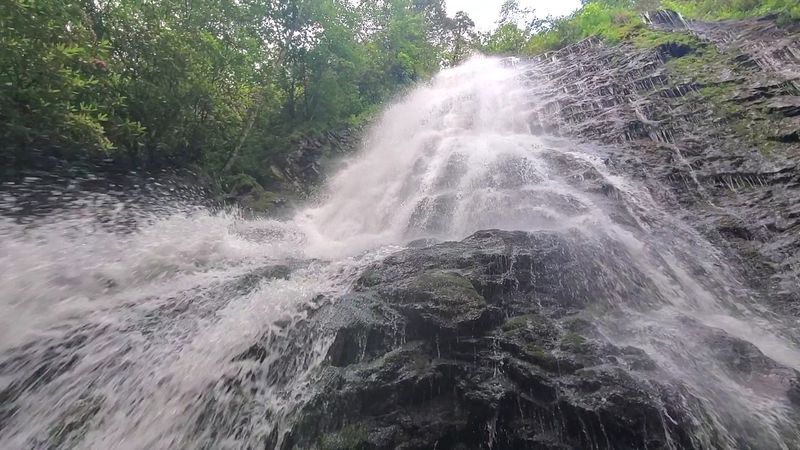
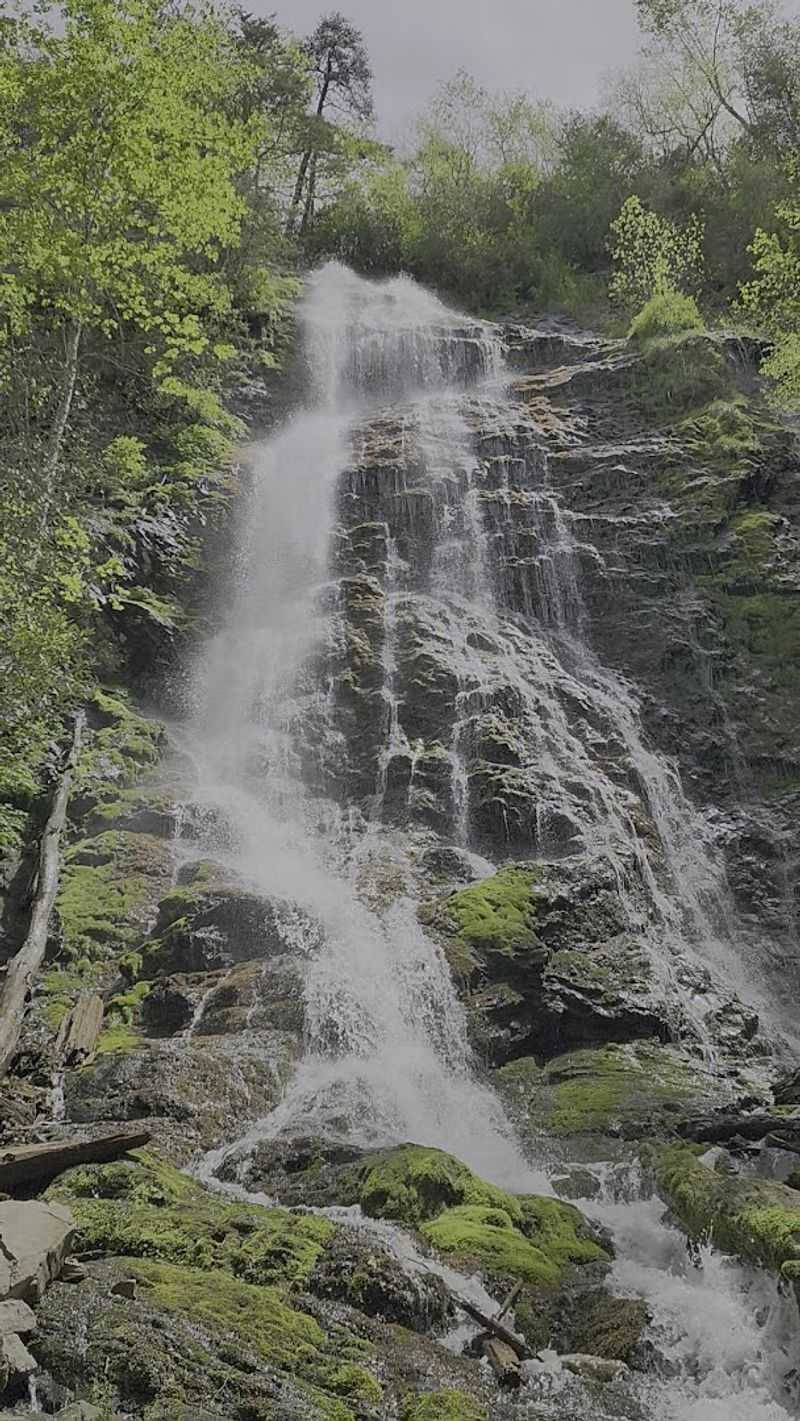
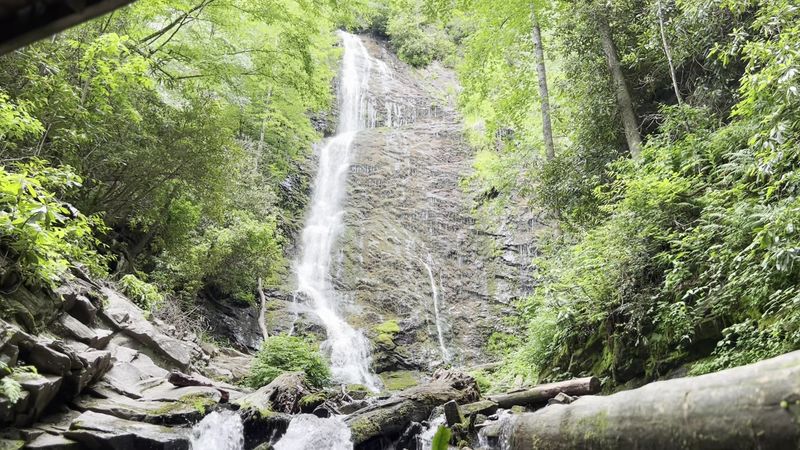
Nothing quite prepares you for the actual height of Mingo Falls the first time you see it. The water drops approximately 120 feet down a sheer rock face, which makes it one of the tallest waterfalls in the entire Appalachian region east of the Mississippi.
The volume of water varies by season, but in spring, snowmelt and rain combine to send a powerful, thundering curtain of white water over the cliff edge. The sound hits you before the full view does, a deep, rolling rush that fills the whole hollow.
Up close, the mist is real and refreshing, especially on a warm day when you have just climbed all those stairs. The rock face behind the falls is streaked with minerals and draped with mosses, giving the whole scene a layered, ancient quality that photographs struggle to fully capture.
Standing at the viewing platform and looking straight up at the falls is one of those experiences that quietly resets your sense of scale. The water does not trickle or drift; it commits fully to the drop, and that energy is genuinely thrilling to witness.
The Viewing Platform: Benches, Bridges, and the Best Angles
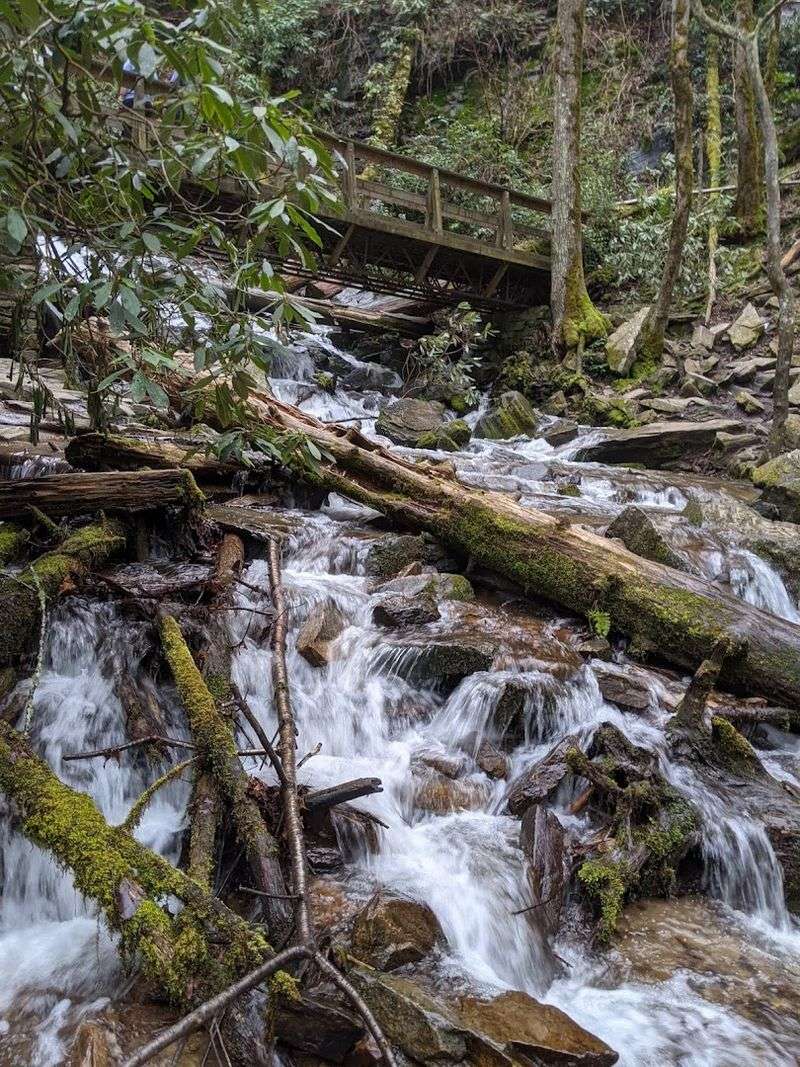
At the top of the staircase, the trail opens onto a well-designed viewing area that makes a real difference in the overall experience. There are three benches positioned to give you a direct sightline to the falls, and a small bridge crosses the creek just below the base of the waterfall.
That bridge is a surprisingly good spot to sit with a packed lunch while the creek rushes beneath your feet and the falls roar just ahead. It feels like a front-row seat to one of nature’s best performances, without any of the discomfort of sitting on a rock.
The platform is wide enough that even on a moderately busy day, everyone finds a comfortable spot. Most visitors spend around ten to fifteen minutes at the top before heading back down, so the crowd tends to rotate fairly quickly.
Photography here is straightforward because the falls are large enough to frame well from multiple angles. Wide shots capture the full height of the drop, while closer angles highlight the texture of the water against the dark rock face.
Either way, the light in spring is particularly kind to this spot.
Spring at Mingo Falls: Why This Season Hits Different
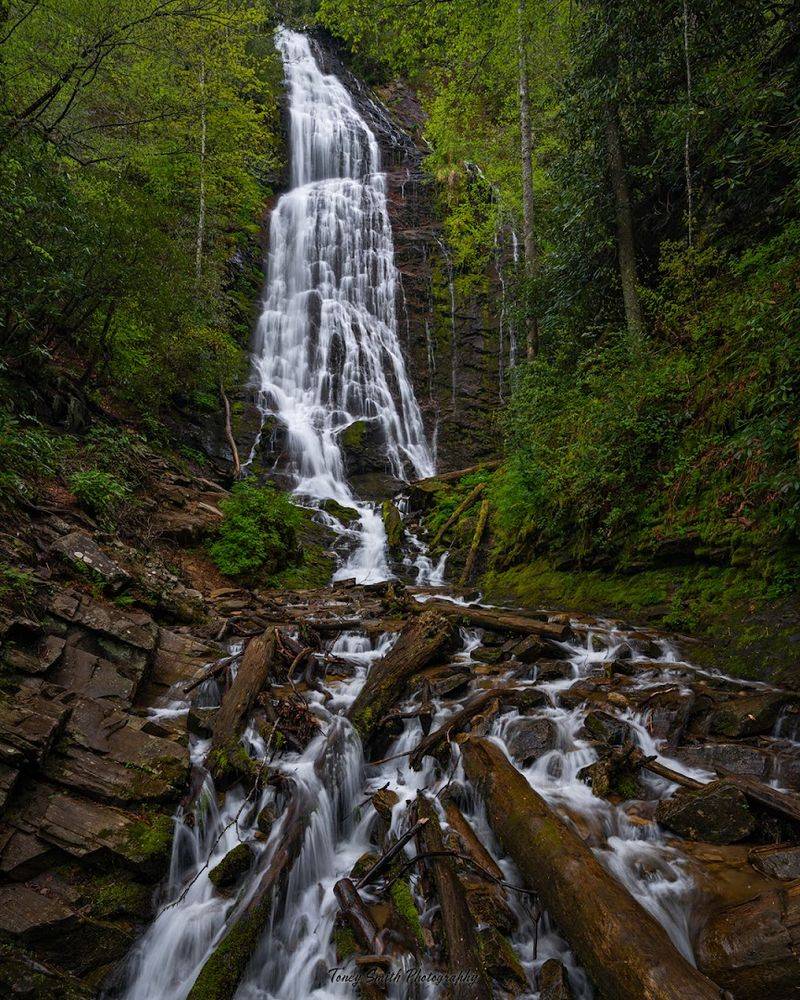
Spring is the season that truly shows off what this waterfall can do. Snowmelt from the higher elevations feeds Mingo Creek through March and April, pushing the water volume to its seasonal peak and making the falls louder and more dramatic than at almost any other time of year.
The surrounding forest responds to the warming temperatures with a burst of fresh green that feels almost electric. Wildflowers appear along the lower trail, and the air carries that clean, damp scent that only comes when everything is actively growing at once.
The contrast between the white rushing water and the vivid new foliage makes for some of the most visually striking conditions of the entire year. Photographers who plan a spring visit specifically for this combination know exactly what they are doing.
Temperatures at the falls tend to run cooler than the surrounding area, even on warm spring days, because the mist and the shade from the tall canopy keep things refreshingly crisp. A light jacket tucked into your pack is worth bringing, even when the parking lot feels perfectly comfortable.
Spring at this waterfall is not a season; it is an event.
Cultural Significance: The Cherokee Connection
Mingo Falls sits on land belonging to the Eastern Band of Cherokee Indians, and that context adds a layer of meaning to the visit that goes well beyond the scenery. The Cherokee people have called these mountains home for thousands of years, and the reservation surrounding the falls is a living, active community, not a historical exhibit.
The name Mingo itself carries regional history, and the falls have long held significance in this landscape as a natural landmark within Cherokee territory. Visiting with that awareness in mind changes how you move through the space and how you treat it.
The Cherokee Reservation, officially known as the Qualla Boundary, encompasses a large area of western North Carolina, and the falls are one of its most visited natural features. The community welcomes visitors warmly, and nearby Cherokee offers cultural museums, authentic crafts, and dining that reflect the depth of the nation’s ongoing traditions.
Respecting the land here means staying on the marked trail, keeping off the rocks near the water, and following the posted guidelines at the trailhead. The signage makes the rules clear, and the reasons behind them are straightforward: the ecosystem around the falls includes protected and sensitive species that need that respect to survive.
Wildlife and Forest Along the Trail
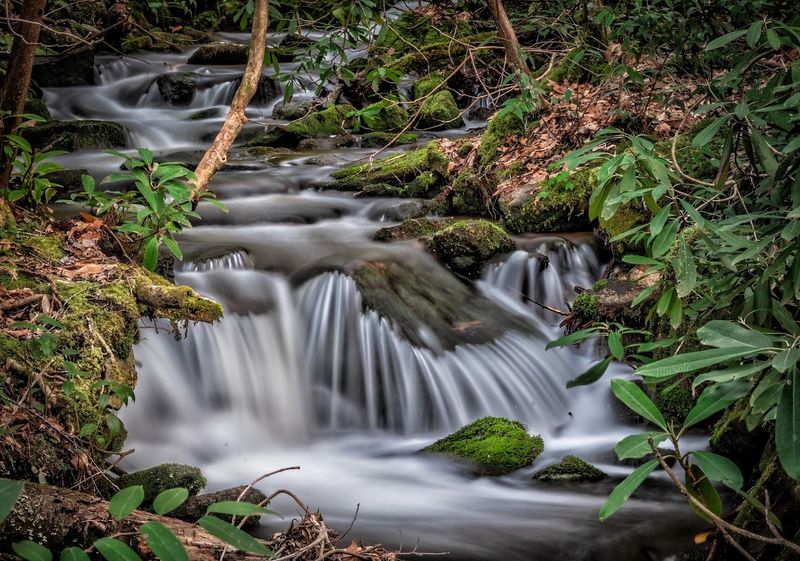
The short walk to the falls punches well above its weight in terms of what you can observe along the way. The forest around Mingo Creek is a mix of hemlocks, tulip poplars, and various hardwoods that create a layered canopy especially lush in spring and summer.
Raven Fork and its tributaries support a healthy population of native brook trout, and the creek alongside the lower trail is clear enough to spot them if you pause and look. The water quality in this part of the reservation is genuinely excellent, which tells you something about how carefully the land is managed.
Birds are active throughout the forest, particularly in spring when migration brings warblers and thrushes through the mountains. If you arrive early in the morning, the trail can feel almost private, with birdsong filling the trees and the sound of the creek keeping pace alongside you.
The trailhead signage mentions the presence of sensitive species in the area, which is a good reminder to stay on the path and resist the urge to scramble up the rocks near the falls. The forest does its best work when visitors move through it quietly and leave it exactly as they found it.
Practical Tips for First-Time Visitors
A few practical notes can make the difference between a smooth visit and a frustrating one. The parking lot is small, holding somewhere around a dozen vehicles, and it fills quickly on spring weekends.
Arriving before 9 a.m. gives you the best chance of walking straight in without waiting.
Footwear matters more than people expect on this trail. The wooden stairs can be slick when wet, and even a light rain earlier in the day leaves them damp for hours.
Trail shoes or sneakers with decent grip are the right call; sandals are not.
There is no entry fee and no permit required since the falls are not inside the national park boundaries. That makes it one of the most accessible waterfall experiences in the entire Smoky Mountains region, which is part of why it draws such consistent crowds.
Bringing water is always worth it, even for a trail this short, because the mist and the cool air can mask how much you are actually exerting yourself on the climb. A small snack for the bench at the top turns the visit into a proper break rather than just a quick stop, and that slower pace is honestly the better way to experience this place.
Why This Spot Keeps Drawing People Back
A 4.9-star rating across more than three thousand reviews is not something that happens by accident. Mingo Falls earns that reputation visit after visit because it delivers something rare: a genuinely spectacular natural feature that is accessible to almost anyone willing to climb a few stairs.
The combination of factors here is hard to beat. It is free to visit, easy to find, close to Cherokee and the broader Smoky Mountains corridor, and the payoff at the top is immediate and undeniable.
That formula keeps both locals and out-of-state travelers coming back.
Repeat visitors often note that the falls look different with every season. Winter brings ice formations along the rock face and icicles hanging from the surrounding branches.
Summer softens the flow but deepens the green of the forest. Fall wraps the whole scene in orange and gold.
Spring, though, is when the trail feels most alive, when the water is at its most forceful and the forest is at its most vibrant. Every season has its appeal, but there is a particular energy to a spring morning at Mingo Falls that is hard to describe and even harder to forget.
Some places just have that quality, and this one has it in abundance.
Share this story