Somewhere in rural Minnesota, a man spent 29 years of his life wrapping twine around a ball in his backyard, and the result became one of the most oddly compelling roadside attractions in the entire country. The ball eventually grew so large that it had to be moved by crane.
Today, thousands of people make the trip each year just to stand next to it and stare. Darwin, Minnesota may be a small town, but it carries a story that is genuinely hard to believe until you see it with your own eyes.
The Man Behind the Twine
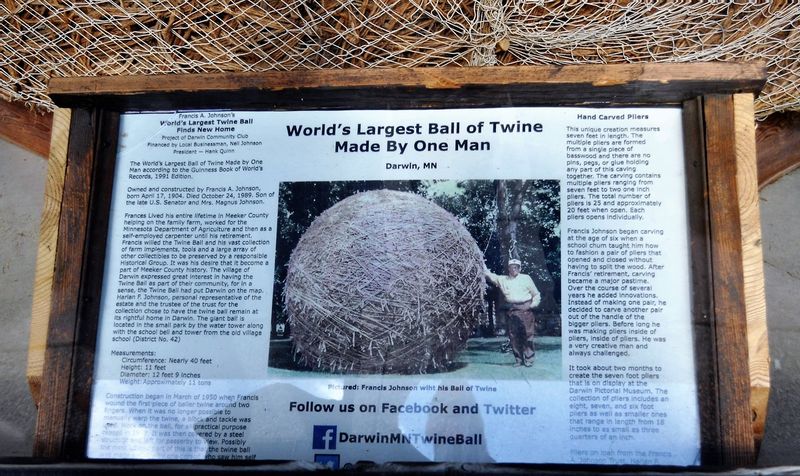
Francis Johnson did not set out to become famous. Starting in 1950, the Darwin, Minnesota farmer began wrapping sisal twine during the long winter months, slowly building what would become a world record.
He worked on it almost every day for four hours without fail.
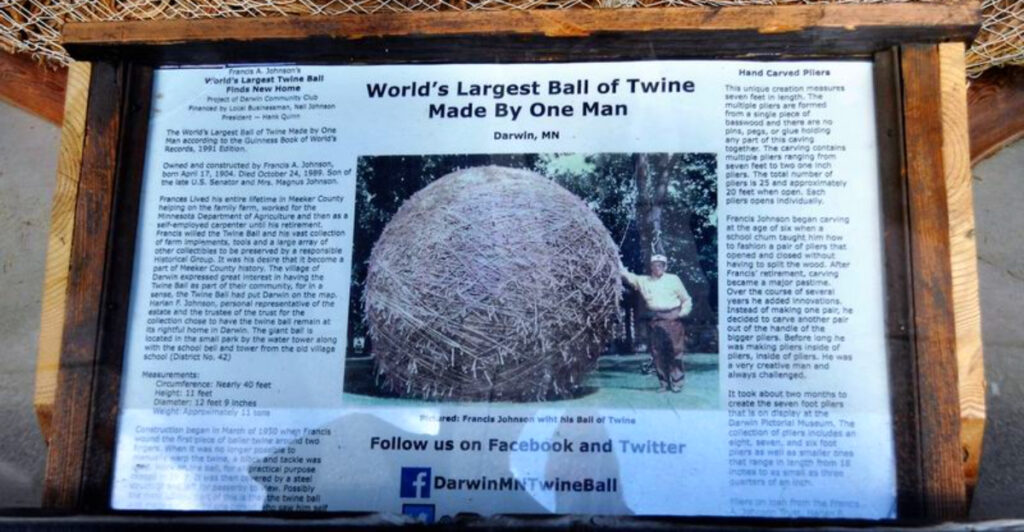
By the time Johnson finished in 1979, the ball weighed nearly 17,400 pounds and measured over 12 feet in diameter. That is not a typo.
One man, working alone, created something that heavy over the course of nearly three decades.
What makes this story even more remarkable is that Johnson never seemed to do it for attention. He just kept wrapping.
The dedication involved is almost impossible to picture, and yet the ball sitting in Darwin today is undeniable proof that he meant business every single day he picked up that twine.
Where Darwin, Minnesota Actually Is
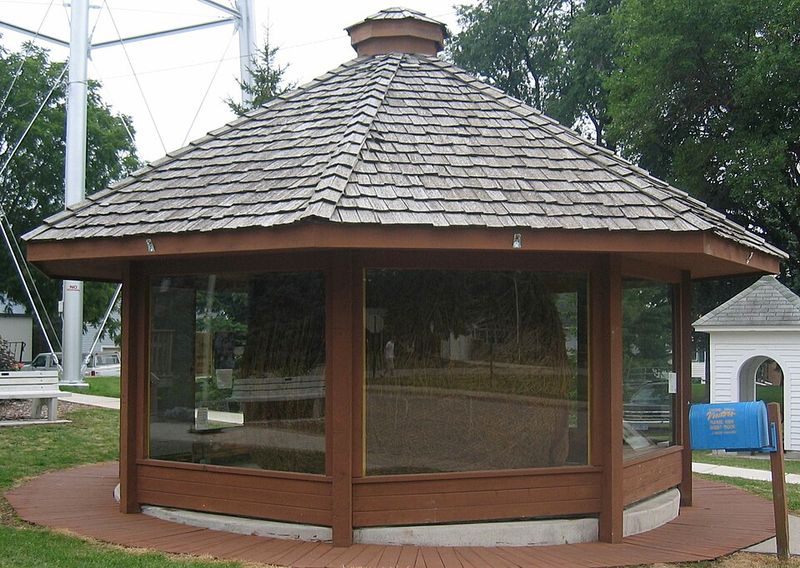
Darwin sits in Meeker County in central Minnesota, roughly 75 miles west of Minneapolis. The town had a population of just 348 people as of the 2020 census, which makes its worldwide name recognition all the more surprising.
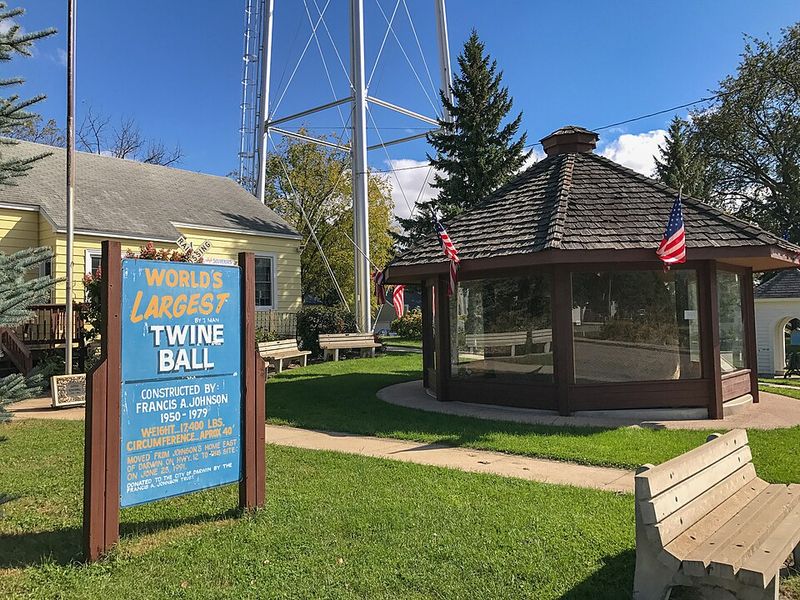
The official address for the ball of twine is in Darwin Township, MN, United States, and the attraction is right in the heart of town. You really cannot miss it because it has its own open-sided pavilion on the main street.
Getting there is straightforward from the Twin Cities, and the drive itself takes you through classic Minnesota countryside with open fields and quiet two-lane roads. For a town this size to draw visitors from across the country and beyond says everything about how powerful one person’s unusual passion can be when it becomes a permanent landmark.
The Record That Sparked a Friendly Rivalry
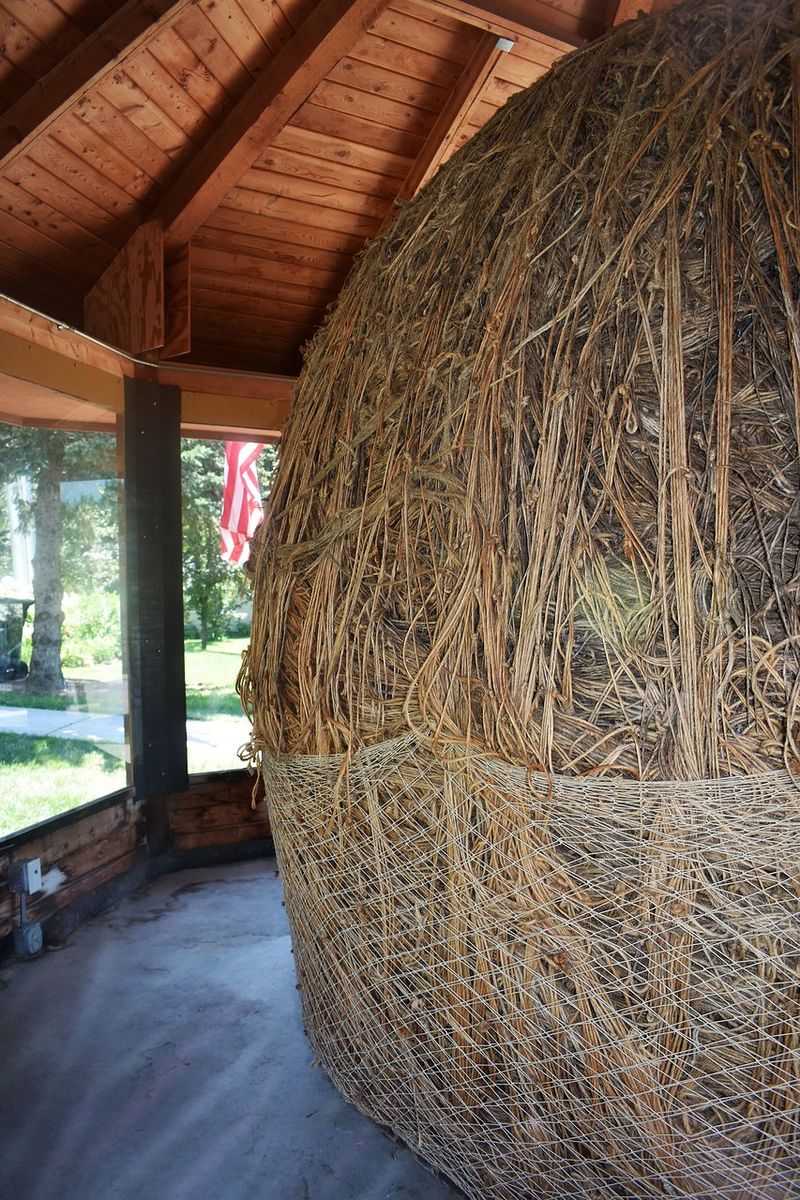
Not every world record goes uncontested. Darwin’s ball of twine holds the Guinness World Record specifically for the largest ball of twine built by a single person, which is an important distinction.
Other towns have made competing claims, but those involve community efforts with multiple people contributing.
Cawker City, Kansas, for example, has a community ball that continues to grow as visitors add twine. Darwin’s claim is different because every single wrap came from one man’s hands over a defined period of time.
That specificity is what makes the record stand on its own.
The rivalry has actually been good for both towns, drawing curious travelers who want to compare the two or simply appreciate the strange American tradition of turning ordinary materials into extraordinary monuments. Darwin leans into the distinction with quiet pride rather than loud competition, which feels very Minnesota.
What the Ball Actually Looks Like Up Close
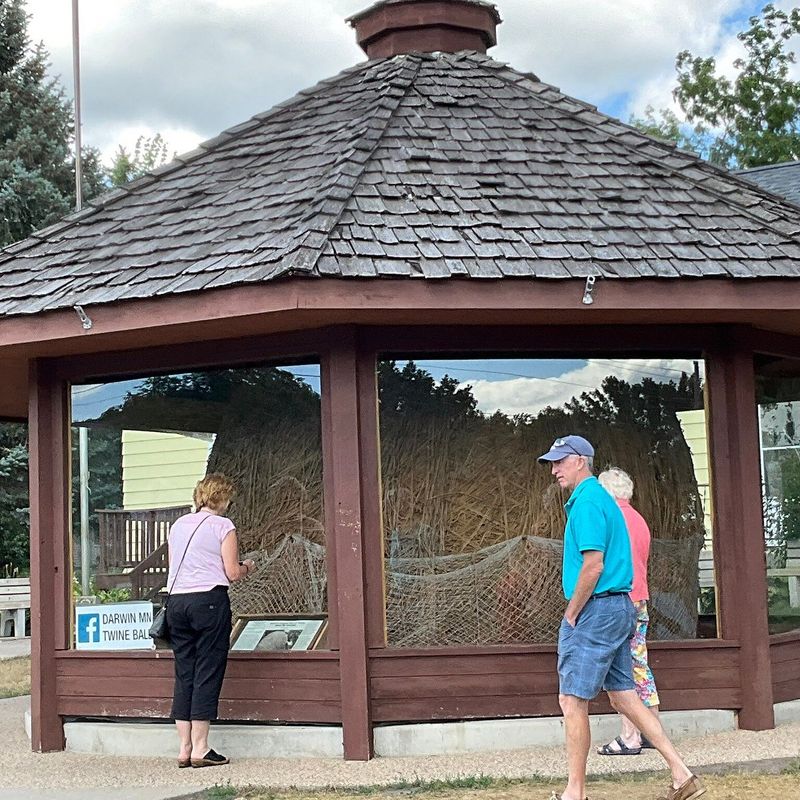
Nothing quite prepares you for the actual size of the thing. Standing in front of it, the ball fills the pavilion completely and towers over adult visitors in a way that makes you recalculate everything you thought you knew about what one person can accomplish with patience and string.
The surface is textured and layered, showing years of tight wrapping wound in different directions. You can see the density of it just by looking, and the sheer weight becomes believable the moment you realize how solid the whole structure appears.
A small plaque and informational sign near the pavilion give you the key facts: the weight, the diameter, and the years it took to build. Most visitors spend several minutes just walking around it slowly, looking at it from different angles as if trying to find the seam where it all began.
The Pavilion That Protects a Legend
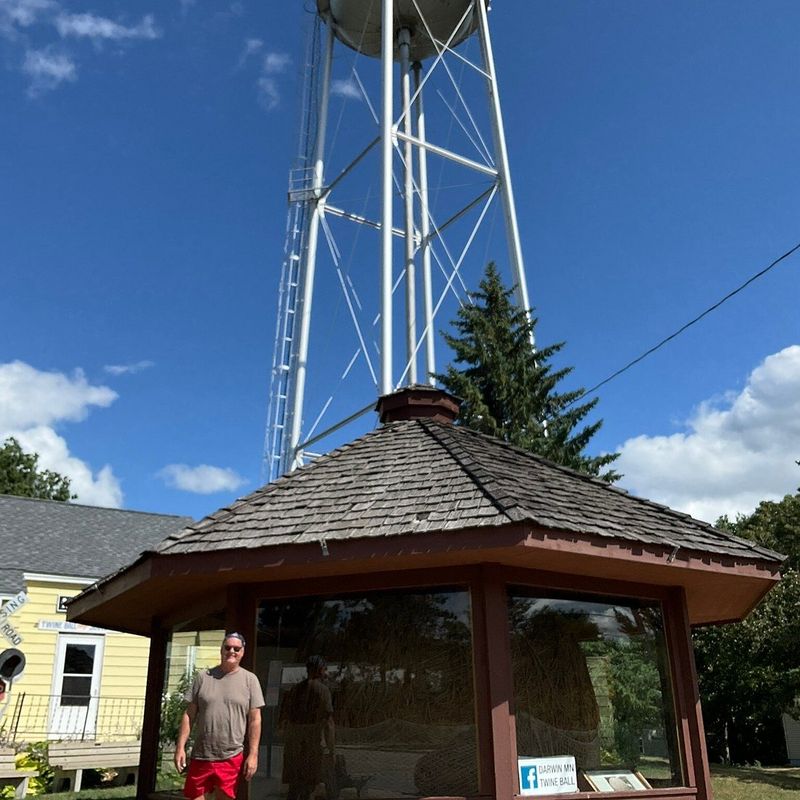
After Johnson passed away in 1989, the town of Darwin took responsibility for preserving his life’s work. The ball was moved to its current spot on the main street and placed under a purpose-built open-sided pavilion that keeps rain and snow off while still allowing visitors to see and photograph it freely at any time.
The pavilion is simple and practical, which fits the spirit of the attraction perfectly. There are no ticket booths, no entry fees, and no scheduled tour times.
You just pull up, walk over, and take it all in at your own pace.
That open-access approach is part of what makes the experience feel genuinely welcoming rather than commercial. The town clearly wants people to enjoy it rather than profit from it, and that attitude gives the whole stop a warmth that polished tourist attractions rarely manage to replicate.
Twine Days: The Annual Festival
Darwin does not let its claim to fame sit quietly all year. Each summer, the town hosts Twine Days, an annual festival that brings the community together and draws visitors who plan their trips specifically around the event.
It is one of those small-town celebrations that feels genuinely local rather than manufactured for tourists.
The festival typically includes activities, food, and community events centered around the town’s unique identity. For a town of under 350 people, the energy during Twine Days is impressive and reflects how much residents actually enjoy sharing their quirky piece of history with the outside world.
Even outside of the festival, the ball of twine attracts steady visitors throughout warmer months. But showing up during Twine Days adds a layer of community spirit to the visit that turns a quick roadside stop into something that actually feels like a small celebration.
How Johnson Actually Built It
The process Johnson used was methodical and consistent. He worked with sisal twine, a natural fiber material commonly used on farms for bundling hay and other agricultural tasks.
Starting with a small center, he wrapped layer after layer over the years, maintaining a roughly spherical shape throughout the process.
During the early years, the ball was manageable enough to move around by hand. As it grew larger and heavier, that became impossible, and it eventually required a crane to relocate it from his property to its current home in town after his passing.
Johnson reportedly kept the ball stored in a specially built structure on his farm to protect it from the elements. The care he took in preserving it during those 29 years shows that this was never a casual hobby.
He treated the project with the same seriousness a craftsman would give any long-term work.
The Cultural Footprint of One Small Town
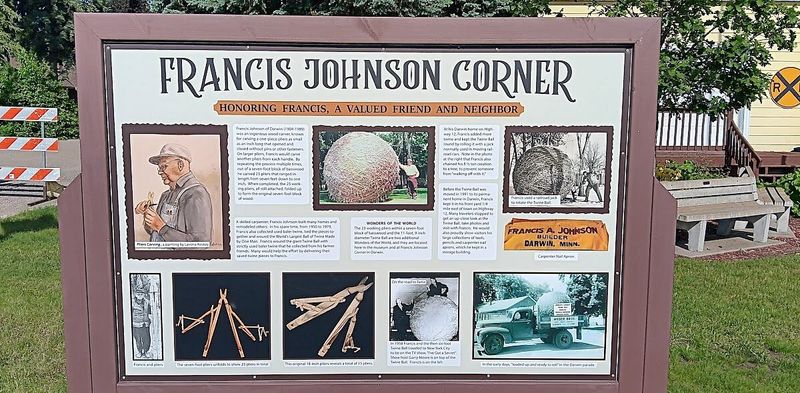
Darwin’s ball of twine has shown up in television programs, travel magazines, and countless road trip bucket lists over the decades. It has become a symbol of a very particular kind of American creativity, the kind that does not ask for permission or recognition but simply keeps going until the result speaks for itself.
The town has embraced this identity without overdoing it. You will not find a sprawling gift shop empire or a theme park built around the attraction.
What you will find is a community that takes genuine pride in something genuinely unusual, which is rarer than it sounds.
For travelers who collect roadside America experiences, Darwin belongs on the list alongside the most memorable stops in the Midwest. The story behind the ball is just as compelling as the object itself, and that combination of history and spectacle is what keeps people talking about it long after they drive away.
What Visitors Say Without Saying a Word
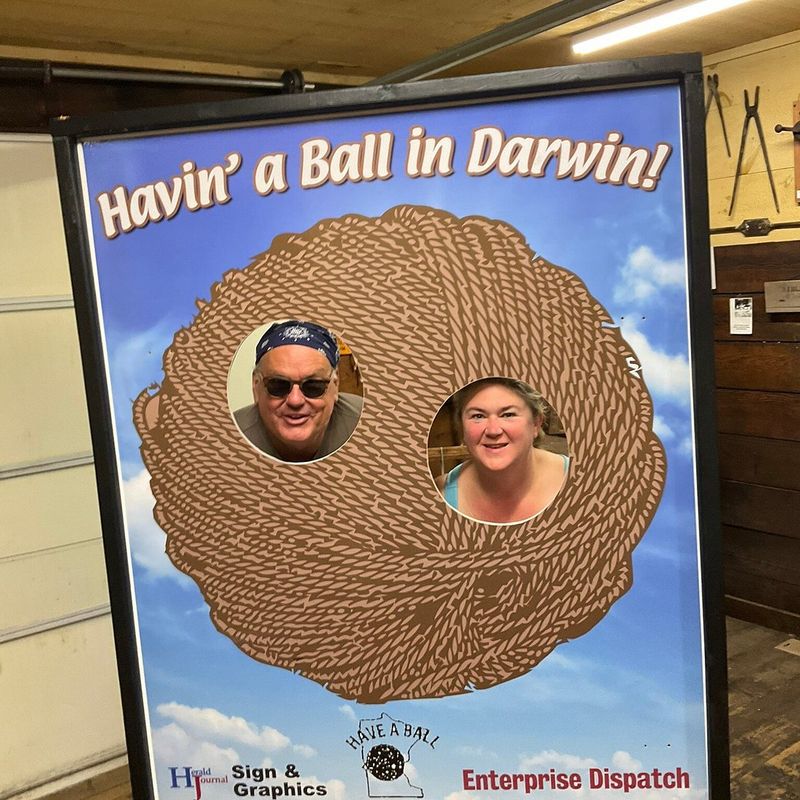
There is a specific look people get when they first walk up to the ball. It is somewhere between disbelief and delight, the kind of expression you cannot really plan for.
Adults who came just to check a box on a road trip list end up staying longer than expected, circling the pavilion and reading the information signs more carefully than they anticipated.
Kids tend to react with straightforward amazement, pointing at the size and immediately trying to calculate how long it would take them to wrap that much twine. It is the kind of attraction that sparks real conversation rather than just a quick photo and a return to the car.
That spontaneous engagement is the best thing a roadside stop can offer. Darwin delivers it consistently, and the relaxed setting means there is no rush, no crowd management, and no pressure.
Just a ball of twine and the story it carries.
Planning Your Own Stop in Darwin
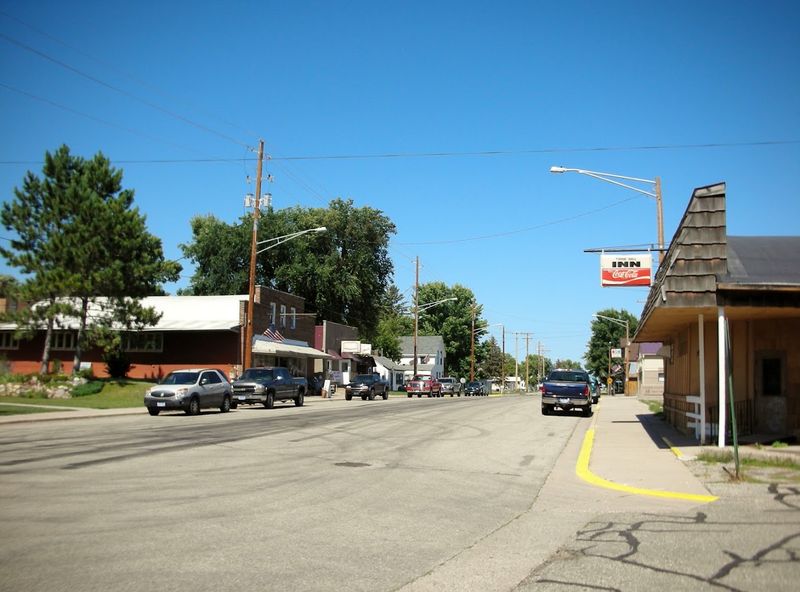
A visit to Darwin fits naturally into a broader central Minnesota road trip. The town is close enough to the Twin Cities for a day trip and works well as a stop along longer routes heading west through the state.
The ball of twine is accessible year-round since the pavilion is open-sided and free to visit at any hour.
There are no formal hours or admission costs, so the only real planning required is making sure your route includes the turn into town. The surrounding Meeker County area offers lakes and quiet countryside that reward slower travel if you have extra time.
Bringing a camera is worth it, not just for the ball itself but for the character of the main street around it. Darwin is the kind of place that reminds you why taking the slower road instead of the highway sometimes leads to the most memorable moments of any trip.
Share this story