The blues did not build itself. It was shaped by real people with real stories, and some of the most powerful voices behind that sound belonged to Black women who sang from experience.
These artists did not just perform the blues. They defined it, expanded it, and carried it across generations.
From the tent shows of the Deep South to the recording studios of Chicago, these women gave blues its grit, its grace, and its emotional backbone. Their names deserve to be known, their recordings deserve to be heard, and their contributions deserve far more recognition than they typically receive.
Ma Rainey
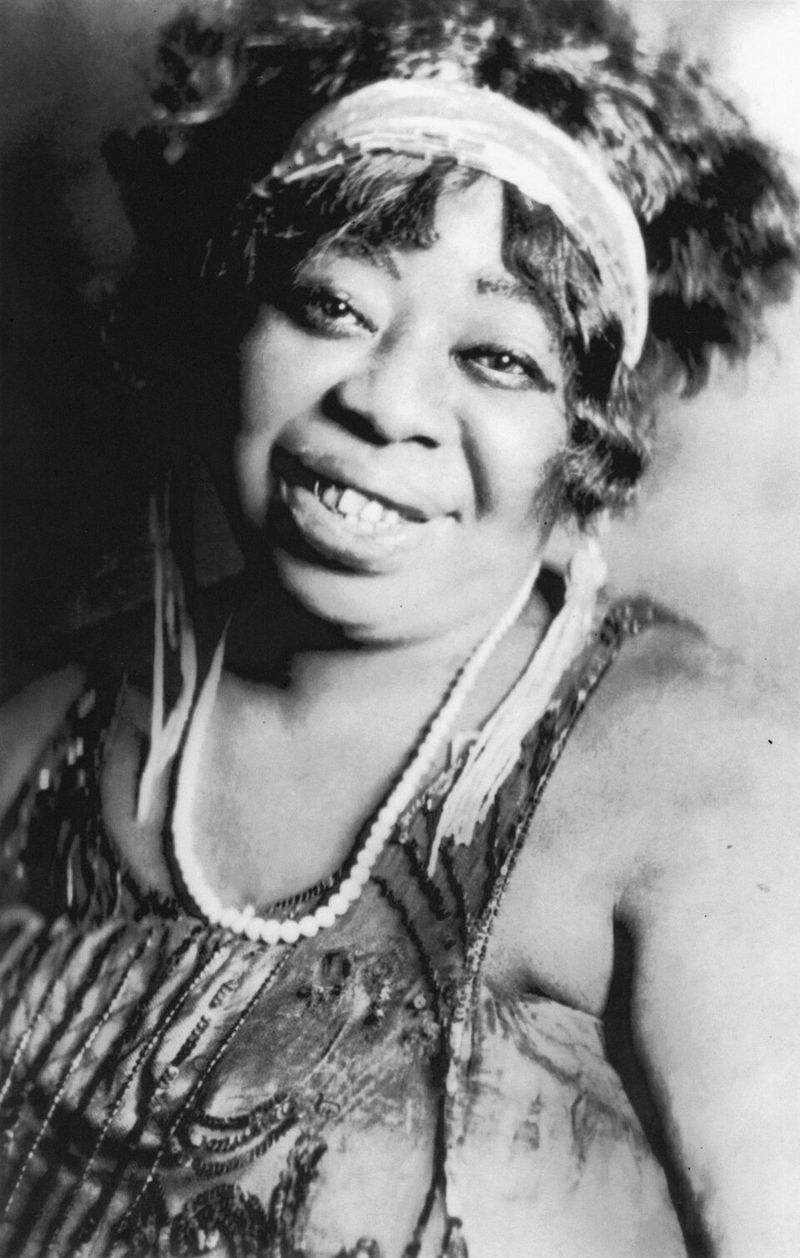
Born Gertrude Pridgett in Columbus, Georgia, Ma Rainey earned the title “Mother of the Blues” long before the recording industry caught up to what she was doing. She was performing the blues in tent shows and traveling circuits years before anyone thought to put the sound on a record.
Her presence was commanding, her voice was unmistakable, and her stage confidence set a standard that followers would spend decades trying to match.
Rainey brought raw honesty to her music. She sang about heartbreak, hard travel, desire, and survival with a directness that felt personal rather than theatrical.
Her recordings from the 1920s, made with Paramount Records, gave that voice a permanent home in history.
She also mentored younger artists, including Bessie Smith. That mentorship alone shaped the next chapter of blues history.
Ma Rainey was not just a performer. She was the foundation on which the entire classic blues era was built.
Bessie Smith
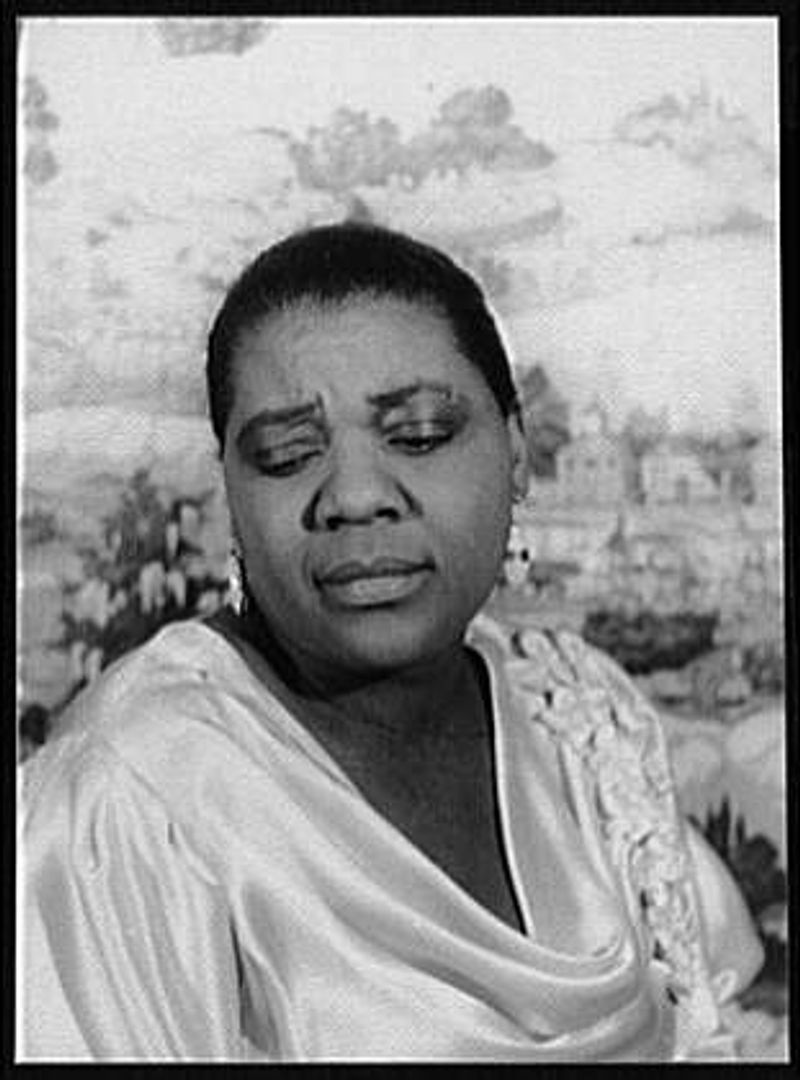
Bessie Smith did not just sing the blues. She made the blues feel like a force of nature.
Her 1923 recording of “Downhearted Blues” sold an estimated 780,000 copies within months of its release, turning her into one of the biggest recording stars of her era. That kind of commercial power was remarkable for any artist, and it was extraordinary for a Black woman in the early 20th century.
Her voice carried tremendous emotional range. She could deliver a slow, aching ballad with the same authority she brought to an uptempo number.
Phrasing, timing, and breath control were all tools she used with precision.
Smith’s influence spread far beyond blues. Singers across jazz, soul, gospel, and rock have pointed to her as a defining model.
Janis Joplin, who helped fund a headstone for Smith’s grave, was among the many who openly credited her as a guiding force.
Mamie Smith
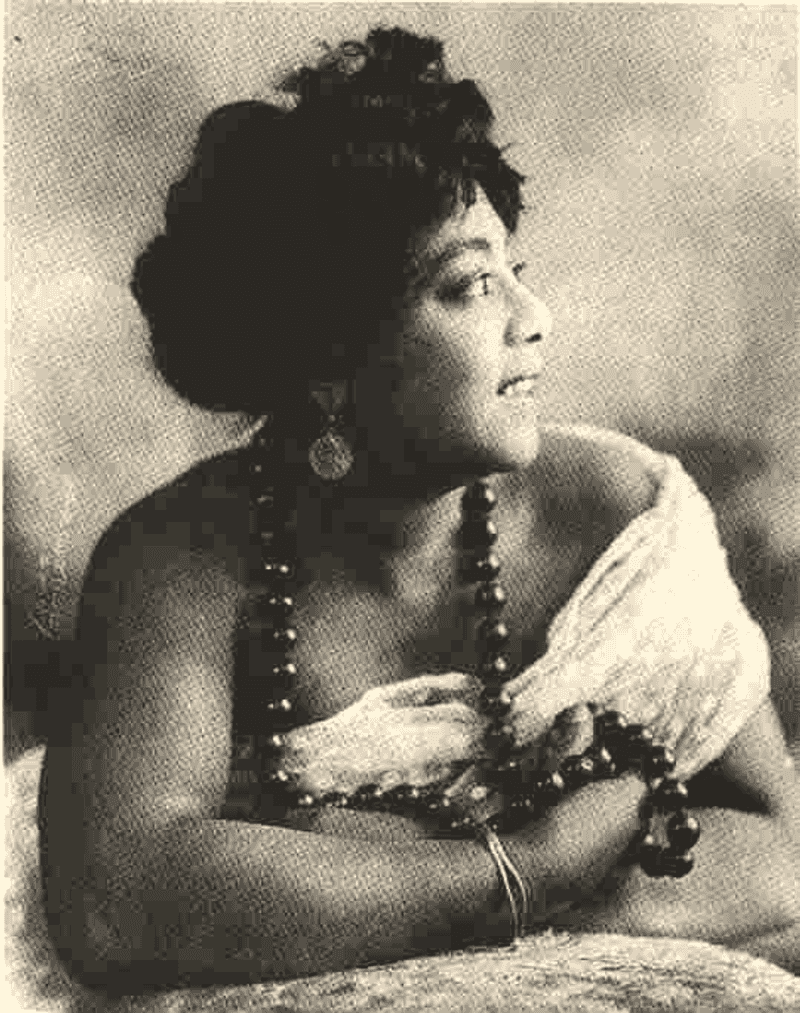
Most people learn about blues history starting in the middle. Mamie Smith takes you back to the very beginning.
In August 1920, she recorded “Crazy Blues” for OKeh Records and made history as the first Black vocalist to record a commercial vaudeville blues record, according to the Library of Congress. That single recording changed what the music industry believed was possible and profitable.
Before that moment, record labels largely assumed Black audiences were too small or too scattered to matter commercially. “Crazy Blues” sold enormously well and proved that assumption completely wrong. It opened the door for dozens of other Black blues women to record throughout the 1920s.
Mamie Smith was already an experienced stage performer before that recording session. She had worked in vaudeville, musical theater, and traveling shows.
Her confidence in the studio came from years of performing for live audiences. Without her willingness to step up to that microphone, blues history looks very different.
Memphis Minnie
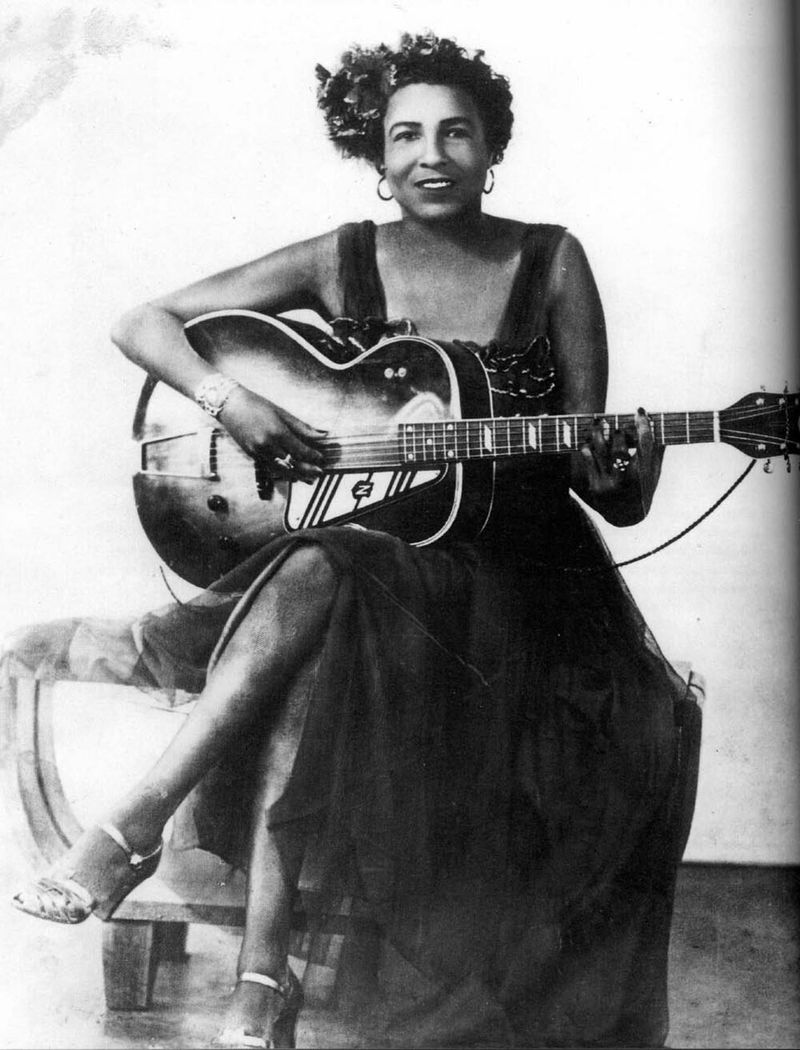
Memphis Minnie was a guitarist first and a singer second, which set her apart from nearly every other woman in blues during her era. She did not rely on a backing band to carry the instrumental weight.
She picked up the guitar herself, wrote her own material, and competed directly with male musicians on their own terms. That independence was not common.
It was rare and deliberate.
Her 1941 recording “Me and My Chauffeur Blues” is preserved in the Library of Congress National Recording Registry, a recognition of its cultural and historical significance. The song showcases her sharp wit and confident delivery alongside guitar playing that still sounds assured decades later.
Minnie also helped bridge the gap between country blues and the electric Chicago sound. She adapted as the music evolved, updating her style without losing her identity.
Muddy Waters and Big Bill Broonzy reportedly respected her as a serious musical competitor, which says everything about the level she operated at.
Sippie Wallace
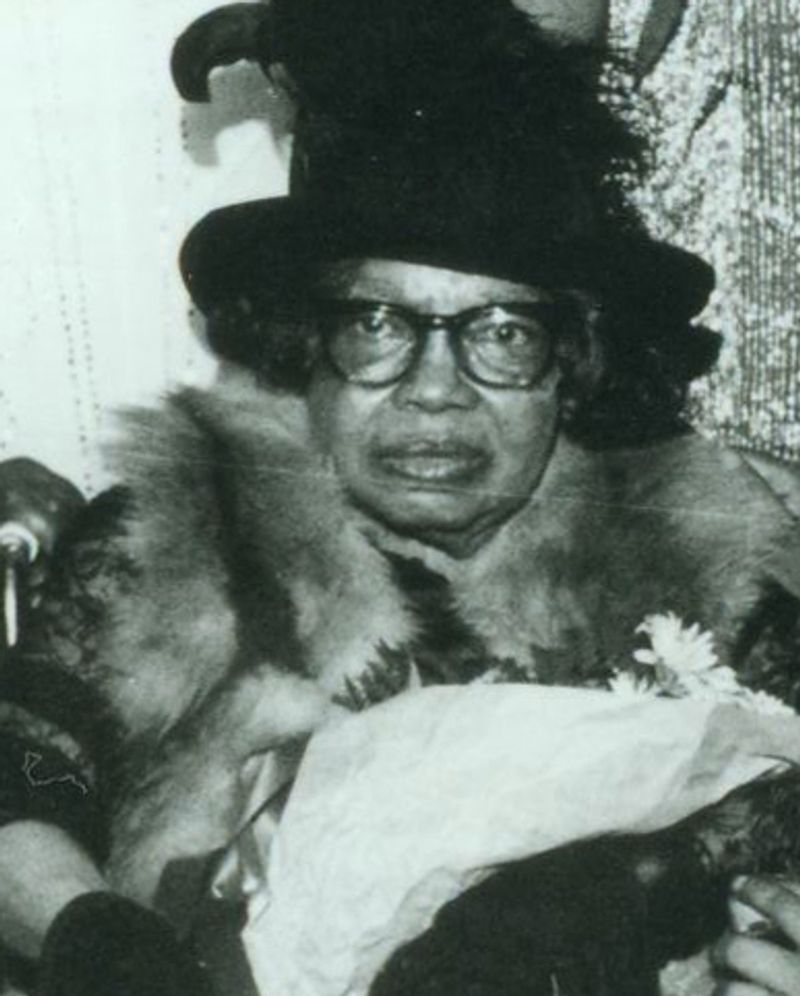
Sippie Wallace recorded her most celebrated work in the 1920s, but her story did not end there. She stepped away from performing for decades, worked in the church, and then returned to the blues stage during the 1960s folk and blues revival.
That comeback gave her music a second life and introduced her to audiences who had never heard her name before.
Her song “Women Be Wise” became one of her signature pieces and later reached a much wider audience when Bonnie Raitt began performing and recording it. Raitt has spoken openly about Wallace’s influence on her own approach to blues and slide guitar.
Wallace’s style was conversational and theatrical, full of personality and knowing humor. She sang like someone sharing advice with a friend rather than performing for a crowd.
That approachable quality made her music feel immediate regardless of when a listener discovered it. Her two-era career is a reminder that great blues voices do not simply fade out.
Victoria Spivey
Victoria Spivey wore many hats across her long career. She was a singer, songwriter, actress, and eventually a record label founder.
Her recording career started in 1926 with “Black Snake Blues,” which became a strong seller for OKeh Records and established her as a major blues voice almost immediately. She had a flair for dark, dramatic storytelling that made her recordings stand out.
What makes Spivey particularly significant is what she did later in life. In the 1960s, she founded Spivey Records, which documented both veteran blues performers and younger artists.
A young Bob Dylan appeared on a Spivey Records album in 1962, which gives a sense of how central her label was to the era’s folk-blues crossover scene.
Her commitment to preservation was as important as her performing. She understood that blues history needed to be documented, not just celebrated.
By running her own label, she made sure that voices from earlier generations stayed on record and stayed heard.
Alberta Hunter
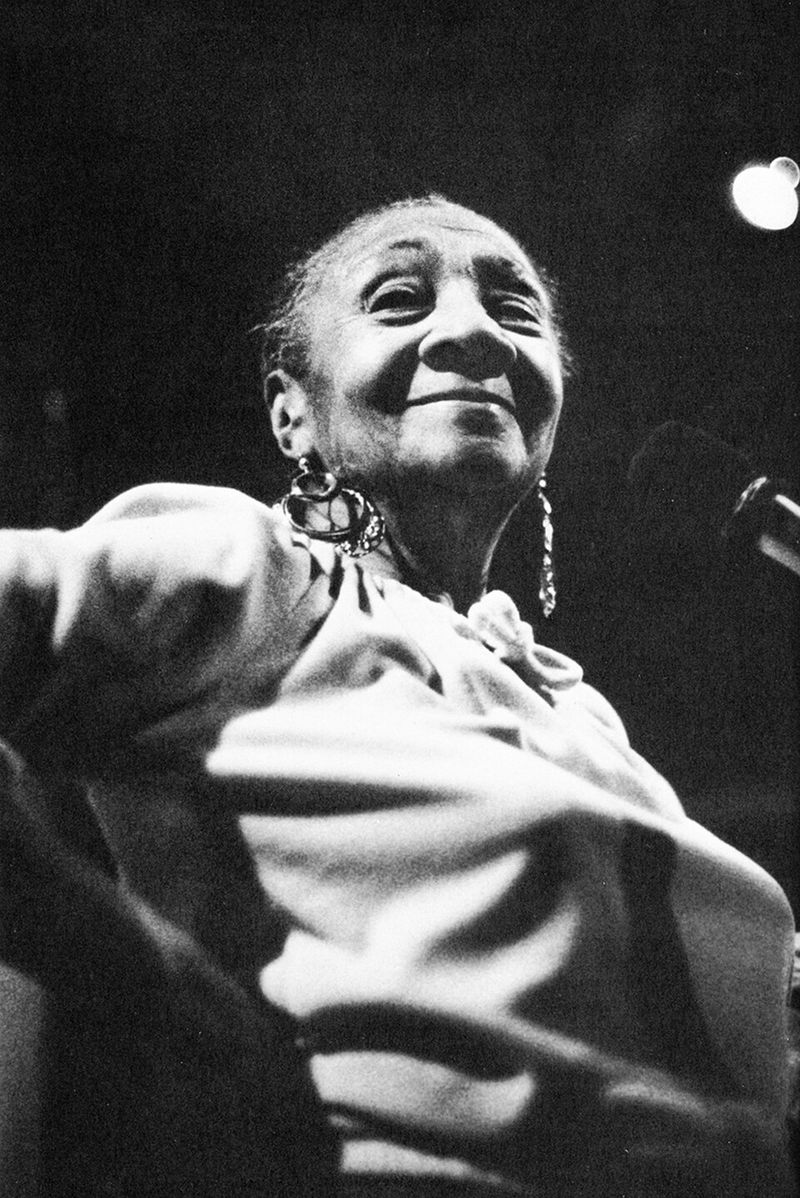
Alberta Hunter’s career is one of the most remarkable stories in all of American music. She began performing in Chicago in the 1910s, recorded extensively in the 1920s, and went on to perform in Europe and on Broadway before stepping away from entertainment in the 1950s to work as a practical nurse.
That alone would make for a full life. But then, in 1977, at around age 82, she returned to performing and became a sensation all over again.
Her late-career residency at the Cookery in New York City drew crowds and critical attention for years. She sang with the same emotional clarity and wit that had defined her work decades earlier, and new audiences discovered a voice that time had only deepened.
Hunter brought elegance to blues that felt genuinely sophisticated. She was not performing struggle.
She was performing wisdom. Her ability to carry that voice and that presence across so many decades is something that no other blues figure quite replicated.
Billie Holiday
Calling Billie Holiday purely a jazz singer misses something important. The blues was the emotional foundation beneath almost everything she recorded.
Her phrasing, her relationship to silence, and her ability to stretch a note past its expected length all came from a blues sensibility that ran deeper than genre labels. She did not perform sadness.
She organized it and delivered it with surgical control.
Holiday changed how singers thought about interpretation. Before her, many vocalists stayed close to the written melody.
She treated melody as a starting point and then bent it toward something more personal. That approach influenced jazz, blues, and soul singing for generations after her.
Her catalog includes recordings that sit comfortably alongside the best work of any blues singer. Songs like “Fine and Mellow” show her blues voice directly, without any jazz polish smoothing the edges.
Holiday’s contribution to blues history is not always framed that way, but the emotional truth she brought to music belongs completely to the blues tradition.
Sister Rosetta Tharpe
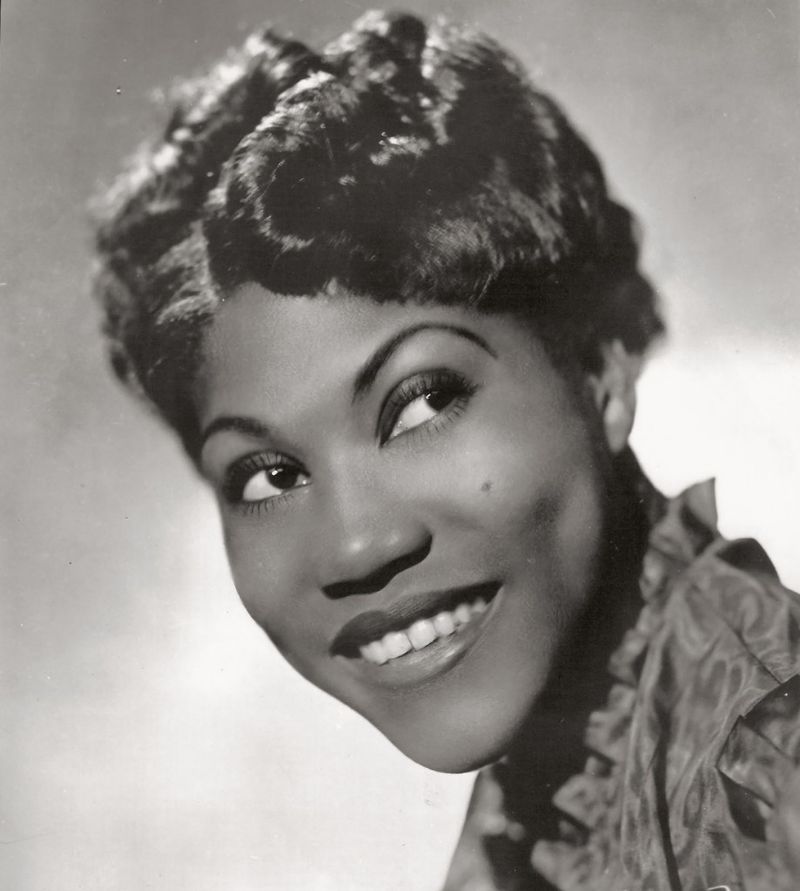
Sister Rosetta Tharpe played electric guitar with an intensity that most male rock and roll guitarists of her era could not match. The Rock and Roll Hall of Fame calls her the “first guitar heroine of rock and roll,” and that description is backed by recordings that still sound powerful today.
She was doing something genuinely new with the instrument, combining gospel fire with blues rhythm and electric volume in a way nobody had quite assembled before.
Her performances brought church energy into secular spaces without apology. She recorded and performed at a time when the line between gospel and blues was heavily policed by both religious and commercial communities.
Tharpe crossed that line regularly and made it look easy.
Artists including Chuck Berry, Elvis Presley, and Johnny Cash have been connected to her influence. Little Richard reportedly saw her perform as a child and credited the experience as formative.
Tharpe’s blues legacy lives in every electric guitar that followed her.
Big Mama Thornton
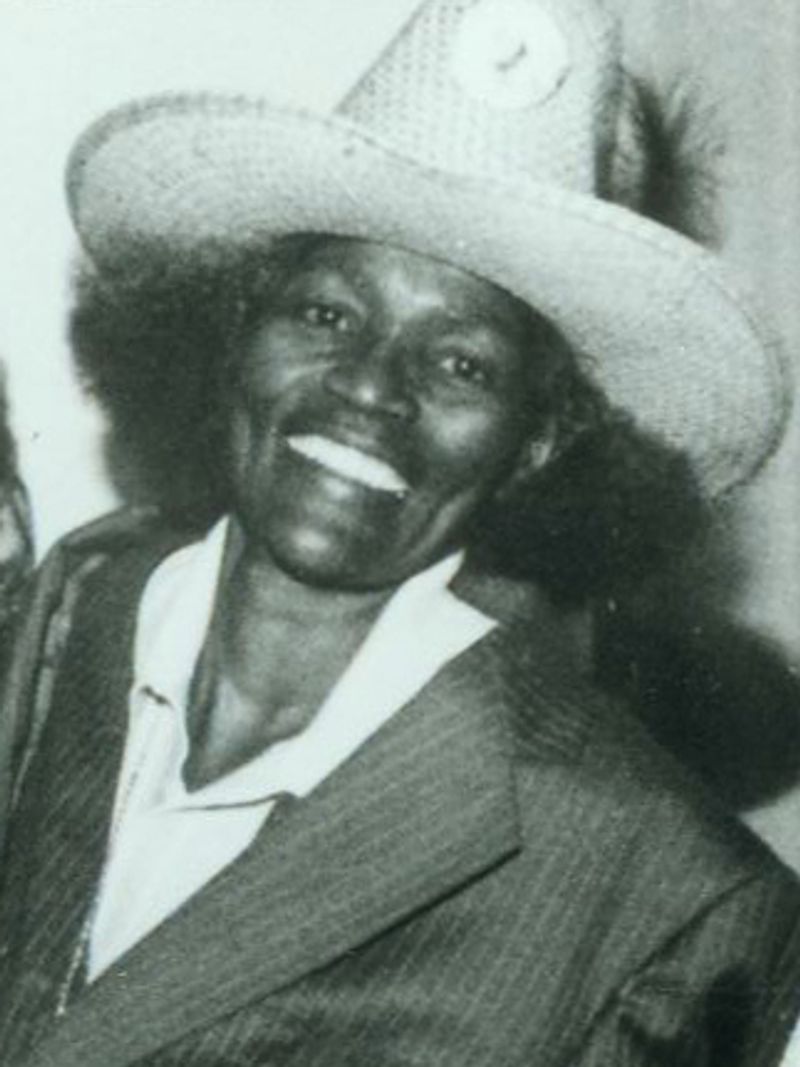
Willie Mae “Big Mama” Thornton recorded “Hound Dog” in 1952, more than three years before Elvis Presley released his version. Her recording was raw, confident, and unmistakably blues, and it reached number one on the R&B charts.
The Rock and Roll Hall of Fame recognizes her as a barrier-breaking figure whose work helped feed the early rock and roll movement directly from blues roots.
Thornton also played harmonica and drums, which gave her a broader musical presence than most vocalists of her era. She was not dependent on a backing arrangement to fill the room.
Her voice alone could do that, and it was a voice that demanded attention without softening itself for any audience.
Her legacy is sometimes reduced to the “Hound Dog” comparison, but that framing undersells her. Thornton had a full catalog of powerful blues recordings and a live reputation that made her one of the most respected performers of her generation.
She shaped blues and rock without waiting for credit.
Dinah Washington
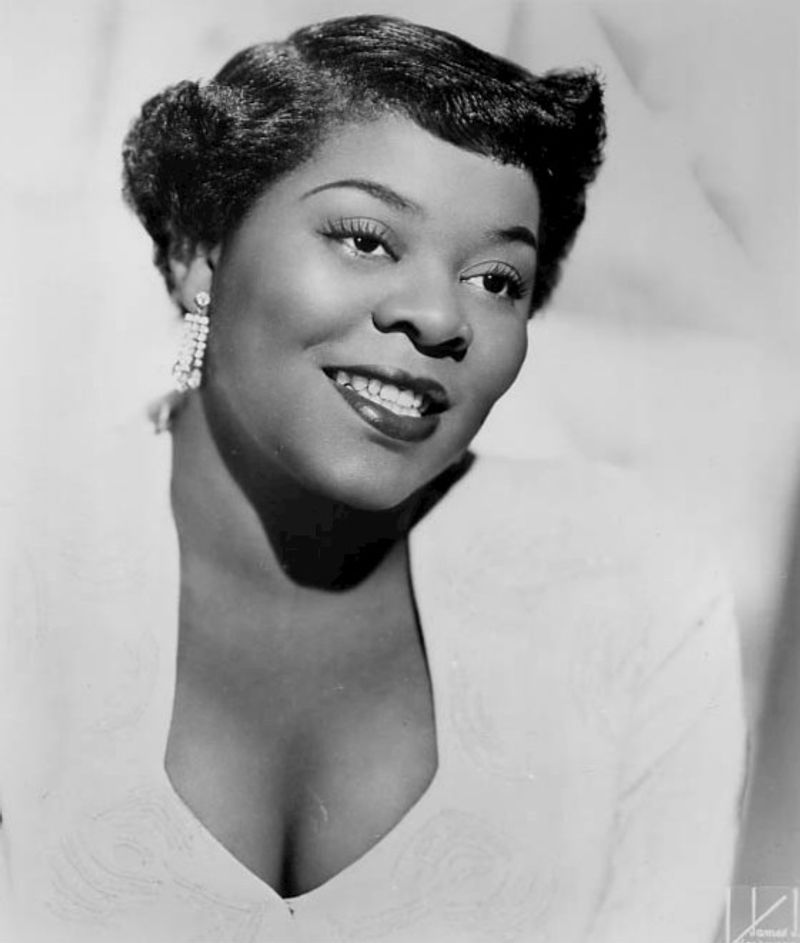
Dinah Washington moved between blues, jazz, R&B, gospel, and pop so naturally that critics spent years debating which category fit her best. AllMusic describes her as one of the most versatile singers of the mid-20th century, and that versatility was not a sign of commercial calculation.
It came from genuine musical range and a voice that could adapt without losing its distinctive edge.
Her blues phrasing was precise and cutting. She had a way of landing on a word with extra weight that made the emotional meaning land harder than the lyrics alone could deliver.
That quality carried through every genre she worked in and made even her pop recordings feel grounded in something real.
Washington was also a significant commercial force. Between 1948 and 1961, she placed over 40 songs on the R&B charts.
That kind of sustained chart presence reflected a broad audience that responded to her blues instincts even when the packaging looked like mainstream pop. She expanded what blues feeling could reach.
Koko Taylor
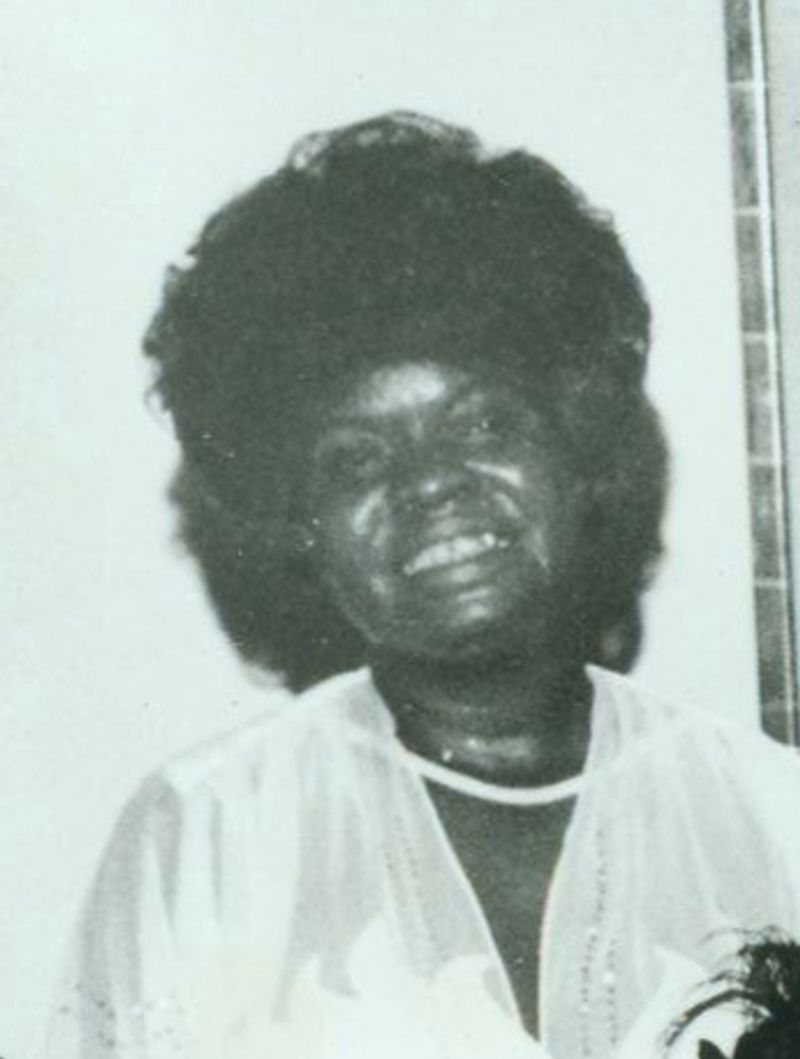
Koko Taylor earned the title “Queen of the Blues” on the strength of a voice that could shake a room without electronic help. Her signature recording “Wang Dang Doodle,” produced by Willie Dixon for Chess Records in 1966, became one of the most recognized blues songs of its decade and introduced her to a wide audience that kept following her career for the next four decades.
Her long partnership with Alligator Records, which began in 1975, helped sustain Chicago blues visibility during years when the genre was not receiving much mainstream attention. She won Grammy Awards, performed at major festivals, and maintained a touring schedule that most younger artists would find exhausting.
Taylor’s significance in the male-dominated Chicago blues scene cannot be understated. She competed directly with male contemporaries on the same stages and the same bills, and she consistently commanded equal or greater audience response.
She showed that the tradition of powerful Black women in blues did not end with the classic era.
Etta James
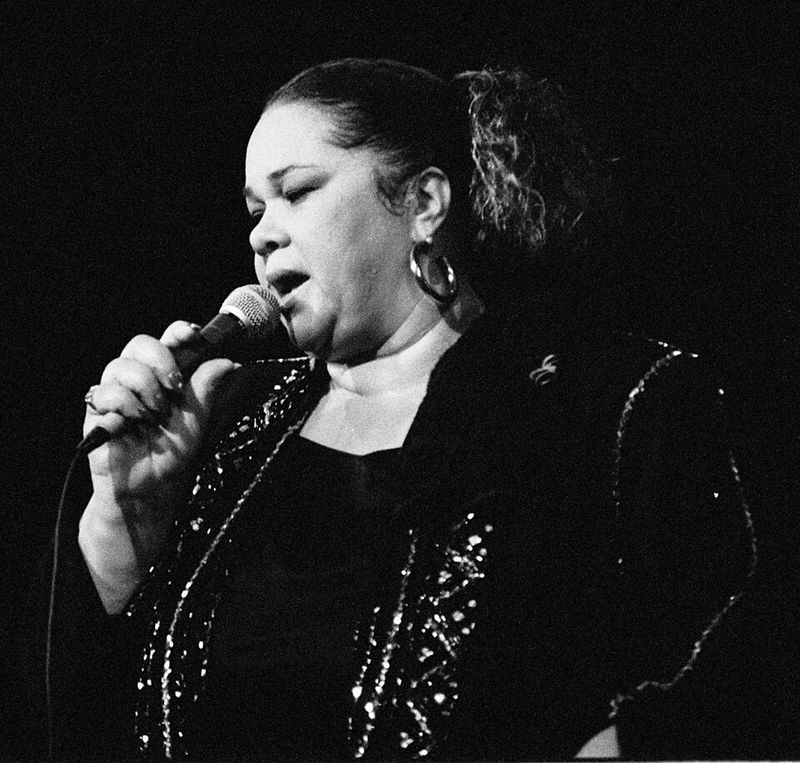
Etta James could do things with her voice that most singers simply cannot explain technically. She could move from a whisper to a full-throated cry within a single phrase and make both ends of that range feel equally necessary.
The Rock and Roll Hall of Fame describes her as one of the greatest voices of her century and calls her the “matriarch of the blues,” which reflects how deeply her influence ran across multiple genres.
Many listeners know her for “At Last,” which became a standard for romantic occasions. But her blues recordings tell a fuller story. “I’d Rather Go Blind” is a masterclass in restrained emotional power, and her earlier Chess Records work showed a raw, aggressive blues voice that she never fully abandoned even as her style evolved.
James bridged classic blues women and modern soul in a way nobody else quite managed. She carried the emotional weight of Ma Rainey’s era into the 20th century’s final decades without making it feel like a history lesson.
Share this story