Just minutes from downtown Dover, a protected forest offers a peaceful escape into towering old-growth trees, quiet wetlands, and some of Delaware’s best birdwatching. Visitors come to stroll easy woodland trails, spot barred owls and white-tailed deer, and explore one of the state’s last remaining mature beech forests, yet many are surprised to discover such a wild landscape exists within the city limits. It feels worlds away from the traffic and busy streets just beyond the trees.
The experience goes far beyond a simple walk in the woods. Scenic boardwalks, educational nature exhibits, seasonal wildflowers, centuries-old trees, and wetlands alive with frogs and birds create an outing that’s equally rewarding for families, photographers, and nature lovers. Whether you’re looking for a relaxing afternoon outdoors or one of Delaware’s most overlooked natural attractions, this preserve is a destination well worth discovering.
Here’s why Fork Branch Nature Preserve has become one of Delaware’s most remarkable urban nature escapes and a place visitors happily return to throughout the year.
A City Preserve With a Surprisingly Wild Address
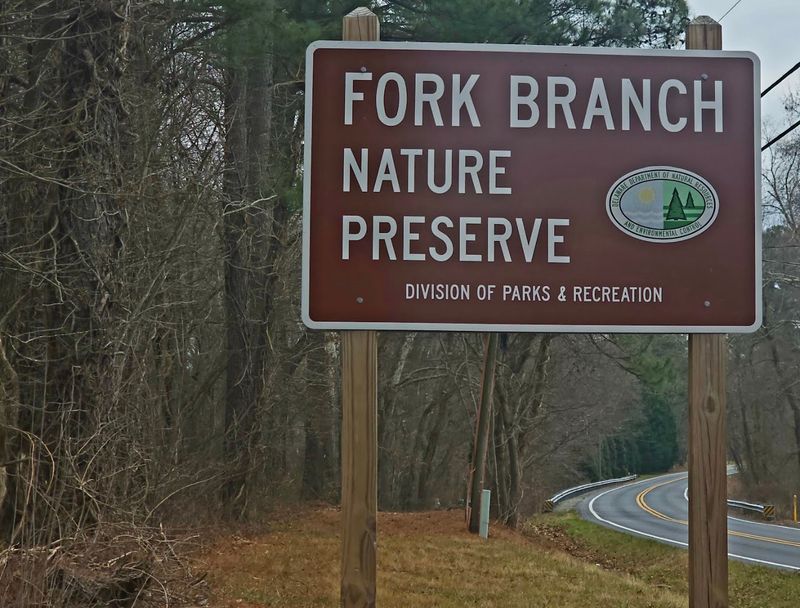
Most people picture a nature preserve as something remote, reachable only after a long drive down a winding country road. Fork Branch Nature Preserve flips that expectation entirely. The address is 2373 Kenton Rd, Dover, DE 19904, just south of Dennys Road, and it sits squarely within the city limits of Dover, Delaware’s state capital.
At approximately 325 acres, it holds the remarkable distinction of being the only state nature preserve located directly within a municipality in all of Delaware. That is not a small claim for a city better known for its NASCAR speedway and Air Force base.
Managed by the Delaware Department of Natural Resources and Environmental Control, the preserve is open daily from 8 AM to 8 PM. A seasonal fee applies from March through November, with Delaware residents paying $4 and out-of-state visitors paying $8. A portable toilet is available in the parking area, and the lot fits roughly six to eight cars.
The Family Behind the Forest: A Story of Remarkable Generosity
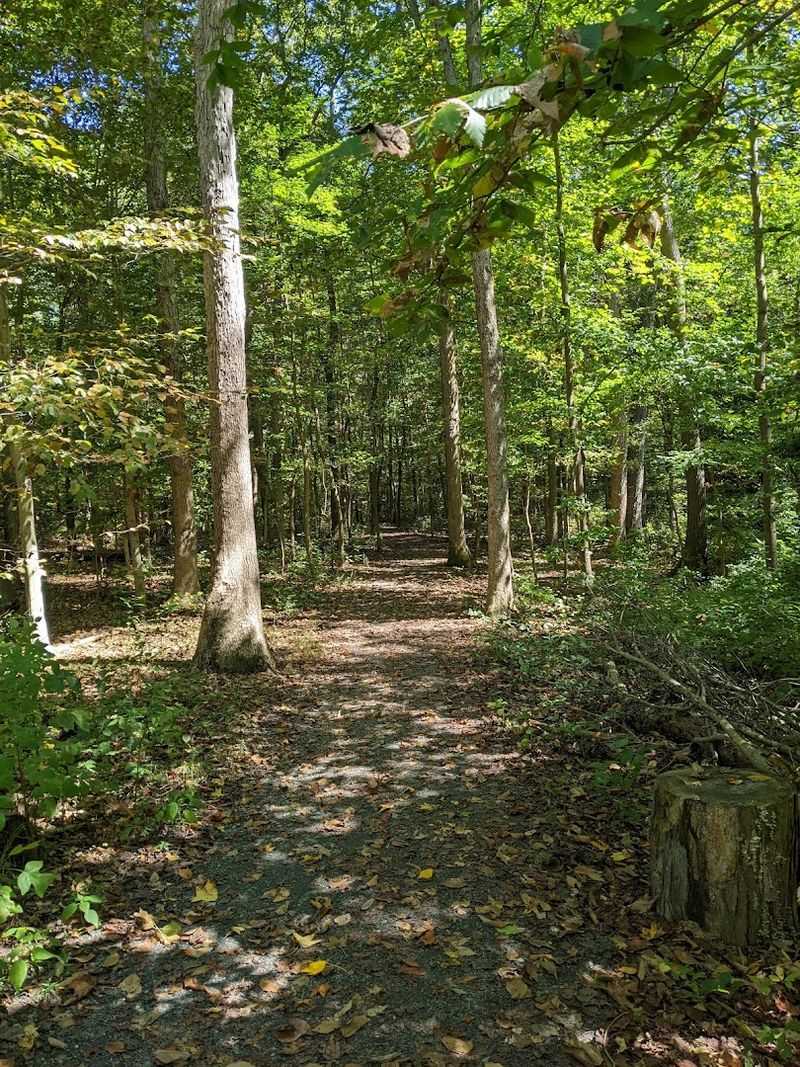
Not every nature preserve begins with a government program or a corporate donation. Fork Branch has a more personal origin, one rooted in a single family’s decision to do something quietly extraordinary with land they loved.
The largest section of the preserve, known as the Anne McClements Woods Tract, covers 236 acres and traces its beginnings to 2003, when Mr. McClements sold 247 acres to the state at a significant discount rather than at full market value. His children followed that act of generosity in 2019 by donating an additional 5.62 acres.
The preserve grew again in 2020 with the acquisition of a 41-acre parcel called the Terry and Tom Burns Tract, secured through DNREC’s Open Space Program. Mr. McClements also contributed to a permanent endowment to fund ongoing maintenance and future expansion. Because of choices made by these families, hundreds of acres of woodland will remain protected long after the surrounding city continues to grow.
Old-Growth Trees That Have Seen Two Centuries Pass
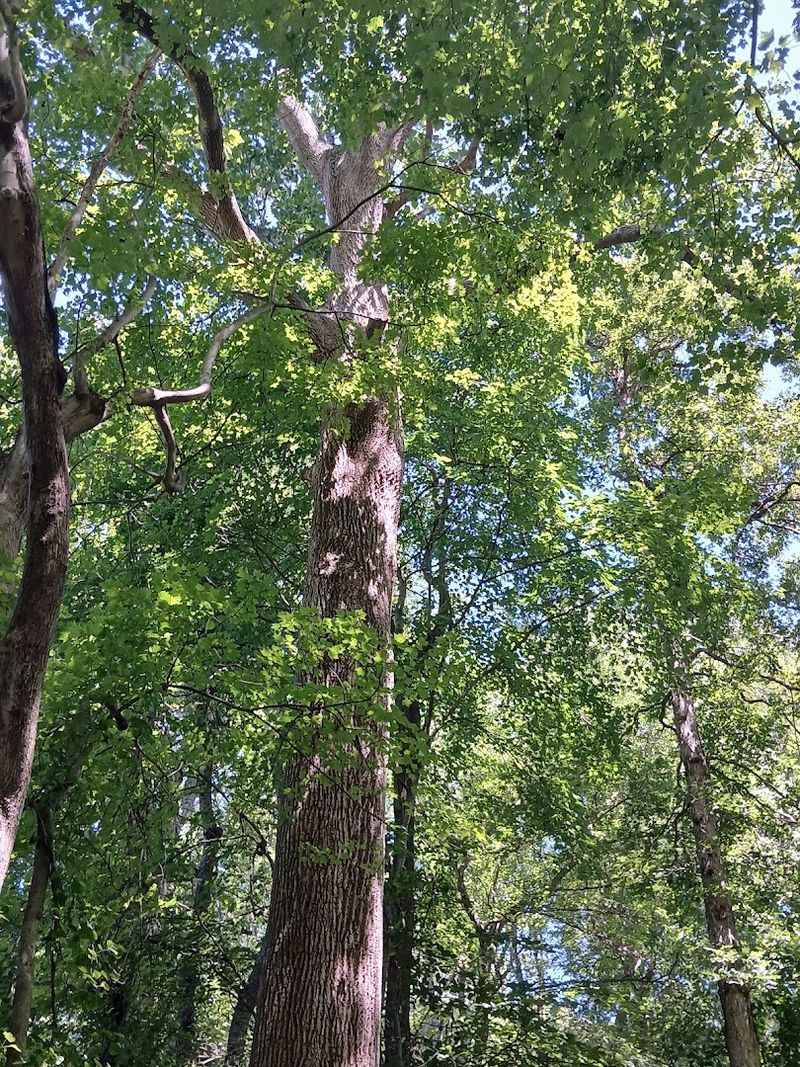
There is something quietly humbling about standing next to a tree that was already mature when the Civil War ended. Fork Branch Nature Preserve holds one of the most impressive stands of old-growth forest in the region, with many trees estimated to be well over 150 years old.
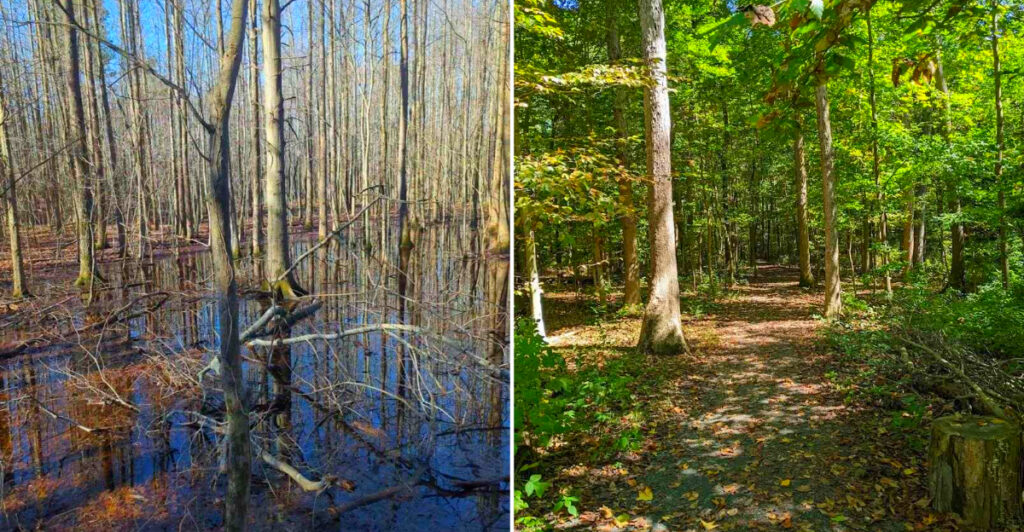
The stars of the show are the American beech trees, recognized by their smooth, silvery-grey bark and broad, cathedral-like canopies. The Anne McClements Woods Tract contains a significant percentage of upland forest older than 70 years, classified as Mesic Coastal Plain Mixed Hardwood Forest, a habitat type that is increasingly rare in developed areas.
Alongside the beeches grow towering Tulip Poplars, Loblolly Pines, and several species of oaks and hickories. Some of these trees were estimated to be at least 140 years old as far back as 1991. The forested wetlands add River Birches, Black Gum, Red Maple, and Swamp Chestnut Oak to the mix, creating a layered, genuinely ancient landscape.
Trails That Welcome Everyone, From Toddlers to Seniors
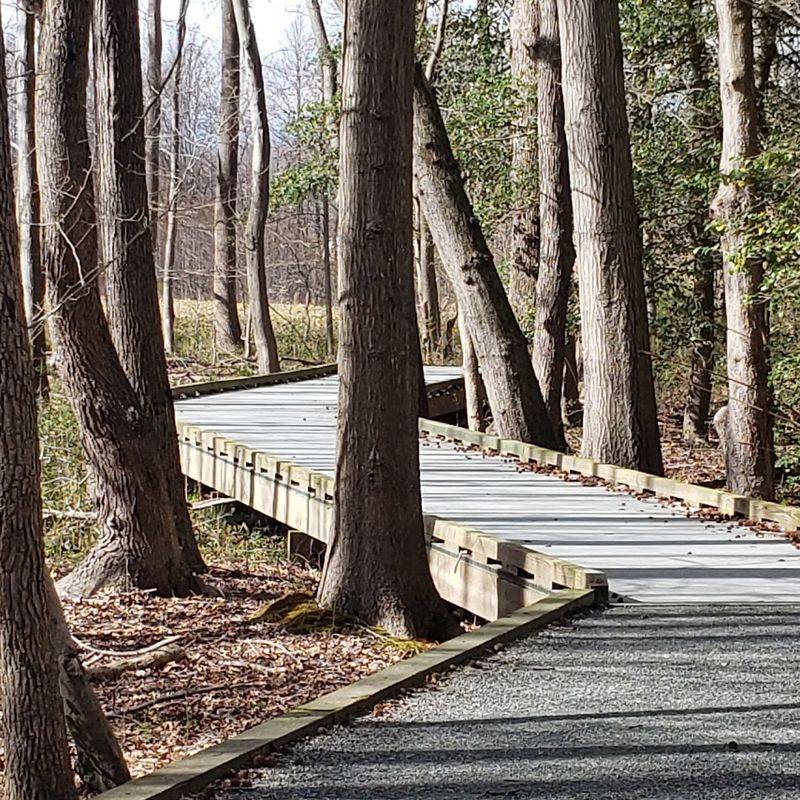
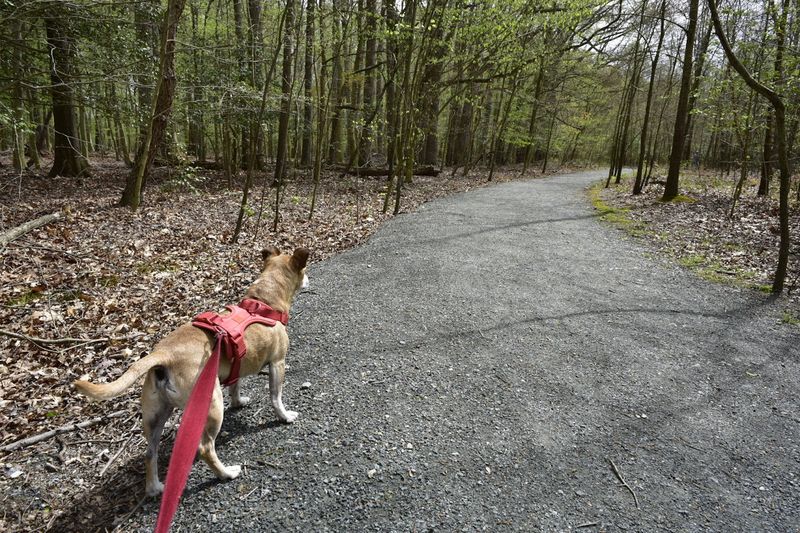
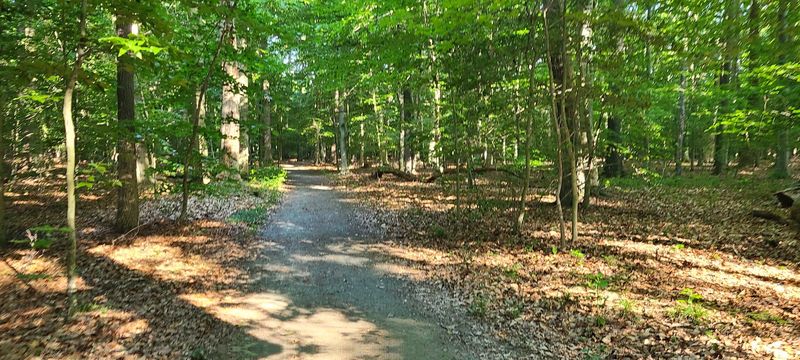
Not every great trail needs switchbacks, elevation, or a difficulty rating that makes your knees nervous. The main loop at Fork Branch Nature Preserve runs between 1 and 1.25 miles, and it is one of the most genuinely accessible trails I have walked anywhere in Delaware.
The surface is packed gravel and stone dust, roughly six feet wide, and almost completely flat with an elevation gain of just 11 feet. That combination makes it a rare find: a trail that feels immersed in nature while remaining practical for families pushing strollers, visitors using mobility aids, and older walkers who want a peaceful outing without the physical demands of a rugged path.
Dogs are welcome on a leash, and nuisance bags are typically provided near the trailhead. A few benches are placed along the route for anyone who wants to pause and listen to the woods. Metal slat bridges span the marshy sections and the small creek, keeping feet dry and offering close-up views of the wetland edges.
The Wetlands That Make This Preserve Ecologically Irreplaceable
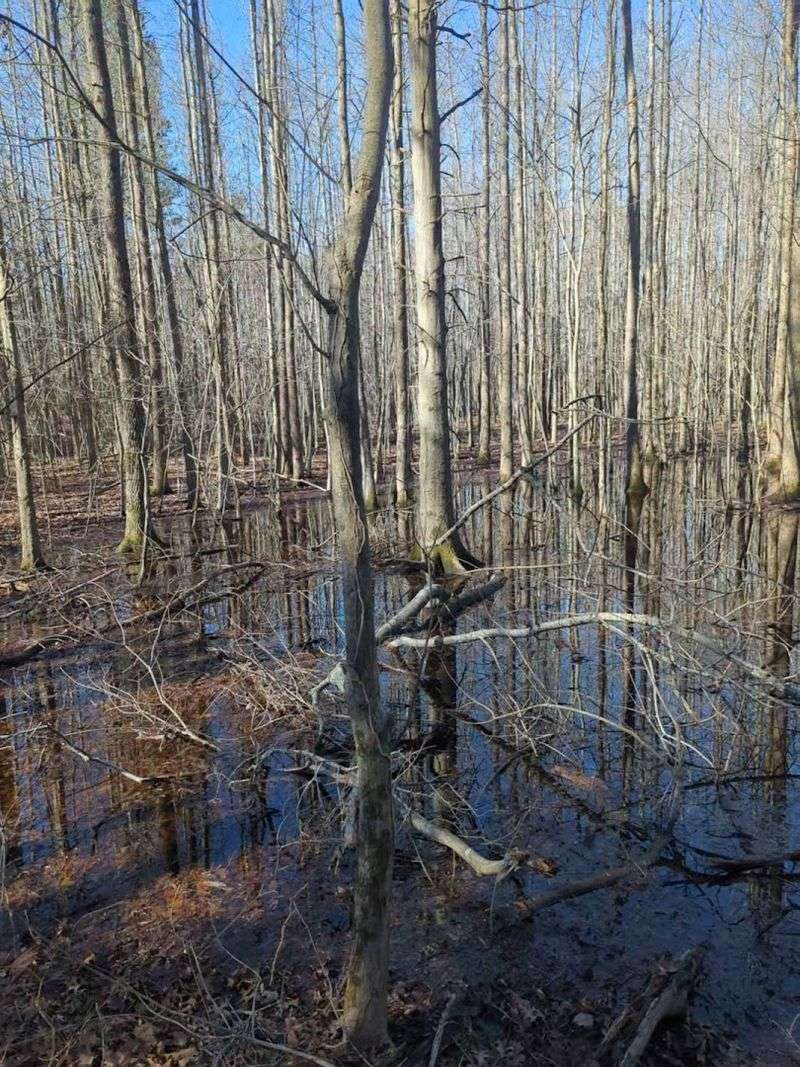
The woodlands at Fork Branch get most of the attention, but the wetlands are arguably the ecological engine that makes the whole preserve function. Fork Branch is the second largest forest tract in the St. Jones River watershed, and its wetland systems play a direct role in filtering water, controlling flooding, and supporting biodiversity across the broader region.
The preserve contains coastal plain pond wetlands, floodplain forest, and marshy areas fed by Cahoon Branch, a small creek that threads through the property. Even during dry spells when the creek runs low or stops entirely, the moisture retained in the soil supports plant communities that would disappear without it.
Spring is the most dramatic season for the wetlands. Vernal pools fill with rainwater, and the chorus of frogs and toads becomes genuinely loud, the kind of sound that surprises first-time visitors who expect a quiet walk and instead get a full amphibian concert. Those seasonal pools also serve as critical breeding habitat for species that depend on temporary water sources.
Birdwatching That Rewards Both Beginners and Serious Birders
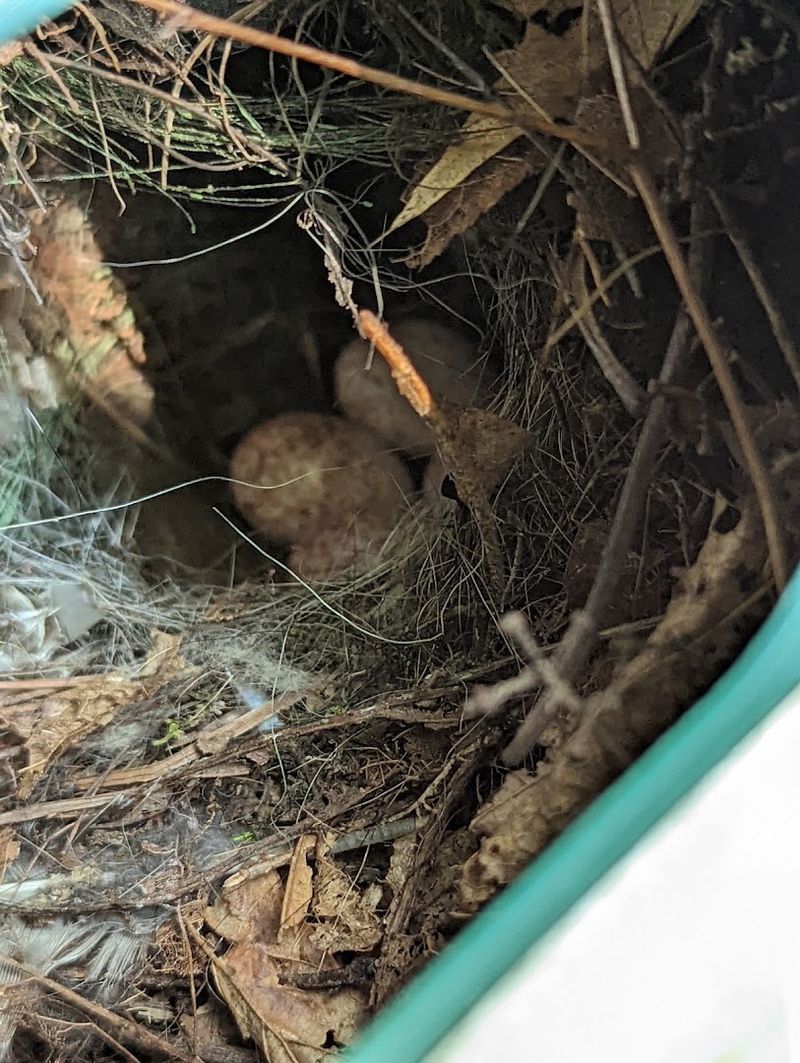
Bring binoculars. That is the simplest piece of advice I can offer anyone visiting Fork Branch with even a passing interest in birds. The preserve’s combination of mature forest, wetlands, and open edges creates conditions that attract an impressive variety of species throughout the year.
Barred owls are perhaps the most celebrated residents. They nest in the mature floodplain forest and are considered a species of conservation concern in Delaware, which makes the preserve’s protected habitat especially valuable. Red-shouldered Hawks also benefit from the undisturbed canopy, and Prothonotary Warblers flash their golden-yellow plumage near the wetter sections of the trail.
Scarlet Tanagers, Pileated Woodpeckers, and White-breasted Nuthatches are regular sightings, and winter visits bring mixed flocks of chickadees, titmice, and sparrows moving through the understory. For anyone new to birdwatching, the flat, quiet trail makes it easy to stop, scan the canopy, and actually hear what is above you without the distraction of traffic noise.
History Buried in the Woods: Arrowheads, Old Bottles, and Forgotten Farms
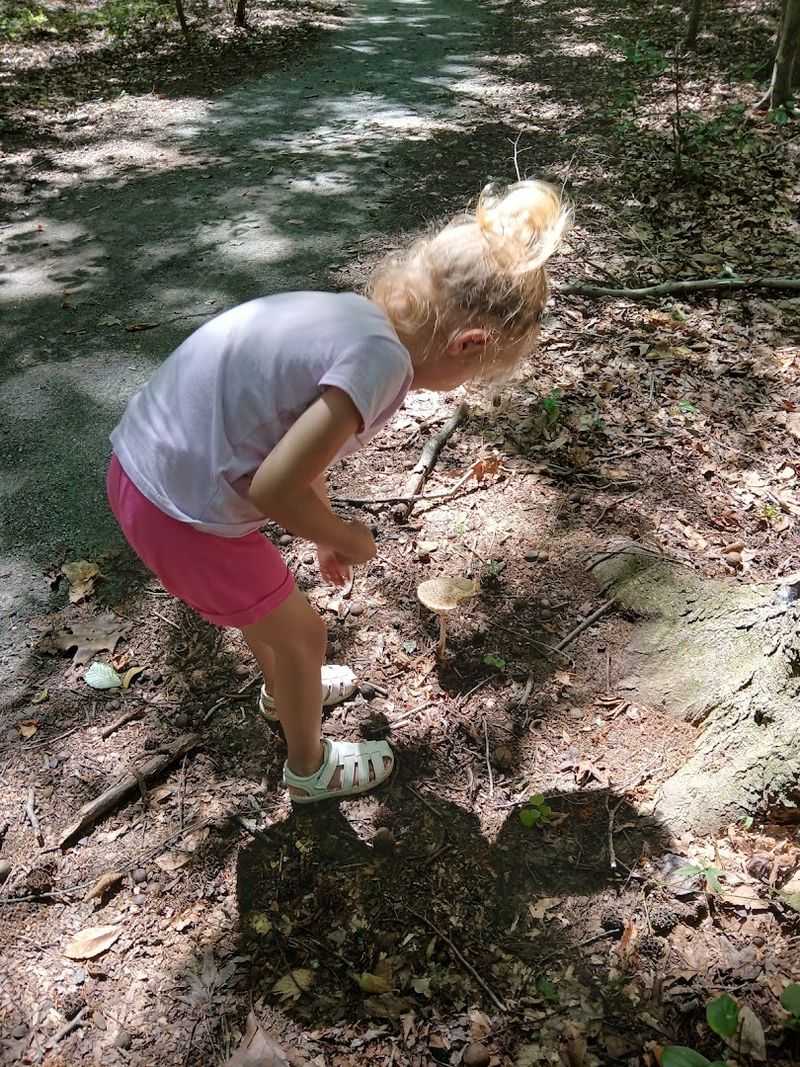
Fork Branch Nature Preserve has a habit of surprising visitors with things that have nothing to do with trees or birds. The forest floor, it turns out, has been quietly collecting history for a very long time, and patient explorers have found some genuinely fascinating artifacts tucked into the undergrowth.
Old glass bottles, some dated to the 1940s and 1950s, and others reportedly traced back to the 1870s and 1880s, have been discovered in what appear to be old bottle dumps scattered through the deeper sections of the woods. Remnants of farm equipment, wood stoves, car axles, and even old car bodies have also turned up, silent evidence of the agricultural life that once operated on this land before it became protected.
Even more striking, arrowheads have been found within the preserve, pointing to a human presence far older than any bottle or tractor part. Delaware’s Natural Areas Preservation System, established in February 1978, exists in part to protect exactly these kinds of layered, irreplaceable records of both natural and human history.
What the Seasons Actually Look and Sound Like Here
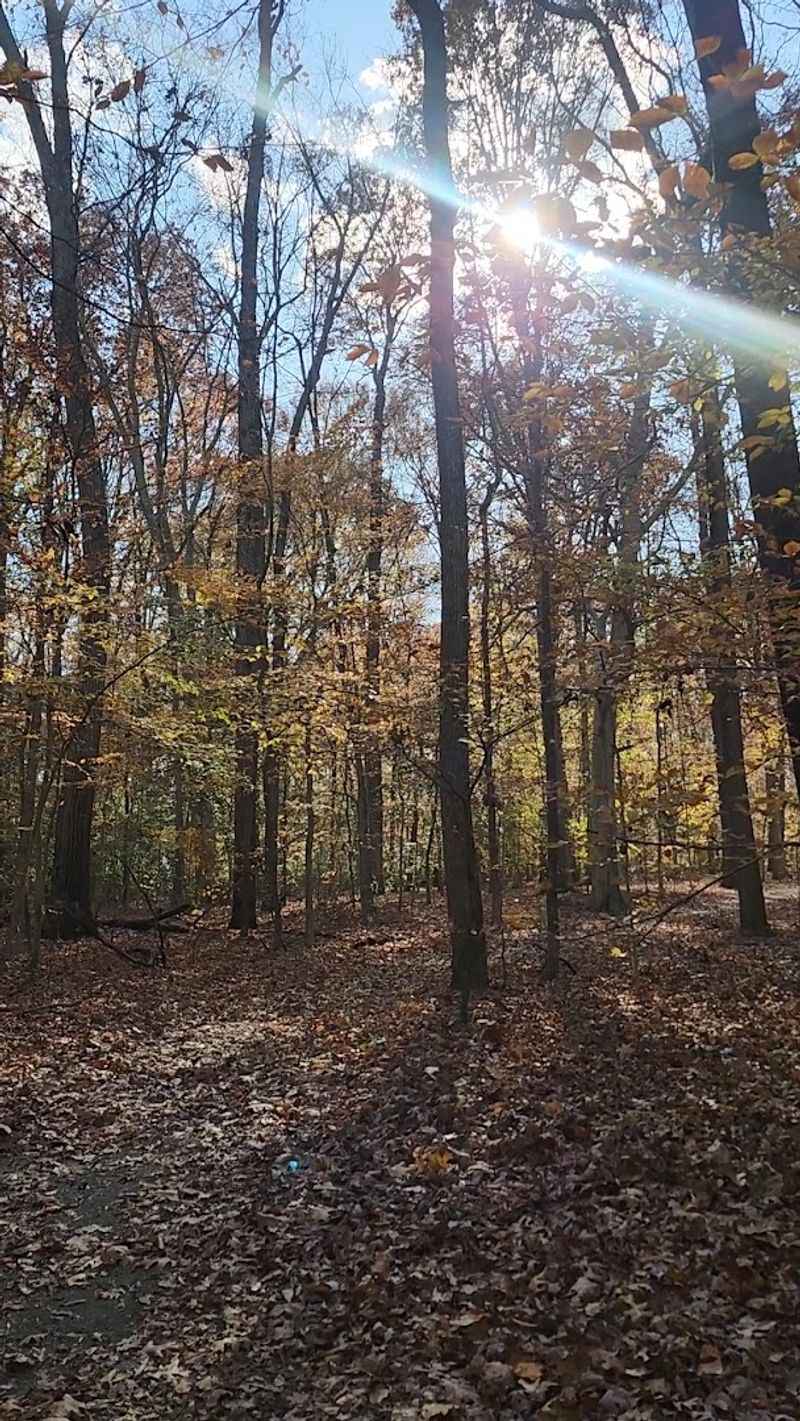
Every season at Fork Branch offers a genuinely different experience, and none of them feel like a lesser version of another. The preserve changes its character with the months in ways that reward repeat visitors who think they already know the place.
Spring is loud and green, with frogs filling the wetlands and early wildflowers pushing through the leaf litter beneath the beeches. Summer brings a dense, shaded canopy that keeps the trail noticeably cooler than the surrounding city, even on days when the temperature climbs into the 90s. Bug spray is a practical necessity from late spring through early fall, particularly near the wetter sections of the loop.
Autumn transforms the preserve into a display of golds, reds, and burnt oranges that reflects beautifully in the standing water near the wetlands. Winter strips the canopy back and reveals the architectural structure of the old trees, along with frost patterns on bark that are easy to miss during the leafy months. Each season has its own reward waiting on the same familiar loop.
Informational Signs That Turn a Walk Into a Lesson
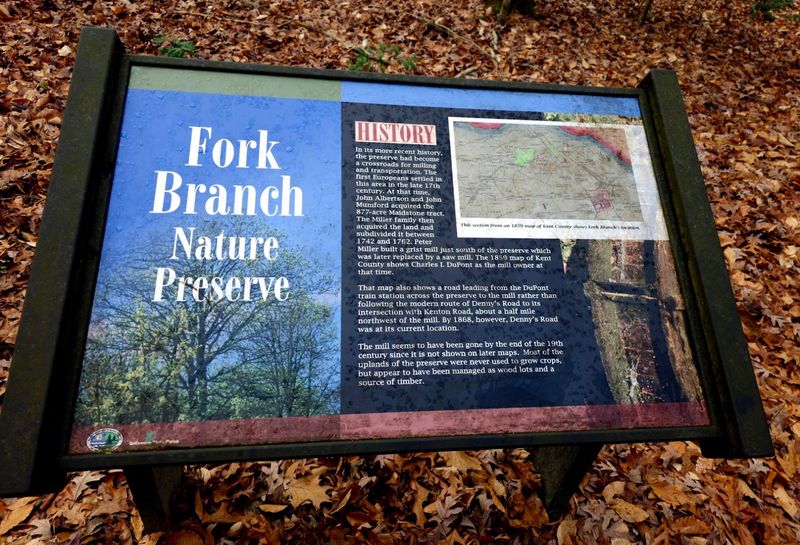
Not every nature trail takes the time to explain itself. Fork Branch does, and it makes a real difference, especially for visitors who are curious about what they are looking at but do not have a field guide in their back pocket.
Informational plaques and fact boards are placed at intervals along the main loop, covering topics that range from tree identification and forest ecology to the history of the preserve itself. Several visitors have noted that reading these signs turns what might otherwise be a simple walk into something closer to an outdoor classroom, one where the lesson is immediately visible in the trees and soil around you.
A dedicated school bus parking spot in the lot confirms that the preserve is used regularly for educational field trips, giving younger visitors structured access to a functioning ecosystem they might not otherwise encounter. The signage also adds context for adult visitors who want more than a pleasant stroll, offering enough ecological detail to make the experience feel genuinely enriching without ever becoming overwhelming or overly technical.
Practical Tips That Will Save You a Headache
A few practical details can make the difference between a smooth visit and an avoidable frustration at Fork Branch. The parking lot is genuinely small, with space for roughly five to eight vehicles and one designated handicap spot. A larger area exists for school bus parking only. Arriving early on weekends is a smart move, and some visitors park carefully along the grassy edge of the entrance when the main spots are taken.
The seasonal fee from March 1 through November 30 requires payment, and the process is not immediately obvious if you arrive without knowing what to expect. There is no digital kiosk, so checking the DNREC website before your visit is worthwhile to understand the current payment method. Failing to pay can result in a $35 ticket, which is a jarring end to an otherwise peaceful outing.
Pack water, wear closed-toe shoes, and apply insect repellent before you start, particularly in warmer months. After your walk, check for ticks carefully. The preserve’s phone number is 302-739-9241 if you have questions before heading out.
Why This Preserve Matters Beyond the Trail
Fork Branch Nature Preserve is easy to appreciate as a place for a pleasant walk, but its significance runs considerably deeper than any single visit. As the only state nature preserve within a Delaware municipality, it occupies a unique position in the region’s conservation landscape, both literally and symbolically.
The preserve protects the second largest forest tract in the St. Jones River watershed, a role that has measurable effects on water quality and flood management for the surrounding area. The old-growth beech forest, the rare beetle populations, the nesting barred owls, and the coastal plain wetlands collectively represent ecological resources that cannot simply be recreated elsewhere once they are gone.
The ongoing commitment from DNREC, combined with the endowment established through the McClements family’s generosity, means the preserve has both the legal protection and the financial foundation to remain intact as Dover continues to develop around it. For a city of its size, having 325 acres of functioning, protected wildland just minutes from the center is something genuinely worth celebrating on every quiet Tuesday afternoon.
Share this story