Arkansas is not a state that gets enough credit for its small towns, and that is honestly a shame. Tucked between the Ozark Mountains and the Mississippi Delta, the state is home to a collection of historic Main Streets so well-preserved that a film crew could roll up tomorrow and start shooting without changing a single storefront. Some of these streets have been frozen in time by careful preservation efforts, while others have quietly reinvented themselves without losing an ounce of their original charm. What they all share is that rare quality of feeling genuinely real in a world full of manufactured experiences.
From a Victorian hillside town with no traffic lights to a tiny cotton-country village where a cotton gin still stands on the main drag, these eleven Arkansas streets prove that the best movie sets are the ones nobody had to build. Keep reading, because each one has a story worth knowing.
1. Main Street, Van Buren, Arkansas
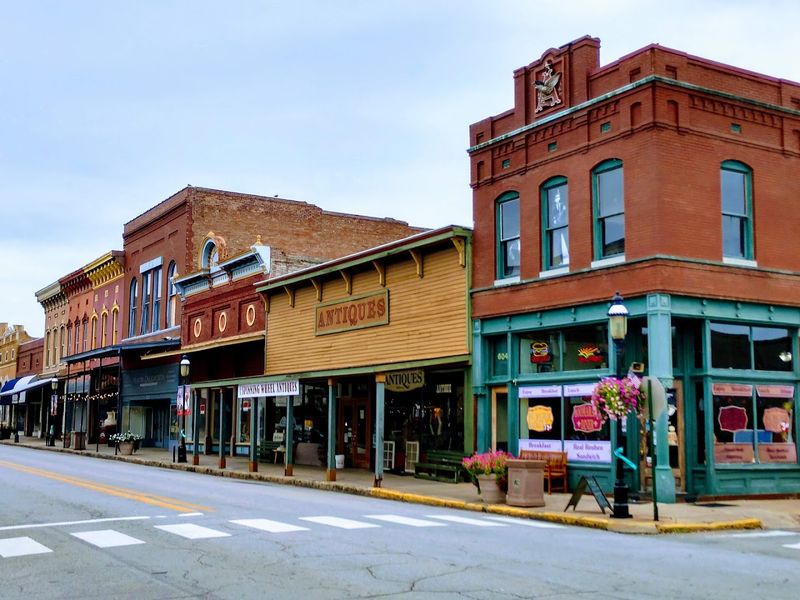
A 1920s vintage excursion train still pulls into one end of this street, and the oldest continuously operating courthouse west of the Mississippi anchors the other. That is quite a range for six blocks.
Van Buren’s Historic Main Street District was placed on the National Register of Historic Places on April 30, 1976, and the architecture tells the story clearly. Victorian, Italianate, Queen Anne, and Chicago school styles line the sidewalks in a parade of beautifully restored brick facades. The town began its rehabilitation program in 1972, and by 1980 new businesses were already moving in.
The 1901 Frisco Train Depot now serves as the visitor center and the terminus for the Arkansas-Missouri Railroad excursion train, giving the district a working landmark rather than just a decorative one. The circa-1890 King Opera House still hosts community theater and local events. Murals throughout the district, including one painted by high school students in the 1980s, document Van Buren’s history in vivid detail. The Old Town Merchants Association keeps it all running as a volunteer-operated nonprofit.
2. Main Street, Batesville, Arkansas
Arkansas has a lot of old downtowns, but Batesville can make a claim that none of the others can match: this is the oldest existing Main Street in the entire state.
Situated along the White River in north-central Arkansas, Batesville’s downtown covers more than 200 years of history within a walkable stretch of brick buildings. Because the town was largely spared during the Civil War, its architecture showcases structures from nearly every decade since the 1840s. The Maxfield-Garrott House, constructed in the early 1840s, is recognized as the oldest home in town and still stands on Main Street.
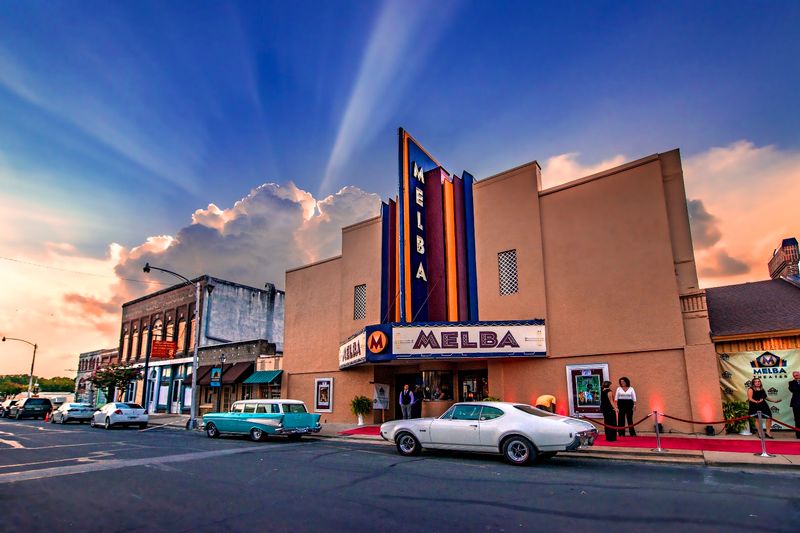
The restored Melba Theater is a standout attraction. It debuted as an opera house roughly 150 years ago and now operates as a classic movie house with its original Art Deco design intact. Main Street Batesville, formed in 1984, has been driving revitalization ever since, with recent upgrades including solar-powered decorative lanterns along the sidewalks. Buildings like The Royal On Main, a brick structure from 1897, and the former Gem Opera House from 1906 continue to anchor the district’s historic character.
3. Commercial Street, Ozark, Arkansas
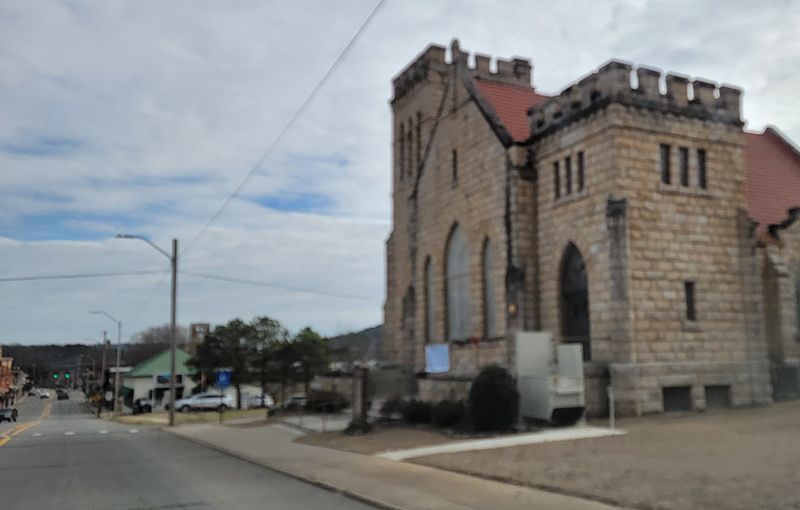
Most towns build their downtowns with whatever materials are cheapest. Ozark built its with native limestone, which turned out to be both locally abundant and significantly harder to burn down than wood.
Commercial Street has served as the center of downtown Ozark since the town became the Franklin County seat in 1837. The Ozark Courthouse Square Historic District was listed on the National Register of Historic Places in 2002, recognizing both the courthouse and the surrounding commercial buildings as a cohesive historic landscape.
The street’s history reads like a catalog of small-town American commerce. One building from around 1885, featuring Italianate detailing, once housed W. L. Haskew’s dry goods, shoes, groceries, and feed operation.
Another from the same era served successively as a general store, a meat market, and a hardware store before its facade was re-bricked in the 1940s. The 200-202 West Commercial address was home to People’s Bank from 1904 to 1926. The arrival of the Little Rock and Fort Smith Railroad in 1876 shaped much of the street’s early development and explains why so many substantial buildings went up in that era.
4. Main Street, Paris, Arkansas
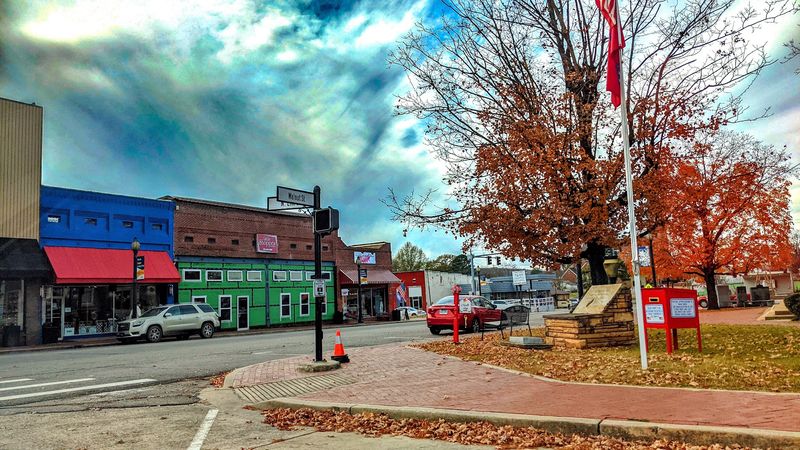
Paris, Arkansas has a 25-foot Eiffel Tower replica painted with the exact same formula used on the original in France, complete with a two-tiered fountain and a love lock fence at its base. That detail alone earns this town a spot on any list.
Founded in 1879, the town grew around its courthouse square, and Main Street Paris is now a nonprofit organization actively working to keep the historic downtown walkable, attractive, and commercially active. The North Logan County Courthouse, a classical revival building originally constructed in 1906, is listed on the National Register of Historic Places and anchors the district visually.
Historic buildings like the Union Bank building from 1927 and the former Commercial Hotel, which operated between 1908 and 1913 and now houses True Grit Grounds, give the street a layered sense of history. Downtown murals highlight Logan County’s railroad and coal mining heritage. Shops like Warren’s Shoes, the flagship of a regional chain, and Stirling Soap Company offer retail experiences that feel genuinely local rather than interchangeable with any other town.
5. Main Street, El Dorado, Arkansas
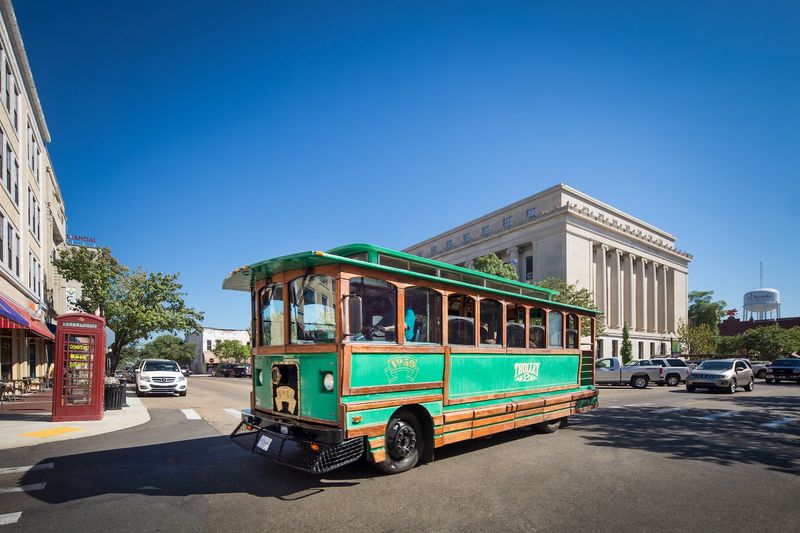
When an oil boom hits a small Arkansas city in the 1920s, the buildings that go up tend to be a little more ambitious than usual. El Dorado’s downtown is the permanent evidence of that moment.
The El Dorado Commercial Historic District comprises 68 brick and masonry early twentieth century buildings, many of them dating directly to the oil boom years when the town’s population surged almost overnight. The National Trust for Historic Preservation recognized El Dorado as one of the Great American Main Streets, a designation earned through decades of careful restoration and active community investment.
Main Street El Dorado has been operating as a formal revitalization program since the 1980s, and its results are visible in every block. The Murphy Arts District, known locally as MAD, has established the city as a regional venue for music and community festivals. Eleven restaurants currently operate within the city center, a number that reflects the district’s commercial health. The Oil Heritage Park, created in 2007, connects the downtown’s visual grandeur directly to the industry that paid for it all.
6. Main Street, Siloam Springs, Arkansas
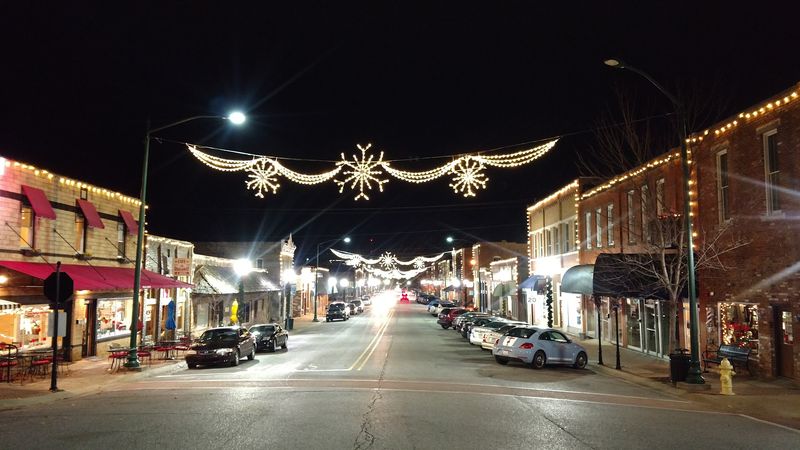
About eight million dollars have been reinvested in downtown Siloam Springs over the past decade, and you can see exactly where the money went the moment you turn onto the main corridor.
The Siloam Springs Downtown Historic District was listed on the National Register of Historic Places in 1995, recognized for its collection of late nineteenth and early twentieth century commercial-style architecture. The district covers buildings along University Street, the 100 block of Wright, and Broadway, creating a compact but well-defined historic core.
Siloam Springs joined the Main Street Arkansas program early and has remained one of its most committed members, investing steadily in facade improvements, building rehabilitation, public spaces, and art installations. A downtown mural created by elementary school students is one of the more charming results of that commitment. East Main Street, historically an industrial corridor, now features a 150-foot mural documenting its own development. Pour Jon’s Coffee and Tea and Books on Broadway are among the locally owned businesses that give the district a personality that feels earned rather than manufactured.
7. Main Street, Mountain View, Arkansas
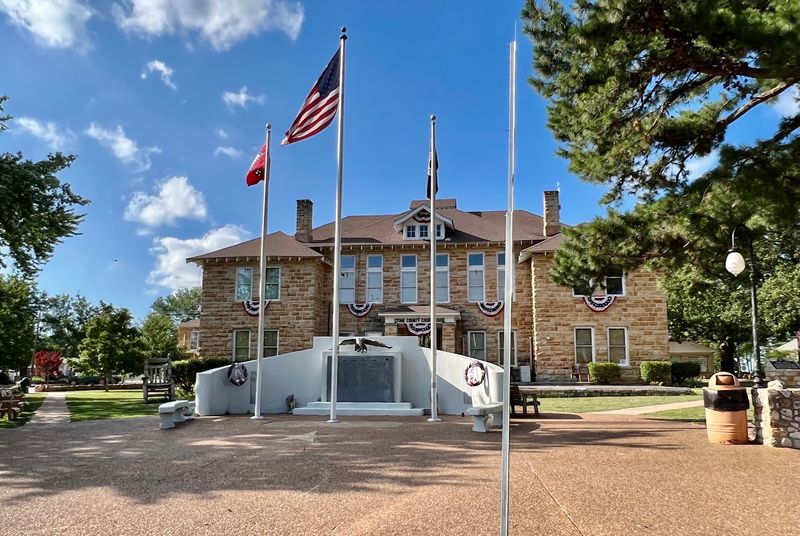
Mountain View holds an official title that most towns would never even think to pursue: Folk Music Capital of the World. The courthouse square is where that title gets proven on a regular basis.
The town was established in the 1870s and has spent the decades since building a reputation for preserving traditional Ozark culture in a remarkably hands-on way. Informal pickin sessions, where locals and visitors gather with fiddles, banjos, and guitars, happen regularly around the courthouse square and in Pickin Park from spring through late fall. These are not scheduled performances with a stage and a ticket booth. They are simply people playing music in public because that is what Mountain View does.
The Arkansas Folk Festival was founded here in the early 1960s, and the Ozark Folk Center State Park followed in 1973, cementing the town’s identity as a living archive of Appalachian and Ozark traditions. The Arkansas Crafts Guild, the largest craft cooperative in the state, is headquartered downtown. The circa-1886 Inn at Mountain View continues to operate as a bed and breakfast, and the surrounding storefronts house music shops, antique dealers, and local cafes.
8. Main Street, Paragould, Arkansas
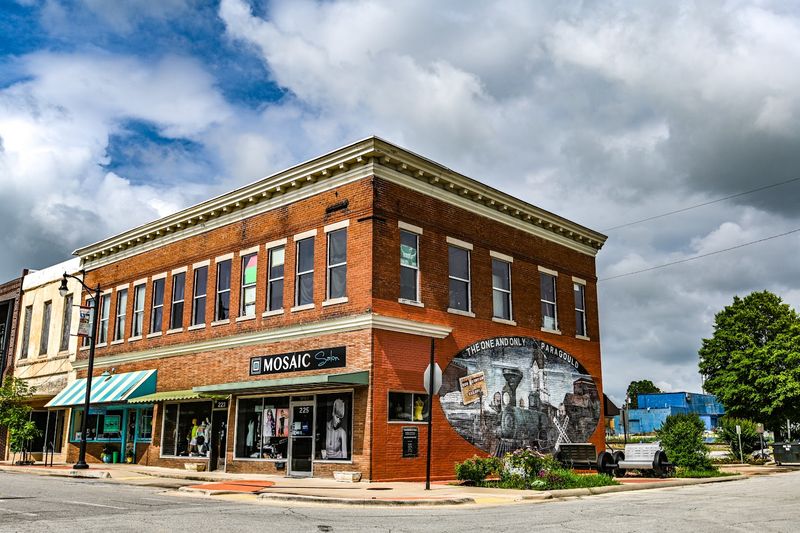
In 1896, Paragould was already being called a city of bricks, with sixty brick businesses operating in its downtown. Today that number has grown to over 190 businesses, most of them locally owned.
Downtown Paragould has been an accredited Main Street America member since 1999, which means its revitalization efforts follow a structured, proven model rather than just good intentions. The Downtown Paragould Commercial Historic District covers the town’s full arc from its early timber boom years through its post-World War II development, preserving that history in its building stock.
The Greene County Courthouse, built in 1888, anchors the historic district and gives the streetscape a focal point that no modern building could replicate. Recent years have brought significant new energy to the area. In 2025 alone, the downtown added five new businesses and four new murals, continuing a pattern of steady investment in both commerce and public art. A former power plant has been converted into a popular venue for weddings, concerts, and a farmer’s market, proving that adaptive reuse can be just as compelling as preservation.
9. Spring Street, Eureka Springs, Arkansas
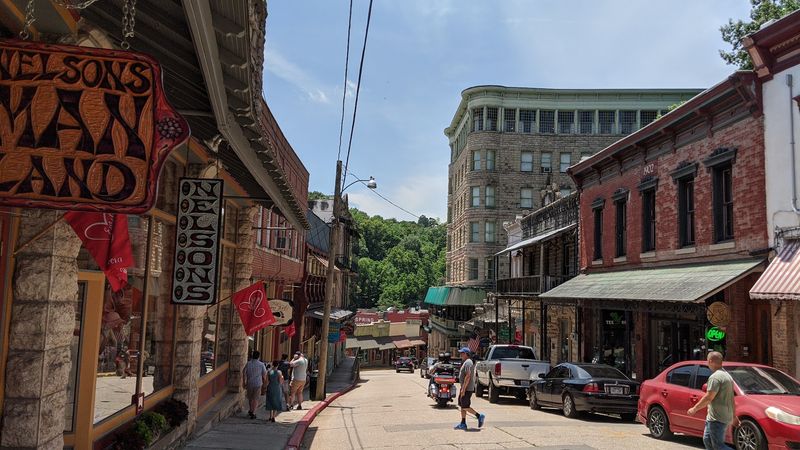
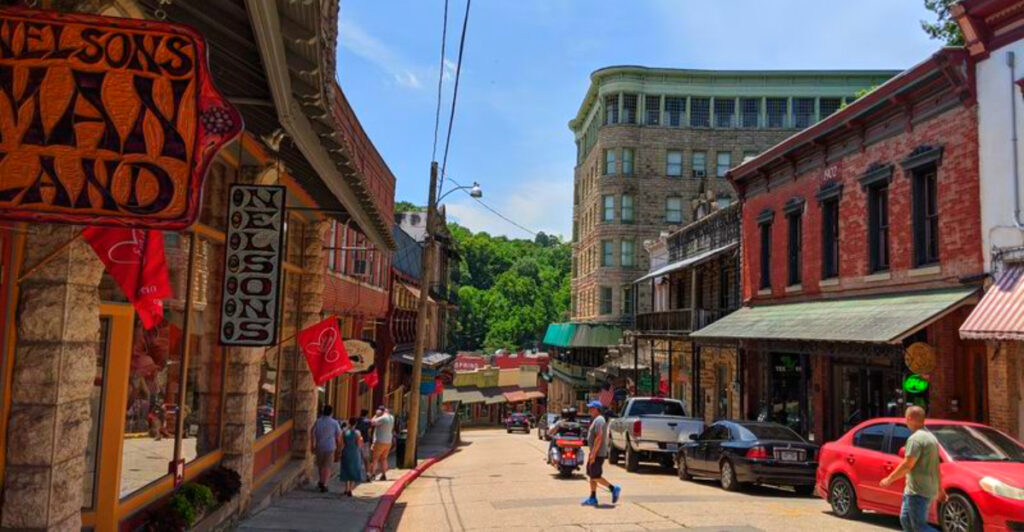
No traffic lights. No four-way stops. Just winding bluff-side streets that make every first-time visitor feel like they have accidentally driven into a period film set in 1890s England.
Spring Street is the commercial heart of Eureka Springs, a town so distinctive it was listed entirely on the National Register of Historic Places back in 1970. The street curves along a high bluff, with two-story Italianate masonry buildings literally constructed into the hillside. The Basin Park Hotel, for example, has seven separate ground-floor entrances because each floor meets the slope at a different point.
Five natural springs along Spring Street have been preserved as public pocket parks, including Basin Park, the spring that originally put the town on the map in 1879. Crescent Spring sits under a restored Victorian gazebo nearby. Art galleries, boutiques, and cafes fill nearly every storefront, and old-style motorized trolleys still serve as public transportation. A half-ton Humpty Dumpty sculpture rounds out the street art collection, because why not.
10. Main Street, Helena, Arkansas
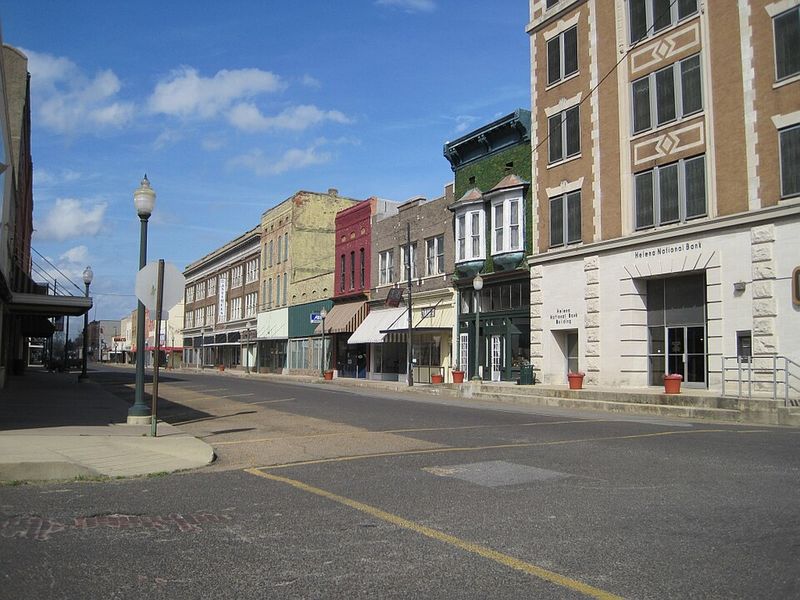
Helena sits right on the Mississippi River, and its downtown carries the architectural weight of a city that once moved serious commerce along that waterway.
The brick buildings lining downtown Helena were built during the height of the city’s river trading era, and their scale reflects the ambition of that period. Impressive facades, wide commercial footprints, and careful masonry work characterize the district in a way that sets it apart from landlocked Arkansas towns of similar size.
Helena’s connection to American music history adds another dimension to its downtown identity. The city is a recognized stop on the Blues Trail, and its museums document the region’s deep contribution to American roots music. The King Biscuit Blues Festival, one of the largest outdoor music events in the mid-South, draws visitors to the downtown area every October and has done so for decades. The combination of river history, musical heritage, and preserved commercial architecture gives Helena’s Main Street a layered character that rewards more than a quick drive-through.
Every block has a reason to stop.
11. Main Street, Keo, Arkansas
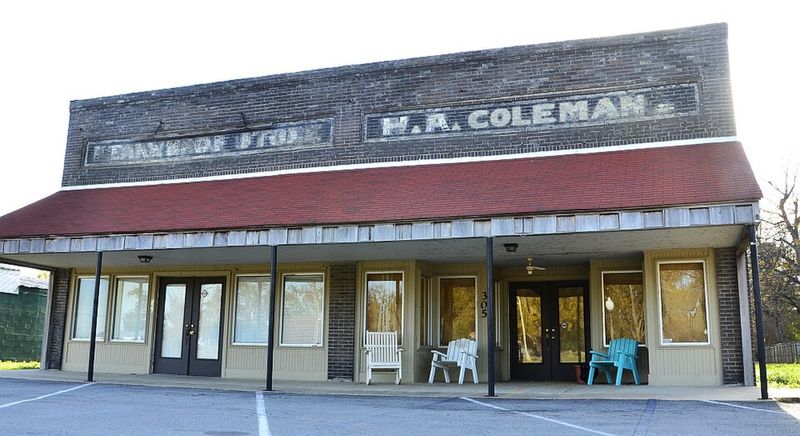
Keo, Arkansas has a population of fewer than 250 people, but its Main Street was placed on the National Register of Historic Places on June 15, 2011, because what it preserved was worth protecting.
The Keo Commercial Historic District consists of thirty-five structures, primarily on the west side of Main Street, built in Standard Twentieth Century and Plain Traditional architectural styles. Most of the brick buildings standing today went up after fires in 1913 and 1926 destroyed the earlier frame structures. Cotton drove the town’s economy for generations, and two cotton gin complexes, the Morris Cotton Gin and the Cobb Cotton Gin, still anchor the street physically. The Cobb complex alone includes twenty-two structures dating from the turn of the century through the 1950s.
By the 1950s, Main Street was a weekly destination for farm families buying groceries and supplies. Today, Charlotte’s Eats and Sweets, which opened in 1992 in the historic Cobb Building, draws visitors from well beyond the county. Morris’ Antiques operates nearby. The safe from the former Bank of Keo still sits inside the old bank building, now operating as Lemon’s Antiques.
Small towns rarely leave a record this complete.
Share this story