Amesbury, Massachusetts sits quietly along the Merrimack River, and for years most travelers drove right past it on their way to Newburyport or the coast. That is starting to change.
This small city carries a surprisingly deep resume, from the oldest wooden boat shop in the country to a preserved poet’s home, a photogenic historic bridge, and farm fields that shift with every season. Whether you are a history buff, an outdoor explorer, or someone who just wants a good reason to take a New England road trip, Amesbury keeps delivering.
The places on this list are real, operating, and genuinely worth your time. Some are well known locally but barely mentioned in travel guides.
Others deserve far more attention than they currently get. Here is a closer look at ten reasons why Amesbury is finally earning its spot on the map.
America’s Oldest Operating Wooden Boat Shop
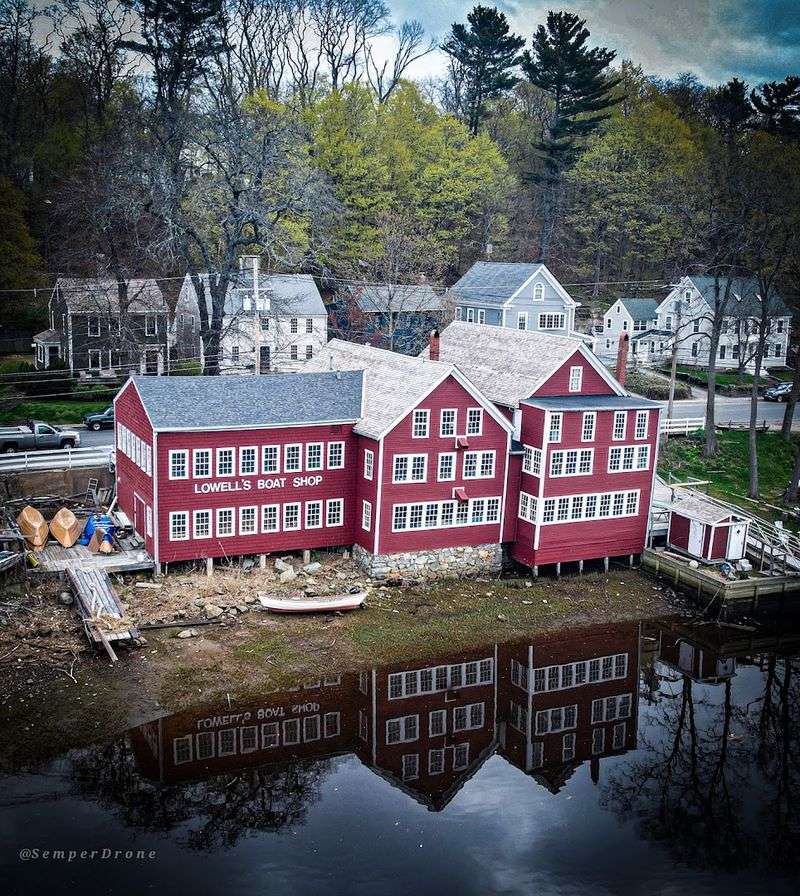
Founded in 1793, Lowell’s Boat Shop holds a title that very few places in the entire country can claim: America’s oldest continuously operating wooden boat shop. That is not a marketing slogan.
It is a verified historical fact backed by more than two centuries of unbroken craftsmanship on the banks of the Merrimack River.
The bright red waterfront buildings are photogenic from the outside, but the real draw is what happens inside. Traditional techniques used to build dories and other wooden craft are still practiced here, keeping skills alive that most of the modern world has forgotten.
Lowell boats were closely tied to New England’s commercial fishing industry, and the shop helped develop efficient production methods that allowed large numbers of sturdy working boats to be built reliably.
Visitors may find exhibits, guided tours, restoration work, or active boatbuilding depending on the season. Public access and programming vary throughout the year, so checking Lowell’s Boat Shop schedule before arriving will save you a wasted trip.
An Orchard Destination for Every Season
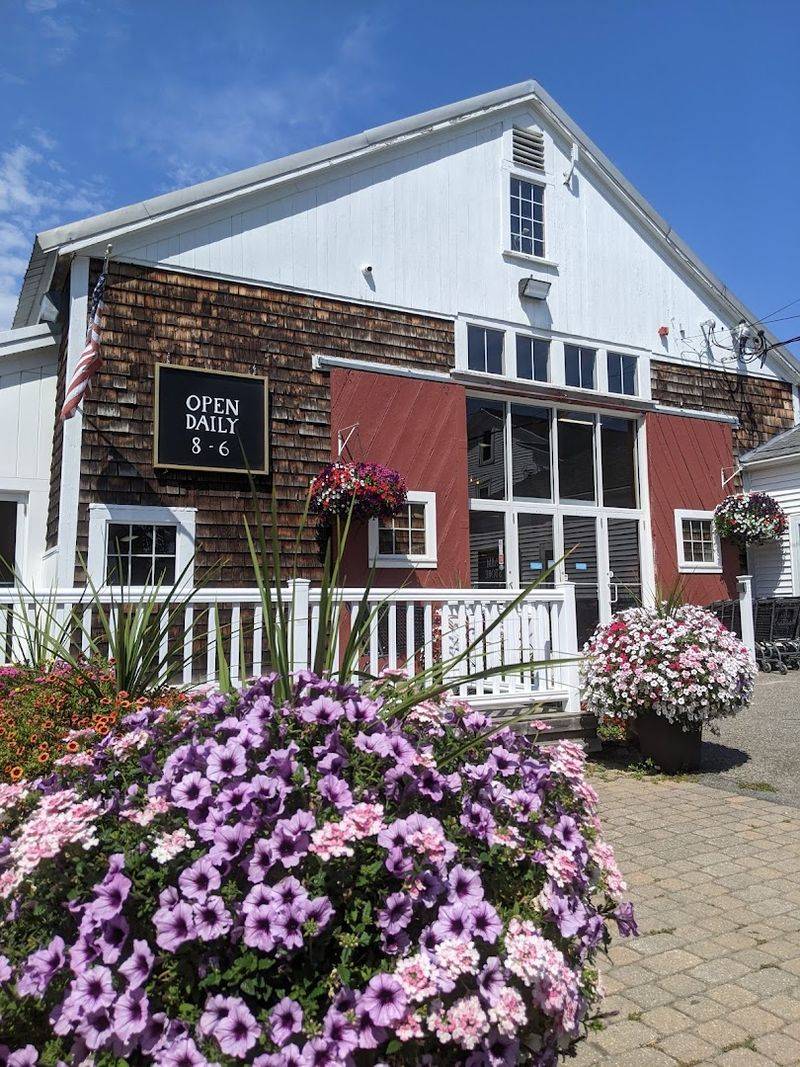
Cider Hill Farm is the kind of place that earns a return visit in every season, not just once a year when the apples turn red. The 145-acre property offers pick-your-own fruit from spring through fall, covering strawberries, cherries, peaches, blueberries, raspberries, apples, and pumpkins as each crop comes into season.
Beyond the fruit, visitors come for cut-your-own flowers, fresh pressed cider, hot apple cider donuts, and a well-stocked farm store. The rolling orchard views photograph beautifully, and live music, seasonal festivals, and family programs give the farm a lively community feel throughout the year.
Spring blossoms and summer berry fields give Cider Hill a completely different character than its popular autumn apple season, which means first-time visitors often become regulars. Because harvest schedules depend on weather and crop conditions, checking the farm’s current calendar before making the drive is strongly recommended.
This is Amesbury’s rural side at its most rewarding.
A Peaceful Beach and Trail Escape
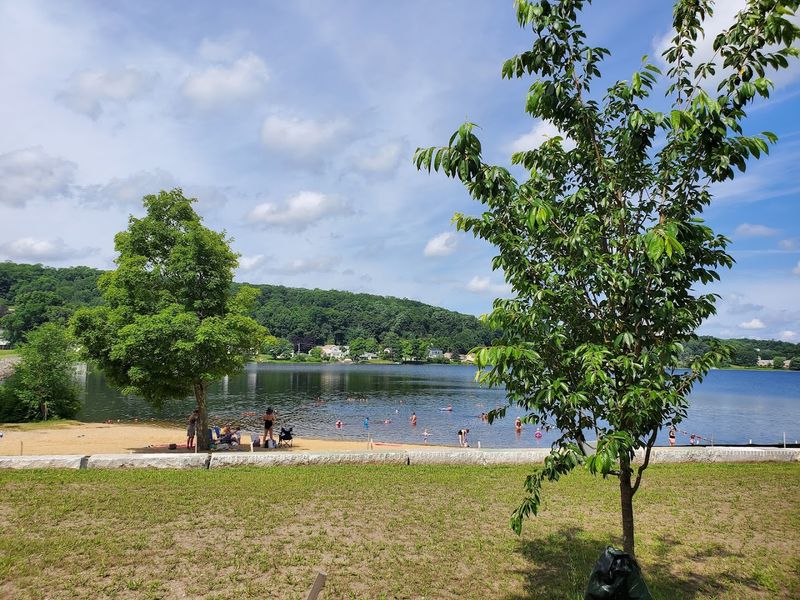
Lake Gardner offers one of the most accessible outdoor escapes in Amesbury without requiring a long drive or a trail map. The city-managed recreation area includes a sandy beach, picnic space, fishing access, and a put-in for canoes and kayaks, making it practical for different kinds of visitors on the same afternoon.
Trails extending from the lake toward Battis Farm allow walkers to turn a beach visit into a longer outing through conservation land. The calm water and tree-lined shoreline are most inviting during summer, but the surrounding paths also attract visitors during spring and fall when the foliage changes color and the crowds thin out.
Lake Gardner connects to Amesbury’s broader network of conservation trails, so it functions as more than a swimming destination. Families can settle near the water while paddlers explore the lake’s quieter edges.
Rules, parking details, and seasonal conditions can shift year to year, so reviewing the City of Amesbury’s Lake Gardner information before planning a visit is a smart first step.
Wide Fields Along the Powow River
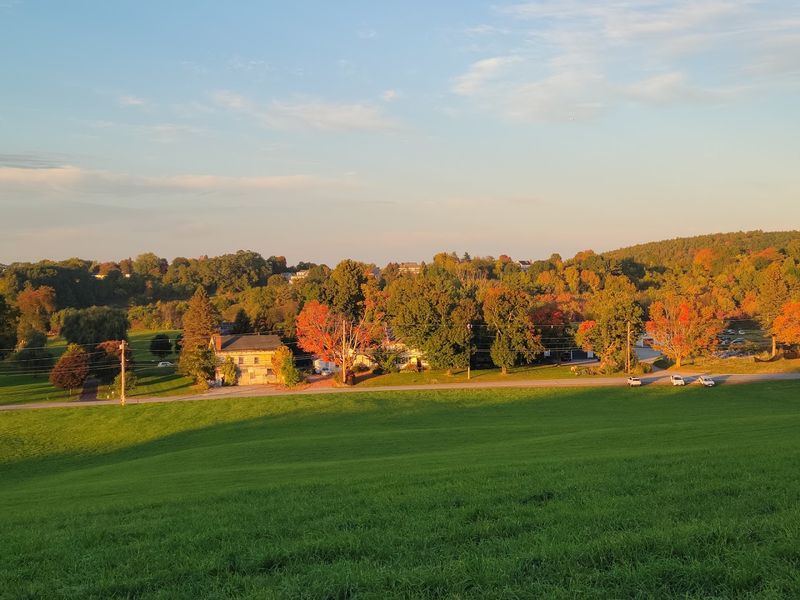
Woodsom Farm has a different energy than a formal city park, and that is exactly what makes it stand out. The city purchased the property in 1989 to protect it from residential development, and it was officially designated a city park in 2019.
Today it serves primarily as conservation land within the Powow River watershed.
Broad open fields, wooded edges, and river access give the property a spacious, unhurried feel. Locals use Woodsom Farm for hiking, dog walking, wildlife watching, sledding in winter, and community events throughout the year.
The main trail from the soccer-field parking area leads toward the Powow River, where a natural swimming area becomes a popular warm-weather stop.
The farm also supports grassland habitat that attracts nesting bobolinks and other birds, so some sections may be managed with wildlife in mind. Wide views across the fields are particularly striking near sunset or during peak fall color.
For anyone wanting breathing room without structured amenities, Woodsom Farm delivers something genuinely different.
The City That Helped Build America’s Carriages
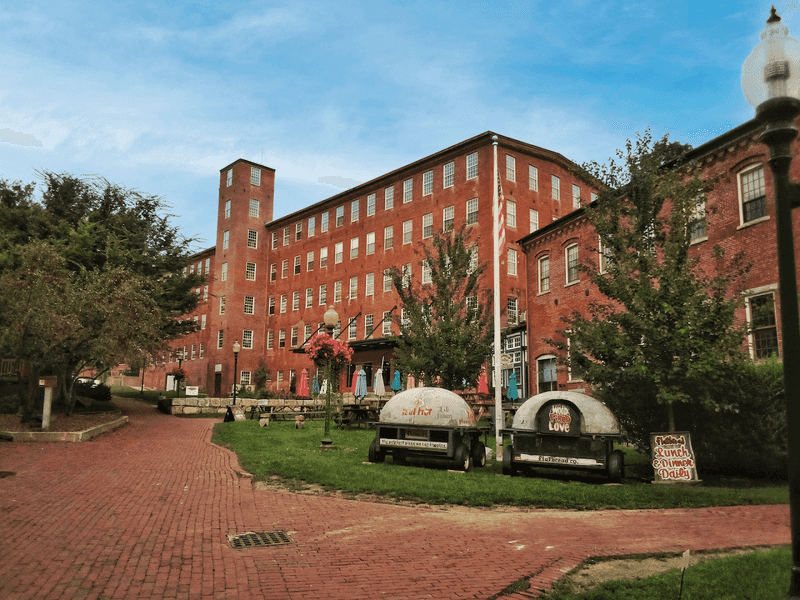
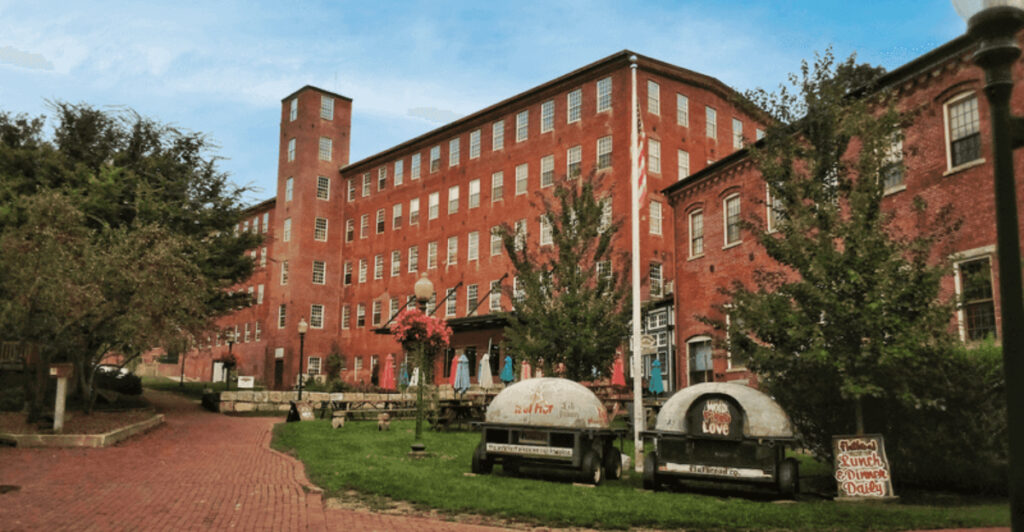
Before automobiles took over, Amesbury was known across the country as a powerhouse of carriage manufacturing. The Amesbury Carriage Museum and Industrial History Center tells that story from inside historic Mill 2 in the Upper Millyard, placing visitors directly inside the landscape where local industry once thrived.
Permanent and rotating exhibits explore the workers, inventions, businesses, and products that made Amesbury a nationally significant manufacturing city. As transportation technology shifted, the region transitioned from carriages to automobile body production, and the museum traces that evolution clearly.
A dedicated children’s area and public programs make the history accessible beyond traditional display cases.
The location also helps visitors understand the role of the Powow River, whose water powered mills for generations. After touring the museum, walking through the surrounding millyard reveals brick factory buildings, mill channels, bridges, and waterfalls with much greater context.
Current exhibitions and opening hours can change, so checking the museum calendar before planning a visit is the right move.
The Preserved Home of an American Poet
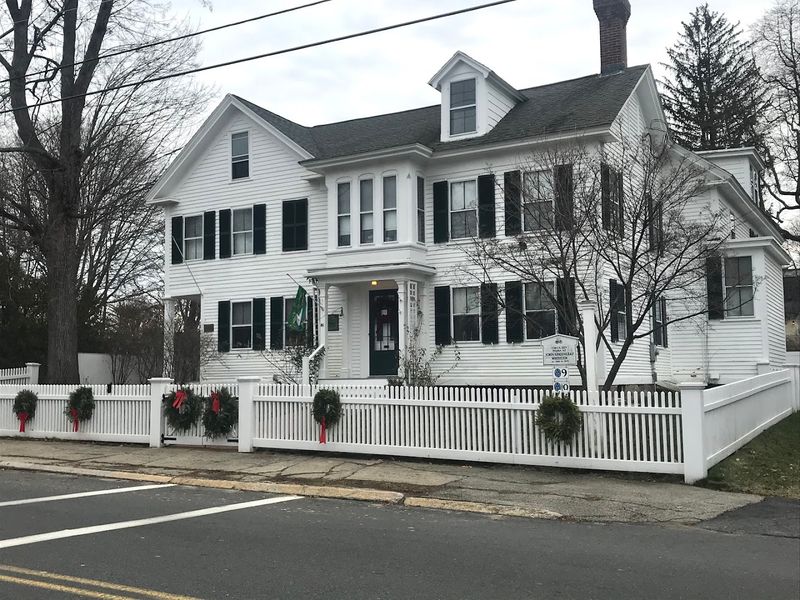
John Greenleaf Whittier was one of nineteenth-century America’s most widely read poets, and his Amesbury home is where much of that work was written. He lived in this circa-1829 New England farmhouse from 1836 until 1892, more than five decades that shaped both his literary output and his public advocacy.
The John Greenleaf Whittier Home and Museum preserves furnishings, personal objects, room arrangements, and garden elements that belonged to Whittier and his family. That level of authenticity gives tours an unusually personal quality compared to reconstructed or replica historic sites.
The story here goes well beyond poetry. Whittier was a committed abolitionist whose writing and public work placed him at the center of some of the most consequential moral debates of his era.
Seeing his study and household surroundings connects that national history to a specific Amesbury address in a way that books alone cannot replicate. Tours are generally seasonal or scheduled, so confirming public hours before arriving is essential to avoid a closed door.
An Eighteenth-Century Interior Frozen in Time
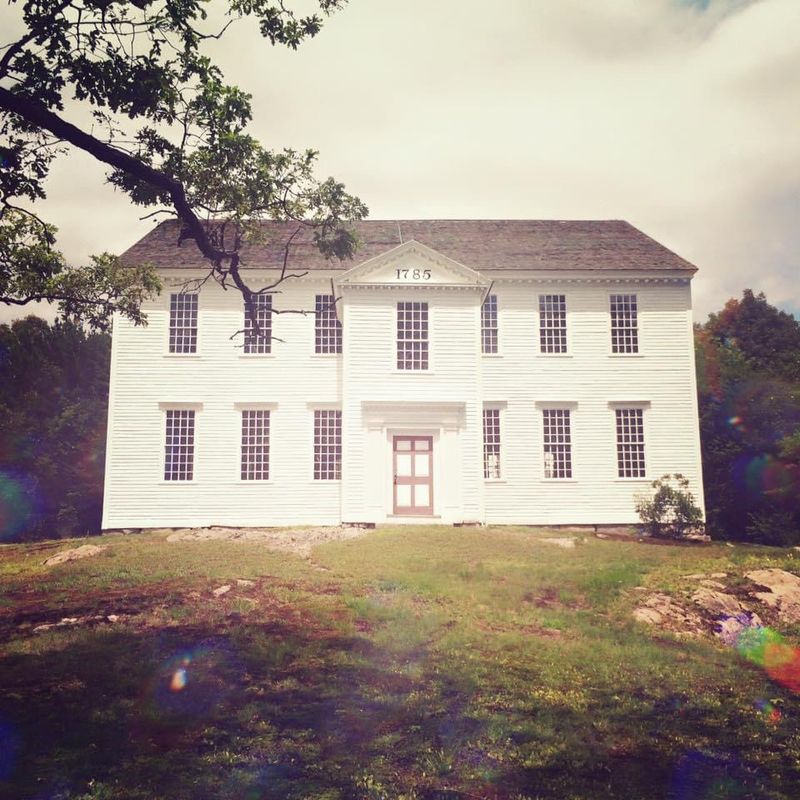
Rocky Hill Meeting House is the kind of historic site that makes you stop and look twice, because the interior has survived largely unchanged since 1785. Built for the West Parish of Salisbury, the building stopped serving an active congregation in the mid-nineteenth century.
That quiet period of disuse is actually what protected it.
Inside, original box pews, upper galleries, historic hardware, and a marbleized pulpit with period paint remain intact. The plain white exterior fits the classic New England meeting house mold, but stepping inside reveals how community gathering, religious practice, and local civic life once shared the same physical space.
There is also a presidential footnote: George Washington paused here to greet townspeople during his 1789 northern journey.
Historic New England now cares for the property, and it opens only on selected dates or for special programs. Even when the interior is closed, the quiet setting and preserved exterior make Rocky Hill Meeting House worth a stop for anyone passing through the area.
Centuries of Local History Inside a Former School
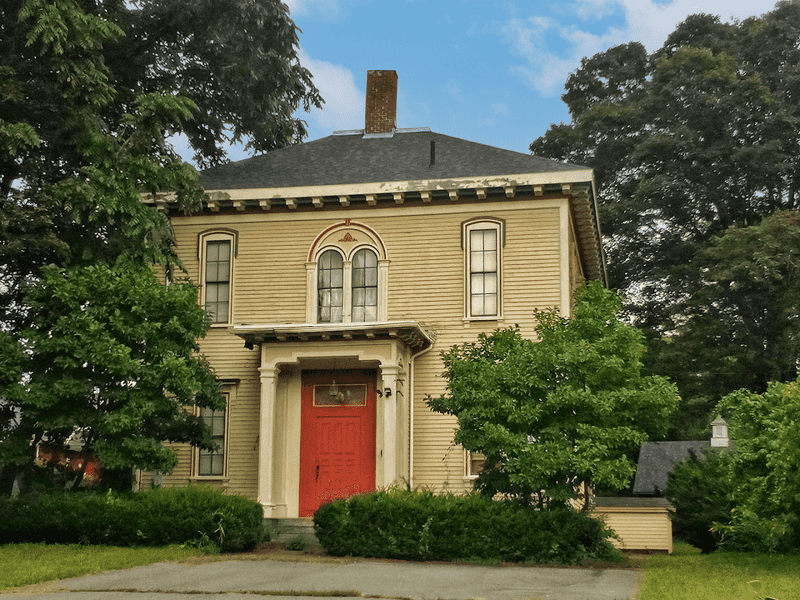
The Bartlett Museum fits more history into one building than most small-city museums manage across several locations. Operated by the Amesbury Historical Society inside a former school dating to 1870, the museum moves visitors through local life from prehistory to the modern era without ever feeling rushed or scattered.
Exhibits include a local-history timeline, a recreated colonial kitchen, a Victorian parlor, a historic classroom, natural-history displays, and a carriage house. Changing exhibitions rotate alongside the permanent collection, giving repeat visitors new material to explore.
The building carries its own layer of significance: it was named for Josiah Bartlett, an Amesbury-born physician who signed the Declaration of Independence.
Rather than centering on one famous figure or single industry, the Bartlett Museum shows how everyday life, education, transportation, and civic identity developed together over centuries. That broad scope makes it genuinely useful as a first stop before exploring other historic sites around the city.
Hours are limited and seasonal, so planning ahead matters.
A Riverwalk Through Amesbury’s Industrial Past
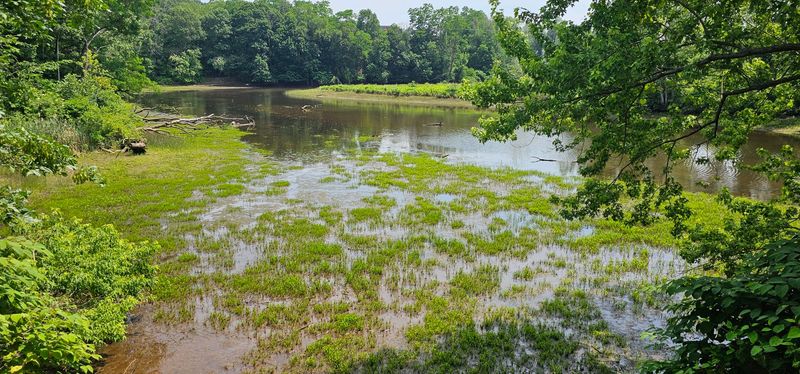
The Amesbury Riverwalk, also known as the Powow Riverwalk, gives visitors one of the most efficient ways to read the city’s industrial history without picking up a guidebook. The paved trail runs roughly 1.3 to 1.4 miles between the Lower Millyard near downtown and Carriagetown Marketplace on Route 110.
The route is separated from vehicle traffic with only one street crossing, making it comfortable for walkers, runners, cyclists, and families. Along the way, glimpses of the Powow River appear through the tree line while historic brick mill buildings recall the era when falling water powered local manufacturing at an impressive scale.
The downtown end connects naturally to Heritage Park, museums, galleries, restaurants, and the atmospheric Upper and Lower Millyard areas, so the trail functions as a starting point rather than a standalone destination. Because it is short and accessible, it works well for visitors who want outdoor time without a long commitment.
Pairing the Riverwalk with a slow exploration of downtown adds real depth to the experience.
A Historic Crossing Over the Merrimack River
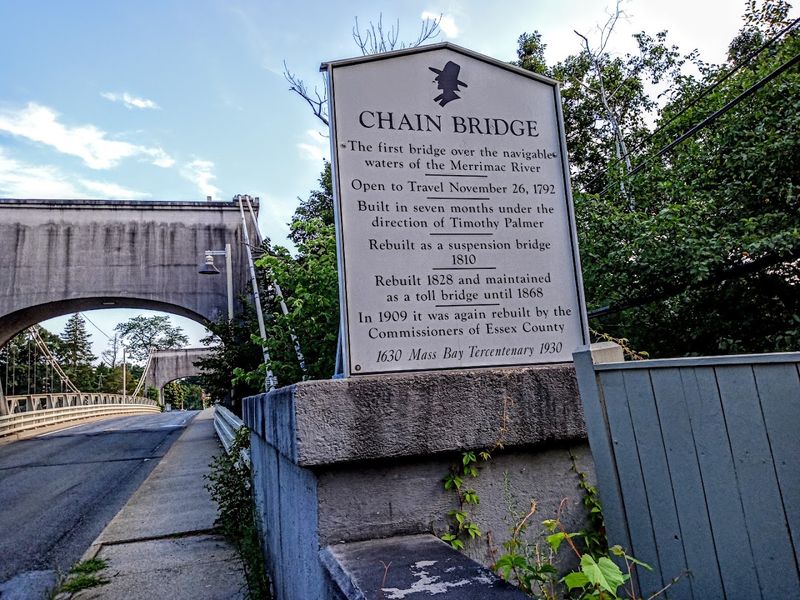
Chain Bridge turns a routine river crossing into a small lesson in early American engineering. The current structure, completed in 1910, sits on a site that has hosted a series of bridges since the 1790s.
It visually echoes the wrought-iron chain suspension bridge built there in 1810, which was among the country’s earliest suspension bridges and the first of its kind in New England.
The bridge crosses the Merrimack River’s channel beside Deer Island, connecting the Amesbury side with the route toward Newburyport. Steel chains, open water views, and a wooded island setting make Chain Bridge genuinely photogenic from both approaches.
Unlike many preserved historic structures, this one is still actively used by vehicles and pedestrians.
Visitors should stay alert while crossing rather than treating it like a closed monument. Chain Bridge also fits naturally into a scenic drive linking Amesbury with Newburyport and the broader Merrimack River corridor.
For anyone drawn to bridges, transportation history, or unexpected roadside landmarks, this crossing earns a deliberate detour.
Share this story