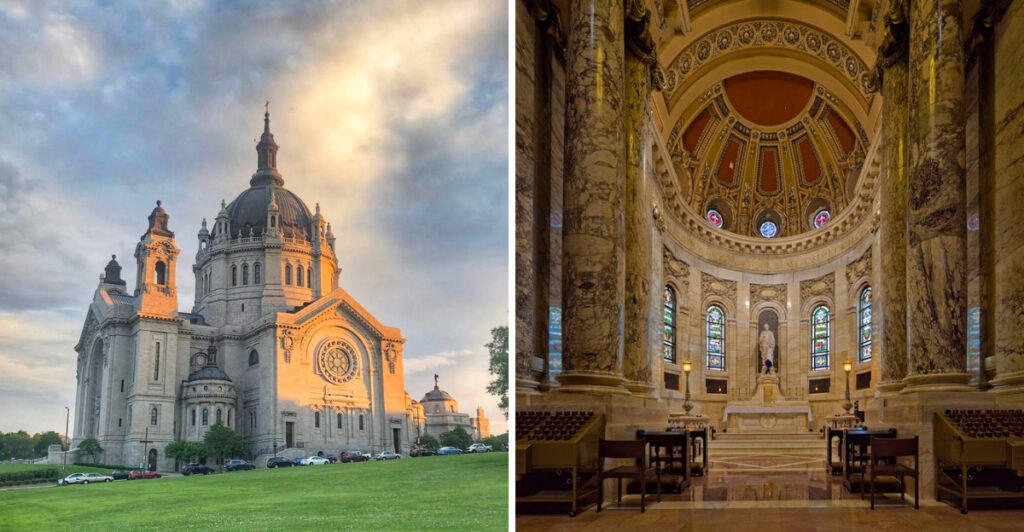
There is a building in St. Paul, Minnesota that stops people in their tracks the moment they see it. Perched on a hill with a massive copper dome rising above the city skyline, it looks less like a church and more like something transported from Rome or Paris.
From the outside, the sheer scale of it is hard to believe. Once you step through those heavy doors, the interior hits you in a way that is genuinely difficult to put into words.
A Landmark That Commands the Skyline
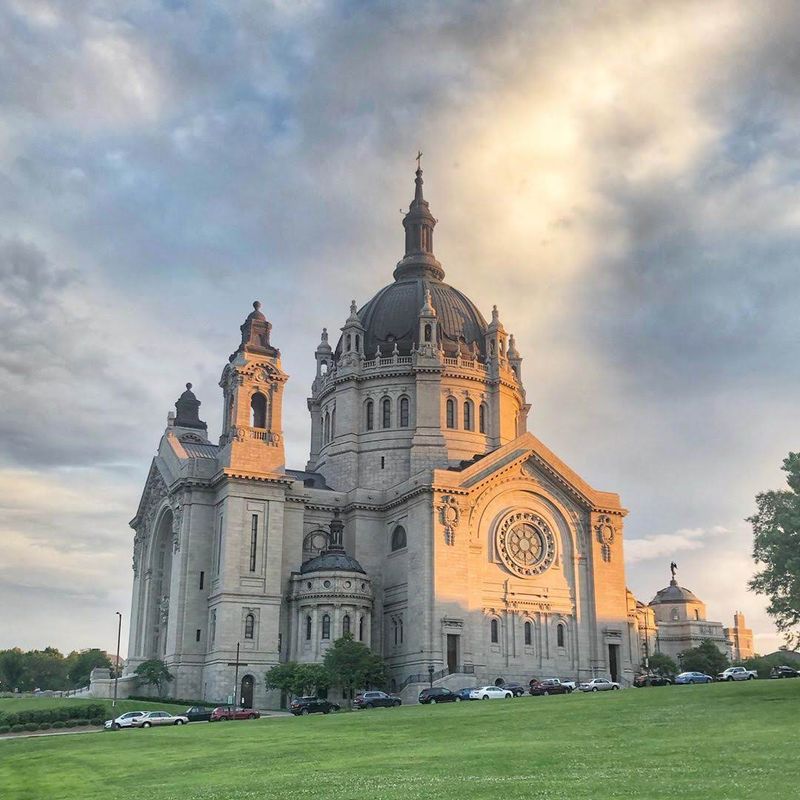
Most buildings blend into a city skyline. This one owns it.
The Cathedral of Saint Paul sits atop Cathedral Hill, rising above the surrounding streets in a way that makes it visible from miles away across the Twin Cities area.
The copper dome is the first thing most people notice, and it is genuinely enormous. It dominates the St. Paul skyline in a way that few structures in the entire Midwest can match.
What surprises a lot of first-time visitors is how the building seems to grow larger as you approach it on foot. From a distance, you think you understand its scale.
Up close, you realize you were underestimating it the entire time. That sense of gradual revelation is part of what makes approaching this cathedral such a memorable experience before you even reach the front steps.
The Full Address and History Behind the Name

The Cathedral of Saint Paul stands at 239 Selby Ave, St. Paul, MN 55102, United States, and has been one of the city’s most defining structures since its completion in 1915.
Archbishop John Ireland was the driving force behind its construction, commissioning architect Emmanuel Louis Masqueray to design it. Masqueray had previously designed the Basilica of Saint Mary in Minneapolis, and the two buildings share a certain grandeur that reflects his Beaux-Arts training.
Construction began in 1906, and the cathedral took nearly a decade to reach a state where it could be used for worship. The building continued to be refined and decorated for years after that initial opening.
Understanding that timeline makes the finished product even more impressive. This was not a quick project.
It was a long-term commitment by an entire community to create something truly lasting for the city of St. Paul.
The Beaux-Arts Style That Sets It Apart
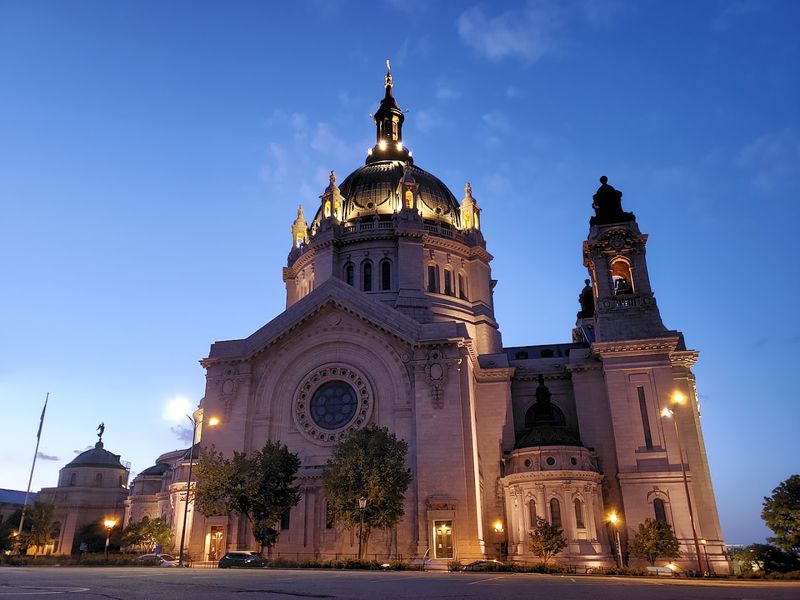
Beaux-Arts architecture is all about boldness, symmetry, and classical European influence, and the Cathedral of Saint Paul delivers every single one of those qualities in full measure.
The exterior features grand columns, carefully carved stonework, and a sense of proportion that feels both monumental and balanced. Nothing about the design feels accidental.
Every element was chosen to create a specific impression of permanence and reverence.
What I find genuinely fascinating about the style is how it manages to feel both ancient and timeless at the same time. You could photograph this building in black and white and it would look perfectly at home in a book about European cathedrals from the 1800s.
Yet here it is, sitting in Minnesota, quietly being one of the most architecturally significant buildings in the entire Upper Midwest. That contrast between location and grandeur is part of its lasting appeal.
The Copper Dome Up Close
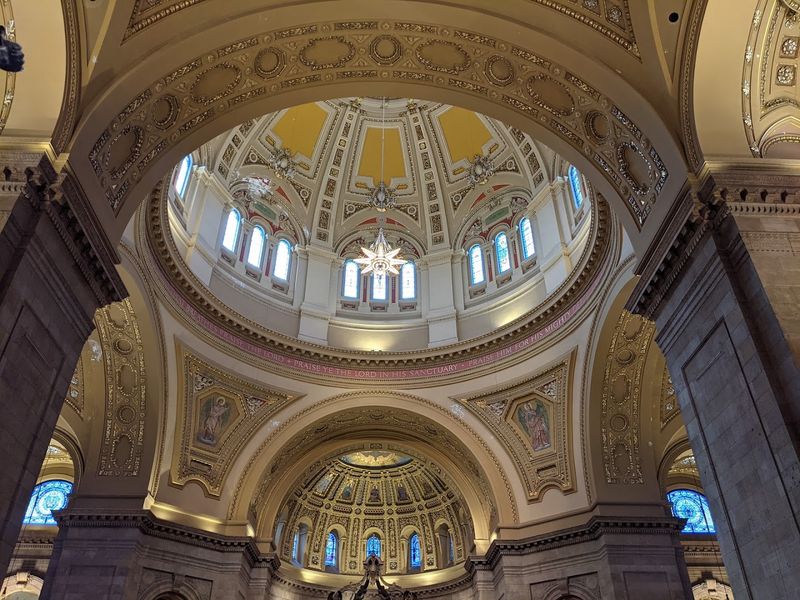
Few architectural features in Minnesota are as recognizable as the copper dome crowning this cathedral. Over the decades, the copper has developed a natural green patina that gives the dome a distinctly aged, almost European quality.
The dome is modeled after the great domed churches of Europe, and its proportions are genuinely impressive when you stand beneath it and look straight up. The interior of the dome soars above the central crossing of the cathedral, creating a vertical space that feels almost theatrical in its drama.
Light filters into the dome from windows placed around its base, casting soft illumination down into the nave below. On a sunny afternoon, those shafts of light shift slowly across the marble floors as the sun moves across the sky.
That slow, quiet movement of light inside the cathedral is one of those small details that rewards visitors who take their time rather than rushing through.
Stained Glass That Stops You Mid-Step
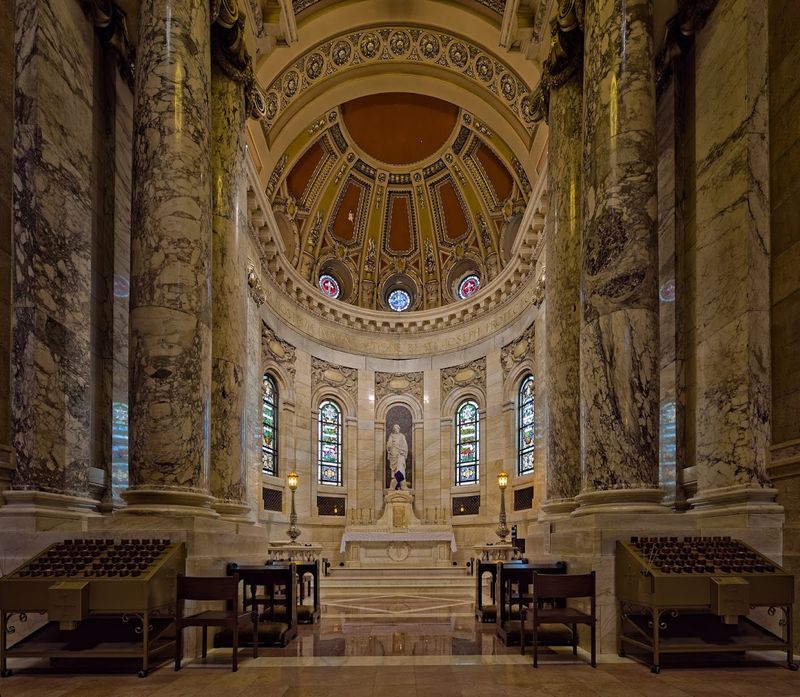
The stained glass inside the Cathedral of Saint Paul is the kind that makes you forget you were walking somewhere. You just stop and stare.
Several rose windows are distributed throughout the cathedral, each one featuring intricate geometric and figurative designs rendered in deep jewel tones. When sunlight hits them at the right angle, the colors spill across the stone floors and marble surfaces in a way that feels almost theatrical.
Each window tells a story, and together they form a visual narrative that runs throughout the entire interior space. You could spend a full hour just moving from window to window without feeling like you had wasted any time.
What makes the glass here particularly special is the quality of the color work. These are not faded or muted windows.
The colors remain vivid and rich, filling the cathedral with warm, shifting light throughout the day that changes the entire character of the interior.
The Marble Columns and Interior Scale
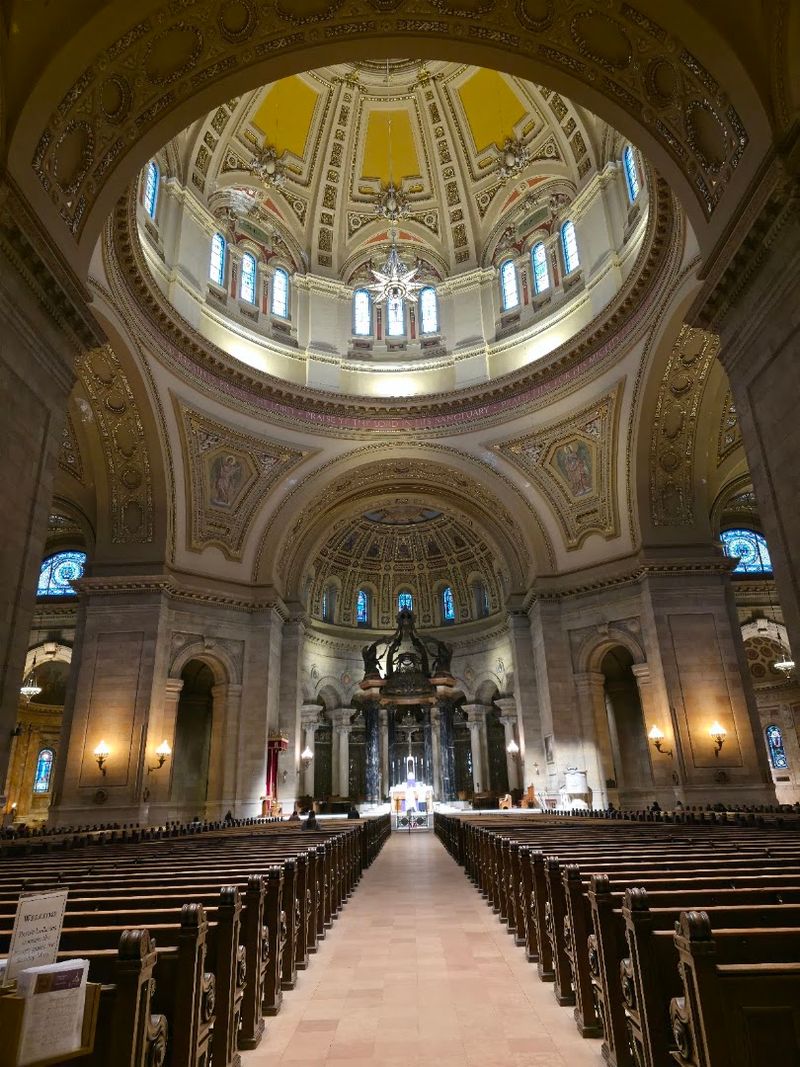
Walking into the nave of the Cathedral of Saint Paul, the first thing that registers is the sheer vertical space above you. The ceilings rise to a height that makes everything at ground level feel almost small by comparison.
Tall marble columns line the nave on both sides, leading your eye naturally toward the main altar at the far end. The columns are not just decorative.
They carry the weight of the structure above while also giving the interior a rhythm and order that makes the space feel organized rather than overwhelming.
The marble itself has a warmth that cold stone does not always deliver. It catches the light from the windows and from the candles near the side altars, giving the interior a glow that photographs simply cannot fully capture.
Standing in the center aisle and looking toward the altar, you get a clear sense of why this building has been drawing visitors for over a century.
Frescoes and Sacred Artwork Throughout
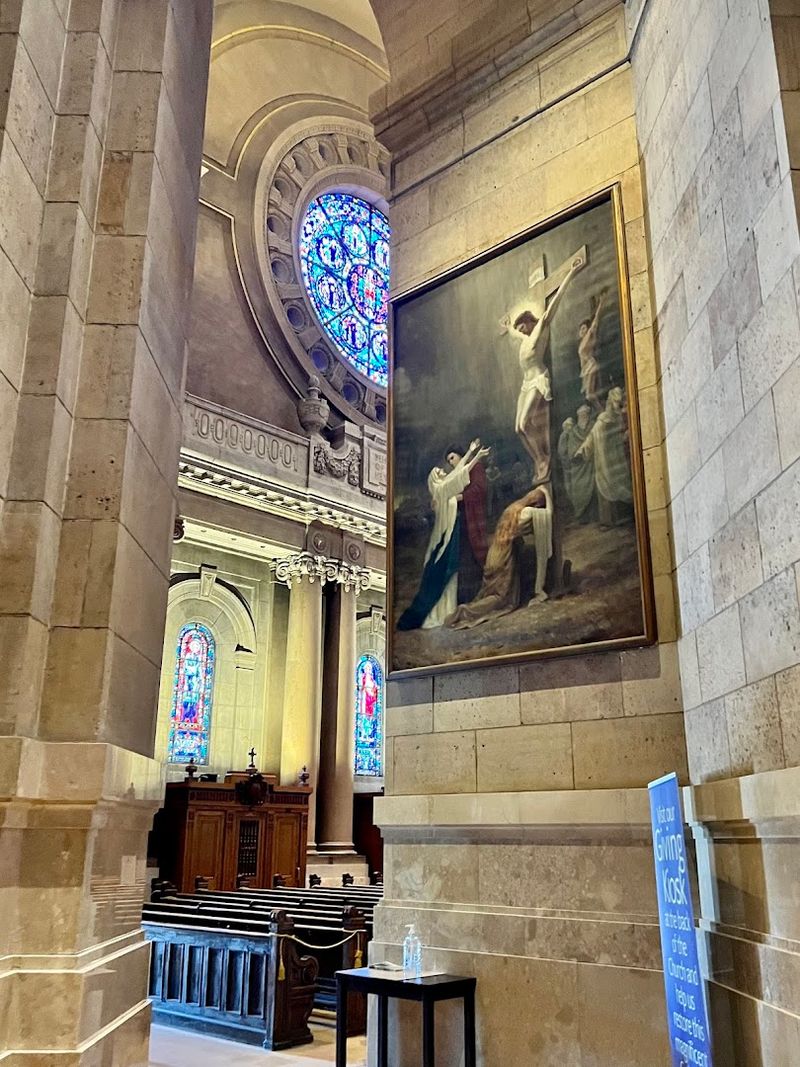
Beyond the stained glass and marble, the Cathedral of Saint Paul is filled with frescoes and sacred artwork that cover nearly every surface in the most thoughtful way.
The frescoes are painted directly onto the walls and ceilings, a technique that requires tremendous skill and careful preparation of the surface. They depict religious scenes and figures with a level of detail that rewards close inspection.
The more time you spend looking, the more you notice.
There is a particular quality to fresco work that printed reproductions never quite capture. The colors have a matte depth that seems to absorb light rather than reflect it, giving the paintings a quiet presence that feels very different from oil paintings or prints.
For visitors who appreciate fine art, this cathedral functions almost like a museum of sacred painting. You do not need to be religious to find genuine beauty and craft in every corner of this extraordinary space.
The Pipe Organ and Acoustic Power
There is something about a pipe organ in a vaulted stone cathedral that no recording can replicate. The sound does not just enter your ears.
It moves through the entire building and through you.
The Cathedral of Saint Paul has a pipe organ that takes full advantage of the cathedral’s remarkable acoustics. When it plays during Mass or during special concerts, the sound fills the entire space from floor to dome in a way that is physically felt as much as heard.
Several visitors have noted that hearing someone sing or play in this space is a completely different experience from any other venue in the Twin Cities. The natural reverb created by the stone walls and vaulted ceilings gives every note a richness and sustain that feels almost otherworldly.
If you have the chance to visit during a musical event or a Mass that includes full organ accompaniment, take it. That acoustic experience alone is worth the trip to Cathedral Hill.
Saint Statues and the Area Behind the Tabernacle
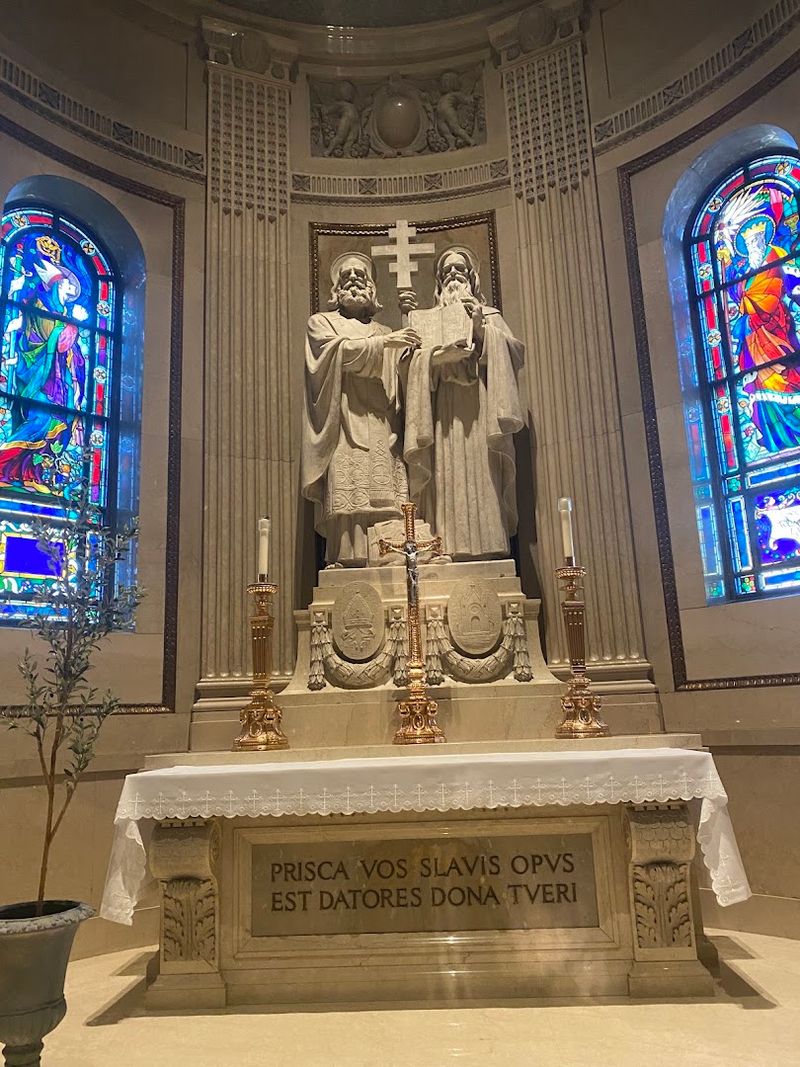
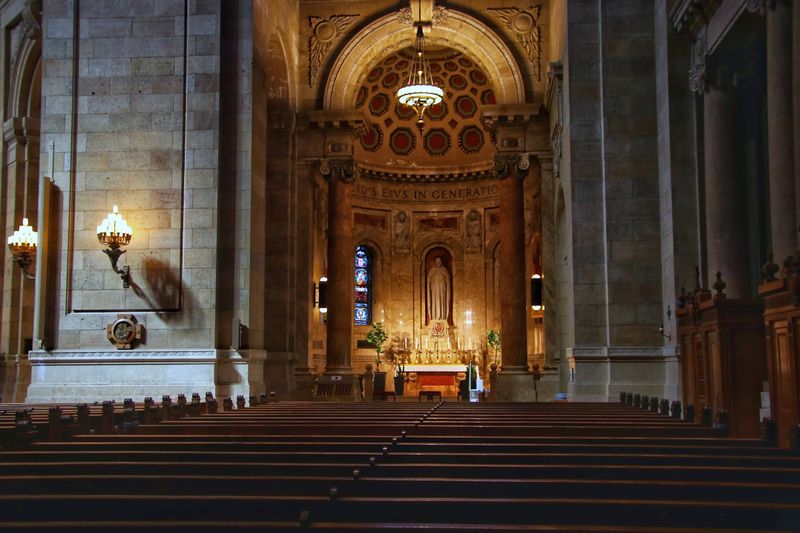
One feature that surprises many first-time visitors is the collection of saint statues arranged behind the main tabernacle. They line the back of the sanctuary in a semicircular arrangement that gives the altar area a sense of depth and presence.
Each statue is carved with individual detail, from the expression on each face to the folds of the robes. They are not generic figures.
Each one has a distinct character that reflects careful craftsmanship and artistic intention.
Standing at the entrance of the nave and looking toward the altar, the statues form a kind of visual backdrop that anchors the entire interior composition. They pull your gaze forward and upward simultaneously, which is exactly what great religious architecture is designed to do.
For visitors who enjoy sculpture, spending time with each individual statue reveals details that are easy to miss from a distance. Moving closer is always rewarded with something new to discover in this cathedral.
Visiting Freely and What to Expect at the Door
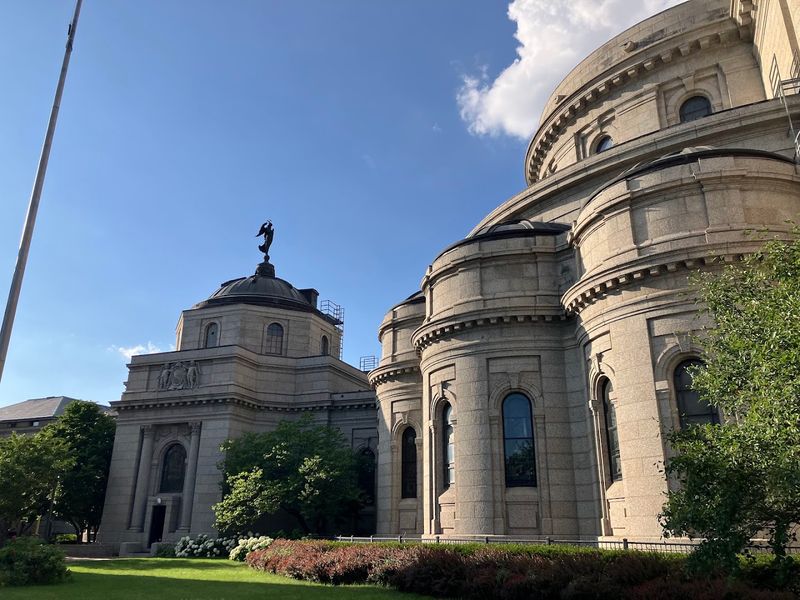
One of the most practical things to know before visiting is that the cathedral is open to the public daily from 7 AM to 7 PM, and general entry is free of charge. You do not need a ticket or a reservation simply to walk in and look around.
The heavy doors at the entrance can sometimes appear closed even when the cathedral is fully open. A gentle push is usually all it takes.
This catches some visitors off guard, but once you are inside, any uncertainty disappears immediately.
The atmosphere inside is calm and respectful, which means visitors are expected to keep voices low and be mindful of anyone who may be there for prayer or Mass. That quiet expectation actually enhances the experience rather than limiting it.
The cathedral also has a gift shop for those who want to bring something home. Guided tours are available for those who want a deeper look into the history and architecture of the building.
The Cathedral’s Ranking Among American Churches
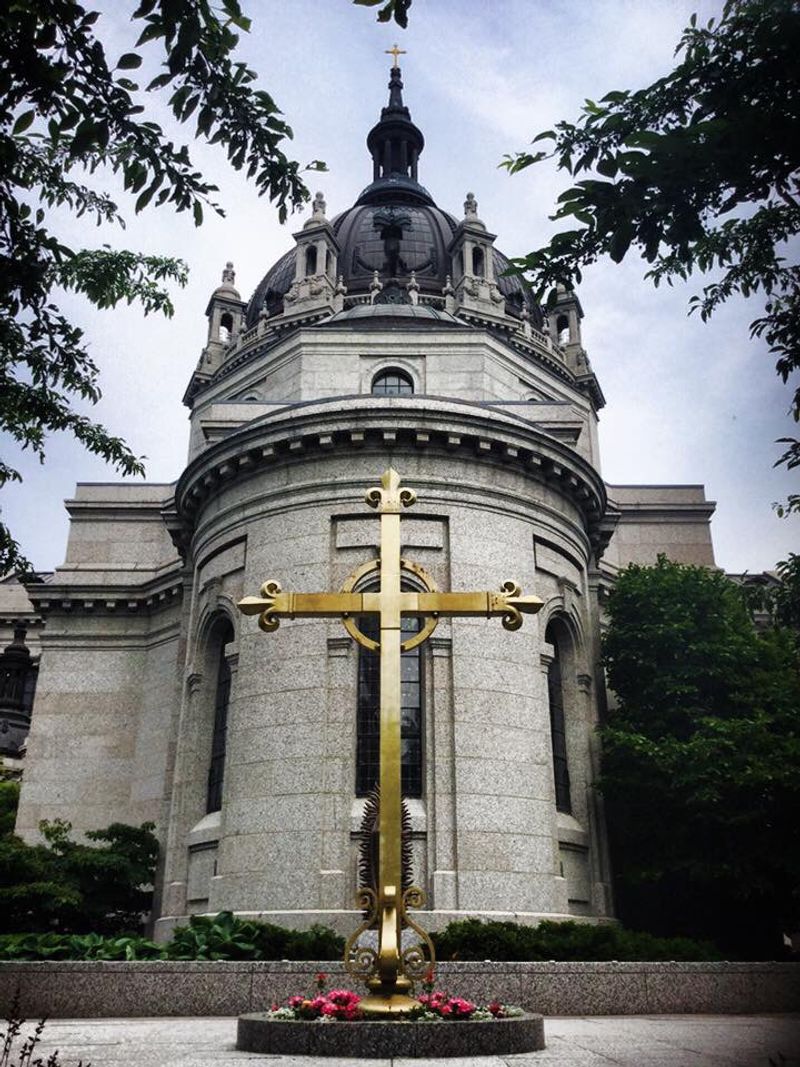
Here is a fact that genuinely surprised me when I first learned it: the Cathedral of Saint Paul is considered the third largest cathedral in the United States. That ranking puts it in rare company on the national stage.
For a city the size of St. Paul, having a cathedral of this scale is remarkable. Its cousin, St. Paul’s Cathedral in London, is often cited for comparison, but the Minnesota version holds its own in terms of interior volume and architectural ambition.
Being the third largest cathedral in the country also means this building draws visitors from well beyond Minnesota. Architecture enthusiasts, religious pilgrims, and curious travelers from across the country make their way to Selby Avenue specifically to see it.
That national significance gives the cathedral a weight that goes beyond its role as a local landmark. It is genuinely one of the great ecclesiastical buildings in the entire country, and it deserves to be talked about that way.
Nearby Attractions That Complete the Visit

Cathedral Hill is not an isolated stop. The Minnesota State Capitol building is within comfortable walking distance, and the two landmarks complement each other well as a paired visit on the same afternoon.
The walk between the cathedral and the Capitol is particularly pleasant during fall, when the surrounding trees turn vivid shades of orange and red. The route passes through a historic section of St. Paul that has its own architectural character worth noticing along the way.
A World War II memorial is also nearby, making the area around Cathedral Hill one of the more historically layered parts of the city. You can cover a meaningful amount of St. Paul history and architecture in a single afternoon without needing to drive between stops.
Ending a visit to the cathedral with a walk toward the Capitol gives the whole experience a natural arc. It is the kind of afternoon that leaves you feeling like you actually understood a city rather than just passed through it.
Share this story