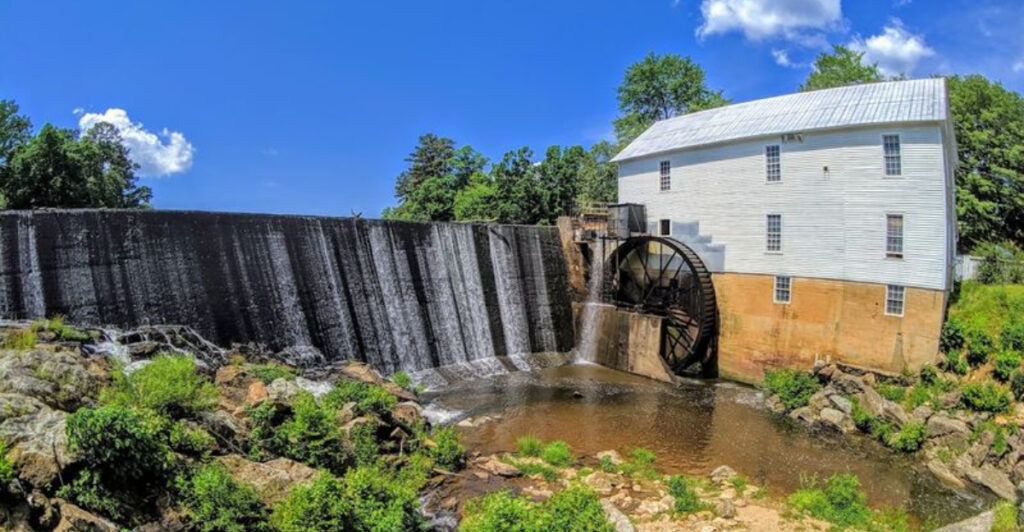
There is a quiet corner of Catawba County, North Carolina, where time seems to have pressed pause somewhere around 1913. An old wooden mill stands beside a glassy pond, a massive water wheel anchors the scene, and the whole place looks like it was painted rather than built.
I visited on a crisp Saturday morning and left genuinely moved by how much history one small property could hold. This article walks you through everything that makes this site so special, from its fascinating backstory and stunning scenery to practical tips that will help you plan a visit worth every mile of the drive.
Where to Find Murray’s Mill Historic Site
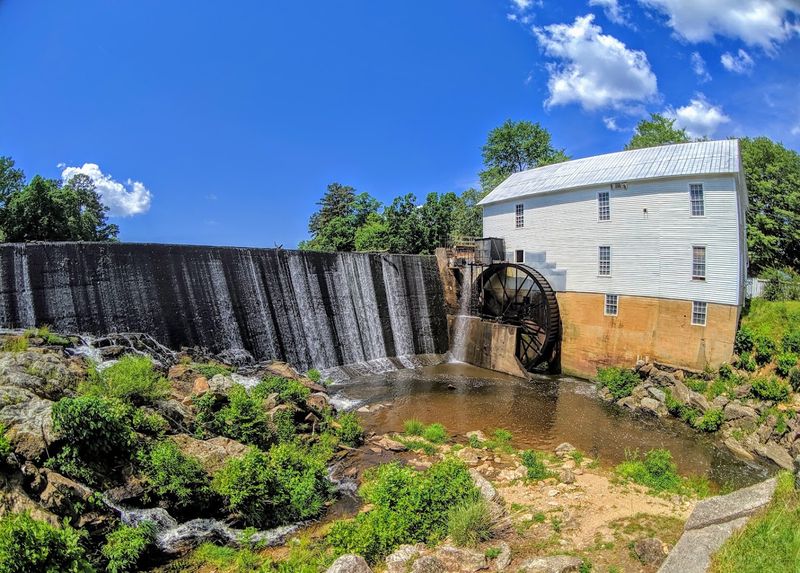
The full address is 1489 Murrays Mill Rd, Catawba, NC 28609, tucked into the eastern part of Catawba County at Balls Creek, roughly ten minutes from Interstate 40.
The drive in sets the tone immediately. The road winds past farmland and old hardwoods before the mill property opens up ahead of you, and that first glimpse of the pond and the dark timber structure is genuinely arresting.
Getting there is straightforward from most of the western Piedmont region. Charlotte is about an hour away, Hickory is closer to twenty minutes, and Statesville sits just a short hop to the east.
The grounds are open during daylight hours, which means you can walk the property even outside of official tour times. The General Store and guided tours operate Wednesday through Friday from 10 AM to 5 PM, Saturday from 9 AM to 5 PM, and Sunday from 1 to 5 PM.
Monday and Tuesday the site is closed. You can reach the staff at 828-241-4299 for questions before you head out.
A Brief History of the Murray Family Mill
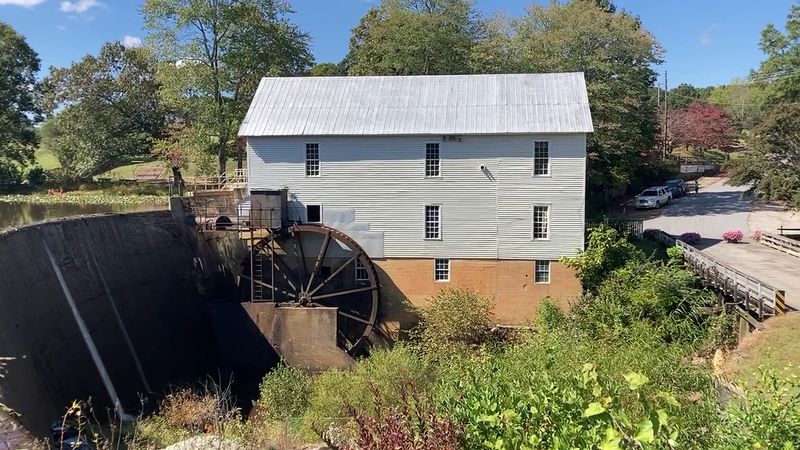
The mill that stands here today was built in 1913, but the Murray family’s connection to this land goes back even further, with the general store dating to the 1890s and the wheat house to the 1880s.
Three generations of the Murray family ran the operation until they closed it in 1967, making it one of the longest-running family milling businesses in the county.
What made this place more than just a grain mill was its role as a community gathering spot. Farmers from miles around would haul their corn here not only to have it ground but also to trade goods, share news, and catch up with neighbors in the way that small rural communities once did so naturally.
The Catawba County Historical Association took over in 1980 and began a careful restoration process. Governor James G.
Martin attended the official opening ceremony in 1988, lending a sense of civic pride to what had already become a beloved local landmark.
The mill is recognized as the last intact milling complex remaining in Catawba County, which makes its preservation feel all the more meaningful.
The 28-Foot Water Wheel Up Close
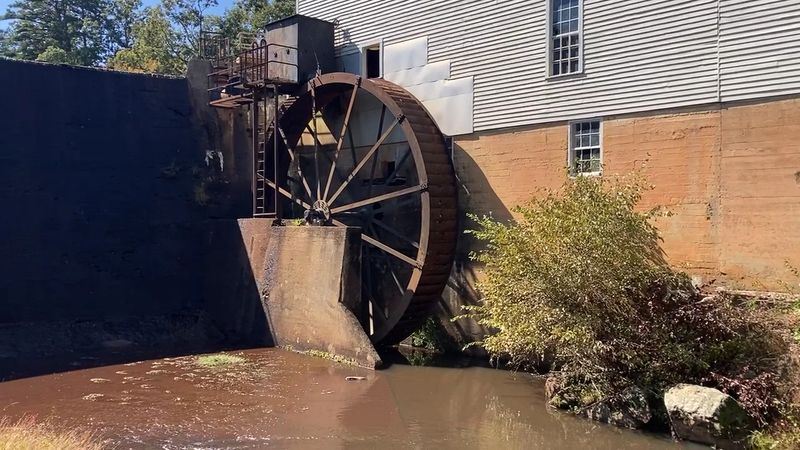
The water wheel is the first thing most visitors lock eyes on, and honestly, it earns every second of that attention. Standing 28 feet tall, it dominates the side of the mill building in a way that feels almost theatrical.
The wheel is fed by water from the millpond, which flows over a dam and channels down to set the wheel in motion. On days when it is turning, the sound alone is worth the trip.
The machinery inside the mill is directly connected to the wheel’s rotation, meaning the whole grinding operation is powered entirely by moving water. That fact hits differently when you are standing right beside it and watching the gears engage.
Some visitors have noted that the wheel has been stationary at times due to ongoing maintenance and repair needs. The hope among the local community is that it will be fully operational again soon, as seeing it in motion adds a whole new layer to the experience.
Even when still, the wheel makes for one of the most photogenic structures in the entire county. The combination of weathered wood, mossy stone, and the shimmer of the pond behind it is hard to beat.
The Millpond and Dam That Steal the Show
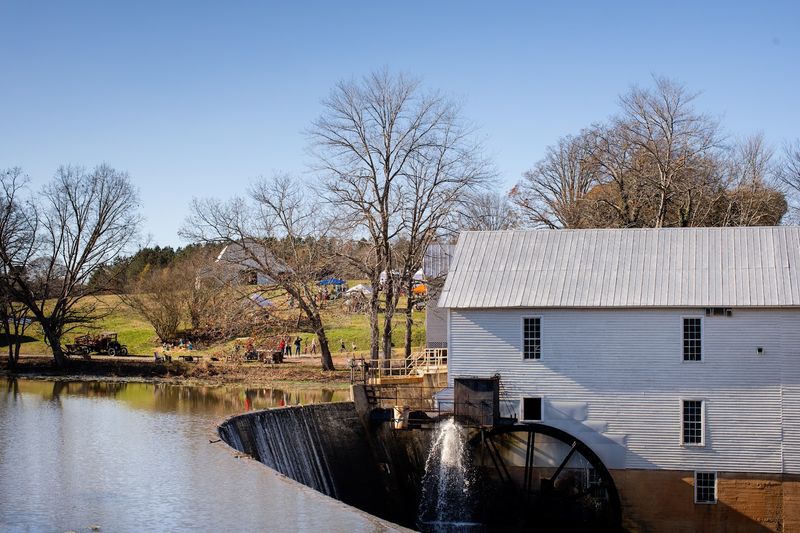
Some historic sites have one standout feature. Murray’s Mill has several, and the pond might quietly be the most beautiful of them all.
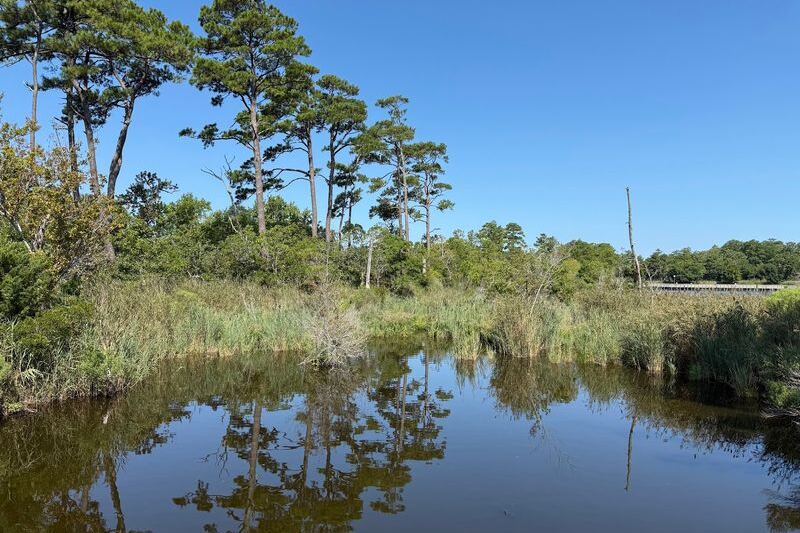
The millpond stretches out behind the dam in a wide, glassy sheet that mirrors the sky and the surrounding tree line with almost painterly precision. On calm mornings, the reflection is so clear it can be hard to tell where the water ends and the sky begins.
The dam itself is a sturdy, well-preserved structure that controls the water flow into the wheel channel. Visitors often walk across the bridge nearby to get different angles of both the dam and the mill, and it is one of the better photo spots on the property.
Wildlife is a bonus here. Herons, ducks, and various songbirds are regular visitors to the pond’s edge, so bringing a pair of binoculars is never a bad idea.
The water’s edge is also a popular spot for families to spread out a blanket and have a quiet picnic. The combination of historic scenery and natural beauty makes the pond area feel like a reward for making the drive, even before you step foot inside the mill itself.
Self-Guided and Guided Tour Options
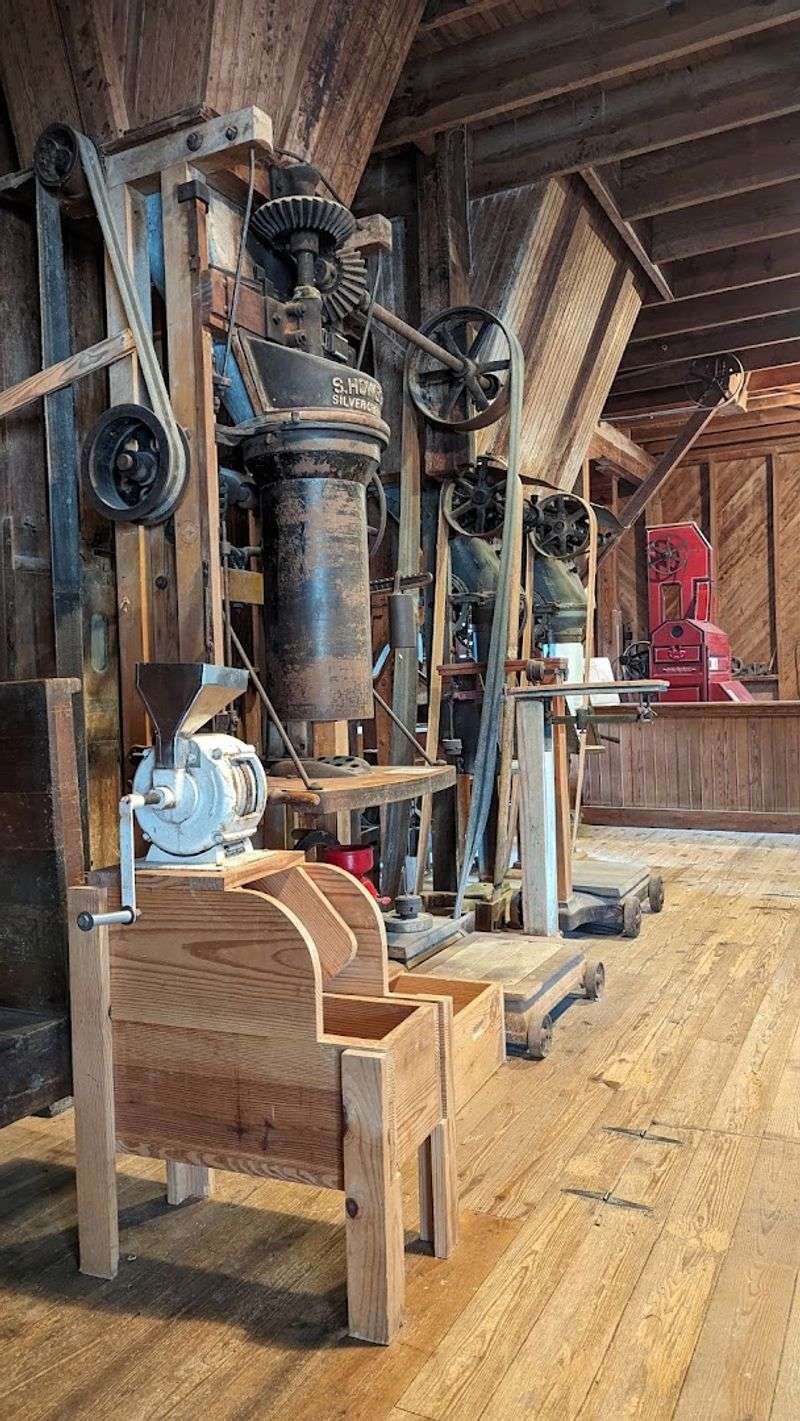
Tours at Murray’s Mill come in two flavors, and both are genuinely good value for what you get. The self-guided option costs seven dollars per person and comes with a thoughtfully assembled binder full of photographs and descriptions organized in the exact order you will encounter each building.
Guided tours run ten dollars per person and give you direct access to a knowledgeable staff member who can answer questions and point out details you might otherwise walk right past. Active duty military and veterans get in free, which is a nice touch.
The guided format works especially well for anyone who wants the deeper story behind the machinery and the family history. Staff members bring a genuine enthusiasm to the subject that makes the information stick in a way that a sign or pamphlet simply cannot replicate.
Families with kids tend to gravitate toward the self-guided option because it allows for a more flexible pace. Children can stop and explore freely without feeling rushed, and the binder format keeps even younger visitors engaged as they match photos to real buildings.
Either way, plan for at least two hours if you want to cover the mill, the outbuildings, the general store, and at least one of the walking trails on the property.
The General Store Experience
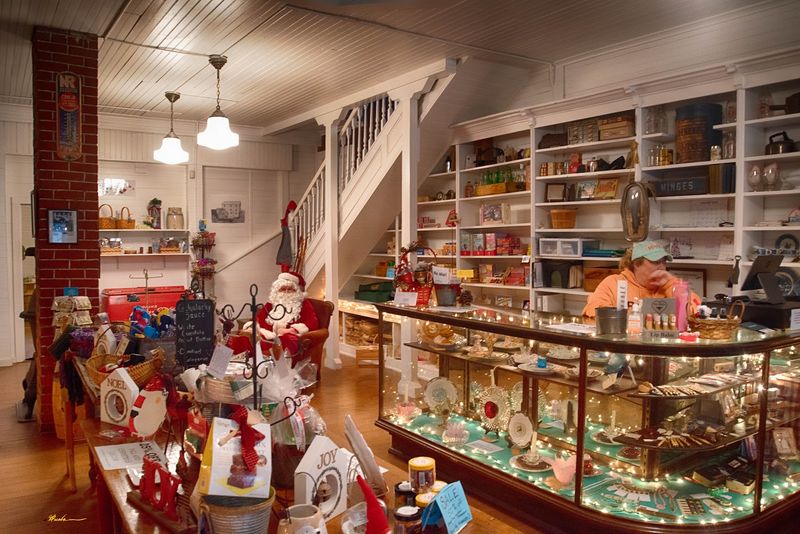
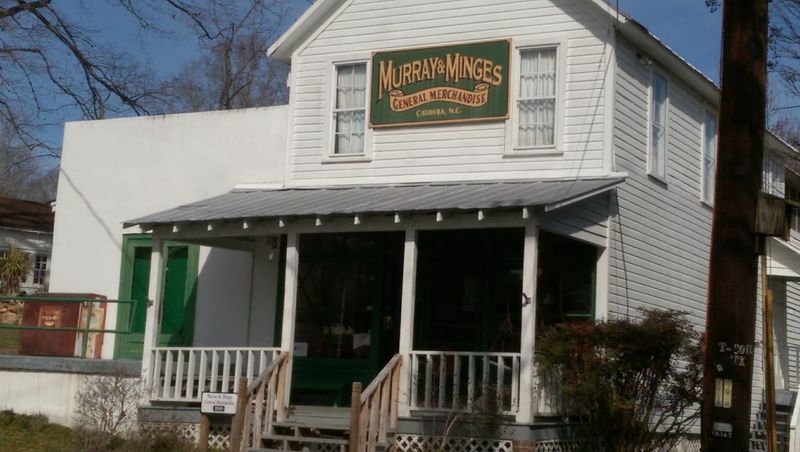
The Murray and Minges General Store dates to the 1890s, and stepping inside feels like a genuine trip backward in time. The shelves are stocked with a charming mix of nostalgic candies, homemade jellies, jams, apple butter, and cornmeal ground right on the property.
That last item is worth pausing on. Buying cornmeal that was actually milled on-site, using the same equipment and methods as a century ago, is the kind of souvenir that carries a real story home with it.
The staff member working the store has become something of a local legend among repeat visitors for her encyclopedic knowledge of the mill’s history and her genuine warmth toward anyone who walks through the door. She can talk you through the restoration timeline, explain how the grinding process works, and recommend what to buy, all without making you feel like you are on a sales floor.
There is also a porch swing out front that invites you to slow down before or after your tour. An old coffee can nailed to the door frame catches bottle caps, a small detail that somehow says everything about the personality of this place.
The store is the kind of stop that turns a day trip into a memory.
Historic Buildings Preserved on the Property
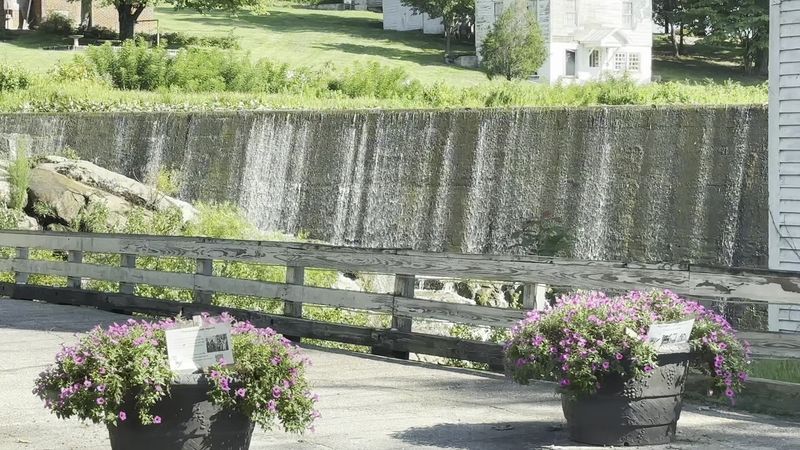
The mill itself is the headliner, but the surrounding buildings are what transform this from a single landmark into a full historic district. Several structures from the late 1800s and early 1900s have been preserved and restored across the property.
The 1880s Wheat House now serves as an exhibit gallery, offering context about the agricultural life that once revolved around this site. The 1913 John Murray House is furnished to the period, giving visitors a clear picture of what domestic life looked like for the family that ran the operation.
Outbuildings scattered across the grounds include a blacksmith shop and a sawmill, which helped form what was essentially a small self-contained rural village in its heyday. Some of the Murray family homes are still in the renovation process, so the site continues to grow with each passing year.
The care taken with each structure is evident. Nothing here looks hastily patched or artificially aged.
The preservation feels respectful, like the people behind it genuinely care about getting the story right rather than just creating a backdrop for photographs.
That said, the photographs do turn out beautifully, which is its own kind of endorsement for the quality of the restoration work done here.
Walking Trails and the Carolina Thread Trail

Hikers and casual walkers both find something to enjoy at Murray’s Mill, thanks to a network of easy trails that weave through the property and connect to a larger regional route.
The Murray’s Mill Trail is part of the Carolina Thread Trail and runs 1.4 miles one way, stretching from Balls Creek in the north to Shiloh Road in the south, with the mill sitting right in the middle. That means you can walk north toward the creek or south along the pond, depending on your mood and your energy level.
The southern stretch along the pond is especially scenic, with plenty of opportunities to spot birds and small wildlife along the water’s edge. Benches are placed at thoughtful intervals, so there is always somewhere to sit, catch your breath, and take in the surroundings.
There is also a children’s literacy trail on the property, which follows an interpretive storybook format and keeps younger visitors fully engaged. Parents have found it to be a clever way to mix outdoor time with a bit of learning without anyone realizing they are doing schoolwork.
The total walking distance around the pond and main grounds comes to roughly one mile, making it accessible for most fitness levels and age groups.
Photography Spots That Make the Drive Worth It
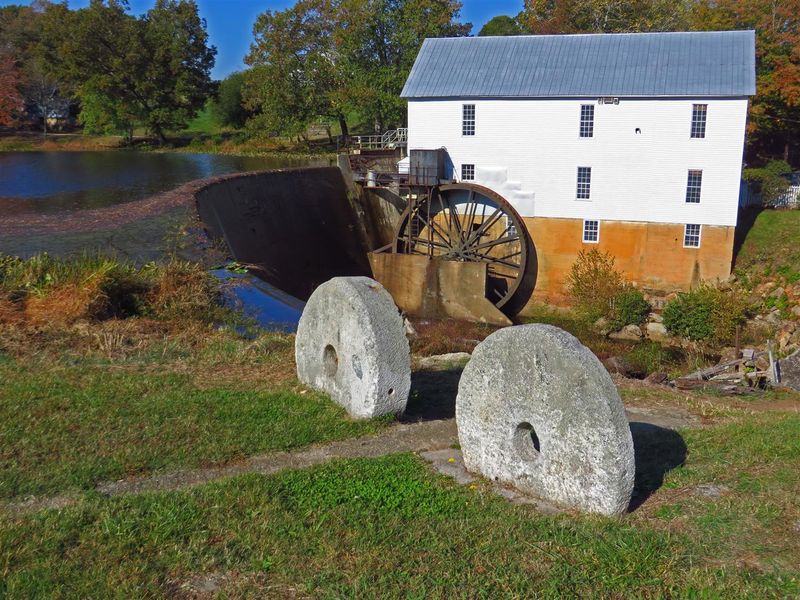
Few historic sites in North Carolina offer quite this many distinct compositions within such a compact area. The mill building, the water wheel, the pond, the dam, the bridge, the general store porch, and the surrounding fields all present differently depending on the light and the season.
Golden hour light in the late afternoon hits the weathered wood of the mill in a way that turns even a phone camera into something capable of producing frame-worthy results. The pond reflection doubles every shot, giving you a natural symmetry that requires zero editing to look polished.
The bridge over Balls Creek offers a slightly elevated vantage point that frames the mill and water wheel together in one clean shot. It is one of the most popular spots on the property for family portraits, and it is easy to see why.
Fall brings an extra layer of color when the surrounding trees turn, and the contrast between the warm foliage and the dark timber of the mill is striking. Spring mornings, when mist sits low over the pond, create an entirely different mood that leans atmospheric and quiet.
Regulars to the site say that no two visits look quite the same, which keeps photographers coming back season after season.
Events and Community Gatherings at the Mill
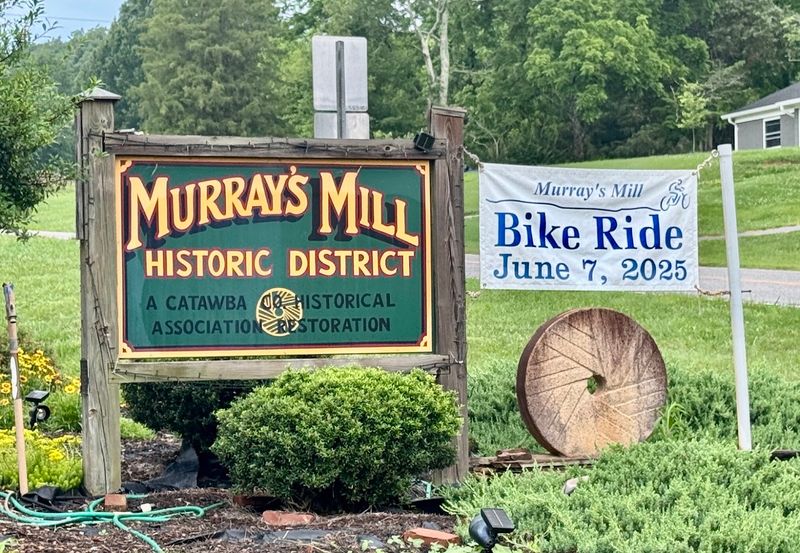
Murray’s Mill is not just a place to visit quietly on a weekday afternoon. The site hosts a rotating calendar of events that bring the community together in ways that feel true to the mill’s original role as a social hub.
A farmers market runs every Saturday morning during the season, with local vendors setting up near the grounds. Fresh produce, handmade goods, and that special energy of a small-town market make Saturday mornings here feel like a full event rather than just a backdrop.
Every June, the site hosts a cycling event that draws between 300 and 350 riders annually. The event is well-organized and serves as a fundraiser for the mill and the Catawba County Historical Society, meaning participants are directly supporting the preservation work that keeps the site intact.
Music events have also been held on the grounds, with at least one local music teacher hosting a student concert here. The outdoor setting adds a natural acoustic quality, and the historic backdrop makes even a small performance feel significant.
Harvest Host travelers with RVs can also stay overnight on the property, which gives the site a welcoming, multi-use character that goes well beyond the typical historic landmark experience.
Practical Tips for Planning Your Visit
A few practical details can make the difference between a smooth outing and a frustrating one, so here is what to keep in mind before you go.
The site is open Wednesday through Friday from 10 AM to 5 PM, Saturday from 9 AM to 5 PM, and Sunday from 1 to 5 PM. Monday and Tuesday are closed, so plan accordingly.
If you arrive outside of tour hours, the grounds are still accessible during daylight, and the scenery alone makes it worth a stop.
Restroom options on the property are limited. At least one portable restroom near the general store has been noted by visitors, but it is worth calling ahead at 828-241-4299 if that is a concern for your group.
Parking is available on-site, though visitors with larger vehicles should be aware that some turning areas are tight. The terrain around the grounds is mostly flat and easy to navigate, making it accessible for strollers and visitors who prefer a gentler pace.
Bring cash or a card for the general store, pack a picnic if you plan to spend a few hours, and wear comfortable shoes. The trails are easy but best enjoyed without dress shoes.
Why Murray’s Mill Deserves a Spot on Your NC Bucket List
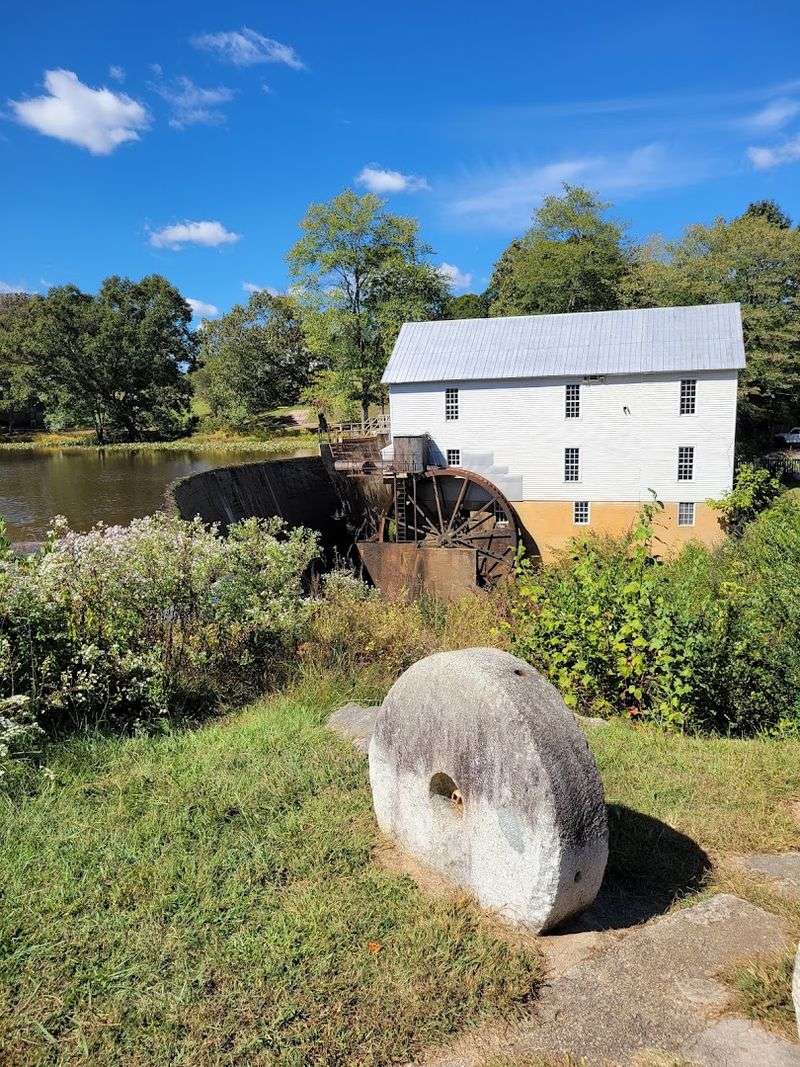
Not many places manage to be historically significant, visually stunning, family-friendly, and genuinely peaceful all at once. Murray’s Mill pulls it off without feeling like it is trying too hard.
The site earned a 4.8-star rating from nearly a thousand visitors, and the consistency of that praise across families, solo travelers, cyclists, RV campers, and photography enthusiasts says something real about how broadly appealing it is.
There is also something quietly important about the fact that this place exists at all. Rapid development across North Carolina has erased countless rural landmarks in recent decades, and Murray’s Mill stands as proof that intentional preservation can hold the line.
The Catawba County Historical Association has done something genuinely admirable here.
Whether you come for the history, the trails, the photography, the farmers market, or just a peaceful hour beside the pond, the experience delivers. The drive from Charlotte takes about an hour, from Hickory closer to twenty minutes, and from most of the western Piedmont region, it is well within day trip range.
Murray’s Mill is the kind of place that earns a return visit before you have even made it back to your car after the first one.
Share this story