Right outside of St. Louis, across the state line in Illinois, there is a place that most Americans have never heard of, yet it rivals the great ancient cities of the world. A thousand years ago, this spot was home to nearly 20,000 people, making it one of the largest cities on the planet at the time.
The earthen mounds left behind by the Mississippian people who built this city still rise dramatically from the flat landscape, and the whole site carries a quiet, powerful energy that is hard to shake. I visited on a crisp fall morning, and by the time I reached the top of the largest mound, I completely understood why this place holds both UNESCO World Heritage status and a permanent spot on my personal list of most unforgettable American destinations.
The Address, Location, and First Impressions
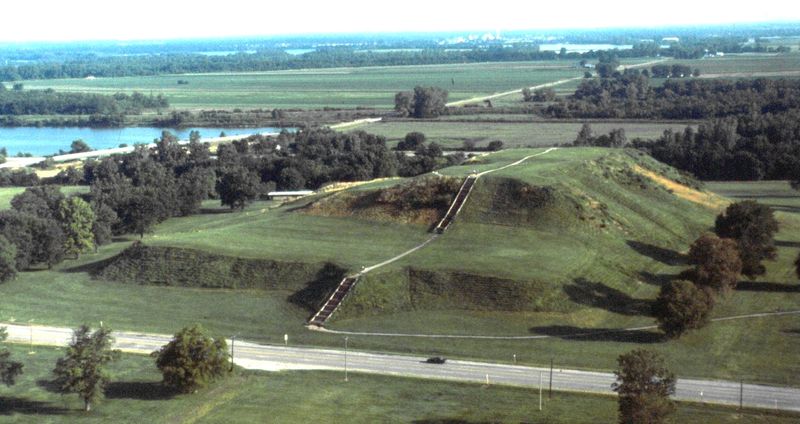
The first thing that strikes you when you pull off Interstate 255 and follow the signs to 30 Ramey St, Collinsville, IL 62234, is just how flat and open the land is, which makes the mounds themselves look even more dramatic rising out of the prairie.
Cahokia Mounds State Historic Site sits just east of St. Louis, Missouri, in southwestern Illinois, and the drive from downtown St. Louis takes less than 20 minutes. That proximity surprises a lot of people, because you genuinely feel like you are stepping into a completely different world once you pass through the entrance.
The parking lots are free, the grounds are open to the public without a gate, and the site sprawls across both sides of a highway. There are clear directional signs, a well-maintained pathway system, and restrooms available near the main mound area.
For a site of this global significance, the ease of access is both welcoming and a little unexpected.
A City That Predates Modern America by Centuries
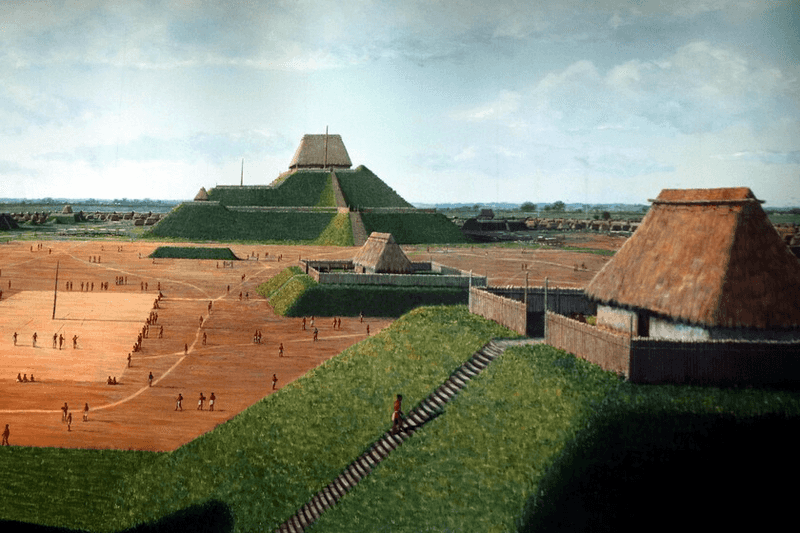
Around 1050 CE, a Native American society known as the Mississippian people began constructing what would become the largest pre-Columbian city north of Mexico. At its peak, sometime between 1100 and 1200 CE, this urban center held an estimated 10,000 to 20,000 residents, a population that made it larger than London at the same point in history.
The city covered roughly six square miles and contained over 120 earthen mounds arranged around carefully planned plazas. These mounds served different purposes, including ceremonial, residential, and administrative functions, showing a level of social organization that continues to impress archaeologists today.
Long-distance trade networks stretched from the Great Lakes to the Gulf of Mexico, bringing copper, shells, and other materials to Cahokia. The people here were not simply surviving; they were thriving, innovating, and building a civilization of real complexity.
Standing in the middle of that grand central plaza, knowing what once surrounded you, is one of those rare travel moments that genuinely rewires how you think about history.
Monks Mound: The Crown of the Ancient City
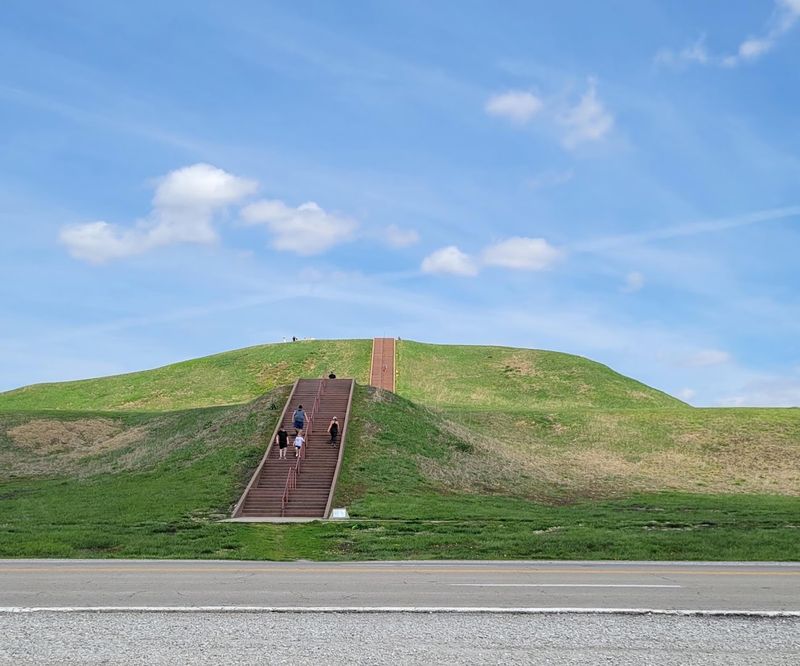
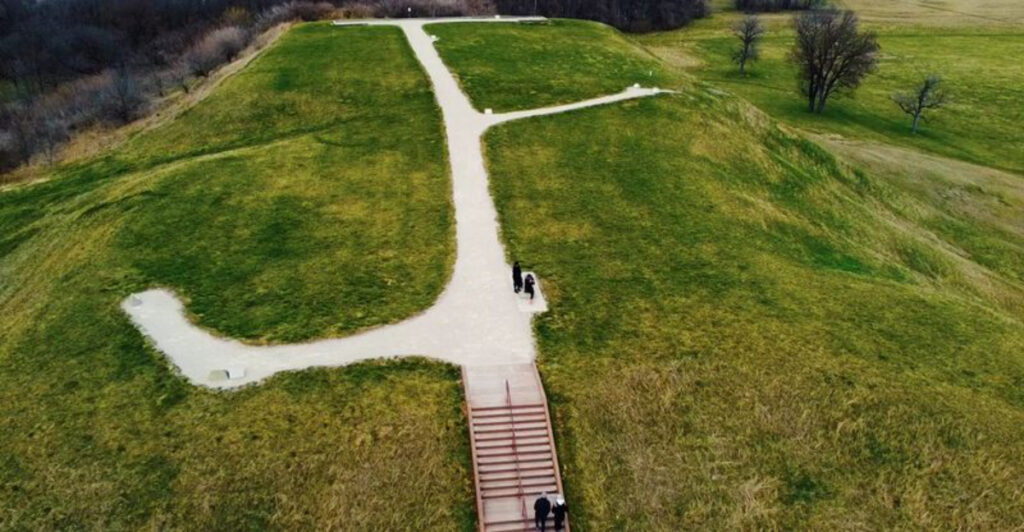
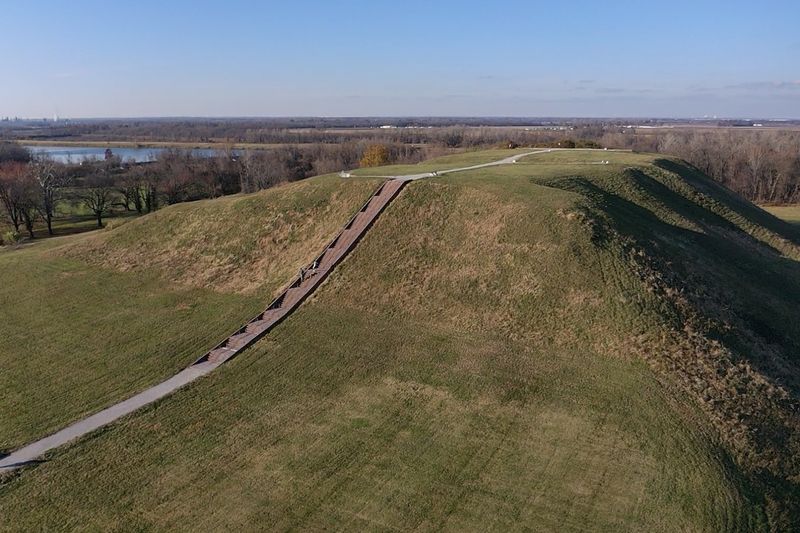
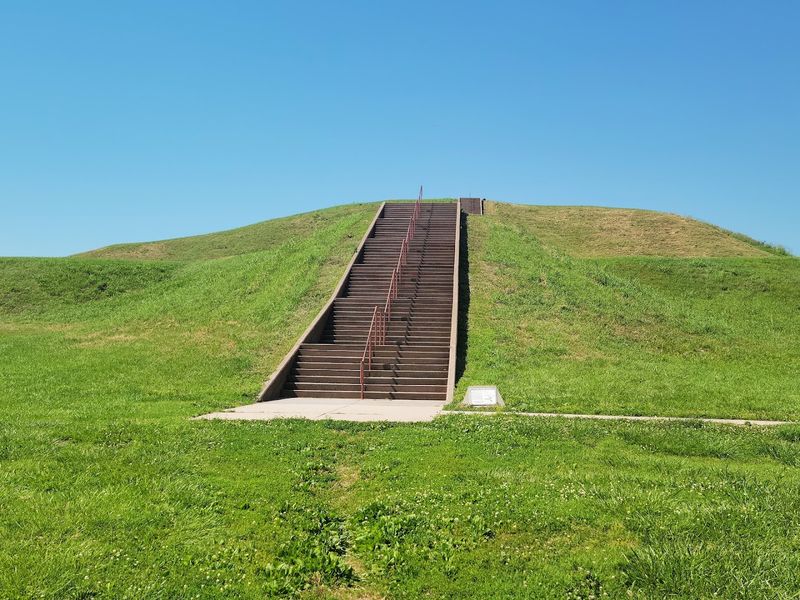
No single feature at Cahokia commands attention quite like Monks Mound, and the numbers behind it are genuinely staggering. At roughly 100 feet tall, covering about 14 acres at its base, and containing more than 22 million cubic feet of hand-placed earth, it is the largest prehistoric earthen structure in North America.
The climb to the top involves around 155 to 160 steps, with several landings and a sturdy handrail running the full length of the staircase. Benches are placed along the way, which is considerate, because the ascent is steeper than it looks from the ground.
People of various fitness levels make the climb regularly, including families with young children and older adults taking their time.
The view from the summit is the reward that makes every step worth it. On a clear day, the Gateway Arch in St. Louis is clearly visible on the horizon, and the full scale of the mound complex stretches out below you in every direction.
That panoramic moment, with ancient earth beneath your feet and a modern skyline in the distance, feels like standing at the exact intersection of past and present.
Woodhenge: The Ancient Solar Calendar
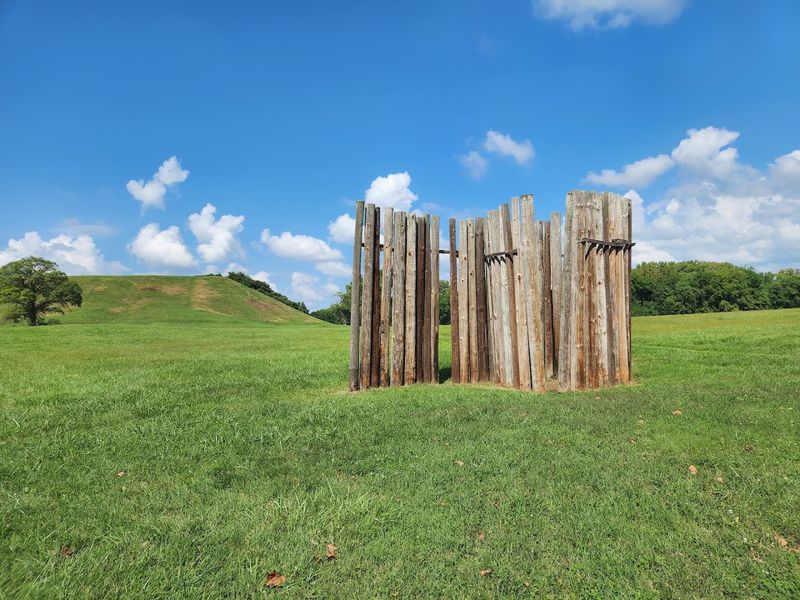
A short drive from Monks Mound sits one of the most underappreciated features of the entire site: Woodhenge, a series of large timber circles used by the Cahokians for astronomical observation and calendar tracking. The current reconstruction gives visitors a tangible sense of how these posts were originally arranged, with red-painted cedar posts rising from the flat prairie.
Archaeologists have identified at least five separate timber circles at the site over the years, each one built and rebuilt as the city grew and changed. The posts were aligned to mark the summer and winter solstices as well as the spring and fall equinoxes, demonstrating a sophisticated understanding of the sun’s movement across the sky.
The Cahokia Woodhenge predates Stonehenge’s famous solstice alignments in terms of cultural context on this continent, and yet most Americans have never heard of it. Visiting this spot early in the morning, when the light is low and the posts cast long shadows across the grass, gives you a real appreciation for the careful planning and deep astronomical knowledge these people carried.
It is one of those quiet corners of the site that rewards the curious visitor.
The UNESCO World Heritage Designation
In 1982, Cahokia Mounds became one of only 24 UNESCO World Heritage Sites in the United States, a designation that places it in the same global category as the Great Wall of China, the Egyptian pyramids, and the historic center of Rome. That recognition was not given lightly, and it reflects the site’s extraordinary cultural and archaeological significance on a worldwide scale.
The designation highlights Cahokia as the most extensive and sophisticated pre-Columbian urban center north of Mesoamerica. UNESCO recognized the site’s evidence of large-scale labor organization, advanced urban planning, complex social structures, and remarkable landscape engineering, all achieved without the use of metal tools or wheeled vehicles.
For American visitors, the UNESCO status adds a layer of context that can shift perspective dramatically. This is not just an interesting local landmark or a regional curiosity; it is a site that the international scholarly community considers one of humanity’s most important cultural achievements.
Knowing that while you walk the grounds has a way of making every step feel more deliberate, more connected to something much larger than a single afternoon visit to a park in southwestern Illinois.
The Interpretive Center and Its Exhibits
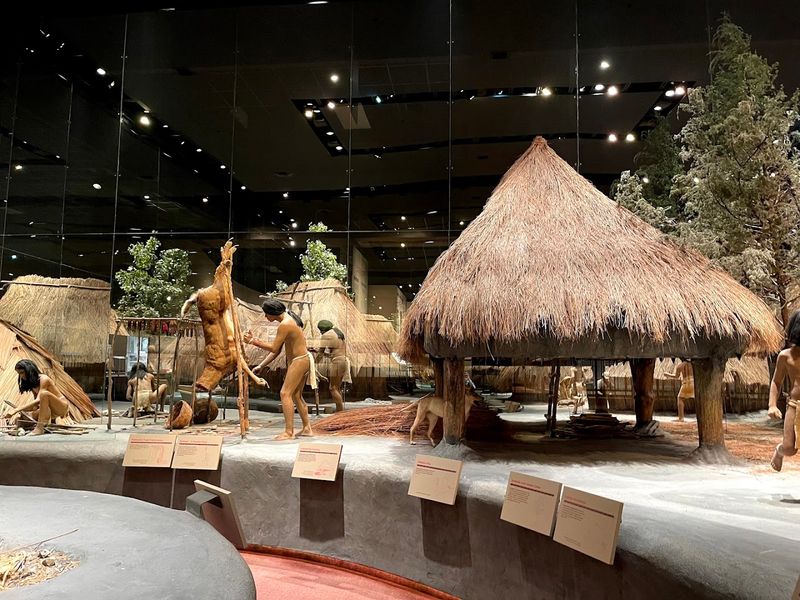
The Interpretive Center at Cahokia Mounds is the kind of museum that earns its square footage. Before its temporary closure for renovations, the building housed an impressive collection of artifacts recovered from the site, including copper ornaments, carved figurines, pottery, and ceremonial objects that paint a detailed picture of daily life in the ancient city.
Full-scale dioramas inside the center reconstructed what the city might have looked like at its peak, with thatched homes, the massive central plaza, and the towering mounds rising above everything. Informational panels explained the social hierarchy, trade networks, agricultural practices, and spiritual beliefs of the Mississippian people in accessible, engaging language.
At the time of writing, the center was closed for a significant renovation project, with a reopening targeted for sometime in 2026. The gift shop and restrooms remained open during this period, and the outdoor grounds were fully accessible.
Before visiting, it is worth checking the official website at cahokiamounds.org or calling ahead at (618) 346-5160 to confirm current hours and facility availability, since conditions can change. The center, when fully operational, genuinely elevates the entire visit.
The Palisade Wall Reconstruction
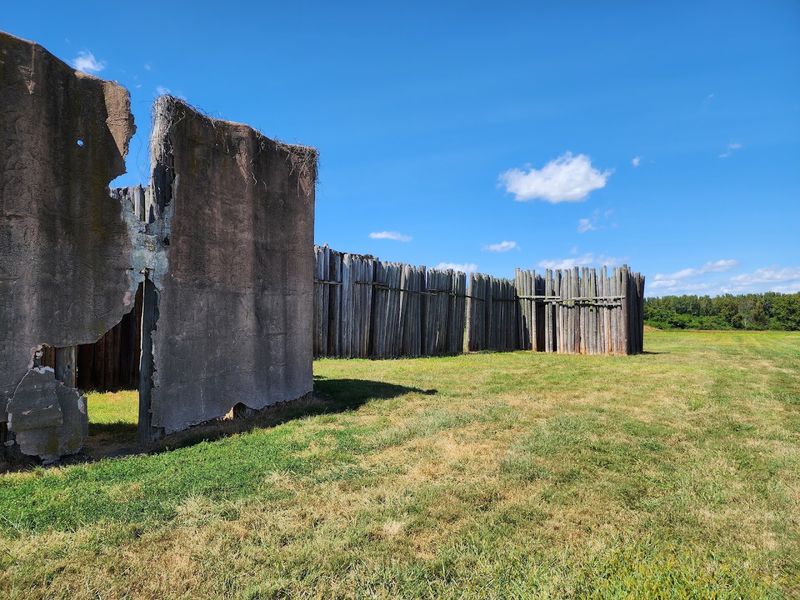
One of the most visually striking features of Cahokia, beyond the mounds themselves, is the partial reconstruction of the massive wooden palisade wall that once enclosed the central ceremonial precinct. The wall originally stretched for nearly two miles around the inner city, standing about 15 to 20 feet tall and reinforced with bastions every 70 feet or so for defensive observation.
The reconstructed section gives you an immediate physical sense of the scale and intention behind this barrier. These logs were not small; they were substantial timbers driven deep into the ground and positioned with clear architectural purpose.
The palisade separated the elite ceremonial core of the city from the surrounding residential areas, reinforcing the social hierarchy that defined Cahokian society.
Archaeological evidence suggests the wall was rebuilt at least four times during Cahokia’s peak period, each reconstruction requiring enormous amounts of timber and labor. Walking alongside the reconstructed section and looking back toward Monks Mound gives you one of the best compositional views on the entire site.
It is the kind of detail that transforms the mounds from abstract ancient features into parts of a real, functioning, organized city that people actually lived in and defended.
Trails, Mounds, and the Full Grounds Experience
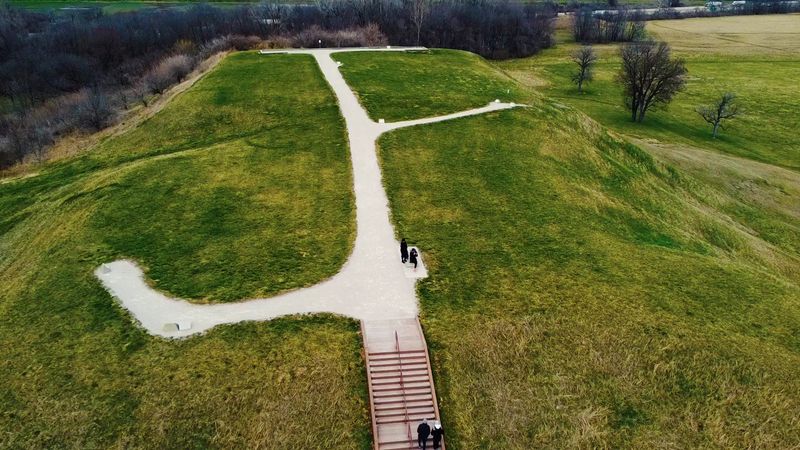
Beyond Monks Mound and Woodhenge, the full site contains over 80 surviving earthen mounds spread across a large area that straddles both sides of Collinsville Road. The grounds include several miles of maintained trails connecting the major features, and most of the pathways are flat, well-marked, and easy to walk at a comfortable pace.
Smaller mounds dot the landscape throughout the site, each one with its own interpretive signage explaining its probable function, whether residential, burial, or ceremonial. Some of these secondary mounds are easy to overlook if you focus only on the main attraction, but they collectively tell the fuller story of a city that had neighborhoods, districts, and organized spatial logic.
A full exploration of the entire grounds, crossing to both sides of the highway and visiting all the major features, takes roughly two to three hours at a relaxed pace. Comfortable walking shoes are strongly recommended, as are sunscreen and a hat, because large sections of the trail system are fully exposed to direct sun with minimal shade.
The site is open Wednesday through Sunday from 9 AM to 3 PM, and Monday and Tuesday are closed, so planning your visit around that schedule is essential.
The Augmented Reality App Experience
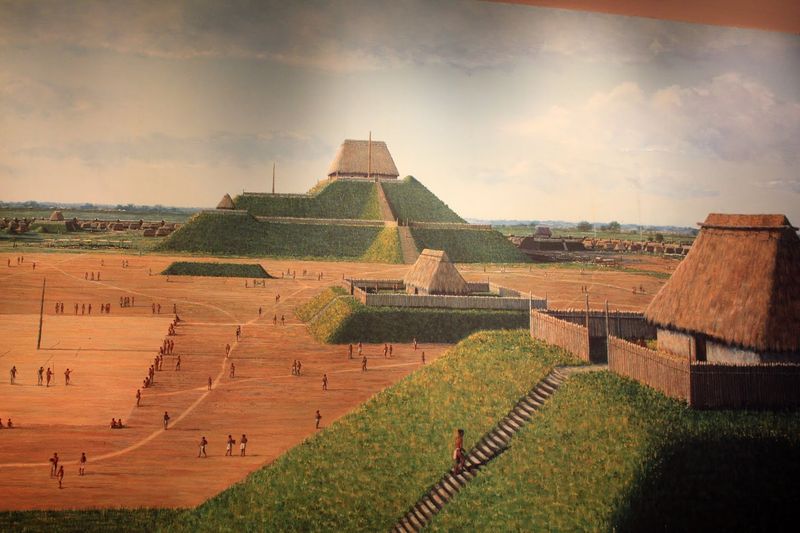
Technology has given Cahokia Mounds a genuinely useful modern layer that rewards visitors who come prepared. An augmented reality app is available for download, and when used at specific marked locations around the site, it overlays digital reconstructions of the ancient city onto your real-time view through your phone camera.
At Monks Mound and several other key spots, the app can show you what the surrounding landscape may have looked like at the height of the city’s power, complete with structures, people, and the full urban environment that once filled this now-quiet prairie. It is a surprisingly effective tool for helping your brain bridge the gap between the grassy mounds you see today and the living city that once occupied this ground.
One practical note worth emphasizing: download the app before you arrive. Cell service at the site can be slow or inconsistent, and trying to download a large app while standing in a field is a frustrating experience that will eat into your visit time.
A quick download at home or at your hotel the night before costs you nothing and ensures the full experience is available the moment you step out of your car.
Visiting Tips, Hours, and Practical Information
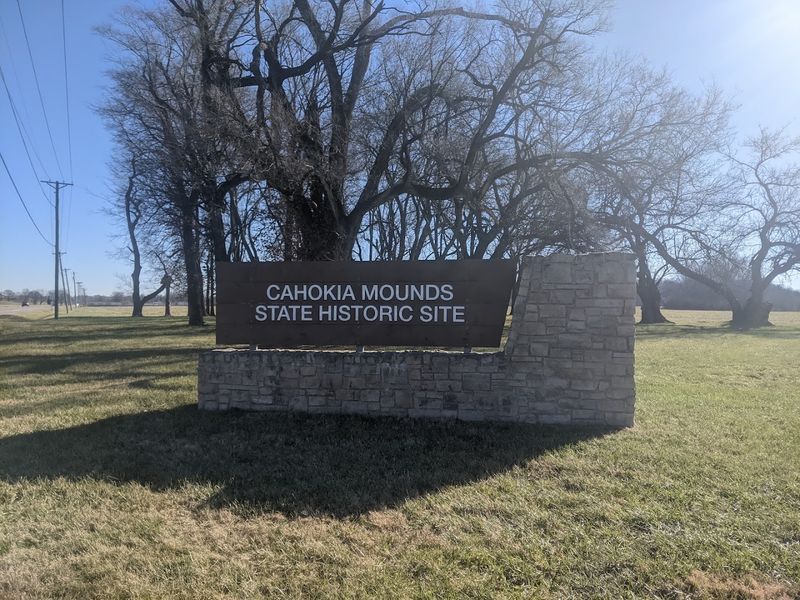
A few practical details can make the difference between a smooth visit and an unnecessarily frustrating one. The site is open Wednesday through Sunday, from 9 AM to 3 PM, and is fully closed on Mondays and Tuesdays.
Arriving closer to the opening time gives you the best chance of experiencing the grounds with fewer other visitors, and the morning light on the mounds is genuinely beautiful.
Admission to the outdoor grounds is free, which is remarkable for a UNESCO World Heritage Site of this caliber. There may be a separate admission fee for the Interpretive Center once it reopens after renovations, so it is worth confirming current policies at cahokiamounds.org or by calling (618) 346-5160 before your visit.
Restrooms and a water fountain are available near the Monks Mound parking area, and the gift shop was open during the renovation period. Wear sturdy shoes with good grip for the mound climb, bring water on warm days, and pack sunscreen generously since the open landscape offers very little natural shade.
Dogs are welcome on leashes, and the site is family-friendly for children of all ages who can handle the walking distance.
The Cultural and Spiritual Significance
For many visitors, Cahokia Mounds is more than an archaeological site or a historical curiosity. For people with Indigenous heritage, particularly those connected to Mississippian tribes and their descendants, this place carries a deep personal and spiritual weight that no signage or museum exhibit can fully capture.
The mounds were not just construction projects; they were sacred spaces tied to cosmological beliefs, ceremonial practices, and a worldview that placed human society in direct relationship with the natural and spiritual worlds. The careful alignment of the mounds, the solar observations at Woodhenge, and the organization of the central plaza all reflect a community that understood its place in a much larger cosmic order.
Visitors of all backgrounds tend to feel something shift when they spend real time on these grounds. The scale of the human effort represented here, hundreds of thousands of basket-loads of earth moved entirely by hand over generations, communicates a kind of communal dedication that is both humbling and deeply moving.
Approaching the site with that awareness, rather than just as a sightseeing stop, transforms the experience into something that stays with you long after you have driven back across the state line.
Why Cahokia Mounds Deserves a Spot on Every Traveler’s List
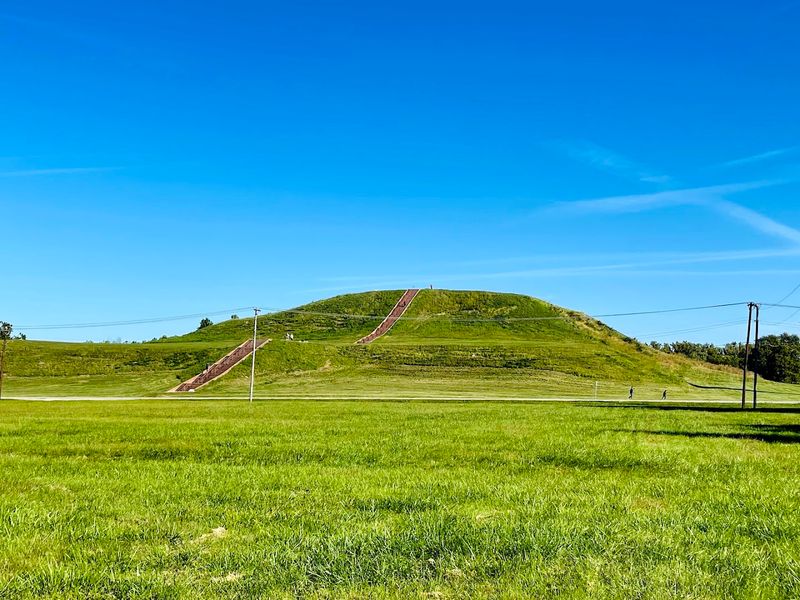
Very few places in the United States offer the combination of historical depth, physical scale, and sheer accessibility that Cahokia Mounds delivers. Within a 20-minute drive of downtown St. Louis, you can stand on top of a 1,000-year-old earthen structure that is taller than a 10-story building and look out at one of America’s most recognizable skylines.
The site earns its 4.7-star average rating across thousands of reviews not through flashy amenities or curated experiences, but through the raw power of what it actually is. A city that once held nearly 20,000 people, built without metal tools or written language, organized around a central plaza and a calendar made of wooden posts, preserved well enough that you can still walk its streets, or at least its mounds.
Whether you are a history enthusiast, a casual traveler passing through the St. Louis metro area, or someone looking for a genuinely meaningful experience that costs nothing to access, Cahokia Mounds rewards the visit completely. Some places make you feel like a tourist; this one makes you feel like a witness to something that the world almost forgot, and that distinction is everything.
Share this story