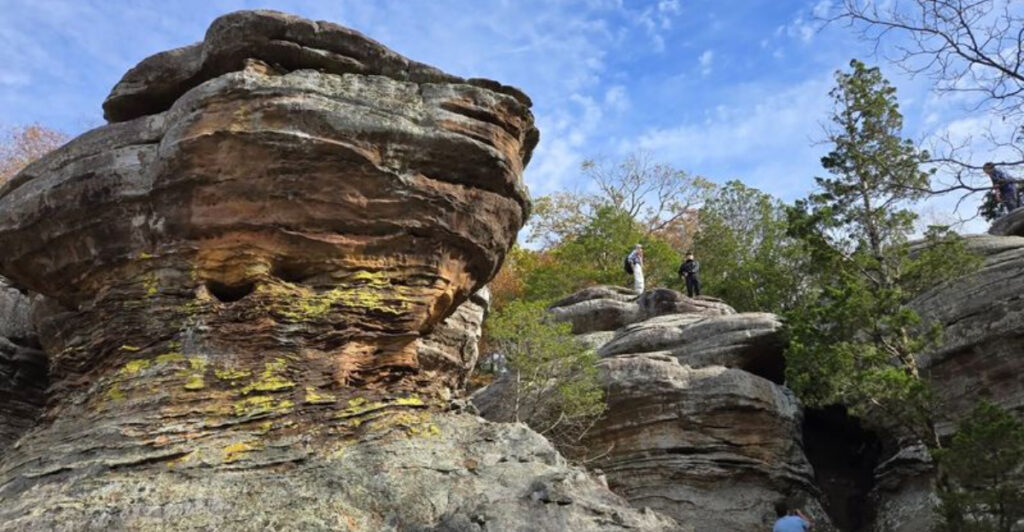
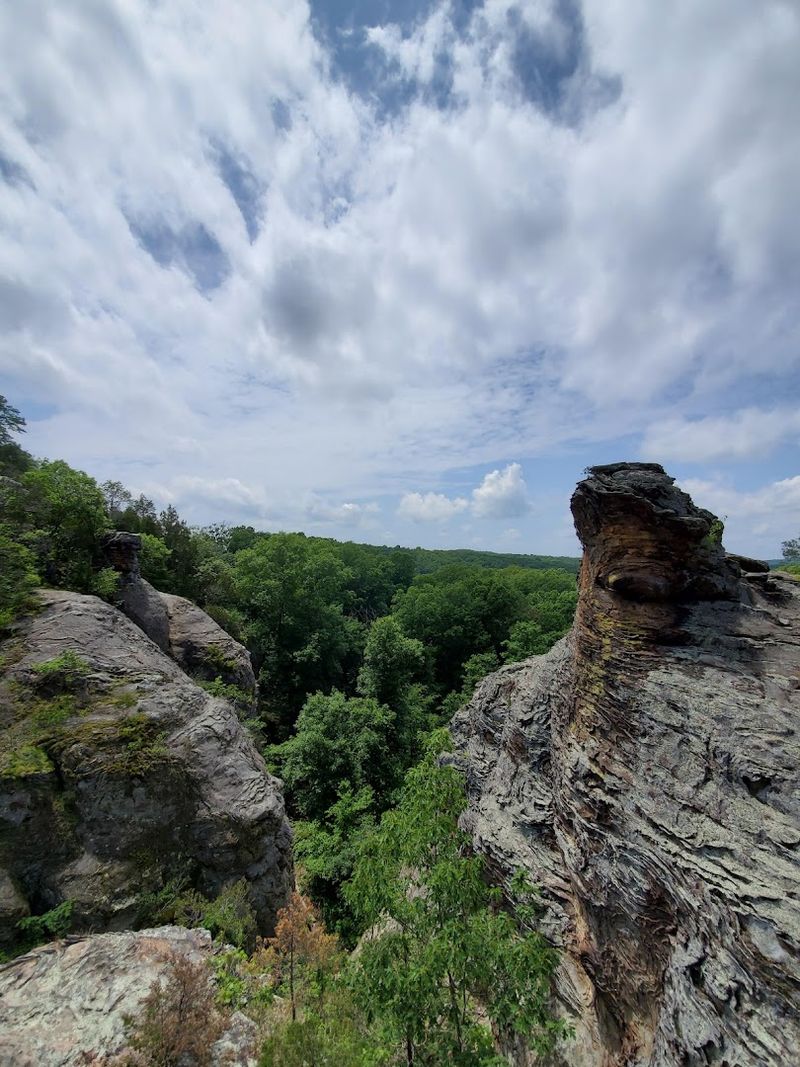
There is a corner of southern Illinois that looks nothing like the rest of the state, and once you see it, you will completely understand why people drive hours just to stand on its rocky ledges. Ancient sandstone formations jut out from the forested hillsides like something sculpted by centuries of wind and rain, because that is exactly what happened.
The trail here is only a quarter mile long, but it packs in views that most people never expect to find in the Midwest. By the time I reached the first overlook, I knew this place was going to stay with me for a long time.
Where to Find This Hidden Wonder
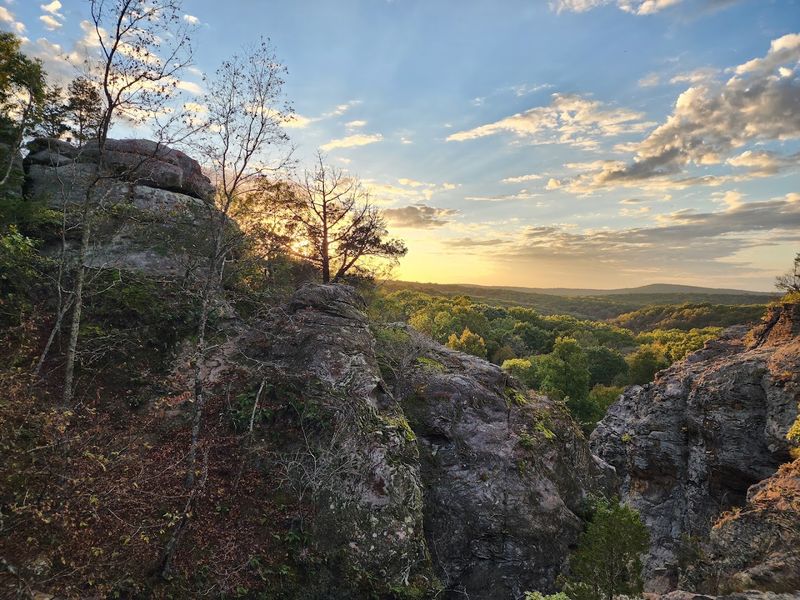
The address is simple enough: Garden of the Gods Recreation Area, Herod, IL 62947, tucked deep in the Shawnee National Forest in southern Illinois. Getting there involves winding roads through dense woodland, and honestly, that drive alone sets the mood perfectly.
The area sits at coordinates that put it far from any major city buzz, and the nearest town, Herod, is little more than a crossroads. That remoteness is part of the appeal.
The moment the forest opens up and the parking area comes into view, you realize you have arrived somewhere genuinely different from the flat farmland most people picture when they think of Illinois.
The recreation area is managed by the U.S. Forest Service and can be reached by phone at +1 618-253-7114.
More details are available at the official USDA Forest Service website. The area is open 24 hours a day, every day of the week, so early risers and sunset chasers alike can plan their visit without worrying about closing times.
320 Million Years in the Making
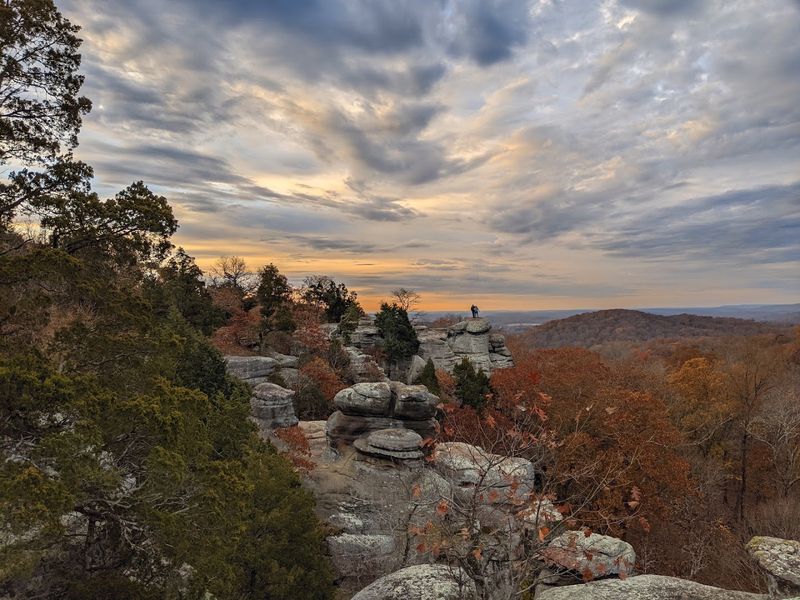
The sandstone cliffs here did not appear overnight. They began forming roughly 320 million years ago during the Pennsylvanian Period, when this region was covered by shallow tropical seas and river deltas.
Over unimaginable stretches of time, layers of sand and sediment compressed into rock, and erosion carved them into the dramatic shapes visible today.
Standing next to one of these formations and pressing your hand against the rough surface, it is hard not to feel a little humbled. The rock under your palm was already ancient before dinosaurs ever walked the earth.
That kind of geological timeline is genuinely difficult to wrap your head around.
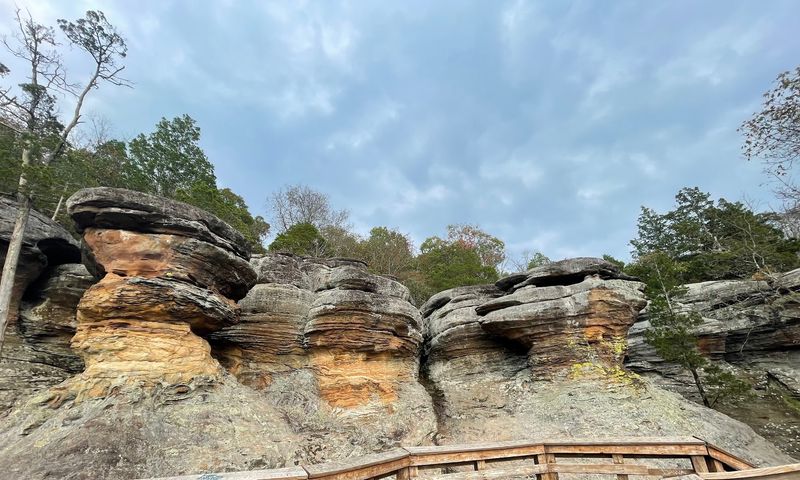
The formations have names like Camel Rock and Devil’s Smokestack, each one shaped by water and wind into something that looks almost intentional. Geologists consider this area one of the most significant sandstone landscapes in the entire Midwest, and visiting makes it easy to see why that reputation is well earned.
The Quarter-Mile Trail That Delivers Big
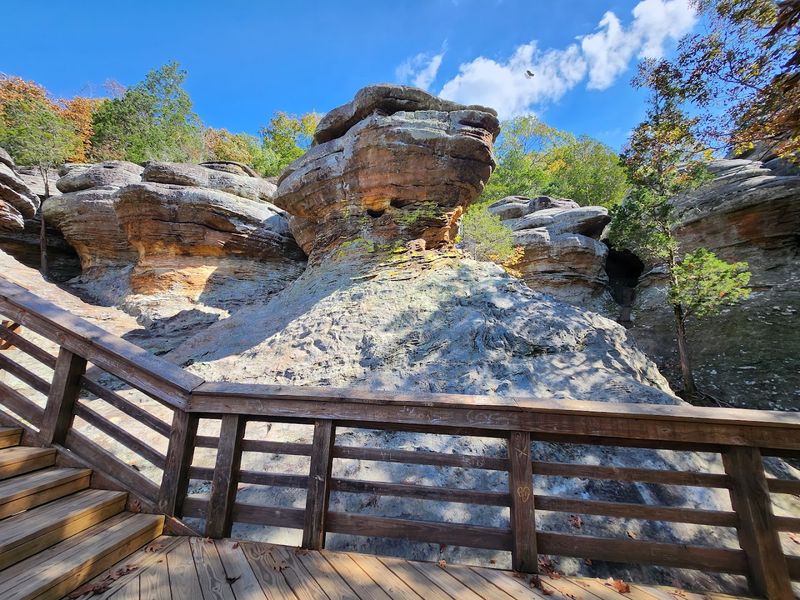
Most people hear “quarter-mile trail” and assume it will be over before it begins, but the Observation Trail at Garden of the Gods packs more scenery into that short distance than trails ten times its length. The path is partly paved and partly laid with stone pavers, making it accessible for a wide range of visitors.
The trail loops around the top of the ridge, delivering one overlook after another in quick succession. Around every bend, a new rock formation appears, and the views across the forested valleys of southern Illinois stretch out in every direction.
Benches are placed along the route so you can sit down and actually absorb what you are looking at instead of just passing through.
The estimated walk time is around 45 minutes, but plenty of visitors spend 90 minutes or more simply because there is so much to take in. The trail works beautifully whether you are a first-time hiker or someone who regularly tackles longer backcountry routes and just wants a scenic afternoon stroll.
Views That Stop You Mid-Step
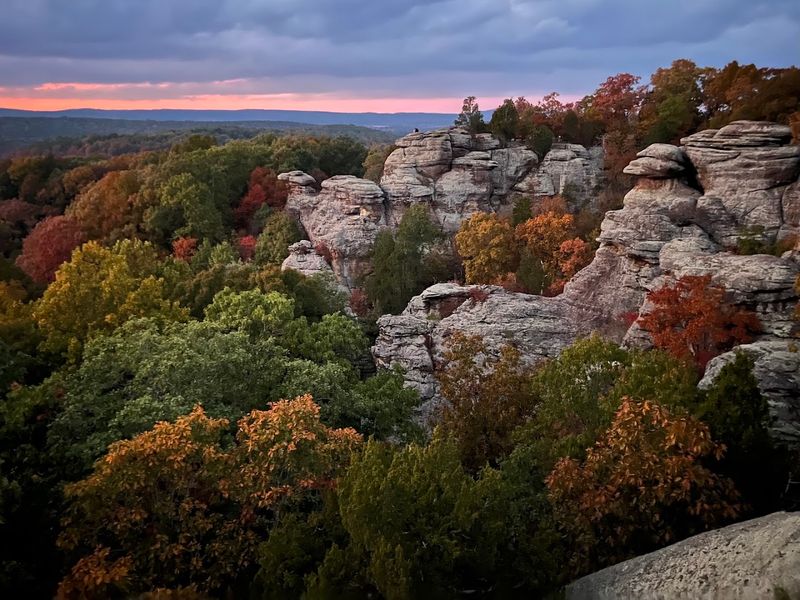
The views from the top of the ridge are the kind that make you stop walking and just stare. The forested hills of southern Illinois roll out in every direction, uninterrupted by buildings or roads, creating a landscape that feels genuinely wild and remote.
Each overlook along the trail offers a slightly different angle on the same sweeping scenery. Some viewpoints look out over deep ravines, while others frame distant ridgelines through gaps in the sandstone.
The variety keeps the walk feeling fresh from start to finish, even on a second or third visit.
Sunset is a particularly rewarding time to be on the trail. The light turns the sandstone formations warm shades of amber and orange, and the shadows across the valley deepen into rich purples.
Photography enthusiasts regularly time their visits around the golden hour specifically because the rock formations catch the fading light in ways that look almost cinematic, even on a basic smartphone camera.
Rock Formations With Personality
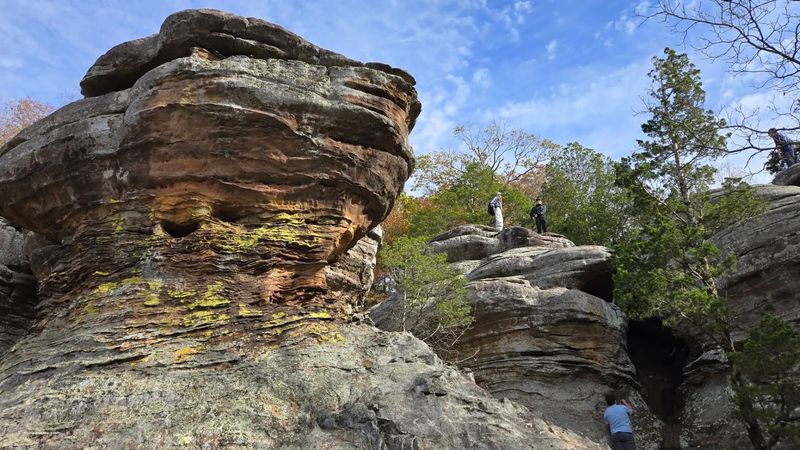
One of the most entertaining parts of exploring the formations here is noticing how many of them resemble something familiar. From a distance, certain rocks look unmistakably like camels, mushrooms, or crouching animals, and the longer you stare, the more shapes your brain finds hiding in the stone.
Camel Rock is probably the most photographed formation in the park, and it earns that distinction by genuinely looking like a resting camel when viewed from the right angle. Devil’s Smokestack rises in a narrow column that seems almost too dramatic to be natural.
Each formation has its own character, and the trail introduces them one by one like chapters in a very old book.
The rock surfaces themselves are textured with ripple marks and cross-bedding patterns left behind by ancient water currents, giving geologists and curious visitors alike plenty to study up close. Running your fingers along those patterns connects you directly to a moment in deep time that no museum exhibit can quite replicate in the same way.
Accessibility for All Kinds of Visitors
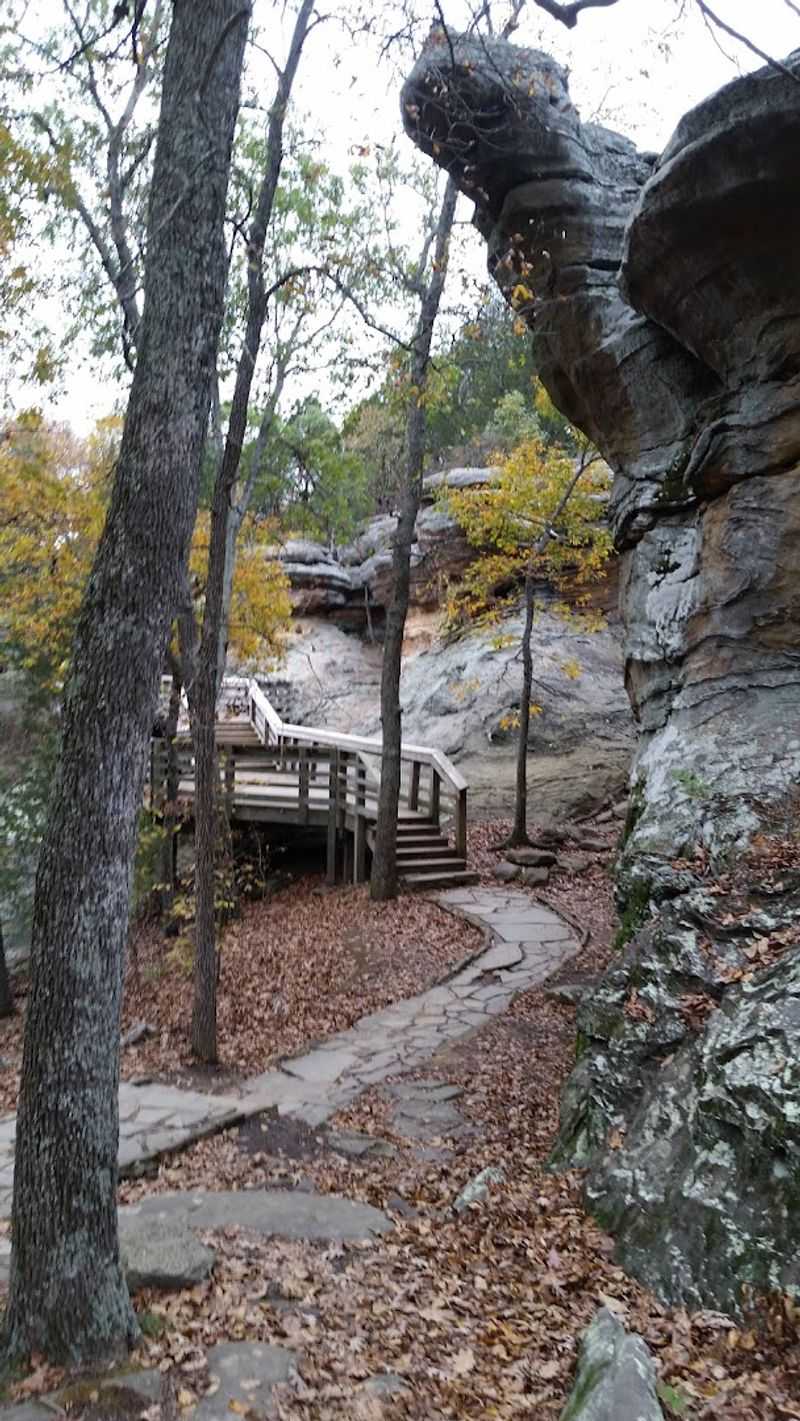
One thing that genuinely surprised me about this trail is how welcoming it is to visitors who might not consider themselves hikers. The basic scenic route is manageable enough that an 87-year-old first-time hiker completed it comfortably, which says a lot about how the path is designed and maintained.
Trekking poles make a noticeable difference on the rocky sections, especially for anyone with knee or back concerns. The trail does have some inclines and uneven surfaces, so solid footwear is always a smart choice, but the overall difficulty level sits firmly in the beginner-to-moderate range for the main Observation Trail.
The parking area is spacious and well-organized, and restroom facilities are available on-site. The open-pit toilets are basic but functional, and the surrounding area is kept tidy.
Families with young children will want to keep a close watch near the cliff edges, as the drop-offs are steep and there are no guardrails along several sections of the trail.
Safety on the Cliffs
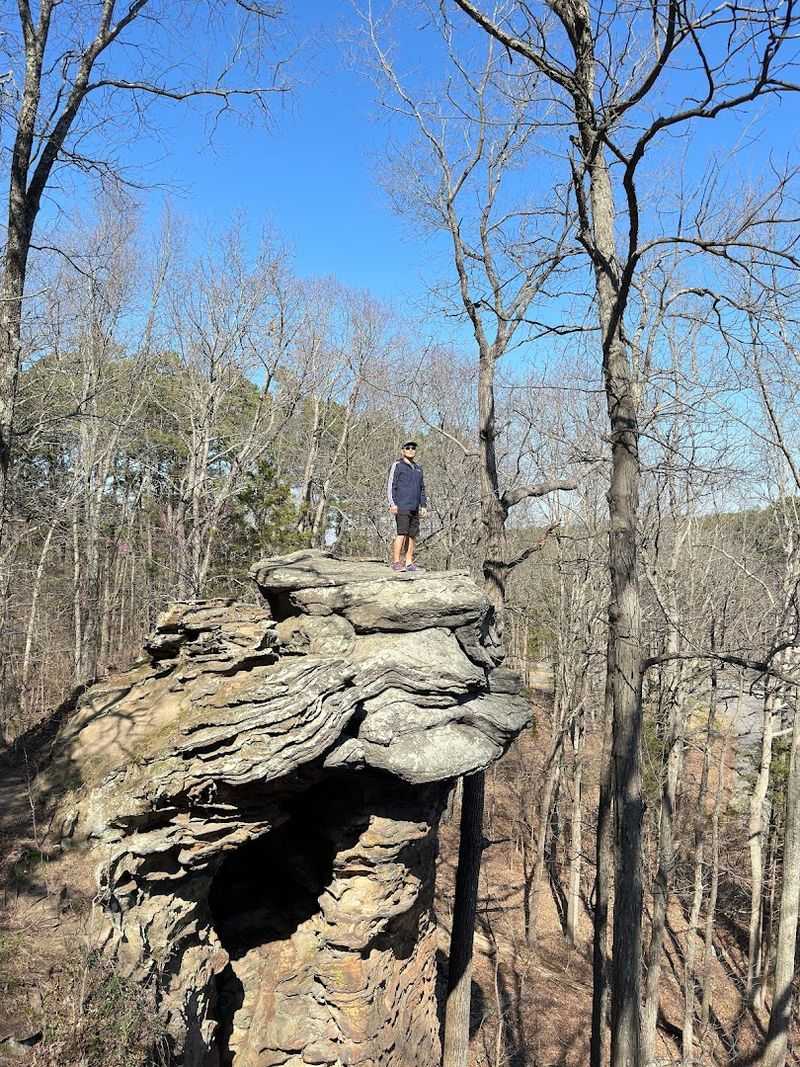
The beauty here comes with a serious reminder to stay alert. Several sections of the trail run close to cliff edges with steep, unguarded drop-offs, and the sandstone can become genuinely slippery when wet.
Rain or morning dew on the rock surfaces changes the experience significantly, so checking the weather before you go is worth the extra minute.
Parents with young children consistently mention that the cliffs require constant attention. The formations are tempting to climb, and the rock surfaces invite scrambling, but the edges arrive suddenly and without warning in some spots.
Keeping kids within arm’s reach near the overlooks is not overcautious; it is just sensible.
Proper footwear makes a real difference on the rocky terrain. Hiking boots with grip are the best choice, and sandals or flat-soled shoes put you at a disadvantage on the uneven stone.
The trail itself is well-maintained and clearly marked, so as long as you stay on the designated path and respect the terrain, the experience is safe and thoroughly enjoyable for the whole group.
Beyond the Main Trail
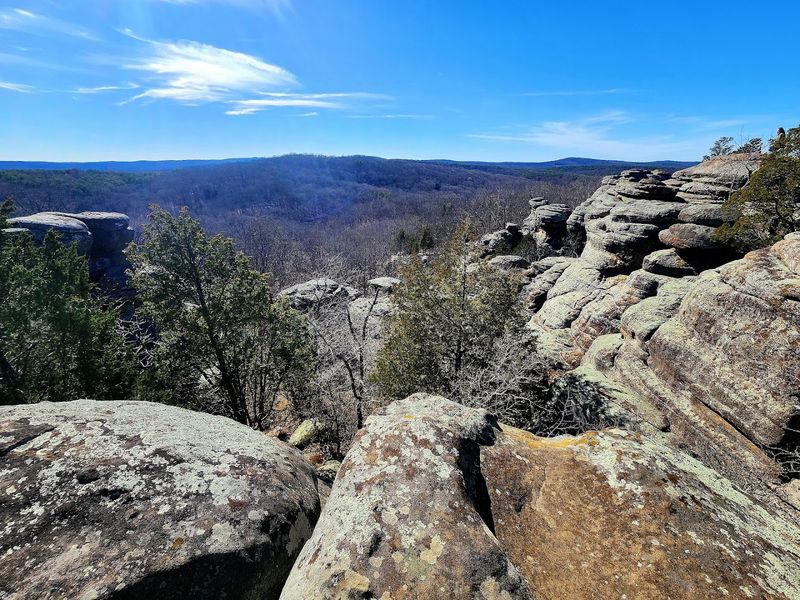
The Observation Trail is just the beginning of what this recreation area offers. Several additional trails branch out from the main loop, ranging from moderate to more demanding routes that push deeper into the surrounding Shawnee National Forest.
These longer trails reward hikers with solitude and scenery that the shorter path cannot quite match.
The Pharaoh Trail is one of the more popular extended options, covering several miles through varied terrain that includes additional sandstone outcroppings, forest corridors, and quieter viewpoints. It is the kind of trail that earns its difficulty rating honestly, with enough elevation change and rocky footing to keep experienced hikers engaged throughout.
Visitors who only have an hour or two can get a satisfying experience from the main loop alone, but those who plan a longer trip will find that the surrounding trail network rewards the extra effort generously. The Shawnee National Forest context means the hiking options extend well beyond the immediate recreation area, making this a strong base for a multi-day outdoor adventure in a part of Illinois most people never think to explore.
Camping Under a Sky Full of Stars
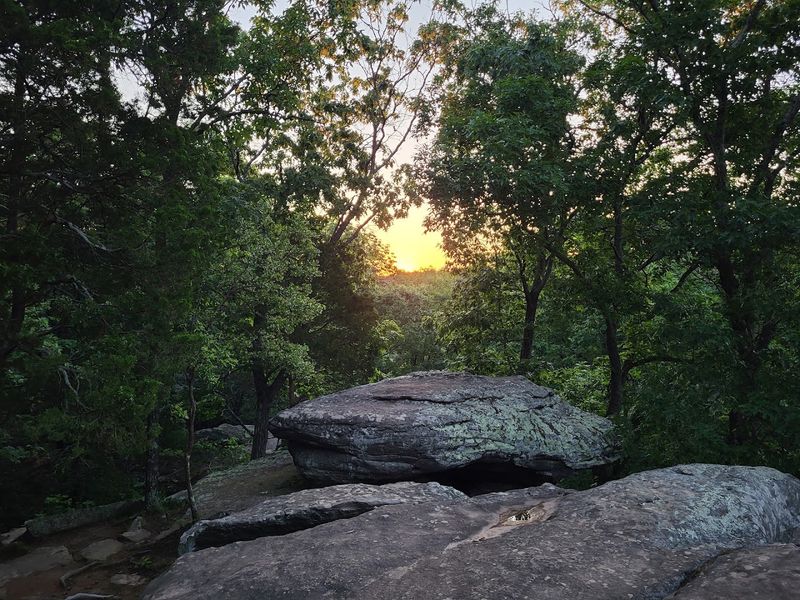
Spending the night here transforms the experience entirely. The campground at Garden of the Gods sits close enough to the formations that you can watch the light shift across the rock faces as the sun sets, and the darkness that follows is the kind of deep, rural dark that city dwellers rarely encounter.
The star visibility on a clear night is remarkable. Without the light pollution of nearby cities, the sky fills up with stars in a way that feels almost excessive, and the Milky Way is visible on the right nights with no equipment needed beyond your own eyes.
It is the sort of sky that makes you want to stay up later than planned.
Campsites fill up quickly during warmer months, especially on weekends, so arriving early in the day gives you the best selection of spots. The campground has basic facilities and is well-suited to tent camping and smaller setups.
The combination of dramatic geology by day and extraordinary skies by night makes an overnight stay one of the most complete outdoor experiences available in the entire state.
When to Visit for the Best Experience
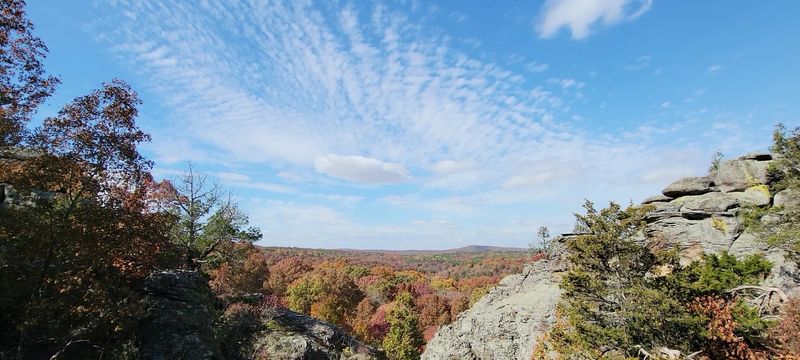
Every season brings something different to this recreation area, and the honest answer is that there is no bad time to visit. Spring delivers fresh green growth that frames the sandstone in vivid color, while autumn turns the surrounding forest into a display of orange, red, and gold that sets off the warm tones of the rock formations beautifully.
Summer weekends attract the largest crowds, and the parking area can fill up quickly on popular days. An early morning arrival solves that problem neatly, giving you the trail mostly to yourself and the bonus of soft morning light on the formations.
Winter visits are quieter still, and a foggy or overcast day lends the landscape a moody, atmospheric quality that has its own appeal.
Sunrise and sunset are consistently the most rewarding times to be on the trail from a photography standpoint, and both are accessible since the area stays open around the clock. Weekday visits during shoulder seasons offer the ideal combination of comfortable temperatures, manageable crowds, and the full natural color palette that makes this place so visually compelling.
A Place for Quiet Reflection
There is a particular kind of quiet that settles over this place, especially in the early morning or on weekday afternoons when the crowds thin out. The sound of wind moving through the trees, the occasional bird call echoing off the rock faces, and the complete absence of traffic noise add up to an atmosphere that feels genuinely restorative.
Several natural perches on the rock formations invite you to sit down and simply look out over the valley without any agenda. The benches placed along the trail serve the same purpose, offering spots to pause and let the scale of the landscape register properly instead of rushing through to the next viewpoint.
People bring this place back with them in a way that is hard to explain until you have experienced it yourself. The combination of ancient geology, expansive views, and genuine natural quiet creates a mental reset that is difficult to achieve anywhere closer to a city.
For visitors coming from Chicago or other urban centers, the four-to-five-hour drive pays off the moment they reach the first overlook and realize what they would have missed by staying home.
Practical Tips Before You Go
A few practical details can make the difference between a great visit and an avoidable headache. Cell service in the area is limited to nonexistent, so downloading an offline map before you leave is a genuinely useful step rather than just a precaution.
The roads leading to the recreation area are paved but narrow, and some sections require careful driving, especially if you are towing anything.
Water is not available on the trail itself, so bringing more than you think you need is the right call, particularly during warmer months. Sunscreen matters too, since the open overlooks offer no shade, and the sandstone reflects heat noticeably on sunny afternoons.
A small snack and a light jacket round out the basics without adding much weight to your pack.
The recreation area is free to visit, which makes it one of the best value outdoor destinations in the entire Midwest. Dogs are welcome on leash, and the trail is popular with pet owners who appreciate having a scenic option that includes their four-legged companions.
Arriving with a full tank of gas is smart, as fuel stations are sparse in the surrounding rural area.
Share this story