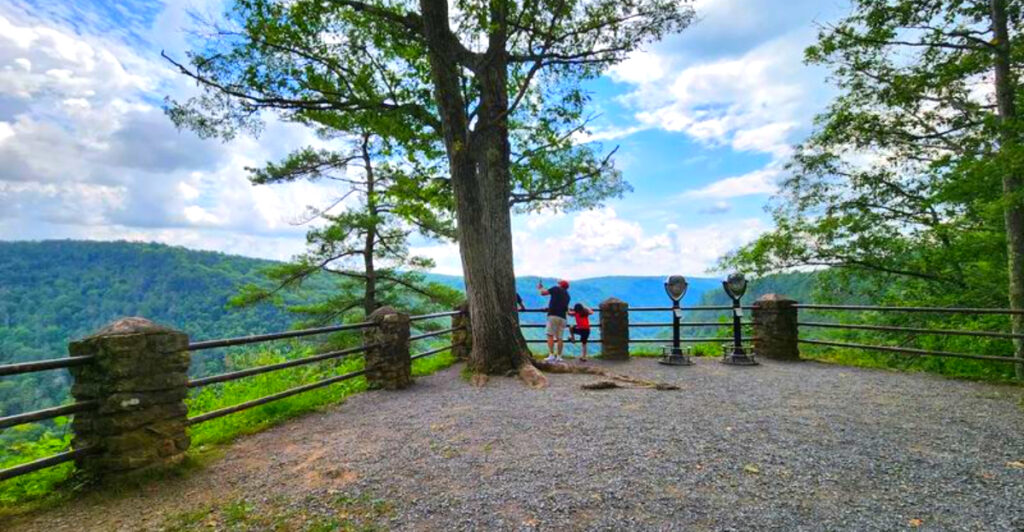
In north-central Pennsylvania, an enormous forested canyon stretches for 47 miles, with towering cliffs, sweeping overlooks, and a winding creek that has carved one of the East Coast’s most breathtaking landscapes. Visitors come to admire panoramic views that extend for miles, hike scenic trails, cycle through the canyon floor, and witness spectacular fall foliage, but many leave wondering why this natural wonder isn’t better known beyond the region. It’s the kind of place that makes you stop talking for a moment and simply take in the view.
The adventure extends far beyond the overlooks. Waterfalls tumble down steep canyon walls, bald eagles soar overhead, the renowned Pine Creek Rail Trail winds through the valley below, and opportunities for hiking, kayaking, fishing, and wildlife watching make every visit feel different. Whether you’re planning a weekend getaway or searching for one of Pennsylvania’s most unforgettable outdoor destinations, it’s easy to understand why this remarkable gorge has earned the nickname the Grand Canyon of Pennsylvania.
Here’s why Pine Creek Gorge, best experienced from Leonard Harrison State Park, has become one of Pennsylvania’s greatest natural attractions and a destination that’s well worth the drive.
Unveiling the Pennsylvania Grand Canyon at Leonard Harrison State Park
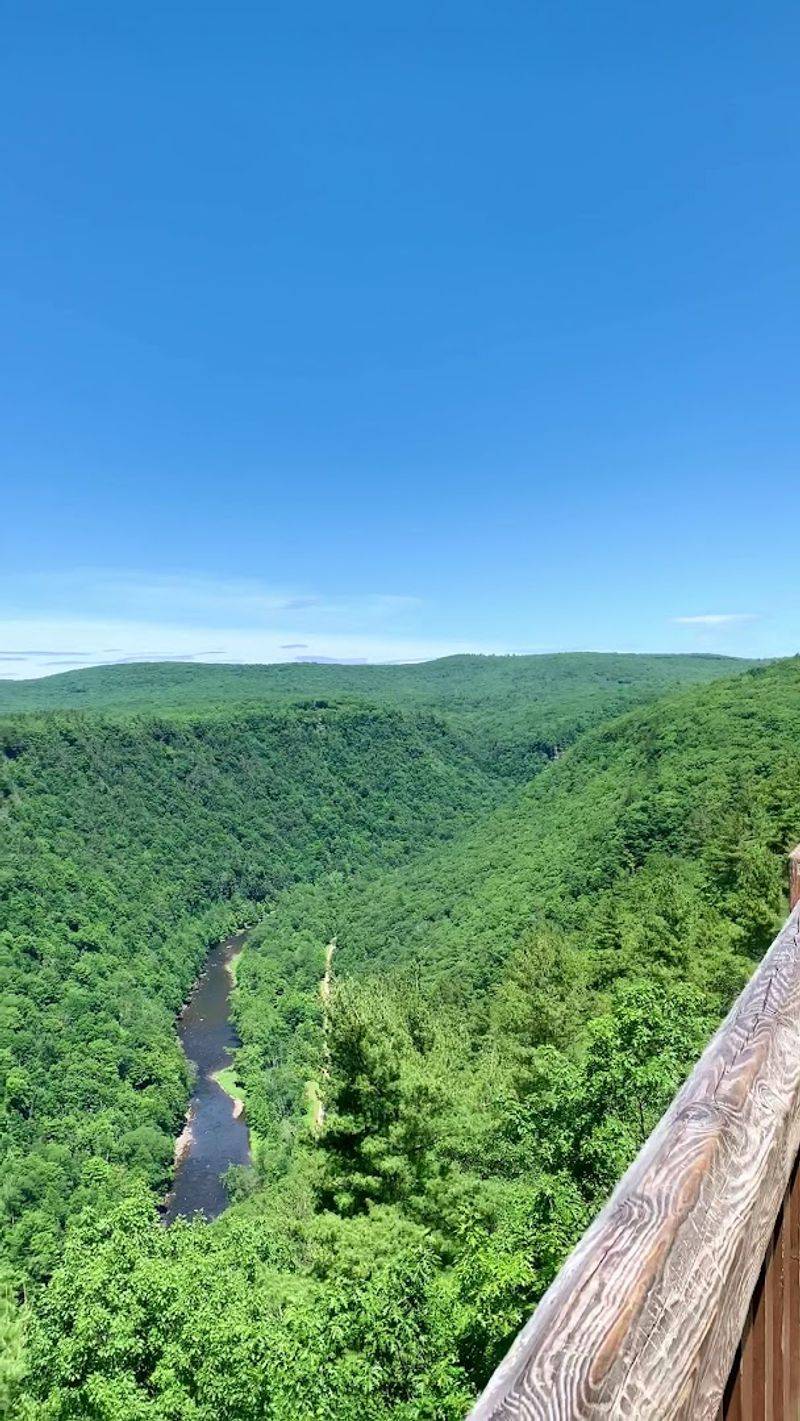
Most people do not realize that one of the most dramatic natural landscapes on the entire East Coast sits quietly in north-central Pennsylvania, waiting to be discovered. The Pennsylvania Grand Canyon, officially known as Pine Creek Gorge, is located near Wellsboro, Pennsylvania, with its primary east-rim entrance at Leonard Harrison State Park, 4797 Route 660, Wellsboro, PA 16901.
The gorge spans an impressive 47 miles, cutting through the ancient Allegheny Plateau across Tioga and Lycoming counties. At its deepest point near Waterville, the canyon drops a staggering 1,450 feet, while the overlooks at Leonard Harrison still plunge over 800 feet to the valley floor.
The distance from one rim to the other stretches as wide as 4,000 feet in places, creating a truly sweeping panorama. In 1968, a 12-mile section of the gorge was designated a National Natural Landmark, recognizing its extraordinary geological and ecological significance for generations to come.
How Ancient Ice and Water Carved This Colossal Chasm
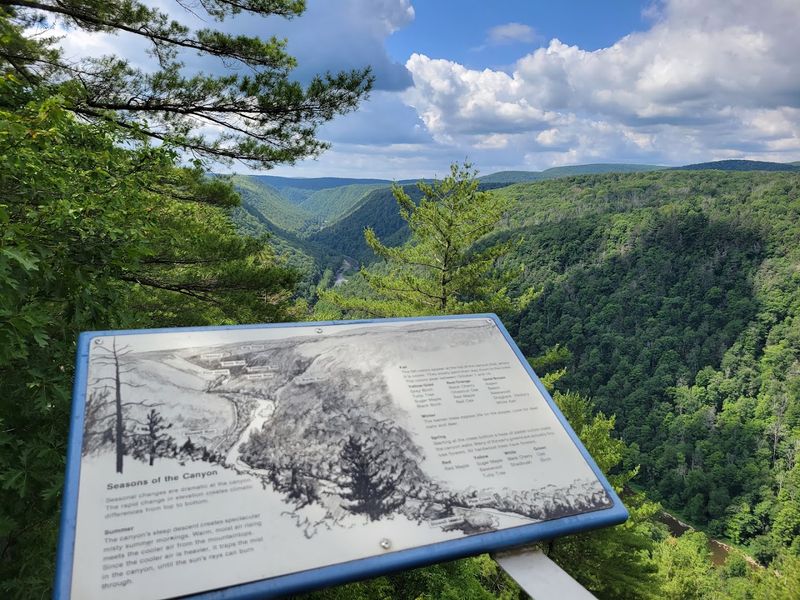
Long before hiking boots ever touched its trails, the Pennsylvania Grand Canyon was shaped by forces almost too enormous to comprehend. Roughly 20,000 years ago, the massive Laurentide Continental Glacier crept across the region, fundamentally redirecting the course of Pine Creek and setting the stage for everything visitors see today.
Before the glacier arrived, Pine Creek actually flowed northeast. The retreating ice left a colossal dam of rocky debris near present-day Ansonia, which caused meltwater to pool into a vast glacial lake. When that lake finally overflowed its natural dam, the released water carved a new southward channel with extraordinary force, creating the gorge we now admire.
The canyon walls themselves expose bedrock dating back 300 to 400 million years, composed of Devonian sandstone, shale, siltstone, and mudstone in vivid layers of gray, red, and brown. Weather-resistant sandstone forms the sheer, towering cliffs that define the gorge’s most dramatic vertical faces, making every rock face a visible record of deep geological time.
East Rim vs. West Rim: Two Very Different Canyon Personalities
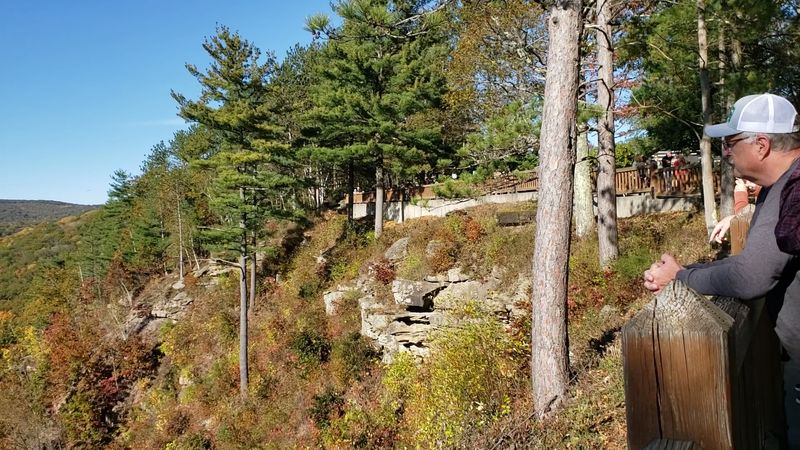
Choosing between the east and west rim of the Pennsylvania Grand Canyon is a genuinely delightful problem to have, because each side rewards visitors in its own distinct way. Leonard Harrison State Park on the east rim offers the more polished experience, with modern facilities, a visitor center, and well-maintained overlooks that deliver the classic, sweeping canyon vista most photographers dream about capturing.
Cross to the other side and Colton Point State Park greets you with a wilder, quieter energy. Its rustic Civilian Conservation Corps architecture from the 1930s lends a nostalgic quality to the experience, and its east-facing position makes it an ideal perch for watching a sunrise paint the opposite canyon wall in warm gold and orange tones.
From Colton Point, you can actually spot activity at Leonard Harrison across the gorge, which puts the canyon’s extraordinary width into immediate, almost humbling perspective. Bringing binoculars to either rim adds a whole new layer of discovery to the visit, especially during wildlife-watching season.
The Pine Creek Rail Trail: A World-Class Path Through the Canyon Floor
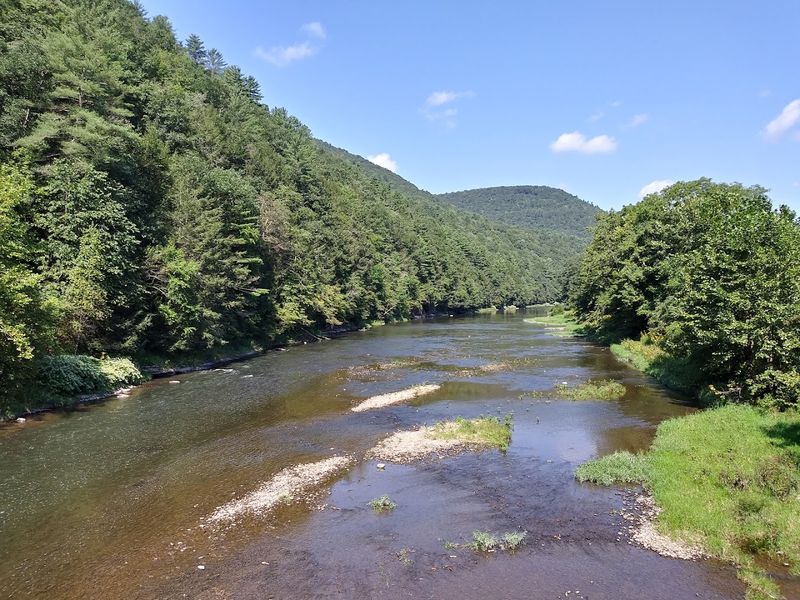
USA Today once named the Pine Creek Rail Trail one of the ten greatest places in the world to take a bike tour, and after experiencing it firsthand, that distinction feels completely earned. Built on a former railroad bed, this trail stretches between 62 and 65 miles along the canyon floor, following Pine Creek from the Ansonia area southward through the heart of the gorge.
Its nearly flat grade, sloping gently downhill from north to south, makes it accessible to a refreshingly wide range of visitors. Families with young children, casual cyclists, dedicated hikers, and horseback riders all share this smooth, crushed-limestone surface without any sense of overcrowding on quieter days.
The experience from the trail floor is entirely different from the rim overlooks. Canyon walls tower above on both sides, waterfalls cascade down the rocky faces after rainfall, and the sound of Pine Creek provides a constant, soothing soundtrack. Wildlife sightings here are frequent, with bald eagles soaring overhead and white-tailed deer appearing along the forested edges without much warning.
Fishing, Kayaking, and the Thrill of Pine Creek on the Water
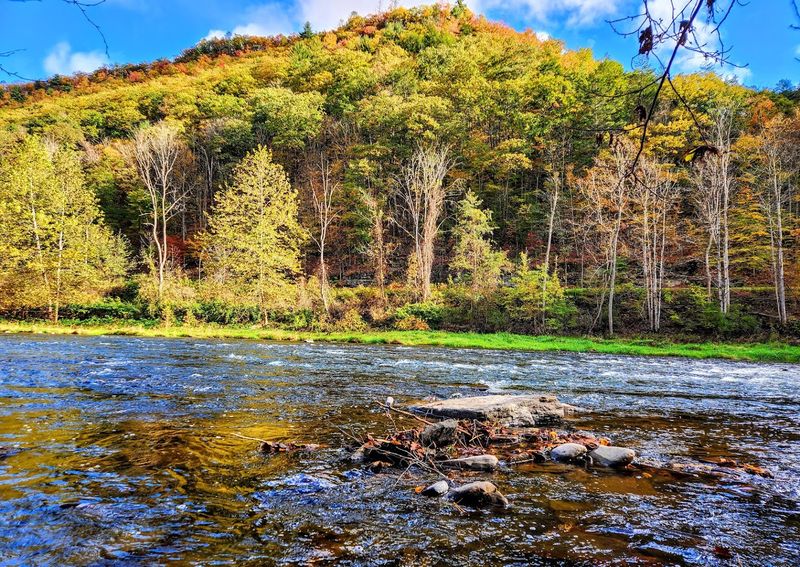
Pine Creek carries a reputation among anglers that extends well beyond Pennsylvania’s borders. Designated a Pennsylvania Scenic River, it supports both warm and cold-water fisheries, with trout being the undisputed prize for those who wade in with a rod and a good deal of patience. The experience of casting a line while canyon walls rise hundreds of feet on either side is genuinely unlike any other fishing setting in the eastern United States.
When spring arrives and snowmelt swells the creek, the water transforms into a completely different animal. Kayakers, canoeists, and whitewater rafting enthusiasts converge on Pine Creek to take advantage of the season’s brisk currents, navigating the gorge from a perspective that no rim overlook can replicate.
Local outfitters near Wellsboro offer equipment rentals and guided excursions, making water-based adventures accessible even for first-timers. Floating through the canyon at water level, with the ancient rock walls rising above you and osprey diving nearby, creates a sense of scale and immersion that stays with you long after the trip ends.
Hiking the Turkey Path: The Canyon’s Most Rewarding Vertical Challenge
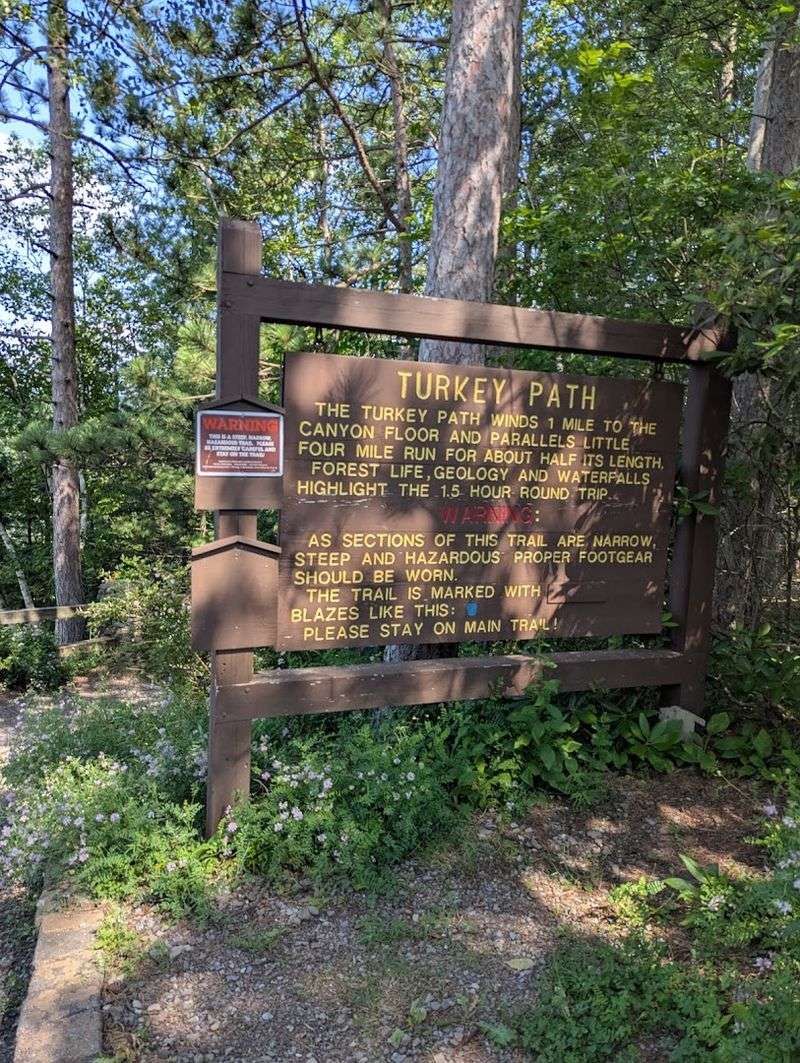
The Turkey Path at Leonard Harrison State Park is one of those trails that earns its reputation through honest effort and spectacular payoff. Starting at the east rim, it drops approximately one mile down to the canyon floor, following Little Fourmile Run through a series of beautiful waterfalls and cascades that tumble over ancient layered rock.
The descent is steep enough to feel genuinely rewarding, and the ascent back to the top will remind your legs that they did real work that day. Sturdy footwear is non-negotiable here, particularly in wet or winter conditions when the rocky steps can become slippery in a hurry.
For those craving a longer multi-day adventure, the West Rim Trail runs approximately 30 miles along the gorge’s western edge through dense forest, offering continuous canyon views for backpackers willing to commit to the full experience. Easier rim trails at both parks connect various overlooks at a gentler pace, while the Barbour Rock Trail at Colton Point provides a wheelchair-accessible option with genuinely stunning views waiting at its end.
Fall Foliage Season: When the Canyon Becomes Something Else Entirely
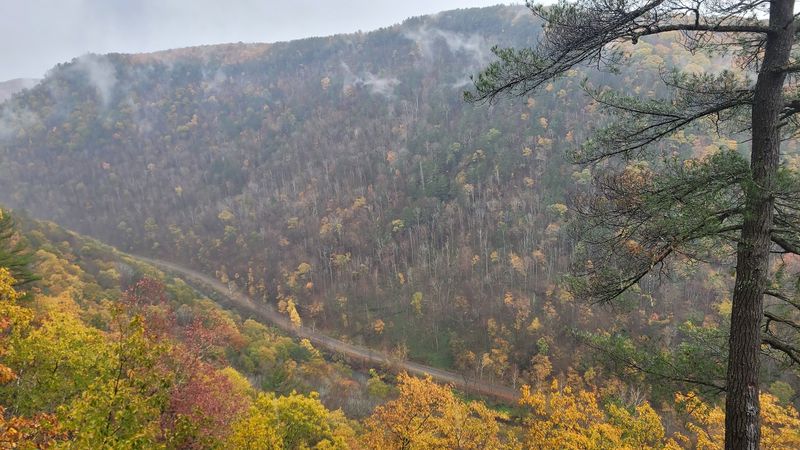
No other season transforms the Pennsylvania Grand Canyon quite as dramatically as autumn. From late September through mid-October, the canyon’s vast hardwood forest ignites in a riot of red, orange, and yellow that stretches across every visible slope and ridge, creating a scene that feels almost too vivid to be real.
The sheer volume of deciduous trees packed into the gorge means the color display here is dense and continuous, not patchy or sparse. Photographers set up at the rim overlooks well before sunrise to catch the first light hitting the opposite canyon wall, and on the clearest October mornings, the view genuinely looks like a painting that someone turned up the saturation on.
Arriving early is essential during peak foliage season, as parking fills quickly at both Leonard Harrison and Colton Point State Parks. Weekday visits offer a noticeably calmer experience, and the slightly cooler temperatures make hiking the Turkey Path more comfortable than during the humid summer months. The crowds are worth navigating for the reward that awaits at every overlook.
A History Written in Timber, Rails, and Conservation Effort
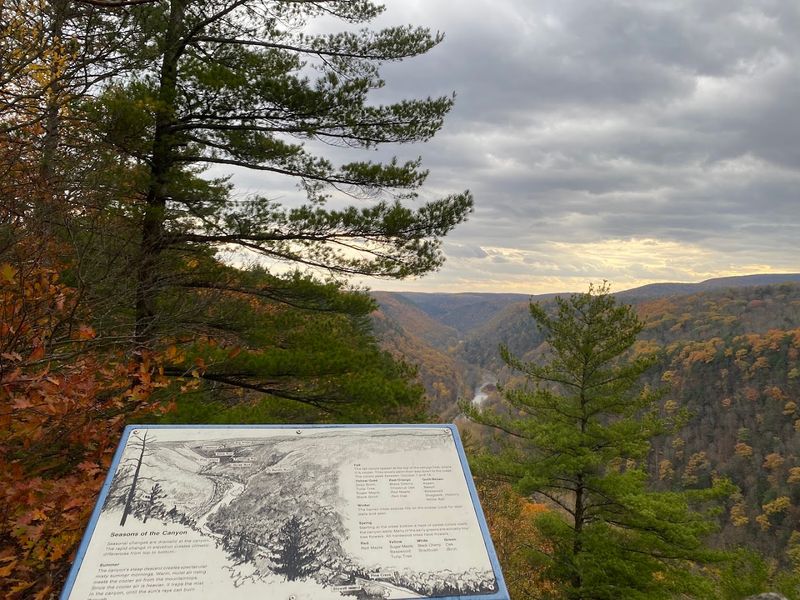
The Pennsylvania Grand Canyon carries a layered human history that adds real depth to any visit. The Seneca people used the Pine Creek Valley as a major travel corridor for thousands of years, calling the creek Tiadaghton, and a seasonal hunting camp near present-day Ansonia served as an important gathering point long before European settlers arrived.
The 19th century brought dramatic change in the form of a logging boom that stripped the surrounding mountainsides of their enormous eastern white pines and hemlocks. Williamsport, downstream, became the self-proclaimed lumber capital of the world in the 1880s, powered in large part by timber floated down Pine Creek in massive log rafts.
By the early 1900s, the forests were nearly gone and wildlife populations had collapsed. Conservation efforts and reforestation programs gradually restored the landscape, and the Jersey Shore, Pine Creek, and Buffalo Railway, which had hauled timber and passengers through the gorge since 1883, ran its final train on October 7, 1988. That same rail corridor is now the beloved Pine Creek Rail Trail, carrying hikers and cyclists instead of freight cars.
Park Amenities and What to Expect at Each Rim
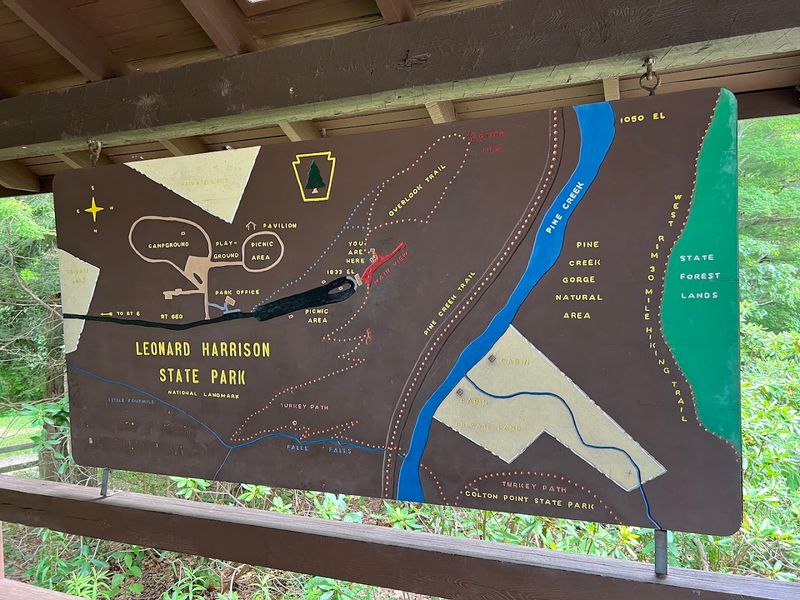
Leonard Harrison State Park functions as the more visitor-ready of the two rim parks, offering a modern visitor center with interactive exhibits on the gorge’s geology, ecology, and human history. Park guides lead seasonal interpretive walks, and a snack bar, clean restrooms, and accessible overlooks make it an easy choice for families and first-time visitors.
Camping at Leonard Harrison is available from mid-April through mid-October, with sites offering flush toilets and showers. The main overlook area is handicap accessible, ensuring that the canyon’s most dramatic views are available to everyone regardless of mobility. A useful bonus for road-trippers: EV charging stations are available in the parking area.
Colton Point across the gorge embraces a more rugged character, with primitive camping on a first-come, first-served basis and pit toilets rather than modern facilities. Its 1930s CCC-era pavilions and overlook structures add a historic charm that feels entirely appropriate for such an ancient landscape. Arriving early at either park during peak season is strongly recommended, as parking fills faster than most visitors anticipate.
Wellsboro: The Charming Gateway Town Worth Exploring
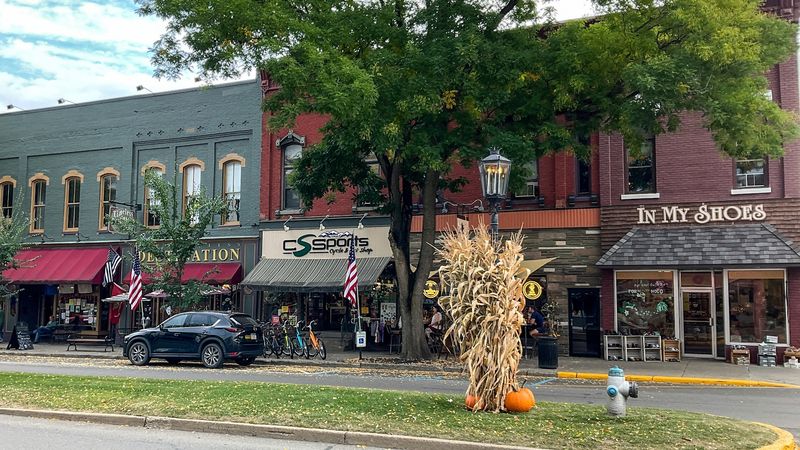
Just a short drive from the east rim of the canyon, Wellsboro serves as the natural basecamp for a Pennsylvania Grand Canyon trip and turns out to be worth exploring on its own terms. Its main street is lined with working gas lamps, a detail that gives the town a genuinely warm, unhurried atmosphere that feels like a genuine contrast to the raw wilderness just up the road.
Local outfitters in and around Wellsboro offer bike rentals, shuttle services for the Pine Creek Rail Trail, fishing gear, and paddling equipment, along with the kind of firsthand trail knowledge that no app can fully replicate. The town’s lodging options range from cozy inns to more standard accommodations, providing a comfortable home base for multi-day canyon adventures.
After a full day of hiking or cycling, the dining options in Wellsboro offer a welcome chance to refuel without driving far. The broader Pennsylvania Wilds region surrounding the gorge also holds additional hiking trails, scenic drives, and small villages like Slate Run and Waterville that carry their own quiet, unhurried appeal worth discovering at a relaxed pace.
Practical Tips for Planning Your Canyon Visit Right
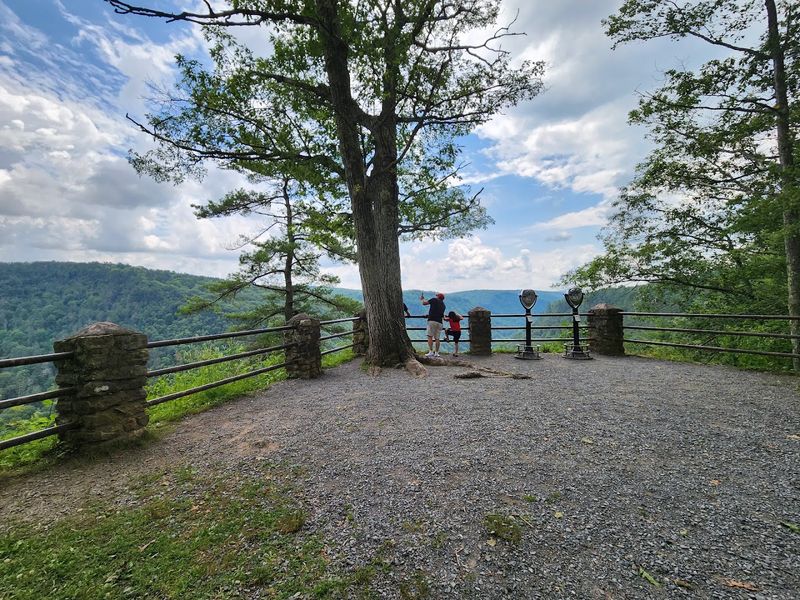
Getting the most from a Pennsylvania Grand Canyon visit comes down to a handful of practical decisions made before you leave home. Autumn is the most visually spectacular season, but it is also the busiest, so arriving early on weekdays gives you the best chance of a relaxed experience at the overlooks. Spring offers excellent water levels for paddling and a fresh green landscape, while winter reveals the canyon’s stark geological bones in a way that summer foliage never allows.
Sturdy hiking boots are essential for the Turkey Path and any trail that descends to the canyon floor. Water and snacks are worth packing even for shorter hikes, as services inside the parks are limited outside peak season. Dogs are welcome on the trails but must remain on a leash no longer than six feet at all times.
Cell service is essentially nonexistent in much of the gorge, so downloading offline maps before arriving is a genuinely useful habit. Winter visitors heading to Colton Point should note that access roads can require four-wheel drive after snowfall, making conditions worth checking in advance before committing to the drive.
Share this story