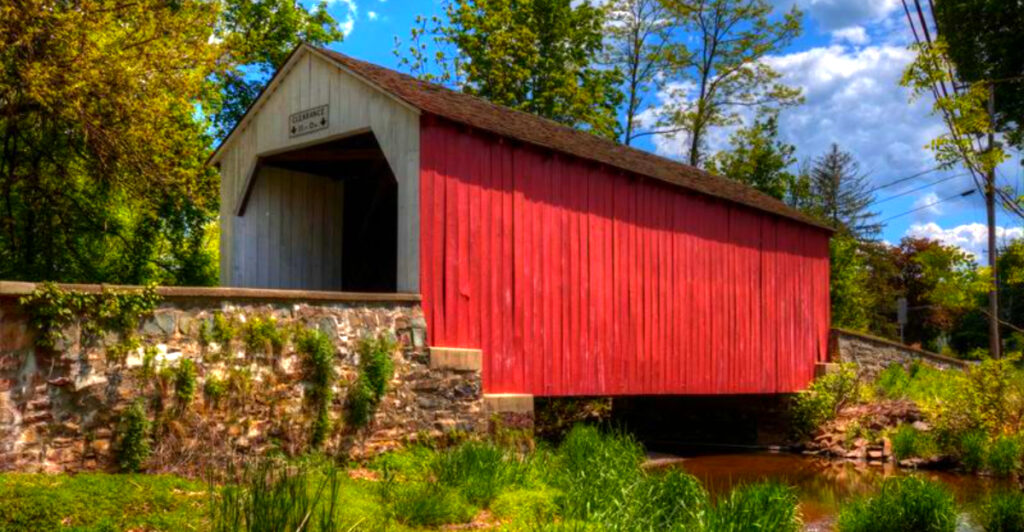
Pennsylvania is home to one of the nation’s largest collections of covered bridges, many tucked away along scenic back roads and quiet countryside. More than picturesque landmarks, these historic wooden spans preserve stories of the state’s past, from wartime history and early industry to remarkable feats of engineering.
From Bucks County to Greene County, these 12 covered bridges showcase the beauty, craftsmanship, and history that make them enduring Pennsylvania icons. Whether you’re planning a road trip or simply enjoy exploring historic landmarks, each is well worth the detour.
1. Sachs Covered Bridge, Gettysburg, Pennsylvania
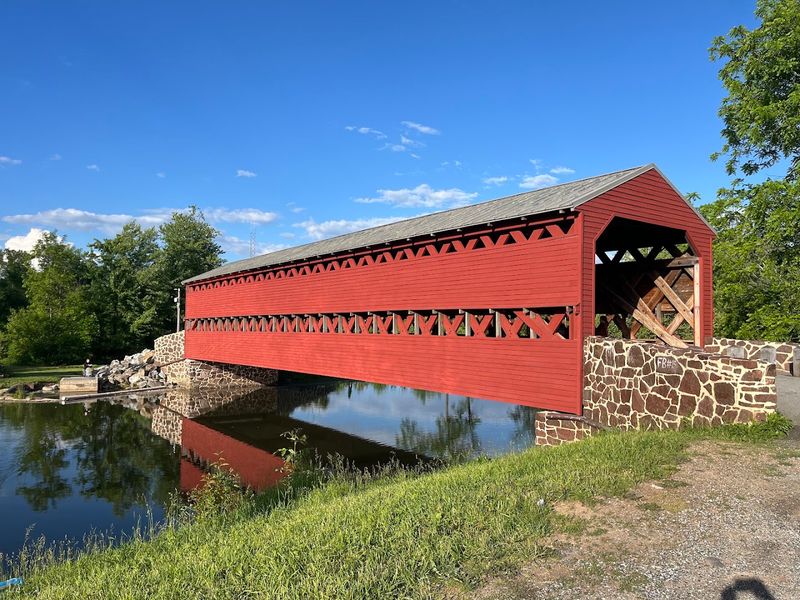
Few bridges in America carry as much history as this one, which saw both Union and Confederate troops cross its wooden planks during the Battle of Gettysburg in July 1863.
Built in 1852 using a Town truss design, Sachs Covered Bridge stretches 100 feet across Marsh Creek and sits just a short drive from Gettysburg National Military Park. It was officially named Pennsylvania’s Most Historic Bridge back in 1938, which is quite a title to hold.
A flash flood in 1996 knocked the bridge 100 yards downstream, but a $500,000 restoration project brought it back, and it was rededicated on July 21, 1997. The exterior was repainted rust-red in 2023, and high-tech cameras were installed to protect it from vandalism.
The surrounding area offers nature walks and peaceful views of the creek. Local legends claim three Confederate soldiers haunt the bridge, which adds an unexpected layer of intrigue to an already fascinating stop.
2. Academia Pomeroy Covered Bridge, Academia, Pennsylvania
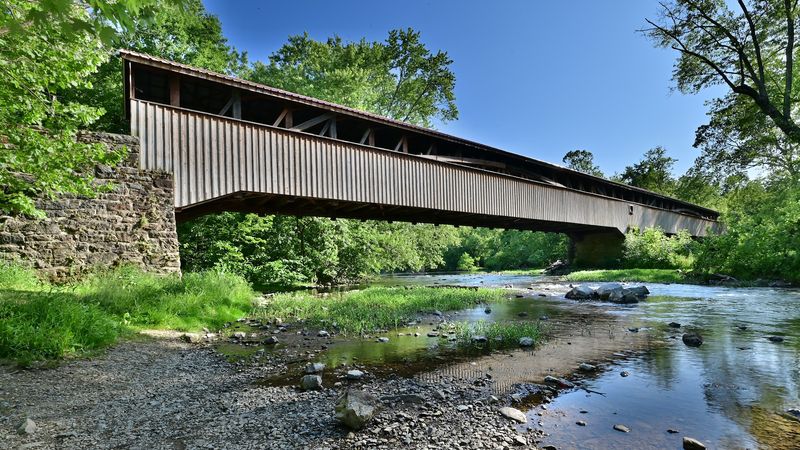
At 278 feet long, Academia Pomeroy Covered Bridge holds the title of the longest remaining covered bridge in all of Pennsylvania, and standing at either end makes that length feel genuinely impressive.
Built in 1902 by James N. Groninger to replace a bridge wrecked by flooding the year before, it uses a Burr truss design and stretches across Tuscarora Creek in quiet Juniata County. The Juniata County Historical Society has owned it since 1962, and an eight-year, $1.4 million restoration project completed in 2009 brought it back from serious deterioration caused by powder post beetles.
The bridge is now closed to vehicles but open for pedestrians, and informational plaques along the way explain its history in detail. It was added to the National Register of Historic Places in 1979.
October is the best time to visit, when golden autumn foliage frames both ends of the bridge and the surrounding countryside looks its most dramatic.
3. Kutz’s Mill Covered Bridge, Kutztown, Pennsylvania
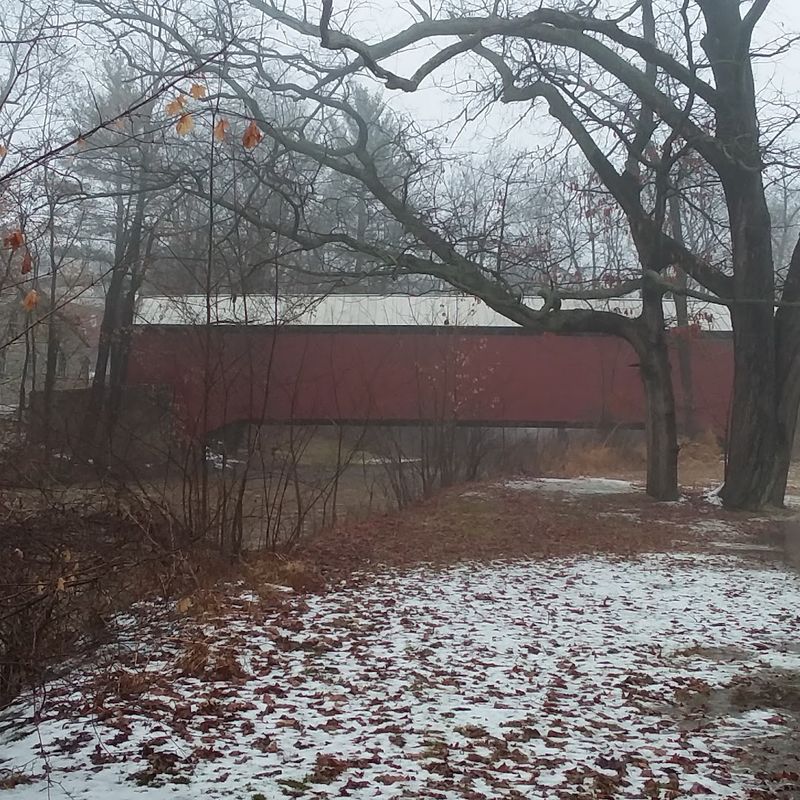
Built in 1854 by Bitner and Ahrens, Kutz’s Mill Covered Bridge is the shortest covered bridge in Berks County at just 93 feet, but what it lacks in length it more than makes up for in historic company.
The bridge crosses Sacony Creek right next to the Kutz’s Mill complex, a historic grain mill that dates to around 1855 and stayed in the same family for four generations. Original features inside the mill, including gears, shafts, rollers, and a millstone crane, are still intact, though the mill itself is on private property and viewable from the road.
This is one of only five covered bridges remaining in Berks County, and it was added to the National Register of Historic Places in 1981. The wooded creek setting makes it a natural photography stop regardless of the season.
If you are planning a covered bridge road trip through eastern Pennsylvania, this one pairs nicely with a stop in the nearby town of Kutztown.
4. Poole Forge Covered Bridge, Narvon, Pennsylvania
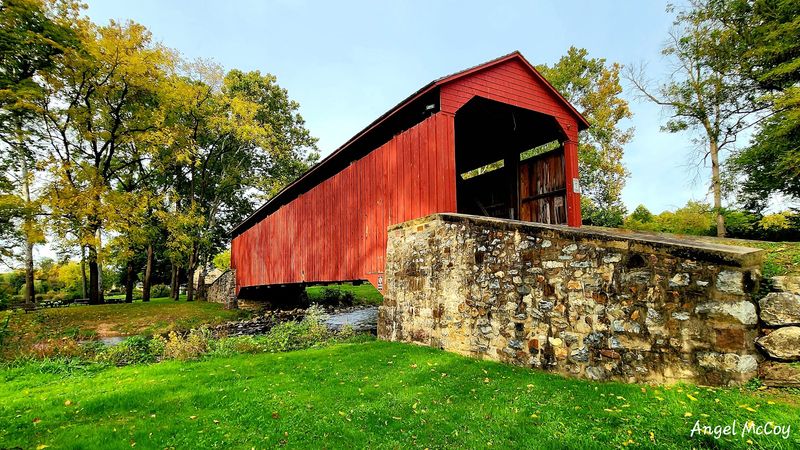
History stacks up quickly at this Lancaster County stop, where a 99-foot covered bridge shares space with an 18th-century iron forge that once produced armaments for the Revolutionary War.
Poole Forge Covered Bridge was built in 1859 and spans the Conestoga Creek inside the 26-acre Historic Poole Forge park. The forge complex dates to 1775, and the entire site, including the bridge, was added to the National Register of Historic Places, with the bridge listed in 1980 and the full complex in 1993.
Caernarvon Township took ownership of the bridge in 2005, and renovations since then have included new floorboards, electric sensor lights, and reinforced stone abutments. The bridge is pedestrian-only, so visitors can walk across at their own pace without worrying about traffic.
The park also offers picnic areas, wildflower meadows, and walking trails, and Amish horse buggies passing on nearby roads give the whole area a distinctly Lancaster County character that is hard to find elsewhere.
5. Forry’s Mill Covered Bridge, Lancaster, Pennsylvania
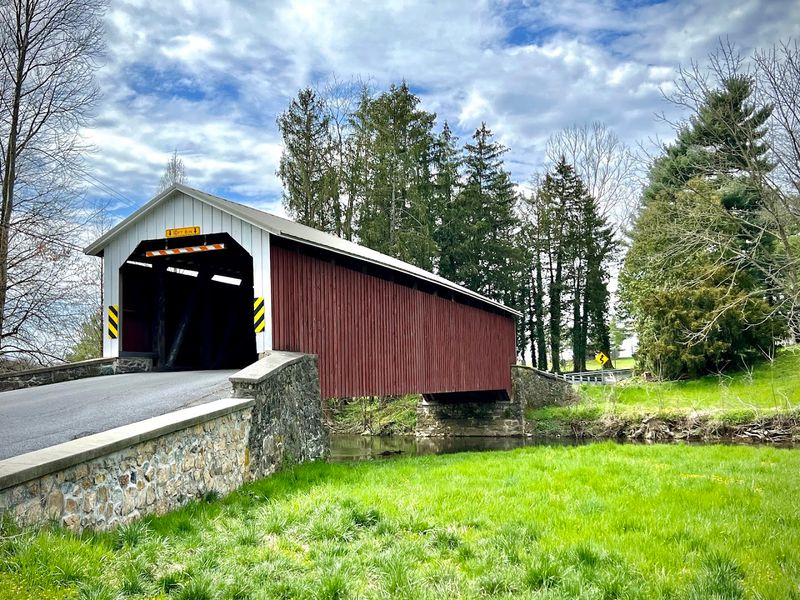
A Civil War veteran built this bridge, which gives it a backstory that most rural landmarks cannot compete with.
Elias McMellen, who served in the Civil War before becoming one of Lancaster County’s most prolific bridge builders, constructed Forry’s Mill Covered Bridge in 1869 for $2,969. It stretches 103 feet across Chiques Creek and holds the distinction of being the last covered bridge on that creek before it meets the Susquehanna River.
The bridge features a double Burr arch truss design, an oak plank deck, and the classic red paint with white approaches that Lancaster County covered bridges are known for. The Forry family’s stone house still stands nearby, overlooking the bridge as it has for well over a century.
It was struck by a tractor-trailer in 1986 and rebuilt, and it came through Tropical Storm Lee in 2011 with only minimal damage. Today it is a favorite stop for joggers, cyclists, and anyone who enjoys a scenic country drive through Lancaster farmland.
6. Hunsecker’s Mill Covered Bridge, Lancaster, Pennsylvania
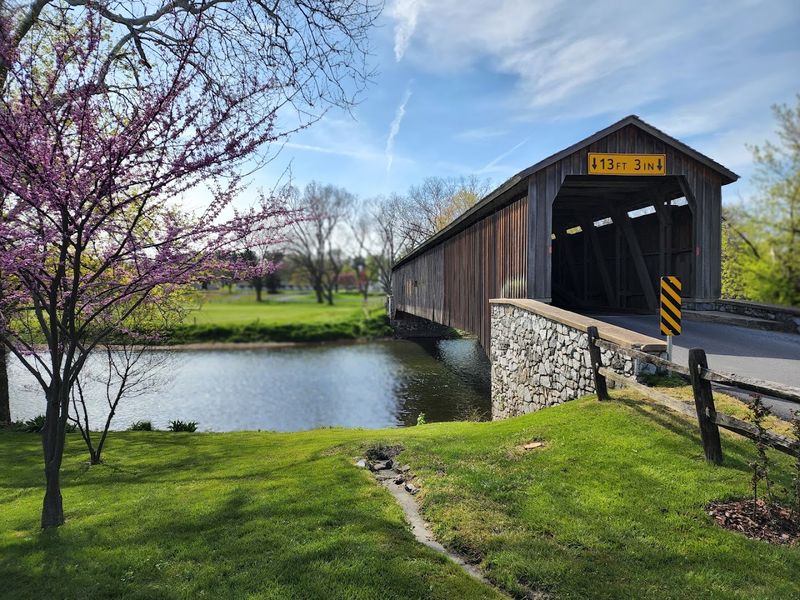
Lancaster County holds the record for the most covered bridges in Pennsylvania, and Hunsecker’s Mill Covered Bridge is the county’s longest single-span example at an impressive 180 feet across the Conestoga River.
The original bridge was built in 1843, but Hurricane Agnes destroyed it completely in June 1972. Public outcry stopped plans for a concrete replacement, and an authentic reconstruction was completed in 1973 for $321,302, rebuilt three feet higher than the original to reduce future flood risk.
One detail that makes this bridge stand out from others in the county is its horizontal floorboards, which create a noticeable vibration when a vehicle crosses. It is a one-lane bridge with no separate pedestrian walkway, so visitors on foot should stay aware of traffic.
The surrounding farmland gives the bridge a classic rural backdrop that looks equally good in every season. Its history of community-driven preservation makes it more than just a pretty crossing; it is proof that people here genuinely care about keeping these structures alive.
7. McConnell’s Mill Covered Bridge, Portersville, Pennsylvania
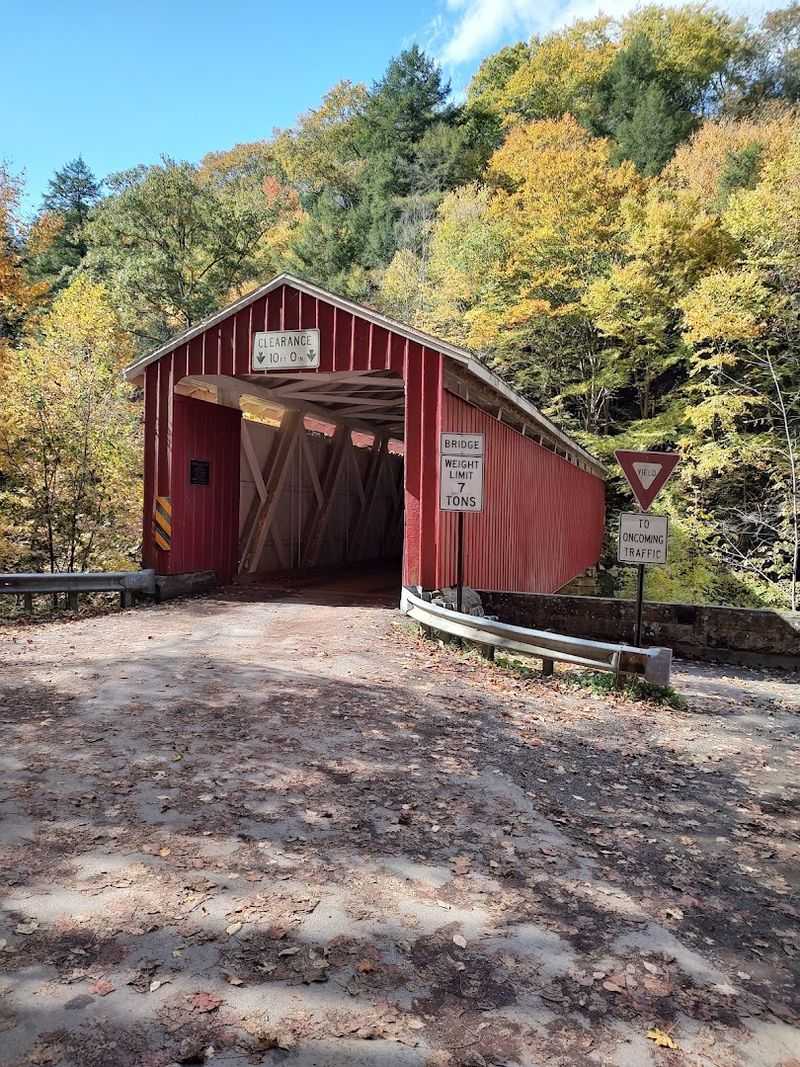
Western Pennsylvania pulls its weight in the covered bridge department, and this one sits inside a state park so scenic that the bridge almost feels like a bonus feature.
Built in 1874, McConnell’s Mill Covered Bridge spans 91 feet across Slippery Rock Creek using a Howe Truss design, one of only four such bridges remaining in all of Pennsylvania. It sits on stone foundations reinforced with steel girders and was extensively rehabilitated in 2016.
The bridge is a registered National Historic Landmark and was added to the National Register of Historic Places in 1980. It is also one of only two remaining covered bridges in Lawrence County, which gives it extra significance for bridge enthusiasts keeping count.
McConnells Mill State Park surrounds the bridge with dramatic rock formations, hiking trails, and the historic gristmill that gives the park its name. The mill, originally built in 1852 and later improved with water turbines, closed in 1928 and is now open for tours. This stop earns its detour on natural scenery alone.
8. Van Sant Covered Bridge, New Hope, Pennsylvania
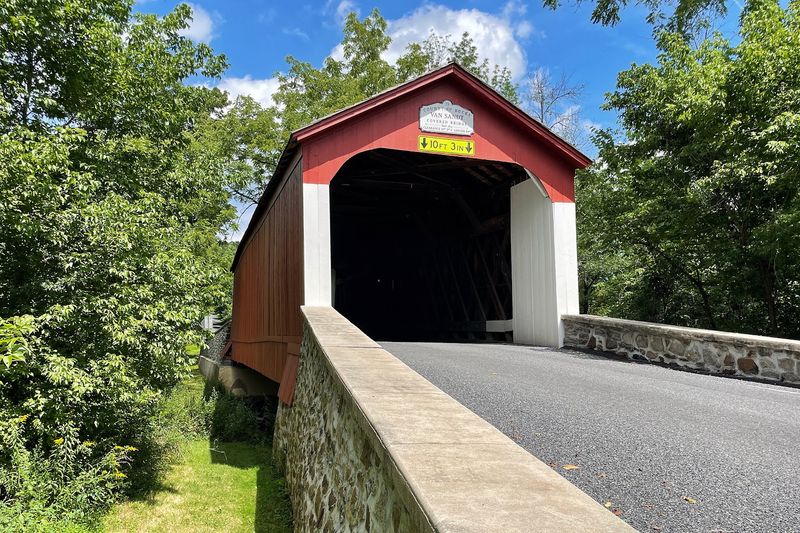
Bucks County has a solid collection of covered bridges, and Van Sant is one of the most visited, partly for its classic appearance and partly for the local legends that have followed it for decades.
Built in 1875 by G. Arndt and P.S. Naylor, the bridge stretches 86 feet across Pidcock Creek using a Town Truss construction. It is traditionally painted red with white entry portals, the standard look for Bucks County covered bridges, and it sits along a quiet country road not far from the Delaware River.
The bridge is also known locally as Beaver Dam Bridge and carries the informal nickname of a Crybaby Bridge, a label attached to a collection of colorful local legends. Some researchers suggest the unusual sounds associated with those stories may simply come from red foxes living in the surrounding woods.
It was added to the National Register of Historic Places on December 1, 1980. Nearby attractions include Washington Crossing State Park and Bowman’s Hill, making this an easy addition to a full day in the area.
9. Erwinna Covered Bridge, Erwinna, Pennsylvania
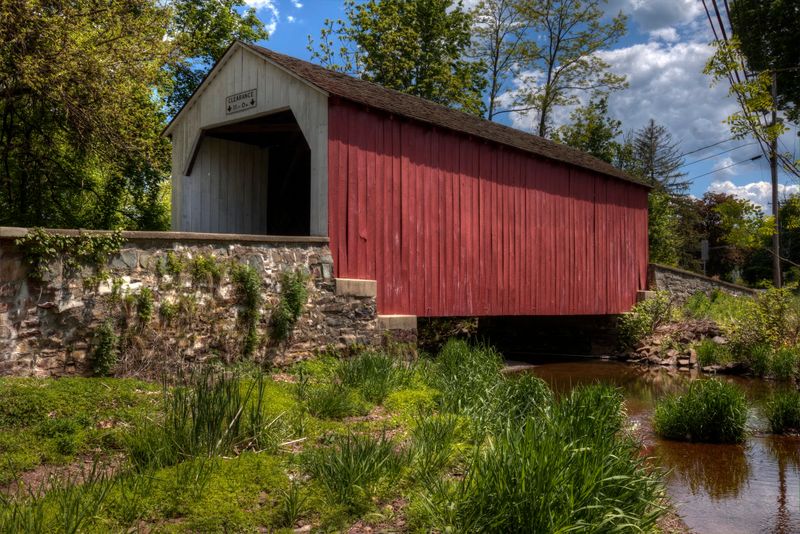
The shortest covered bridge in Bucks County has survived more close calls than most structures twice its size, and that resilience is a big part of what makes it worth seeking out.
Erwinna Covered Bridge spans just 56 feet across Swamp Creek, also called Lodi Creek, and uses a lattice-type Town Truss construction. Its construction date is debated, with county records suggesting 1832 and the National Register listing 1871, but either way it has been standing for a very long time. The bridge was transferred to state ownership in 1936.
It survived a hit-and-run truck strike in 1974, a $240,000 PennDOT renovation in 1996, and additional truck damage in both 2012 and 2013. Each time, repairs followed, and the bridge kept going.
The village of Erwinna itself is named after Colonel Arthur Erwin, a Revolutionary War figure, adding another layer of history to the stop. During winter, the Church of Tinicum decorates the bridge with lighted pine roping and wreaths, which makes a December visit surprisingly charming.
10. Barronvale Covered Bridge, Somerset, Pennsylvania
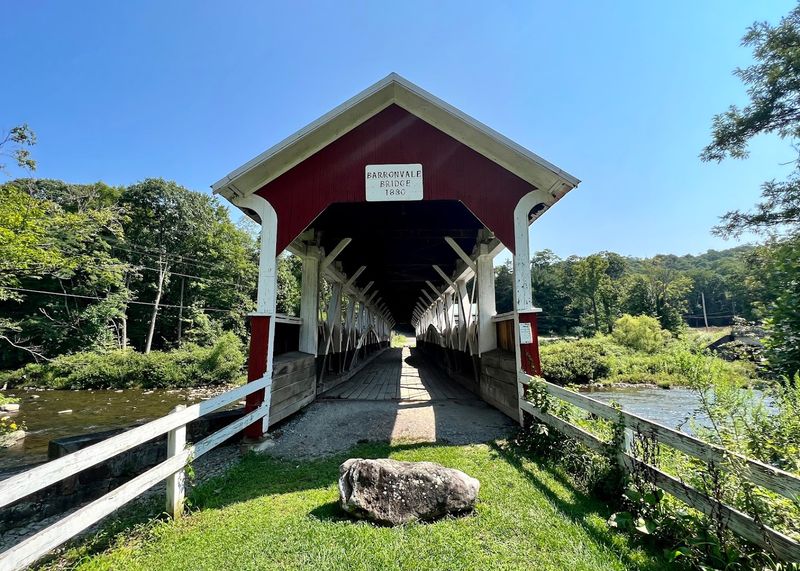
Somerset County quietly holds onto one of the best collections of covered bridges in western Pennsylvania, and Barronvale is the crown jewel of the group at 162 feet long.
The history of this bridge goes back further than most people expect. A petition for it was filed in 1828 by Peter Kooser for his gristmill, and the original structure was completed in 1830 by Cassimer Cramer for $300. Burr arches were added in 1845 for $750, and Italian craftsmen reinforced the stone supports in 1907 for just under $774.
It is a two-span Burr Arch truss crossing Laurel Hill Creek and holds the distinction of being the longest covered bridge in Somerset County. A metal roof was installed in 1986, and Middlecreek Township continues to maintain it today.
The bridge is open to foot traffic only, and while it is privately owned, visitors are welcome to park and walk through it. It is a natural anchor point for the Somerset County covered bridge driving tour, which passes several other historic bridges in the same region.
11. Lower Humbert Covered Bridge, Confluence, Pennsylvania
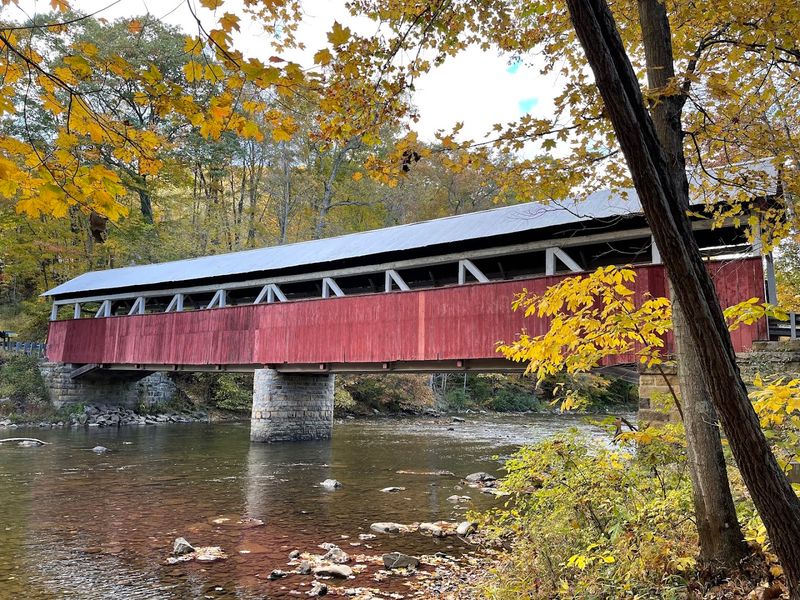
Tucked into the Laurel Highlands near the outdoor recreation hub of Confluence, this bridge is the kind of find that makes a road trip feel worth every wrong turn.
Lower Humbert Covered Bridge, also known as the Faidley Covered Bridge, was built in 1891 and spans 126.5 feet across Laurel Hill Creek using a double-span Burr Arch Truss and King-post design. It was listed on the National Register of Historic Places on December 10, 1980, and is one of ten remaining covered bridges in Somerset County.
A historically sensitive rehabilitation in 1991 reinforced the abutments, added a new pier, and installed four steel beams beneath the deck to extend its life without changing its appearance. The bridge has a load limit of three short tons, so it is foot traffic only for visitors today.
The red timber frame and metal roof look especially striking against autumn foliage reflected in the still water of Laurel Hill Creek below. Many travelers pass right by this one on their way to more famous Laurel Highlands destinations, which honestly just means less competition for the best photo spots.
12. Cox Farm Covered Bridge, Carmichaels, Pennsylvania
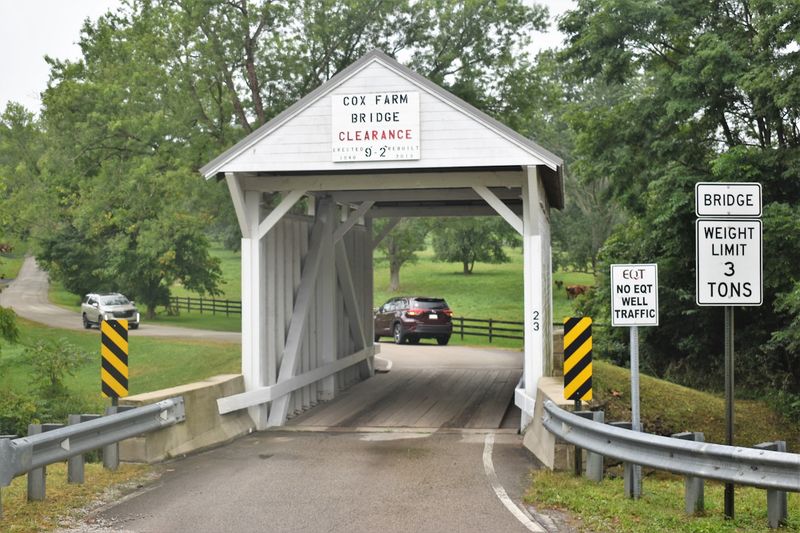
Greene County may not be on every traveler’s radar, but it holds seven historic covered bridges, and Cox Farm Covered Bridge is one of the most unusual in the whole state thanks to its backstory alone.
Also known as the Lippincott Covered Bridge, it was built in 1943 using wood because steel was being rationed for the war effort during World War II. At just 27.75 feet, it is a compact King post truss bridge crossing Ruff Creek, with horizontal siding and a sheet metal roof giving it a tidy, well-kept appearance.
It was added to the National Register of Historic Places in 1979 and underwent a grant-funded restoration in 2013 that replaced deteriorated wood and installed five steel beams to support traffic loads. The result is a bridge that looks polished without losing its historic character.
Greene County’s covered bridge driving tour connects this bridge with six others across the county’s rolling hills, making it an ideal starting point for a full afternoon of exploration on narrow, winding back roads.
Share this story